
Are you searching for modern front yard landscaping ideas to elevate your home’s curb appeal and create a stunning first impression? The front yard is more than just a patch of grass; it’s the architectural handshake that introduces your home to the world. A modern landscape moves beyond the traditional, cluttered flower beds and embraces a “less is more” philosophy, focusing on clean lines, strong geometric forms, and an intentional, curated plant palette. It’s about creating a space that is as sculptural and architectural as the home it frames, a design that feels both deliberate and deeply connected to its environment.
This guide will walk you through 16 stunning ideas, from geometric concrete work to minimalist planting schemes, that will help you transform your front yard into a sophisticated, stylish, and welcoming modern masterpiece.
1. Embrace Clean Lines with Geometric Concrete Pavers
The foundation of modern landscape design is strong geometry, and nothing achieves this better than large-scale, geometric concrete pavers. Forget fussy, cobblestone paths; modern design is all about oversized rectangular or square slabs arranged in a clean, linear pattern. These pavers create a powerful visual pathway to your front door, guiding the eye and establishing a sense of order. They can be set tightly together for a sleek, solid surface or spaced apart with gravel, turf, or groundcover in between for a more integrated, permeable look.
In a recent project for a contemporary home, we used oversized, 24×48-inch concrete pavers to create a floating-style walkway leading to the entrance. The clean lines and substantial scale of the pavers perfectly complemented the home’s modern architecture. This use of architectural concrete is a hallmark of high-end modern design, creating a look that is both impactful and incredibly durable.
- Layout: Arrange pavers in a simple, stacked bond or a running bond pattern. Avoid complex, decorative patterns.
- Spacing: Leave consistent, 1-4 inch gaps between pavers for planting or filling with decorative gravel.
- Material: Choose high-quality, pre-cast concrete pavers in a neutral color like light gray, charcoal, or buff.
For an enhancement, have the pavers custom-poured in place. This allows you to create unique sizes and a perfectly seamless finish, and even allows for textures like a board-formed finish to be imprinted on the surface.

15 Living Room With Fireplace And TV Layout Design Ideas
2. Utilize Decomposed Granite and Gravel
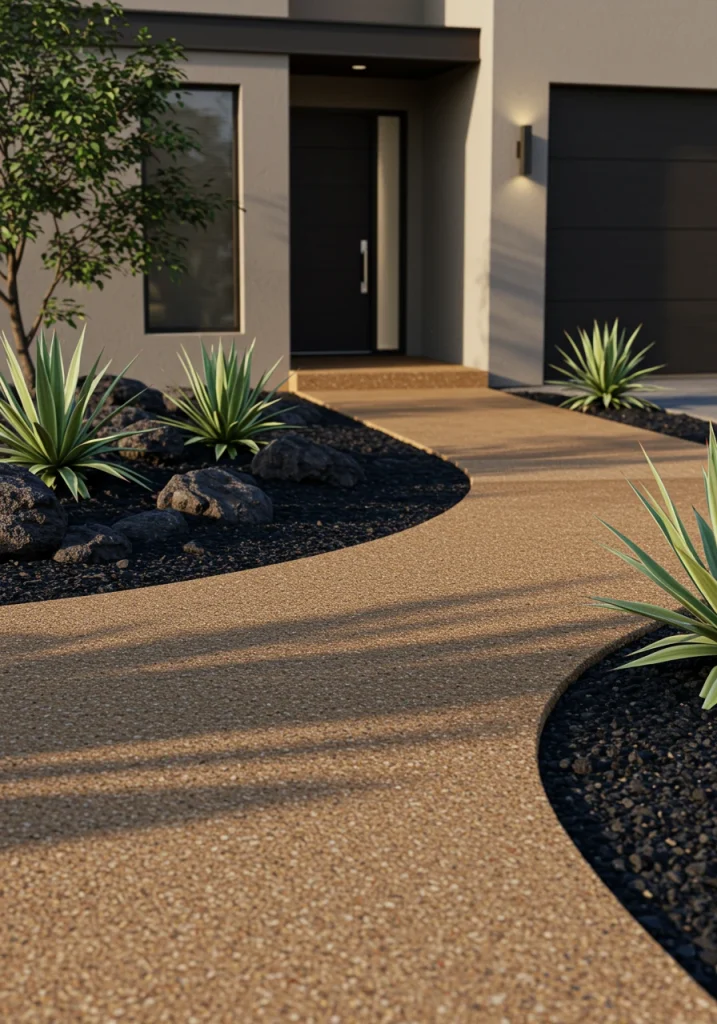
In modern landscaping, the spaces between plants and pavers are just as important as the elements themselves. This “negative space” is often filled with materials like decomposed granite (DG) or decorative gravel. These materials provide a clean, textured, and low-maintenance groundcover that is a perfect alternative to traditional mulch or a water-intensive lawn. The fine texture of DG or the clean look of black or gray gravel creates a neutral canvas that allows your architectural plants and hardscaping to stand out.
I often use a combination of materials for my clients. A large bed of dark gray gravel can create a dramatic, Zen-like feel, while the softer, more natural look of stabilized decomposed granite is perfect for pathways and patios. These materials are also excellent for drought-tolerant and xeriscape designs, reducing water usage significantly.
- Materials: Decomposed granite (stabilized for pathways), black lava rock, Mexican beach pebbles, or simple gray gravel.
- Application: Use as a groundcover in planting beds, for pathways, or to fill the gaps between concrete pavers.
- Installation: Always install a high-quality weed barrier fabric underneath your gravel or DG to prevent weed growth.
For a high-design enhancement, use different colors and sizes of gravel to create subtle, geometric patterns or to delineate different zones within your front yard.
3. Incorporate Board-Formed Concrete Walls
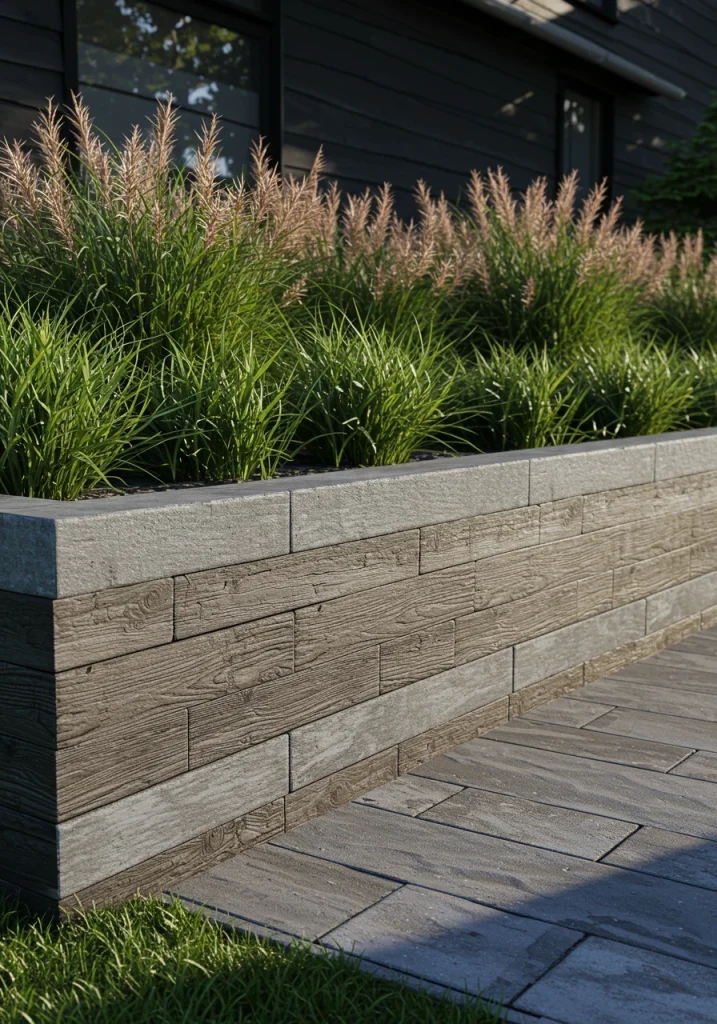
For retaining walls, planters, or privacy screens, board-formed concrete is a stunning material choice that screams modern architecture. This technique involves pouring concrete into a formwork made of wooden planks. When the forms are removed, the texture and grain of the wood are permanently imprinted onto the surface of the concrete, creating a look that is both raw and industrial, yet warm and textural.
This material beautifully blurs the line between hardscape and art. A low board-formed concrete wall can define the edge of a planting bed, while a taller wall can create a dramatic and private entryway courtyard. The horizontal lines of the wood grain impart a strong linear quality that is a hallmark of modern design. It’s a technique that requires a skilled contractor but results in a truly custom, high-end feature.
- Aesthetic: A beautiful, wood-grain texture on a durable, industrial material.
- Use: Low retaining walls, raised planter beds, water features, or accent walls.
- Color: The concrete can be left in its natural gray or tinted to a darker charcoal or a warmer earth tone.
To enhance a board-formed concrete wall, install subtle, low-voltage uplighting at its base. At night, the light will graze up the textured surface, highlighting the beautiful wood grain patterns and creating a dramatic effect.
4. Use Corten Steel for Planters and Edging
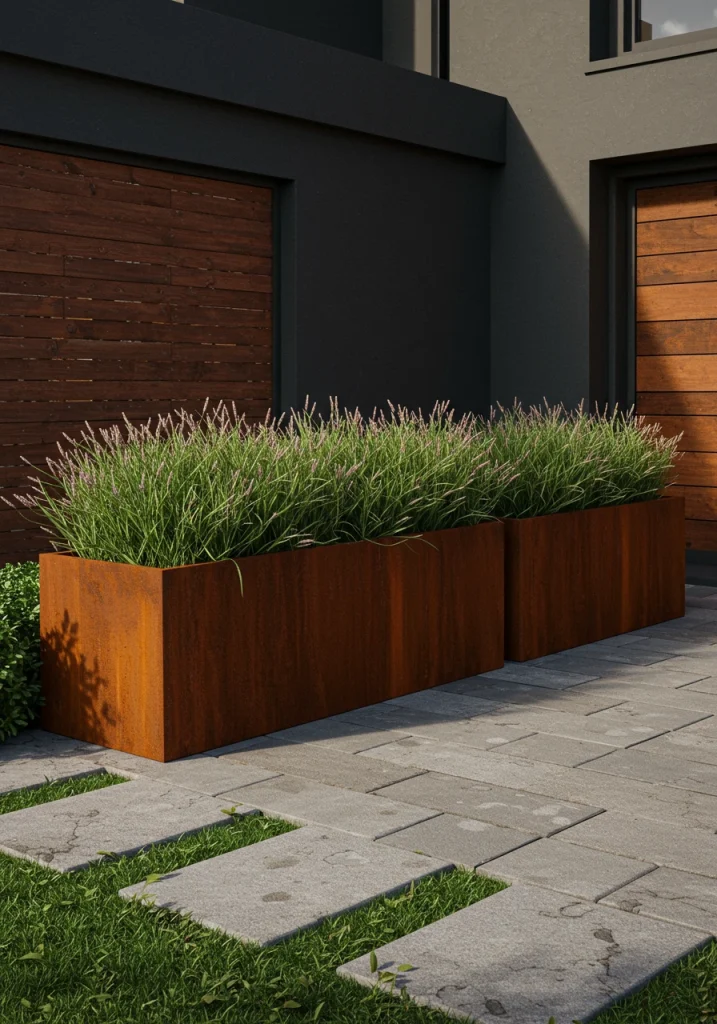
Corten steel, also known as weathering steel, is a material that is beloved by modern landscape architects for its unique, rustic-industrial aesthetic. When exposed to the elements, this steel alloy develops a stable, rust-like surface layer that is not only beautiful but also protects the steel from further corrosion. The deep, rich, orange-brown patina of Corten steel provides a stunning, warm contrast to the cool grays of concrete and the vibrant greens of plants.
I love to use Corten steel to create sharp, clean lines in a landscape. It can be used as crisp, minimalist edging to separate a lawn from a planting bed, or it can be fabricated into bold, geometric planter boxes. A series of tall, rectangular Corten steel planters can create a powerful, sculptural statement.
- Material: Weathering steel that develops a stable, protective rust patina.
- Color: A beautiful, evolving palette of deep orange, red, and brown.
- Use: Garden edging, raised planter boxes, retaining walls, and water features.
For a striking enhancement, create a custom house number sign out of a sheet of Corten steel. The numbers can be laser-cut out of the steel, with a backing plate and backlighting for a high-end, modern look.
5. A Limited and Repeated Plant Palette
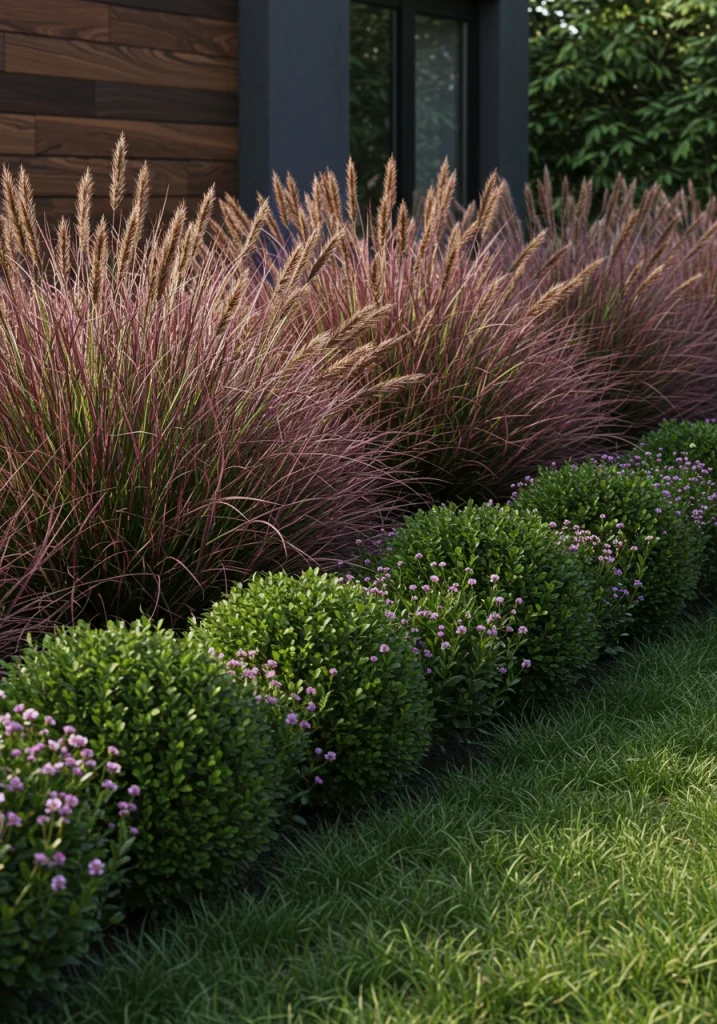
A key principle of modern landscape design is restraint. Instead of a chaotic cottage garden with one of everything, a modern landscape uses a very limited and carefully chosen plant palette. The idea is to select just a handful of plant species and then repeat them in large groups or masses throughout the design. This creates a sense of rhythm, cohesion, and calm.
When designing a modern front yard, I typically choose no more than five to seven different types of plants. We might select one type of ornamental grass, two types of perennials, a hardy groundcover, and a single specimen tree. By repeating these same plants in different areas, we create a unified design that feels intentional and serene, not messy. This approach, championed by renowned landscape designers like Piet Oudolf, is about the beauty of form and texture over a riot of color.
- Philosophy: “Less is more.” Choose a few plants and use them in large groups.
- Effect: Creates a calm, cohesive, and rhythmic design.
- Plant Choice: Focus on plants with interesting shapes, textures, and foliage.
As an enhancement, ensure your limited plant palette includes plants that provide interest in all four seasons. Include an evergreen for winter structure, ornamental grasses for fall texture and movement, and a flowering perennial for summer color.
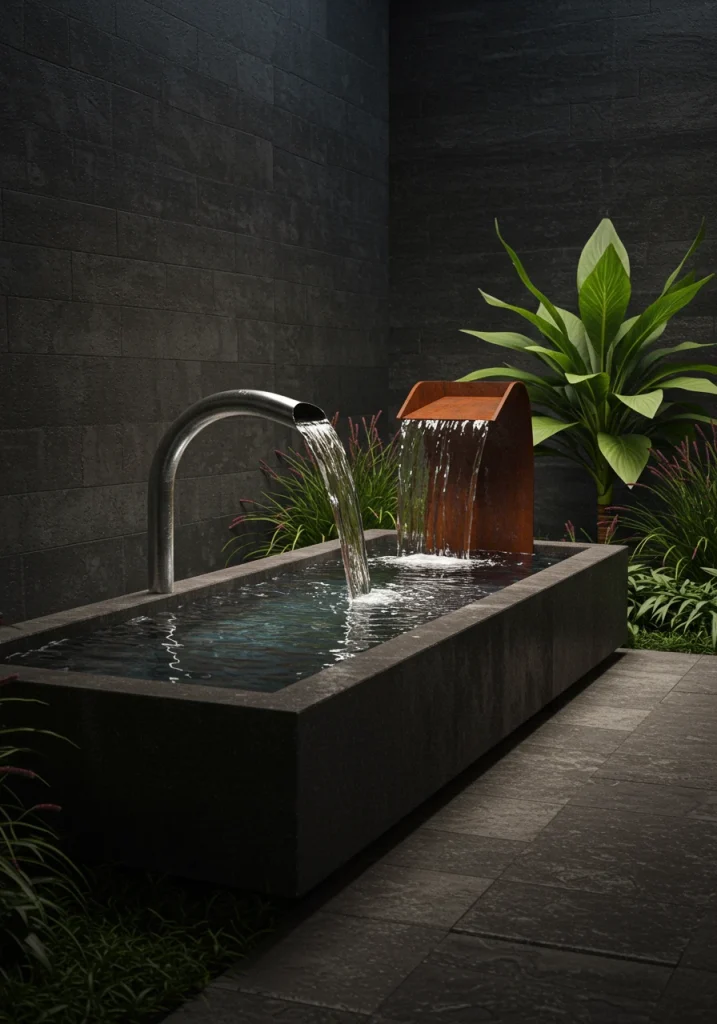
6. Incorporate Water Features with Clean Lines
The sound of trickling water can bring a sense of tranquility to any space, and in a modern front yard, water features are often designed with clean, geometric lines to complement the overall aesthetic. Forget whimsical ponds with grottoes; modern water features are typically sleek, minimalist structures made from materials like concrete, stone, or metal. A simple, rectangular reflecting pool, a tall, slender waterfall cascading down a board-formed concrete wall, or a series of geometric fountains can create a sophisticated and calming focal point.
A well-designed water feature can also help to create a cooler microclimate during hotter months. I often suggest incorporating a simple, linear water channel that runs alongside a walkway, providing a subtle sensory experience as you approach the house. The reflection of the sky and surrounding greenery in the still water can also add a beautiful, dynamic element to the landscape.
- Design: Focus on simple geometric shapes: rectangles, squares, and clean vertical lines.
- Materials: Use concrete, natural stone, or sleek metals like stainless steel or Corten steel.
- Planting: Keep the planting around the water feature minimal and architectural, perhaps using just a few carefully placed reeds or succulents.
For an enhancement, incorporate subtle underwater lighting into your water feature. At night, the soft glow illuminating the water and the surrounding hardscape will create a dramatic and inviting ambiance.
7. Create Defined Outdoor “Rooms”
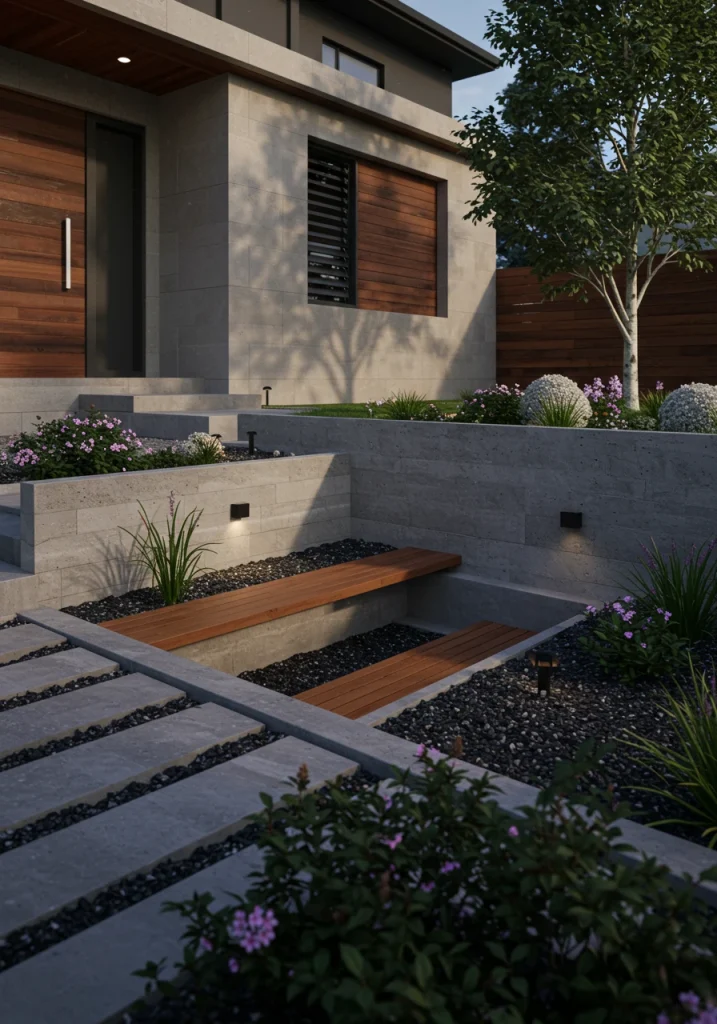
Modern front yard landscaping isn’t just about what’s planted; it’s also about how the space is organized. Creating defined outdoor “rooms” can add structure and functionality to your front yard. This can be achieved through the use of low walls, hedges, changes in elevation, or distinct paving materials. A small, paved area near the entryway could function as a formal arrival zone, while a slightly sunken gravel area with a bench could be a quiet seating nook.
Creating these defined zones can maximize the use of even a small front yard. I often design a small courtyard enclosed by a low wall and some bamboo or ornamental grasses to provide a sense of privacy and create a distinct “room” separate from the public street. This approach adds depth and interest to the landscape, making it feel more like a series of connected spaces rather than just one flat expanse.
- Zoning: Divide the front yard into distinct areas with different purposes.
- Defining Elements: Use low walls, hedges, changes in ground level, or different hardscaping materials to delineate these zones.
- Functionality: Each “room” should have a clear purpose, such as arrival, seating, or a display area for sculptural plants.
For an enhancement, integrate subtle pathway lighting to guide visitors through the different outdoor “rooms” at night, highlighting the transitions between the spaces and creating a sense of journey.
8. Incorporate Native and Adapted Plants
Sustainability is a growing concern in landscape design, and a modern approach often includes the use of native and well-adapted plants. These plants are naturally suited to the local climate, soil conditions, and rainfall patterns, which means they typically require less water, fertilizer, and pesticides once established. This not only creates a more environmentally friendly landscape but also reduces long-term maintenance.
Using native plants can create a landscape that feels more connected to the natural environment. I always advise clients to research their local flora and choose plants that will not only look beautiful but also contribute to the local ecosystem by supporting pollinators and wildlife.
- Sustainability: Choose plants that are well-suited to your climate and require minimal resources.
- Local Character: Using native plants creates a landscape that feels authentic to its region.
- Low Maintenance: Native and adapted plants are typically more resilient and require less care once established.
For an enhancement, create a small rain garden or bioswale within your modern front yard. This functional and attractive feature can help to capture and filter rainwater runoff, further enhancing the sustainability of your landscape and providing an ideal habitat for certain native plant species.
9. Architectural and Sculptural Plants
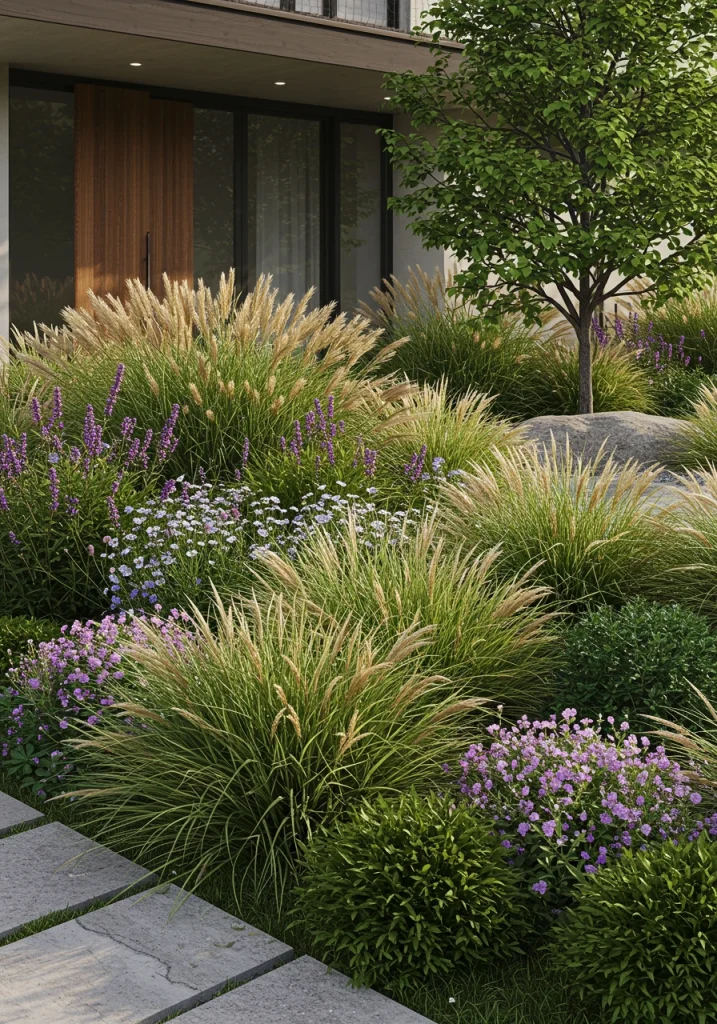
Modern planting design often relies on “architectural” or “sculptural” plants. These are plants that have a strong, dramatic, and interesting shape that allows them to function as a living sculpture in the landscape. Instead of soft, billowing mounds of flowers, think of bold, spiky forms, clean geometric shapes, and dramatic foliage. These plants can stand alone as a focal point in a gravel bed or a large planter.
Plants like agave, yucca, horsetail reed, and tree aloes are perfect examples. Their strong, defined silhouettes create a powerful contrast against the soft textures of ornamental grasses or the hard lines of a concrete wall. I often use a single, large Agave americana as the centerpiece of a front yard design; its dramatic, spiky rosette is a stunning, low-maintenance focal point.
- Plant Examples: Agave, Yucca, Century Plant, Horsetail Reed, Phormium (New Zealand Flax), Tree Ferns.
- Placement: Use them as a focal point in a planter, a gravel bed, or against a plain wall.
- Effect: Adds a dramatic, sculptural, and architectural element to the planting scheme.
For an enhancement, place your architectural plant in a simple, modern planter that complements its shape. A spiky agave in a smooth, round, minimalist bowl, or a stand of vertical horsetail reed in a long, low, rectangular planter, creates a beautiful study in contrasting forms.
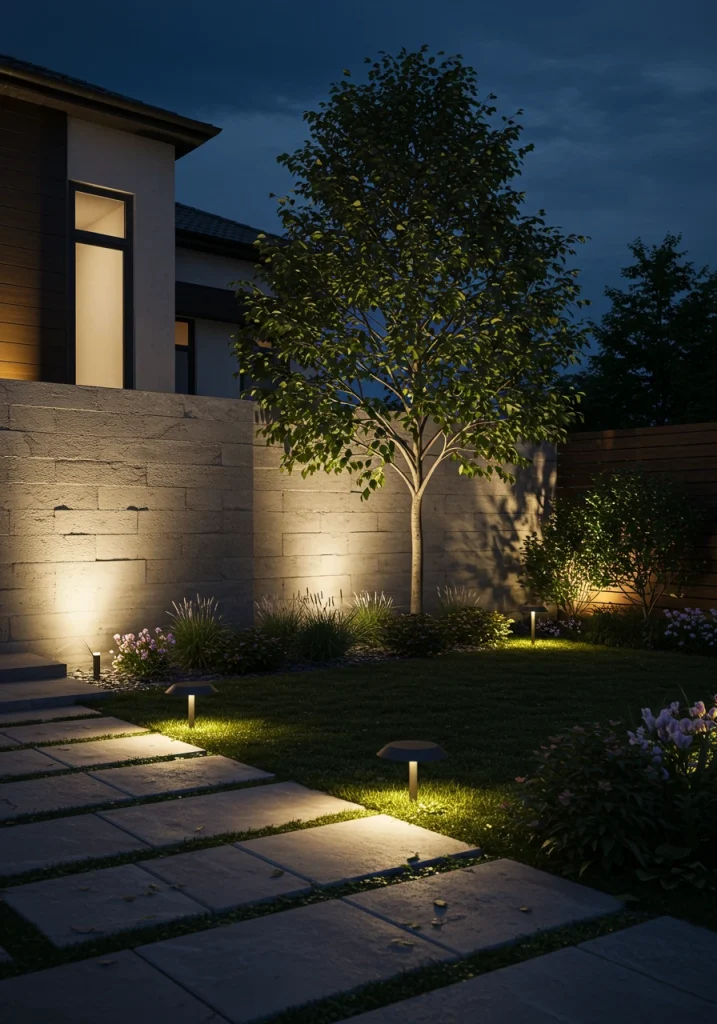
10. Incorporate Outdoor Lighting Artfully
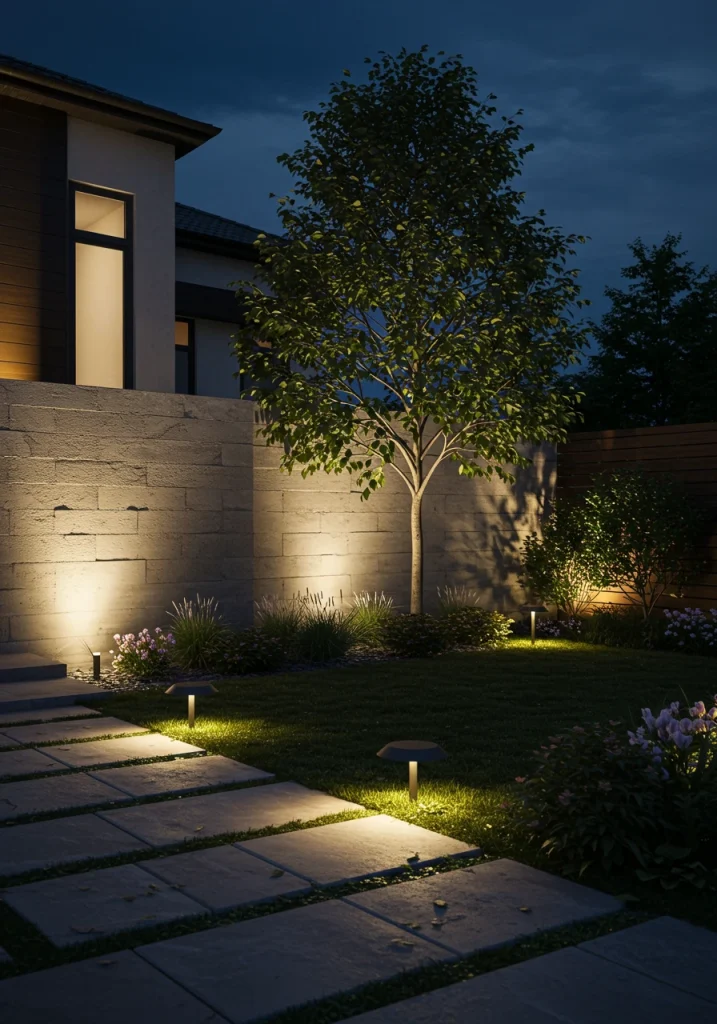
Modern landscape lighting is not just about illuminating pathways; it’s also about creating ambiance and highlighting the architectural and planting features of your front yard. The key is to use lighting strategically and subtly, avoiding harsh, glaring fixtures. Uplighting can be used to accentuate the forms of trees or architectural plants, while downlights can provide gentle illumination for walkways. Path lights should be low to the ground and cast a soft glow.
Thoughtful outdoor lighting can also enhance safety and security at night. Consider incorporating motion-sensor lights for added security, while using softer, more decorative lighting to create a welcoming atmosphere. I often suggest using warm-toned LED lights for a modern and energy-efficient approach.
- Types of Lighting: Uplights, downlights, path lights, and potentially some subtle in-ground well lights.
- Placement: Focus on highlighting key architectural elements, specimen plants, and pathways.
- Style: Choose minimalist fixtures that blend seamlessly with the modern aesthetic.
For an enhancement, incorporate landscape lighting that can be controlled via a smart home system. This allows you to adjust the intensity and timing of your lights remotely, creating different moods and enhancing security.
11. Utilize Vertical Elements for Interest
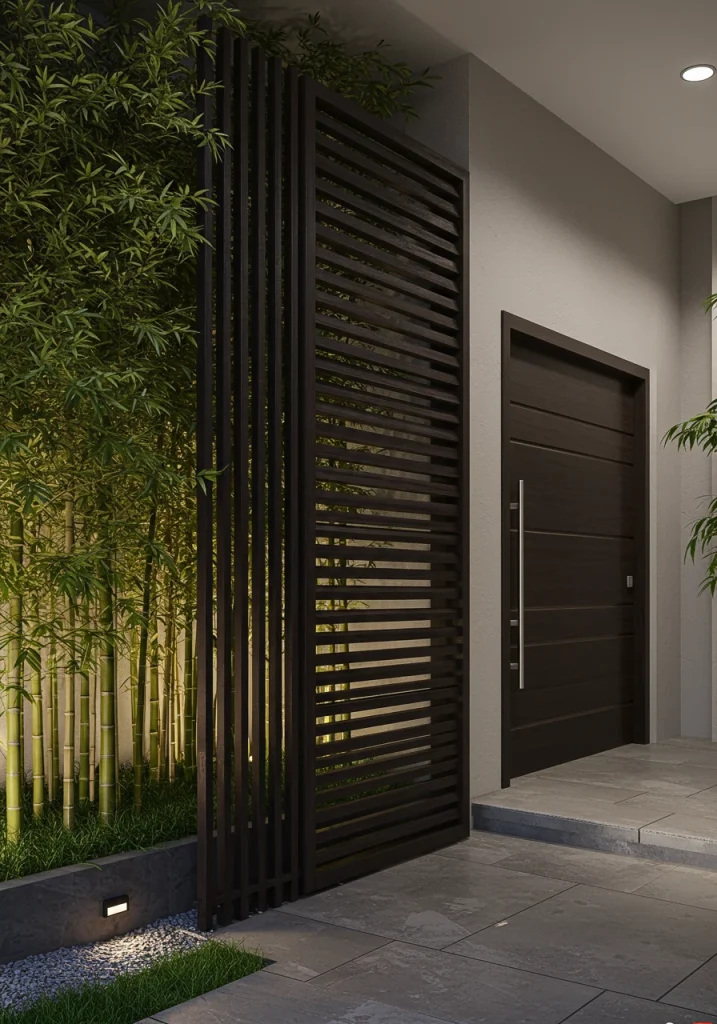
Modern landscape design often makes use of vertical elements to add visual interest and break up horizontal lines. This can be achieved through tall, slender plants like bamboo or certain ornamental grasses, vertical hardscape features like narrow privacy screens made of metal or wood, or even a simple, modern arbor or pergola. Vertical elements can help to define spaces, create a sense of enclosure, and draw the eye upward, making even a small front yard feel more spacious.
Using verticality is a smart way to maximize visual impact without taking up too much ground space. A narrow screen made of horizontal wood slats could provide privacy from a busy street while adding a strong, modern, linear element.
- Planting: Use tall, slender plants like bamboo (consider non-invasive varieties), vertical ornamental grasses, or espaliered shrubs.
- Hardscape: Incorporate narrow privacy screens made of wood, metal, or composite materials, or simple modern arbors.
- Function: Can be used to define boundaries, create privacy, or add a sculptural element to the landscape.
For an enhancement, incorporate climbing vines on a vertical structure like a modern trellis or pergola. Choose a vine with interesting foliage or seasonal flowers to add a layer of softness and texture to the vertical element.
12. Minimalist Lawn Areas or Alternatives
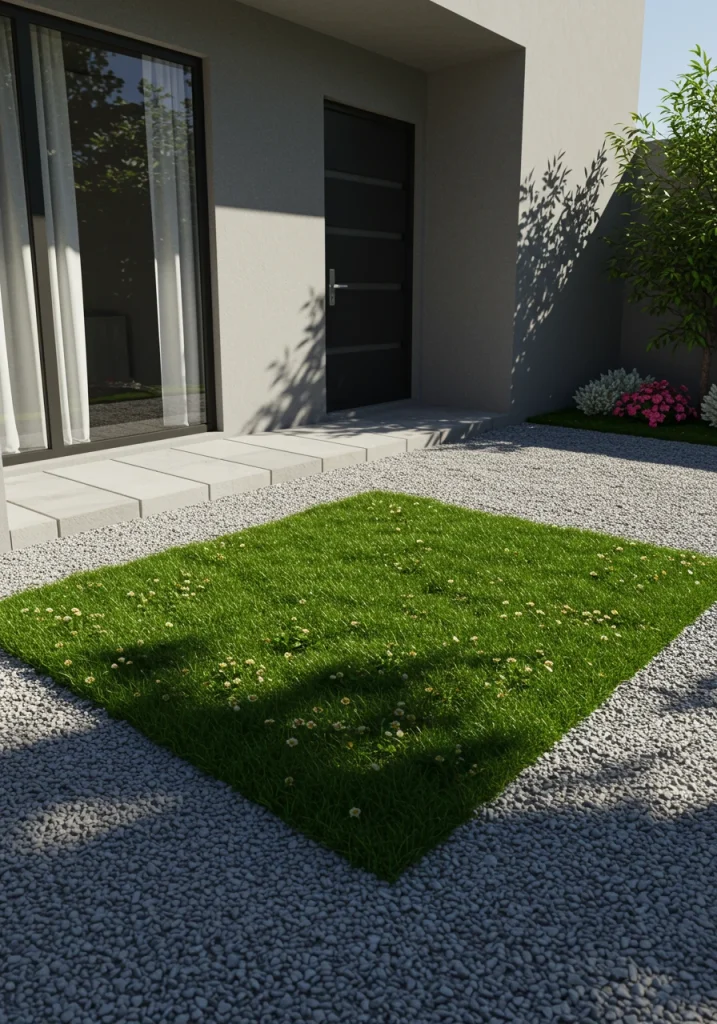
The traditional, sprawling green lawn is becoming less common in modern landscape design, often replaced by smaller, more intentionally shaped lawn areas or low-maintenance alternatives. A small, perfectly manicured rectangular lawn can serve as a clean, green focal point, while alternatives like drought-tolerant groundcovers, gravel gardens, or even permeable paving can reduce water consumption and maintenance.
Considering alternatives to a large, thirsty lawn is a wise and sustainable choice. A carefully selected, low-growing groundcover can provide a similar visual effect with significantly less upkeep.
- Rethink the Lawn: Consider smaller, more defined shapes or eliminating it altogether.
- Alternatives: Explore drought-tolerant groundcovers, gravel gardens, permeable paving options, or moss lawns (if suitable for the climate).
- Sustainability: Reduce water usage and maintenance by opting for lower-impact groundcover solutions.
For an enhancement, define the edges of a minimalist lawn area or a groundcover planting with a crisp, clean border of Corten steel edging or a concrete curb to emphasize its geometric form and create a polished look.
13. Statement Planters at the Entryway
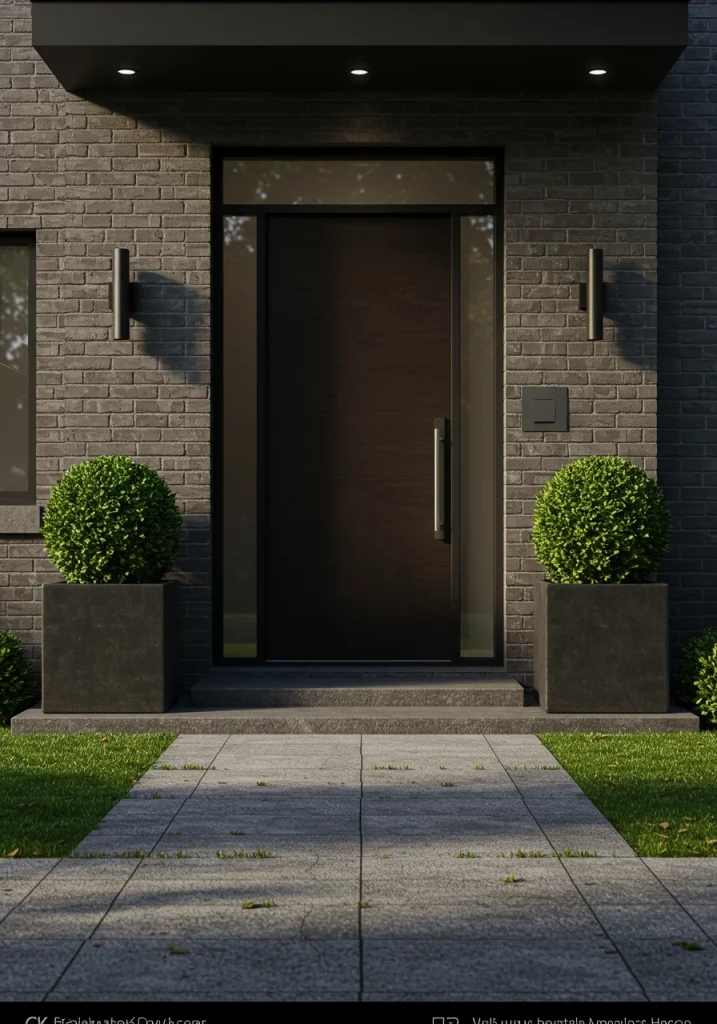
Large, modern statement planters flanking the front door are a classic way to add visual impact and a touch of greenery to a modern entryway. Choose planters with clean, simple lines and in materials that complement your home’s architecture, such as concrete, metal, or a high-quality fiberglass. The plants you select for these planters should be equally impactful, perhaps a single architectural specimen or a simple, elegant arrangement.
A pair of tall, slender planters with upright ornamental grasses or small, well-pruned trees can create a welcoming and sophisticated entrance.
- Placement: Flanking the front door or along a pathway leading to the entrance.
- Planter Style: Choose clean, simple geometric shapes (cubes, cylinders, tall rectangles) in modern materials.
- Planting: Opt for single statement plants or simple, elegant arrangements that complement the planter’s style.
For an enhancement, choose planters with integrated, subtle uplighting. At night, the light will shine up into the plant’s foliage, creating a beautiful, dramatic effect and highlighting your entryway.
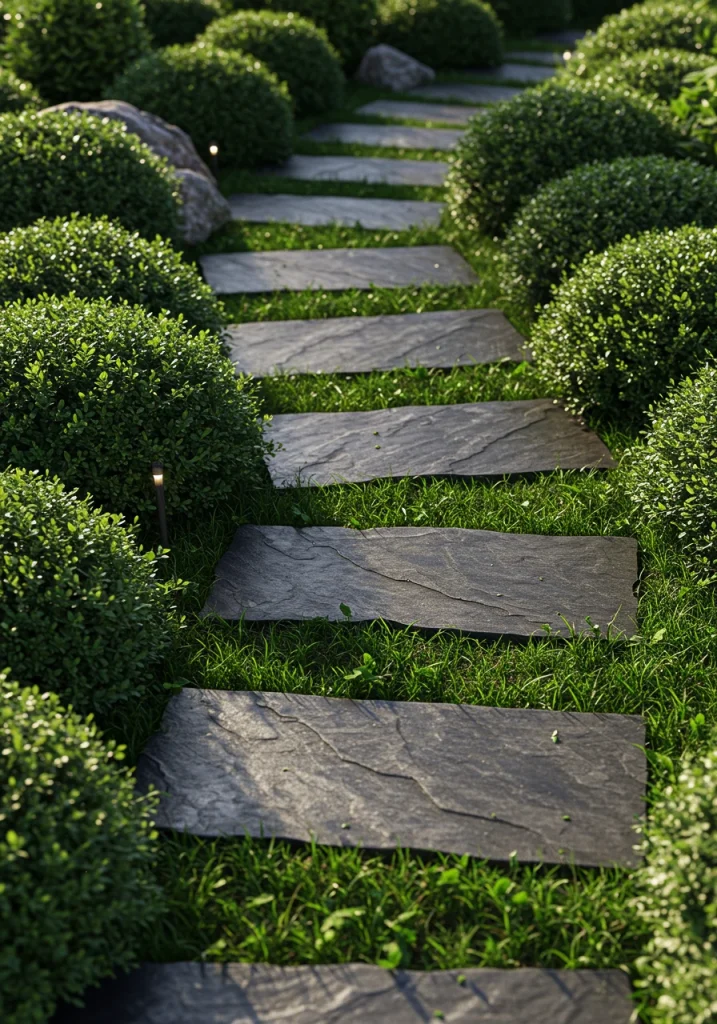
14. Incorporate Stepping Stones Through Planting Beds
Instead of a solid pathway, consider incorporating stepping stones through a planting bed or a gravel area. This creates a more informal and integrated feel, allowing you to move through the landscape and experience the plants up close. Use large, flat stones or concrete pavers spaced comfortably apart. The material of the stepping stones can contrast with or complement the surrounding groundcover.
Using large, irregular flagstones as stepping stones through a bed of low-growing, drought-tolerant groundcover can create a beautiful and naturalistic effect. This approach adds a sense of discovery and encourages interaction with the landscape.
- Material: Use large, flat natural stones, concrete pavers, or even slices of reclaimed wood.
- Spacing: Allow enough space between stones for a comfortable stepping gait.
- Groundcover: Plant low-growing groundcovers like thyme or sedum, or use fine gravel between the stepping stones.
For an enhancement, use solar-powered, low-level lights placed near the stepping stones to illuminate the path at night, creating a magical and safe passage through the landscape.
15. Use Bold Numbers and Mailboxes
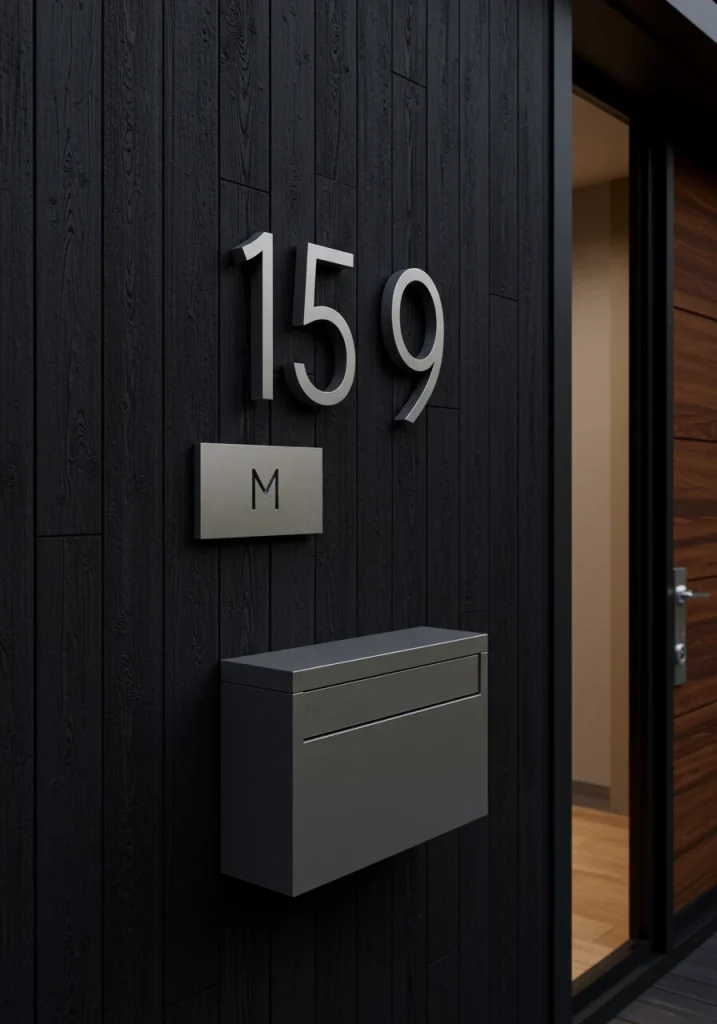
Don’t overlook the details! Modern front yard design extends to the functional elements like your house numbers and mailbox. Opt for bold, minimalist house numbers in a modern font and in a material like brushed metal or dark bronze. A sleek, contemporary mailbox can also contribute to the overall aesthetic. These small details can make a significant difference in the overall impression of your front yard.
A well-designed, wall-mounted mailbox near the entryway can enhance both functionality and style.
- House Numbers: Choose a bold, modern font (like sans-serif) and durable materials like stainless steel or anodized aluminum.
- Mailbox: Select a sleek, contemporary design that complements the architecture of your home.
- Placement: Ensure both are clearly visible from the street and well-lit at night.
For an enhancement, have your house numbers mounted so they “float” slightly off the wall. This allows for backlighting and casts a beautiful shadow, making them stand out even more.
16. Integrate Seating Areas Thoughtfully
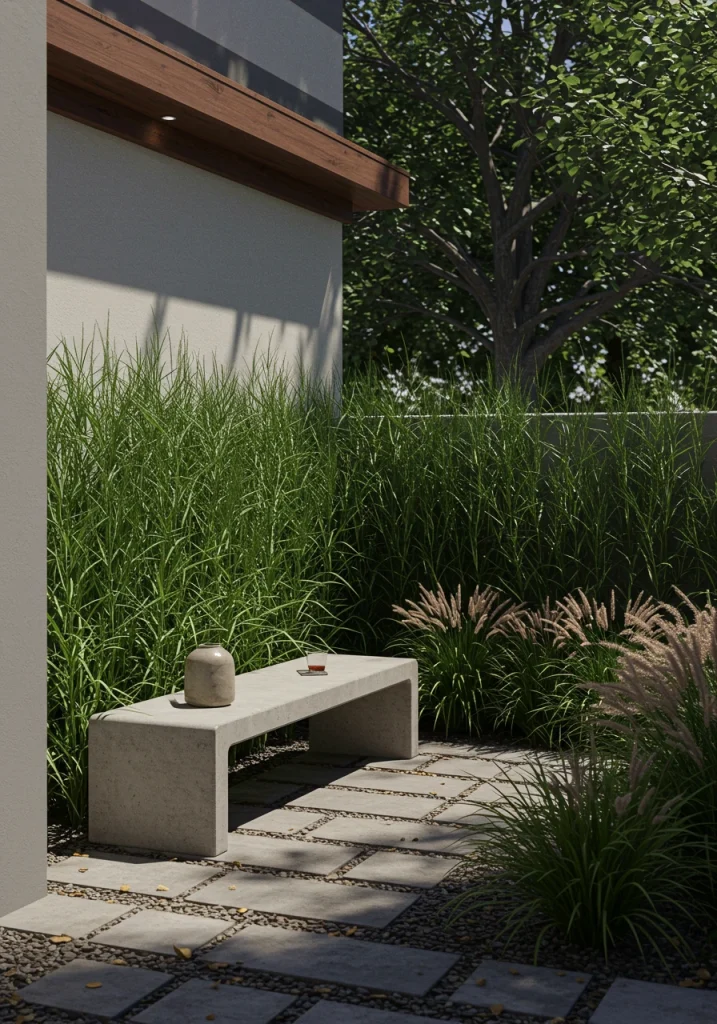
While not always a primary feature of a front yard, a thoughtfully integrated seating area can add both functionality and a welcoming touch to a modern landscape. A simple concrete bench, a couple of minimalist outdoor chairs, or a low retaining wall that doubles as seating can create a space to pause and enjoy the garden.
A small seating area in the front yard can be a lovely spot to watch the sunset or chat with neighbors. Consider placing a bench in a shaded area or creating a small gravel patio with a couple of comfortable, modern outdoor chairs.
- Keep it Simple: Opt for minimalist seating options in materials like concrete, powder-coated metal, or durable wood like ipe or teak.
- Placement: Locate seating in a spot that offers a pleasant view or a sense of enclosure and privacy.
- Functionality: Ensure the seating area is accessible and comfortable for its intended use.
For an enhancement, build a simple, modern bench directly into a low, board-formed concrete retaining wall. This creates a seamless, integrated seating solution that is both incredibly durable and architecturally interesting.
Conclusion
Creating a stunning modern front yard is an exercise in thoughtful restraint and intentional design. As we’ve explored through these 16 ideas, the modern aesthetic is achieved through a harmonious balance of clean, geometric hardscaping and a soft, curated plant palette. It’s about celebrating the beauty of materials like concrete and steel, and the sculptural forms of architectural plants. By focusing on clean lines, repetition, and the principle of “less is more,” you can transform your front yard from a standard lawn into a sophisticated, architectural landscape that enhances your home’s curb appeal and provides a sense of calm and order.


