
Are you struggling to find the perfect long narrow living room layout with a fireplace and TV? You’re facing one of the most notoriously tricky challenges in interior design. The long, rectangular shape can easily feel like a “bowling alley” or a tunnel, making furniture placement awkward.
Add to that the complexity of two competing focal points the cozy, architectural fireplace and the essential, modern television and you have a true design puzzle.
The goal is to create a space that feels balanced, functional, and inviting, rather than a cramped corridor with furniture pushed up against the walls.
This guide will provide you with 15 smart layout ideas, from furniture arrangement tricks to visual strategies, that will help you conquer the “tunnel effect” and create a beautiful, multi-purpose living room you’ll love.
1. The “Two Zones” Layout: Divide and Conquer
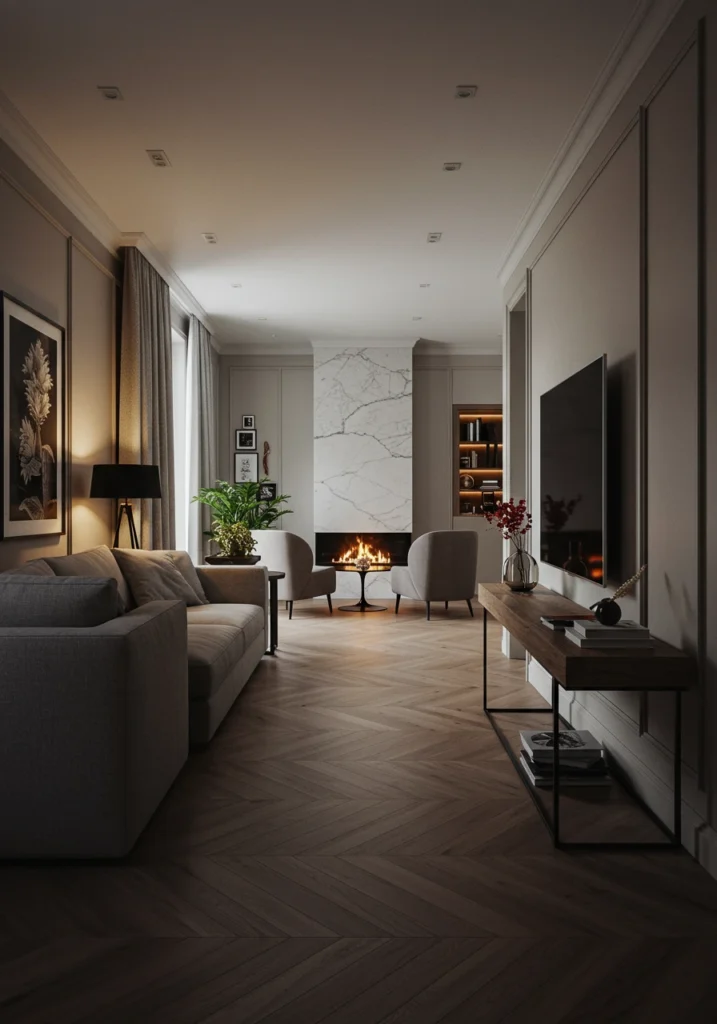
The most effective strategy for a long, narrow room is to stop fighting its shape and start working with it. Instead of trying to create one large, awkward seating area, divide the room into two or more distinct zones, each with its own purpose.
This is the number one solution I recommend to clients. Typically, you can create a primary seating area around the TV for everyday lounging and a secondary, more intimate zone around the fireplace for conversation or reading.
This layout breaks up the long, linear feel of the room, making it feel more balanced and functional.
A low-profile piece of furniture, like a backless bench, a pair of ottomans, or a slim console table placed behind a sofa, can act as a subtle divider between the zones.
This approach gives each focal point the attention it deserves and makes the room feel much more purposeful.
- Primary Zone: A comfortable sofa or small sectional facing the television.
- Secondary Zone: Two or four comfortable armchairs arranged around the fireplace.
- Divider: A console table, a bench, or simply the back of the sofa can delineate the spaces.
For an enhancement, use two separate but complementary area rugs to visually anchor each zone. This will further solidify the feeling of two distinct “rooms” within the larger space, a technique often highlighted by HGTV designers.
2. The “Floating” Sofa and Main Walkway Layout
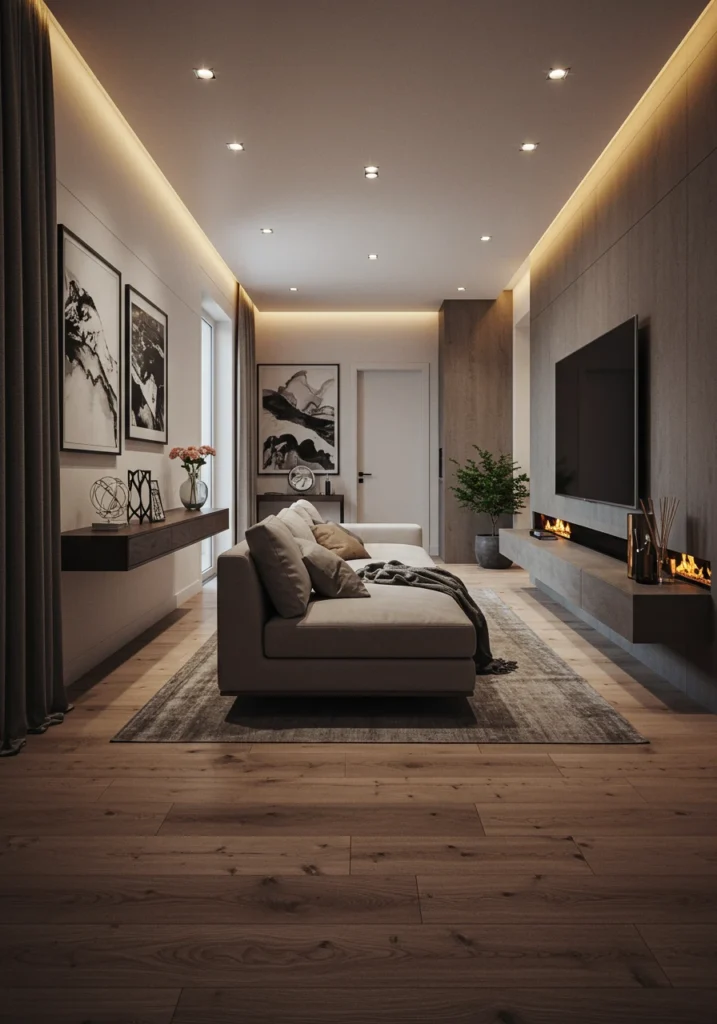
In many long, narrow rooms, the most direct path from one end to the other is right through the middle, forcing you to walk around the furniture. A smart layout is to embrace this and create one clear, dedicated walkway along one of the long walls.
To do this, you “float” your main sofa and seating arrangement in the middle of the room, pulled away from the walls. This creates an unobstructed “traffic lane” on one side and a cozy, contained seating area on the other.
This layout is incredibly effective at solving the “bowling alley” traffic problem. I often place the fireplace and TV on the same long wall and float the sofa directly opposite them. The walkway is then created behind the sofa, along the other long wall.
This makes the seating area feel intentional and intimate, and the traffic flow is vastly improved.
- Float the Sofa: Pull the main sofa away from the wall into the center of the room.
- Create a Walkway: Leave a clear path of at least 30-36 inches along one wall.
- Anchor with a Rug: Place a large area rug under your floating furniture to define the seating zone.
To enhance this layout, place a long, slim console table against the wall in the walkway. This provides a surface for lamps, decor, or a drop zone for keys, making the walkway feel like a stylish gallery or foyer rather than just empty space.
3. The One-Wall Solution: Fireplace and TV on the Long Wall
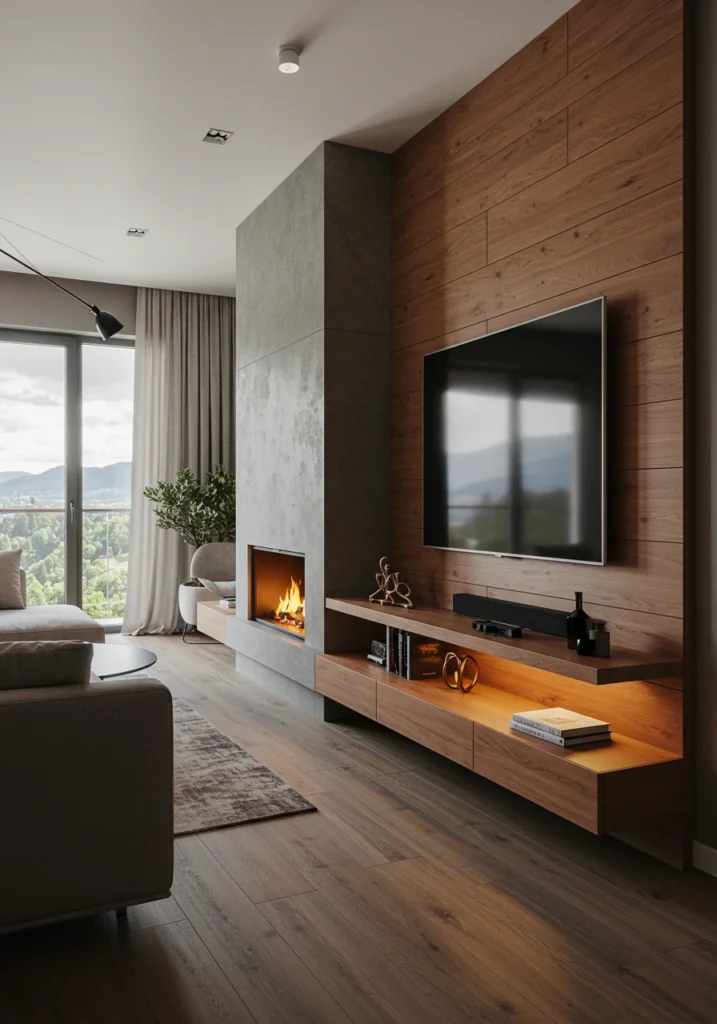
If your long, narrow room allows, placing both the fireplace and the television on the same long wall can be a very effective way to unify the space. This layout creates one single, primary focal wall, which simplifies furniture arrangement and creates a strong visual anchor. The key is to create a sense of balance between the two elements.
You can achieve this in several ways. The fireplace and TV can be placed side-by-side, visually connected by a long, low media console or a custom built-in unit. Another modern approach is to have an off-center fireplace on one end of the wall and the TV on the other, connected by a long, floating hearth or bench.
I designed a stunning version of this with a sleek, linear fireplace and a TV mounted next to it, which made the long wall the undeniable star of the room.
- Balance is Key: Arrange the TV and fireplace in a way that feels visually balanced, not lopsided.
- Unifying Element: Use a long console, hearth, or built-in to connect the two focal points.
- Furniture Placement: Arrange your main seating to face the long focal wall.
For a budget-friendly enhancement, if you can’t do a long hearth or built-ins, simply paint the entire long focal wall in a deep, moody accent color. This will visually tie the fireplace and the TV together and make them feel like part of one cohesive design.
4. The Swivel Chair Solution for Maximum Flexibility
Swivel chairs are the secret weapon for any room with two focal points, and they are especially brilliant in a long, narrow layout.
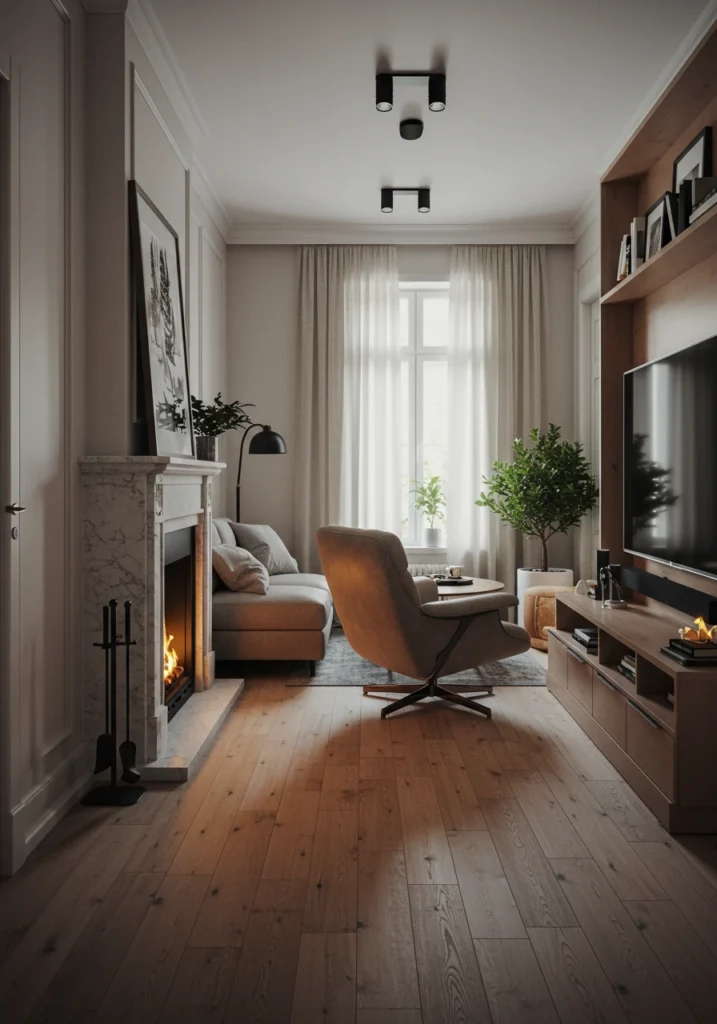
Placing a pair of stylish swivel chairs in your seating arrangement introduces an incredible amount of flexibility, allowing you to easily pivot between the fireplace and the television without rearranging any furniture.
This is a favorite solution of mine because it’s so dynamic. You can create a primary seating area with a sofa facing the fireplace. Then, place two swivel chairs opposite the sofa. For a cozy conversation, the chairs face the sofa and the fire.
For movie night, they can simply turn to face the TV on an adjacent or opposite wall. They are the ultimate problem-solvers.
- Incredibly Flexible: Allows for easy reorientation between different focal points.
- Adds a Modern Touch: Most swivel chairs have a clean, contemporary silhouette.
- Great for Zoning: Can act as a bridge, able to participate in two different zones.
To enhance this layout, choose swivel chairs in a unique shape or a bold, contrasting color. This will highlight them as a special, functional feature in the room, celebrating their flexibility.
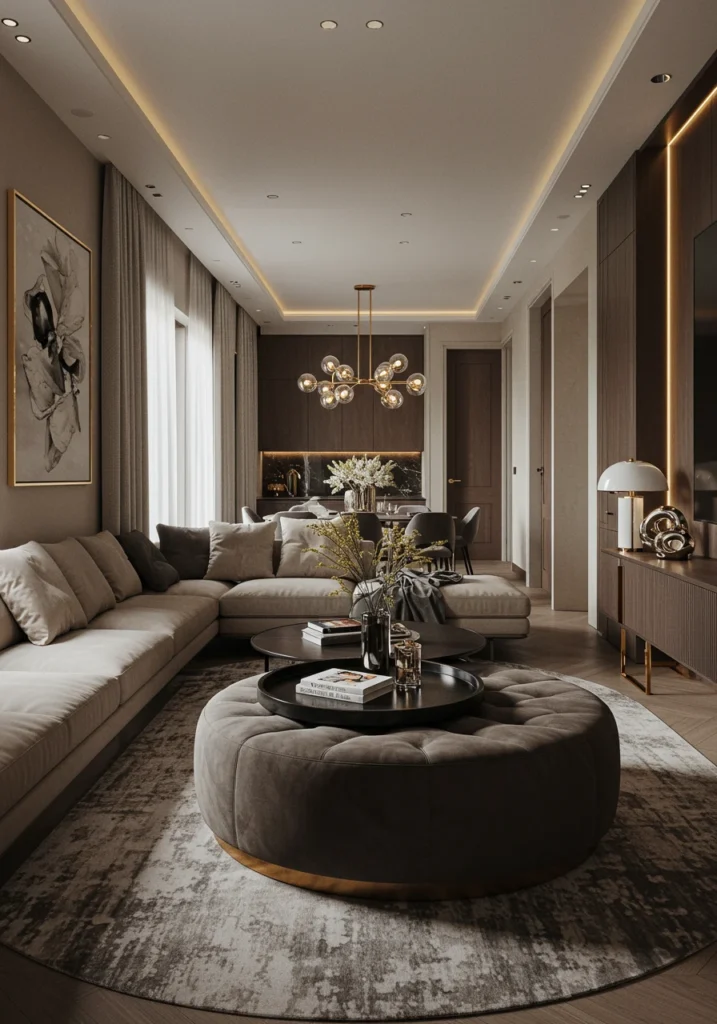
5. Using Round Furniture to Break Up Lines
A long, narrow room is dominated by straight lines. A very effective visual trick to break up this “tunnel effect” is to introduce curved and rounded furniture.
The soft, corner-free shapes of a round coffee table, a circular area rug, or a pair of barrel chairs can interrupt the harsh linearity of the room, making it feel softer, more dynamic, and less corridor-like.
I always try to incorporate at least one major round element in a long, narrow room. A large, round coffee table or ottoman in the center of the main seating area is a great starting point.
It improves traffic flow (no sharp corners to bump into) and creates a natural, central gathering spot. A round area rug can also work wonders to define a seating area and break up the long, rectangular shape of the floor.
- Round Coffee Table: Softens the seating area and improves flow.
- Circular Rug: Visually breaks up the long, rectangular floor plan.
- Curved Chairs: A pair of barrel chairs or other accent chairs with soft curves can be a beautiful addition.
For an enhancement, hang a large, round mirror on one of the long walls. The circular shape will be a powerful, graphic counterpoint to the length of the room and will also help to bounce light around, making the space feel wider.
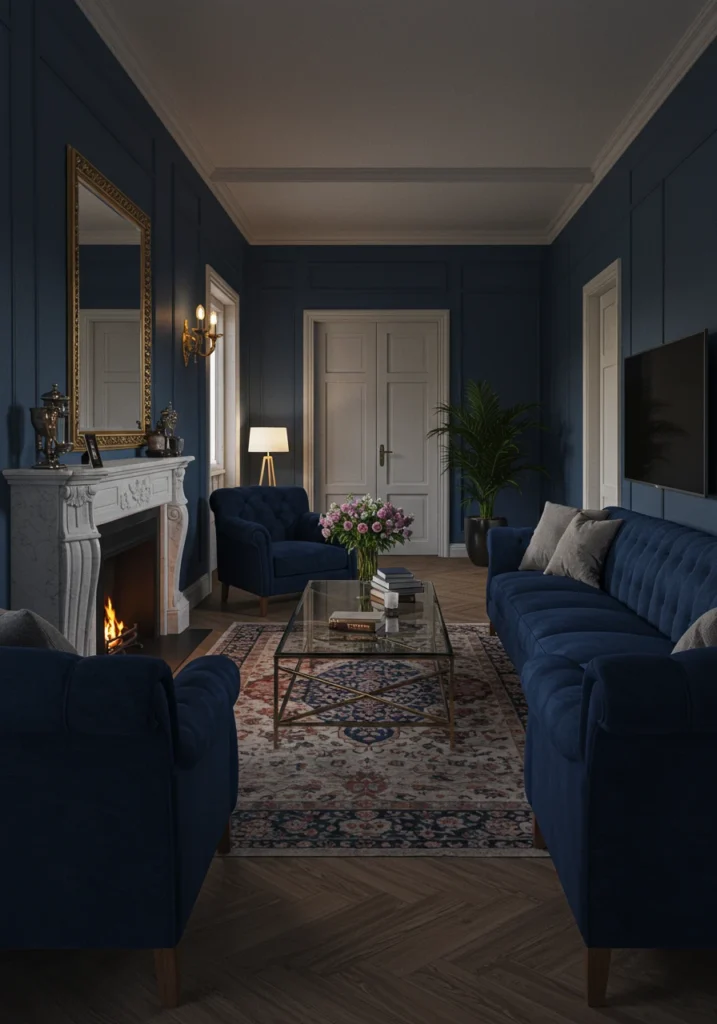
6. The Symmetrical Layout with Two Loveseats
For a more formal and balanced approach in a long, narrow room, consider a symmetrical layout using two matching loveseats or small-scale sofas. In this classic arrangement, the fireplace, typically located on one of the short walls, serves as the main focal point.
The two loveseats are then placed directly facing each other, perpendicular to the long walls, with a coffee table in between.
This layout creates a very elegant and defined conversation zone. It’s a classic setup often seen in traditional design. The television is usually placed on the wall opposite the fireplace, making it a secondary focal point. This arrangement, as celebrated by design authorities like Architectural Digest, is perfect for homeowners who prioritize formal entertaining and conversation.
- Best For: Formal living rooms, creating a strong sense of balance.
- Furniture: Use two identical, smaller-scale sofas or loveseats to avoid overwhelming the narrow space.
- Effect: Creates a very elegant, balanced, and formal conversation area.
To enhance this layout, place identical console tables or bookcases on the long walls behind each loveseat. This will reinforce the perfect symmetry of the arrangement and provide valuable storage and display space.
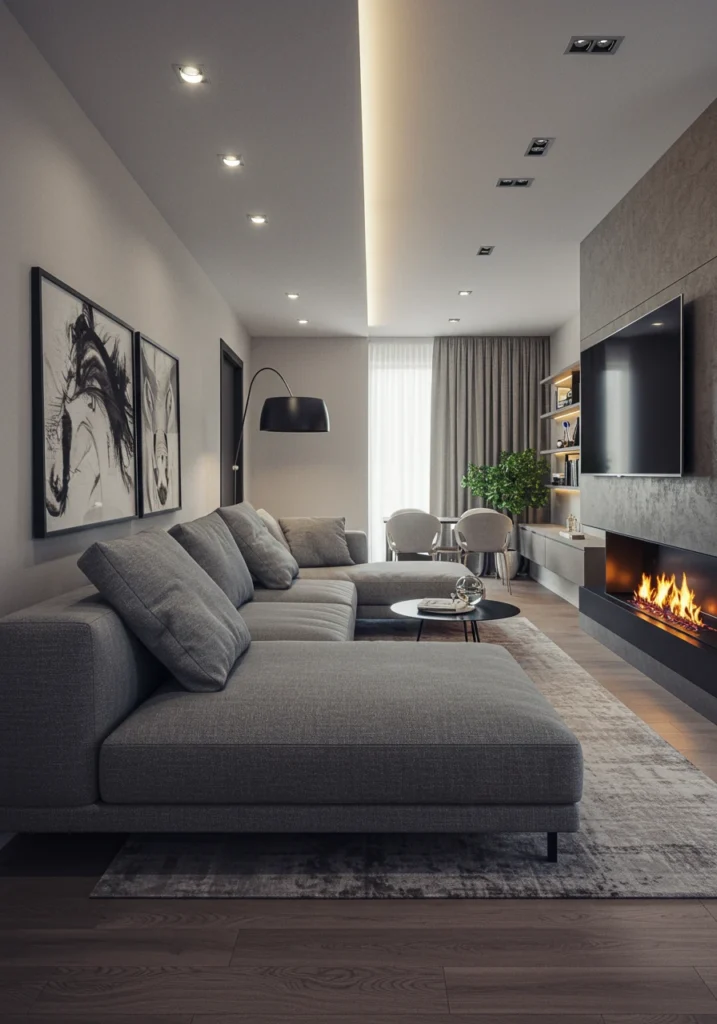
7. The L-Shaped Sectional Solution
An L-shaped sectional sofa can be a surprisingly smart choice for a long, narrow living room, provided you choose the right one and place it correctly. Instead of pushing it into a corner, float the sectional in the middle of the room.
Place the long side of the “L” parallel to the long wall, and the shorter side (the “chaise”) will act as a natural, soft divider, helping to break up the length of the room.
This layout can create a very cozy and contained seating area. I often place the fireplace and TV on the long wall opposite the sectional.
This allows everyone seated to have a comfortable view of both. The key is to choose a sectional that is not too deep or bulky, often called an “apartment-scale” sectional.
- Placement is Key: Float the sectional away from the walls.
- Use the “L” as a Divider: The short side of the sectional can help to define the end of the seating zone.
- Scale: Choose a sectional with a slim profile and a shallow depth to avoid overwhelming the narrow room.
For an enhancement, ensure you leave a clear walkway (at least 30 inches) behind the long side of the sectional. Place a long, very slim console table in this walkway to make it feel like an intentional and stylish path.
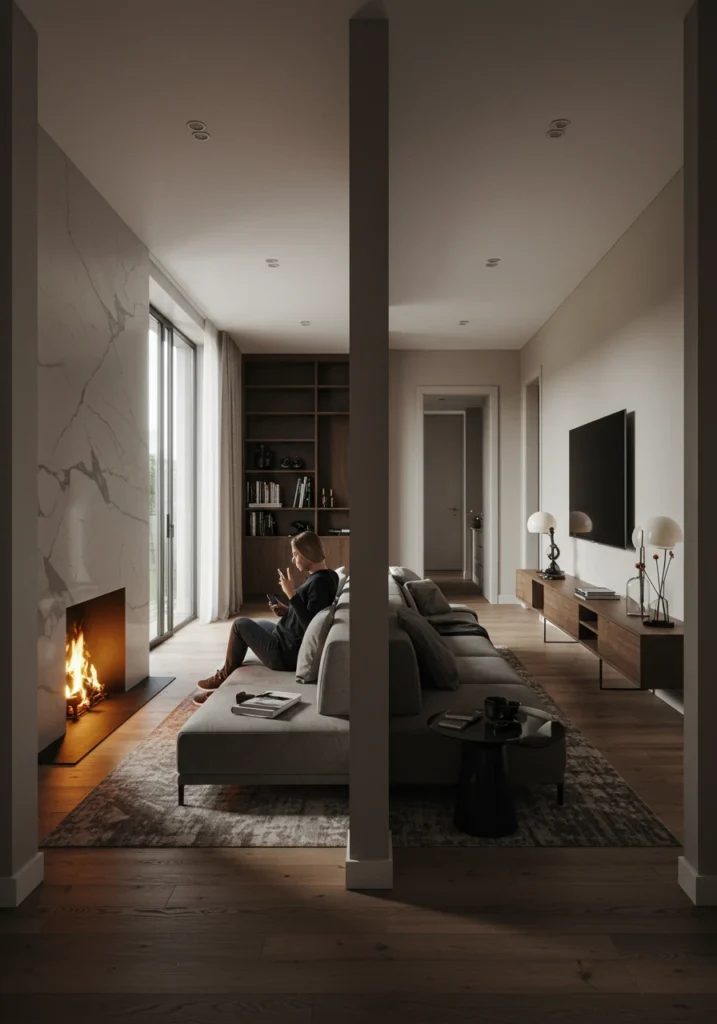
8. Using Backless Sofas or Benches
In a long room where you want to create two distinct zones, a standard sofa can sometimes act as a harsh visual barrier. A brilliantly creative solution is to use a backless sofa, a daybed, or a long, upholstered bench as the dividing element.
Because these pieces have no high back, you can see over them, which allows the two zones to feel connected and maintains an open, airy sightline down the length of the room.
This is a favorite trick of mine for maintaining an open-plan feel. A backless sofa is also a very social piece of furniture, as people can sit on either side, allowing it to participate in both zones at once.
- Maintains Sightlines: The lack of a back keeps the room feeling open and connected.
- Social Seating: Allows for two-way seating, engaging with both zones.
- Visually Light: Feels much less bulky than a traditional sofa.
For a functional enhancement, place a slim, C-shaped side table that can slide over the top of the backless sofa. This provides a flexible, movable surface for a drink or a book without the need for a full coffee table.
9. The Slim Console Table Solution
In a very narrow living room, sometimes even a standard-depth sofa can feel too bulky. A creative solution for creating a functional zone is to use a long, slim console table as a primary element.
By placing a long (60-72 inch) and narrow (12-16 inch deep) console table against one of the long walls, you can create a strong focal point and a functional surface without taking up much floor space.
This works especially well when the fireplace is on the opposite long wall. The console table can be placed under the TV and styled with lamps and decor. Then, you can arrange a couple of small-scale armchairs and a small loveseat to create an intimate seating area that doesn’t rely on a large, room-hogging sofa.
- Space-Saving: A narrow console takes up very little floor space.
- Creates a Focal Point: Can be styled with lamps, art, and decor to create a beautiful feature.
- Grounds the TV: Provides a visual anchor for a wall-mounted television.
As an enhancement, tuck two small, upholstered stools or ottomans underneath the console table. They will be completely out of the way for daily use, but can be pulled out as extra seating when you have guests.
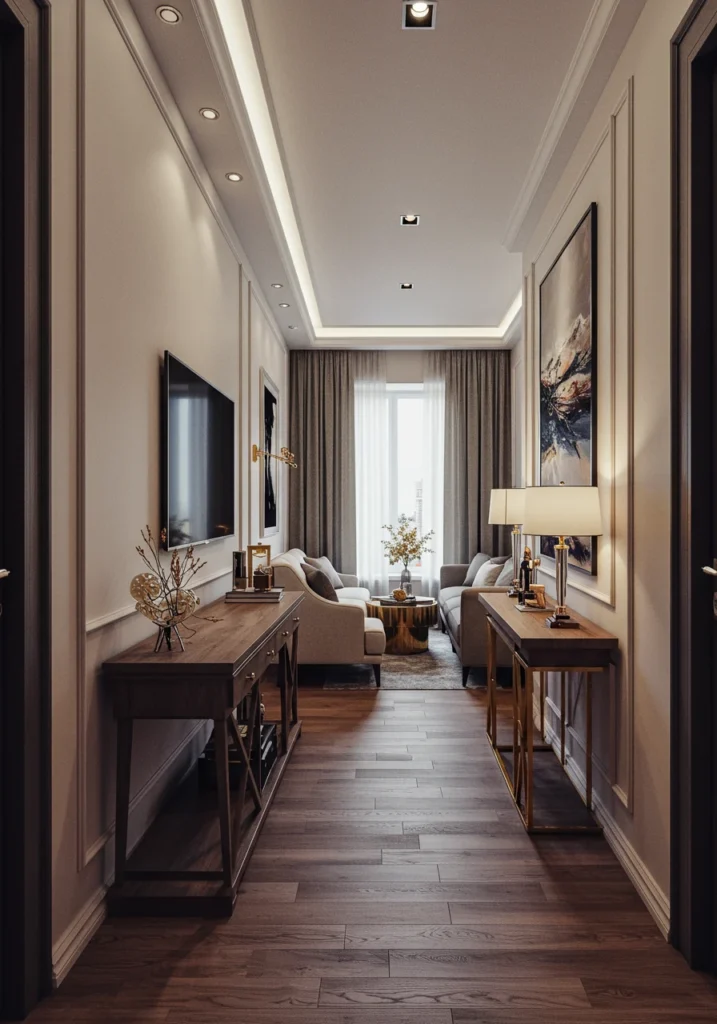
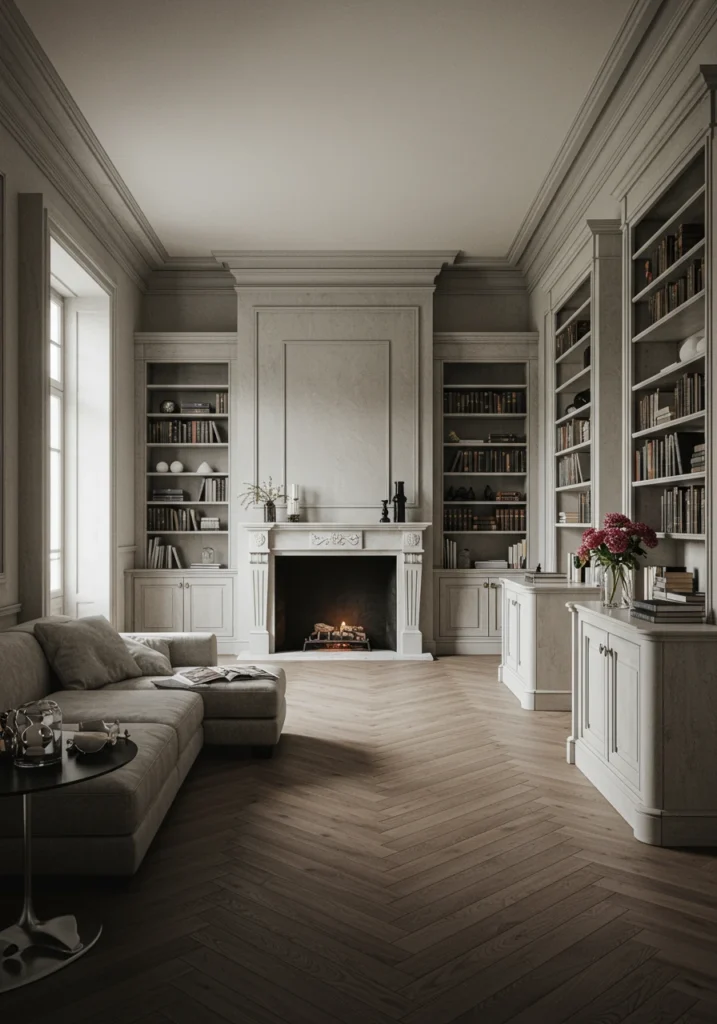
10. Create Vertical Interest with Tall Bookshelves
A long, narrow room has an excess of horizontal lines. To counteract this and make the room feel more balanced and proportional, it’s important to add strong vertical elements. A pair of tall, matching bookshelves is a fantastic way to do this.
Placing a tall bookshelf on either side of the fireplace or on the wall opposite it can draw the eye upward, making the ceiling feel higher and the room feel less like a tunnel.
This strategy, often recommended by designers at The Spruce, adds both height and a huge amount of valuable storage and display space. The vertical lines of the bookshelves provide a powerful counterpoint to the horizontal length of the room.
- Draws the Eye Upward: Makes the ceiling feel higher and the room more balanced.
- Adds Storage: Provides much-needed space for books, decor, and storage bins.
- Creates a Focal Point: A well-styled set of bookshelves can be a beautiful feature.
For an enhancement that adds a high-end, custom look, paint the back of your bookshelves a dark, contrasting color or apply a beautiful wallpaper. This will make your books and decorative objects stand out and will add a surprising amount of depth.
11. The Classic: TV Above the Fireplace on the Short Wall
If your fireplace is located on one of the short walls at the end of your long, narrow room, the most classic and often most practical layout is to mount your TV directly above it.
This consolidates both focal points at the end of the “tunnel,” creating one single, powerful destination for the eye and for your furniture arrangement.
This layout allows you to use the long walls for your main seating. You can place a long sofa on one wall and a pair of armchairs on the opposite wall, all oriented towards the fireplace/TV wall. This creates a clear, central walkway down the middle of the room and a very comfortable and functional seating area.
- Best For: Rooms where the fireplace is on a short wall.
- Unifies Focal Points: Creates a single, clear destination at the end of the room.
- Good for Traffic: Naturally creates a clear central corridor.
For an enhancement, to minimize the potential for neck strain from a high TV, choose a low-slung, deep-seated sofa that encourages you to lean back and look up more naturally and comfortably.
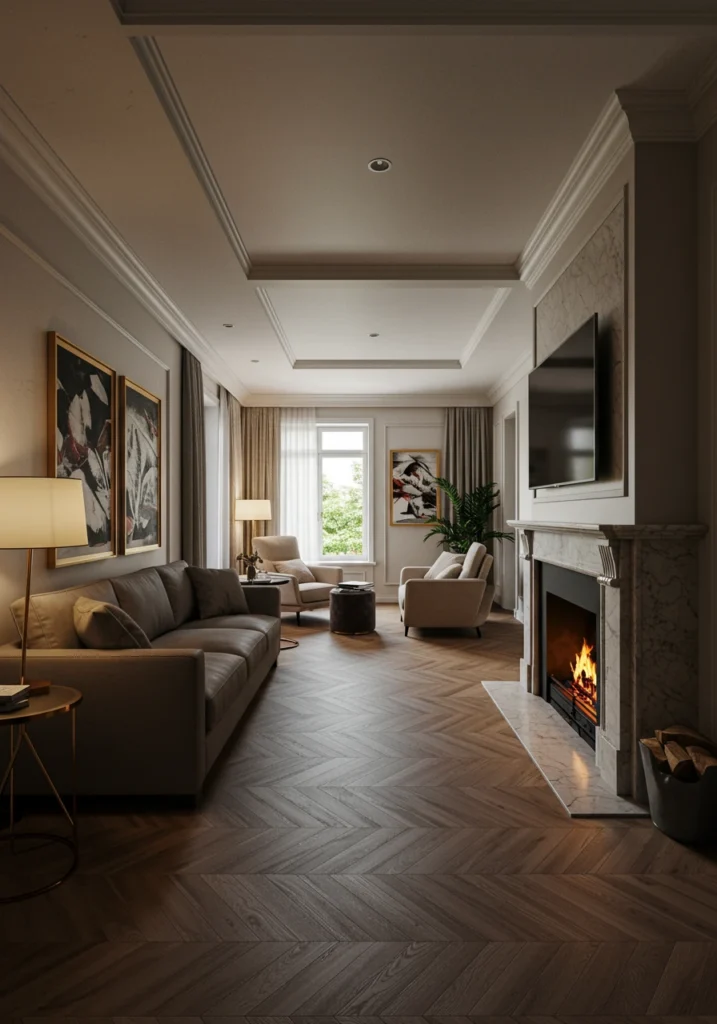
12. The Angled Furniture Arrangement
While it’s generally advisable to keep furniture parallel to the walls, in some long and narrow rooms, a slightly angled furniture arrangement can be a creative solution to break up the boxiness. This doesn’t mean putting everything on a harsh diagonal, but rather subtly angling your main sofa.
By placing your sofa at a slight angle facing a corner where the fireplace and TV might be, you can create a more dynamic layout and improve sightlines to both focal points.
This can also help to create more interesting, triangular-shaped spaces in the corners behind the sofa, which are perfect for a floor lamp or a tall plant.
- Breaks the Box: Angling the furniture disrupts the harsh, linear feel of the room.
- Improves Sightlines: Can help to create a better viewing angle to two different focal points.
- Creates Dynamic Space: Moves away from a rigid, parallel layout.
As an enhancement, use a custom-shaped or an angled area rug that aligns with the angle of your sofa. This will make the angled placement feel much more intentional and will anchor the unique seating arrangement.
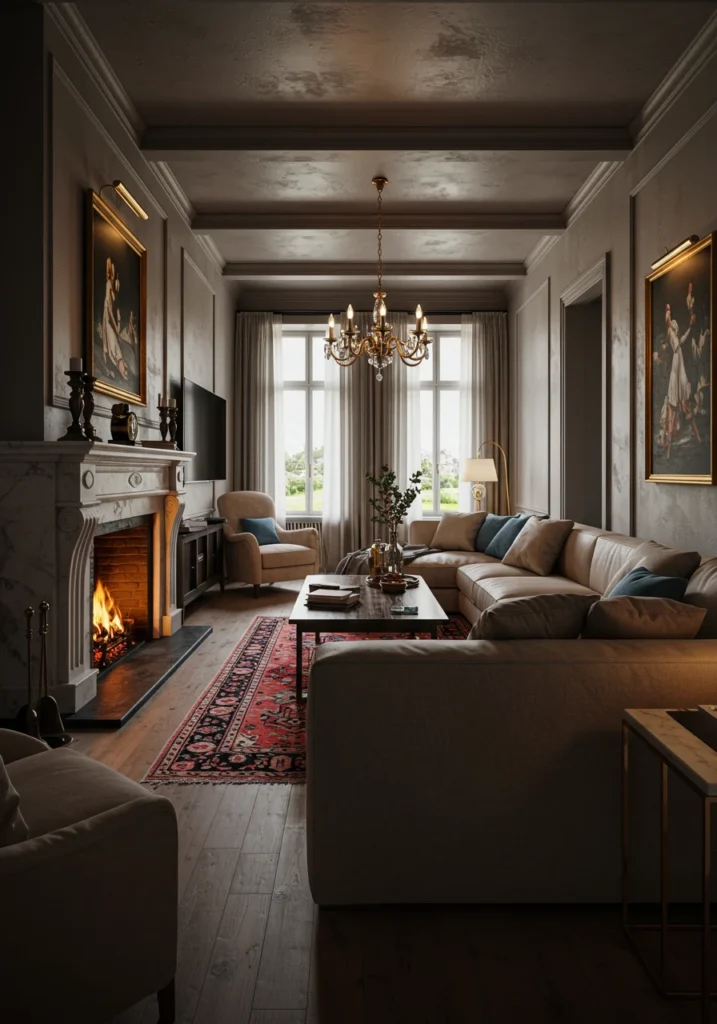
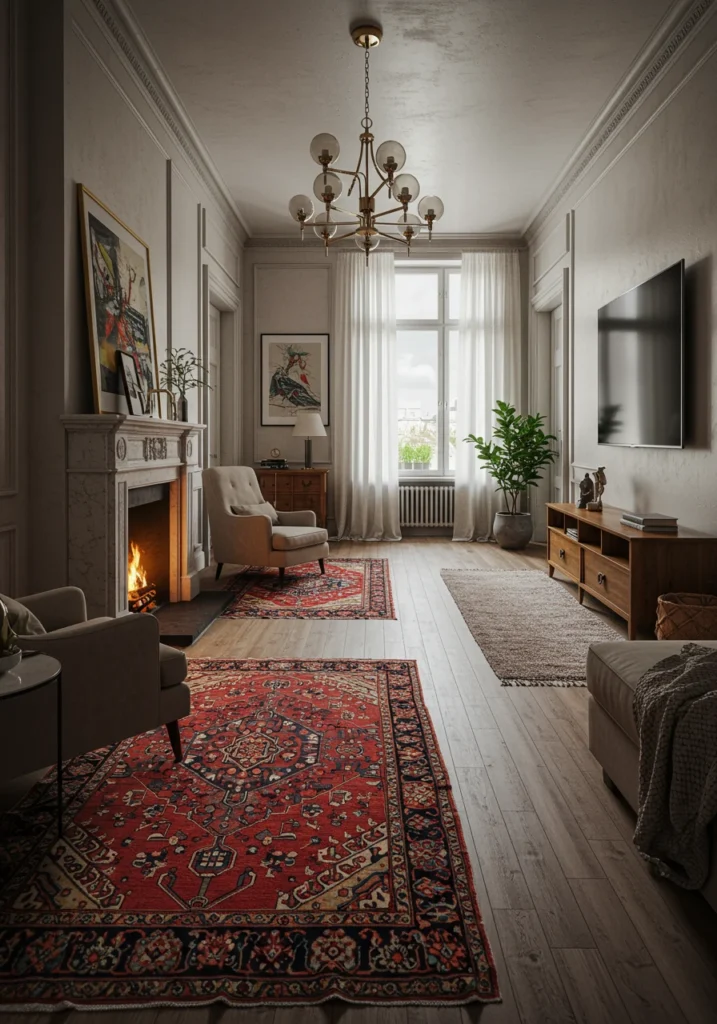
13. Use Two Area Rugs to Define Zones
This is the key supporting element for the “Two Zones” layout (Idea #1). Using two distinct area rugs is the most powerful visual cue you can use to break up a long, narrow room and establish separate, functional areas.
The rugs act as “islands” that anchor each of your furniture groupings, making the division of space feel clear and intentional.
I always advise my clients to choose rugs that are complementary but not necessarily identical.
They could be the same rug in two different colors, or two different patterned rugs that share a common color palette. This creates a cohesive flow while still allowing each zone to have its own distinct personality.
- Clearly Defines Zones: The most effective way to visually separate a conversation area from a media area.
- Adds Color and Texture: A great way to add pattern and softness to a long room.
- Anchors Furniture: Makes your “zonal” furniture groupings feel grounded and purposeful.
For an enhancement, overlap the edges of your two rugs slightly. This small detail can make the transition between the two zones feel a little softer and more connected.
14. The Back-to-Back Sofa Divide
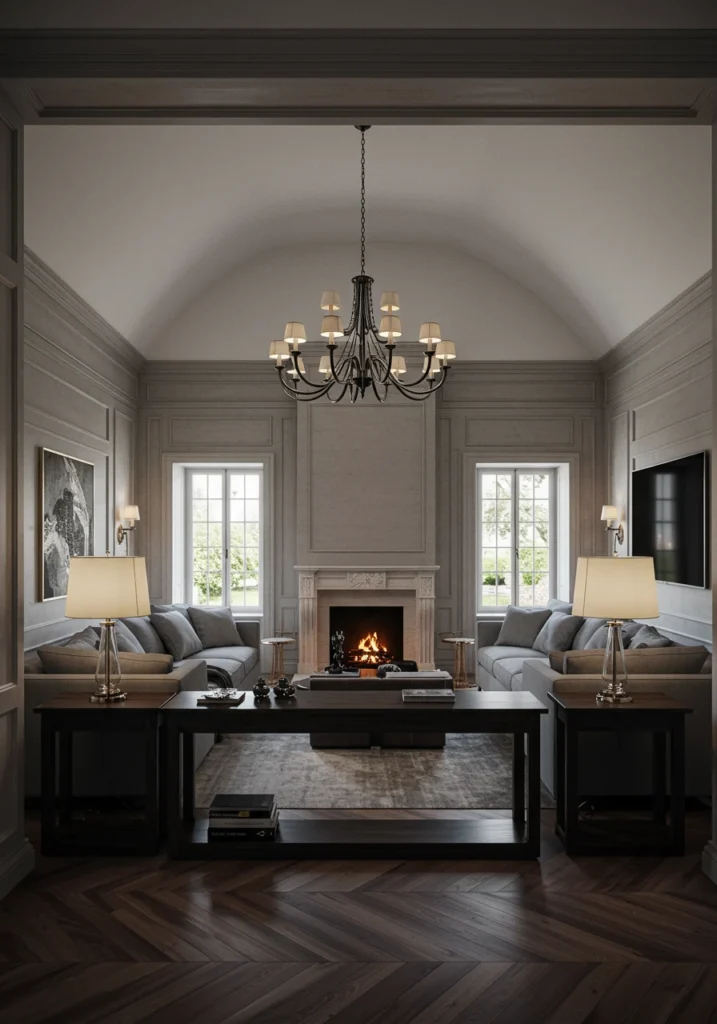
This is a bold and highly effective layout for a very long great room, and it’s the ultimate expression of the “two zones” concept. In this arrangement, two identical sofas (or a sofa and a loveseat) are placed back-to-back, floating in the middle of the room.
One sofa faces the fireplace, creating a more formal, conversation-focused living area. The other sofa faces the opposite direction, towards a TV on the far wall, creating a dedicated, casual family or media room.
This is a high-impact layout that I have used in large, open loft-style homes. It’s the ultimate way to give both the fireplace and the TV their own, equally important, dedicated spaces. The key is to have a room that is long and wide enough to accommodate the two zones and comfortable walkways around them.
- Best For: Very large, long, or open-plan great rooms.
- Pros: Creates two completely separate and highly functional zones.
- Cons: Requires a very large amount of space and two sofas.
To enhance this layout and connect the two zones, place a long, slim console table between the two back-to-back sofas. This creates a beautiful, finished look and provides a perfect surface for a pair of matching lamps, which will provide light to both sides of the room.
15. The “Art TV” Disguise to Reduce Focal Points
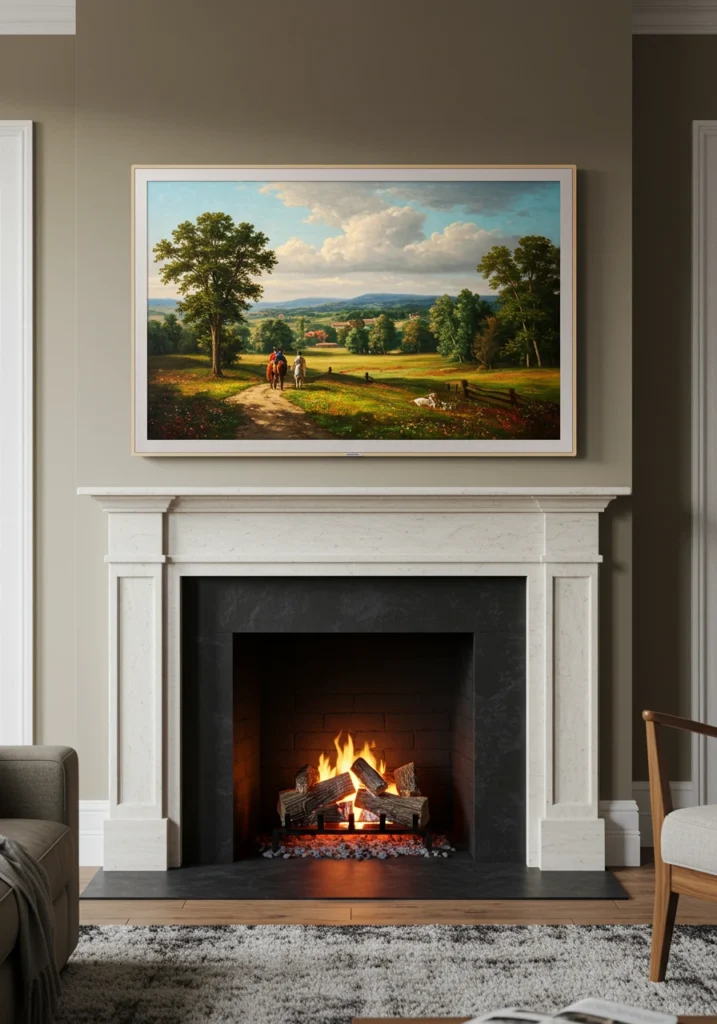
Sometimes, the best way to solve the two-focal-point problem is to make one of them disappear. An “Art TV,” like Samsung’s “The Frame,” is a brilliant creative solution that allows your television to blend seamlessly into your decor.
These TVs are designed with a slim profile and a customizable bezel that makes them look exactly like a piece of framed art. When the TV is off, it displays a high-resolution image of a painting or a photo instead of a blank, black screen.
This allows you to place the TV in a location where a black screen would be an eyesore, such as directly above a beautiful, traditional fireplace. It effectively reduces the number of focal points in the room from two to one, allowing the fireplace to be the undisputed star. I love recommending this to my clients who value a traditional aesthetic but don’t want to sacrifice modern conveniences.
- Best For: Design-conscious homeowners who want their TV to blend into the decor.
- Pros: Disguises the TV as art, reduces the number of competing focal points, allows for flexible placement.
- Cons: More expensive than a standard television of the same size.
To enhance the “art” illusion, create a gallery wall on the same wall as your Art TV. Mix in other real, framed art pieces of different sizes around the television. This will make it blend in even more seamlessly and feel like part of a curated collection.
Mastering your long narrow living room with a fireplace and TV layout is about creating a thoughtful balance between comfort, function, and style. As we’ve explored through these 15 ideas, there is no single “correct” answer, but rather a spectrum of clever solutions tailored to your specific room shape, your lifestyle, and your priorities.
The most successful layouts almost always involve either dividing the long room into smaller, more intimate zones or using smart furniture choices, like floating sofas and swivel chairs, to create flexibility and clear traffic paths.
By embracing your room’s unique shape and using these strategies, you can conquer the common design challenges and create a cohesive and inviting space.
Frequently Asked Questions (FAQs)
How do you arrange furniture in a long narrow living room?
The best strategy is to avoid pushing all the furniture against the long walls, which creates a “bowling alley” effect. Instead, create distinct zones for different activities (like a conversation zone and a TV zone) or “float” your main sofa in the middle of the room to create a clear walkway along one wall.
How do you break up a long living room?
Use visual cues to divide the space. A sofa with a console table behind it can act as a divider. Two separate but complementary area rugs can anchor two different zones. A backless sofa or a bench in the middle of the room can also create a soft, permeable division.
Where do you put the TV in a narrow living room with a fireplace?
You have several options: 1) Above the fireplace (if the height and heat are manageable). 2) Next to the fireplace on the same wall, often with built-ins. 3) On an adjacent wall, with an L-shaped seating arrangement. 4) On the wall opposite the fireplace, which often requires creating two separate zones.
Should a sofa be against the long wall or a short wall in a narrow room?
It depends. Placing a sofa against the long wall can save space, but often accentuates the narrowness. “Floating” the sofa parallel to the long wall (but away from it) is often a better choice for creating a good traffic pattern. Placing a small-scale sofa against a short wall can work if it doesn’t block a major walkway.
What is the best way to create a clear traffic path?
The “Floating” sofa layout (Idea #2) is the most effective. By pulling your main furniture grouping away from one of the long walls, you create a single, dedicated, and unobstructed walkway for people to move through the room without disturbing the seating area.
How do I make a long, narrow room feel wider?
Use visual tricks. Introduce round shapes with a circular coffee table or rug. Hang a large mirror on one of the long walls. Consider a layout with some furniture angled slightly to break up the harsh parallel lines.
What kind of sofa is best for a long, narrow room?
A long, low-profile sofa can work well against a long wall. An L-shaped “apartment scale” sectional can be great when floated in the room. Two smaller-scale loveseats facing each other can also be a very elegant solution. Avoid overly deep, bulky, or overstuffed pieces.


