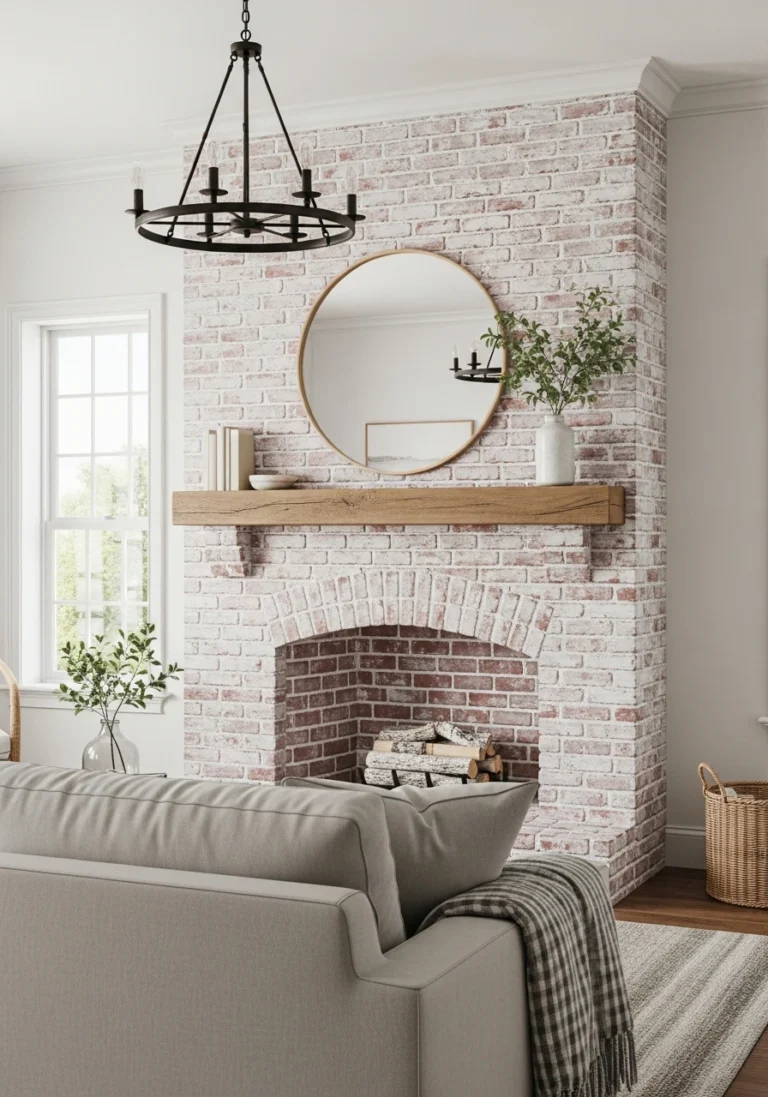
Are you struggling with a long narrow living room furniture arrangement? It’s one of the most common and perplexing layout challenges in homes and apartments. The long, rectangular shape can easily feel like a “bowling alley” a difficult, corridor-like space that defies a cozy and functional furniture setup.
Pushing all the furniture against the walls only emphasizes the tunnel effect, while placing it incorrectly can create awkward traffic jams. The key to conquering this tricky space is to stop fighting its shape and start using smart, strategic arrangements that create balance, flow, and intimacy.
This guide will provide you with 15 smart furniture arrangement ideas, from classic zoning techniques to clever visual tricks, that will help you transform your long, narrow living room from an awkward hallway into a beautiful and welcoming space.
1. The Main Walkway Arrangement: Create a Clear Path
One of the biggest problems in a long, narrow room is that foot traffic often has to cut directly through the middle of the seating area. A brilliantly effective arrangement is to create one clear, dedicated walkway along one of the long walls.
To achieve this, you “float” your main sofa and seating arrangement in the middle of the room, pulled away from the walls. This creates an unobstructed “traffic lane” on one side and a cozy, contained seating area on the other.
This is my go-to strategy for improving the flow of a room. I often place the main focal point (like a TV or fireplace) on one long wall and float the sofa directly opposite it. The main walkway is then created behind the sofa, along the other long wall.
This makes the seating area feel intentional and intimate, and the traffic flow is vastly improved, preventing people from walking in front of the TV.
- How it works: Pull the main sofa away from the wall and group your seating in the center of the room.
- Benefits: Creates a clear, uninterrupted traffic path and a cozy, defined seating zone.
- Key element: An area rug is essential to anchor the floating furniture grouping.
For an enhancement, place a long, very slim console table against the wall in the walkway. This provides a surface for lamps and decor, making the walkway feel like a stylish and intentional gallery, not just an empty path.
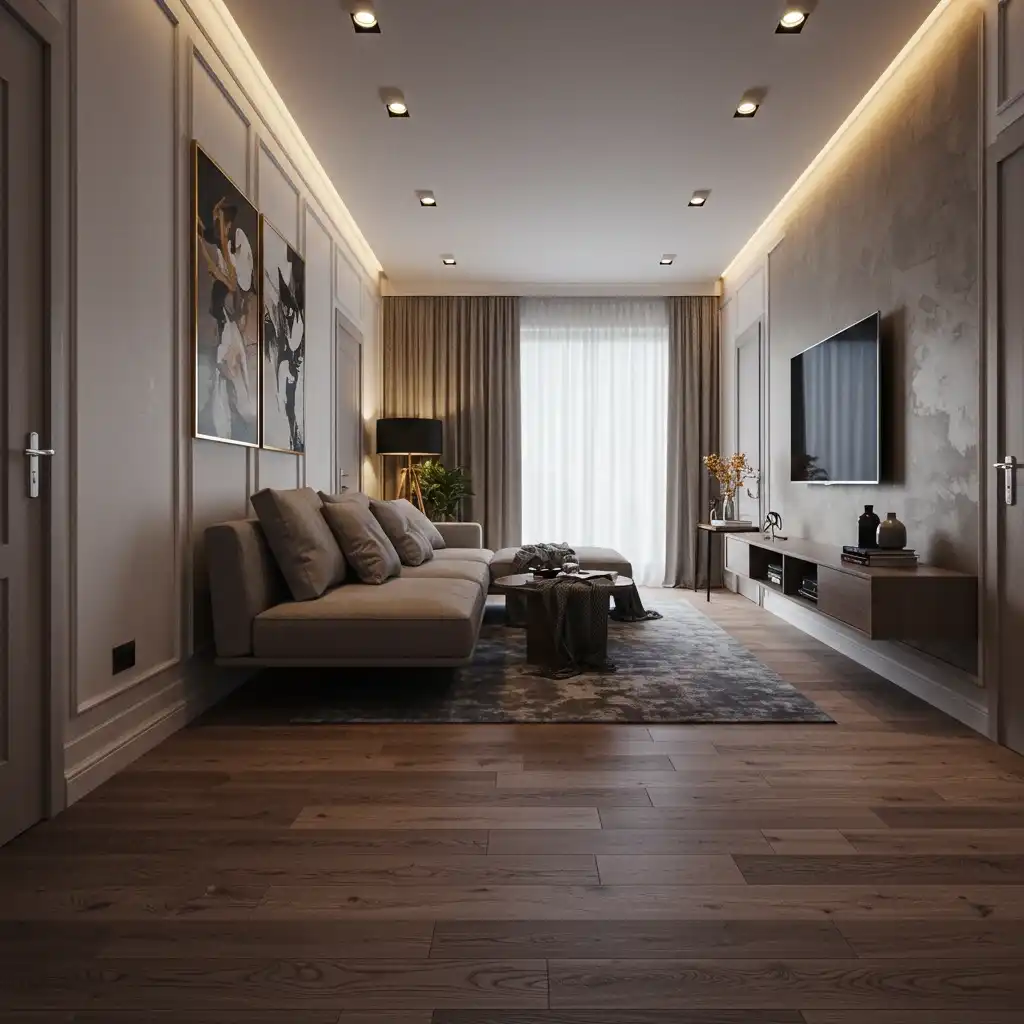
2. The “Two Small Zones” Arrangement
The most effective way to combat the “bowling alley” effect of a long room is to divide it into two or more distinct, smaller zones. Instead of one long, awkward seating area, you create two functional spaces.
This breaks up the linearity of the room and makes it feel more balanced and purposeful. The most common combination is a primary seating area for TV watching and a secondary zone for another activity.
I always recommend this approach to clients with long rooms. The secondary zone can be tailored to your lifestyle.
- Primary Zone: Typically the larger area, featuring a loveseat or small sofa and a coffee table.
- Secondary Zone: Could be a reading nook with a comfy chair and a lamp, a small home office area with a desk, a play area for kids, or a conversation spot with two armchairs.
- Divider: The back of the sofa, a low bookshelf, or a see-through screen can act as a subtle divider.
For an enhancement, use two separate but complementary area rugs to visually anchor each zone. This is a powerful visual cue that clearly tells you where one “room” ends and the next begins, a technique often highlighted by HGTV designers.
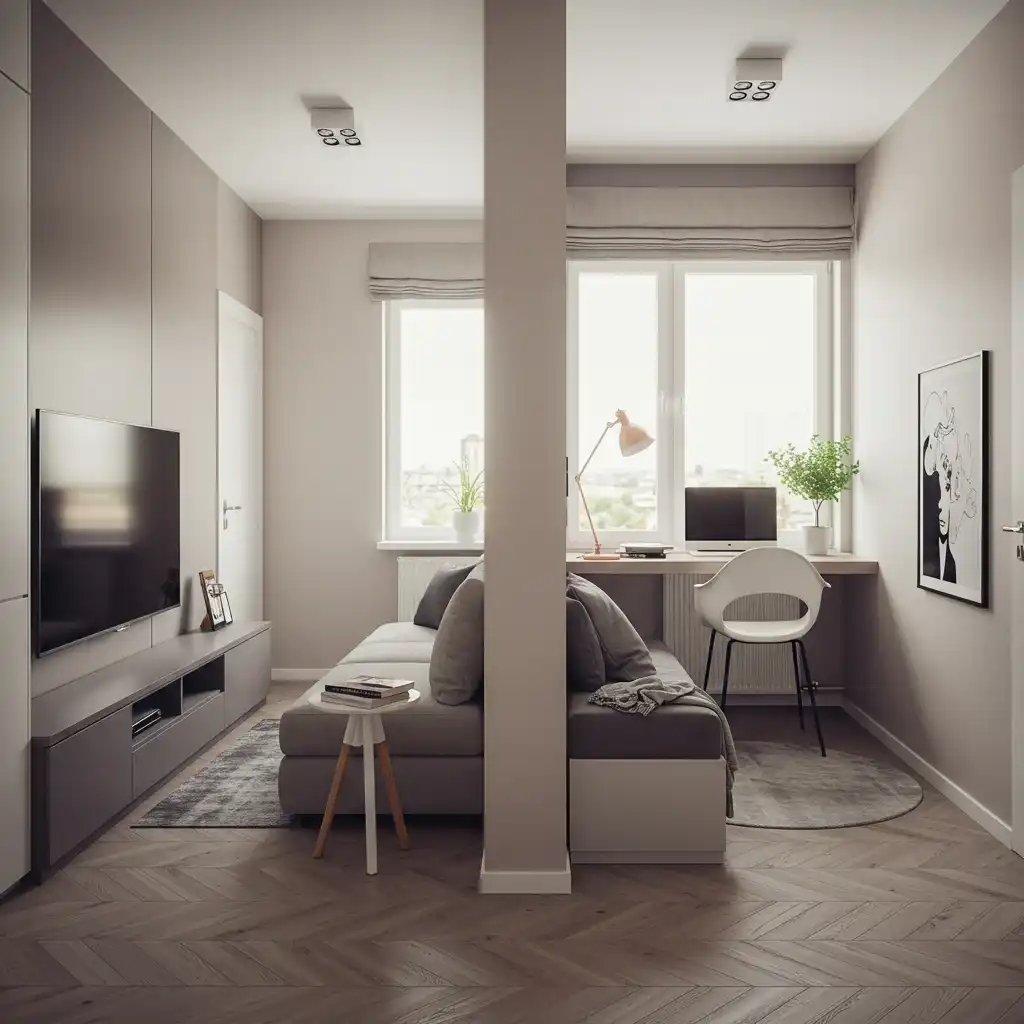
3. The Symmetrical Arrangement with Two Loveseats
For a classic, formal, and beautifully balanced look in a long room, a symmetrical arrangement using two matching loveseats or small-scale sofas is a timeless choice.
In this layout, the two loveseats are placed directly facing each other, perpendicular to the long walls. This creates a “room within a room” in the center of the space, with a coffee table in between, forming a perfect conversation pit.
This arrangement is incredibly effective at breaking up the length of the room and creating a very defined, central seating area. It forces the traffic to flow around the conversation zone, not through it. I love this layout for its elegance and its focus on sociability.
The main focal point, like a fireplace or a large piece of art, is typically on one of the short walls.
- Best For: Formal living rooms, prioritizing conversation.
- Furniture: Use two identical, smaller-scale sofas or loveseats to avoid overwhelming the narrow width.
- Effect: Creates a very elegant, balanced, and contained conversation area that counteracts the room’s length.
For an enhancement, place identical slim console tables or bookcases on the long walls behind each loveseat. This will reinforce the perfect symmetry of the arrangement and add valuable storage and display space.
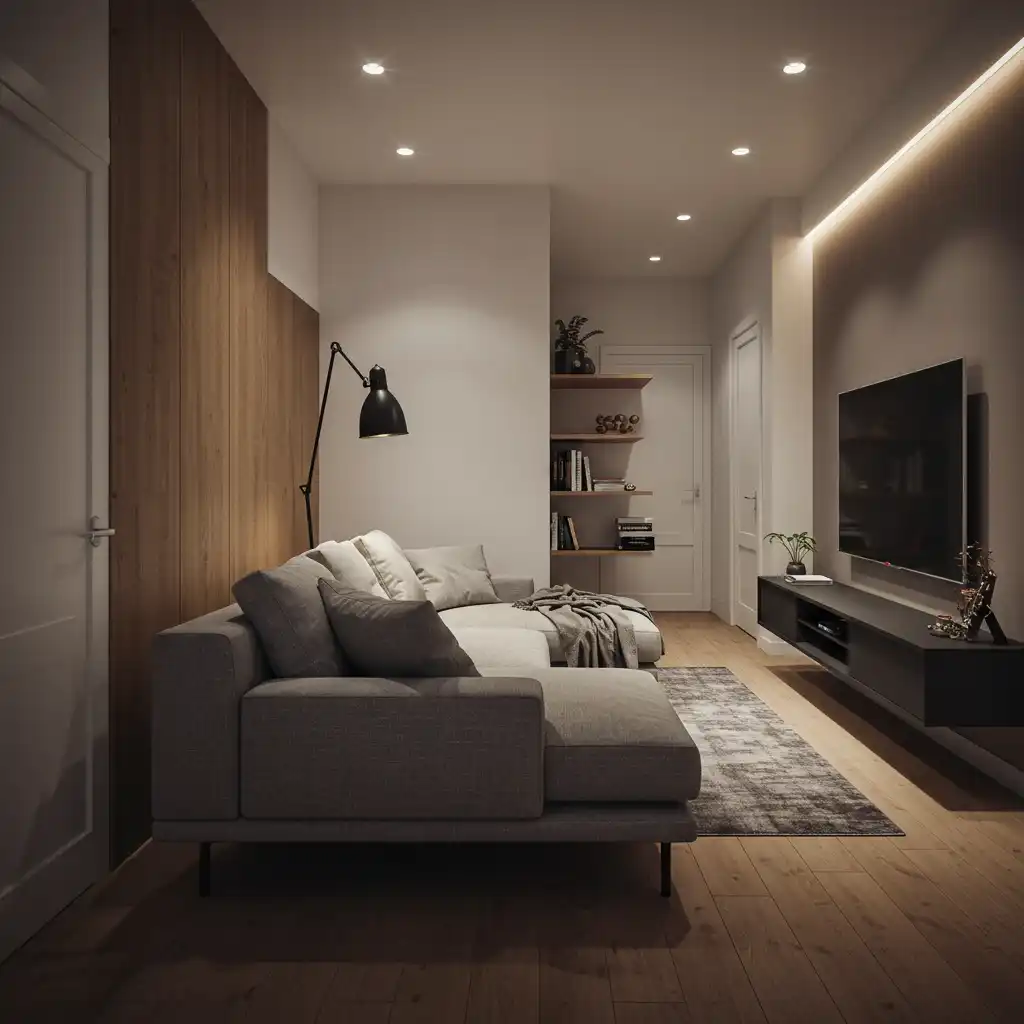
4. The “Floating” Central Conversation Area
This layout is perfect for a long, narrow room that serves as a central pass-through, with doorways at both ends. Instead of pushing furniture against the walls, you create one single, cozy, conversation area that “floats” in the very center of the room.
This arrangement typically consists of a small-scale sofa or loveseat with two armchairs facing it.
By grouping all the furniture in the middle, you create clear, defined walkways on both sides of the seating area. I recommend this layout to keep the room feeling as open and unobstructed as possible. An area rug is absolutely essential here to anchor the floating furniture and make it feel like a purposeful island of comfort.
- How it works: Group all seating pieces in the center of the room, away from all walls.
- Benefits: Creates excellent traffic flow on both sides of the room, ideal for a pass-through space.
- Key element: A large area rug to unify the entire floating furniture group is a must.
For an enhancement, use a round coffee table and a circular area rug. The round shapes will provide a soft, beautiful contrast to the long, linear shape of the room itself.
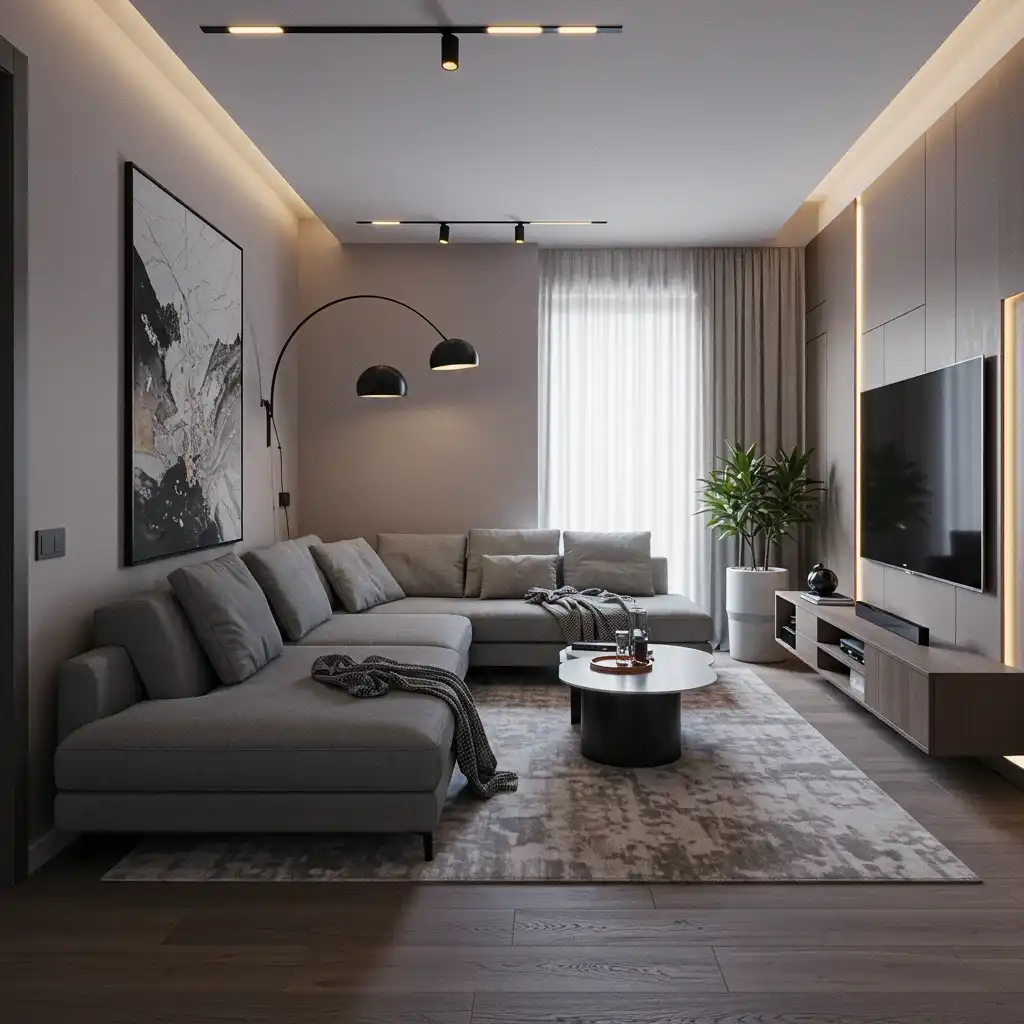
5. The Perpendicular Sofa as a Room Divider
This is a bold but highly effective furniture arrangement that directly challenges the shape of the room. Instead of placing your sofa parallel to the long walls, place it perpendicularly, running across the narrow width of the room.
This arrangement has the powerful effect of acting as a room divider, visually stopping the eye and breaking the long room into two smaller, more proportionally pleasing spaces.
This is a great solution when you need to create a clear division between a living area and another zone, like a dining area or an office space, at one end of the room. I often use this layout in open-plan apartments. The back of the sofa creates a definitive “wall” for the living room zone.
- Acts as a Divider: The sofa itself becomes the primary room divider.
- Creates Two Spaces: Effectively turns one long room into two smaller, more intimate zones.
- Placement: Float the sofa in the middle of the room’s length, facing one of the short walls.
To enhance this layout, place a long console table or a low bookshelf against the back of the sofa. This provides a finished look, defines the division even more strongly, and adds valuable storage.
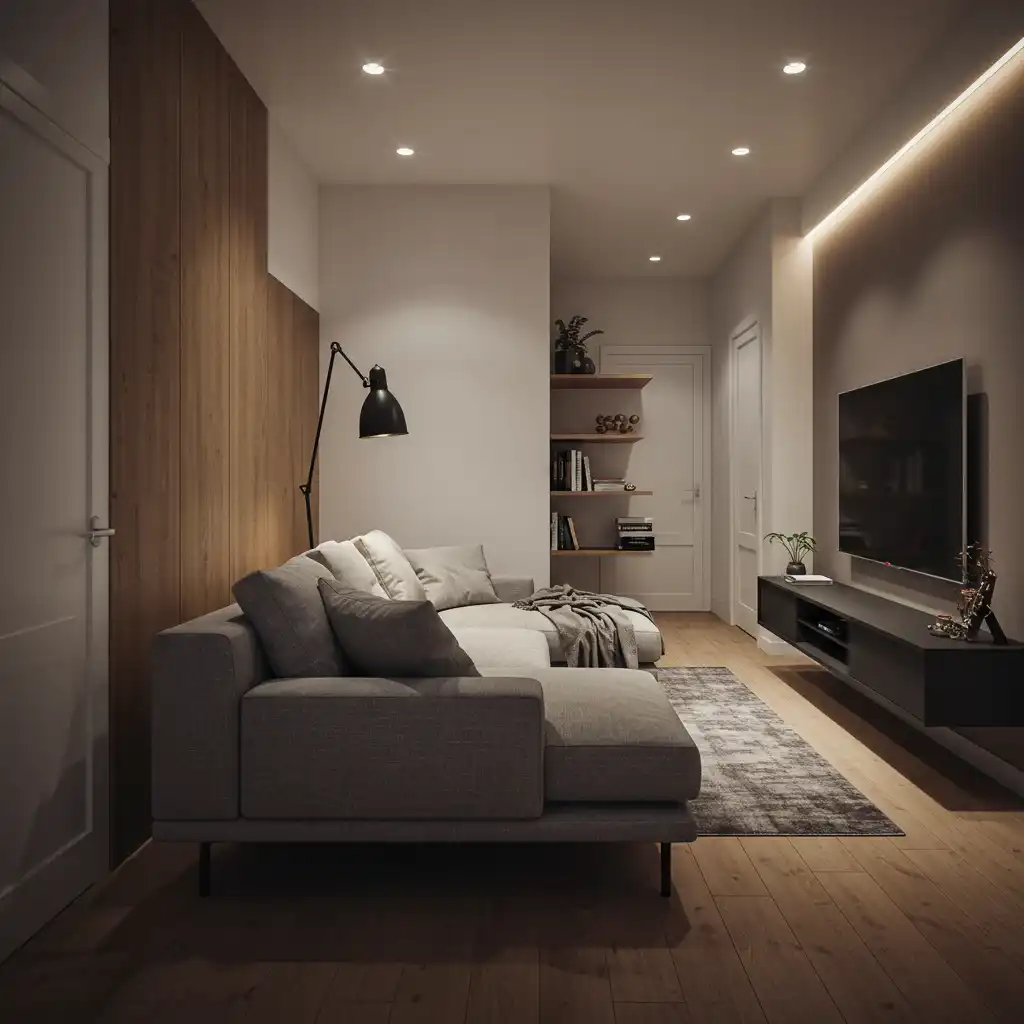
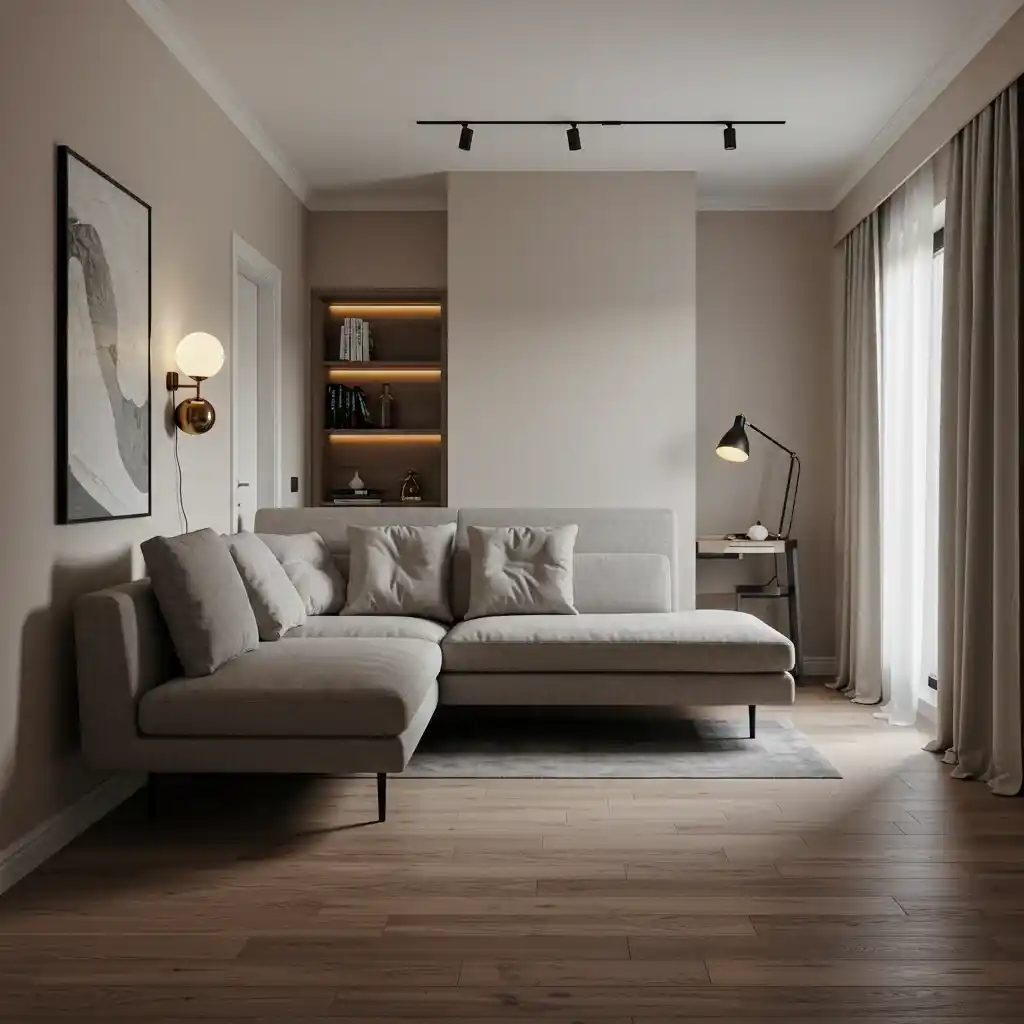
6. The L-Shaped Sectional Arrangement
An L-shaped sectional sofa can be a surprisingly smart choice for a long, narrow living room, provided you choose the right one and place it correctly. Instead of pushing it into a corner, float the sectional in the middle of the room.
Place the long side of the “L” parallel to the long wall, and allow the shorter side (the chaise or the other arm of the sectional) to jut out into the room. This shorter side acts as a natural, soft peninsula that helps to visually divide the room and define the end of the seating zone.
This layout is a favorite of mine for creating a very cozy and contained seating area in one part of a long room, leaving the other part free for a dining area, a walkway, or a secondary nook. As seen in many modern designs, it’s a very space-efficient way to get a lot of seating while also helping to solve the “bowling alley” problem.
- Placement is Key: Float the sectional away from the walls.
- Use the “L” as a Divider: The short side of the sectional creates a natural, soft barrier.
- Scale: Choose a sectional with a slim profile, often called an “apartment-scale” sectional, to avoid overwhelming the narrow width.
For an enhancement, ensure you leave a clear walkway (at least 30 inches) behind the long side of the sectional. Place a long, very slim console table in this walkway to make it feel like an intentional and stylish path.
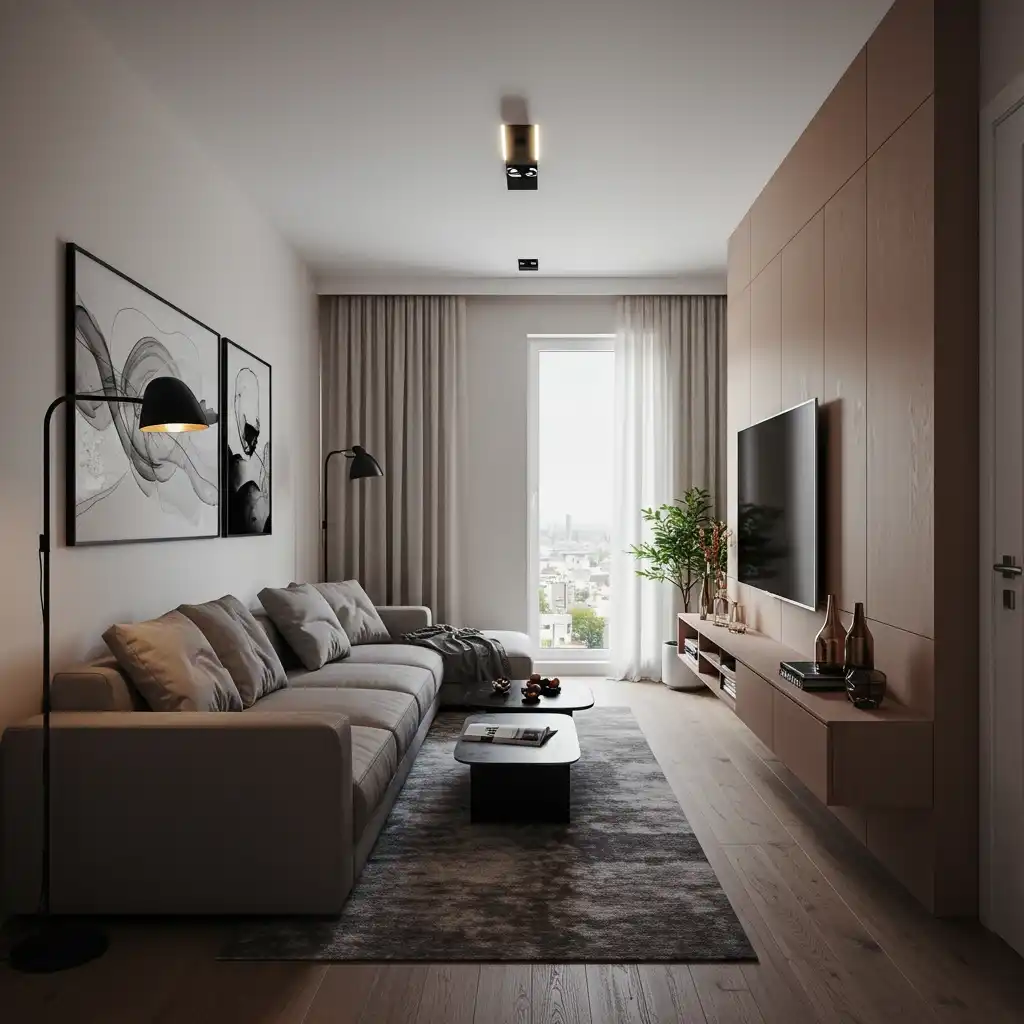
7. The Minimalist Arrangement with Slim Furniture
In some very narrow living rooms, any standard-depth furniture can feel too bulky. In these cases, the best arrangement is to embrace a more linear layout but to do it with minimalist, space-saving furniture. This layout typically involves placing a long, low-profile, and very slim sofa against one of the long walls.
The key to making this work is to choose furniture that is not deep. I often look for sofas that are under 34 inches deep. On the opposite wall, instead of a bulky media unit, use a very slim, wall-mounted media console or a set of floating shelves.
This maintains the maximum amount of open floor space in the middle, creating a clear and functional path and making the room feel as wide as possible.
- Slim Furniture: Choose a sofa and media unit with a narrow depth (“apartment-scale”).
- Wall-Mounting: Wall-mounting your TV and your console saves precious floor space.
- Keep it Uncluttered: This layout requires a minimalist approach to decor to avoid feeling crowded.
For an enhancement, use a coffee table that is visually light, like one made of glass or acrylic with a thin metal frame. The transparent surface will keep it from feeling like a visual obstruction in the narrow space.
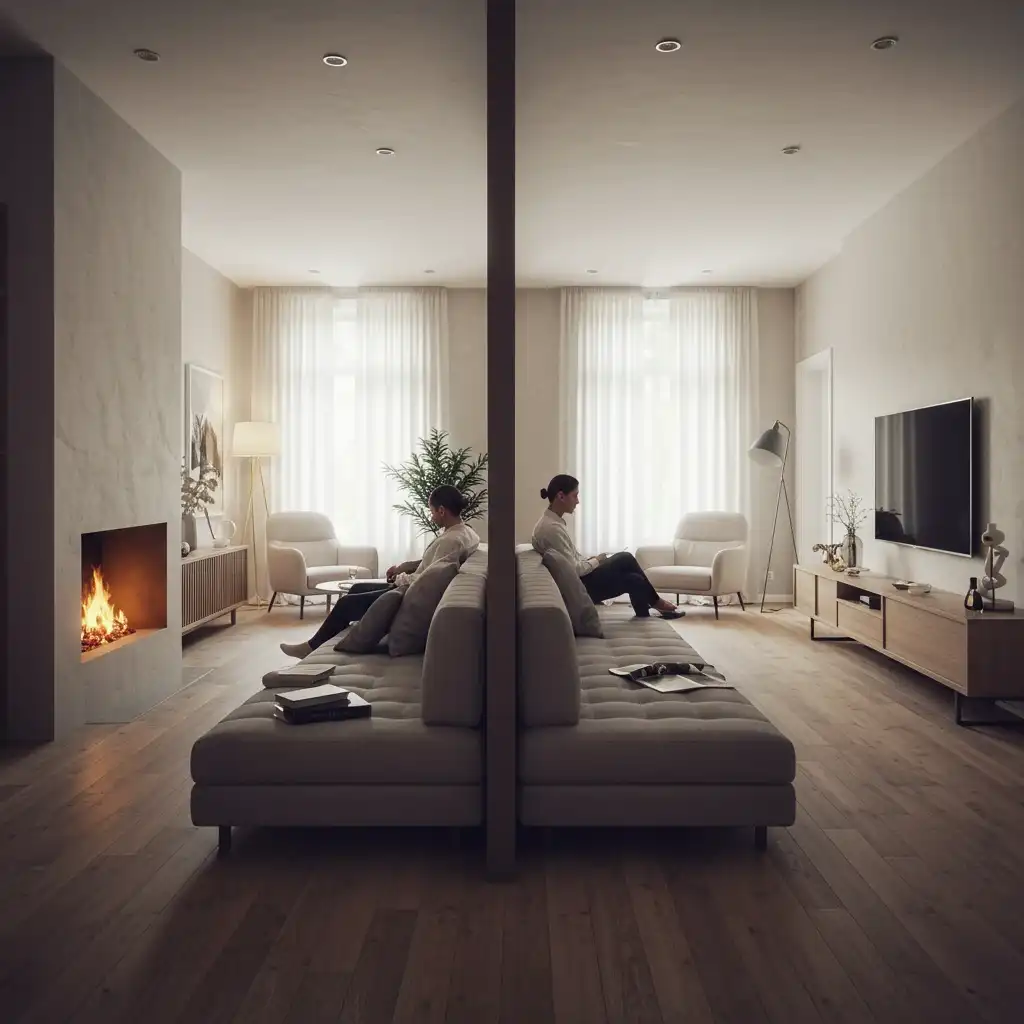
8. The Backless Bench or Daybed Divider
In a long room where you want to create two distinct zones, a standard sofa can sometimes act as a harsh visual barrier. A brilliantly creative furniture arrangement is to use a backless sofa, a daybed, or a long, upholstered bench as the dividing element.
Because these pieces have no high back, you can see over them, which allows the two zones to feel connected and maintains an open, airy sightline down the length of the room.
This is a favorite trick of mine for maintaining an open-plan feel. A backless sofa is also a very social piece of furniture, as people can sit on either side, allowing it to participate in both zones at once. It’s a sophisticated and highly functional solution for dividing a space.
- Maintains Sightlines: The lack of a back keeps the room feeling open and connected.
- Social Seating: Allows for two-way seating, engaging with both zones.
- Visually Light: Feels much less bulky than a traditional sofa.
For a functional enhancement, place a slim, C-shaped side table that can slide over the top of the backless sofa. This provides a flexible, movable surface for a drink or a book without the need for a full coffee table.
9. The Dual Armchair Nook
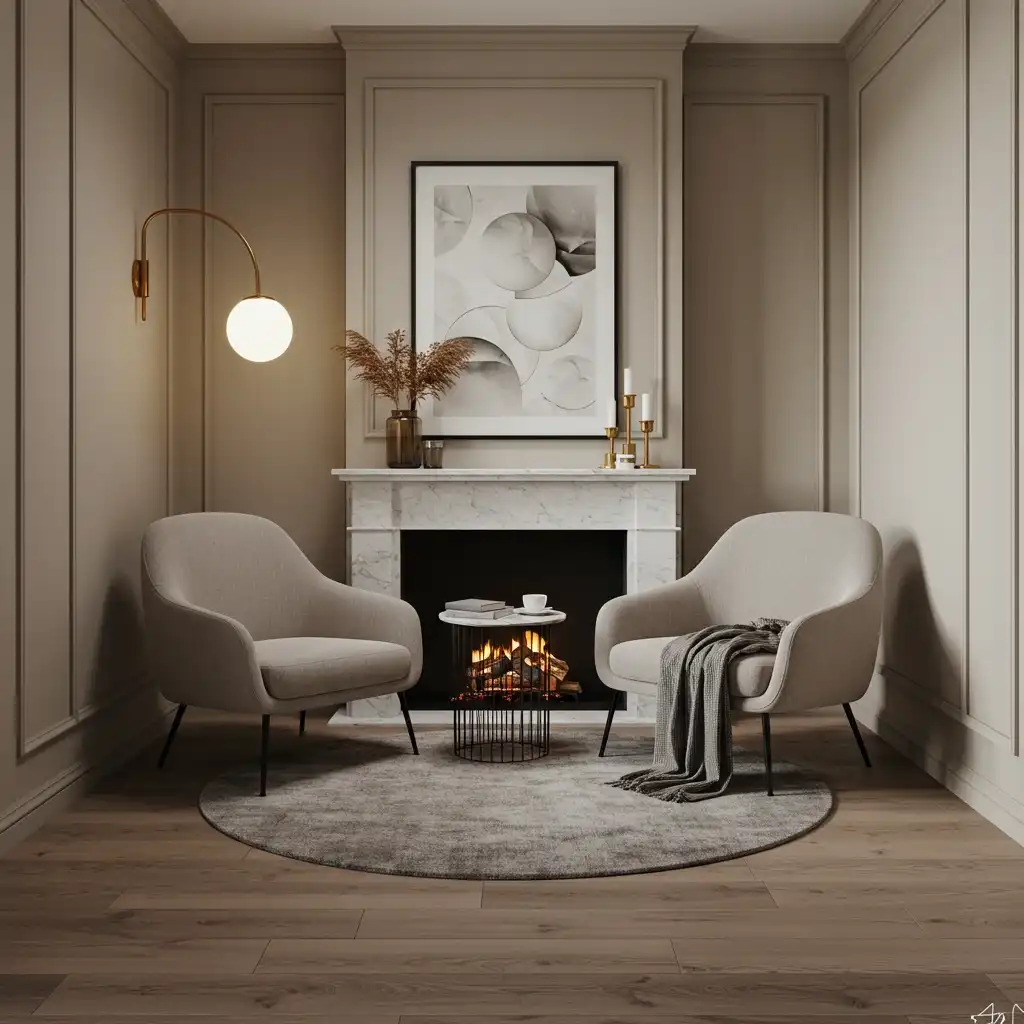
Sometimes in a long, narrow living room, the best arrangement is to forgo a traditional sofa altogether in one of the zones. If you’ve created a secondary zone, a simple and elegant layout is to use just two comfortable armchairs facing each other.
This creates a perfect, intimate spot for a quiet conversation, a cup of coffee, or for reading.
I love this arrangement for a secondary zone near a fireplace or a window. It feels much lighter and more open than trying to squeeze in another loveseat. A small side table or a garden stool between the two chairs is all you need to complete the nook. This layout prioritizes intimate connection over mass seating.
- Creates Intimacy: Perfect for a quiet, two-person conversation area.
- Visually Light: Two chairs feel much less bulky than a sofa.
- Flexible: The chairs can be easily moved or angled if needed.
For an enhancement, place a small, round ottoman in the center of the two chairs. It can be used as a shared footrest or, with a tray, as a small coffee table, adding to the coziness and function of the nook.
10. The “Gallery” Arrangement
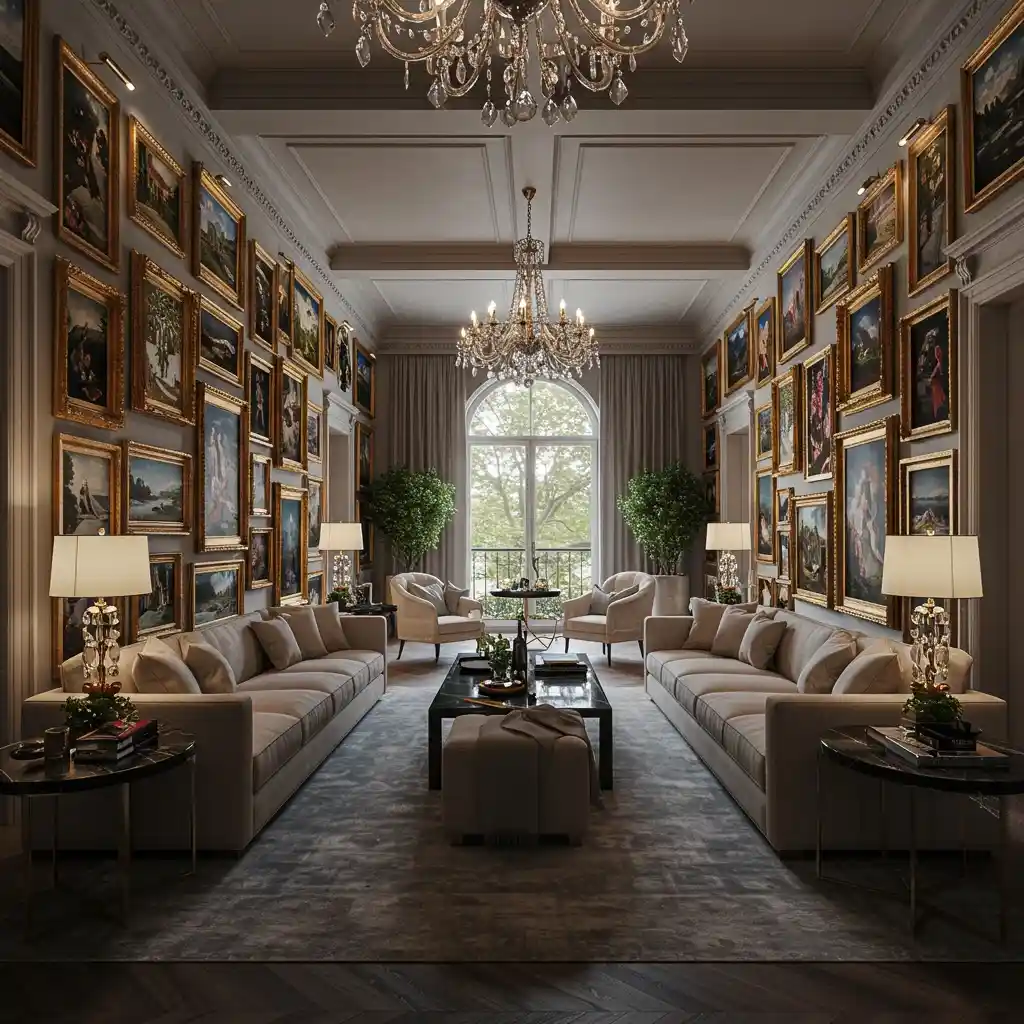
This layout fully embraces the long, linear nature of the room and treats it like a beautiful gallery or a grand, traditional salon. In this arrangement, you place your two main seating elements like two sofas, or a sofa and a pair of armchairs directly against the two long, opposing walls. This creates a very clear, wide, central pathway down the middle of the room.
This layout, often seen in formal, historic homes, is very dramatic and is perfect for showcasing beautiful walls, whether they feature large-scale art, a collection of mirrors, or stunning architectural molding. I recommend this for wider “long” rooms, as it requires enough space in the middle for the room to not feel like a cramped corridor.
- Best For: Wider “long” rooms, formal spaces.
- Formal and Dramatic: Creates a very grand, gallery-like feel.
- Showcases the Walls: Perfect for displaying large art collections.
For the ultimate enhancement, use a series of identical, beautiful runner rugs to create a continuous, patterned path down the center of the room. This will accentuate the length in a very chic and intentional way.
11. The Angled Furniture Arrangement
While it’s generally advisable to keep furniture parallel to the walls, in some long and narrow rooms, a slightly angled furniture arrangement can be a creative solution to break up the boxiness. This doesn’t mean putting everything on a harsh diagonal, but rather subtly angling your main sofa or a pair of chairs.
By placing your sofa at a slight angle, you can disrupt the harsh, parallel lines of the walls, which can make the room feel more dynamic.
This can also help to create better sightlines if you have two focal points (like a fireplace and a TV) that are not on the same wall. The angled placement creates interesting, triangular-shaped spaces in the corners behind the furniture, which are perfect for a floor lamp or a tall plant.
- Breaks the Box: Angling the furniture disrupts the harsh, linear feel of the room.
- Improves Sightlines: Can help to create a better viewing angle to two different focal points.
- Creates Dynamic Space: Moves away from a rigid, parallel layout.
As an enhancement, use a custom-shaped or an angled area rug that aligns with the angle of your sofa. This will make the angled placement feel much more intentional and will anchor the unique seating arrangement.
12. The Chaise Sectional as a Soft Divider
This is a slight variation on the L-shaped sectional layout, but one that works particularly well in a slightly narrower room.
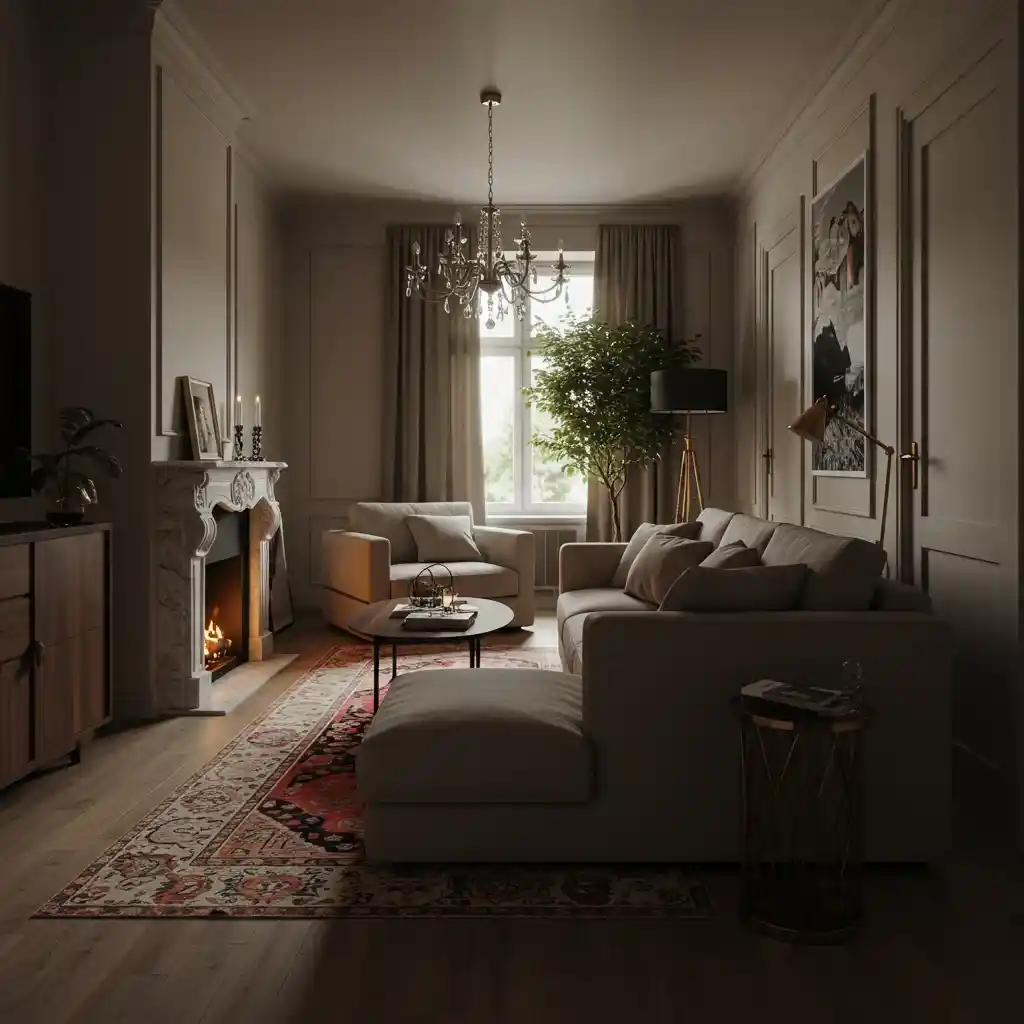
A chaise-style sectional is one where the shorter side of the “L” is a backless chaise lounge. When you float this type of sectional in a long room, with the chaise part jutting into the space, it acts as a very soft, low, and permeable divider.
Because the chaise has no high back, it doesn’t create a harsh visual barrier. You can still easily see over it, which helps the two zones on either side of it feel more connected and maintains a more open feel than a standard sectional. I love this solution for its relaxed, lounge-y vibe, which is perfect for a family room.
- Soft Division: The backless chaise creates a divider that doesn’t block sightlines.
- Relaxed Vibe: A chaise is inherently a piece of furniture for lounging and relaxation.
- Space-Saving: The lack of an arm and back on the chaise section can make it feel less bulky.
For a functional enhancement, place a slim, C-shaped side table that is designed to slide over the chaise. This provides a convenient, movable spot for a laptop or a drink without taking up any floor space.
13. The “Room within a Room” Arrangement
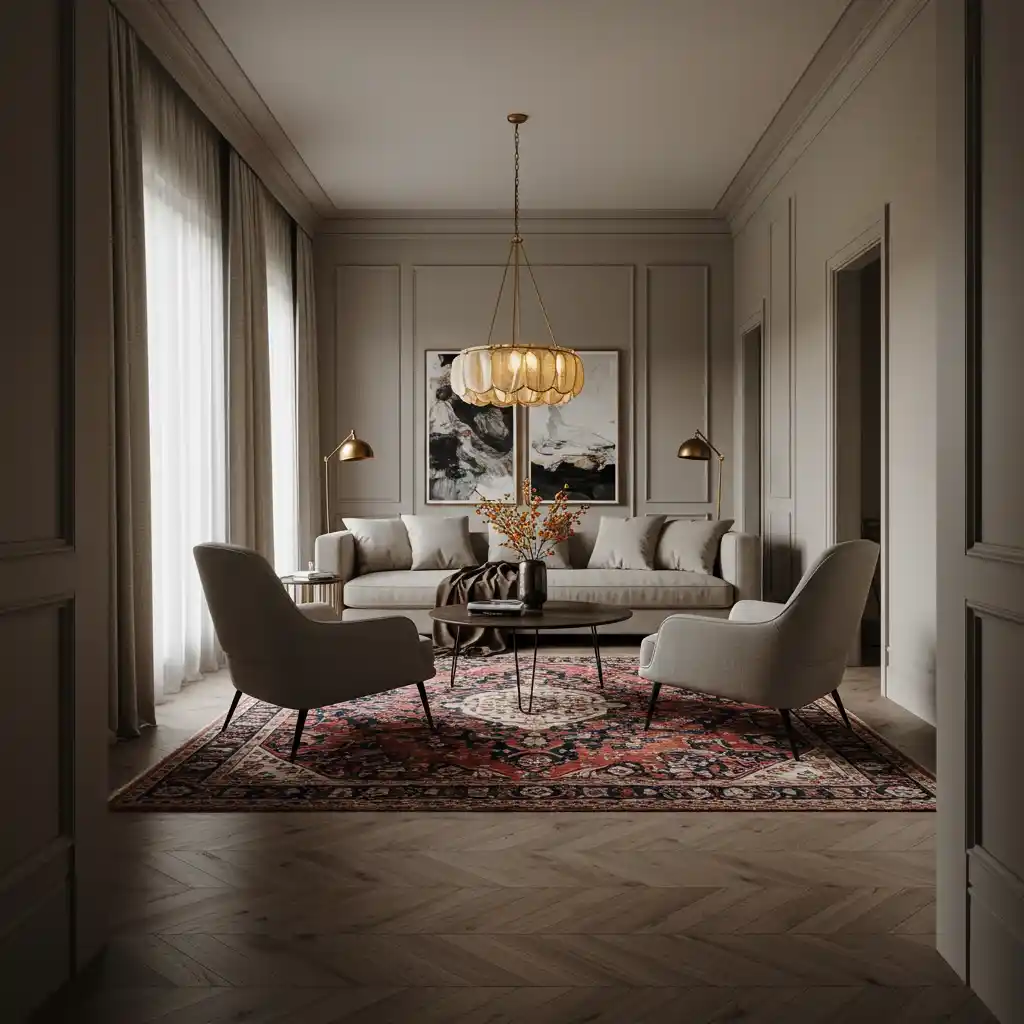
This layout focuses on creating one, very well-defined, primary seating area that feels like a cozy “room within a room,” leaving the rest of the long, narrow space for circulation and secondary functions.
To achieve this, you create a tight, conversational grouping with a sofa and two armchairs (or two facing loveseats) and place them on a large, bold, area rug.
The key to this arrangement is the rug. As the experts at The Spruce often note, a rug that is large enough to contain all your main seating furniture is essential for creating this effect. The edges of the rug become the “walls” of your room. This is a great way to create a cozy, human-scale zone in a room that might otherwise feel overwhelmingly long.
- Create a Contained Zone: A tight furniture grouping on a large rug.
- Defines the Space: The rug acts as the foundation and the boundary of your “room.”
- Leaves Open Space: The rest of the long room is left open for traffic or smaller furniture pieces.
For an enhancement, hang a large, low-hanging pendant light or chandelier directly in the center of your furniture grouping. This will act as a “ceiling” for your room within a room, further enhancing the sense of enclosure and intimacy.
14. The “Work and Play” Zoned Arrangement
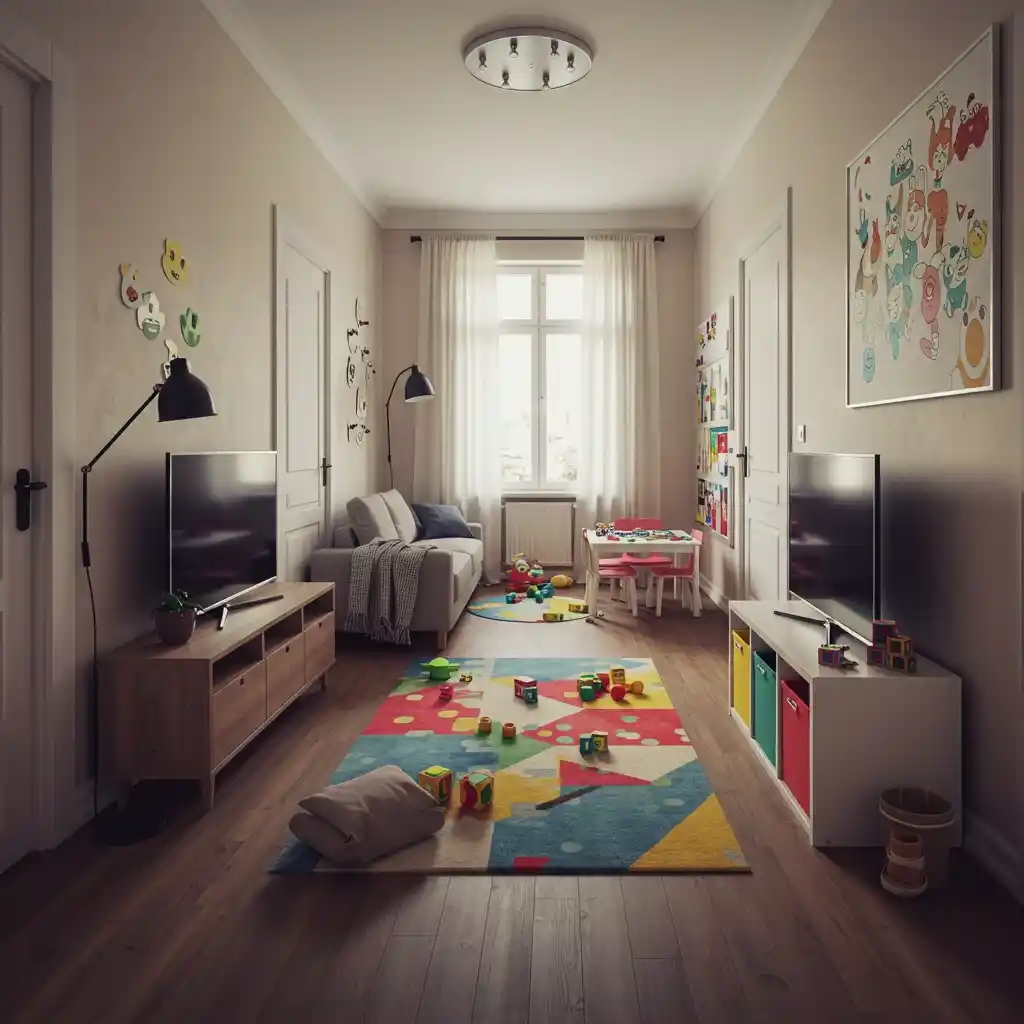
This is a specific application of the “two zones” layout, tailored for modern, multi-functional living. A long, rectangular living room is actually perfect for combining a relaxation zone with a dedicated space for a hobby, work, or play.
The length of the room provides the necessary separation between the two different activities.
I often design spaces like this for my clients who work from home or have young children. One end of the room can be your classic living room, with a comfortable sofa and a TV.
The other, separate end of the room can be a beautiful and functional home office with a desk and some bookshelves, or a dedicated play area with soft flooring, floor cushions, and toy storage.
- Multi-Functional: Allows your living room to serve two distinct purposes.
- Separation: The length of the room provides a natural buffer between the “work” and “relaxation” zones.
- Practical for Modern Life: Acknowledges that the living room is often more than just a place to sit.
For an enhancement, use a see-through shelving unit (like an IKEA Kallax or a similar style) as the divider between your two zones. This will provide valuable storage for both your office supplies and your living room decor, while still allowing light to pass through.
15. The Dual Loveseat Layout
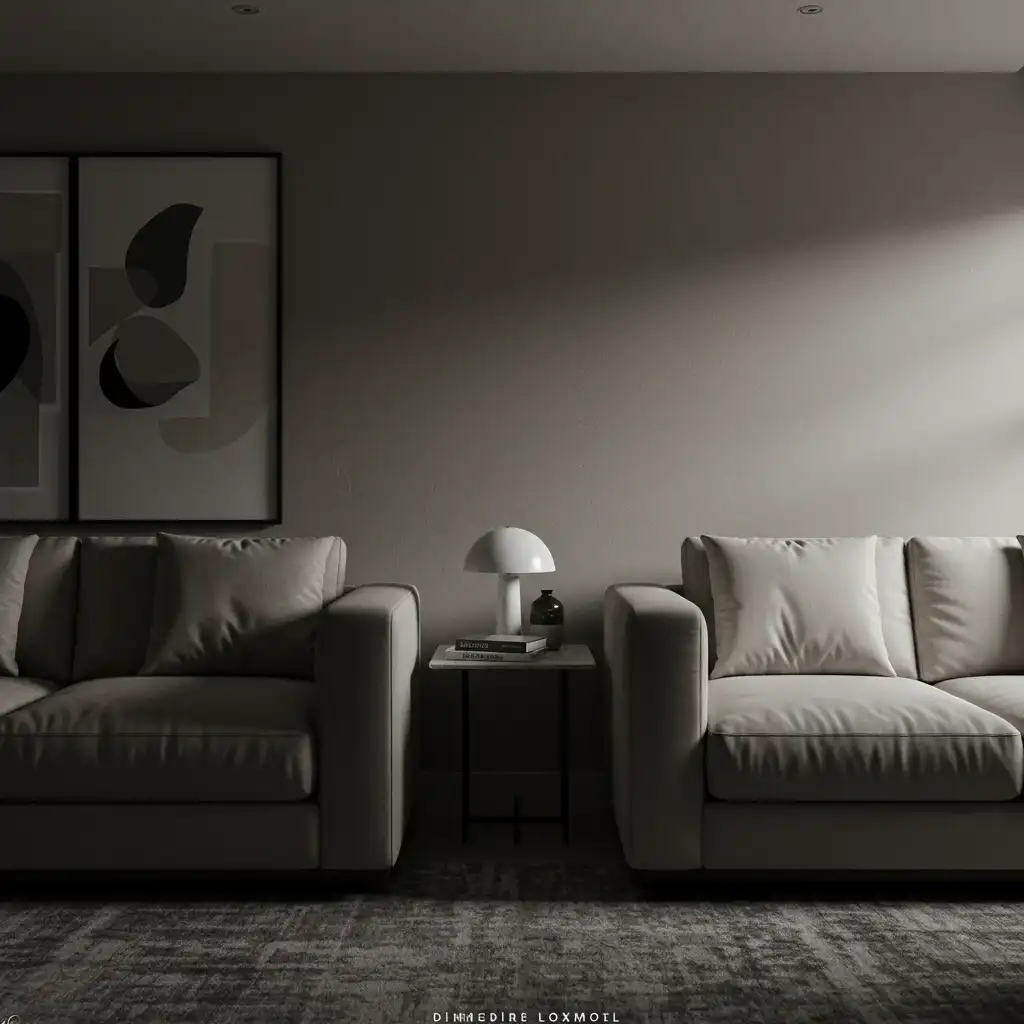
Instead of one large, long sofa that can accentuate the length of a room, a creative furniture arrangement is to use two smaller, matching loveseats. This adds flexibility and can help to break up the space in a more interesting way.
You can arrange them in a classic, symmetrical layout facing each other, or you can place them in an L-shaped configuration.
I particularly like using two loveseats in an L-shape in a long, narrow room. It provides a similar amount of seating to a small sectional but often feels lighter and more open, as there is no clunky corner piece. It’s a very elegant and adaptable solution that feels a bit more custom and designerly than a standard sofa.
- Flexibility: Can be arranged in multiple configurations (facing, L-shape).
- Visually Lighter: Two smaller pieces can feel less bulky than one massive one.
- Breaks Up the Space: Avoids having one long piece of furniture that mirrors the long shape of the room.
For an enhancement, place a single, square end table in the corner where the two loveseats meet in their L-shaped configuration. This provides a useful surface and neatly fills the corner, making the arrangement feel more cohesive.
Conclusion
A long, rectangular living room, with its inherent challenges, is truly an opportunity to think like a designer. As we’ve explored through these 15 smart layouts, the key to success is to move beyond the simple impulse to push furniture against the walls. By embracing strategies that divide the space into functional zones, create clear traffic paths, and use furniture to break up the linearity of the room, you can transform your “bowling alley” into a beautiful, balanced, and highly functional space.
Frequently Asked Questions (FAQs)
How do you arrange furniture in a long narrow living room?
The best strategy is to avoid pushing all the furniture against the long walls, which creates a “bowling alley” effect. Instead, create distinct zones for different activities (like a conversation zone and a TV zone) or “float” your main sofa in the middle of the room to create a clear walkway along one wall.
How do you break up a long living room to make it feel less like a hallway?
Use furniture as a divider. A sofa with a console table behind it, an L-shaped sectional, or a backless bench in the middle of the room can all act as a “soft wall” to break up the length. Using two separate area rugs to define two different zones is also a very effective visual trick.
Should a sofa be on the long wall or a short wall in a narrow room?
It depends on your layout goals. Placing it against the long wall can save space, but can also accentuate the narrowness. “Floating” the sofa parallel to the long wall is often a better choice for creating a good traffic pattern. Placing a small-scale sofa against a short wall is a good option if it is the room’s main focal point.
How do you create a clear traffic path in a long living room?
The “Main Walkway” layout (Idea #2) is the most effective. By pulling your main furniture grouping away from one of the long walls, you create a single, dedicated, and unobstructed walkway for people to move through the room without disturbing the seating area.
What is the best type of sofa for a long, narrow room?
A long, low-profile sofa can work well against a long wall. An L-shaped “apartment scale” sectional is great when floated in the room. Two smaller-scale loveseats facing each other can also be a very elegant solution. Avoid overly deep, bulky, or overstuffed pieces that will eat into your precious width.
How do I make a long room feel wider?
Use visual tricks. Introduce round shapes with a circular coffee table or rug. Hang a large mirror on one of the long walls to create an illusion of depth. Consider a layout with some furniture angled slightly to break up the harsh parallel lines.
What does it mean to “float” furniture?
“Floating” furniture means pulling it away from the walls and placing it in a grouping in the middle of the room. This is a key professional design strategy for large or long rooms, as it creates more intimate seating areas and improves traffic flow.