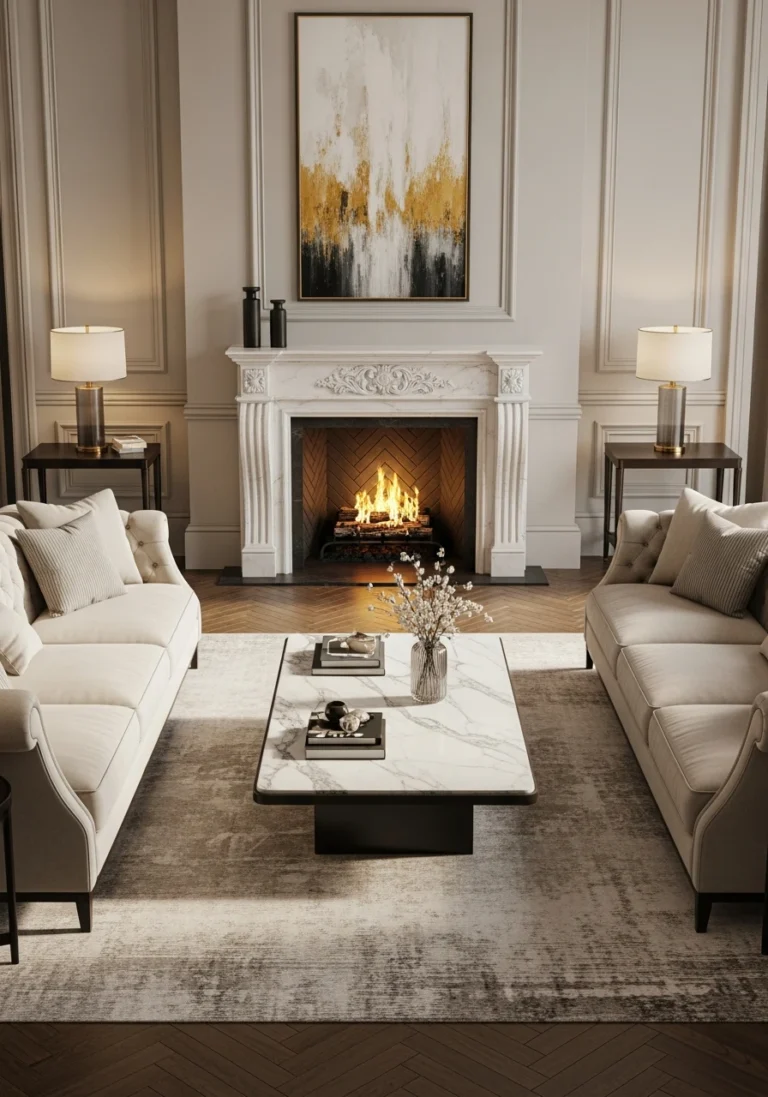
Are you looking for inspiring big living room ideas to transform your large, cavernous space into a comfortable, stylish, and well-utilized home hub? A big living room is a wonderful luxury, offering a canvas for grand gestures and multi-functional living. However, it also presents a unique and often tricky design challenge: how do you make a large room feel cozy and inviting, rather than empty, cold, or like a hotel lobby? The key to a successful large living room is not to simply fill it with more stuff, but to use smart, intentional design strategies that manage the scale, define the space, and create a sense of human-centric intimacy.
This guide will provide you with 15 smart ideas, from clever furniture layouts to architectural enhancements, that will help you conquer the empty space and craft a big living room that is both grand and graciously inviting.
1. Create Multiple Seating Zones
The single most important strategy for a big living room is to “divide and conquer.” Instead of trying to create one, massive seating arrangement where people have to shout to be heard, break the space down into smaller, more intimate, functional zones. A large living room can easily accommodate a primary seating area for watching TV or gathering, and a secondary zone for other activities.
I always start a large room design by identifying the potential for multiple zones. This creates a much more functional and human-scale environment.
- Primary Zone: This is your main hub, typically centered around a fireplace or a media wall, with a large sofa or sectional and a couple of armchairs.
- Secondary Zone: This could be a quiet conversation nook with two or four armchairs, a reading corner with a single chair and a lamp, a game table with a couple of chairs, or even a small desk area.
- Define with Rugs: Use separate area rugs to visually anchor and define each zone.
For an enhancement, ensure there is a clear and comfortable traffic path (at least 36 inches wide) that flows between and around your different zones, making the entire room easy to navigate.
2. Float Furniture Away from the Walls
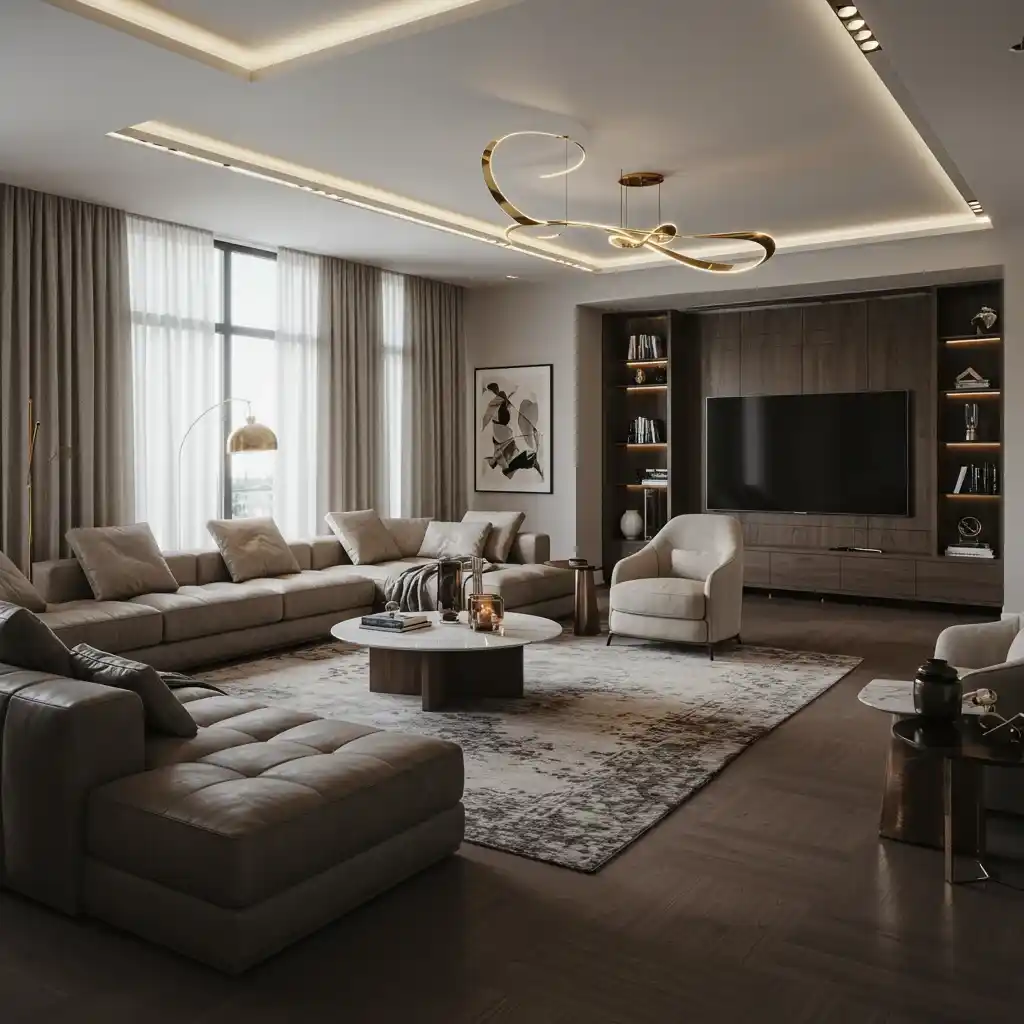
A common mistake in a big living room is to push all the furniture up against the walls. This creates a vast, empty void in the middle of the room that can feel like a “waiting room” or a dance floor. The professional solution is to “float” your furniture. Pull your sofas and chairs away from the walls and arrange them in a cozy, conversational grouping in the center of the room or a specific zone.
This technique, a cornerstone of good interior design, instantly makes a large room feel more intimate and intentional. I always anchor a floating furniture arrangement with a large area rug, ensuring that at least the front legs of all the pieces in the grouping are on the rug. This visually connects them and creates a defined, cozy “island.”
- Create a Grouping: Arrange your main seating pieces so they are facing each other, with a comfortable conversation distance between them.
- Anchor with a Rug: Use a rug that is large enough to ground the entire furniture arrangement.
- Create Walkways: This layout naturally creates clear and gracious walkways around the perimeter of the seating area.
For an enhancement, place a slim console table against the back of your floating sofa. This creates a beautiful, finished look and provides a perfect surface for lamps, books, or decorative objects.
3. Choose Oversized, Statement Furniture
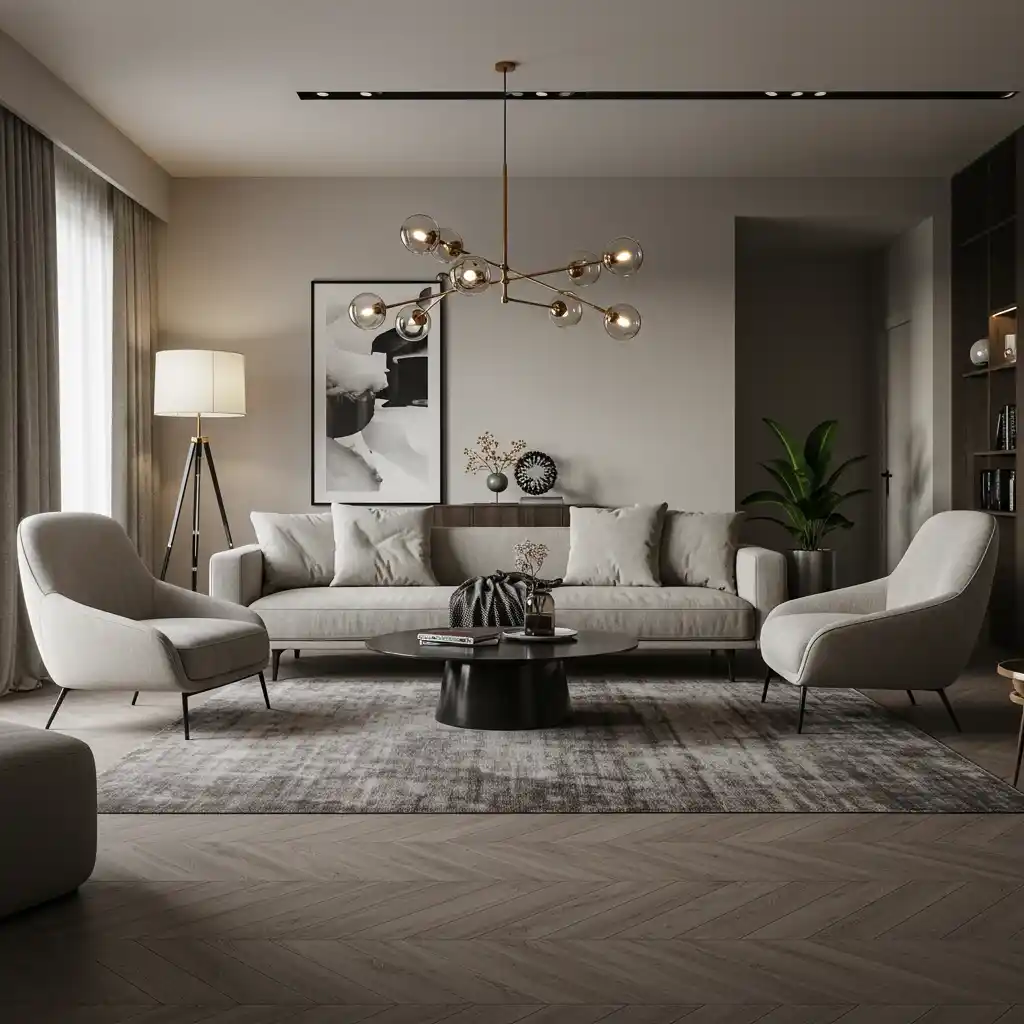
A big living room demands furniture that is appropriately scaled. Small, delicate furniture will look lost and out of place in a vast, open space. This is your opportunity to embrace oversized, statement-making pieces that can hold their own in a grand room. Think of a large, deep, comfortable sectional sofa that the whole family can pile onto, a substantial, chunky wood coffee table, or a pair of stately, high-backed armchairs.
I always create a to-scale floor plan for my clients to help them visualize how larger pieces will fit. It’s crucial to get the scale right. A big room needs big furniture to feel balanced and properly furnished.
- Sofas: Look for deep-seated sectional sofas or extra-long chesterfields.
- Coffee Tables: A large, square or round coffee table (48 inches or more) can anchor a large seating area.
- Armchairs: Choose chairs with generous proportions, wide arms, and a substantial presence.
For a dramatic enhancement, instead of one large coffee table, use a grouping of two or four smaller, identical ottomans or tables to create one large, modular surface. This adds flexibility and a high-end, custom look.
4. Hang Large-Scale Art and Mirrors
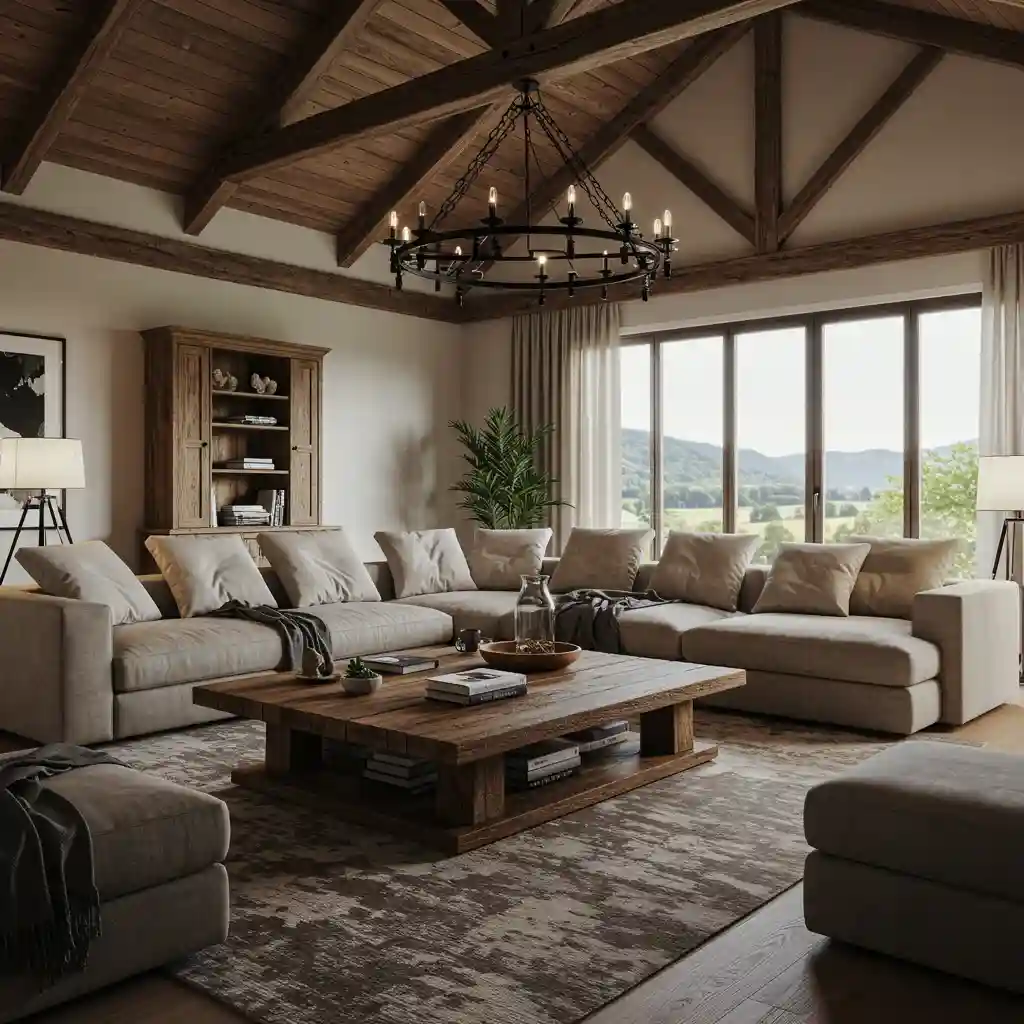
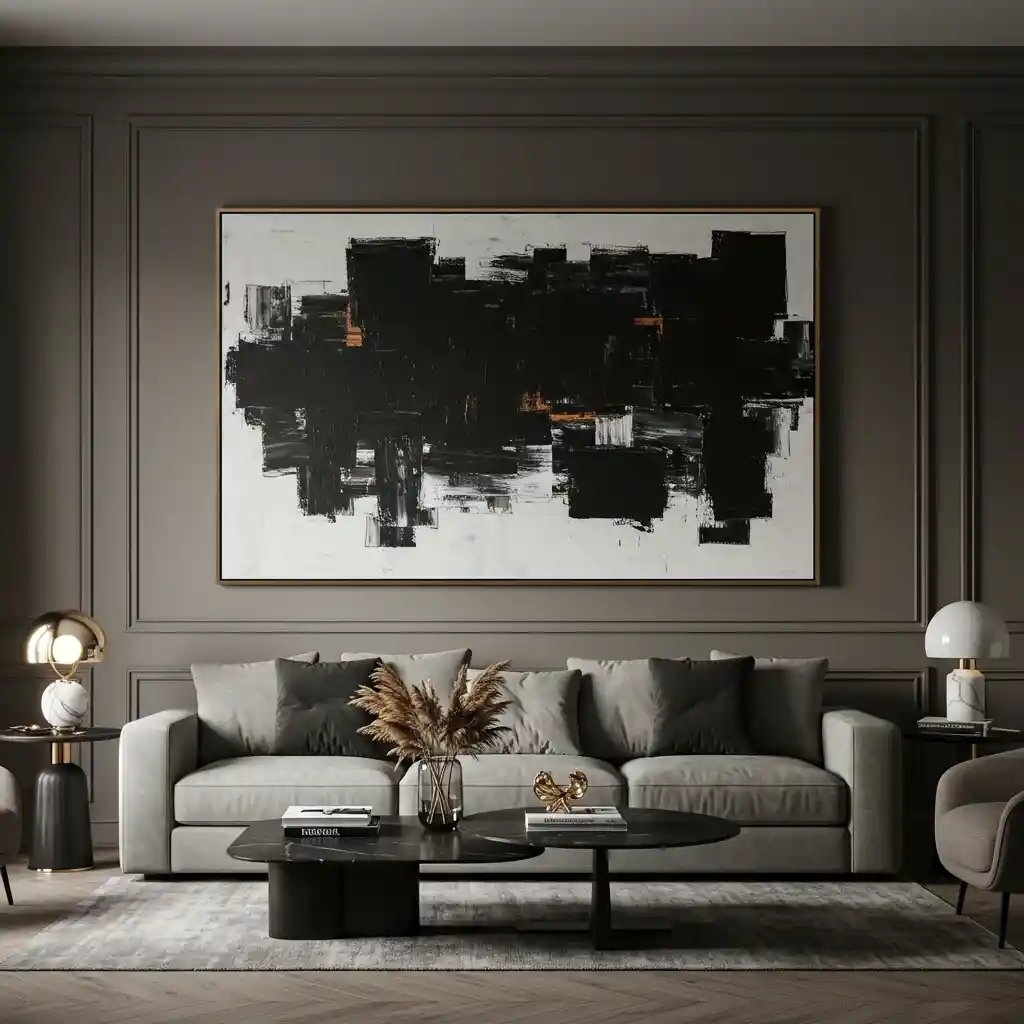
Just as small furniture can get lost in a big room, small pieces of art can look like postage stamps on a large, empty wall. A big living room is the perfect canvas for displaying dramatic, large-scale art or an oversized mirror. A single, massive piece of art hung above the sofa or on a main feature wall can be a powerful and stunning focal point. It can anchor the room and provide the inspiration for your color palette.
I often advise clients to invest in one, significant piece of art that they truly love. If a massive painting is out of the budget, a gallery wall of many smaller pieces grouped tightly together can create the same sense of scale and impact. An oversized, full-length mirror leaned against a wall is another fantastic choice; it will reflect the room, making it feel even more grand, and will bounce a huge amount of light around.
- Go Big: A single piece of art should be at least two-thirds the width of the furniture it hangs above.
- Gallery Wall: Group smaller pieces together to create one large, cohesive statement.
- Oversized Mirror: A floor-length mirror can add drama and light.
For an enhancement, install a dedicated, professional-quality picture light above your large piece of art. This will highlight it beautifully, especially in the evening, and signal it as a major feature of the room.
5. Install a Dramatic, Large-Scale Light Fixture
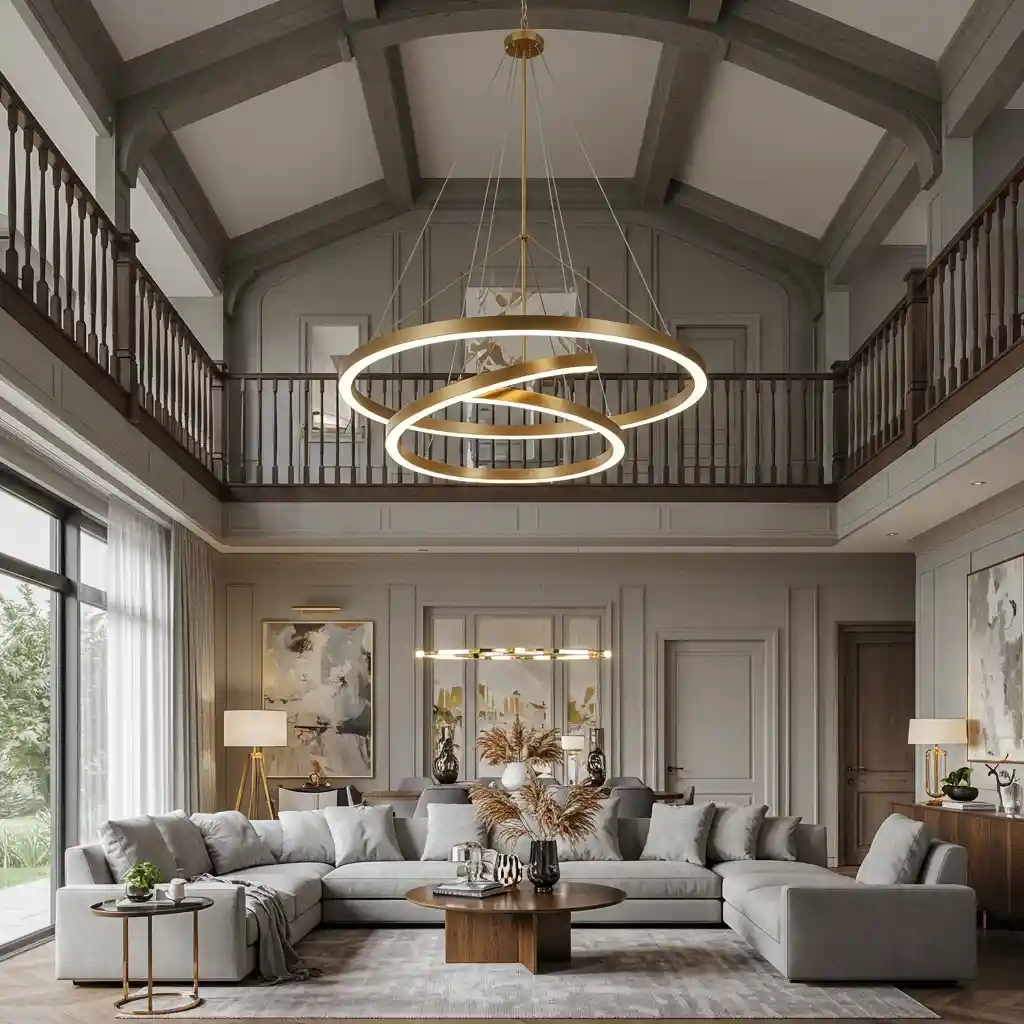
A standard, small light fixture will look completely lost and undersized in a big living room, especially one with high ceilings. A large room requires a large, statement-making light fixture to feel balanced and properly lit. This is your chance to use a dramatic chandelier, a large, sculptural pendant light, or a modern, multi-armed fixture that can act as the “jewelry” of the room.
The right light fixture can be a major focal point that anchors the main seating area and draws the eye upward, celebrating the volume of the space. I always follow a simple rule for sizing: the diameter of your chandelier should be roughly the sum of the room’s length and width in feet, converted to inches. (e.g., a 20×15 foot room would need a 35-inch diameter chandelier).
- Scale is Key: Choose a light fixture that is appropriately scaled to the size and height of your room.
- Create a Focal Point: A statement chandelier can anchor the primary seating zone.
- Use Dimmers: Always install your main light fixture on a dimmer switch to control the ambiance.
For a very contemporary enhancement in a room with very high ceilings, hang a cluster of several, identical pendant lights at varying heights. This can create a stunning, cascading, sculptural light installation.
6. Use a Back-to-Back Sofa Layout
This is a brilliantly effective layout for a very long or large great room, and it’s the ultimate expression of the “two zones” concept. In this sophisticated arrangement, two identical sofas are placed back-to-back, floating in the middle of the room. One sofa faces a primary focal point, like a beautiful fireplace, creating a more formal conversation area. The other sofa faces the opposite direction, towards a media wall with a TV, creating a dedicated, casual family room zone.
This high-impact layout, often seen in the grand spaces featured in Architectural Digest, is the perfect way to give two different activities equal importance in one large space. The key is to have a room that is both long and wide enough to accommodate the two sofas and comfortable walkways on all sides.
- Best For: Very large, long, or open-plan great rooms.
- Function: Creates two completely separate and highly functional zones.
- Requires: A very large amount of space and two matching sofas for the best look.
For an enhancement that connects the two zones, place a long, slim console table between the two back-to-back sofas. This creates a beautiful, finished look and provides a perfect surface for a pair of matching lamps, which will provide symmetrical, ambient light to both sides of the room.

7. Create a Cozy Conversation Pit
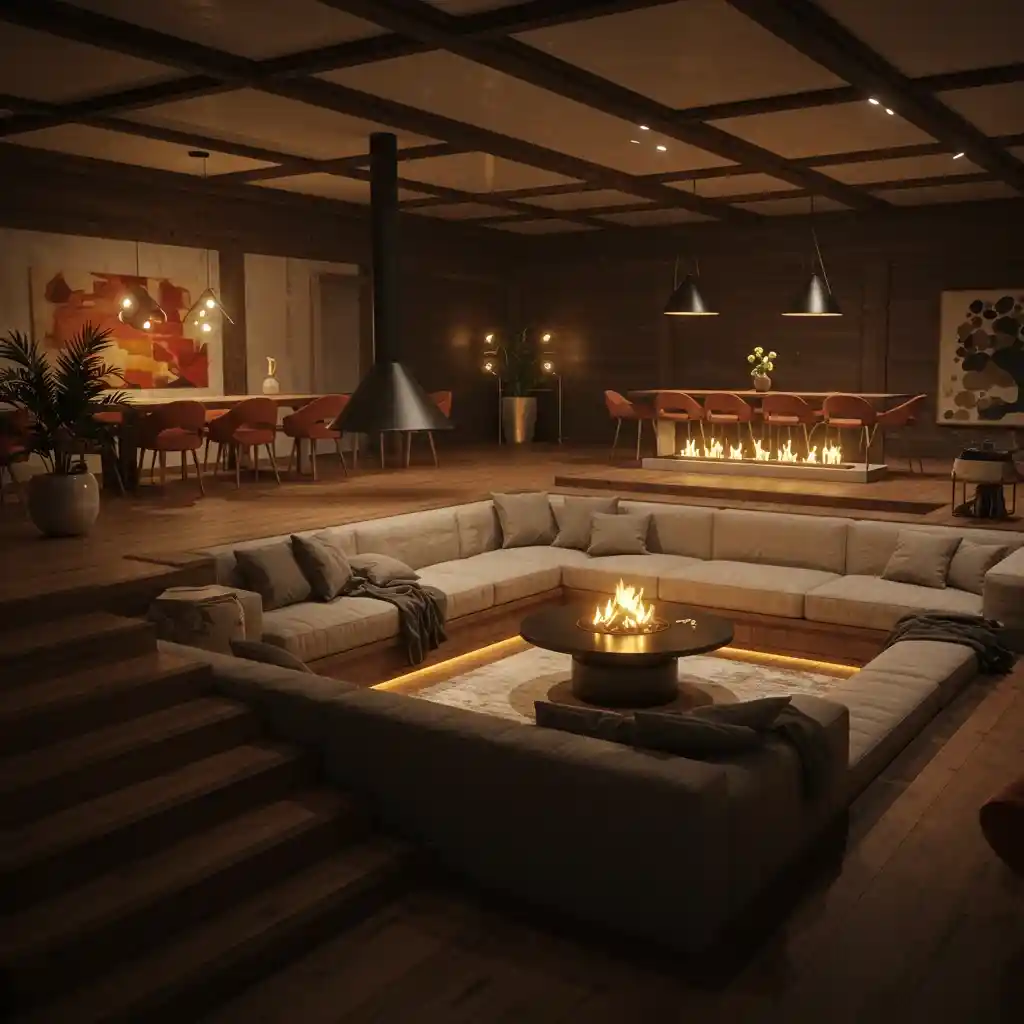
To make a large, open living room feel more intimate and cozy, consider creating a sunken or semi-sunken conversation pit. This is a classic mid-century modern design feature that has made a huge comeback. By lowering the main seating area by just a step or two, you can create a distinct, self-contained zone that feels incredibly cozy, communal, and perfect for conversation.
This is a major architectural undertaking, but the result is a stunning, high-impact feature. I love how a conversation pit creates a space that is all about human connection, with built-in seating that faces inwards, encouraging face-to-face interaction. If a true sunken pit isn’t possible, you can create a similar effect with a large, U-shaped sectional sofa that has a low back.
- Architectural Feature: A sunken area defines a cozy, intimate zone.
- Promotes Conversation: Seating is typically arranged to face inwards.
- Cozy Factor: The feeling of being “in” the space, rather than “on” it, is incredibly comforting.
For an enhancement, place a large, round fire feature or a plush, oversized ottoman in the center of the conversation pit to serve as the cozy focal point for the grouping.
8. Use Dark, Moody Paint Colors
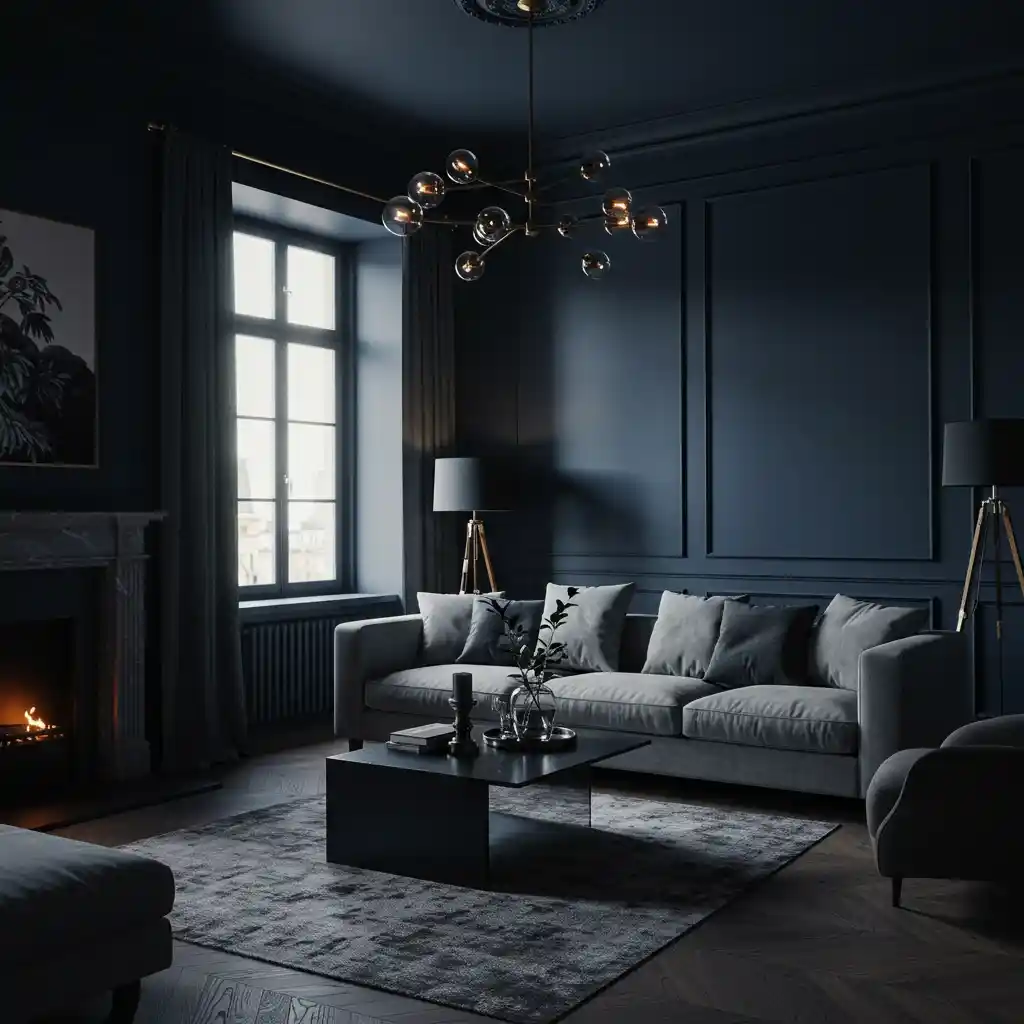
While the common advice for small rooms is to use light colors, a big living room is the perfect place to embrace a dark, moody, and saturated color palette. A deep color like charcoal gray, navy blue, or a rich forest green on the walls can visually bring the walls inward, making a vast, cavernous room feel much more intimate, cozy, and luxurious.
I love using a dark color in a large room with a lot of natural light. The light will prevent the room from feeling gloomy, and the dark color will create a dramatic, sophisticated, and enveloping atmosphere. As often seen in high-end design, a dark color can make a room feel incredibly chic and expensive.
- Effect: Makes a large room feel cozier and more intimate.
- Color Choices: Charcoal gray, navy blue, forest green, deep plum, or rich chocolate brown.
- Paint Finish: A matte or eggshell finish will absorb light and create a soft, velvety look that enhances the cozy vibe.
For the ultimate enveloping feel, use the “color drenching” technique. Paint the walls, the trim, the doors, and even the ceiling all in the same dark, moody color. This is a very bold, high-design move that makes the boundaries of the room disappear, creating a truly immersive experience.
9. Fill Vertical Space with Tall Curtains and Plants
A big living room often comes with high ceilings, which can make the space feel out of proportion if not addressed properly. The key is to use decorative elements that draw the eye upward and celebrate the vertical space. The most effective way to do this is with tall, floor-to-ceiling curtain panels.
I always advise my clients to hang their curtain rods as high as possible—just a few inches below the ceiling or crown molding—and to extend the rod well beyond the window frame on each side. The long, continuous line of the fabric will draw the eye upward and make the room feel grand and elegant. Another fantastic way to fill vertical space is with a tall, statement-making tree, like a Fiddle Leaf Fig or a Kentia Palm.
- Hang Curtains High and Wide: This is the number one trick for making a room feel grand.
- Use Tall Plants: A tall, indoor tree can be a beautiful, sculptural element that fills a corner.
- Tall Bookcases: Floor-to-ceiling built-in or freestanding bookshelves also draw the eye upward.
For a dramatic enhancement, choose curtains with a subtle, vertical stripe pattern. The vertical lines will further accentuate the height of your room.

10. Add Architectural Details to the Ceiling
In a large living room, the ceiling is a huge, blank surface that is often ignored. Adding architectural details to the ceiling is a fantastic, high-end way to add character, break up the vast expanse, and make the entire room feel more custom and finished. This is a classic technique used in grand, traditional homes that is being reinterpreted in modern design as well.
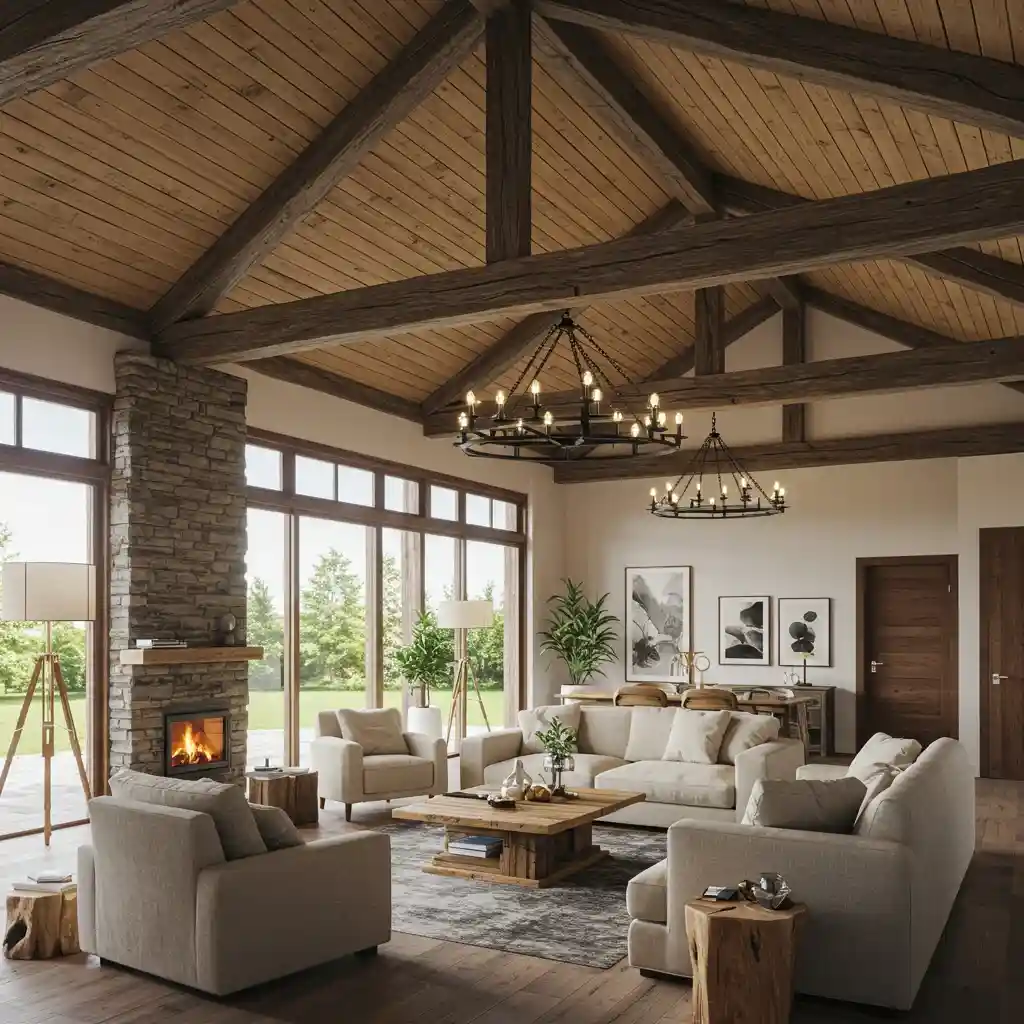
There are several options for adding ceiling detail. Coffered ceilings, with their series of sunken, grid-like panels, add a very classic, formal look. Simple, rustic, reclaimed wood beams can add a huge amount of warmth and a farmhouse or rustic vibe. Even just adding a large, ornate, plaster ceiling medallion around your main light fixture can add a beautiful, traditional focal point.
- Coffered Ceilings: A classic, formal grid of beams.
- Exposed Beams: Adds a rustic, industrial, or farmhouse feel.
- Ceiling Medallion: A decorative element that enhances a chandelier.
For a more contemporary enhancement, consider creating a “tray ceiling,” where the central part of the ceiling is recessed and higher than the perimeter. You can then install hidden, LED strip lighting around the inside of the tray to cast a beautiful, soft, ambient glow.
11. Incorporate Rich Textures and Layers
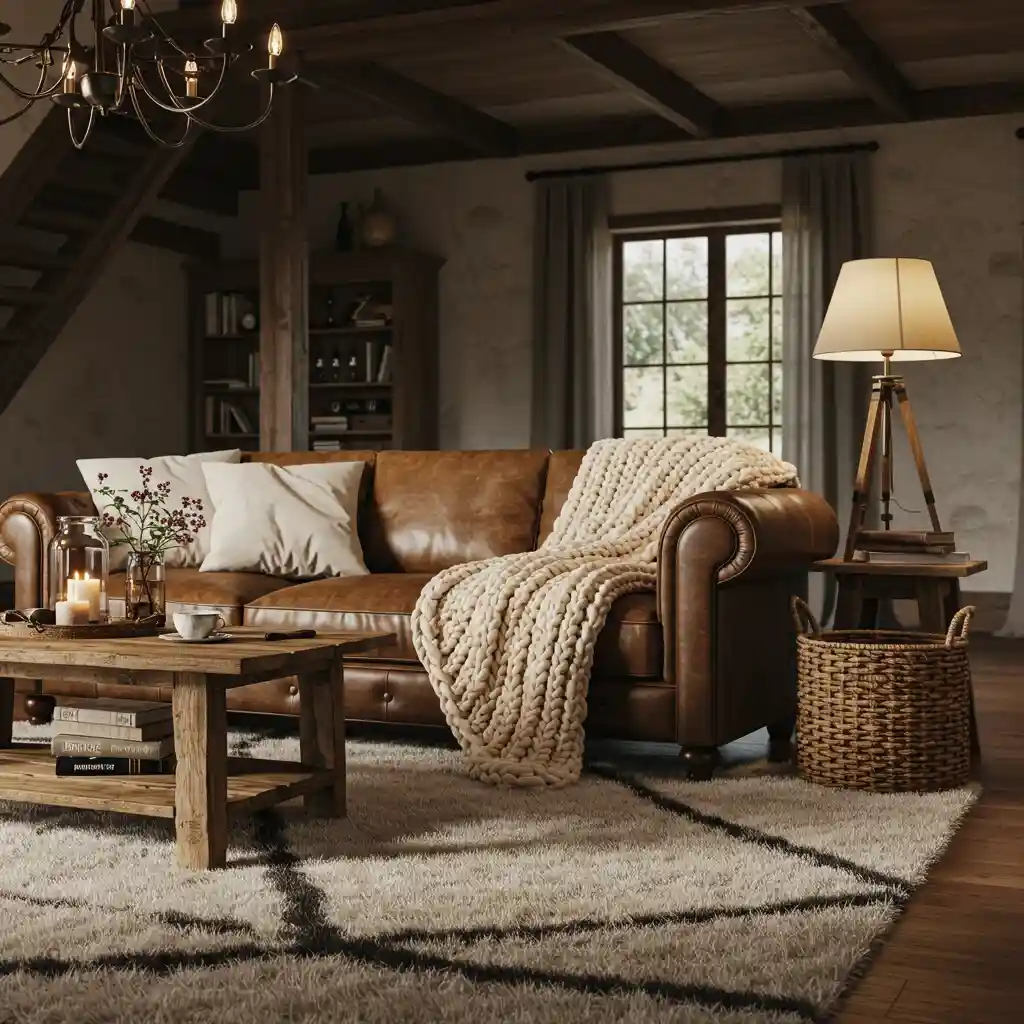
To keep a big living room from feeling cold and empty, it is essential to layer in a rich variety of textures. Texture is what makes a space feel cozy, warm, and inviting. In a large room, you have the opportunity to use a wide range of different materials to create a deeply layered and tactile experience.
Think about a mix of hard and soft, rough and smooth. I love to combine a sleek leather sofa with a plush, high-pile wool rug. A chunky knit throw on a smooth, linen armchair. A rough, reclaimed wood coffee table next to a smooth, metal side table. The contrast and interplay of these different materials is what makes a room feel rich, complex, and interesting.
- Soft Textures: A high-pile or shag rug, chunky knit blankets, faux fur pillows, velvet upholstery.
- Rough Textures: Woven baskets, rustic or reclaimed wood, natural fiber rugs like jute or sisal.
- Smooth Textures: Leather, polished metal, glass, and marble.
For an enhancement, use a large, textural wall hanging. A large, vintage rug, a beautiful tapestry, or a handmade macrame piece hung on a major wall can add a huge amount of softness, absorb sound, and make a big room feel much cozier.
12. Use Built-in Bookcases to Add Warmth and Character
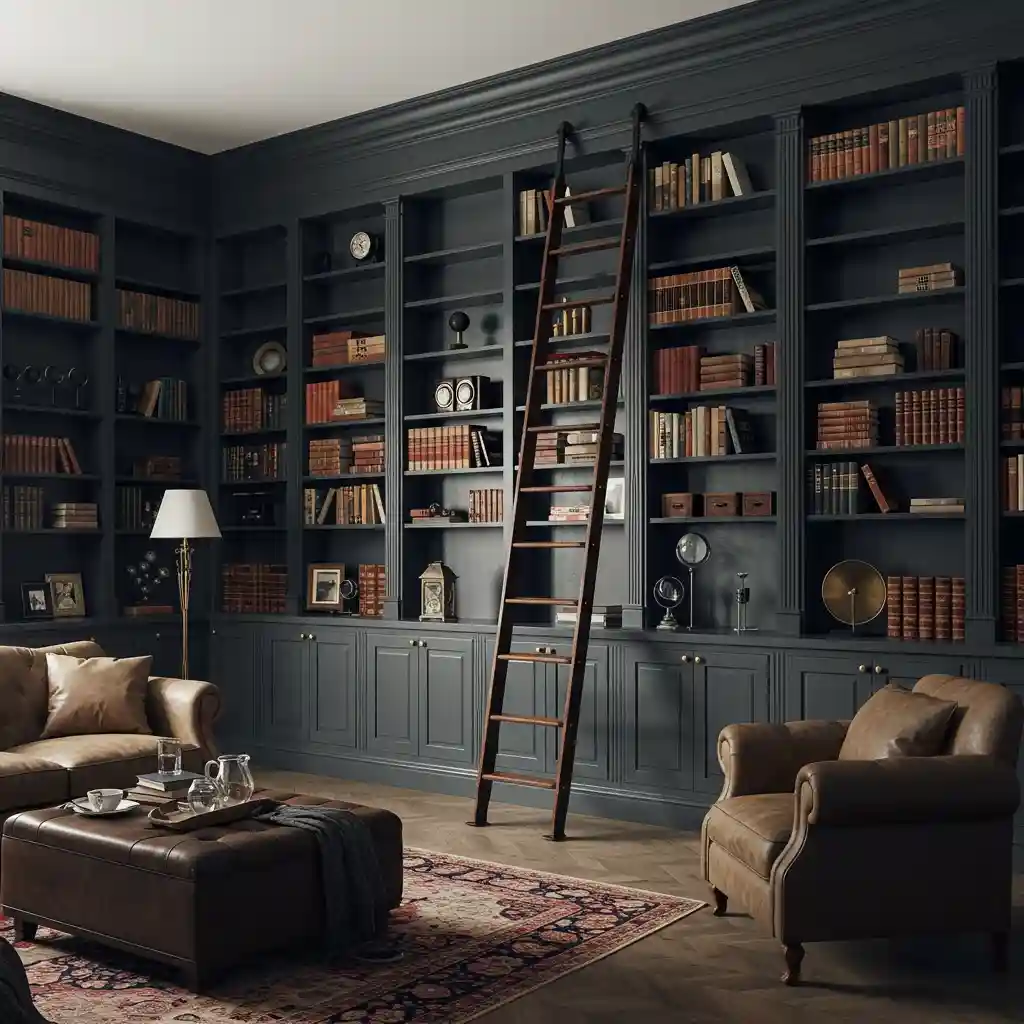
A wall of floor-to-ceiling, built-in bookcases is a classic and stunning feature for a large living room. It can turn a vast, empty wall into a beautiful, functional, and character-filled focal point. Bookcases add a sense of history, intellect, and warmth to a room. They also provide a huge amount of storage for books and a perfect place to display personal collections and decorative objects.
A well-styled bookshelf is a work of art in itself. I always tell my clients to arrange their books in a mix of vertical and horizontal stacks. Intersperse the books with personal objects, framed photos, and small plants. Leave some “breathing room” on the shelves; they don’t need to be crammed full.
- Adds Character: A wall of books adds instant warmth, color, and personality.
- Fills a Large Wall: The perfect solution for a vast, empty wall.
- Provides Storage: A huge amount of functional storage and display space.
For a dramatic and sophisticated enhancement, install a classic, rolling library ladder on a track in front of your built-in bookcases. It’s a beautiful, functional, and nostalgic feature that adds a huge amount of charm.
13. Create a Strong Focal Point
In a large, open space, it’s very important to have at least one, strong, clear focal point to anchor the room and give the eye a place to rest. Without a focal point, a big room can feel chaotic and unfocused. Your focal point should be the undisputed star of the room, and your main furniture arrangement should be oriented towards it.
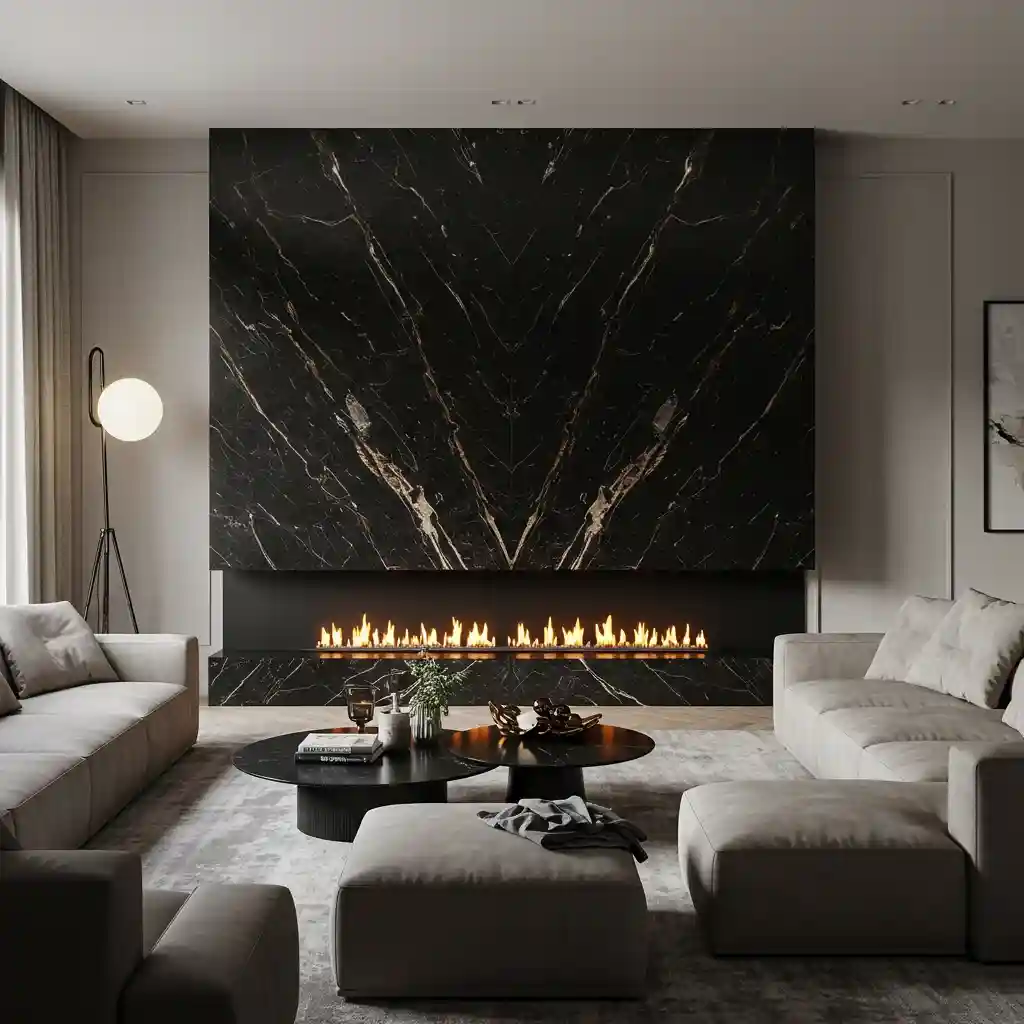
The most natural focal point in a living room is often a fireplace. You can make it even more of a statement by cladding the entire fireplace wall in a beautiful, textural material like stacked stone, marble, or reclaimed wood. If you don’t have a fireplace, a large, dramatic media wall with built-in cabinetry and a place for a huge TV can be a great, modern focal point.
- Classic Focal Point: A large, beautiful fireplace.
- Modern Focal Point: A well-designed media wall.
- Other Options: A huge, stunning piece of art or a large window with a spectacular view.
For an enhancement, ensure your focal point is well-lit. Use accent lighting, like a pair of beautiful sconces flanking a fireplace or a picture light over a piece of art, to draw attention to it and make it feel even more special.
14. Design a Dedicated Nook
The “secondary zone” concept (Idea #1) can be taken a step further by designing a dedicated nook for a specific activity. A big living room often has an awkward or empty corner that is perfect for this. By creating a small, purposeful nook, you make the entire room feel more functional and you give that forgotten corner a new lease on life.
This is a great way to add a very personal touch to your living room. I love to work with my clients to figure out what kind of nook would bring them the most joy.
- A Reading Nook: A single, super-comfortable armchair, an ottoman, a small side table, and a great reading lamp.
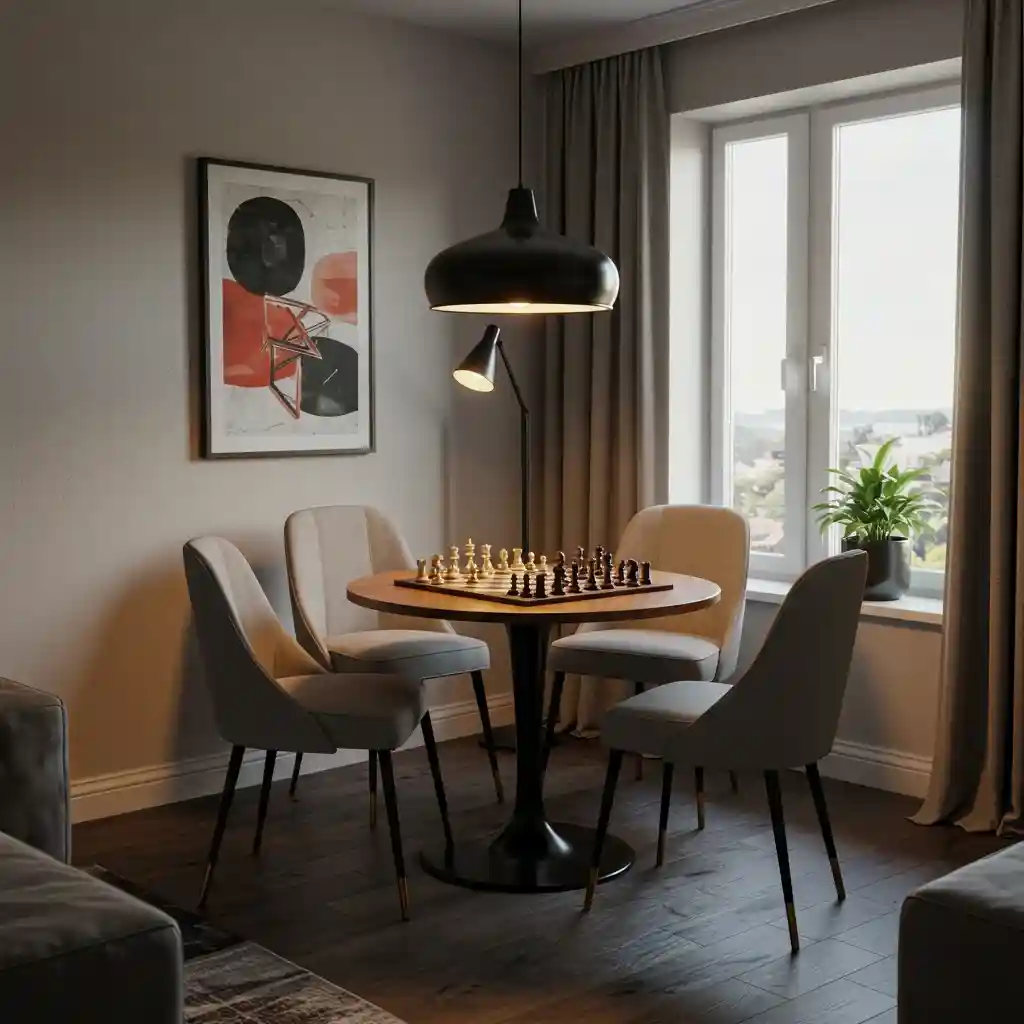
- A Game Nook: A small, round table with two or four comfortable chairs, perfect for playing cards, board games, or doing a puzzle.
- A Music Nook: A corner dedicated to a beautiful record player and a comfortable chair for listening, with shelves for your vinyl collection.
- A Bar Nook: A small, built-in bar cabinet and a pair of stylish stools.
For an enhancement, visually define your nook to make it feel even more special. You can do this by using a different, bold paint color or a wallpaper on the walls of the nook, or by placing a small, round rug on the floor underneath it.
15. The Symmetrical Layout with Two Sofas
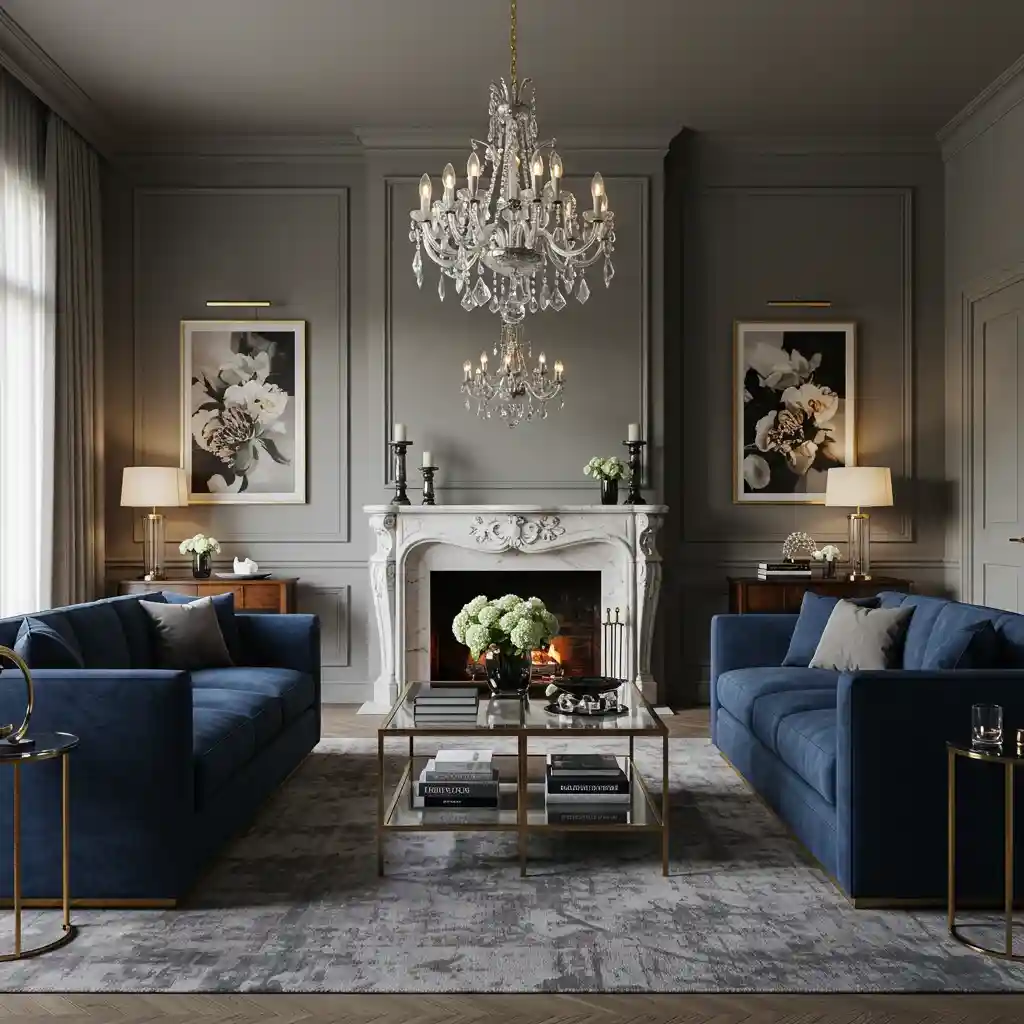
For a formal, classic, and beautifully balanced living room, a symmetrical layout with two matching sofas is a timeless choice that works particularly well in a large space. In this arrangement, the fireplace or a large window is the primary focal point. The two sofas are placed directly facing each other, perpendicular to the focal wall, with a large coffee table in between. This creates a powerful, elegant conversation area and fills the space beautifully.
This layout is not primarily designed for TV watching, but it is incredibly beautiful and perfect for homeowners who prioritize formal entertaining and conversation. The perfect symmetry, as often seen in the pages of Architectural Digest, creates a sense of calm, order, and grandeur that is perfectly suited to a large room.
- Best For: Formal living rooms, homeowners who prioritize conversation over TV.
- Furniture: Two identical sofas are key to achieving the perfect symmetry.
- Effect: Creates a very elegant, balanced, and formal look that fills a large space effectively.
For an enhancement, use a large, striking area rug that is big enough for both sofas to have all their legs on it. This will unify the entire seating arrangement and make it feel even more grand and cohesive.
Conclusion
A big living room is a wonderful asset, and with the right design strategies, it can be transformed from an intimidating, empty space into a warm, stylish, and highly functional heart of your home. As we’ve explored through these 15 ideas, the key to success lies in conquering the scale and creating a sense of intimacy. By dividing the room into functional zones, choosing appropriately scaled furniture, and layering in rich textures, warm lighting, and architectural details, you can create a space that feels both grand and graciously inviting.
Frequently Asked Questions (FAQs)
How do you make a big living room feel cozy and warm?
The key is to create smaller, intimate zones within the larger space. “Float” your furniture away from the walls into cozy conversation groups, and anchor them with large, plush area rugs. Use a rich, layered lighting scheme with multiple warm lamps on dimmers. And incorporate a wealth of soft, warm textures like chunky knit blankets, velvet pillows, and heavy curtains.
How do you arrange furniture in a huge living room?
The most important principle is to “float” your furniture away from the walls. Create at least two distinct zones: a primary seating area for TV or conversation, and a secondary nook for reading, games, or smaller conversations. Use large area rugs to define these zones.
What size rug do I need for a large living room?
The rug needs to be large enough to properly anchor your main seating arrangement. A common rule is that at least the front legs of all your sofas and chairs in a grouping should be on the rug. In a very large room, you might even choose a rug that is large enough for all the furniture in a zone to sit completely on top of it.
How do you fill an empty corner in a large living room?
An empty corner is a perfect spot for a secondary zone or a statement piece. You can create a reading nook with a comfortable armchair and a floor lamp. You can place a large, sculptural, statement plant or tree. Or, you can add a game table with a couple of chairs.
Should I use light or dark colors in a big living room?
You can use either! Light colors will make the large space feel even more vast and airy. However, a big living room is a perfect opportunity to use a dark, moody, and saturated color (like charcoal or navy) on the walls. The dark color can make a vast, cavernous room feel much more intimate and cozy.
How do I choose furniture that is the right scale?
Before you buy, use painter’s tape to mark the dimensions of the potential furniture piece on your floor. This will help you visualize how much space it will actually take up. Look for “grand scale” or oversized pieces. A small sofa will look lost in a big room.
What is a “conversation pit”?
A conversation pit is a seating arrangement, often sunken below floor level, where the furniture is arranged to face inwards, creating a very cozy and intimate space that is specifically designed for conversation. You can create the “feel” of one with a large, U-shaped sectional.