
Introduction
Are you looking to create a cottage living room that feels like a warm, cozy, and heartfelt retreat? Cottage style is the antidote to the sleek, impersonal nature of modern minimalism. It’s an aesthetic built on comfort, nostalgia, and the beauty of imperfection. A cottage living room is a space that tells a story; it feels collected over time, filled with comfortable furniture, soft textiles, and personal treasures. It’s a style that invites you to curl up with a good book, sip a cup of tea, and escape from the hustle and bustle of the outside world.
This guide will walk you through 15 essential ideas to help you infuse your living room with the cozy, romantic, and utterly charming spirit of cottage style.
1. The Comfort of a Slipcovered Sofa
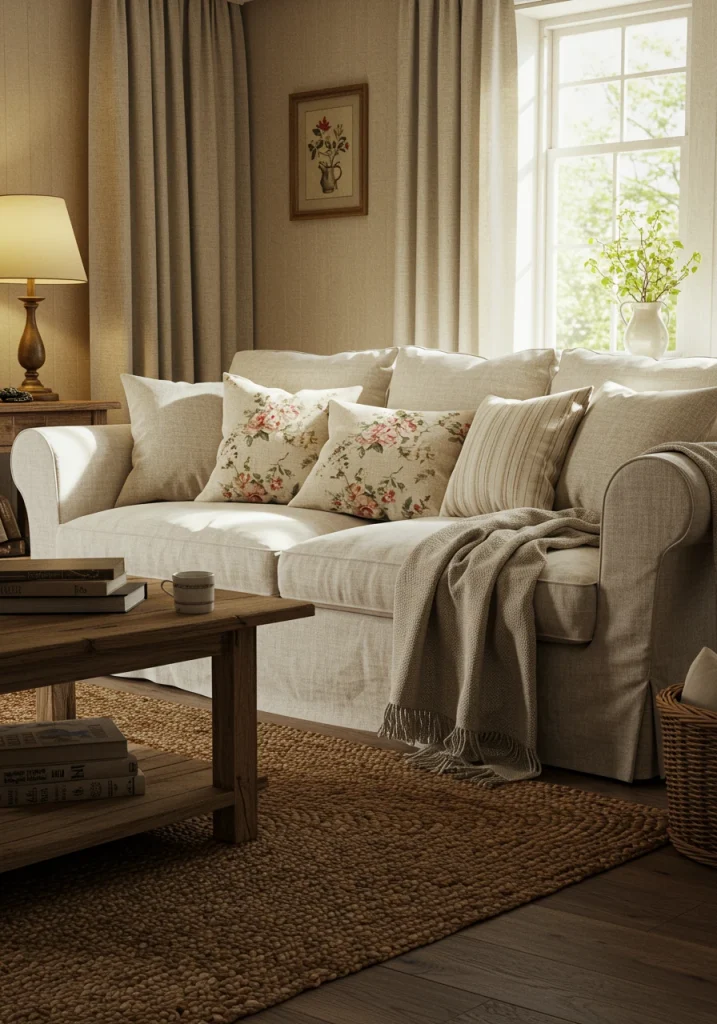
The heart of any cottage living room is comfortable, inviting seating, and nothing says “cozy and relaxed” quite like a slipcovered sofa. A slipcover, typically in a durable and soft fabric like cotton canvas or linen, instantly softens the lines of a sofa and creates a casual, unpretentious feel. It’s a look that says, “Come on in, put your feet up, and don’t worry about being too precious.”
The practicality of slipcovers is a huge part of their appeal. I always recommend them to my clients with families or pets. The ability to remove and wash the slipcover takes away the stress of everyday spills and life’s little messes. A classic white or off-white slipcovered sofa is a versatile and timeless foundation for a cottage living room, providing a perfect, neutral canvas for layering colorful, patterned pillows and cozy throws.
- Fabric Choice: A durable, washable cotton canvas, a soft linen blend, or even a classic ticking stripe.
- Style: Look for a sofa with a relaxed silhouette, like one with rolled arms and a simple skirt.
- Comfort is Key: Choose a sofa with deep, plush cushions that you can really sink into.
For an enhancement that adds a touch of custom charm, have a second set of slipcovers made in a different color or a subtle pattern, like a soft floral. You can swap them out seasonally to give your living room a fresh look.
2. Mix and Match Furniture for a Collected Look
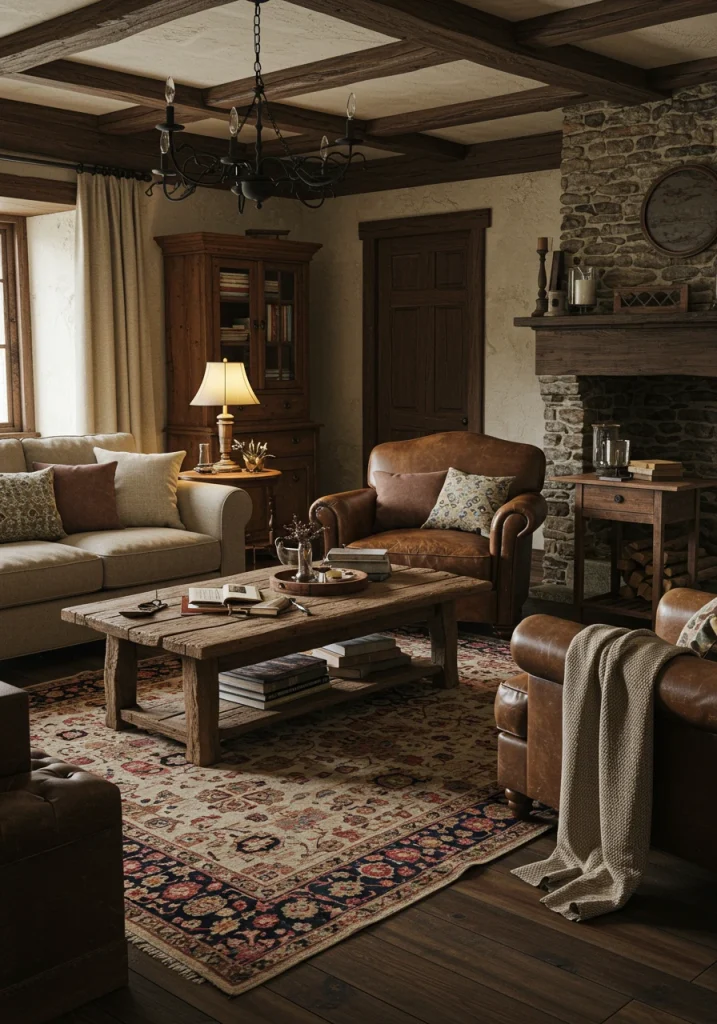
A core principle of cottage style is that a room should look as if it has been lovingly collected over time, not purchased from a showroom floor. Resist the urge to buy a matching set of living room furniture. Instead, embrace the charm of mixing and matching different pieces. A comfortable, modern sofa can sit beautifully next to a vintage, ornately carved armchair that you inherited, and a rustic, reclaimed wood coffee table can be paired with a delicate, antique side table.
This collected approach is what gives a cottage living room its unique personality and soul. I love helping clients “shop their own homes” to find forgotten pieces that can be brought into the living room to create a more layered look. The key to making a mismatched collection feel cohesive is to find a common thread, such as a similar wood tone, a repeated color, or a consistent level of formality (or informality).
- Combine Old and New: Mix modern, comfortable seating with antique or vintage case goods.
- Vary the Styles: A rustic farmhouse coffee table can work with a more traditional armchair.
- Don’t Be Afraid of Imperfection: A few scratches or a bit of worn paint on a vintage piece adds character.
For a cohesive enhancement, you can unify a collection of mismatched wooden chairs or tables by painting them all the same color. A soft, creamy white or a pale sage green can instantly make a group of different pieces feel like a deliberate and charming collection.
3. Incorporate Painted and Distressed Wood
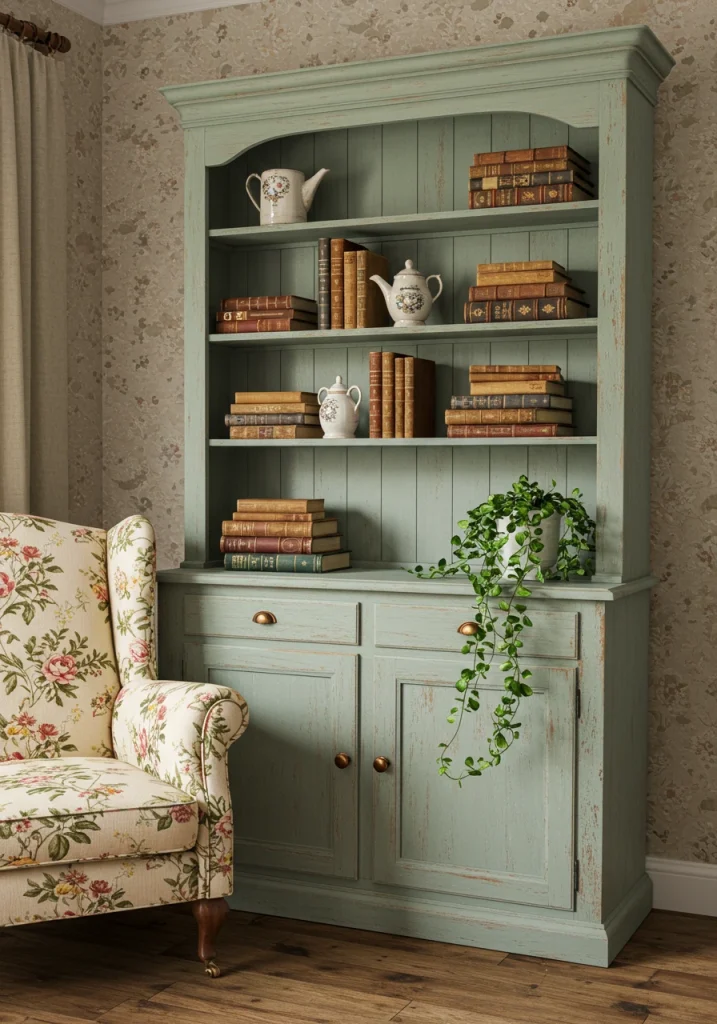
Painted wood furniture is a hallmark of cottage style. It has a humble, handmade quality that feels both cheerful and timeless. Look for pieces like bookcases, coffee tables, or console tables that have been painted in soft, classic colors like creamy white, pale blue, soft green, or butter yellow. A distressed or “shabby chic” finish, where the paint is lightly sanded on the edges to reveal the wood underneath, adds a beautiful, time-worn, rustic feel.
This is a fantastic way to breathe new life into an old, dated piece of wooden furniture. I often take clients to flea markets to find a sturdy but unattractive brown wood cabinet. With a bit of chalk paint and some light sanding, it can be transformed into the perfect, charming centerpiece for their cottage living room.
- Color Palette: Soft, muted, nature-inspired colors.
- The Finish: A matte or eggshell finish, like that of chalk paint, is ideal.
- DIY Project: This is a very easy and rewarding DIY project for a beginner.
- Key Pieces: Bookcases, sideboards, coffee tables, and accent chairs.
For an enhancement, after painting and distressing your piece, swap out the hardware. Replacing the old knobs or pulls with new ones made of ceramic, glass, or a vintage-style metal can be the perfect finishing touch.
4. Use Beadboard or Shiplap for Wall Character
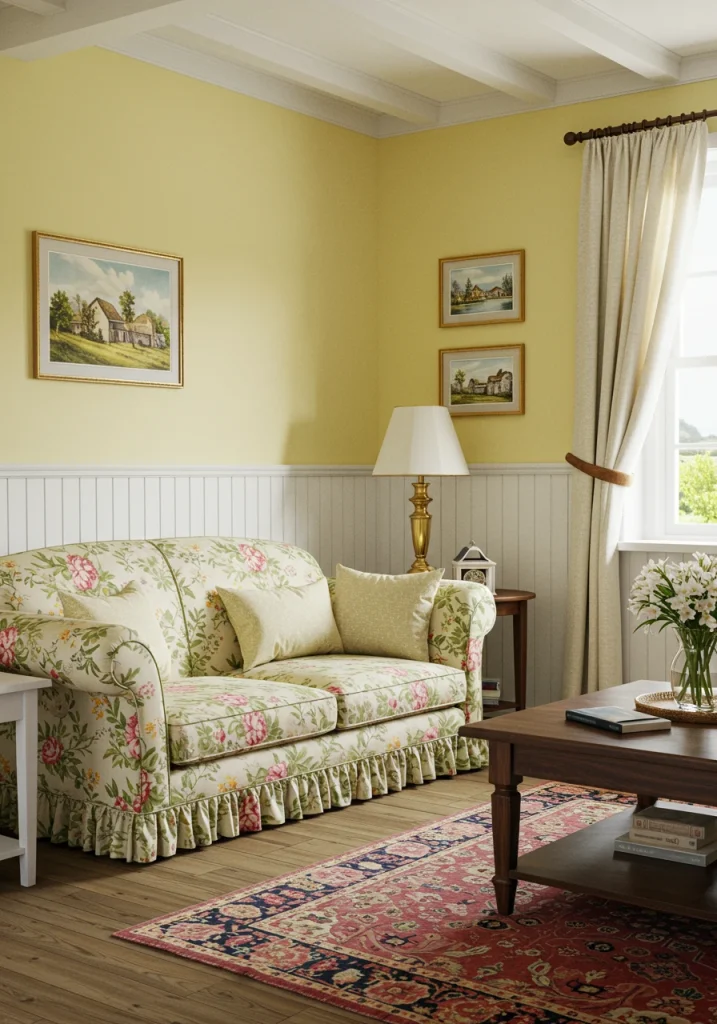
A plain, flat, drywall surface can sometimes feel too modern for a true cottage look. Adding architectural character to your walls with beadboard or shiplap paneling is a fantastic way to instantly evoke a sense of history and charm. Beadboard, with its classic, narrow, vertical grooves, is a quintessential element of cottage and coastal style. It adds a subtle texture and a clean, crisp feel to a room.
I often recommend installing beadboard on the lower half of the walls, as a form of wainscoting, and capping it with a simple chair rail. This adds a layer of protection to the walls and a huge amount of architectural interest. For a slightly more rustic, farmhouse-cottage feel, horizontal shiplap can also be a beautiful choice.
- Beadboard: Classic, clean, and vertical. Perfect for a traditional or coastal cottage look.
- Shiplap: Horizontal boards that add a more rustic, farmhouse feel.
- Application: Can be used on all four walls, as a wainscoting, or on a single accent wall or ceiling.
- Color: Almost always painted a classic, crisp, creamy white or off-white.
For an enhancement, take your beadboard all the way up to the ceiling on a single, focal wall, such as the wall behind your sofa. This can create a stunning, textural feature and add a sense of height to the room.
5. Layer with Vintage and Handmade Textiles
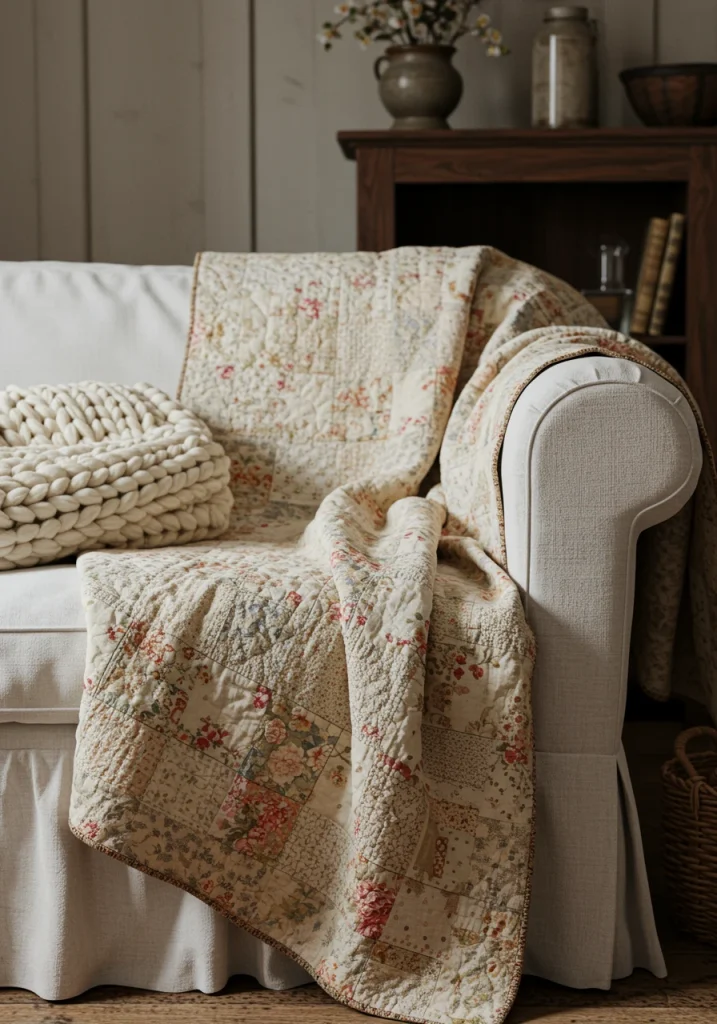
The textiles in a cottage living room are all about comfort, texture, and a sense of history. This is the place to showcase handmade and vintage pieces that have a story. A beautiful, hand-stitched quilt, a chunky knit blanket made by a family member, or a collection of needlepoint pillows found at a flea market can all add a huge amount of soul and character to your space.
I love to see a beautiful, faded, vintage quilt draped over the back of a sofa. It adds a layer of color, pattern, and history that is impossible to replicate with a new, mass-produced item. The key is to layer these pieces casually. The cottage look is relaxed and unpretentious, not perfectly staged.
- Quilts: A handmade or vintage quilt is the ultimate cottage accessory.
- Knits: Chunky, cable-knit, or Aran wool blankets.
- Needlepoint: Small, decorative needlepoint pillows can add a touch of charming, grandmillennial flair.
- Lace and Crochet: A delicate, vintage, lace or crocheted table runner on a coffee table is a classic, nostalgic touch.
For an enhancement, create a small gallery wall using a collection of vintage textile hoops. You can frame small, beautiful scraps of vintage fabric or embroidery in different-sized wooden embroidery hoops for a charming, crafty, and unique art display.
6. Incorporate Classic Patterns like Florals and Checks
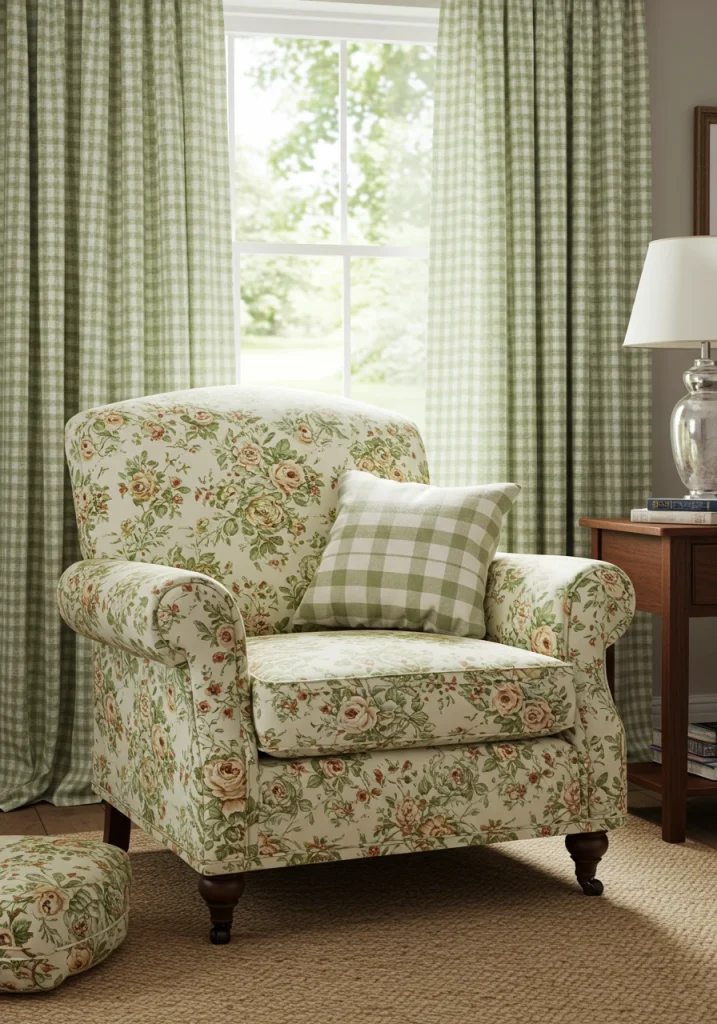
A cottage living room joyfully embraces pattern. This is not a place for stark solids. Classic, traditional patterns like florals, gingham checks, and simple stripes are essential for creating that charming, layered, and slightly busy (in a good way!) cottage feel. The key to mixing these patterns with a gentle confidence is to find a common color palette that ties them all together.
A floral chintz fabric on an armchair is a timeless cottage statement. I often tell my clients to start with one large-scale “hero” pattern, like a big floral, and then to support it with a few smaller-scale, simpler patterns, like a simple stripe or a gingham check, in complementary colors. This is a core principle of the “grandmillennial” style, which is deeply rooted in cottage aesthetics.
- Florals: Chintz, cabbage roses, and small, ditsy floral prints are all classic choices.
- Checks and Plaids: Gingham, buffalo check, and simple windowpane patterns.
- Stripes: A classic, ticking stripe is a perfect, simple, neutral pattern.
For a cohesive enhancement, choose a simple, two-color pattern, like a blue and white check, and repeat it in a few different places throughout the room—perhaps on a pair of pillows, the trim of a lampshade, and a ceramic vase. This repetition will tie the room together.
7. Style with Botanical Prints
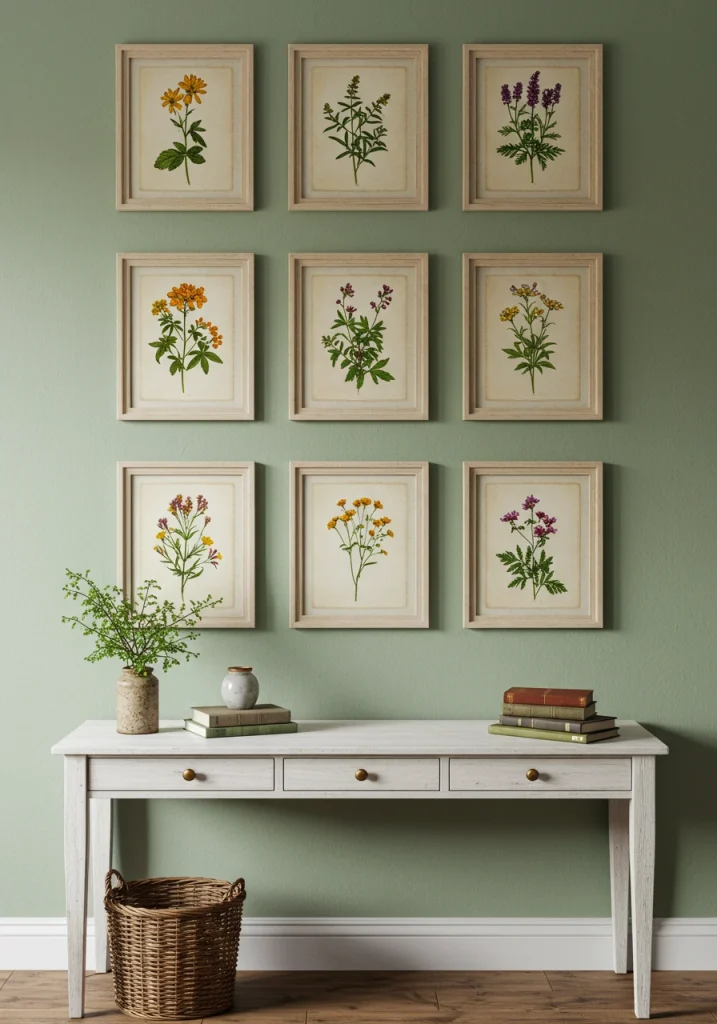
Given the strong connection between a cottage and its garden, it’s only natural to bring the beauty of the outdoors in through botanical art. A gallery wall or a simple series of framed botanical prints is a classic and sophisticated way to decorate the walls of a cottage living room. These prints have a timeless, scholarly, and natural charm that is a perfect fit for the aesthetic.
I love to scour flea markets and old bookstores for vintage books with beautiful, hand-colored botanical illustrations. You can carefully remove the pages and frame them for a truly authentic, one-of-a-kind piece of art. This is a very budget-friendly way to create a large, high-impact gallery wall.
- Source: Look for vintage book pages, modern reproduction prints on sites like Etsy, or press your own flowers and leaves.
- Frames: A collection of simple, matching frames (in a light wood or a thin, vintage-style gold) will unify the display.
- Arrangement: Hang a symmetrical grid of prints for a more formal look, or a more casual, salon-style hang for an eclectic feel.
For an enhancement, instead of just framing the prints, find a beautiful, botanical-themed wallpaper with a more subtle, tone-on-tone pattern to use on an accent wall. This can create a beautiful, immersive, garden-like backdrop for your room.
8. Use Baskets for Cozy, Natural Storage
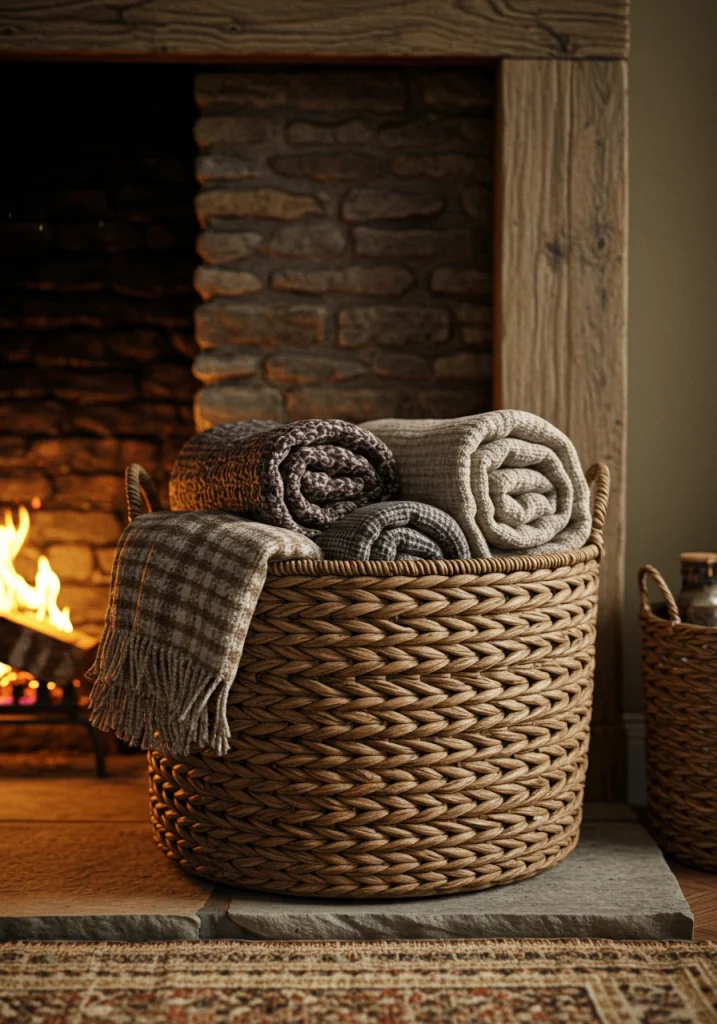
Baskets are an essential accessory in a cottage living room. Their natural, woven textures add a layer of rustic, homespun charm, and they are incredibly practical for providing stylish, cozy storage. A cottage should feel comfortable and lived-in, not stark and empty, and baskets are the perfect vessel for corralling the cozy clutter of everyday life.
I use baskets everywhere in my cottage designs. A large, sturdy, woven basket on the hearth is the perfect place to store firewood or a collection of rolled-up throw blankets. A smaller basket on a bookshelf can hide away remote controls and other electronics. A shallow, tray-like basket is a perfect, soft alternative to a hard coffee table tray.
- Materials: Look for baskets made of natural materials like seagrass, water hyacinth, rattan, or willow.
- Uses: For blankets, pillows, firewood, magazines, toys, or even as a decorative planter for a houseplant.
- Placement: On the floor, on shelves, under console tables—anywhere you need storage or a touch of natural texture.
For a charming enhancement, choose a basket with a bit of extra detail, like leather handles or a simple, painted stripe around the middle. This small detail can make a simple basket feel a bit more special.
9. Create a Cozy Reading Nook
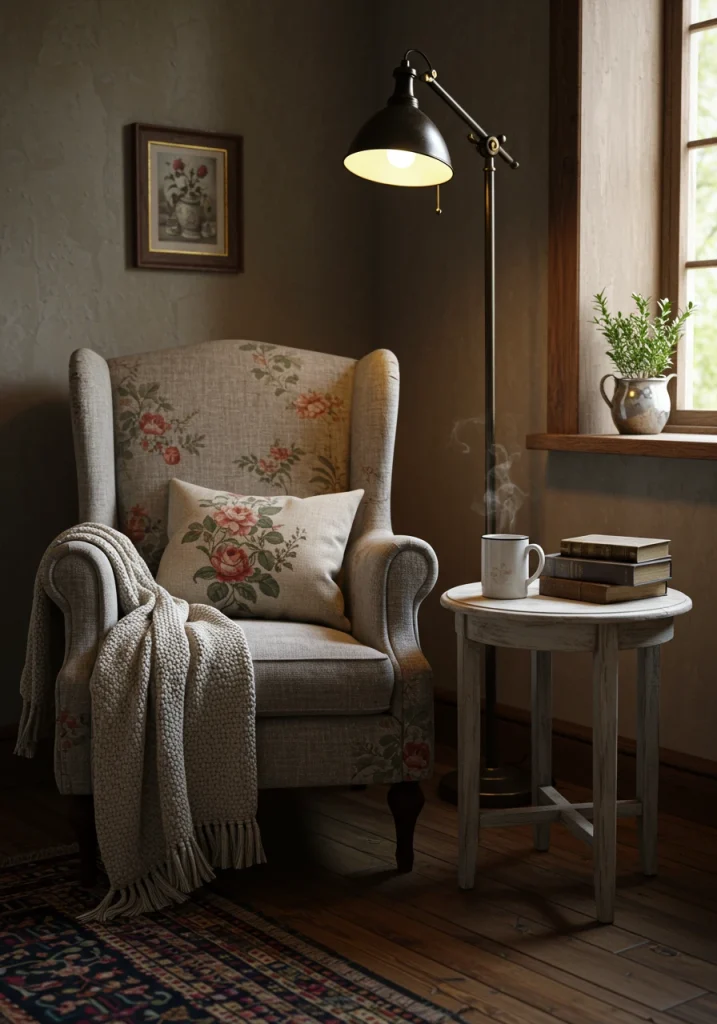
A cottage living room is the perfect place to create a dedicated reading nook. The entire aesthetic is about comfort, relaxation, and escaping into a good story. You don’t need a lot of space to do this; a quiet corner of the room with good light can be easily transformed into an irresistible retreat.
The essential ingredient is a very comfortable chair. I always suggest my clients find the most comfortable armchair they can, one with soft cushions and a supportive back. Add a small side table to hold a cup of tea and your book, and make sure you have a good reading lamp. A soft ottoman or footstool to put your feet up is the ultimate finishing touch.
- The Chair: A plush, comfortable armchair, perhaps with a slipcover or in a soft, floral fabric.
- Good Lighting: A dedicated floor lamp or a small table lamp with a warm-toned bulb.
- A Surface: A small side table or a garden stool.
- Ultimate Coziness: A soft blanket and a plush pillow are non-negotiable.
For an enhancement that adds to the scholarly, bookish feel, install a few, simple, floating shelves on the wall next to your reading chair. This creates a small, dedicated library for your current and future reads.
10. Choose a Soft, Nature-Inspired Color Palette
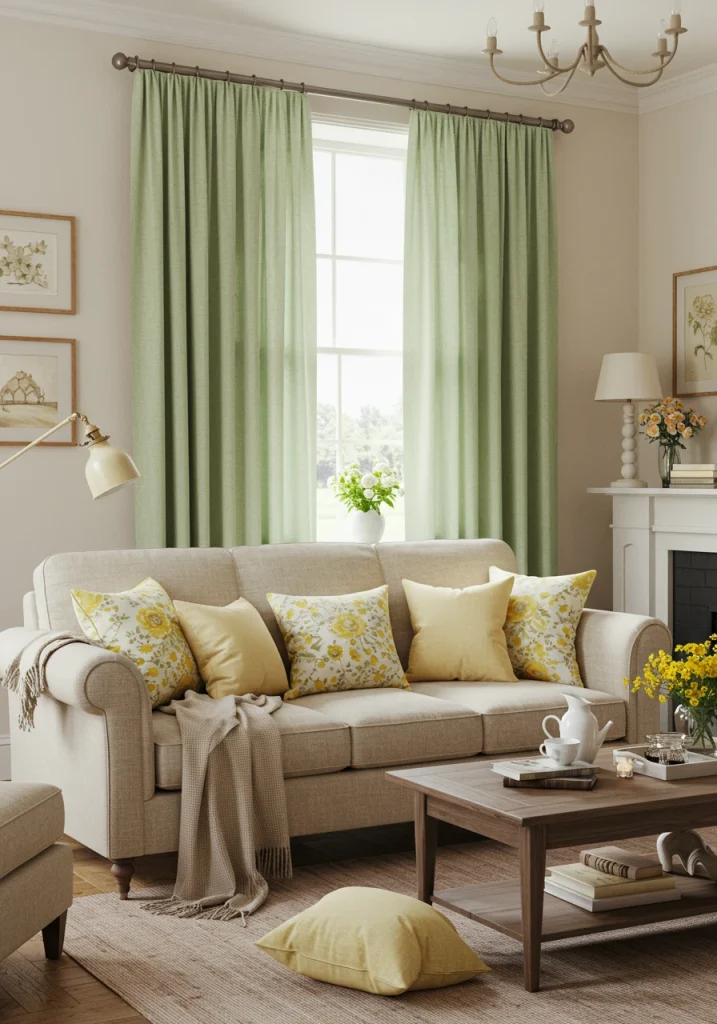
The color palette of a cottage living room should be soft, gentle, and inspired by the colors of a country garden. Think of the soft, muted hues of flowers, the warm, earthy tones of the soil, and the pale, airy colors of the sky. This is not a style for bold, primary colors or stark, high-contrast schemes. The goal is to create a calm, serene, and welcoming atmosphere.
I often start a cottage design by pulling colors from a piece of floral “inspiration fabric.” The soft, buttery yellows, dusty roses, sage greens, and pale, sky blues found in a classic chintz fabric are a perfect starting point. The main wall color is typically a warm, creamy white, a soft beige, or a very pale, muted color.
- Wall Colors: Creamy white, warm beige, pale sage green, dusty blue, or a soft, buttery yellow.
- Accent Colors: Dusty rose, faded reds, and other soft, floral-inspired hues.
- Finish: A matte or eggshell paint finish will enhance the soft, gentle feel.
For an enhancement, paint the interior back of a glass-fronted cabinet or a built-in bookshelf in one of your soft, accent colors. This is a classic designer trick that adds a surprising and charming pop of color to the room.
11. Add Wicker and Rattan for Natural Texture
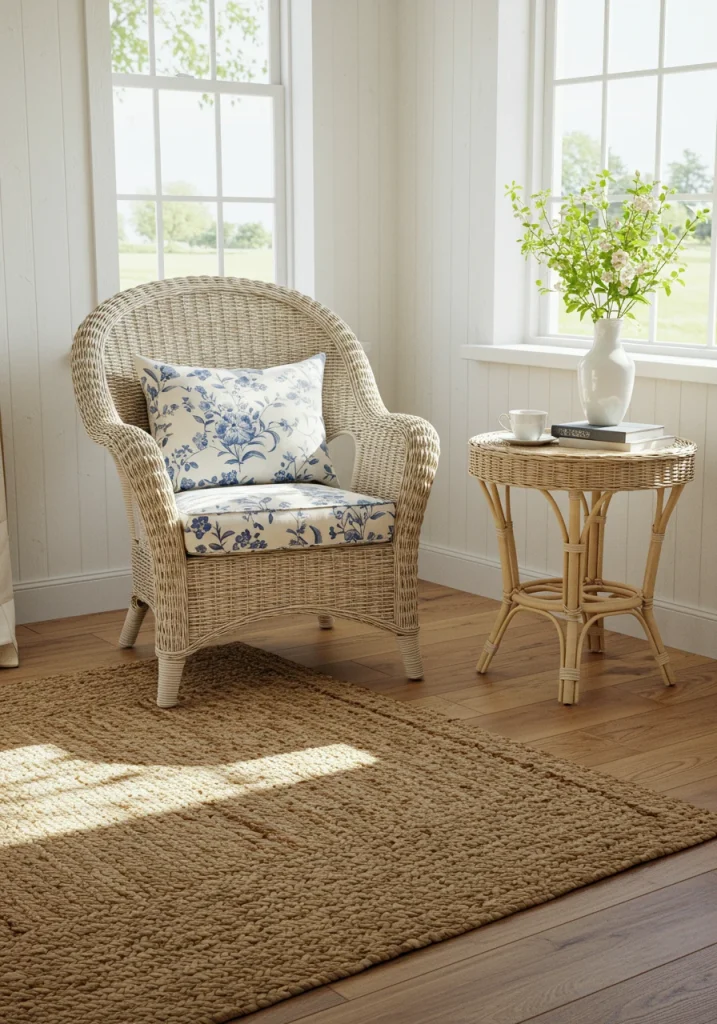
Wicker and rattan are classic materials that are right at home in a cottage living room. Their natural, woven texture adds a layer of rustic, garden-inspired charm and a sense of lightness and airiness. These materials help to create a bridge between the indoors and the outdoors, making the living room feel connected to the garden.
You can incorporate these materials in many ways. A classic, wicker armchair with a comfortable cushion can be a beautiful and lightweight accent chair. A small, rattan side table or a wicker trunk used as a coffee table can add a huge amount of natural texture. As a designer, I find that even a few small, woven accents can make a room feel more relaxed and informal.
- Furniture: Wicker or rattan armchairs, coffee tables, and side tables.
- Storage: Wicker trunks or large, lidded baskets.
- Accents: A rattan mirror frame, a woven tray on an ottoman, or a wicker lamp shade.
For a simple and charming enhancement, find a vintage wicker plant stand. A multi-tiered stand allows you to display a collection of your favorite houseplants, creating a beautiful, green, and textural feature in a corner of the room.
12. Display Collections of Vintage Finds
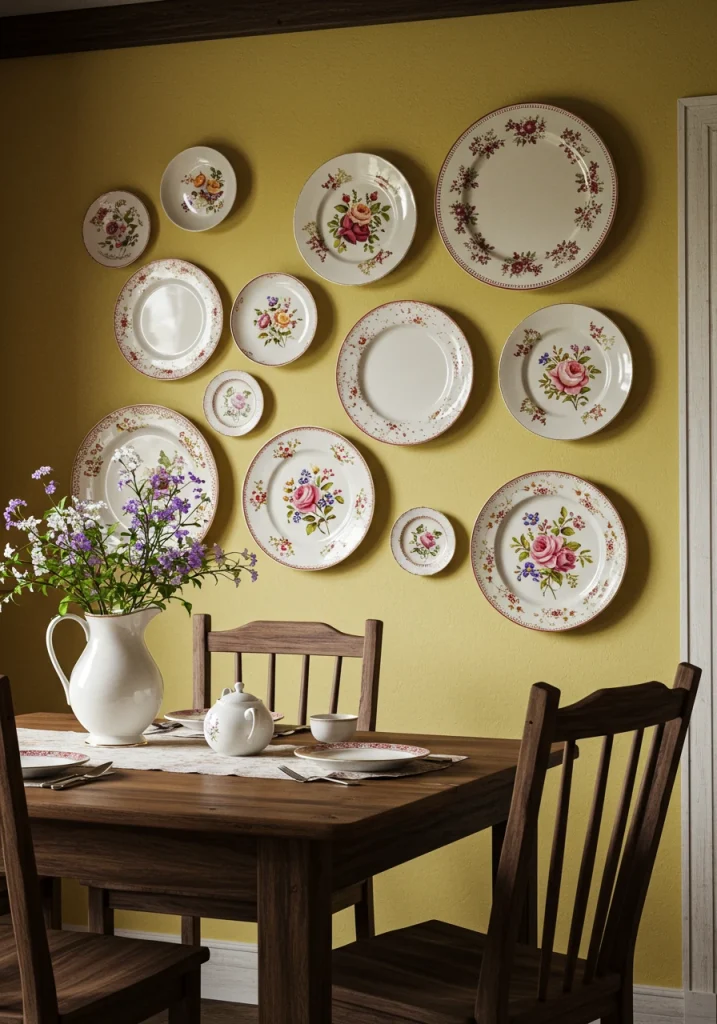
A cottage living room should feel personal and collected. A wonderful way to add a unique, custom touch is to display a collection of vintage items on your walls or shelves. A gallery wall of mismatched, vintage landscape paintings in ornate, thrifted frames can add a huge amount of character. Another classic and very charming idea is to hang a collection of beautiful, decorative plates.
I love helping clients create a plate wall. You can find beautiful, inexpensive, individual plates at antique stores and flea markets. Look for plates with floral patterns, bird motifs, or a simple, elegant border. A collection of classic, blue and white transferware plates can also be a stunning, graphic statement.
- What to Collect: Mismatched china plates, small, vintage oil paintings, or framed silhouettes.
- How to Hang: Arrange your collection on the floor first to perfect the layout. Use sturdy, spring-loaded plate hangers for plates.
- Placement: Above a sofa, a sideboard, or in a dining nook.
For an enhancement that makes your collection feel more cohesive, look for pieces that share a common theme or a common color. For example, a collection of different plates that all feature a shade of pink, or a gallery wall of only small, pastoral landscape paintings.
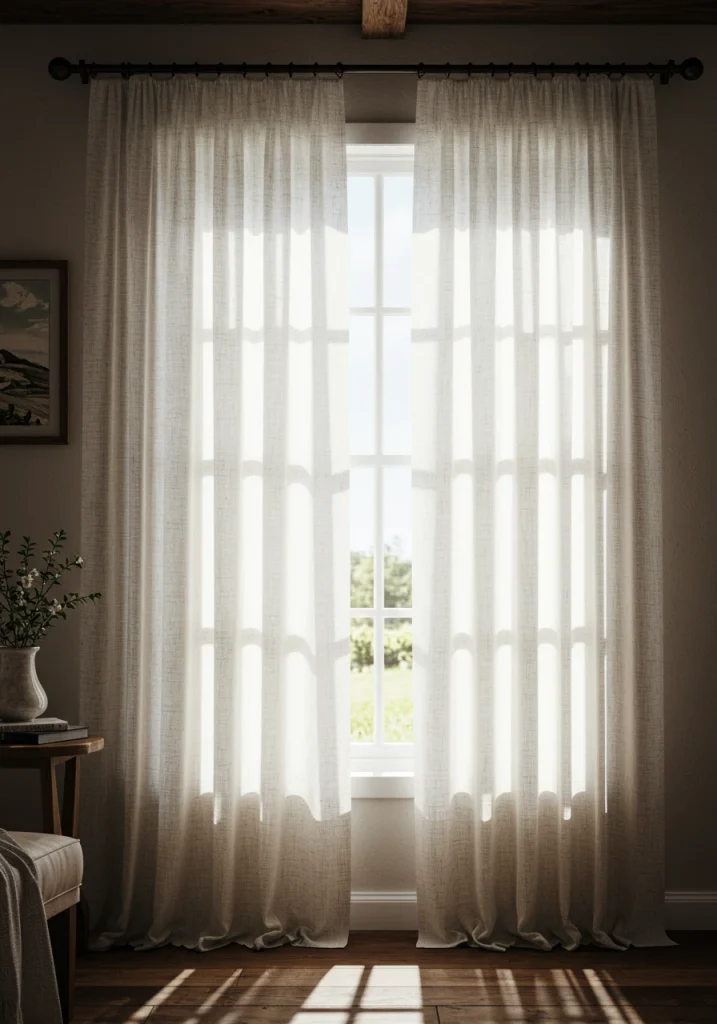
13. Use Soft, Breezy Window Treatments
The window treatments in a cottage living room should be soft, simple, and designed to gently filter the light rather than block it out completely. Heavy, formal, pleated drapes can feel too stuffy for the relaxed cottage aesthetic. Instead, opt for more casual and breezy styles that feel light and romantic.
Simple, sheer linen or cotton curtain panels that you can pull closed for a bit of privacy are a perfect choice. A classic, Roman blind in a soft, floral or striped fabric is another wonderful option that provides a clean, tailored look when raised. I often suggest simple, cafe-style curtains for smaller windows, as they provide privacy on the lower half of the window while still allowing plenty of light to stream in through the top.
- Fabric Choice: Lightweight and natural fabrics like linen, cotton, or a simple sheer.
- Style: Simple curtain panels, Roman blinds, or charming cafe curtains.
- Hanging: Hang your curtain rods high and wide (several inches above and beyond the window frame) to make your windows feel larger.
For a very simple and classic enhancement, instead of formal tie-backs, use a simple, wide ribbon made of silk or linen to tie your curtain panels back in a soft, graceful drape.
14. Light it Up with Charming, Vintage-Style Lamps
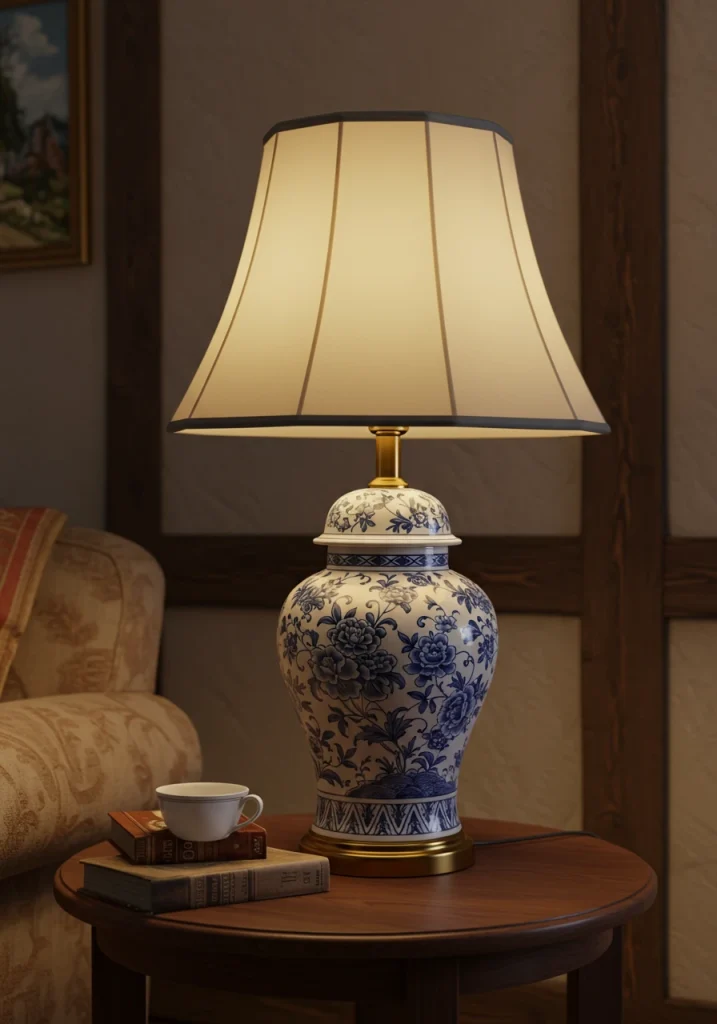
Good lighting is essential for creating a cozy atmosphere, and in a cottage living room, your lamps should be just as charming as the rest of your decor. This is a great place to add a touch of vintage character. Look for lamps with interesting, shapely bases and soft, fabric lampshades that will cast a warm, diffused glow.
Flea markets and antique stores are fantastic sources for unique, one-of-a-kind lamp bases. Look for bases made of ceramic with a floral pattern, turned wood, or even old ginger jars that have been converted into lamps. I always tell my clients that a beautiful, pleated or patterned fabric lampshade can instantly elevate a simple lamp base and add a huge amount of cottage charm.
- Bases: Ceramic, turned wood, or vintage glass.
- Shades: Soft, fabric shades, especially pleated or gathered ones.
- Placement: You should have several lamps scattered around the room to create multiple, warm pools of light.
For an enhancement that is a true hallmark of the “grandmillennial” cottage style, add a simple, decorative ribbon trim to the top and bottom edge of a plain, fabric lampshade.
15. Fill with Plants and Fresh Flowers
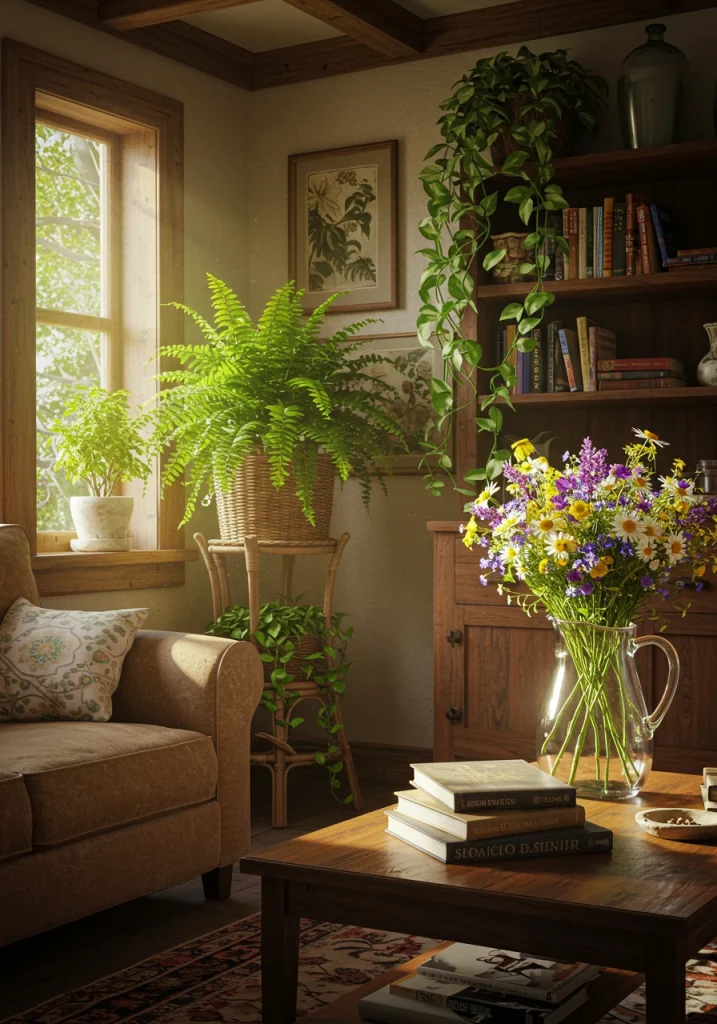
A cottage living room should feel alive and deeply connected to the garden outside. The easiest and most beautiful way to achieve this is to fill your space with an abundance of green houseplants and vases of fresh flowers. Plants add a touch of life, a natural, organic element, and a beautiful pop of color that will energize your space.
I always tell my clients that a room isn’t finished until it has something living in it. You don’t need to be a green thumb.
- Houseplants: A few, easy-care plants, like a trailing pothos on a bookshelf or a beautiful fern in a vintage planter, can make a huge difference.
- Fresh Flowers: A simple, informal bouquet of flowers from your garden (or the grocery store) in a rustic pitcher or a simple glass jar is a classic cottage touch.
- Vessels Matter: Use charming, vintage, or handmade pots and vases for your plants and flowers.
For an enhancement, force some bulbs like paperwhites or amaryllis to bloom indoors during the winter months. The beautiful, fragrant blooms will provide a welcome and life-affirming touch of the garden during the coldest part of the year.
Conclusion
Creating a cottage living room is about crafting a space that feels like a warm hug. As we’ve explored through these 15 ideas, the essence of the style lies in its relaxed, unpretentious, and deeply personal nature. It’s a celebration of comfort, history, and the simple beauty of a life well-lived. By embracing comfortable, slipcovered furniture, layering a joyful mix of patterns and handmade textiles, and incorporating the natural charm of wood, wicker, and fresh flowers, you can create a living room that is a true, cozy retreat.


