
Are you looking for beautiful white farmhouse living room ideas to create a space that is bright, airy, and full of timeless, rustic charm? The modern farmhouse style has captured the hearts of homeowners for its ability to feel both fresh and clean, yet incredibly warm and inviting. At the core of this beloved aesthetic is a celebration of white not as a cold, sterile color, but as a soft, versatile canvas for layering natural textures, rustic woods, and cozy textiles. A white farmhouse living room is a sanctuary of comfort, a place that feels both thoughtfully designed and effortlessly livable.
This guide will walk you through 15 essential ideas, from adding architectural character with shiplap to layering cozy textures, that will help you create the perfect, light-filled, and charming white farmhouse living room.
1. Choose the Right Shade of White Paint
The foundation of any white farmhouse living room is, of course, the white paint on the walls. But not all whites are created equal. The right shade of white can make your room feel warm, inviting, and spacious, while the wrong one can feel cold, stark, and clinical. The key is to choose a white with the right undertone to create the cozy, comfortable atmosphere you’re looking for.
I always advise my clients to avoid stark, pure whites with cool, blueish undertones. Instead, opt for a white with a soft, warm, creamy, or slightly grayish undertone. These “off-whites” have a bit of softness and depth that is much more forgiving and creates a more welcoming backdrop for your rustic decor. Always test your paint samples on your wall and observe them at different times of the day, as the natural light will affect how the color reads.
- Warm Whites: Have creamy, yellow, or beige undertones. Look at shades like Benjamin Moore’s “White Dove” or Sherwin-Williams’ “Alabaster.”
- Soft Gray-Whites: Have a hint of gray for a slightly more modern, less creamy look. Look at shades like Farrow & Ball’s “Wimborne White.”
- Paint Finish: A matte or eggshell finish will give your walls a soft, non-reflective look that is perfect for the farmhouse style.
For an enhancement, use the same, soft white paint color on your walls, trim, and ceiling. This creates a seamless, cohesive, and enveloping feel that makes the room feel larger and more serene.
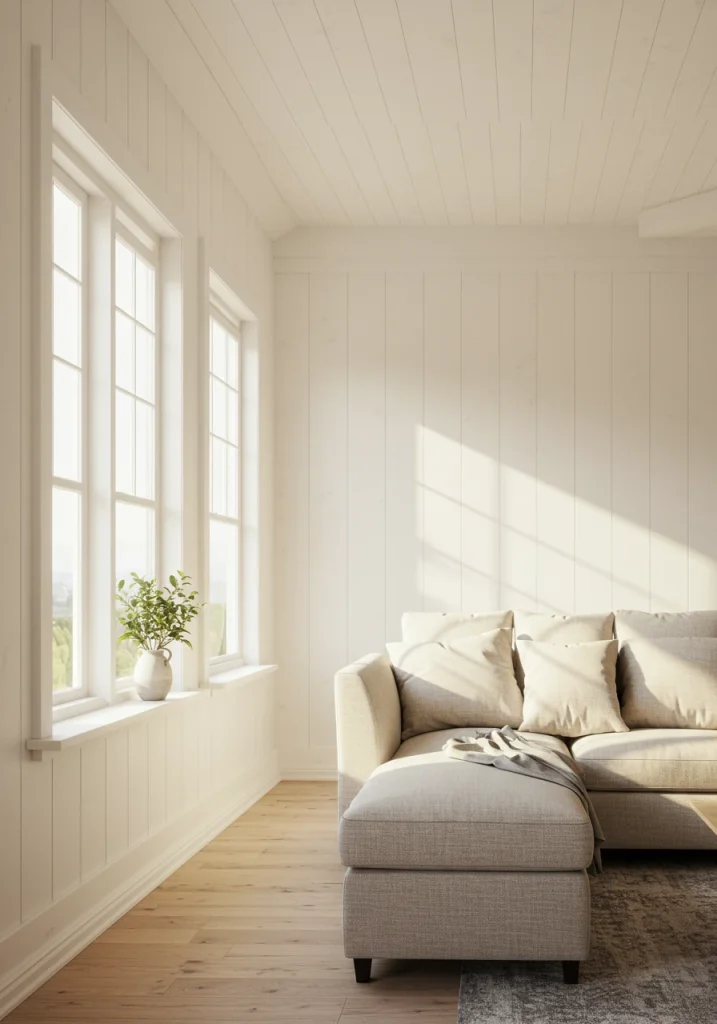
2. Install a Shiplap or Beadboard Feature Wall
Nothing says “modern farmhouse” quite like a shiplap feature wall. This classic wall paneling, with its distinctive horizontal lines, instantly adds texture, character, and a touch of rustic history to a plain, white room. It breaks up the flat, one-dimensional surface of drywall and creates a subtle, textural backdrop that is a hallmark of the style.
A feature wall behind your sofa or on the wall with your fireplace is the perfect place to add shiplap. I love how it adds a layer of architectural detail that makes a new-build home feel like it has more character and history. While traditional shiplap involves installing individual wooden planks, you can get a similar look more easily with MDF panels that are milled to look like shiplap.
- Shiplap: Horizontal boards that create a rustic, clean, and slightly modern look.
- Beadboard: Vertical, grooved paneling that provides a more traditional, cottage-like feel.
- Application: Use on a single accent wall, on the lower half of the walls as wainscoting, or even on the ceiling for a dramatic effect.
For a classic enhancement, paint your shiplap in a crisp, white, semi-gloss finish. The slight sheen will catch the light and will provide a subtle, textural contrast to the matte or eggshell finish of your other walls.
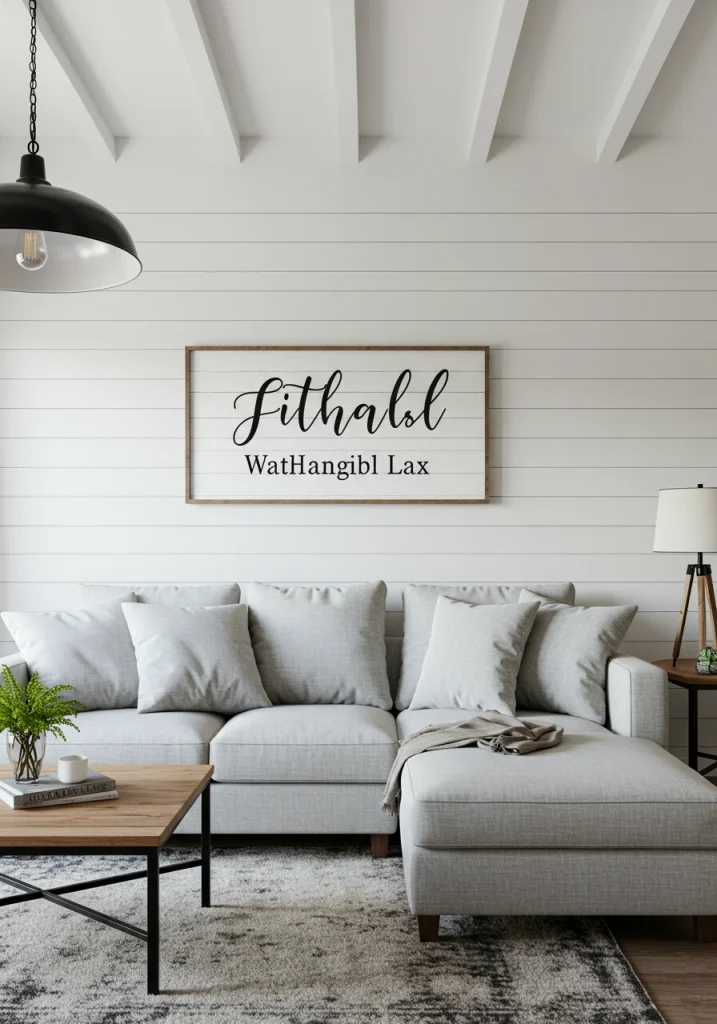
3. Incorporate Warm, Reclaimed Wood Accents
An all-white room can quickly feel cold and sterile without the addition of warming, natural elements. The most important material for adding warmth and rustic character to a white farmhouse living room is wood, especially reclaimed or distressed wood with a sense of history and texture. The warm, earthy tones and rustic grain of wood provide the perfect, organic contrast to the crisp, clean white walls.
I always tell my clients to incorporate at least three different wood elements in their room to create a layered and balanced look. This could be a thick, reclaimed wood beam used as a fireplace mantel, a rustic, solid wood coffee table, and a set of simple, floating shelves made from old barn wood.
- Mantels: A chunky, reclaimed wood mantel is a classic focal point.
- Furniture: Coffee tables, console tables, and side tables in a warm, rustic wood finish.
- Architectural Elements: Exposed ceiling beams or a wooden sliding barn door.
- Accents: Simple wooden picture frames or a large, carved wooden bowl.
For an enhancement, look for a piece of furniture made from reclaimed wood that still shows some of its history, like old nail holes or a faded, painted finish. These imperfections are what give the piece its unique, soulful character.
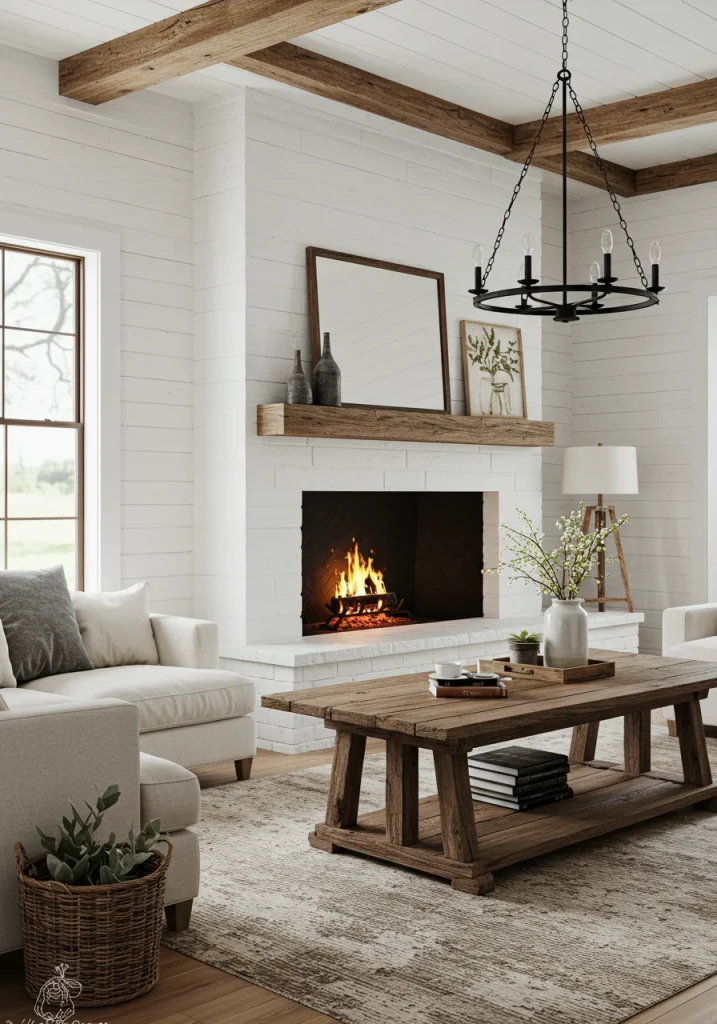
4. Layer with a Natural Fiber Jute Rug
To continue adding warmth and texture to your white living room, an area rug made from a natural fiber like jute or sisal is a perfect choice. These rugs have a beautiful, chunky, woven texture and a warm, golden-beige color that feels both rustic and organic. A large jute rug provides a perfect, casual, and durable foundation for a farmhouse seating area, and its rustic texture is a wonderful contrast to the soft, upholstered furniture.
This is one of the first pieces I select when designing a farmhouse living room. A jute rug is incredibly versatile and surprisingly affordable for its size. As showcased in many Pottery Barn catalogs, it’s the perfect, neutral, textural base for the modern farmhouse look.
- Material: Jute is the softest and most common choice. Sisal is a bit more durable but also more coarse.
- Texture: Adds a casual, rustic, and organic element to the room.
- Versatility: The neutral color and texture work beautifully with the white and wood palette.
For an enhancement that adds another layer of coziness, layer a smaller, softer rug on top of your large jute rug. A small, vintage patterned rug or a simple, faux hide rug placed in the center of the seating area can add a pop of color and a soft, plush texture.
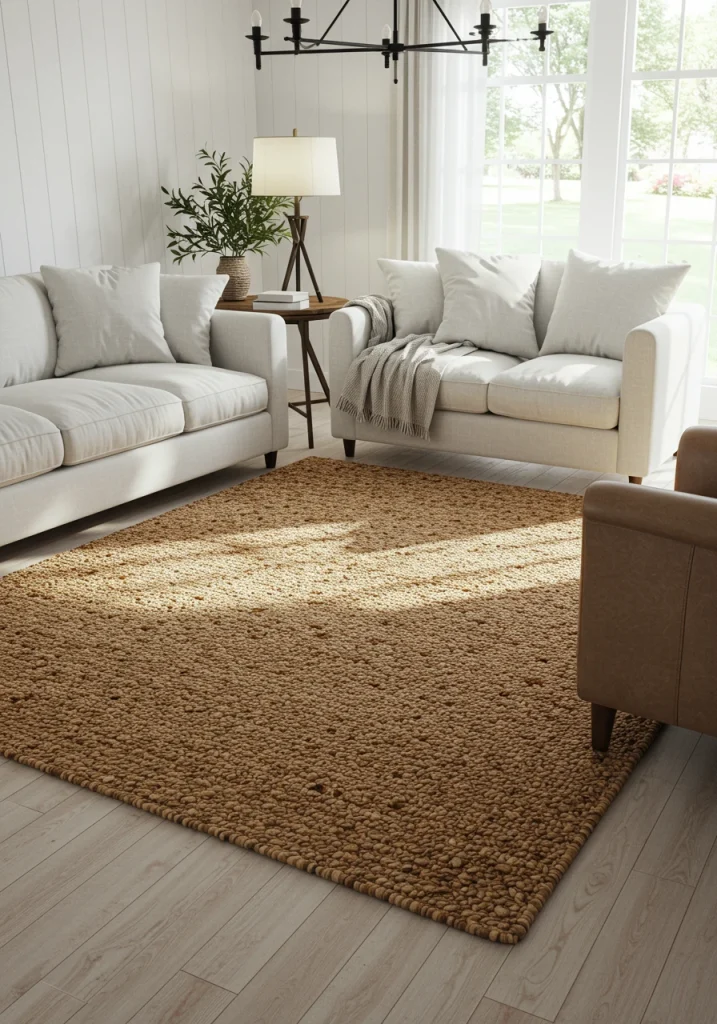
5. Anchor with a Comfortable, Slipcovered Sofa
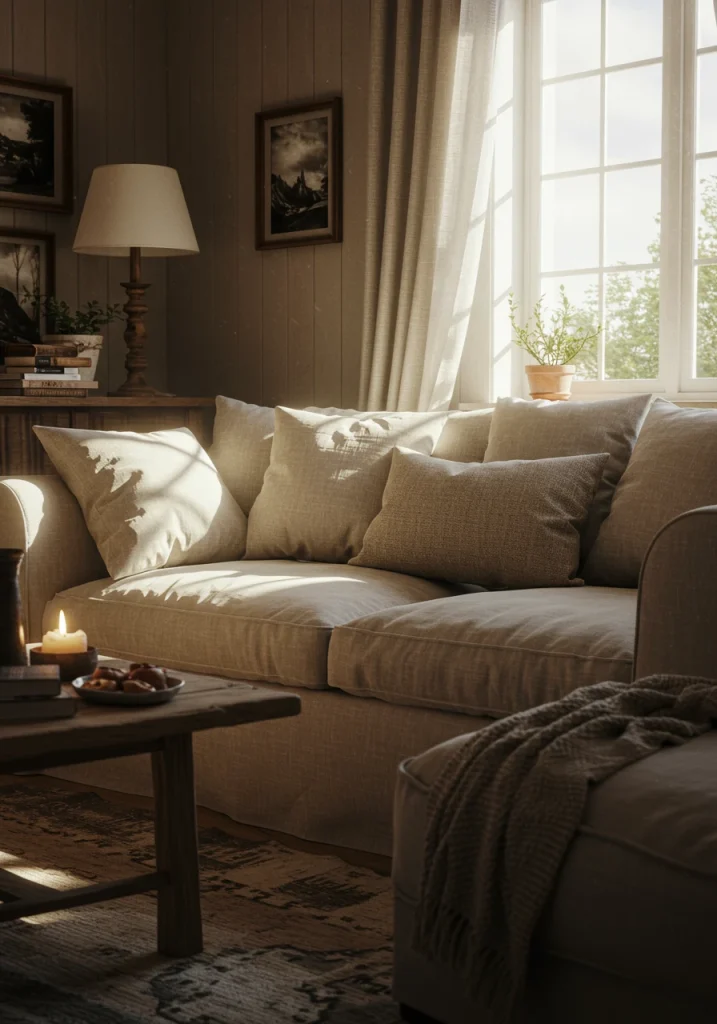
The ideal sofa for a white farmhouse living room is one that is large, deeply comfortable, and has a relaxed, unpretentious feel. A classic, slipcovered sofa is the quintessential choice. A slipcover, typically in a durable, off-white or light beige cotton canvas or linen, has a soft, casual look that is perfect for the farmhouse aesthetic. It’s a piece of furniture that invites you to curl up and get cozy.
The practicality of a washable slipcover is a major reason for its popularity, especially in a home aiming for a light color palette. I always recommend slipcovers to my clients with families or pets. The ability to remove and wash the cover takes away the stress of everyday life. A slipcovered sofa is a versatile and timeless foundation that you can easily update with seasonal pillows.
- Fabric: A durable, washable cotton canvas or a soft linen blend in a shade of white, cream, or light beige.
- Style: Look for a sofa with a relaxed silhouette, like one with classic rolled arms and a simple skirt.
- Comfort: Deep, plush, down-filled or down-alternative cushions are a must for that “sink-in” feeling.
For an enhancement, don’t be afraid of a few gentle wrinkles in your linen slipcover. The slightly rumpled, imperfect look is part of its charm and contributes to the relaxed, lived-in feel of the farmhouse style.
6. Incorporate Black Accents for Contrast
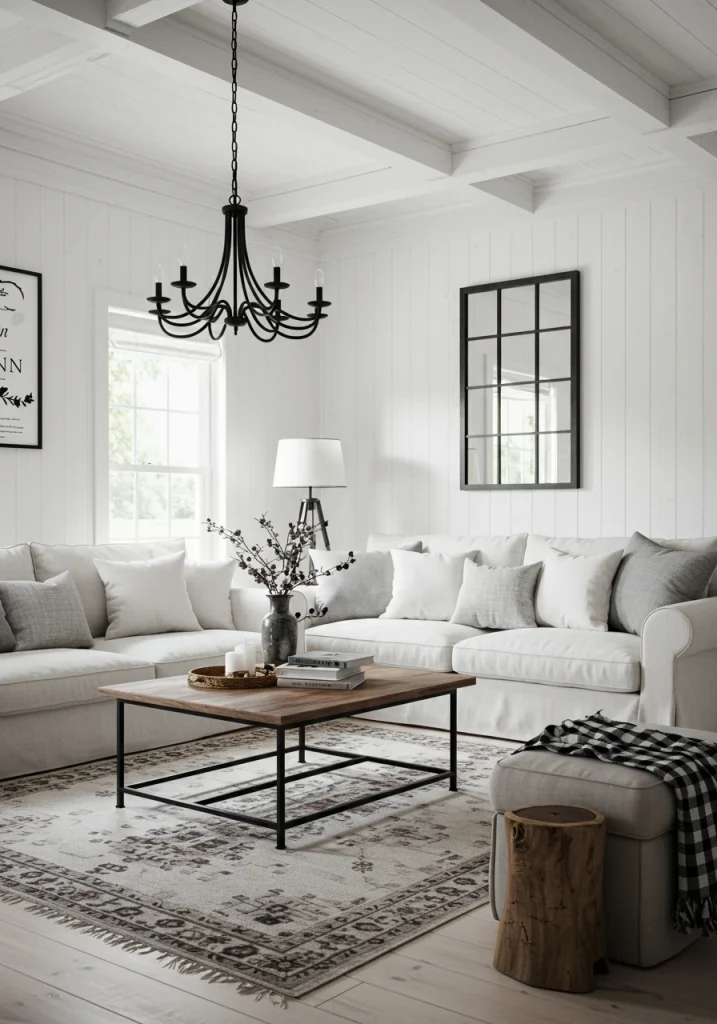
An all-white and wood room can sometimes feel a bit flat. The secret designer ingredient to make a white farmhouse living room feel sharp, modern, and intentional is to add a few, carefully placed black accents. Black provides a strong, graphic point of contrast that grounds the light and airy space and keeps it from feeling washed out. It adds a touch of modern, industrial edge that is a key part of the “modern farmhouse” look.
I always tell my clients that every room needs a little bit of black. It doesn’t have to be a lot. The key is to sprinkle small, sharp black details throughout the room to create a cohesive rhythm.
- Lighting: A classic, black metal chandelier or a simple, black floor lamp.
- Furniture: The frame of a coffee table, the legs of an armchair, or a small, black side table.
- Frames: Use simple, thin, black metal frames for your artwork and mirrors.
- Window Frames: Black window frames are a stunning, high-impact architectural choice.
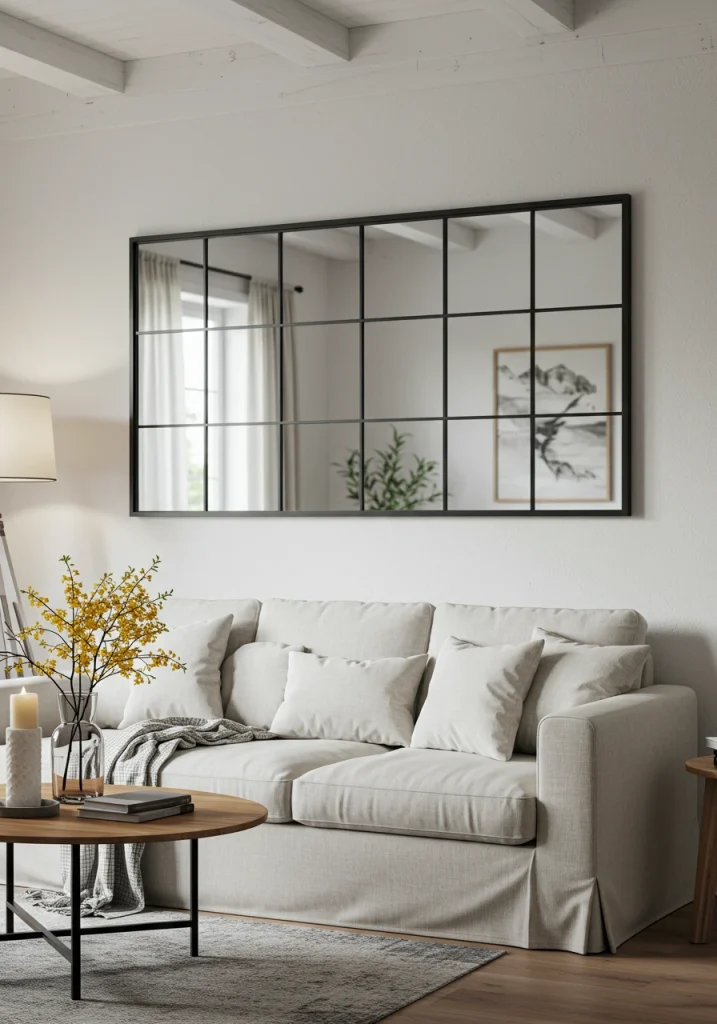
For a classic farmhouse enhancement, hang a large, simple, black, windowpane-style mirror on a prominent wall. The simple, black grid of the mirror is a perfect, graphic counterpoint to the soft, white room.
7. Use Woven Baskets for Cozy, Natural Storage
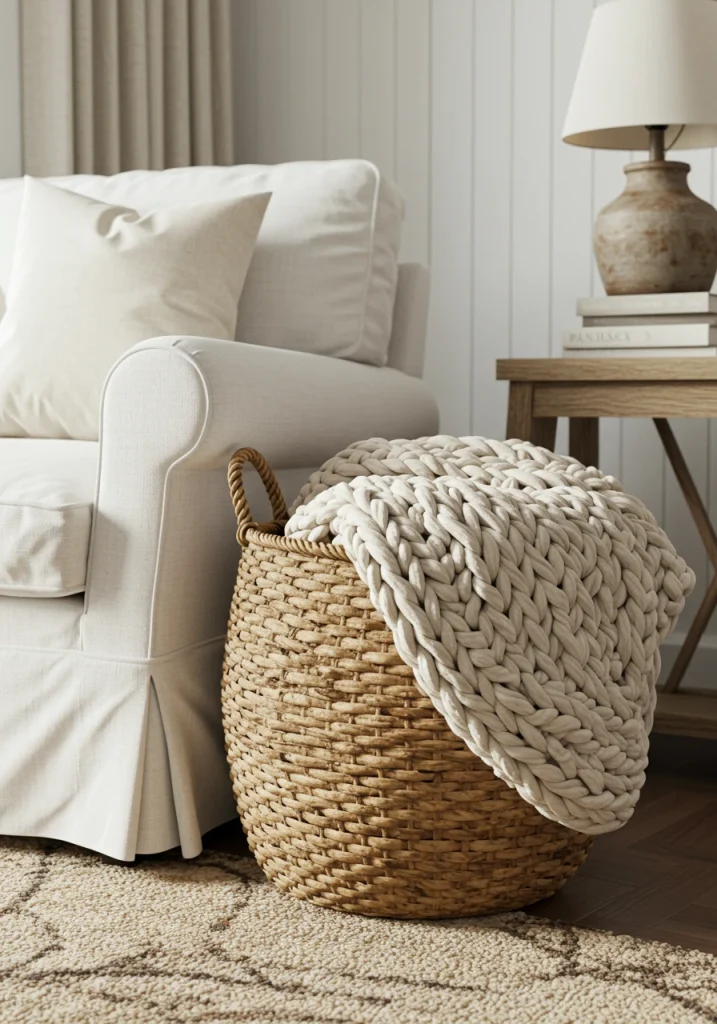
Baskets are an essential accessory for adding texture and providing practical, stylish storage in a farmhouse living room. Their natural, woven construction adds a layer of rustic, homespun charm and warmth that is perfect for breaking up an all-white scheme. Baskets are the ideal vessel for corralling the cozy clutter of everyday life, like throw blankets, magazines, or kids’ toys.
I use baskets in all of my farmhouse designs to add a necessary, organic element. A large, sturdy, woven basket on the hearth is the perfect place to store firewood or a collection of extra pillows. A set of matching baskets on the shelves of a console table can hide away clutter while creating a neat, organized look.
- Materials: Look for baskets made of natural materials like seagrass, water hyacinth, rattan, or willow.
- Function: Use them for storing blankets, firewood, magazines, or as a decorative cover for a houseplant pot.
- Placement: On the floor by the fireplace or sofa, on bookshelves, or under a console table.
For an enhancement that adds a touch of history, look for a vintage basket, like an old apple-picking basket or a rustic wicker laundry basket. The weathered patina and signs of use will add an incredible amount of authentic character to your room.
8. Mix in Vintage or Antique Accent Pieces
A true farmhouse living room should feel soulful and collected, not like it was all purchased in one day. Incorporating a few, unique vintage or antique accent pieces is key to adding the sense of history and character that defines the style. A piece with a story and a bit of weathered patina provides a beautiful, authentic contrast to the new, clean elements in the room.
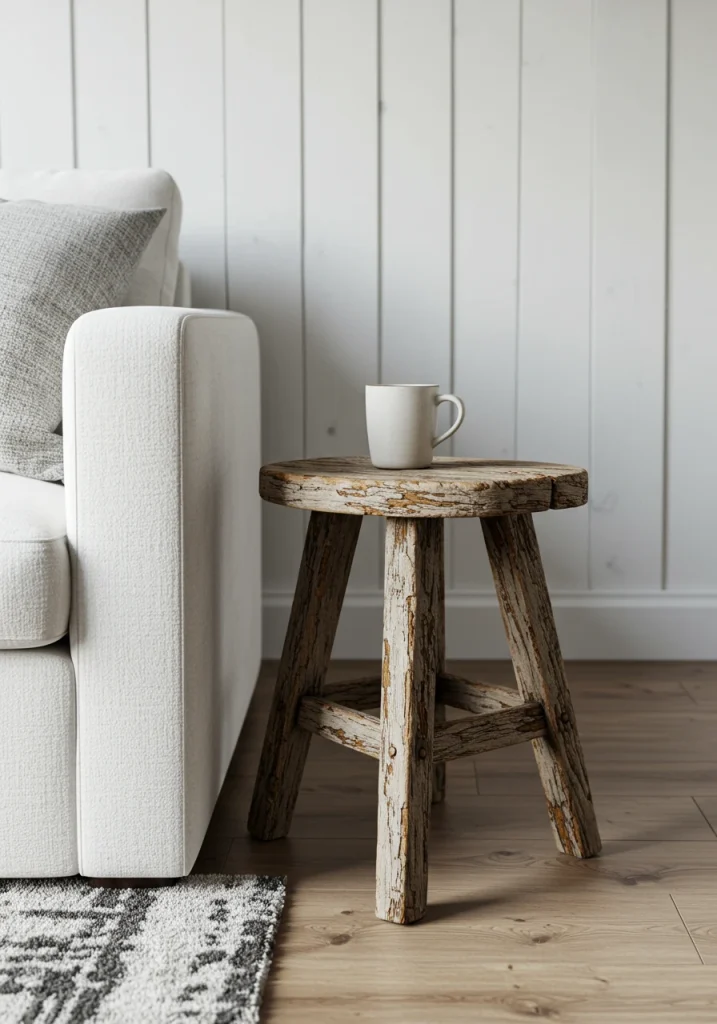
You don’t need a room full of expensive antiques. I love to scour flea markets and antique shops for small, affordable pieces that have a lot of character. An old, rustic wooden stool can be a perfect, charming side table. A vintage, galvanized metal olive bucket can be a unique planter. A collection of old, faded books can be a beautiful styling accessory.
- What to Look For: Small wooden stools, vintage pottery, old books, rustic crates, and antique picture frames.
- The Mix is Key: The beauty lies in the juxtaposition of old and new. Place a vintage crock on a modern, new console table.
- Embrace Imperfection: The chipped paint, the dings, and the worn finish are what give these pieces their soul.
For a classic enhancement, find an old, multi-paned window frame at an architectural salvage store. You can hang it on the wall as a piece of art or have a mirror fitted behind it to create a beautiful, rustic, windowpane mirror.
9. Hang a Classic Windowpane Mirror
A large mirror is a great addition to any living room, and for the farmhouse style, the classic windowpane mirror is the perfect choice. This style of mirror features a grid-like overlay, typically made of wood or metal, that mimics the look of an old, multi-paned window. It adds a touch of architectural, rustic charm and is a perfect fit for the farmhouse aesthetic.
I love to use a large, oversized windowpane mirror to create a strong focal point. Leaning a very large, full-length one against a wall can make a room feel taller and more casual. Hanging a rectangular one horizontally above a sofa or a console table is a more traditional approach. The mirror will bounce light around your white room, making it feel even brighter and more spacious, and the grid-like frame adds a beautiful, graphic element.
- Style: A mirror with a wooden or metal grid overlay that resembles a window.
- Placement: Leaned against a wall, or hung above a sofa, fireplace, or console table.
- Effect: Adds architectural character, bounces light, and creates an illusion of another window.
For a dramatic enhancement, choose a mirror with a slightly arched top. The gentle curve of the arch can provide a beautiful, soft contrast to the strong, linear grid of the windowpanes.
10. Use Simple, Breezy Window Treatments
The window treatments in a white farmhouse living room should be simple, natural, and designed to let in as much light as possible. The goal is to create a bright, airy, and sun-filled space, so avoid heavy, ornate, or light-blocking drapes.
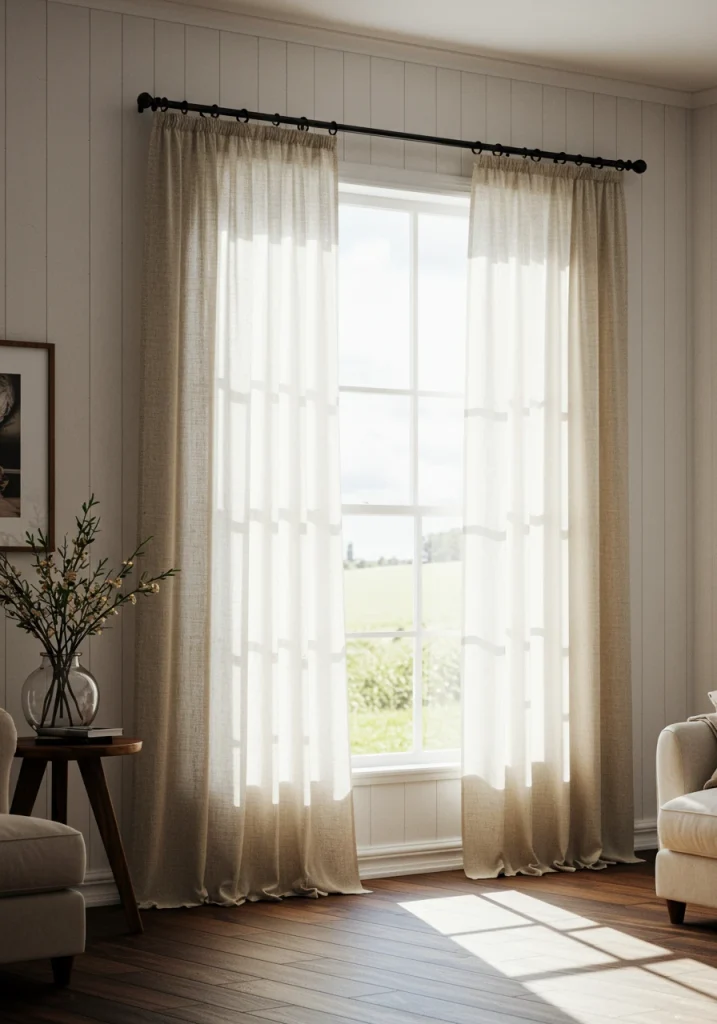
I almost always recommend simple, lightweight curtain panels made from natural, textural fabrics. Sheer or semi-sheer linen or cotton curtains are a perfect choice. They provide a bit of privacy while still allowing beautiful, diffused sunlight to filter through, creating a soft, dreamy glow. For a more tailored look, a simple, flat Roman blind in a neutral fabric or a classic ticking stripe is another great option.
- Fabric Choice: Lightweight and natural fabrics like linen, cotton, or a simple sheer.
- Style: Simple curtain panels or unfussy Roman blinds.
- Hanging: Hang your curtain rods high and wide (several inches above and beyond the window frame) to make your windows feel larger and to allow the panels to be pulled completely clear of the glass.
For a very simple and rustic enhancement, instead of a standard metal curtain rod, use a sturdy, beautiful branch that you have foraged. Paired with simple, tab-top linen curtains, it creates a wonderfully natural and budget-friendly look.
11. Incorporate Galvanized Metal Accents
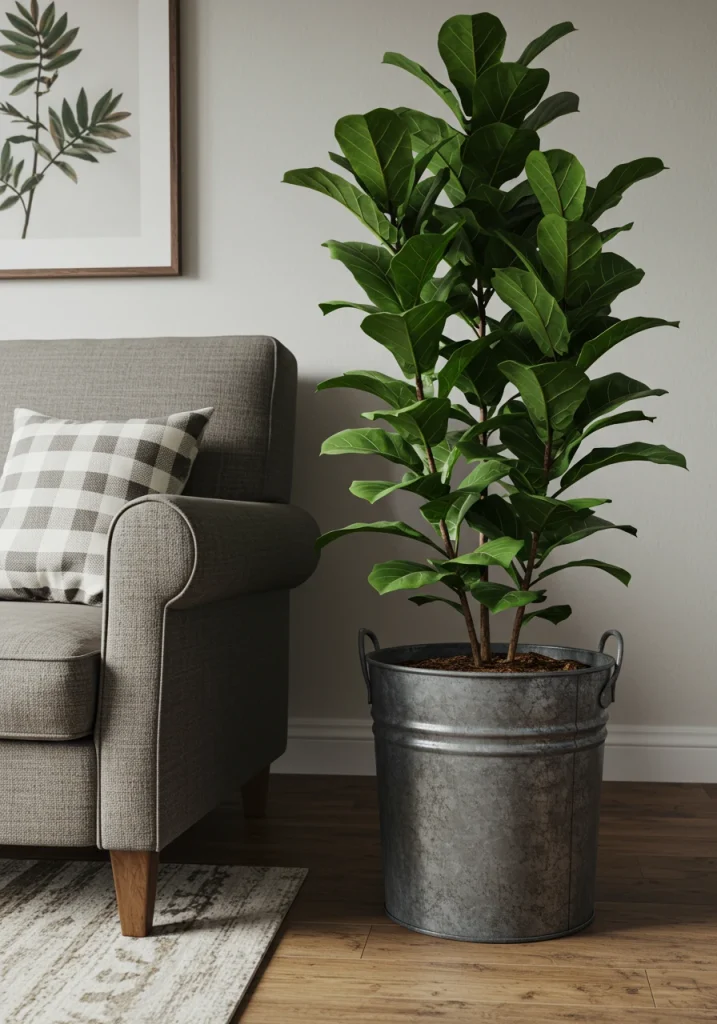
To add a touch of authentic, rustic, and slightly industrial charm to your white farmhouse living room, incorporate a few accents made of galvanized metal. This silvery-gray, matte-finish metal is a classic farmhouse material, harkening back to utilitarian items like pails, troughs, and watering cans. The cool, rustic tone of the metal provides a beautiful, textural contrast to the soft, white walls and warm wood tones.
A few, well-placed galvanized pieces can add a lot of character. You don’t want to overdo it, or the look can become too themed. I love to use a vintage, galvanized olive bucket as a unique planter for a small tree, or a simple, galvanized metal tray on a coffee table.
- What to Look For: Buckets, tubs, pitchers, watering cans, and trays.
- The Finish: Look for pieces with a matte, slightly weathered finish, not a shiny, new one.
- Placement: Use as planters, storage containers, or simple decorative objects.
For a creative enhancement, look for a light fixture, like a pendant light or a wall sconce, that has a shade made of galvanized metal. This can be a great way to add a touch of industrial farmhouse style to your lighting plan.
12. Use Cozy, Neutral-Toned Textiles
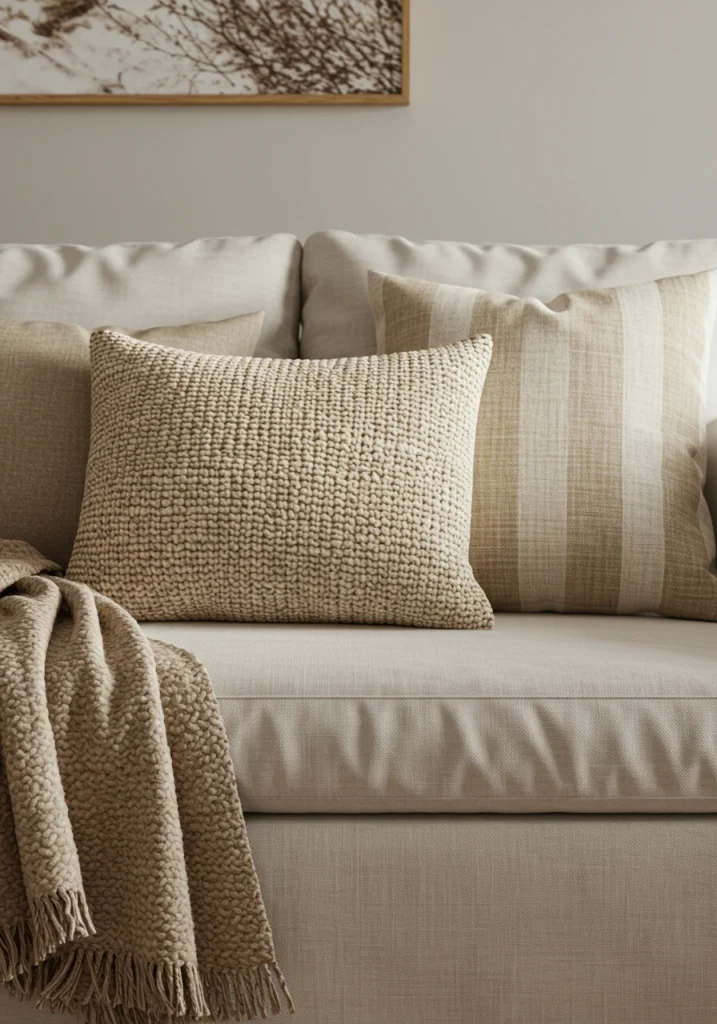
While the walls are white, the textiles are what truly make a farmhouse living room feel cozy and inviting. This is where you layer in softness, texture, and warmth. In a classic white farmhouse, the textile palette is typically a calm and cohesive mix of warm, neutral tones. Think of the colors of natural, undyed fibers.
I always advise my clients to build a collection of pillows and throws in a mix of these comforting, neutral shades. This creates a serene, layered, and sophisticated look that is very easy on the eyes.
- Colors: Cream, ivory, oatmeal, beige, taupe, and soft, warm grays.
- Materials: Focus on natural, textural materials like linen, chunky wool, soft cotton, and even a bit of burlap.
- Layering: Mix different textures and tones. A cream-colored, chunky knit pillow next to a simple, beige linen one, for example.
For an enhancement that adds a classic, subtle pattern, incorporate a textile with a simple, tone-on-tone ticking stripe or a grain sack stripe. A pillow made from a vintage grain sack with a simple, faded blue or red stripe is the epitome of authentic farmhouse charm.
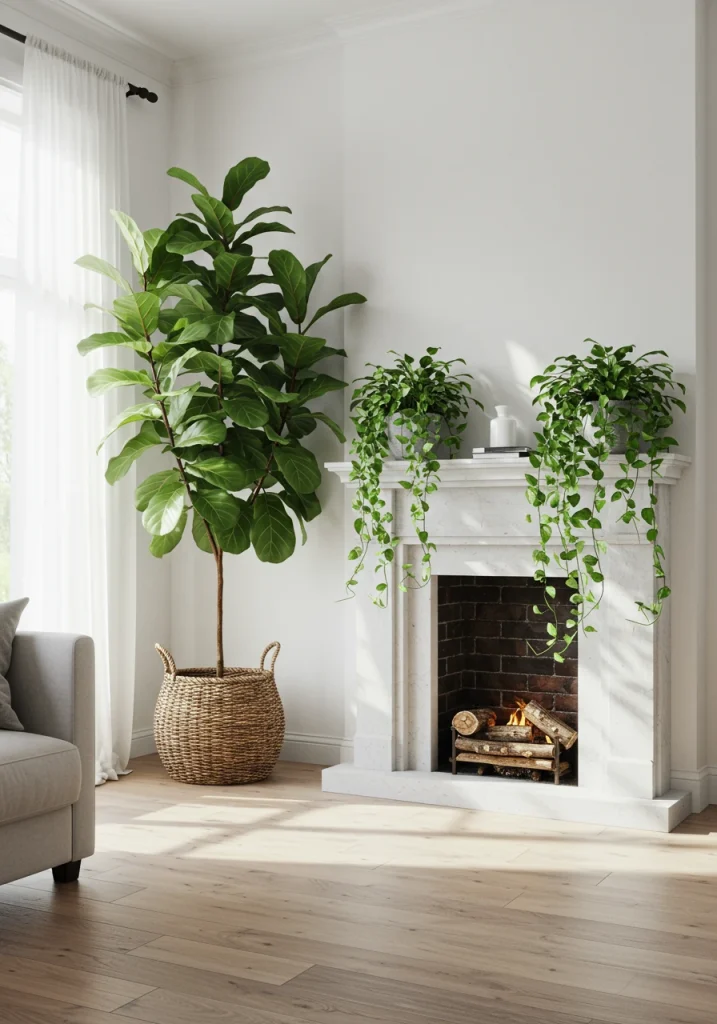
13. Add Greenery with Faux or Real Plants
In a neutral, all-white room, the vibrant, living green of houseplants is an essential element. Plants add a necessary touch of life, natural color, and organic texture that keeps the space from feeling stark or one-dimensional. The sculptural forms of the leaves can also act as beautiful, living works of art.
I always tell my clients that every room needs something green. A large, statement-making plant in a rustic basket can be a stunning focal point in a corner of the room. A few, smaller, potted plants on a bookshelf or a console table can add small touches of life throughout the space. If you don’t have a “green thumb,” high-quality faux plants can give you the same beautiful, green look with zero maintenance.
- Statement Plants: A Fiddle Leaf Fig is a classic choice for the modern farmhouse look.
- Small Accents: Small pots of ferns, pothos, or succulents.
- Vases: A simple, glass vase with a few, large branches of fresh or faux eucalyptus is an easy and elegant touch.
For a charming enhancement, choose planters that add to the farmhouse aesthetic. A plant in a rustic, woven basket, a vintage stoneware crock, or a simple, aged terracotta pot will feel right at home.
Image Gen 13
14. Choose Rustic and Industrial Lighting Fixtures
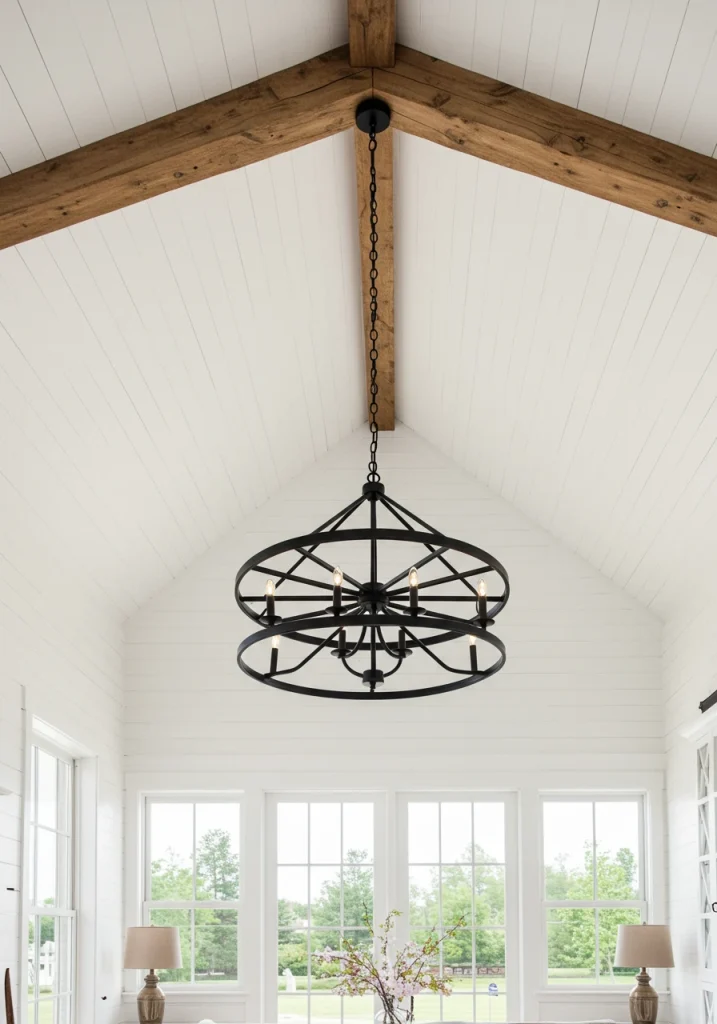
The lighting in a white farmhouse living room should be a key decorative element that contributes to the overall style. Look for fixtures that have a rustic, industrial, or vintage-inspired feel. This is a great way to introduce contrasting materials like dark metal and to add a touch of hardworking, utilitarian charm to the soft, white space.
A large, simple, candle-style chandelier in a dark, oil-rubbed bronze or a matte black finish is a classic choice for the center of the room. For accent lighting, a floor lamp with a simple, tripod base or a wall sconce that looks like a vintage barn light can add a lot of character. As seen in many of the designs that have popularized this style, the lighting is often a key source of black or dark metal contrast.
- Chandeliers: A simple, black metal, wagon wheel or candle-style chandelier.
- Wall Sconces: Gooseneck “barn light” style sconces are a perfect choice.
- Materials: Look for finishes like oil-rubbed bronze, matte black, or even a bit of galvanized metal.
For an enhancement that adds another layer of rustic texture, choose a light fixture that incorporates a natural wood element. A chandelier that combines a dark metal frame with a central, reclaimed wood beam, for example, is a perfect embodiment of the modern farmhouse style.
15. Create a Cozy Reading Nook
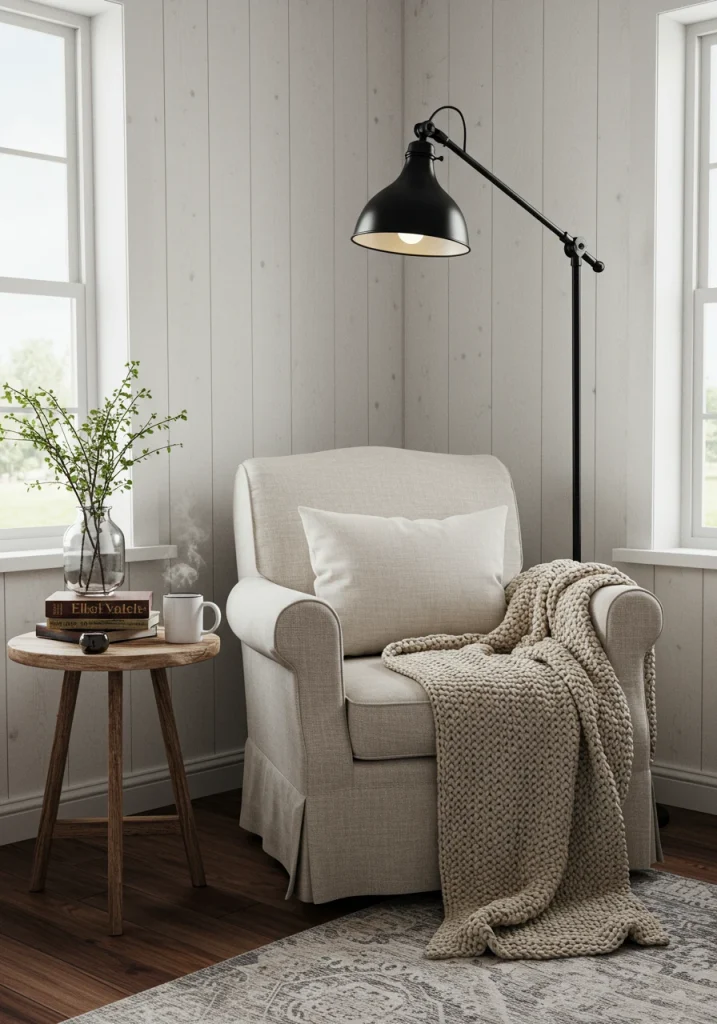
A core tenet of the farmhouse lifestyle is taking the time for simple pleasures, and a cozy reading nook is the perfect embodiment of this. Every cottage and farmhouse living room can benefit from a designated corner for quiet relaxation. This doesn’t need to be a large space; a single, comfortable chair in a well-lit corner can become your favorite spot in the house.
The most important element, of course, is a very comfortable armchair. Look for one with deep, plush cushions and soft, durable upholstery. I love to find a classic, rolled-arm chair and have it slipcovered in a simple, off-white canvas. Add a small side table for your book and a cup of tea, a soft ottoman or footstool, and a dedicated reading lamp, and your retreat is complete.
- The Chair: A deep, plush, and incredibly comfortable armchair.
- Good Lighting: A dedicated floor or table lamp with a warm, soft light.
- A Surface: A small, rustic wooden side table or a garden stool.
- The Comforts: A soft throw blanket and a comfortable pillow are essential.
For an enhancement that adds to the cozy, rustic charm, use a vintage, wooden apple crate turned on its side as a unique and budget-friendly side table for your reading nook.
Conclusion
Creating a white farmhouse living room is about crafting a space that feels bright, clean, and spacious, yet also deeply warm, cozy, and inviting. As we’ve explored through these 15 ideas, the magic of this beloved style is not just in the white paint, but in the rich, thoughtful layering of textures and natural materials.
By combining the rustic charm of reclaimed wood, the organic feel of woven baskets and jute rugs, and the soft comfort of slipcovered furniture and cozy textiles, you can create a space that is the perfect balance of modern freshness and timeless, homespun character.


