
Are you searching for clever tiny bedrooms ideas to transform your compact space from cramped to comfortable and chic? A tiny bedroom is a common challenge in apartments, dorm rooms, and older homes, but a lack of square footage doesn’t mean you have to sacrifice style or function. In fact, a small bedroom presents a fantastic opportunity for smart, creative, and incredibly cozy design. The key is to make every inch count, using space-savvy furniture, clever storage solutions, and visual tricks that create an illusion of a larger, more serene space.
This guide will provide you with 19 essential ideas, from choosing the right bed and maximizing storage to using light and color to your advantage, that will help you create a tiny bedroom that is a true, functional, and stylish sanctuary.
1. Choose a Low-Profile Bed Frame
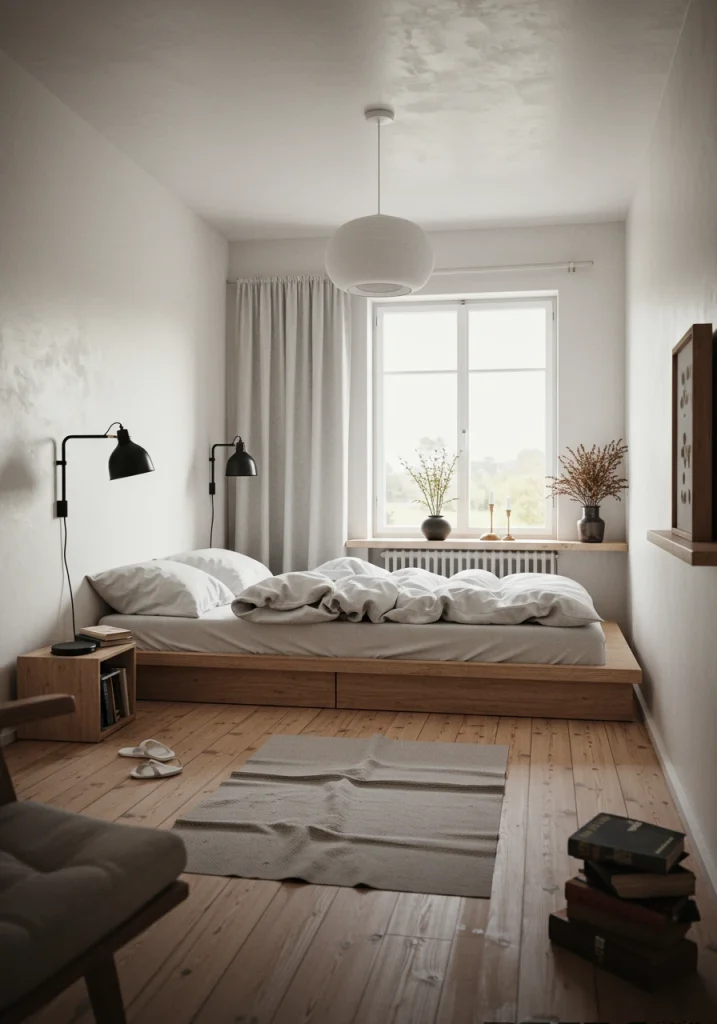
In a tiny bedroom, the bed is the largest piece of furniture and can easily dominate the space. To create an illusion of a higher ceiling and a more open, airy room, choose a low-profile bed frame. A bed that sits closer to the ground, like a simple platform bed or a Japanese-style frame, takes up less vertical space, which tricks the eye into seeing the room as taller and more spacious than it actually is.
This is the first piece of advice I give to my clients with small bedrooms. A tall, bulky bed frame can feel overwhelming, while a low, sleek bed creates a more relaxed and minimalist aesthetic that is perfect for a small, modern room.
- Style: A simple, wooden or upholstered platform bed is a perfect choice.
- Effect: Creates more visual space between the top of the bed and the ceiling, making the room feel taller.
- Aesthetic: Modern, minimalist, and serene.
For an enhancement, choose a bed frame that is the exact same width as your mattress, with no extra side rails sticking out. This will save you a few precious inches of floor space on either side of the bed, which can make a huge difference in a narrow room.
2. Go Vertical with Floor-to-Ceiling Shelving
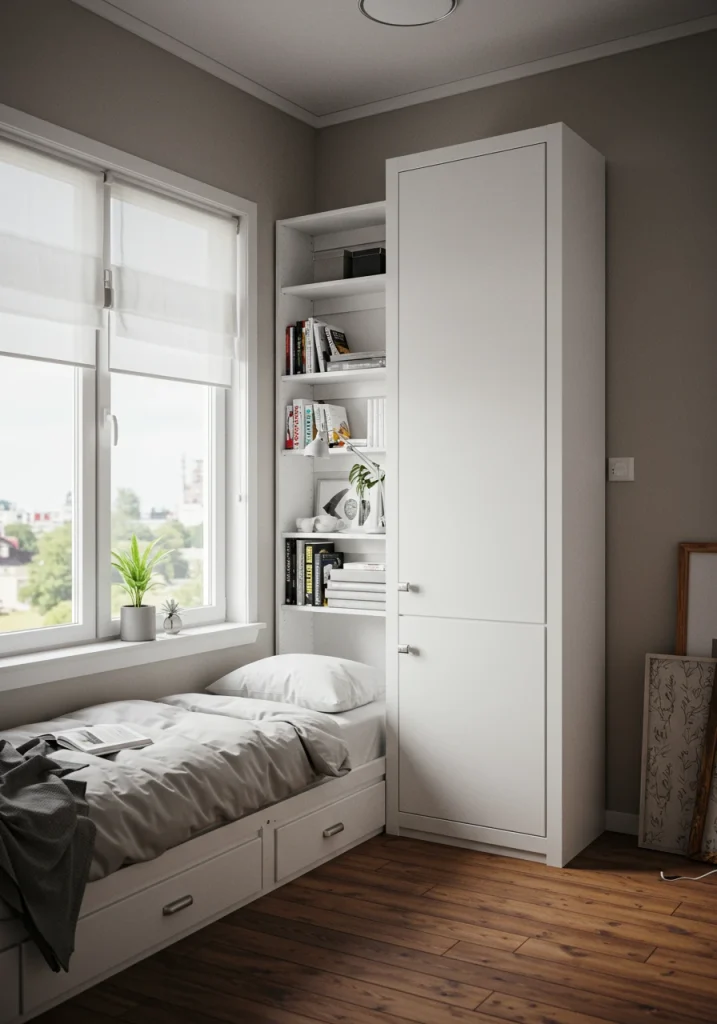
When you can’t build outwards, the most important rule in a tiny bedroom is to build upwards. Your vertical space is your most valuable and underutilized asset. Installing tall, narrow, floor-to-ceiling bookshelves or a modular shelving system can provide a huge amount of storage for books, baskets, and decor without taking up a large footprint on your floor.
This strategy draws the eye upward, which creates a powerful illusion of height and makes the entire room feel larger. I love using a tall, narrow shelving unit in the corner of a tiny room.
- Tall and Narrow: Look for “ladder” style bookshelves or tall, slim, modular units.
- Maximizes Space: Uses the often-wasted vertical space near the ceiling.
- Multi-functional: Can serve as a bookshelf, a display area, and a place for storage bins.
For an enhancement that makes the shelving feel like a custom, built-in feature, paint the shelving unit the exact same color as your wall. This will help it to visually blend in, reducing its visual weight and making the room feel less cluttered.
3. Install Floating Nightstands or Shelves
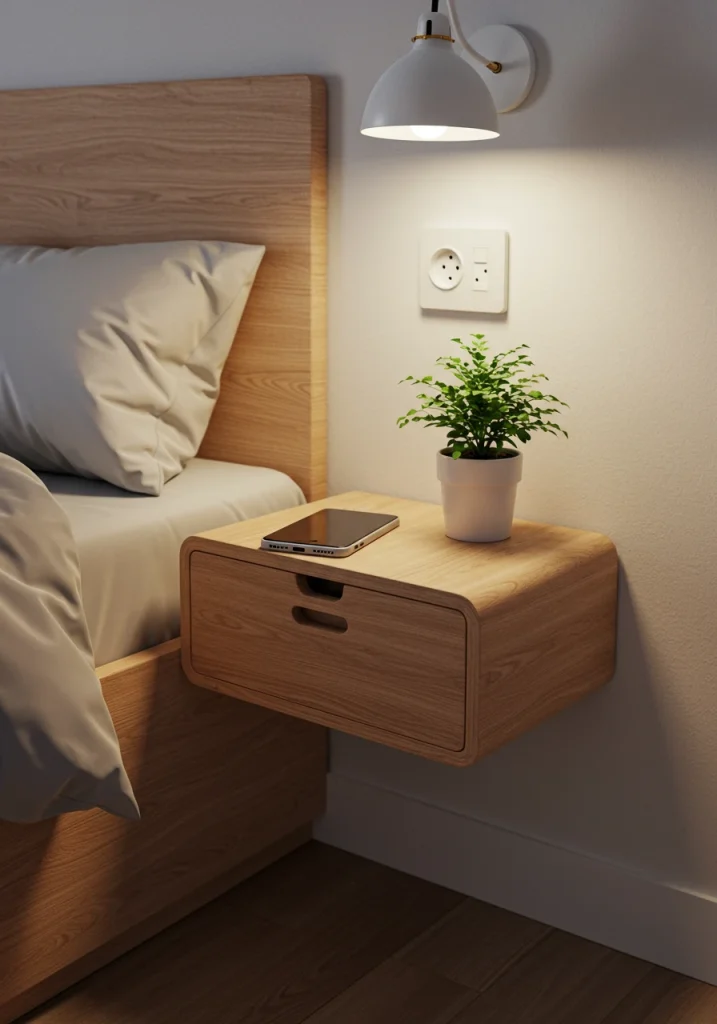
Traditional, bulky nightstands can eat up a lot of floor space and make the area around your bed feel cramped. A brilliant, space-saving solution for a tiny bedroom is to use floating, or wall-mounted, nightstands or simple shelves. By lifting your bedside storage off the floor, you create a sense of lightness and airiness, and you make the room feel larger because more of the floor is visible.
This is one of my go-to tricks for creating a clean, uncluttered, and modern look in a small space. It also has the practical benefit of freeing up the floor space underneath for a small basket or a pair of slippers.
- Floating Nightstand: A small, wall-mounted drawer or box is perfect for hiding away clutter.
- A Simple Shelf: For a truly minimalist look, a single, small, floating shelf is all you need for a phone, a glass of water, and a small book.
- Benefits: Saves precious floor space, creates a modern and airy look, and is easy to clean under.
For an enhancement, instead of a floating shelf, install a stylish, wall-mounted sconce for your bedside lighting. This will free up the entire surface of your floating nightstand, creating an even cleaner and more minimalist look.
4. Use Wall-Mounted Sconces Instead of Lamps
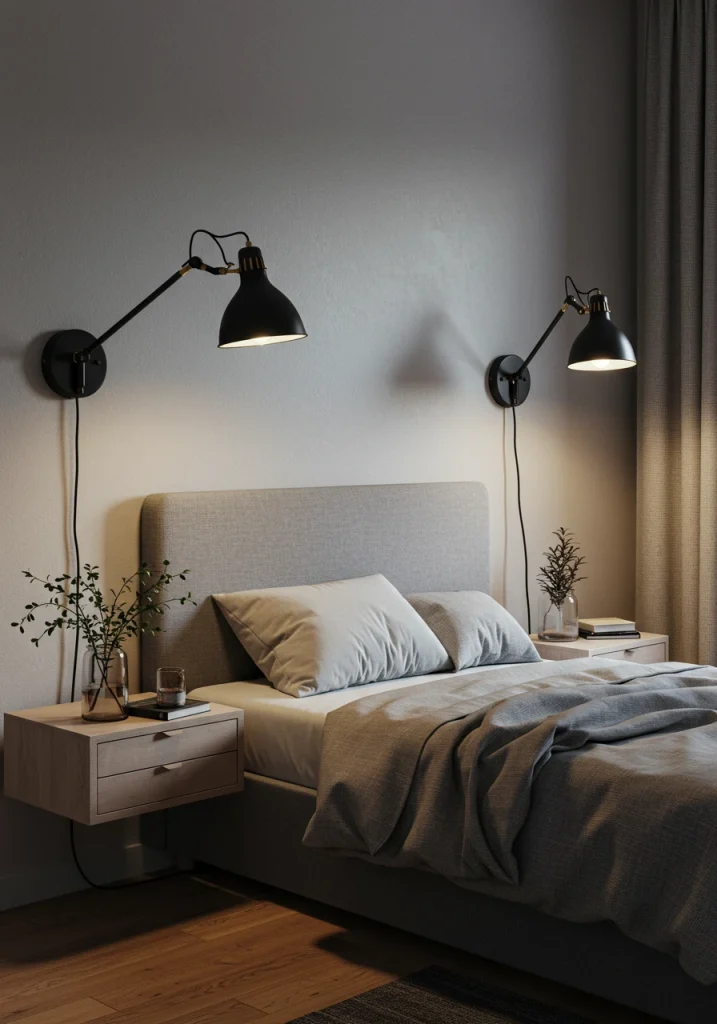
Table lamps can take up a huge amount of valuable surface area on your already small nightstands. A very smart and stylish solution is to get your lighting off your tables and onto your walls. A pair of beautiful, wall-mounted sconces on either side of the bed provides excellent, focused light for reading and frees up your entire nightstand surface for other essentials.
I use this solution in almost every small bedroom I design. It’s a custom, high-end look that is also incredibly practical.
- Space-Saving: Frees up the entire surface of your nightstands.
- Stylish Look: Adds a sophisticated, hotel-like, architectural element.
- Renter-Friendly Option: If you can’t do hardwired sconces, look for “plug-in” wall sconces. They mount to the wall in the same way, but have a cord that you simply plug into a nearby outlet, no electrician required.
For an enhancement that offers maximum flexibility, choose articulating, swing-arm sconces. This will allow you to easily adjust the position and the angle of the light for perfect, comfortable reading.
5. Paint the Walls a Light, Bright Color
The color you paint your walls has a huge impact on how large your tiny bedroom feels. A light, bright color is a classic and foolproof choice for making a small space feel bigger. Light colors reflect more light—both natural and artificial—which makes a room feel more open, airy, and expansive. A dark color, on the other hand, can absorb light and make the walls feel like they are closing in on you.
I always advise my clients to start with a light, neutral foundation for a small room.
- Best Colors: A crisp, clean white is the ultimate space-maximizer. A soft, creamy off-white, a very pale gray, or a light, cool blue can also be beautiful and serene choices.
- Effect: Reflects light and makes the space feel brighter and more open.
- Paint Finish: An eggshell or a satin finish will have a slight sheen that will reflect more light than a flat, matte finish.
For an enhancement that is a classic designer trick, paint your walls and your ceiling the exact same, light color. This will erase the visual boundary between the walls and the ceiling, which will trick the eye into seeing the room as being taller and more spacious than it is.
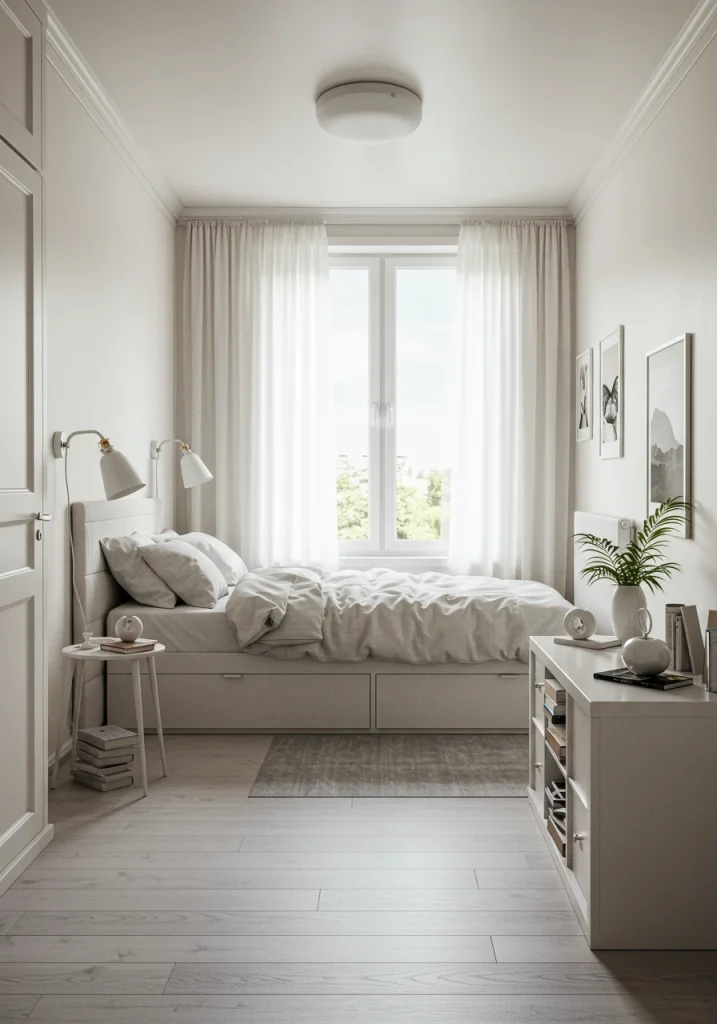
6. Hang a Large, Statement Mirror
A large mirror is the number one, must-have, magic accessory for any tiny bedroom. It is the most effective tool for creating a powerful illusion of space and light. A well-placed, oversized mirror can visually double the size of your room by reflecting it back on itself. It will also capture and bounce any available light around the room, making it feel significantly brighter.
I always tell my clients to go as big as they can with their mirror. Instead of a small, decorative mirror, choose a large, simple, full-length one.
- Placement is Key: Place the mirror on the wall opposite your main window to reflect the most natural light and the view.
- Go Big: The larger the mirror, the more powerful the space-enhancing effect will be.
- Renter-Friendly: A large, full-length floor mirror that is simply leaned against the wall requires no installation and has a very chic, effortless look.
For a creative enhancement that combines storage and reflection, choose a wardrobe or a closet door that has a full-length mirror integrated into its front. This is a brilliantly space-efficient, two-in-one solution.
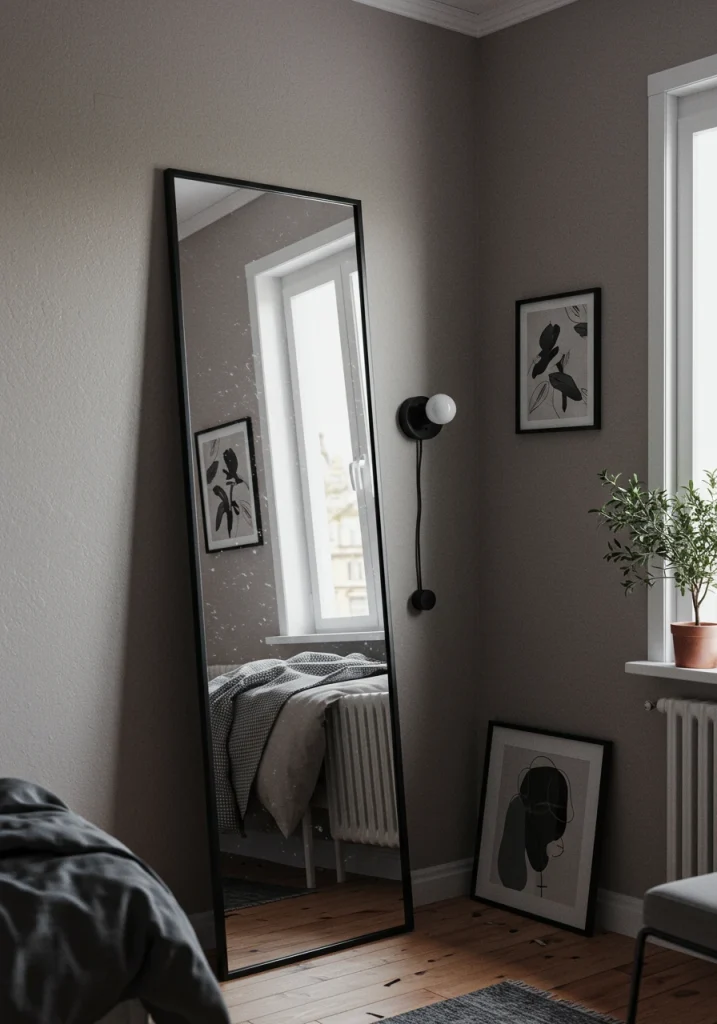
7. Choose a Bed with Built-in Storage Drawers
In a tiny bedroom, your bed takes up the most real estate, so it’s essential to make it work as hard as possible. Choosing a bed frame that has built-in storage drawers underneath is one of the smartest, most functional decisions you can make. This is a huge amount of wasted space in a standard bed frame, and a storage bed allows you to reclaim it for clothes, shoes, or extra bedding.
This is a solution I recommend for almost every small bedroom project. It can often completely eliminate the need for a bulky, space-hogging dresser, which can be a true game-changer in a very tiny room.
- Functionality: Provides a huge amount of hidden, dust-free storage.
- Space-Saving: Can eliminate the need for a separate, large dresser.
- Style: Many modern, stylish platform beds are available with sleek, integrated storage drawers.
For an enhancement, look for a bed that has a combination of drawers and open, bookshelf-style cubbies in the headboard. This provides even more storage for books, an alarm clock, and other bedside essentials, and can even eliminate the need for nightstands.
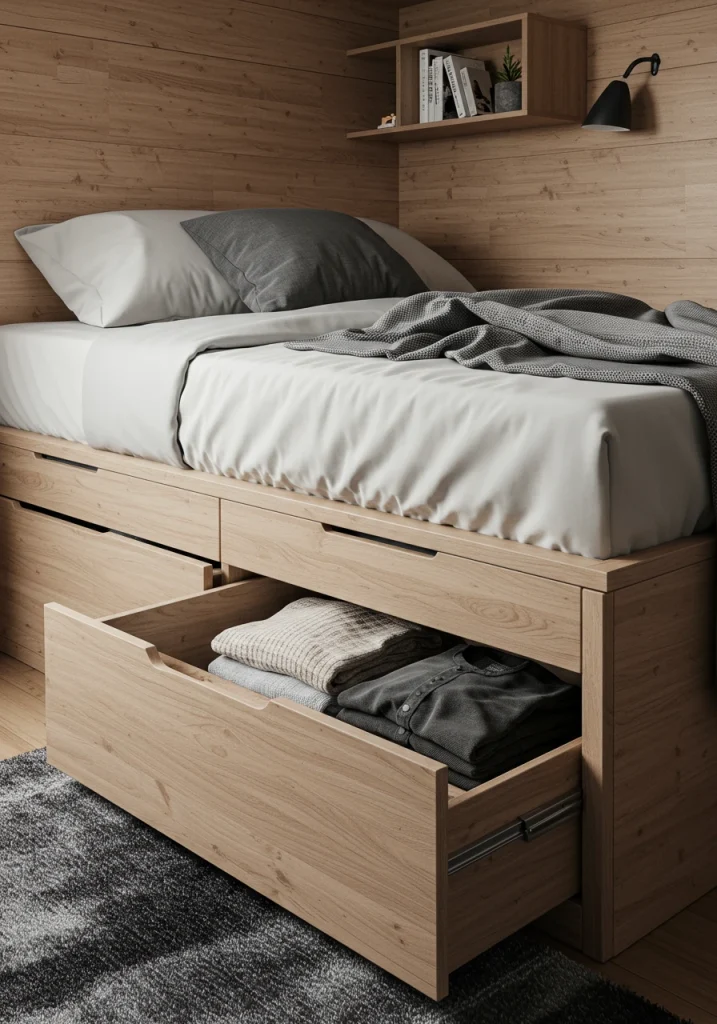
8. Hang Curtains High and Wide
This is a simple, classic, and incredibly effective visual trick for making the window in your tiny bedroom feel larger and the ceiling feel higher. It’s a must-do for any small room. Instead of mounting your curtain rod right on the window frame, you should hang it “high and wide.”
I instruct all my clients to follow this simple rule.
- Hang it High: Mount your curtain rod at least 4-6 inches above the top of your window frame. If you have the space, mounting it halfway between the top of the frame and the ceiling is even better.
- Hang it Wide: The curtain rod should extend at least 6-10 inches beyond the window frame on both sides. This allows you to pull the curtain panels completely clear of the window when they are open, letting in the maximum amount of light.
- Let Them Kiss the Floor: The curtain panels should be long enough to just touch or “kiss” the floor.
For an enhancement that maximizes the airy feeling, choose curtain panels that are the same, light color as your walls. This will create a seamless, tone-on-tone look that will make the wall feel larger and less broken up.
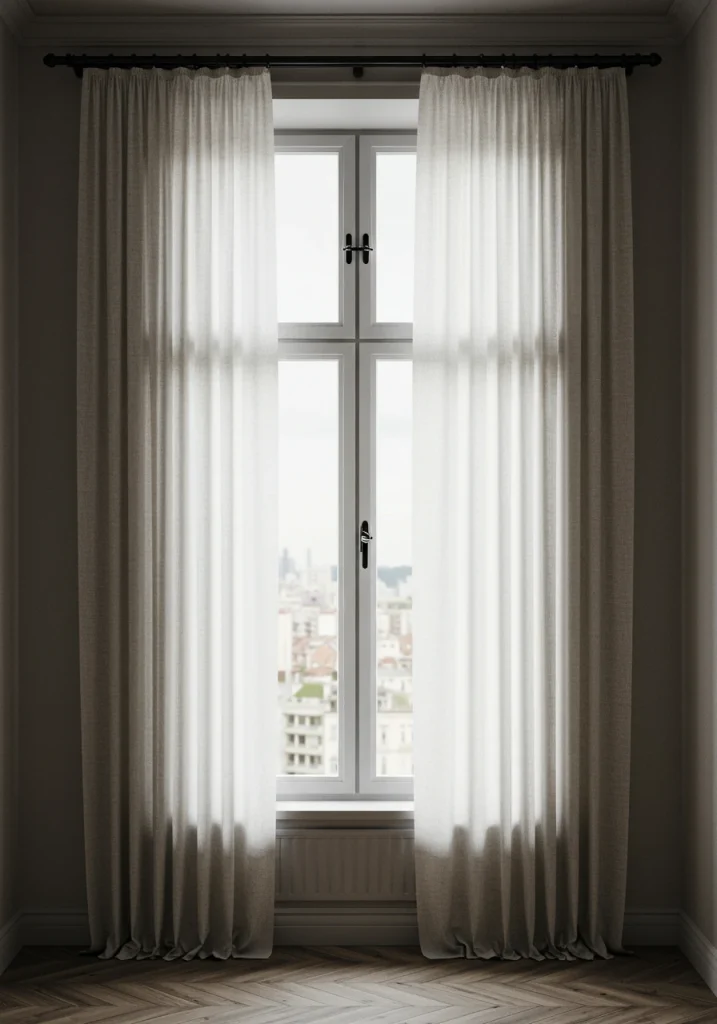
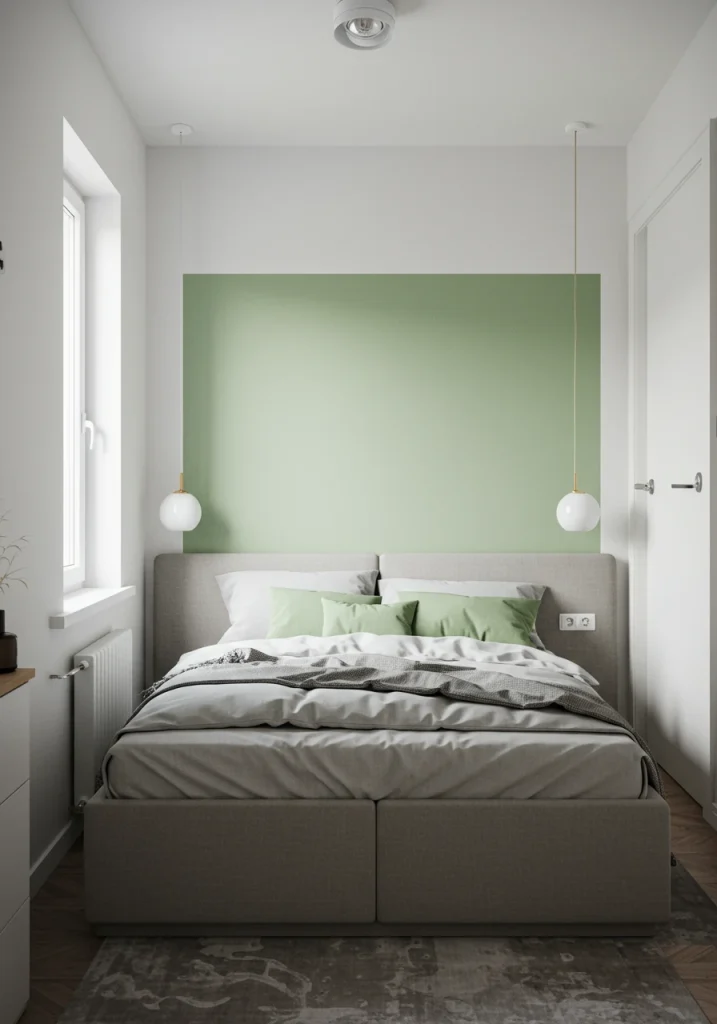
9. Use a Slim Headboard (or No Headboard)
A large, bulky, or ornate headboard can eat up several, precious inches of depth in a tiny bedroom and can feel visually overwhelming. A very smart, space-saving solution is to opt for a very slim, streamlined headboard, or even to forgo a traditional headboard altogether.
I often use creative, DIY solutions to create the look of a headboard without the bulk.
- A Painted “Headboard”: Paint a simple, graphic shape—like a rectangle or a half-circle—on the wall behind your bed to create a “virtual headboard.”
- A Fabric Panel: A simple, flat, upholstered panel that is mounted directly to the wall can provide a soft backrest with a zero footprint.
- A Wall-Mounted Headboard: Many modern headboards are designed to be mounted to the wall, which can save a few inches compared to a bed-frame-mounted one.
For an enhancement that is incredibly cozy and space-saving, use a series of large, comfortable, “Euro” square pillows propped up against the wall to serve as your soft, flexible, and comfortable headboard.
10. Select “Visually Light” Furniture
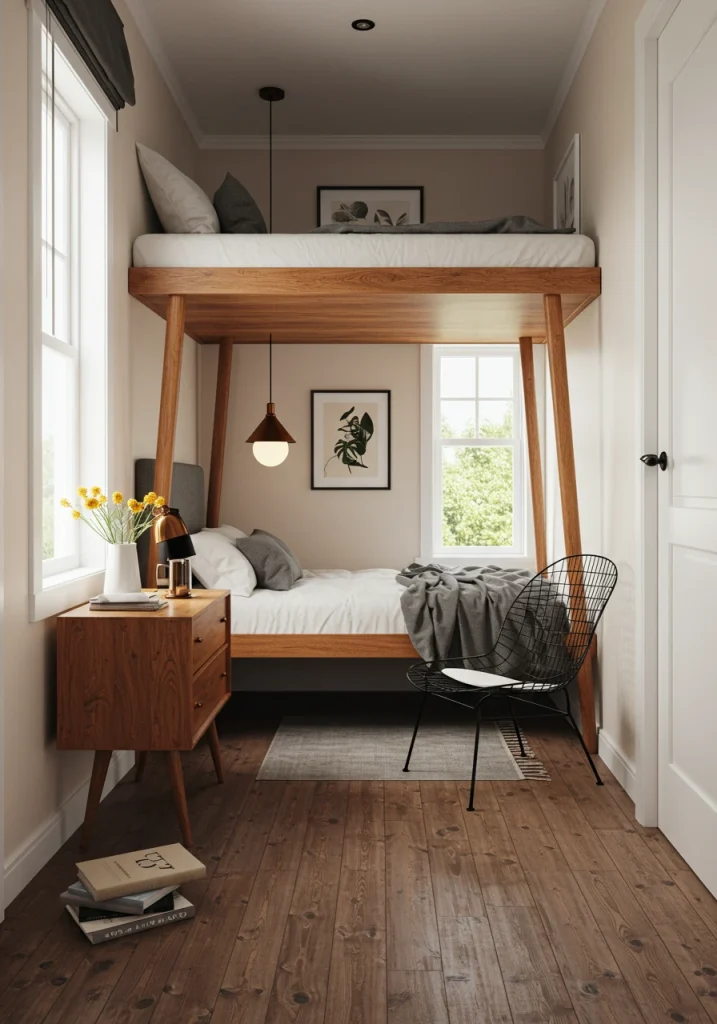
The physical and visual weight of your furniture has a huge impact on how open and airy your tiny bedroom feels. Bulky, solid-base furniture can eat up space and make the area feel cramped and heavy. A creative solution is to choose furniture that is “visually light.” This means pieces that are raised up on slender legs so you can see the floor and the air underneath them.
This principle, often highlighted by small-space experts at IKEA and West Elm, is key for small rooms. Look for a dresser, an accent chair, and a bed frame with “leggy” designs.
- Look for Legs: The more of the floor and the wall you can see, the larger the space will feel.
- Choose See-Through Materials: Furniture made of acrylic or lucite can almost “disappear” visually, which is a fantastic trick for a small space. A simple, acrylic console could work as a desk.
- Thin Frames: Furniture made from thin metal or streamlined wood profiles feels less bulky.
For an enhancement, if you need a small desk or a vanity in your tiny bedroom, choose a “ladder desk.” This style of desk leans against the wall and has a very small footprint and a very light, open feel.
11. Push the Bed into a Corner
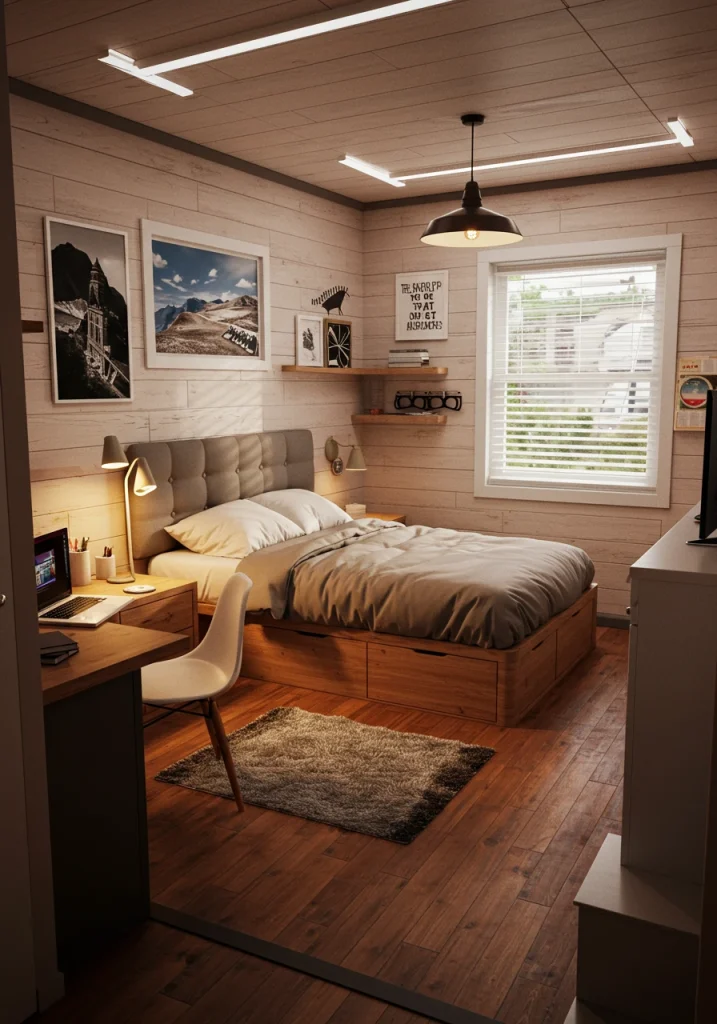
While design rules often say to center your bed on the main wall, in a very tiny bedroom, this can often leave you with two, unusable, narrow walkways on either side. A very practical and space-saving solution is to break this rule and push your bed into a corner. This will free up a much larger, more usable, open area of floor space in the rest of the room.
This is a layout that I use all the time for very small, square bedrooms. By pushing the bed against two walls, you can open up enough space for a small desk, a larger dresser, or a comfortable reading corner.
- Maximizes Floor Space: Frees up a significant, consolidated area of open floor.
- Creates a Cozy Nook: The corner placement can make the bed feel like a cozy, den-like nest.
- Practicality: Be aware that it makes making the bed a bit more difficult, and one person will have to climb over the other to get out.
For an enhancement that adds to the cozy, nook-like feel, hang a small, floating corner shelf in the corner above the bed. It’s the perfect, tiny perch for a phone or a small book.
12. Use a “Color Drenching” Technique
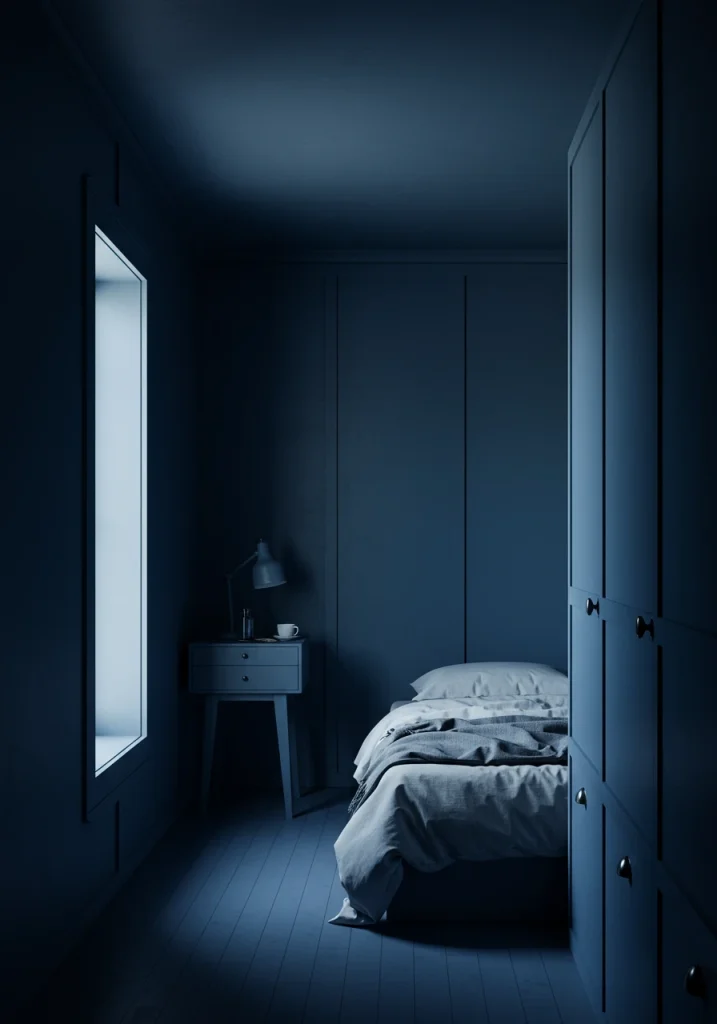
This is a wonderfully counter-intuitive but incredibly sophisticated and effective trick for a tiny bedroom. “Color drenching” means painting the walls, the trim, the doors, and even the ceiling all in the same color. By eliminating the high-contrast lines of traditional white trim, you blur the architectural boundaries and corners of the room. This can trick the eye and make a small space feel larger, more seamless, and more serene.
I love this technique for creating a very immersive and high-end, jewel-box-like feel in a small room.
- Effect: Creates a seamless, enveloping, and sophisticated atmosphere. Blurs the edges of the room.
- How to Implement: Paint the walls, window trim, door, baseboards, and ceiling all in the same color.
- Color Choice: Works beautifully with a soft, light, and muted color (like a pale sage green or a dusty blue) for a serene look, or with a deep, moody color for a dramatic, cocoon-like feel.
For an enhancement, also paint a large piece of furniture, like your dresser or a bookshelf, the exact same color as the walls. This will make the furniture visually “disappear” into the wall, further enhancing the uncluttered and spacious feel.
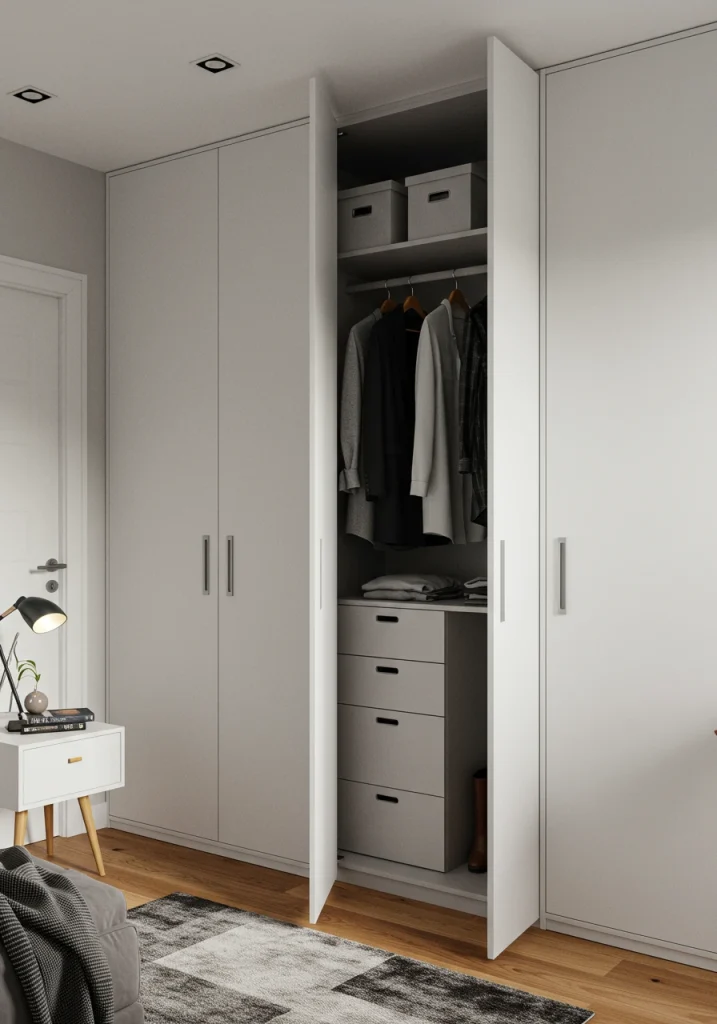
13. Use a Wall-Mounted Wardrobe System
A freestanding wardrobe or a large dresser can be a bulky, space-hogging monster in a tiny bedroom. A far more space-efficient and modern solution is a wall-mounted wardrobe system. These systems, like the popular PAX system from IKEA or other modular brands, allow you to create custom, floor-to-ceiling storage that is often much shallower than a traditional wardrobe.
I love these systems for their flexibility. You can customize the interior with a mix of hanging rods, drawers, and shelves to perfectly suit your needs.
- Space-Saving: Can be shallower than a freestanding wardrobe, and a wall-to-wall installation has a custom, built-in look.
- Customizable: You can design the interior to perfectly match your wardrobe.
- Seamless Look: Choose doors that are a simple, flat-panel design and paint them the same color as your walls to make the large unit visually disappear.
For the ultimate space-saving enhancement, choose wardrobe doors that have a mirrored front. This will combine your entire wall of storage with a massive, space-enhancing mirror, giving you two essential functions in one.
14. Use a Floating Desk as a Multi-Use Surface
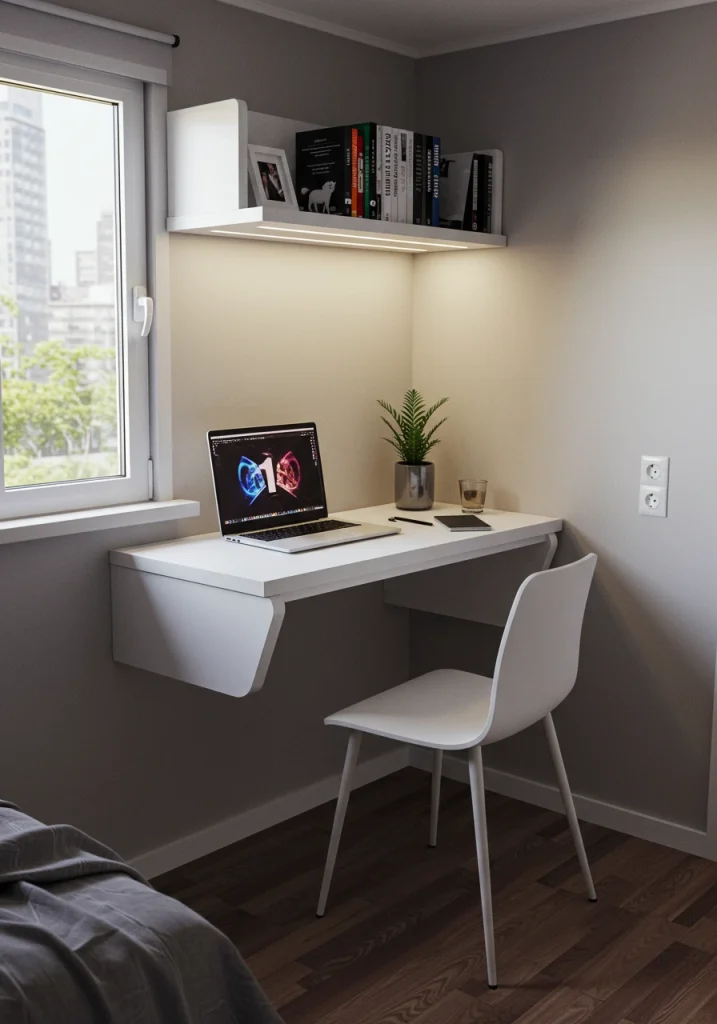
In a tiny bedroom that also needs to function as a workspace or a vanity, a simple, wall-mounted, floating desk is a brilliant, multi-purpose, and space-saving solution. A floating desk takes up zero floor space, which keeps the room feeling as open and uncluttered as possible. It can serve as a place for your laptop, a spot to do your makeup, and can even double as a nightstand if it’s placed next to your bed.
This is a favorite solution of mine for creating a functional “nook” in a tiny room without adding a bulky piece of furniture.
- Ultimate Space-Saver: Takes up no floor space, making the room feel larger.
- Multi-Functional: Can be a desk, a vanity, or a nightstand.
- Minimalist Aesthetic: The simple, clean lines are perfect for a modern, uncluttered look.
For an enhancement, hang a beautiful, round mirror on the wall above your floating desk. This will allow it to function perfectly as a vanity, and the mirror will also help to bounce light around your small room.
15. Keep the Decor Minimal and Curated
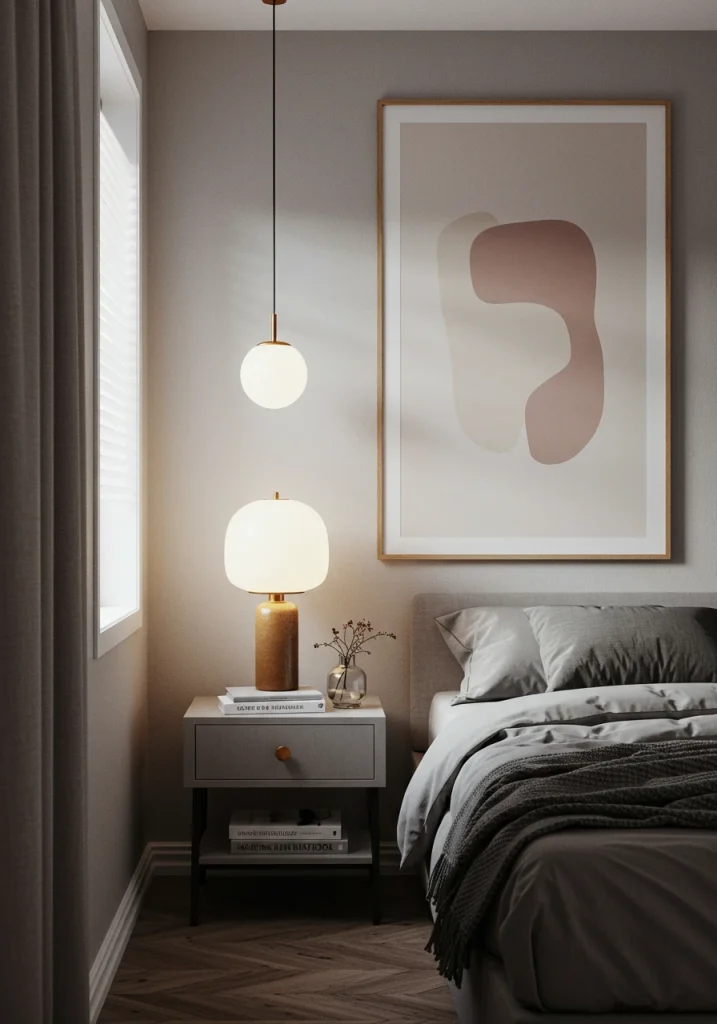
In a tiny bedroom, visual clutter is just as bad as physical clutter. A room that is filled with too many small, fussy, decorative objects will feel chaotic and much smaller than it actually is. The key to a stylish and serene small space is to adopt a minimalist and highly curated approach to your decor. This is a core principle celebrated by small-space living experts everywhere.
I always advise my clients to follow the “one in, one out” rule to keep their decor from getting out of hand.
- Less is More: Choose a few, beautiful, and meaningful decorative objects rather than a lot of small, insignificant trinkets.
- Go Big: A single, large piece of art often has more impact and feels less cluttered than a gallery wall of many small pieces in a tiny room.
- Clear Your Surfaces: Keep your nightstand and any other surfaces as clear as possible.
For an enhancement, use your functional items as your decor. A beautiful, sculptural lamp, a set of stylish, vintage books, or a beautiful, ceramic pot for a plant can all be beautiful, decorative objects that also serve a purpose.
16. Utilize the Space Over the Door
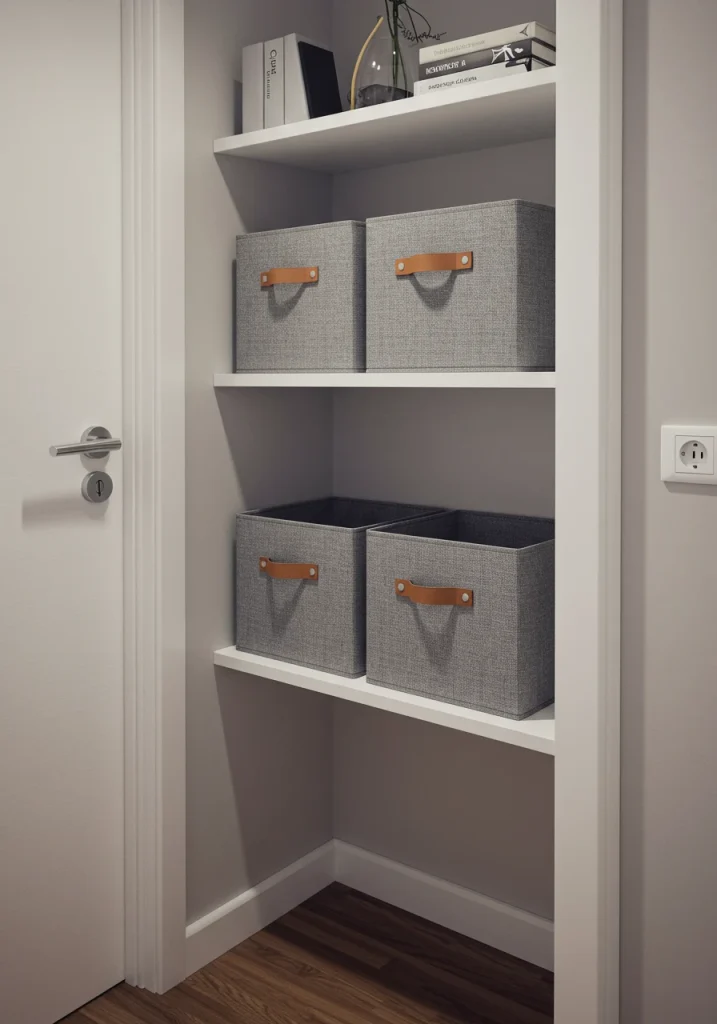
The small slice of wall space between the top of your bedroom doorway and the ceiling is almost always overlooked and wasted. In a tiny bedroom, this is a prime piece of real estate for storage. Installing a simple, single, floating shelf in this spot is a brilliantly creative and space-saving idea.
This is a perfect, out-of-the-way spot for items that you don’t need to access every day. I love to use this shelf for a collection of beautiful, matching storage boxes or baskets.
- Perfect for Long-Term Storage: A great spot for storing out-of-season items, extra bedding, or a collection of books.
- Draws the Eye Up: Placing a shelf high up can also be a visual trick that makes the ceiling feel higher.
- DIY-Friendly: A very easy and inexpensive project that adds a huge amount of storage.
For an enhancement, find a set of beautiful, lidded, decorative boxes that fit the shelf perfectly. This will keep your storage looking neat and tidy and will hide the contents from view.
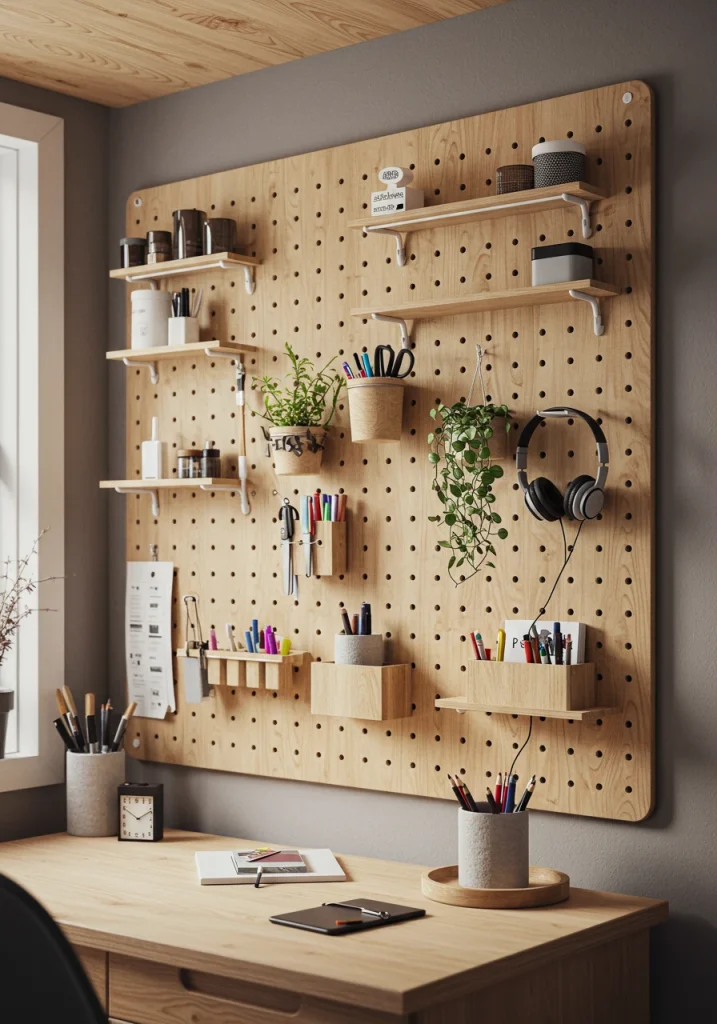
17. Hang a Pegboard Organizer
A pegboard is a wonderfully versatile and space-saving organizer that is perfect for a tiny bedroom. It can turn an empty section of wall into a completely customizable storage and display hub for a huge variety of small items, from jewelry and accessories to office supplies and small plants.
This is a fantastic solution for keeping all your small, clutter-prone items off your precious desk and dresser surfaces. I love the industrial-chic look of a pegboard, and its flexibility is unbeatable.
- Ultimate Flexibility: You can easily move the hooks, shelves, and baskets around as your needs change.
- Vertical Storage: Gets all your small items off your surfaces and onto the wall.
- DIY or Buy: You can have a large sheet of pegboard cut to size at a hardware store, or you can buy smaller, more decorative, pre-made pegboard systems.
For an enhancement, paint your pegboard a beautiful, stylish color—perhaps the same color as your walls to make it blend in, or a bold accent color to make it a fun feature.
18. Layer Rugs to Define Zones
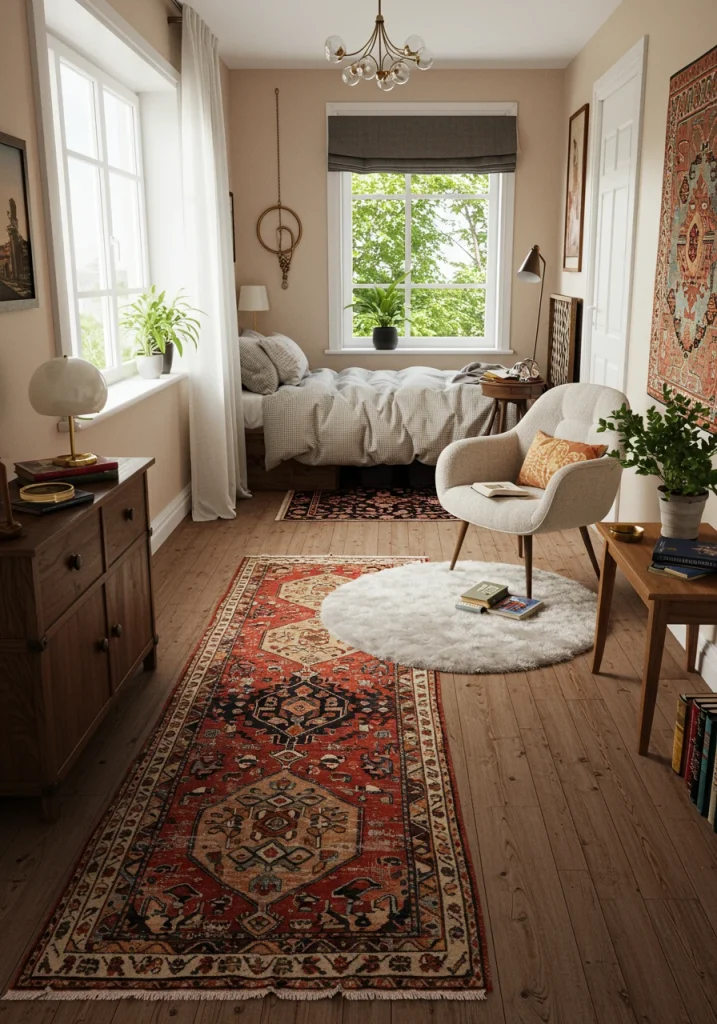
Even in a tiny, single-room bedroom, you can use rugs to create the illusion of different, functional zones. This is a clever designer trick that can make your space feel more organized and a bit larger. For example, a small, rectangular runner next to your bed can define a “waking up” zone, while a small, round, plush rug in a corner can define a “reading nook” zone under an armchair.
I love this technique for adding texture and a layer of sophistication. The key is to choose rugs with a low profile so they don’t become a trip hazard.
- Defines Zones: Creates a clear, visual separation between different functions in the room.
- Adds Texture and Color: A great way to add a layer of softness and pattern.
- Layering: You can even place a smaller, more textural rug (like a faux sheepskin) on top of a larger, low-pile rug to create a super cozy spot.
For an enhancement, use rugs to help with your layout. For example, if you have pushed your bed into a corner, use a simple, rectangular runner in the open, walkway area to emphasize the clear path and make the layout feel more intentional.
19. The Murphy Bed: The Ultimate Transformer
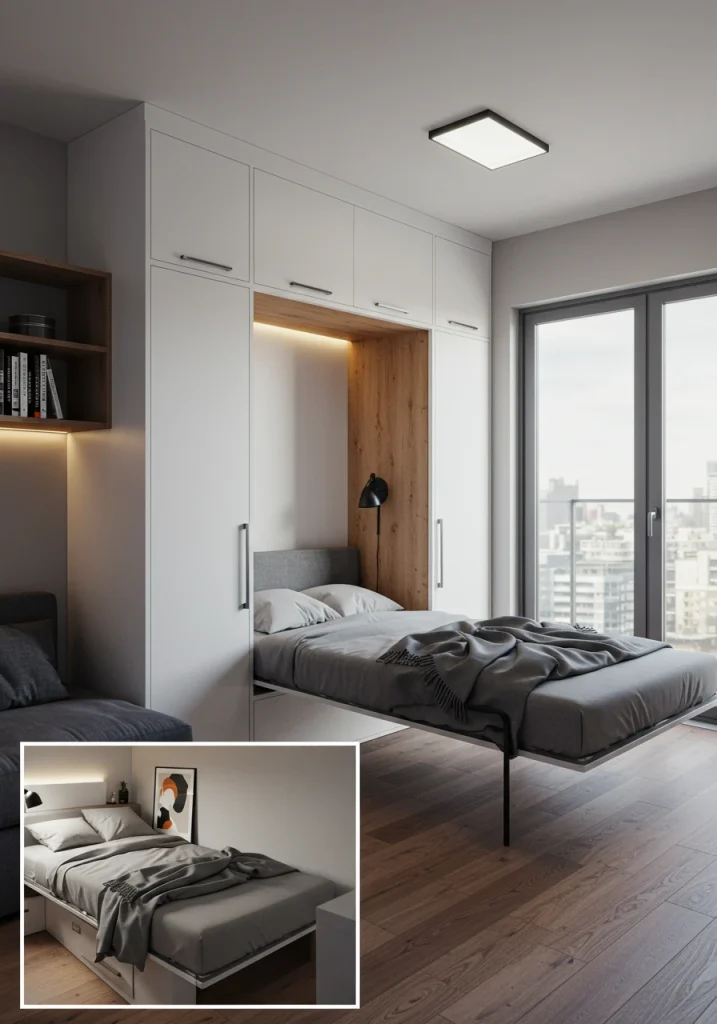
For the ultimate in tiny bedroom functionality, especially for a studio apartment or a guest room that needs to double as an office, the Murphy bed is an unbeatable, transformative solution. A Murphy bed is a bed that is hinged at one end so it can be folded up and stored vertically against the wall or inside a cabinet.
This is the most dramatic, space-saving piece of furniture you can own. It allows you to have a full, comfortable bed for sleeping, and then to completely reclaim all of that floor space during the day for other activities. I have designed many studio apartments where a modern, stylish Murphy bed is the key to making the small space truly livable.
- Ultimate Space-Saver: Frees up the entire footprint of the bed during the day.
- Transforms the Room: Allows a single room to be a comfortable bedroom at night and a functional office or living room during the day.
- Modern Designs: Modern Murphy beds are sleek, easy to operate, and can include integrated features like a sofa or a desk on the front when the bed is folded up.
For an enhancement, choose a Murphy bed system that has built-in, vertical storage towers on either side. This will create a full, wall-unit system that provides a huge amount of storage and makes the bed feel like a very intentional, high-end, custom piece.
Conclusion
A tiny bedroom does not require you to sacrifice style, comfort, or function. As we’ve explored through these 19 ideas, the key to a successful small space is a commitment to clever, creative, and multi-functional design. By thinking vertically, choosing smart, space-savvy furniture, and using visual tricks to create an illusion of spaciousness, you can transform a cramped room into a beautiful, organized, and deeply personal sanctuary. The constraints of a small footprint are simply an invitation to be a more creative and intentional designer.


