Are you looking for inspiring open living room ideas to create a space that feels cohesive, functional, and truly welcoming? The open-concept floor plan has revolutionized modern living, breaking down walls to create airy, light-filled great rooms perfect for social gatherings and family connection. Yet, this popular layout comes with its own set of design challenges. Without walls to define the space, an open living room can sometimes feel vast, cold, or undefined, with furniture that seems to float aimlessly. The key to a successful design is to master the art of creating intimacy and order within the openness.
This guide will walk you through 16 essential ideas, from smart furniture layouts to cohesive design choices, that will help you craft an open living room that is both beautifully spacious and wonderfully welcoming.
1. Anchor the Space with a Large Area Rug
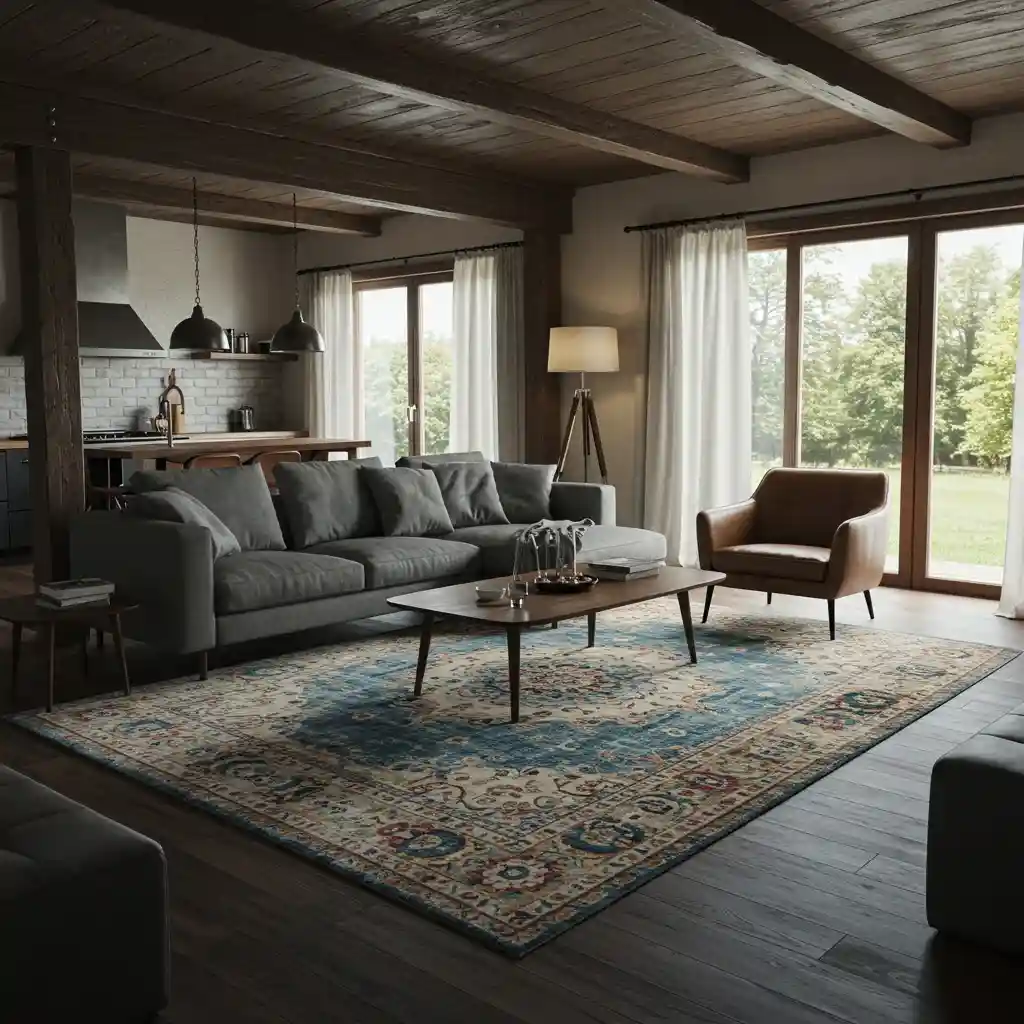
In an open living room without walls, an area rug is your most powerful tool for defining your space. A large rug acts as a visual “island,” anchoring your sofa, chairs, and coffee table and grouping them together into an intentional and cohesive seating area. This simple addition is the number one rule for preventing your furniture from looking like it’s randomly floating in a vast, empty room. It creates a sense of place and intimacy, effectively creating a “room within a room.”
I always tell my clients that the most common mistake is choosing a rug that’s too small. A generously sized rug is crucial. For a truly grounded feel, the rug should be large enough that at least the front legs of all your main seating pieces are resting on it. This physically and visually connects the furniture, creating a unified and welcoming conversation zone.
- Function: Visually defines the living room zone and adds softness, color, and texture.
- Size is Key: Must be large enough to connect the main seating pieces.
- Placement: The front legs of the sofa and any chairs should be on the rug.
For an enhancement, choose a rug with a beautiful pattern or a rich color. In a large, neutral open-plan space, the living room rug is the perfect opportunity to inject a major dose of personality and style that can inform the color palette for your throw pillows and accessories.
2. Use a Sofa and Console Table as a Divider
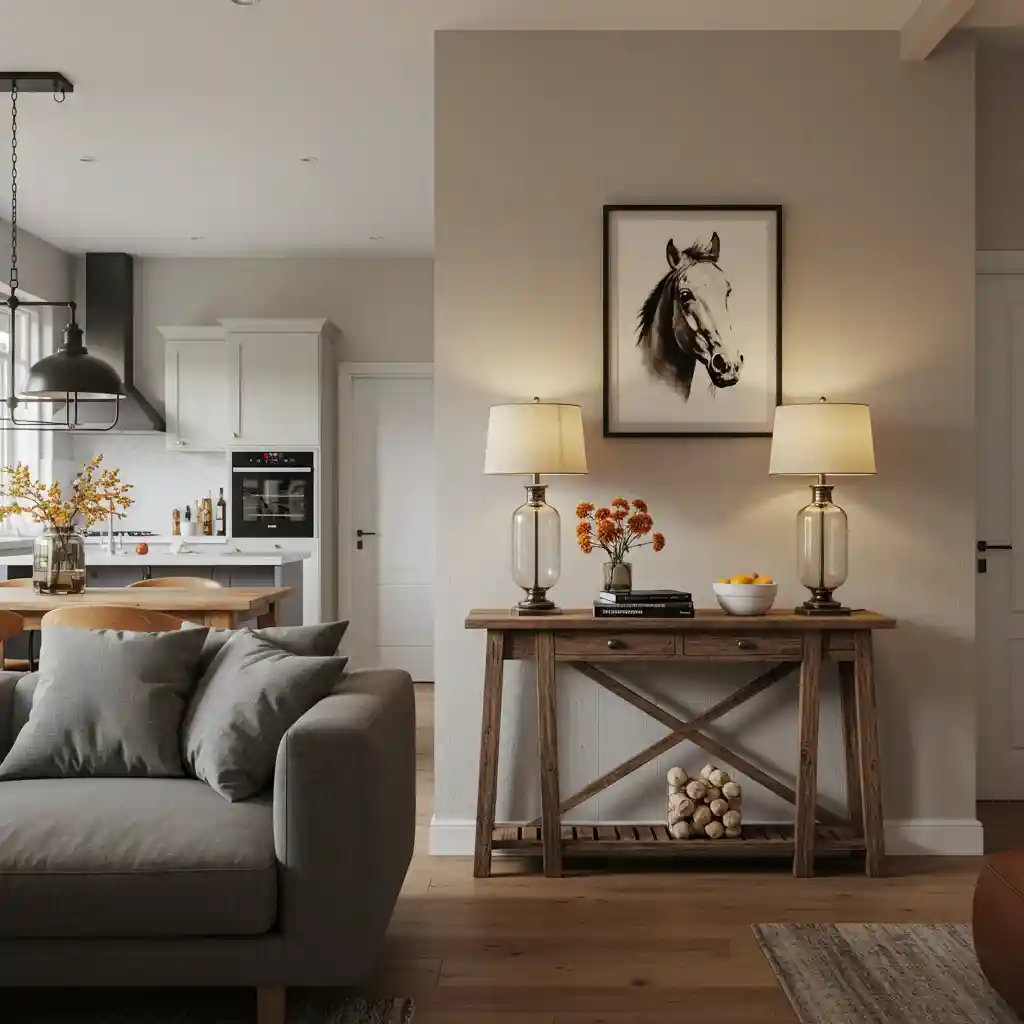
In an open floor plan, the back of your sofa is often exposed to another zone, like the dining area or kitchen. A brilliantly smart and stylish way to handle this is to place a slim console table directly against the back of the sofa. This creates a clean, finished border between your zones and turns the back of your sofa from a purely functional object into a beautiful and purposeful feature. This technique is a favorite of space planning experts at publications like The Spruce.
This is my go-to trick for making a “floating” sofa arrangement feel intentional and polished. The console table provides a perfect surface for placing a pair of matching table lamps, which adds crucial, human-scale ambient light to the middle of a large room. It’s also a great spot for displaying a vase of flowers, a few curated books, or other decorative objects.
- Function: Creates a visual and physical border, provides a surface for lighting and decor.
- Placement: The console should be roughly the same height as the back of the sofa and slightly less wide.
- Style: Choose a console in a style and material that complements the overall decor of the open space.
For an enhancement that adds function, tuck two small, upholstered stools or ottomans underneath the console table. They will be completely out of the way for daily use but can be pulled out as extra seating when you have guests.
3. Float Your Furniture Away from the Walls
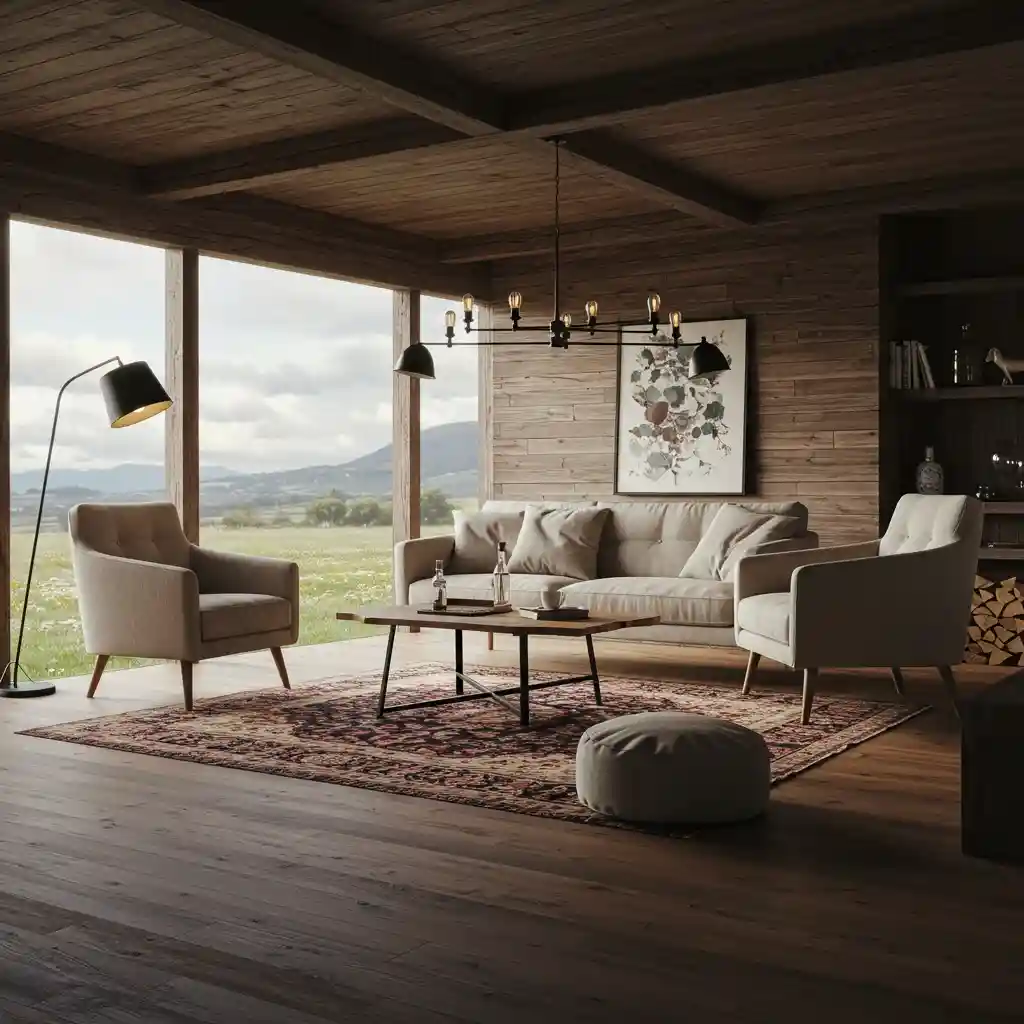
A common mistake in any living room, but especially in a large open one, is to push all the furniture up against the walls. This can create an awkward, empty “dance floor” in the middle of the room and can actually make the space feel less intimate and conversational. The solution is to “float” your furniture by pulling it away from the walls and arranging it in a comfortable, cohesive grouping in the center of the space.
I always encourage my clients to create more intimate seating arrangements. Your sofa and chairs should be close enough to each other that people can have a conversation without shouting. This floating arrangement, anchored by a large area rug, will instantly make your open living room feel more welcoming, cozy, and intentionally designed.
- Create a Grouping: Pull your furniture away from the walls to create a defined conversation area.
- Conversation Distance: Aim for no more than 8-10 feet between seating pieces.
- Anchor with a Rug: This is essential to make the floating arrangement feel grounded.
For an enhancement, ensure you leave a clear and generous pathway (at least 36 inches) behind your floating furniture. This creates a clear traffic lane and makes the room easy to navigate.
4. Maintain a Consistent Color Palette
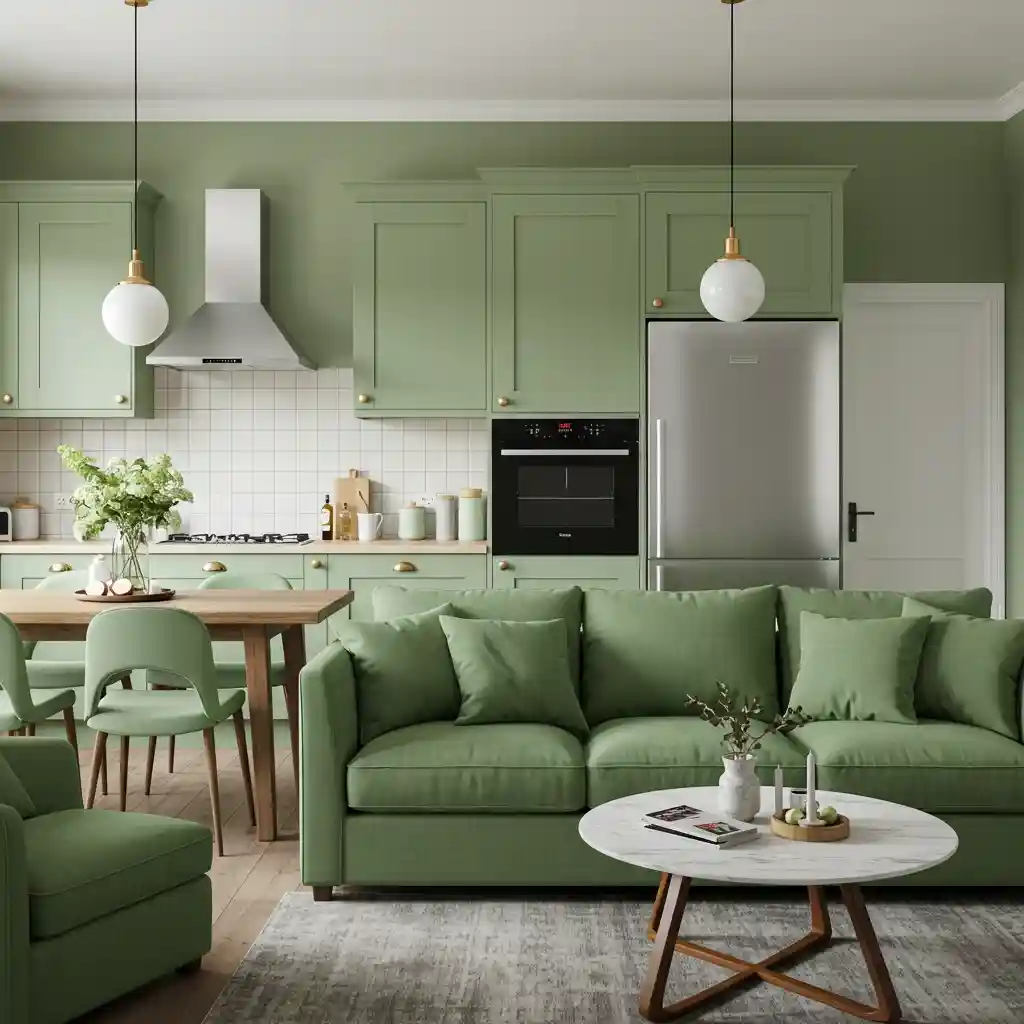
To make a large, multi-functional open-plan space feel cohesive and harmonious rather than like a series of disconnected rooms, it’s crucial to use a consistent color palette throughout all the zones. This doesn’t mean everything has to be the exact same color, but the main colors should be repeated and balanced across the entire space. This visual thread is what ties the different functional areas together into one unified great room.
I advise my clients to choose a simple palette of three to four colors and use them in different proportions in each zone. For example, the deep navy blue of your kitchen island could be repeated in the throw pillows on your living room sofa and in the art in your dining area. The warm brass of your kitchen hardware could be echoed in a floor lamp or picture frames in the living area.
- Choose a Palette: Select 3-4 complementary colors to use throughout the space.
- Repeat Colors: Use your main colors in the kitchen, dining, and living zones in varying amounts.
- Create Flow: The consistent palette allows the eye to move smoothly and harmoniously from one zone to the other.
For a sophisticated enhancement, choose one bold accent color and use it in three to five small, well-placed locations across the entire open plan. This creates a stylish and intentional “visual triangle” that guides the eye through the space.
5. Use a Sectional to Define a Corner
A large sectional sofa can be a fantastic tool for an open living room. Its L-shape naturally creates a “corner,” defining the boundary of the living room zone and creating a very cozy and contained seating area. When floated in the room, a sectional acts as a partial wall, clearly delineating the living space from a nearby dining area or entryway.
This is a favorite solution for families, as a sectional provides a huge amount of comfortable, lounge-worthy seating. I often pair a large sectional with a round coffee table or a cluster of smaller ottomans to soften the corner and improve traffic flow. As showcased in many Pottery Barn catalogs, a sectional is the ultimate piece for creating a comfortable and inviting family hub.
- Creates a “Soft Wall”: The back of the sectional acts as a natural room divider.
- Maximizes Seating: Perfect for large families or those who love to entertain a crowd.
- Defines the Zone: Clearly and effectively anchors the living room area.
For an enhancement, ensure the side of the sectional that faces another zone (like the dining room) has a clean, finished back. Place a tall, sculptural plant or a slim floor lamp just behind this corner to add a beautiful, vertical accent.
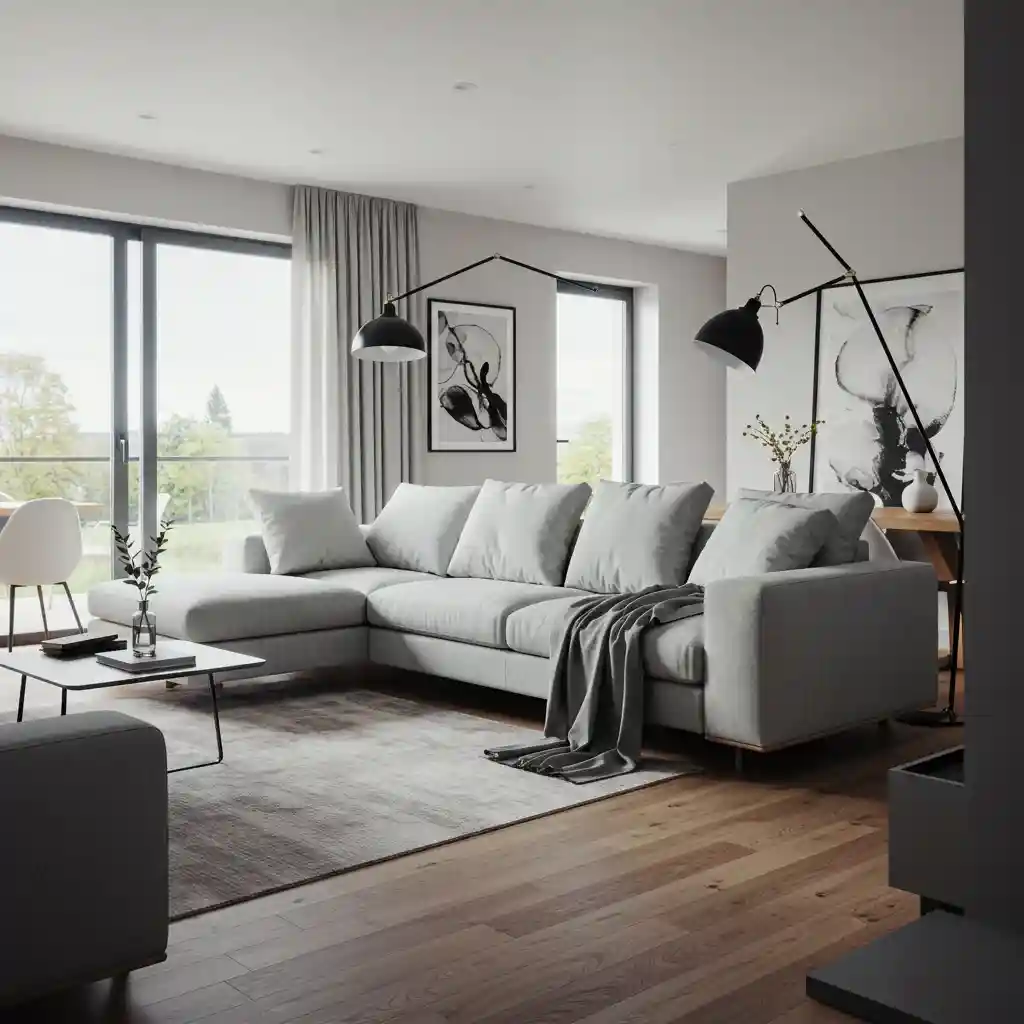
6. Use Continuous Flooring Throughout
One of the most important architectural decisions you can make to ensure your open living room feels like one large, unified space is to use the same flooring material throughout. Running a single, uninterrupted flooring material—like hardwood, laminate, or large-format tile—from the kitchen, through the dining area, and into the living room creates a seamless visual foundation. Abruptly changing the flooring at the edge of a zone can visually chop up the space and make it feel smaller and more disjointed.
As a designer, this is one of my non-negotiable rules for a successful open plan. A continuous floor allows the eye to travel across the entire space without interruption, which is key to creating that expansive, airy feeling. Modern materials like luxury vinyl plank (LVP) and wood-look porcelain tile are fantastic choices as they provide the warm look of wood with the durability needed for a kitchen.
- Creates Flow: A single flooring material is the key to a seamless, unified space.
- Makes Space Feel Larger: Unbroken lines on the floor make the entire area feel more expansive.
- Durable Choices: Choose a material that is durable enough for the kitchen but also warm and comfortable enough for the living room.
For an enhancement, if you use a wood or wood-look flooring, pay attention to the direction you lay the planks. Running the planks parallel to the longest dimension of the room will further enhance the sense of space and flow.
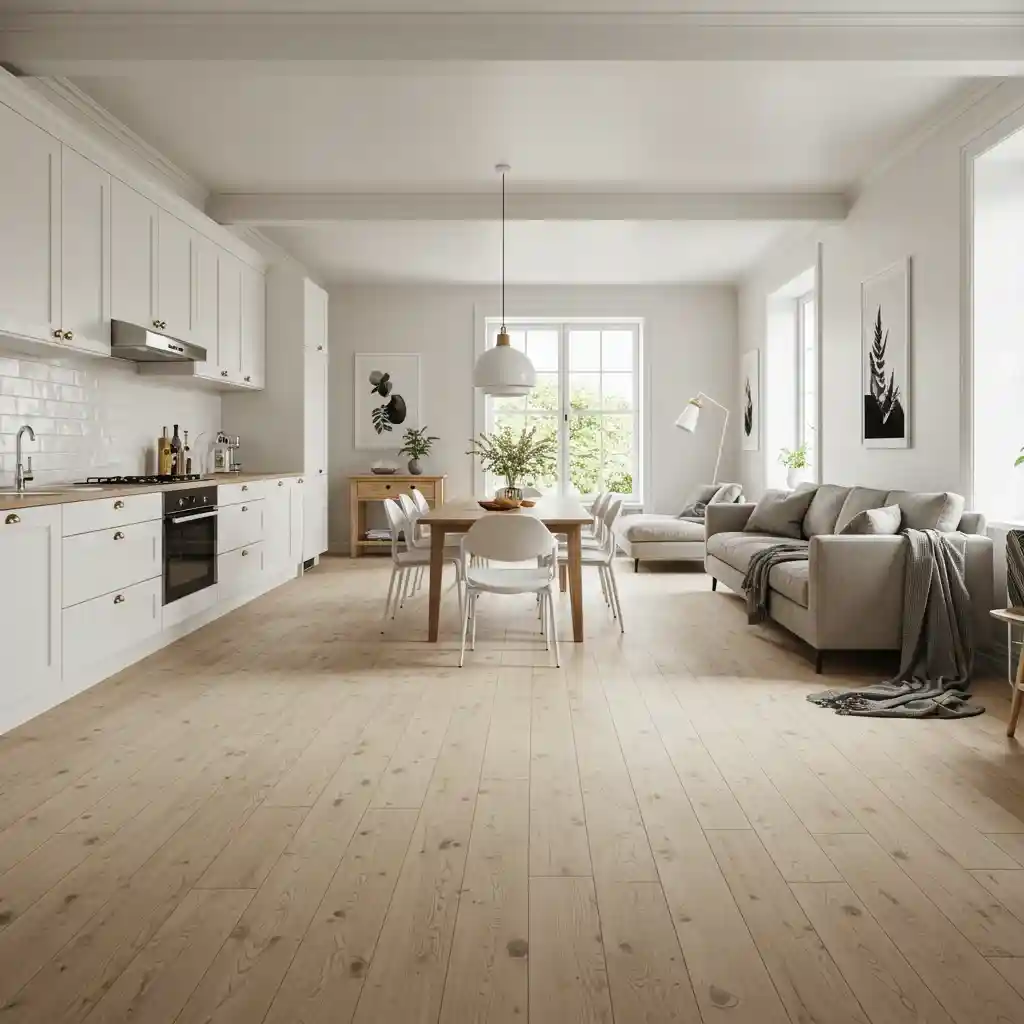
7. Create a Cohesive, Layered Lighting Plan
In a large, open-concept space, a single overhead light in each “zone” is not enough. A cohesive and layered lighting plan is essential for both functionality and creating a warm, welcoming ambiance. Your lighting plan should be considered as a whole, with fixtures in each zone that are stylistically complementary.
Each zone needs its own layers of light.
- Kitchen: Requires bright, ambient light (recessed cans), focused task lighting (pendants over the island, under-cabinet lights).
- Dining: Requires a statement fixture (a chandelier or large pendant) hung low over the table.
- Living Room: Requires softer, ambient light (from lamps and a central fixture) and task lighting (a reading lamp).
- Cohesion: The key is to choose fixtures that share a common style, finish (e.g., all brass or all black metal), or shape.
For a dramatic enhancement, use a large, statement chandelier over your living room seating area. This creates a powerful focal point, clearly anchors the living zone, and gives it a sense of importance and place within the larger open room, drawing people in.
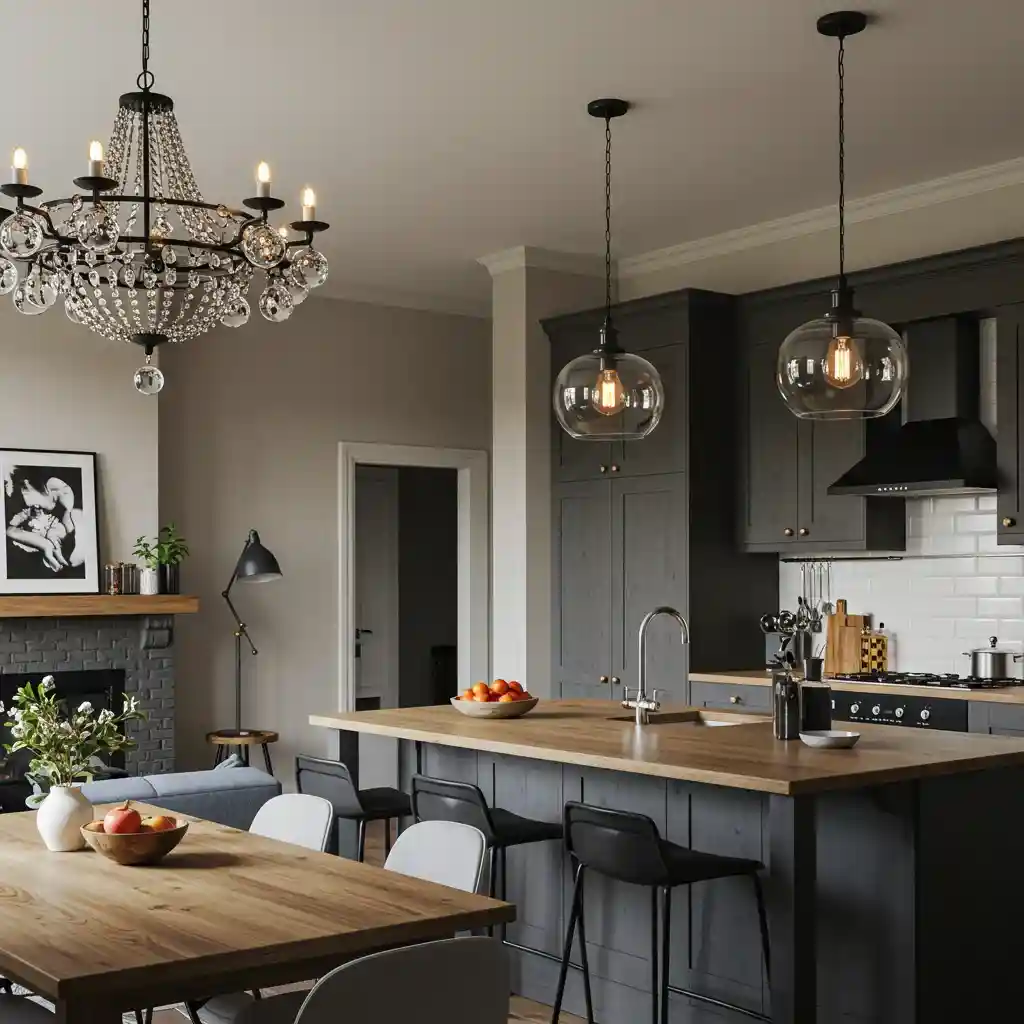
8. Repeat Key Materials and Finishes
Beyond just color, repeating key materials and finishes throughout your open-plan space is another powerful strategy for creating a cohesive and intentional design. This is about creating a subtle but effective visual dialogue between the different zones. By using the same wood tone, metal finish, or stone type in each area, you create a sense of rhythm and harmony that ties the entire great room together.
This is a trick I use in all my open-concept projects to make them feel custom and high-end. For example, if you have open shelving made of warm walnut in your kitchen, use a media console or a coffee table in the same warm walnut in your living room. If you choose a sleek, matte black finish for your kitchen faucet, repeat that same matte black in the frame of a mirror or a floor lamp in the living area.
- Wood Tones: Match the wood of your kitchen island to a piece of furniture in the living room.
- Metal Finishes: Repeat the finish of your kitchen hardware (brass, black, nickel) in your living room lighting and accessories.
- Stone: The marble of your kitchen countertop could be echoed in the top of a small side table.
For an enhancement, use a material in an unexpected way. For instance, clad the front of your kitchen island in the same reclaimed wood that you used for a feature wall or floating shelves in your living room. This creates a very strong and custom-looking connection.
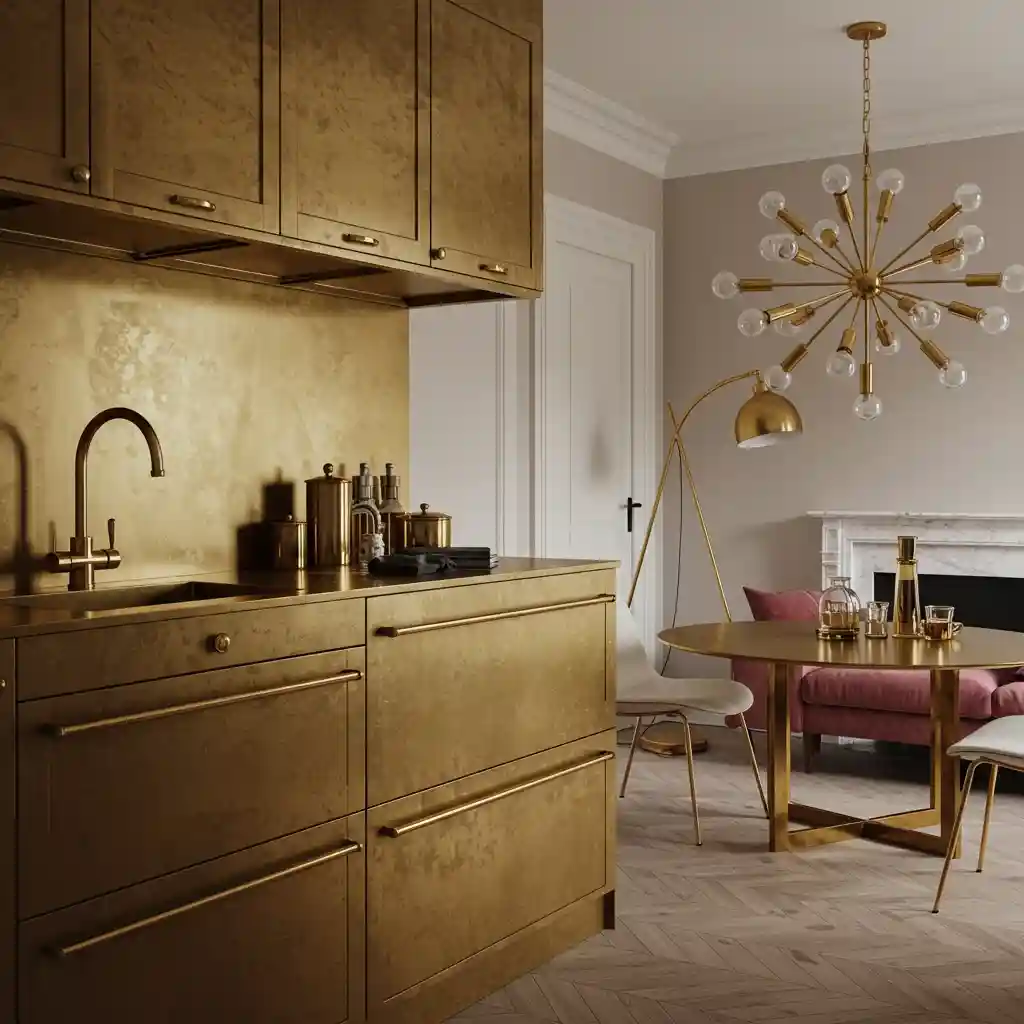
9. Incorporate Round Shapes to Soften the Space
Large, open-plan living rooms can often feel very boxy and full of hard, straight lines. A very effective way to break up this linearity and make the space feel softer and more welcoming is to incorporate round and curved shapes. The soft, gentle geometry of a circle or an oval provides a beautiful, organic counterpoint to the angular architecture of the room.
I always try to include at least one major round element in an open-plan space. A large, round coffee table or ottoman is a fantastic choice, as it improves traffic flow and creates a natural gathering point. A circular dining table can also feel more social and space-efficient than a rectangular one.
- Round Coffee Table/Ottoman: Softens the main seating area and has no sharp corners.
- Circular Dining Table: Encourages conversation and can often fit in smaller spaces.
- Curved Furniture: A sofa or an armchair with soft, curved lines can add a sculptural element.
- Round Rug: A circular area rug is a bold and unexpected choice that can beautifully define a zone.
For an enhancement, hang a large, round mirror on a main wall. The perfect, simple geometry of the circle will be a powerful and beautiful contrast to the long, straight lines of the open-plan room.
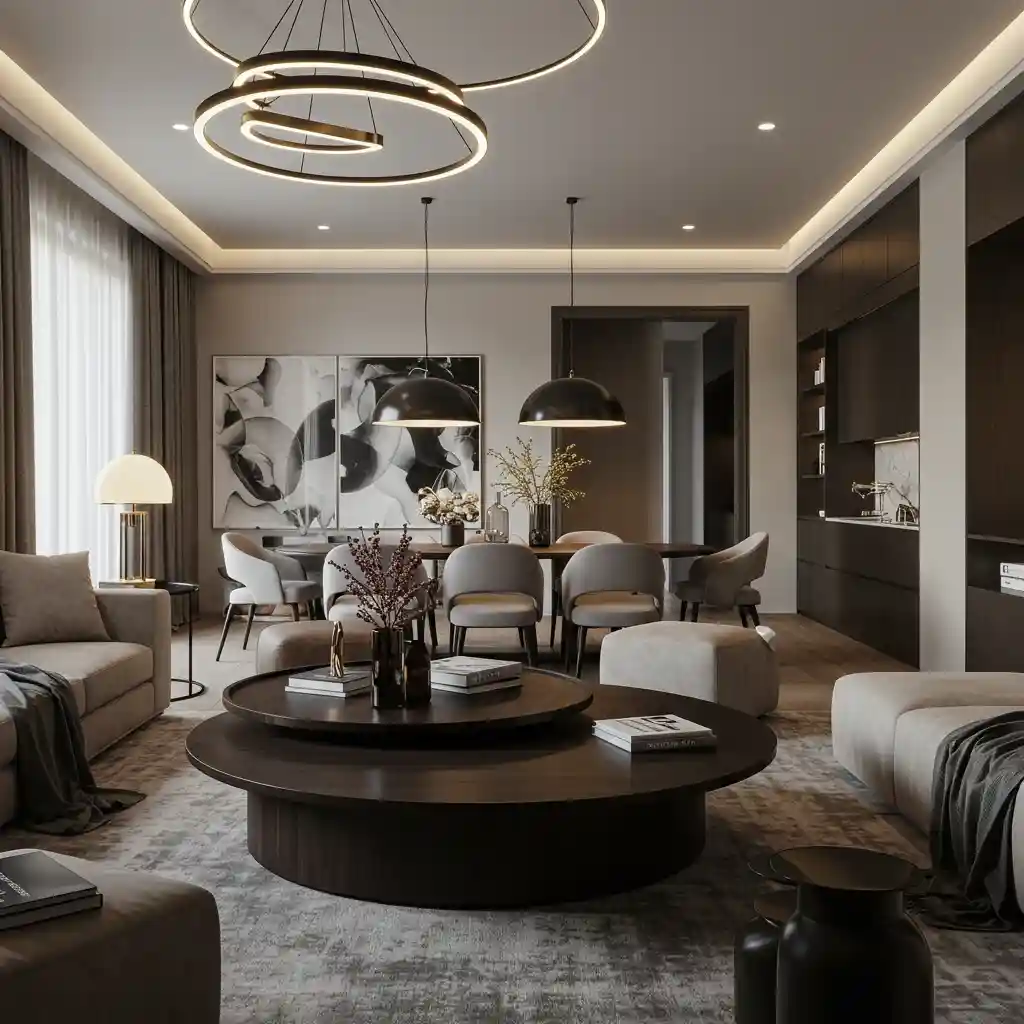
10. Create Multiple, Smaller Seating Zones
In a very large open living room, instead of one massive seating group, a more functional and welcoming approach can be to create two or more smaller, more intimate seating zones. This breaks up the large space and provides different areas for different activities, making the room feel cozier and more versatile.
This is a great strategy for a room that needs to accommodate different needs at the same time. I often design a primary seating zone with a large sofa and a coffee table, focused on the TV or a fireplace. Then, in another part of the room, perhaps by a window, I’ll create a smaller, secondary zone. This could be a simple reading nook with just two comfortable armchairs and a small table between them, or a small game table with a couple of chairs.
- Primary Zone: For the main activity, like watching TV or large group conversations.
- Secondary Zone: For quieter activities, like reading, a one-on-one chat, or playing a game.
- Define with Rugs: Use a separate, smaller rug to define your secondary zone.
For an enhancement, ensure your secondary seating zone has its own dedicated task lighting, like a beautiful floor lamp. This will make it feel like its own, special, self-contained destination within the larger room.
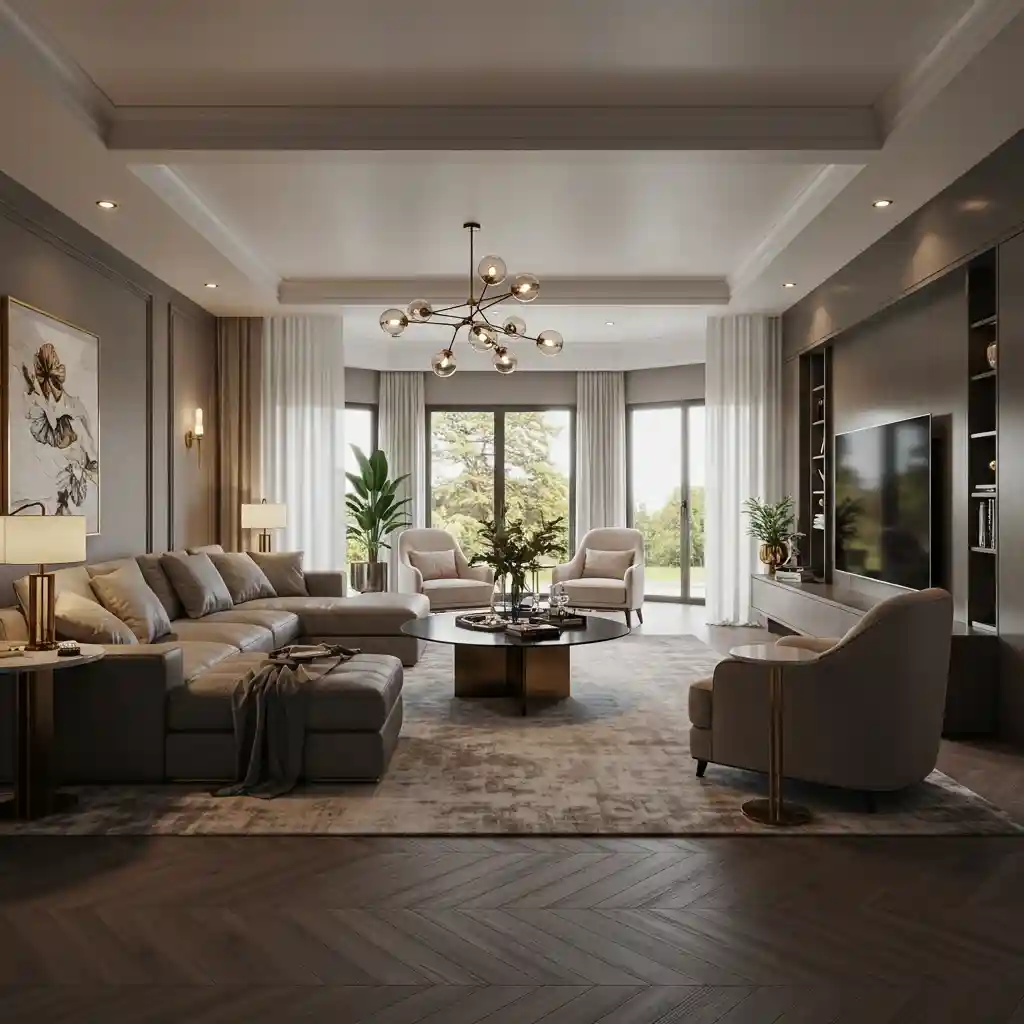
11. Go Big with an Oversized Statement Piece
In a large open living room with high ceilings, small, delicate furniture and decor can get lost and feel out of scale. A smart design strategy is to embrace the scale of the room and go big with one or two, oversized statement pieces. This can actually make the room feel more balanced and intentionally designed, not empty.
This is where you can have a bit of fun and drama. It could be a very large, oversized piece of abstract art that covers a major portion of a wall. It could be a massive, sculptural chandelier that acts as the dramatic centerpiece of the room. Or it could be a single, very large, architectural floor plant, like a 10-foot-tall fiddle leaf fig tree. As the design experts at Architectural Digest often show, a single, confident, large-scale piece is the key to mastering a grand space.
- Statement Art: A single, huge canvas has more impact than a gallery wall of many small pieces.
- Statement Lighting: A large, sculptural chandelier or an oversized arc floor lamp.
- Statement Plant: A very large, architectural tree in a beautiful, big planter.
For an enhancement, if you choose a statement light fixture, make sure it’s on a dimmer. This will allow you to enjoy its grand, sculptural form while still being able to control the ambiance and create a more intimate feel in the evenings.
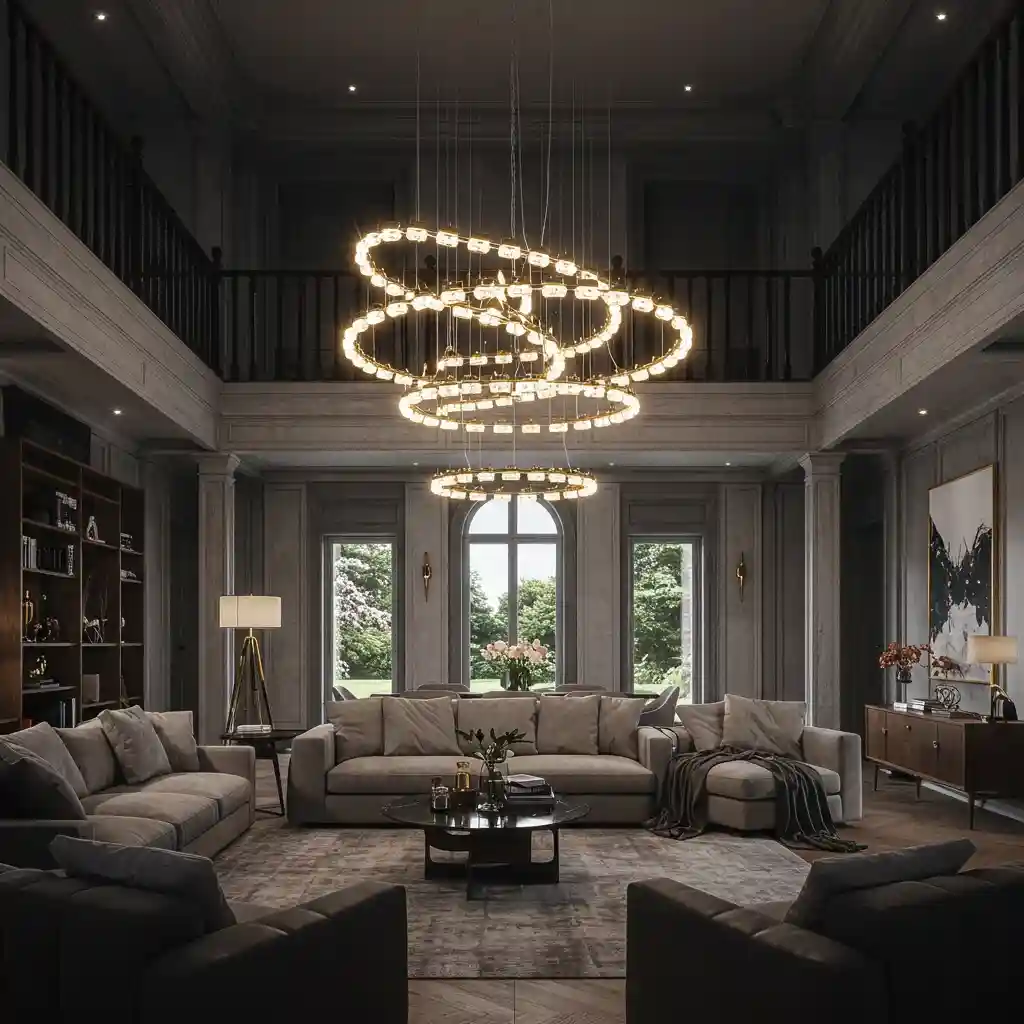
12. Use Vertical Elements to Add Height
If your open living room feels wide but has standard-height ceilings, it can sometimes feel a bit squat and out of proportion. A great way to counteract this is to add strong vertical elements that draw the eye upward, creating an illusion of height.
There are many ways to achieve this. Tall, floor-to-ceiling bookshelves are a fantastic option that also adds a huge amount of storage. A pair of long, elegant, floor-to-ceiling curtain panels hung high and wide around your windows can also make the entire wall feel taller. I also love to use a tall, slender, sculptural floor plant, like a snake plant, or a tall, narrow piece of vertical art to add that necessary upward line.
- Bookshelves: Floor-to-ceiling units are best.
- Curtains: Hang your curtains as high and wide as possible.
- Tall, Narrow Plants: A snake plant or a tall, thin ficus tree.
- Vertical Art: A tall, narrow canvas or a stack of two or three smaller, framed pieces.
For a simple enhancement, choose a floor lamp that has a strong, vertical line. A simple, tall, and slender “stick” lamp or a torchiere-style lamp can provide a subtle but effective vertical accent.
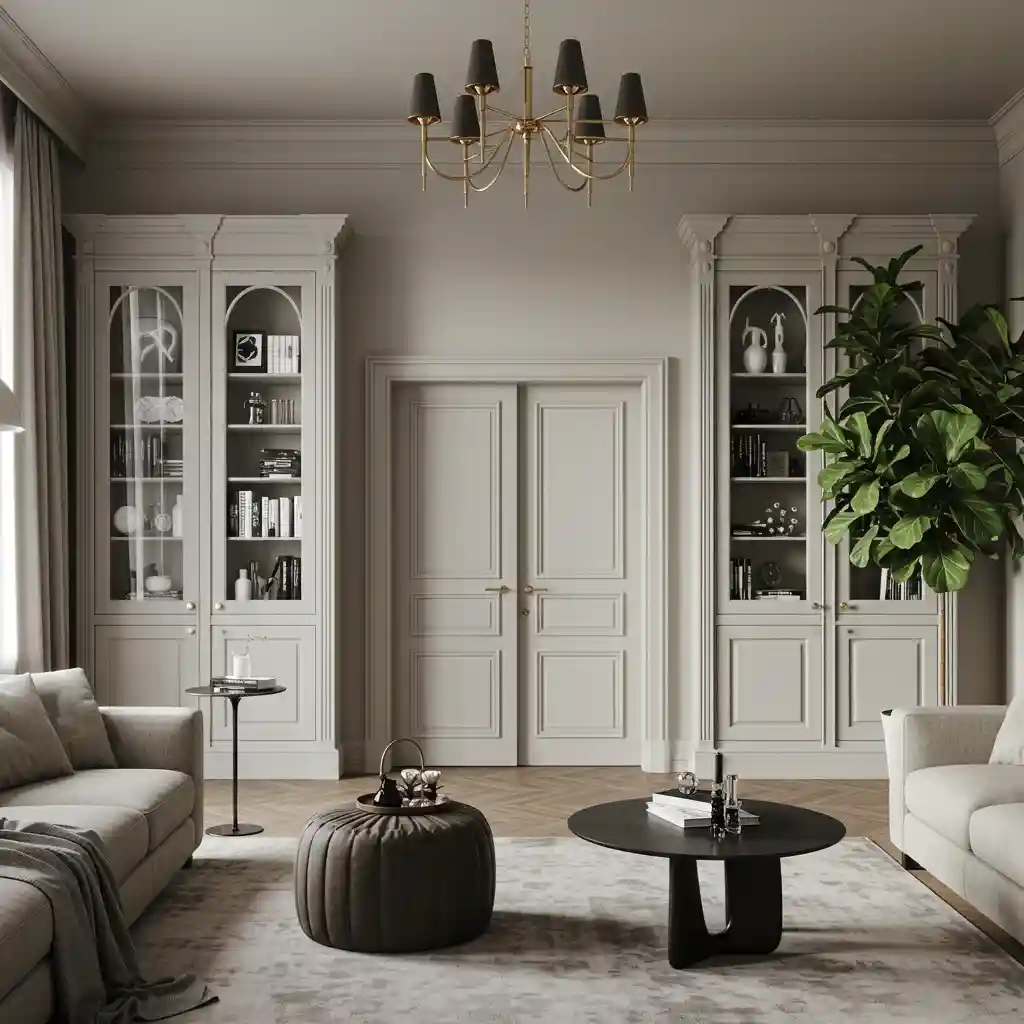
13. Create Clear Pathways for Traffic Flow
One of the biggest functional challenges in an open-plan living room is creating clear, intuitive pathways for people to walk through the space without having to weave around furniture. A well-designed layout should have clear, defined “traffic lanes” that guide you from one area to another, for example, from the entryway to the kitchen, without cutting through the main conversation area.
This is a key part of my space planning process. Before I place any furniture, I map out the main traffic patterns. As a general rule, a main walkway should be at least 36 inches wide to be comfortable. The “floating furniture” layout (Idea #3) is one of the best ways to achieve this, as it naturally creates a clear corridor behind the main seating group.
- Identify Main Routes: Determine the most common paths people will take through the space.
- Keep Them Clear: Don’t place furniture or accessories in these main traffic lanes.
- Aim for 36 Inches: A comfortable width for a main walkway.
For an enhancement that makes your walkway feel more intentional, define it with a long, durable runner rug. This is especially effective for the main path from your front door through your open-plan space.
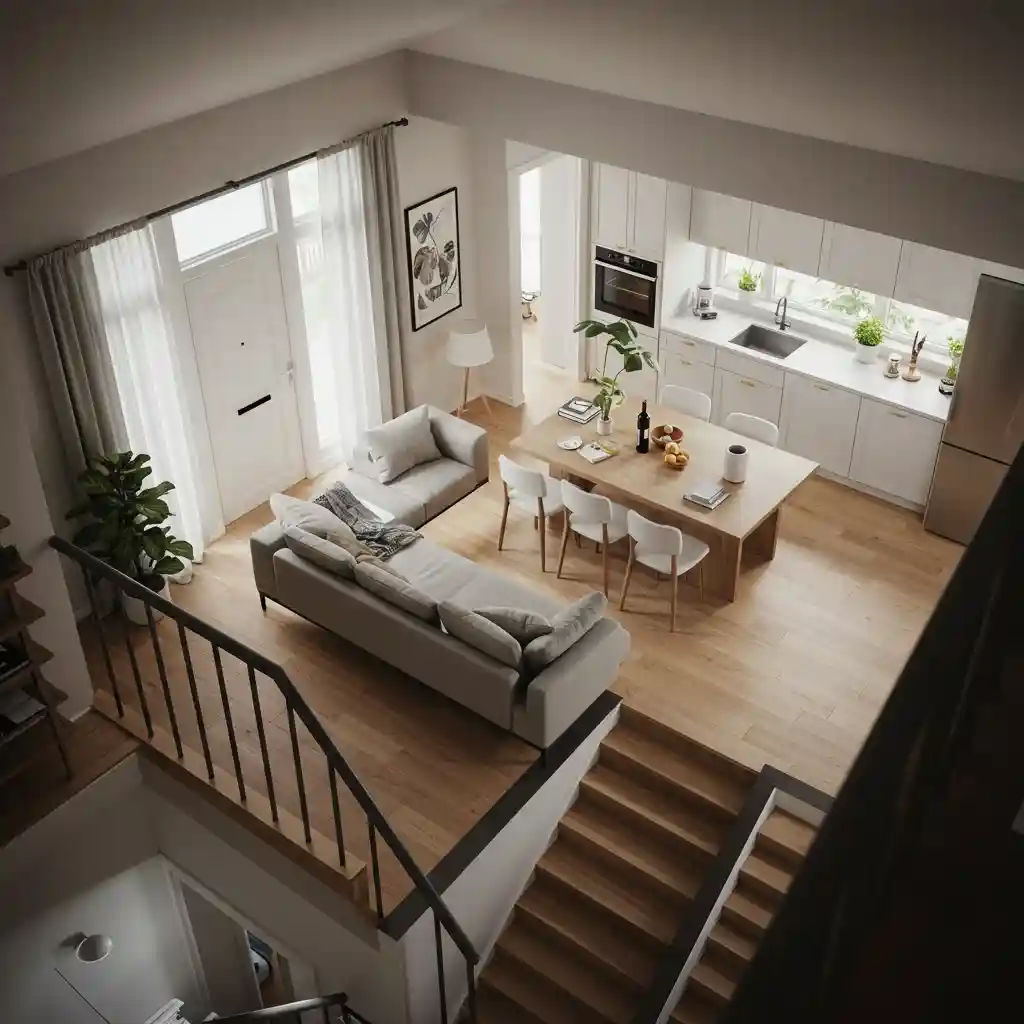
14. Layer in Plenty of Textures
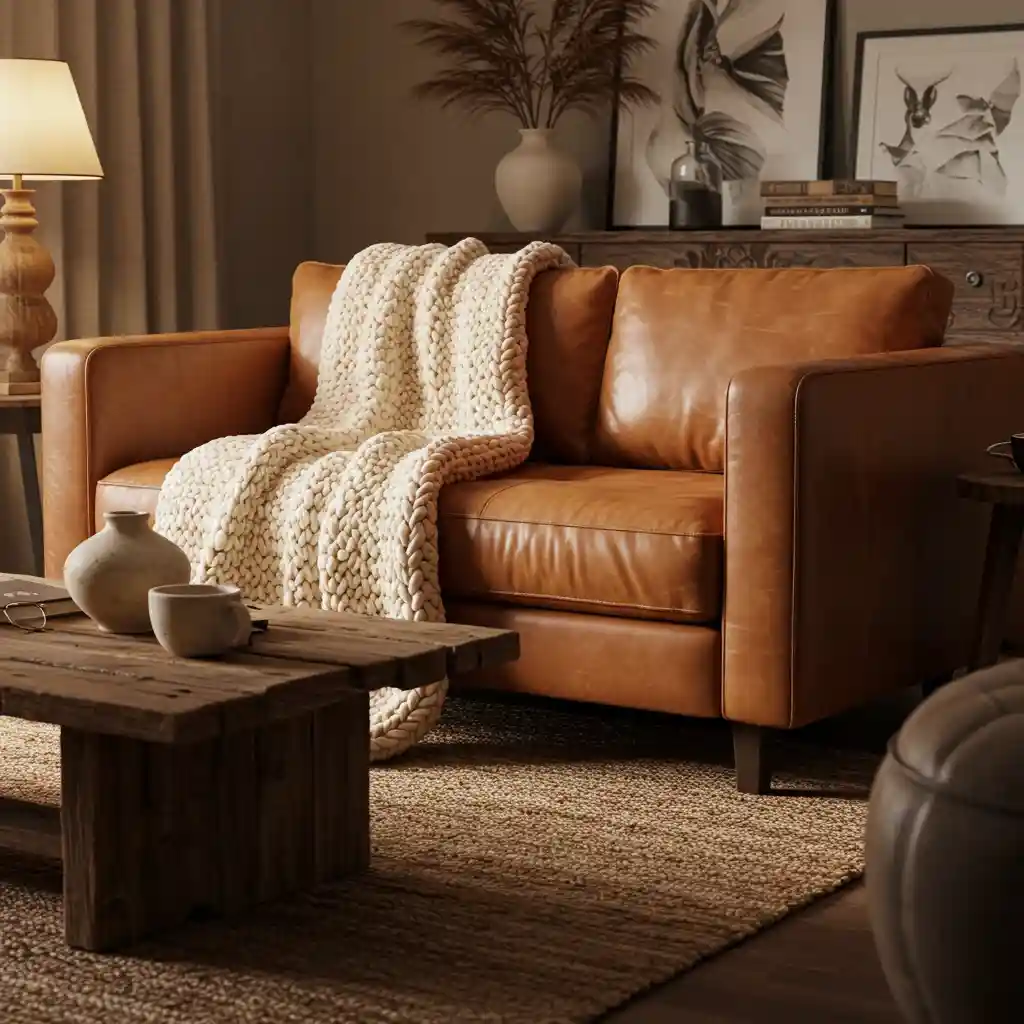
An open-plan living room, with its large, expansive surfaces, can sometimes feel a bit cold or flat. A crucial strategy for making a large, open space feel warm, cozy, and inviting is to layer in a rich variety of textures. Texture adds visual weight, depth, and a tactile quality that makes a space feel more comfortable and interesting.
Think about incorporating a mix of different materials throughout your entire open-plan space to create a cohesive, textural story.
- Soft Textures: A chunky knit throw, velvet pillows, a high-pile shag rug, and soft linen curtains.
- Rough Textures: A rustic, reclaimed wood coffee table, woven seagrass baskets, or a stone fireplace surround.
- Smooth Textures: A sleek leather armchair, a polished marble side table, or smooth, ceramic vases.
For a professional enhancement, as celebrated by designers at Amber Interiors, ensure you have a mix of all three types of textures—soft, rough, and smooth—in your living room zone. The contrast between them is what creates a truly rich, layered, and high-end feel.
15. Create Architectural Division with a Half-Wall
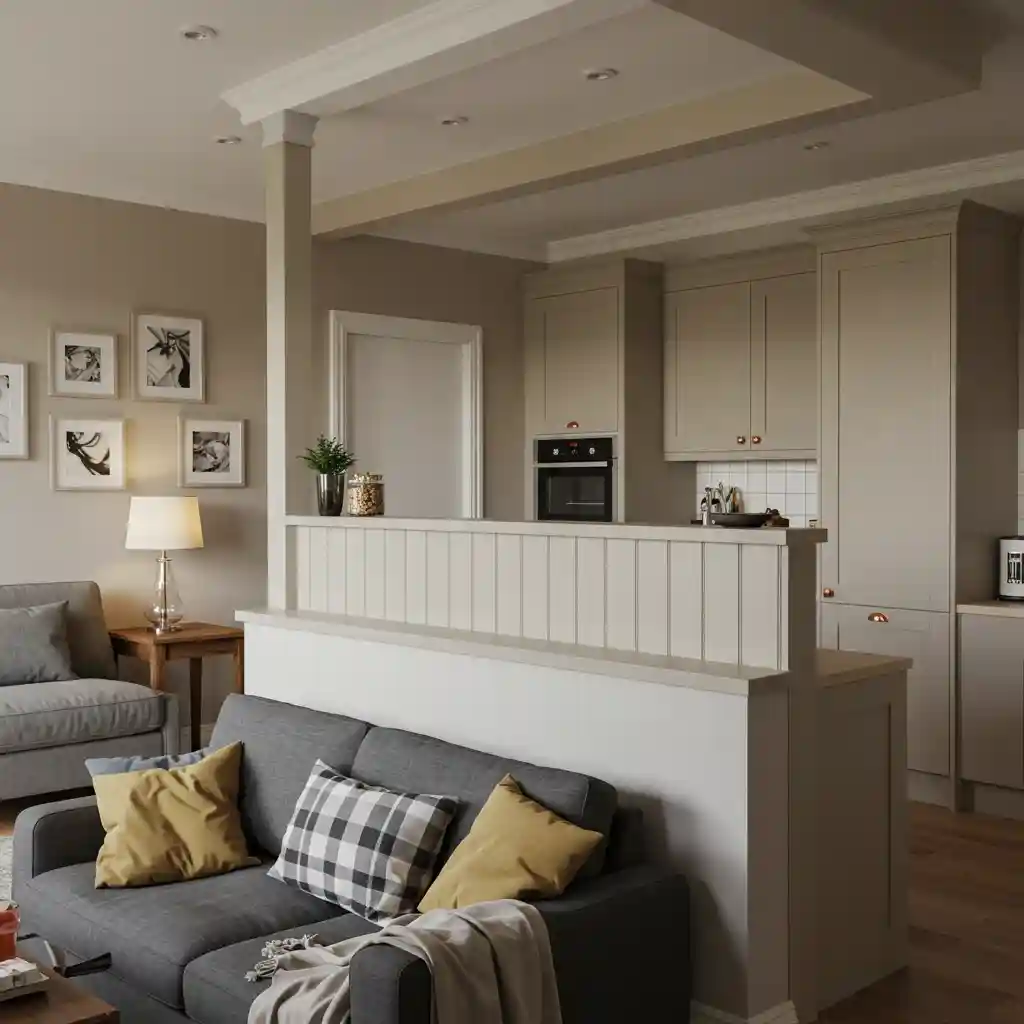
If you crave a little more separation between your kitchen and living room than a piece of furniture can provide, a half-wall is a fantastic, permanent, architectural solution. A half-wall provides a solid, physical barrier for the lower portion of the room, which is great for hiding kitchen messes from the living room view, but it keeps the top half of the room open, so light and conversation can still flow freely.
This is a great compromise that gives you the best of both worlds: the definition of a traditional layout with the airy feel of an open plan. I love to make a half-wall extra functional. The kitchen side can be used for shallow cabinets or a wine fridge, while the living room side provides a perfect back for a sofa or a console table.
- Function: Hides kitchen clutter, provides a solid room divider.
- Maintains Openness: Keeps the sightlines open on the upper half of the room.
- Multi-functional: Can house storage or provide a backdrop for furniture.
For an enhancement that turns your half-wall into a major feature, cap it with a beautiful, thick piece of waterfall countertop material that matches your kitchen. This creates a functional serving bar or a beautiful display ledge and looks incredibly custom.
16. Add a Bar Cart for a Social Hub
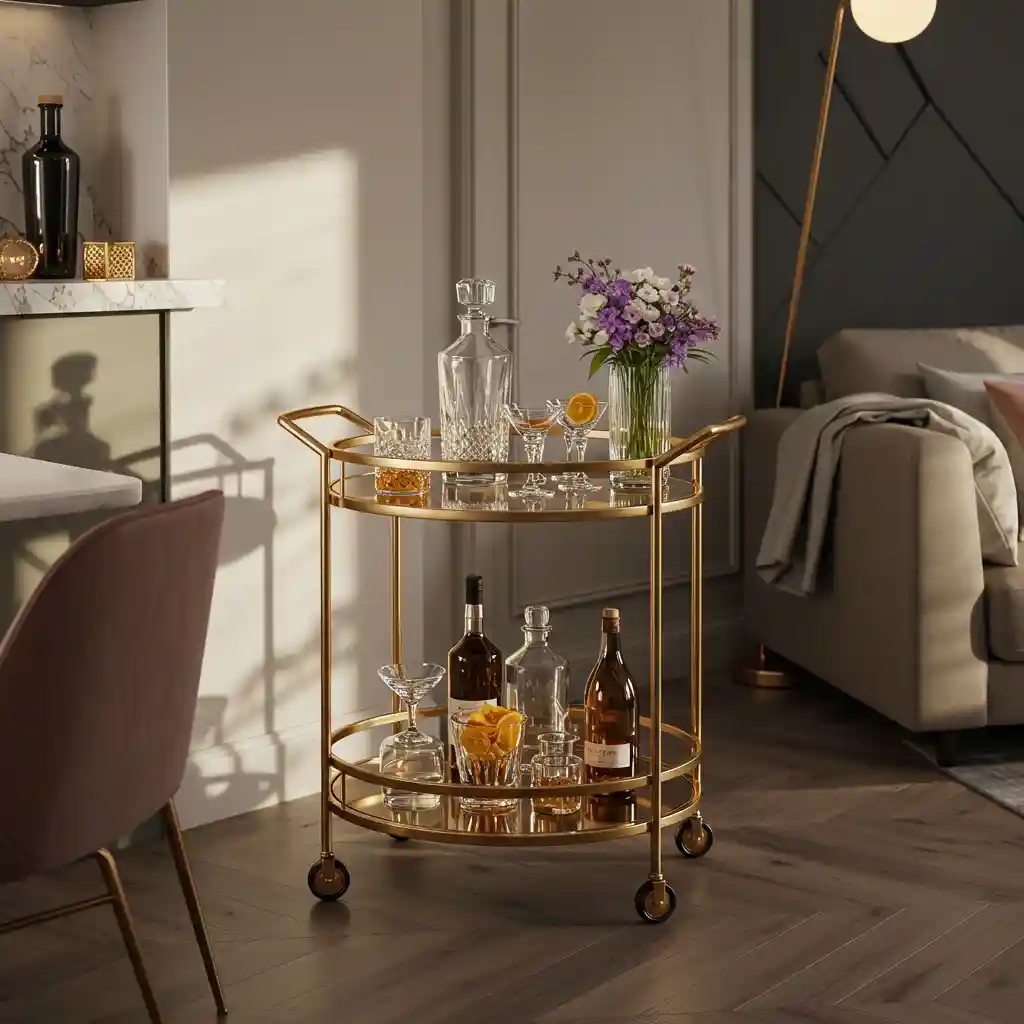
In a large open-plan living room designed for entertaining, a stylish bar cart is a wonderful and flexible addition. It can act as a mobile “social hub,” a designated spot for drinks that can be rolled to wherever the party is. It’s a much more space-efficient and less permanent option than a full, built-in bar, and it adds a touch of vintage glamour and a sense of hospitality to the space.
A bar cart can also help to define a smaller, secondary zone. I love to place a beautifully styled bar cart in a transitional space or an underutilized corner, perhaps with a single accent chair next to it, to create a small, dedicated “cocktail lounge” area.
- Flexibility: Can be easily moved between the kitchen, dining, and living zones.
- Defines a Zone: Can help to activate a small corner or transitional space.
- Style: Adds a touch of glamour and a designated spot for entertaining.
For a cohesive enhancement, choose a bar cart with a metallic finish (like brass or black) that matches the hardware and lighting finishes you’ve used in your kitchen and living room. This will create a beautiful, intentional visual link between all the zones.
Conclusion
Designing a successful open living room is about mastering the art of creating cozy, defined, and functional spaces within a larger, cohesive whole. As we’ve explored through these 16 ideas, the key to a welcoming home with an open floor plan is a thoughtful and strategic approach. By using tools like large area rugs, console tables, and clever furniture arrangements to define your zones, and then tying everything together with a consistent palette of colors, materials, and lighting, you can conquer the “empty warehouse” feeling and create a space that is both wonderfully spacious and intimately inviting.


