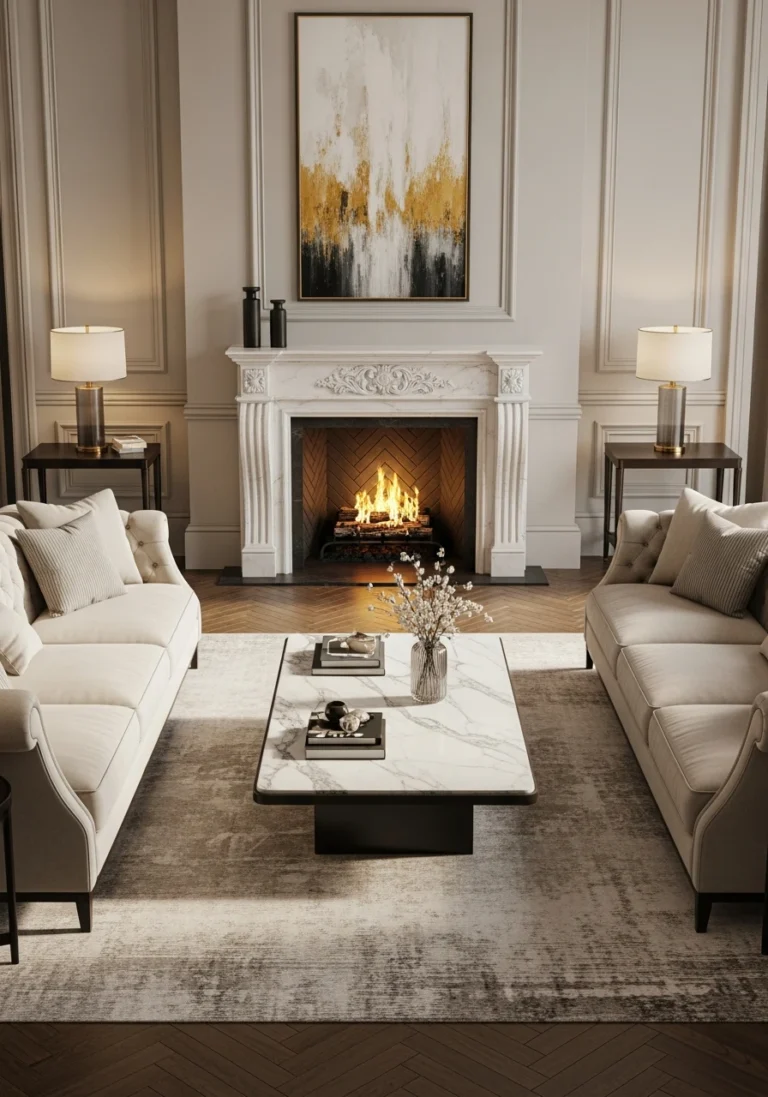
Are you searching for modern classic living room ideas to create a space that is both timelessly elegant and refreshingly current? The modern classic style, also known as classic contemporary, represents the perfect marriage of two beloved design aesthetics. It borrows the grace, symmetry, and architectural detail of classic design and marries it with the clean lines, uncluttered feel, and sophisticated simplicity of modernism. The result is a living room that is refined but not stuffy, comfortable but not messy, and luxurious but understated. It’s a style that feels curated, balanced, and enduringly chic.
This guide will walk you through 15 essential ideas to help you achieve the perfect modern classic balance in your own living room.
1. Start with a Sophisticated, Neutral Color Palette
The foundation of a modern classic living room is a calm and sophisticated neutral color palette. This is not the place for loud, trendy colors. Instead, the look is built on a serene backdrop of soft, complex neutrals that create a timeless and elegant atmosphere. Think of colors like warm whites, creamy beiges, soft grays, “greige,” and muted, earthy tones. This neutral canvas allows the architectural details of the room and the beautiful shapes of your furniture to take center stage.
I always begin a modern classic project by selecting the perfect, nuanced neutral for the walls. A color like Benjamin Moore’s “Revere Pewter” or Farrow & Ball’s “Elephant’s Breath” provides a warm, sophisticated base. The color comes from the layers of texture, art, and carefully chosen accent pieces.
- Wall Colors: Cream, off-white, soft gray, greige, taupe, or mushroom.
- Effect: Creates a calm, cohesive, and timeless backdrop.
- Flexibility: A neutral palette is incredibly versatile and allows for easy updates with accessories.
For an enhancement, paint the walls, trim, and ceiling all in the same neutral color, but use different sheens. For example, use a matte or eggshell finish on the walls, a satin finish on the trim, and a flat finish on the ceiling. This creates a subtle, textural, and very high-end monochromatic look.
2. Incorporate Classic Architectural Details
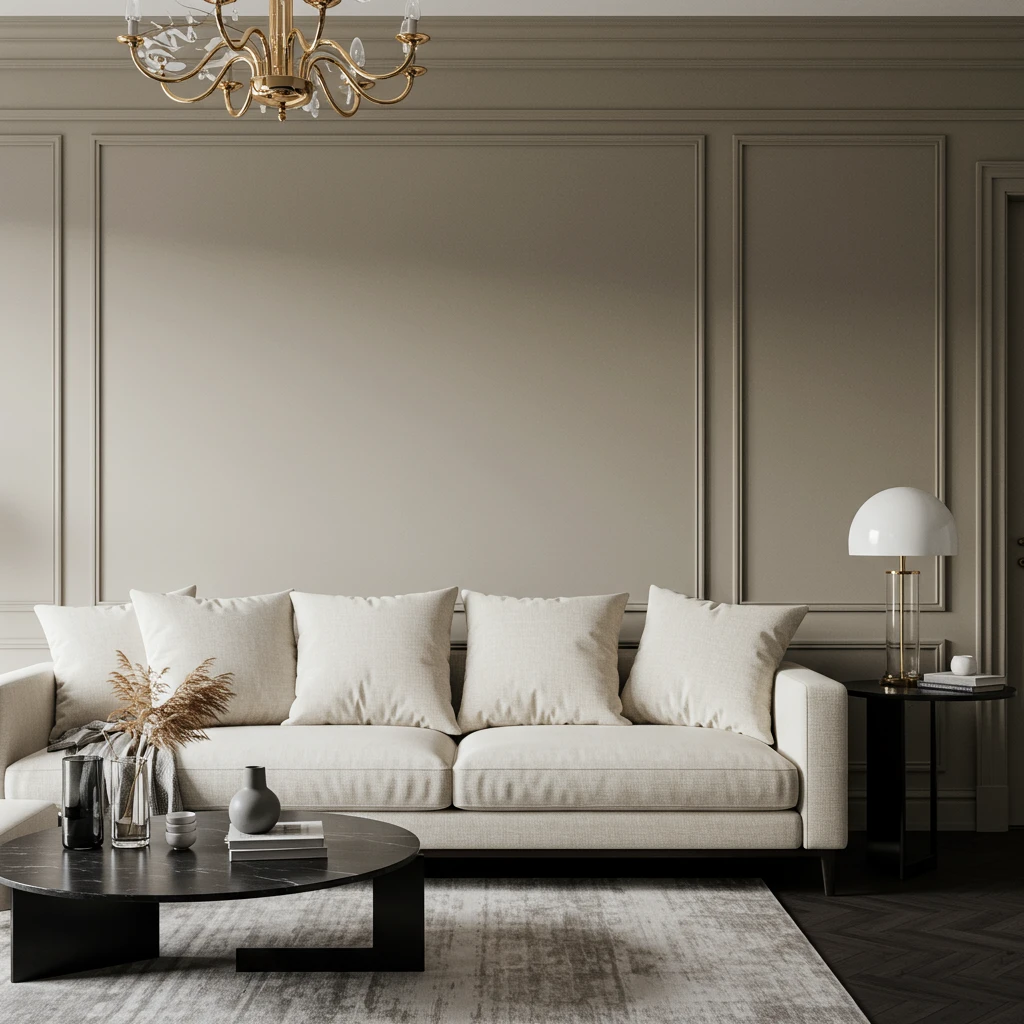
One of the defining features of this style is the blend of modern furnishings with a classic architectural shell. If your room has them, celebrate traditional details like crown molding, picture frame wainscoting, a classic fireplace mantel, or an ornate ceiling medallion. If your room is a plain “white box,” adding these details is one of the most effective ways to achieve the “classic” part of the modern classic equation.
These architectural elements provide a sense of history, structure, and craftsmanship that forms a beautiful, formal backdrop for cleaner, more modern furniture. I recently worked on a new-build home where we added a full wall of classic, applied molding (picture frame wainscoting). It instantly gave the brand-new room a sense of age and sophistication that felt deeply timeless.
- Crown Molding: Adds an elegant, finished transition between wall and ceiling.
- Wainscoting/Paneling: Adds texture, depth, and a formal, traditional feel.
- Ceiling Medallion: Creates a beautiful, classic anchor for a statement light fixture.
For a modern twist, paint your classic architectural moldings the same color as the walls. This “color drenching” technique makes the details feel more subtle, textural, and contemporary than if they were picked out in a contrasting white.

3. Pair a Sofa with Clean Lines with Classic Armchairs
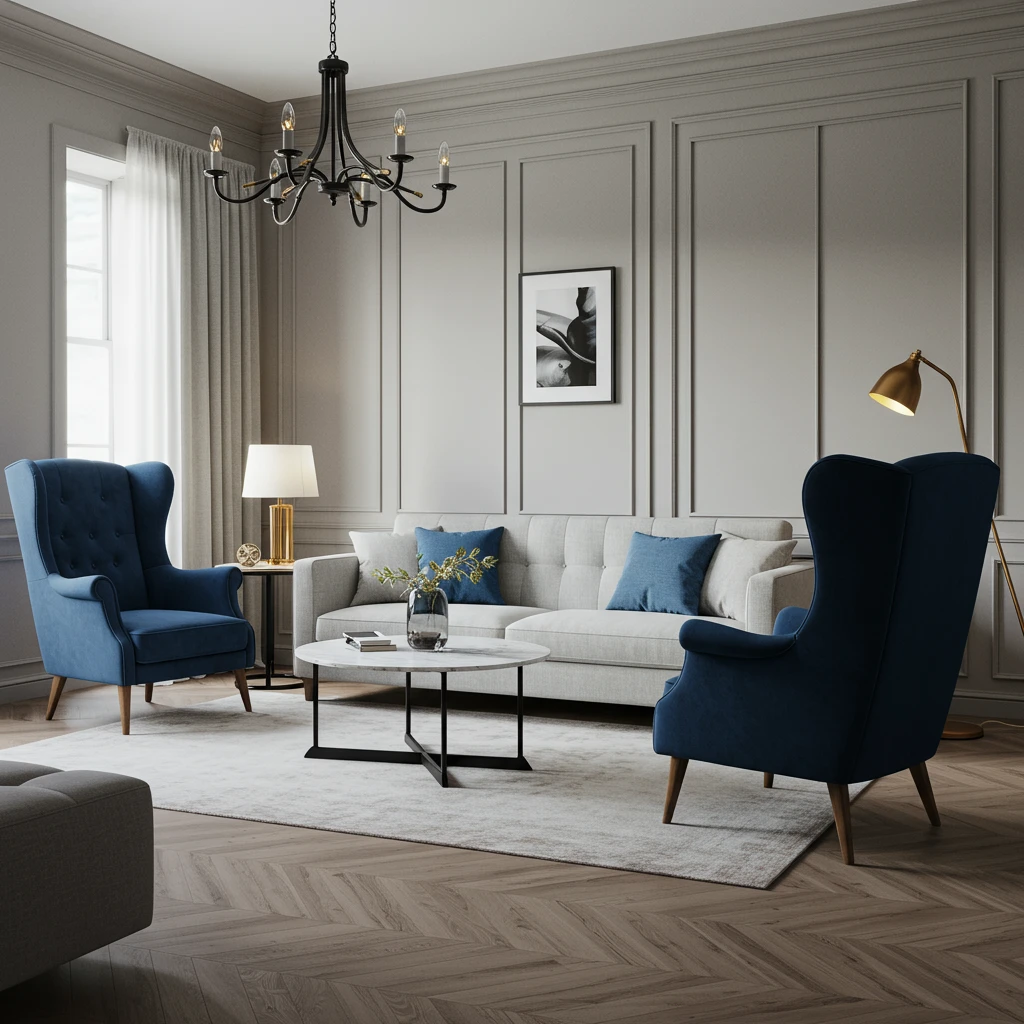
The art of mixing furniture is central to the modern classic style. One of the most successful formulas is to pair a modern sofa that has clean, simple lines with a pair of armchairs that have a more classic, traditional silhouette. This juxtaposition creates a perfect, balanced dialogue between modern and classic.
Choose a sofa with a simple, rectilinear shape, a tight back, and minimal ornamentation. Then, flank your coffee table with two chairs that have more traditional details, like a classic wingback shape, rolled arms, or turned wooden legs. I often use this strategy to create a look that feels both comfortable and current. The sofa provides the clean, modern anchor, while the chairs add a touch of timeless, elegant character.
- The Sofa: Simple, clean-lined, and often in a solid, neutral fabric.
- The Chairs: Classic silhouettes like a wingback, a Bergère chair, or an English roll arm.
- The Balance: The contrast between the simple sofa and the more detailed chairs is key.
For an enhancement, upholster the classic-shaped armchairs in a modern, unexpected fabric. A traditional wingback chair covered in a bold, abstract-patterned fabric or a simple, solid-colored linen can be a stunning and very chic bridge between the two styles.
4. Use a Modern Coffee Table as a Centerpiece
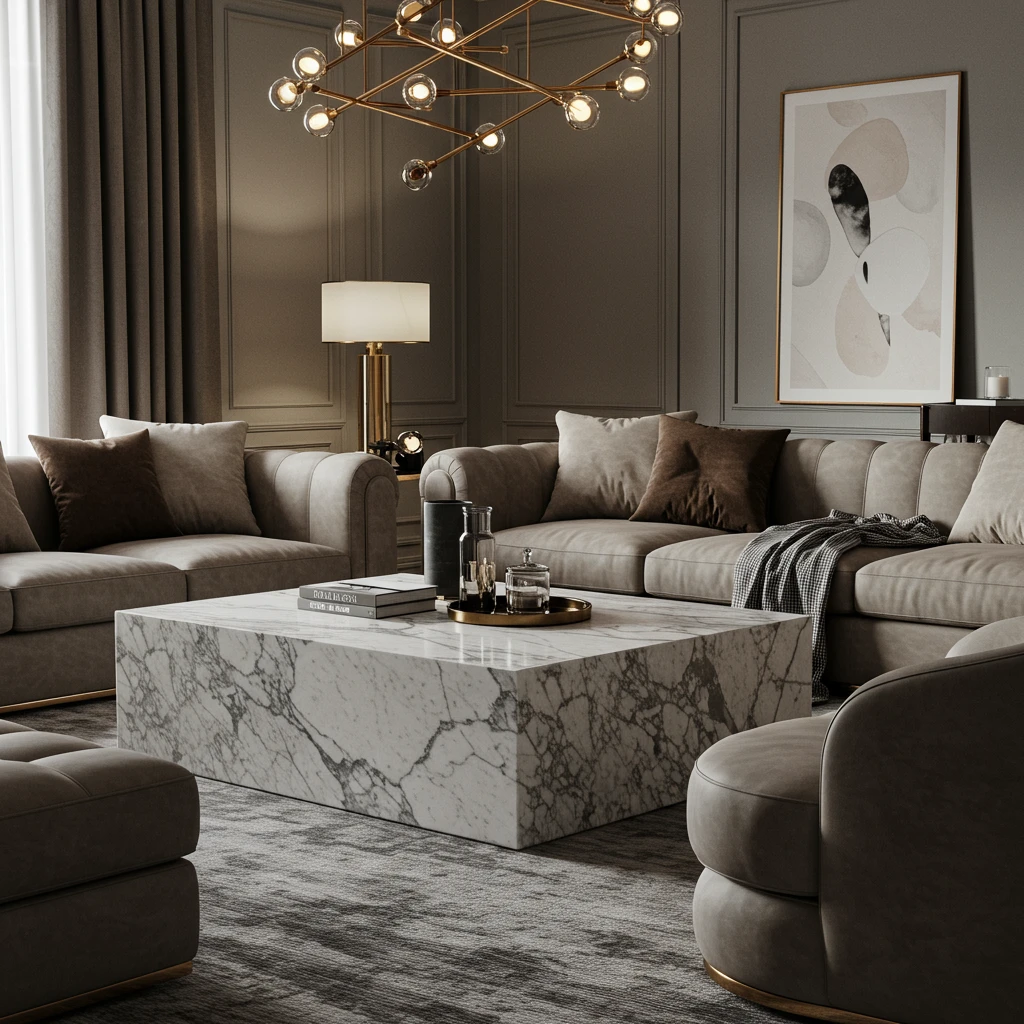
While some of your furniture may lean classic, the coffee table is the perfect place to make a strong, modern statement. A sleek, minimalist coffee table can act as a sculptural, contemporary centerpiece that beautifully contrasts with the more traditional elements in the room, like an ornate fireplace or classic armchairs.
Look for a coffee table with a simple, geometric shape and clean lines. I love using tables made from a bold, modern material. A large, low, waterfall-style coffee table made of marble or travertine, a simple block-like table made of concrete, or a table with a sleek, metal frame and a glass top are all fantastic choices. As seen in many high-end interiors, the coffee table can be a piece of functional sculpture.
- Shape: Simple geometric shapes like a low rectangle, a square, or a circle.
- Materials: Marble, travertine, glass and metal, or even a simple, dark wood.
- Effect: Provides a clean, contemporary anchor to the main seating area.
For a sophisticated enhancement, choose a coffee table with a unique, sculptural base. A simple glass top supported by an interesting, architectural base in metal or wood can be a stunning and airy choice.
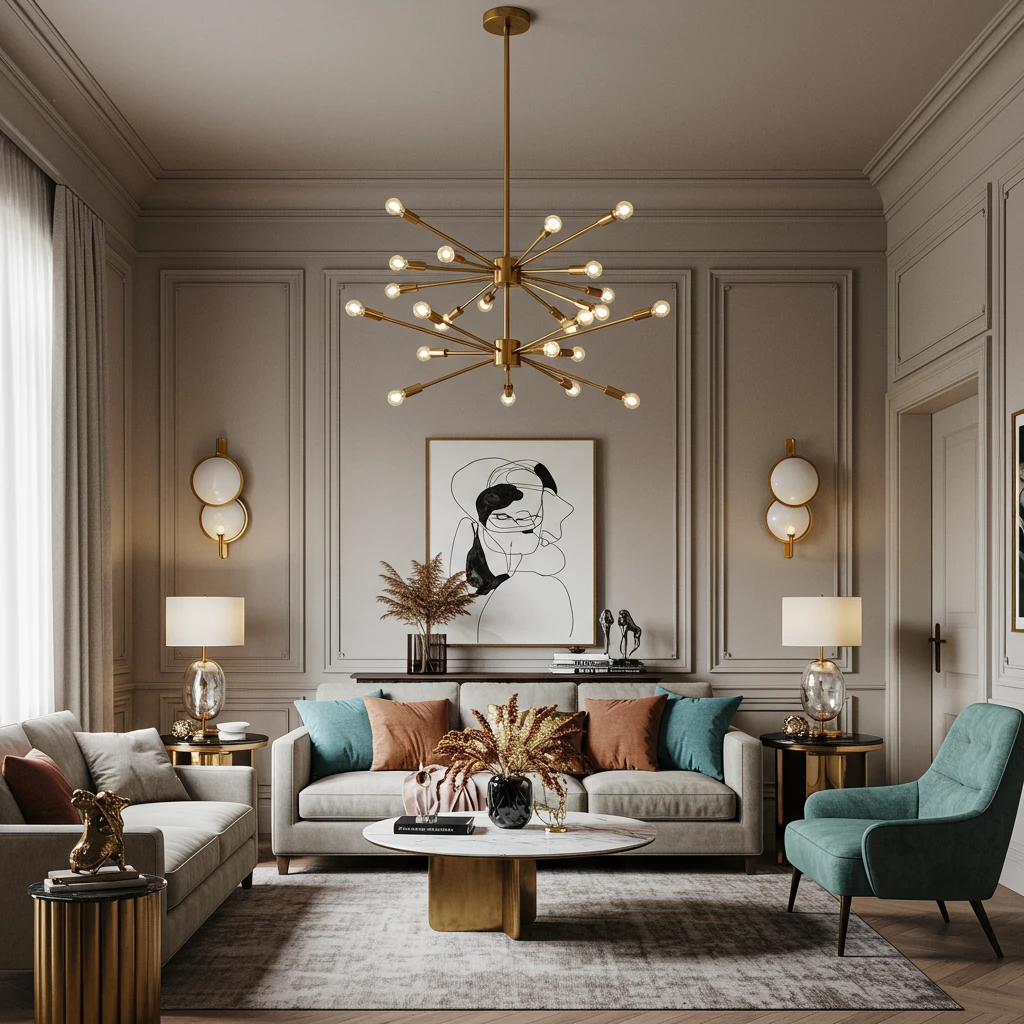
5. Hang a Statement Chandelier
Lighting is the jewelry of a room, and a beautiful, statement chandelier is a key ingredient in a modern classic living room. This is another area where you can choose to lean either modern or classic to create a beautiful tension. A traditional, ornate, crystal chandelier hanging in a room with clean-lined, modern furniture can be a stunning, glamorous, and unexpected focal point.
Conversely, a sleek, modern, sculptural chandelier hanging in a room with classic architectural details and more traditional furniture can be a fantastic way to add a contemporary edge. Whichever direction you choose, the chandelier should be a major, intentional statement. I always advise my clients to be bold with the scale of their central light fixture.
- Classic Choice: A traditional, multi-armed crystal or brass chandelier for a touch of old-world glamour.
- Modern Choice: A large, sculptural, metallic chandelier with clean lines for a contemporary statement.
- Placement: Centered in the room, or hung low over the main coffee table to create a more intimate feel.
For an enhancement, put your statement chandelier on a dimmer switch. This is absolutely essential for creating a soft, ambient, and atmospheric glow in the evenings.
6. Use Large, Oversized Abstract Art
Art is one of the most powerful tools for bridging the gap between modern and classic. Hanging a large, bold, contemporary abstract painting in a room with classic architecture and traditional elements is a hallmark of the modern classic style. The abstract art adds a necessary touch of the “now,” providing a vibrant, energetic counterpoint to the calm, historic feel of the space.
I love the tension and dialogue that a piece of abstract art creates in a traditional setting. It signals that the room is not a stuffy, period-perfect museum, but a current and livable space that respects both the past and the present.
- Go Big: A single, oversized piece of art will have more impact than a collection of many small pieces.
- Style: Look for bold, colorful, abstract expressionist pieces or more subtle, textural, minimalist abstracts.
- Placement: The perfect spot is on the largest, most prominent wall, usually above the sofa or the fireplace.
For an enhancement, choose a piece of abstract art that subtly picks up on some of the other colors in your room. If you have a pair of navy blue chairs, a painting with a small splash of the same blue will make the entire color scheme feel incredibly cohesive and intentional.
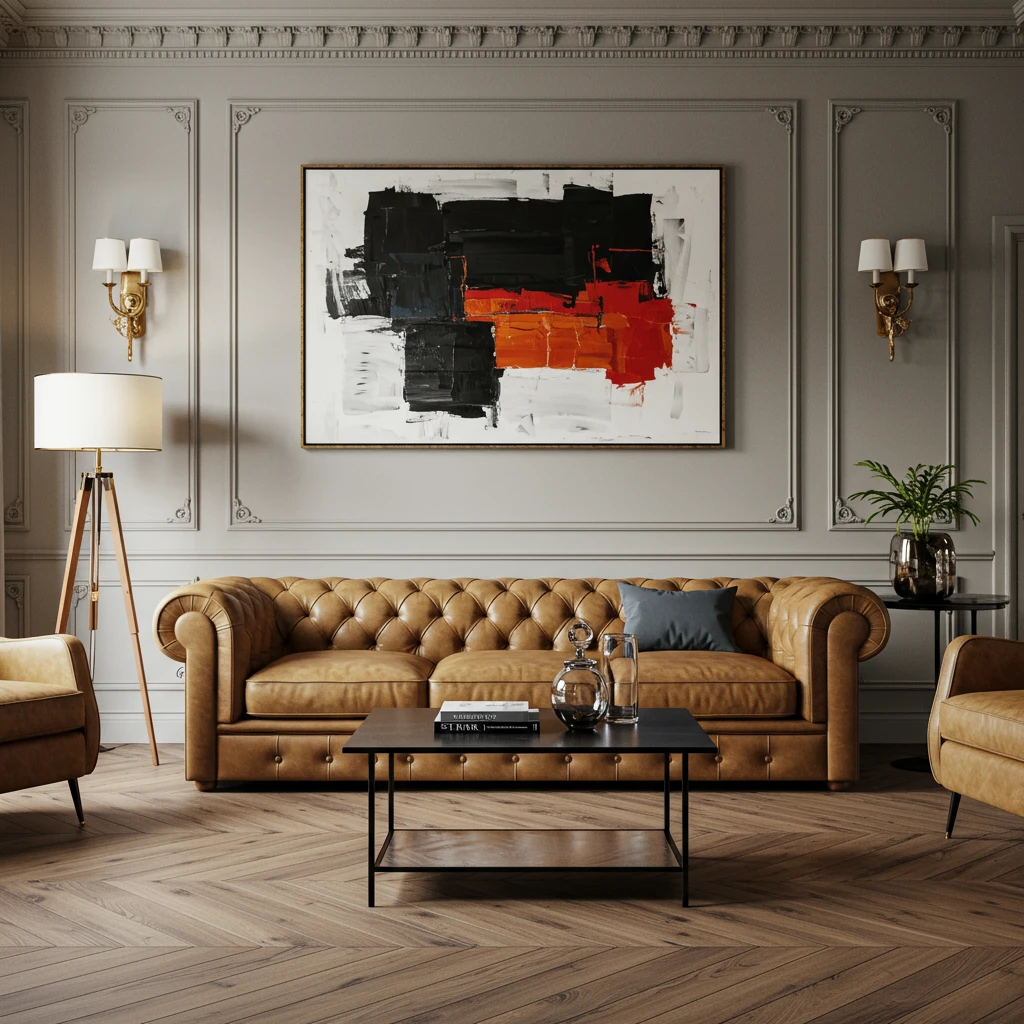
7. Update a Classic Piece with Modern Fabric
A fantastic way to achieve the modern classic look is to take a piece of furniture with a very traditional, classic silhouette and have it reupholstered in a clean, modern fabric. This creative solution breathes new life into a vintage or antique piece and makes it feel perfectly at home in a contemporary setting.
Imagine a classic, ornate, Louis XV-style Bergère chair, but instead of a stuffy, traditional damask, it’s covered in a simple, textural, solid-colored linen. Or a classic, button-tufted Chesterfield sofa upholstered in a rich, vibrant, jewel-toned velvet. This is a technique I use frequently to give my clients’ beloved family heirlooms a fresh and updated look.
- Classic Silhouettes: Wingback chairs, Chesterfield sofas, Bergère chairs, or simple camelback sofas.
- Modern Fabrics: Solid-colored linen, plush velvet in a bold color, a simple tweed, or even a subtle, modern geometric pattern.
- Effect: Creates a unique, custom piece that perfectly bridges the gap between old and new.
For a dramatic enhancement, consider a high-gloss, lacquered finish for the wooden frame of your classic chair. A traditional armchair with a glossy, black lacquered frame and a simple, white linen upholstery is an incredibly chic and high-contrast statement.

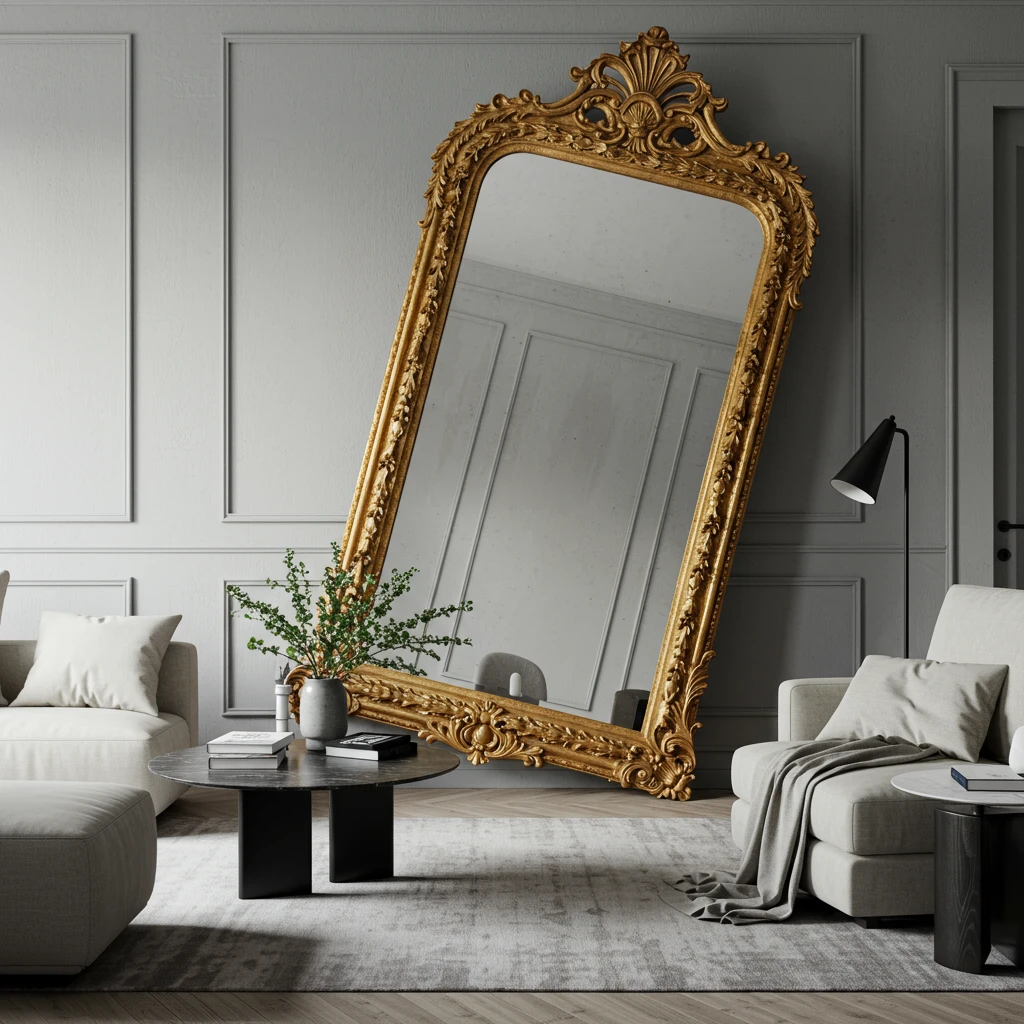
8. Hang a Grand, Ornate Mirror in a Modern Way
A large, ornate, gilt-framed mirror is a staple of classic, traditional design. In a modern classic living room, you can use this traditional element in a fresh and contemporary way. Instead of hanging it in a formal, expected manner, treat it with a bit of modern nonchalance.
Instead of carefully centering a large, ornate mirror over a fireplace, try leaning it casually against the wall. This is a very current styling trick that instantly makes a very formal, traditional piece feel more relaxed, modern, and effortless. I love the juxtaposition of the intricate, gold-leaf frame of an old mirror against a simple, clean, modern wall.
- The Mirror: A large, vertically-oriented mirror with an ornate, carved, or gilded frame.
- The Placement: Lean it against a main wall in your living room or entryway instead of hanging it.
- The Effect: The casual placement makes a very formal object feel relaxed and contemporary.
For an enhancement, place a very sleek, minimalist console table or a simple, modern bench partially in front of your large, leaning, ornate mirror. The contrast between the simple, clean lines of the modern piece and the intricate, historic detail of the mirror is the essence of the modern classic style.
9. Use High-Quality, Natural Materials
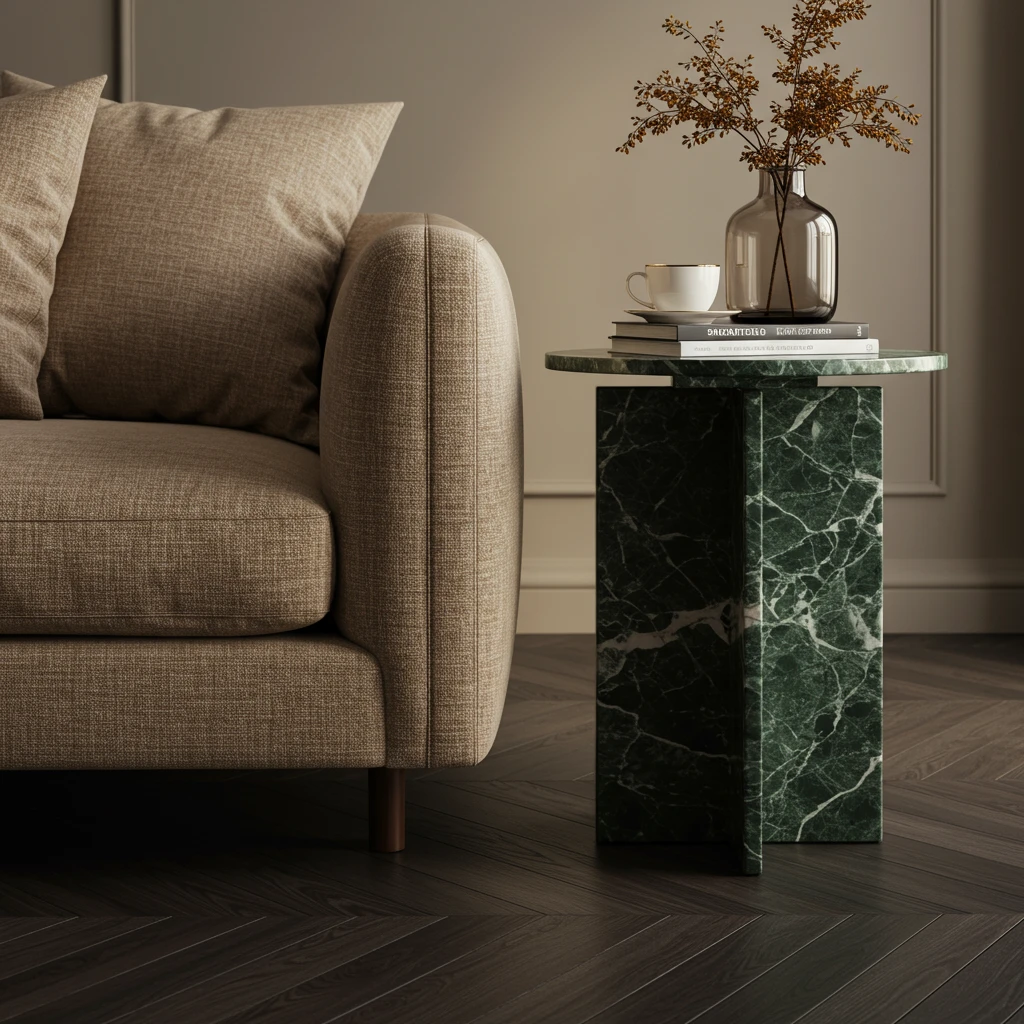
A key element that unifies both modern and classic design is an appreciation for high-quality, authentic, natural materials. A modern classic living room should feel luxurious and permanent, and this is largely achieved through the use of materials like marble, rich hardwoods, natural stone, linen, and wool. These materials have a timeless beauty and an inherent sense of quality that transcends trends.
I always advise my clients to invest in a few key pieces made from high-quality, natural materials. A beautiful marble-topped coffee table, a solid, dark wood console, or a comfortable sofa upholstered in a rich, 100% linen fabric will be the timeless foundation of your room.
- Stone: Marble, travertine, or slate for coffee tables and fireplace surrounds.
- Wood: Solid hardwoods like walnut, oak, and mahogany for furniture and flooring.
- Textiles: Natural, textural fabrics like linen, wool, and high-quality cotton velvet.
For an enhancement, use the same high-quality material in a couple of different ways in the room. For example, if you have a beautiful, dramatic, marble fireplace surround, echo that material by using a small, marble decorative object or a marble-topped side table elsewhere in the room.
10. Layer with Luxurious, Solid-Colored Textiles
While classic design can sometimes lean into heavy, patterned textiles, the modern classic look often favors the luxurious simplicity of solid-colored, textural fabrics. This is where you can add layers of comfort and subtle color to your living room. The key is to choose fabrics with a beautiful, rich texture and a luxurious feel.
Instead of a busy, patterned throw, opt for one made of incredibly soft, solid-colored cashmere or merino wool. For your pillows, choose covers in a rich, plush velvet, a nubby boucle, or a simple, heavy linen. I love to create a layered, tone-on-tone look on a sofa using several pillows in different shades of the same color, but all in different, luxurious materials.
- Key Fabrics: Velvet, linen, cashmere, merino wool, boucle, and high-quality cotton.
- Focus on Solids: Allows the texture of the fabric to be the main feature.
- Comfort and Quality: The textiles should feel as good as they look.
For an enhancement, invest in high-quality, oversized pillow inserts (a 22-inch insert for a 20-inch cover is a good rule of thumb). A full, plump, and heavy pillow insert is a small detail that makes your pillows look incredibly high-end and luxurious.

11. Keep Window Treatments Simple and Elegant
In a modern classic living room, the window treatments should be simple, elegant, and functional. They should frame the window and complement the architecture of the room, not be an overly fussy or decorative statement. Heavy, swagged drapes or busy, patterned curtains can feel dated and can detract from the clean, sophisticated feel of the space.
I almost always recommend simple, floor-to-ceiling curtain panels in a high-quality, solid-colored fabric. A heavy linen or a simple, matte velvet are both fantastic choices. The curtains should be hung from a simple, elegant curtain rod. Another great option is a classic, tailored Roman blind, which provides a very clean and structured look when raised.
- Style: Simple, straight-hanging curtain panels or tailored Roman blinds.
- Fabric: A high-quality, solid-colored fabric like linen, cotton, or a matte velvet.
- Hanging: Hang your curtain rods high and wide (several inches above and beyond the window frame) to make your windows appear larger and more grand.
For an enhancement, have your curtains custom-made to just “kiss” or “puddle” slightly on the floor. This tailored length is a high-end detail that looks much more luxurious than standard, off-the-shelf curtains that are often too short.

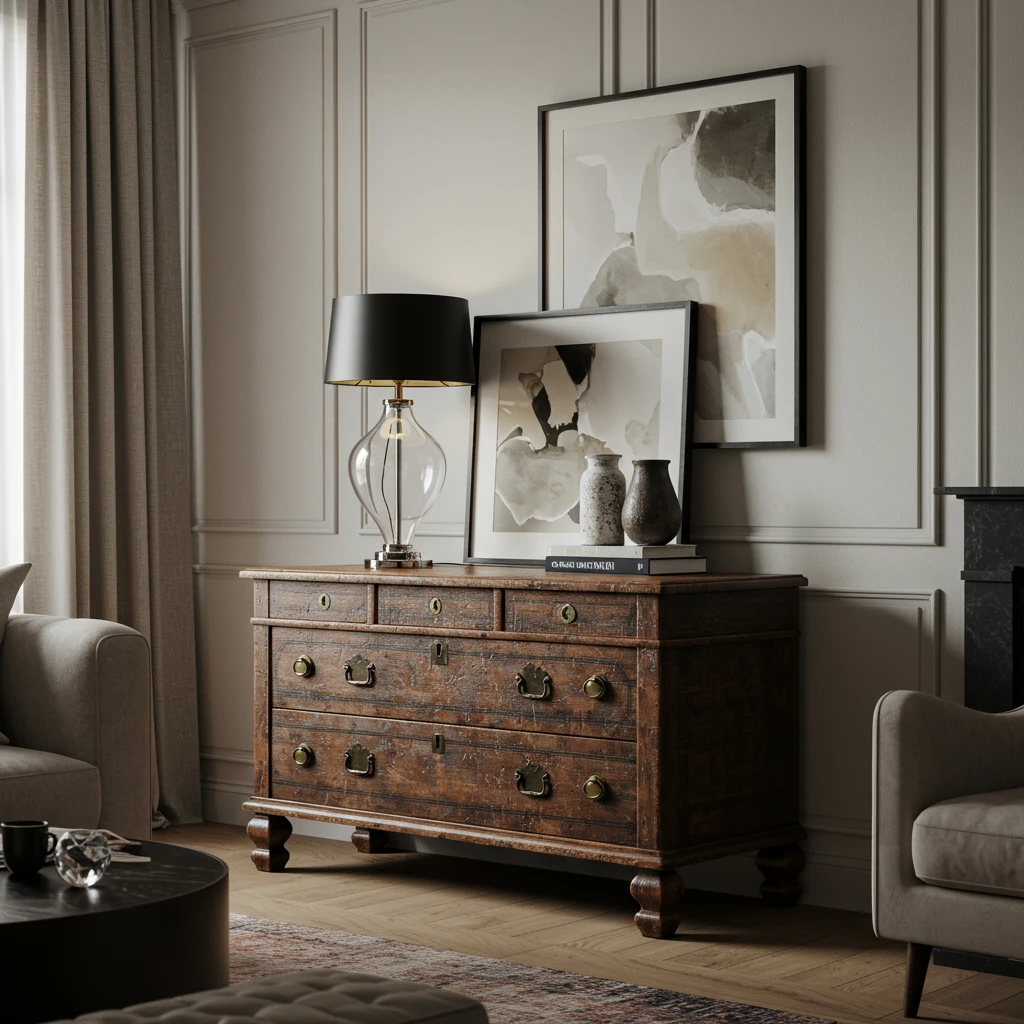
12. Incorporate a Statement Antique or Vintage Piece
While the overall feel of your room is a balance, it’s a great idea to have one or two pieces that are purely, unapologetically classic. A single, beautiful, statement-making antique or vintage piece can add a huge amount of soul, history, and character to a modern classic living room. It becomes a conversation starter and a testament to your curated, personal style.
This could be a beautiful, intricately carved, antique armchair that you leave in its original, time-worn finish. It could be a large, rustic, antique trunk used as a coffee table. Or it could be a stunning, vintage, Art Deco-style bar cabinet. I love the story that an antique piece brings into a room.
- Focal Point: Choose one or two special pieces to be a focal point.
- Embrace the Patina: The worn finish, the small imperfections, and the signs of age are what make the piece beautiful.
- Juxtaposition: The contrast of a truly old piece against the clean, modern elements in the room is what creates the magic.
For an enhancement, if your antique piece is a cabinet or a chest, give the interior a modern surprise. Line the drawers or the inside of the cabinet with a bold, contemporary, geometric wallpaper.
13. Style with a “Less is More” Curated Approach
While classic design can sometimes be associated with a lot of “stuff,” the modern classic style embraces the modern principle of “less is more” when it comes to accessories and styling. The goal is not to fill every surface with clutter, but to carefully curate and display a few, beautiful, meaningful objects. This allows each object to breathe and be appreciated as a special piece.
I always tell my clients to follow the “rule of three” when styling a surface like a coffee table or a console. Group three objects of varying heights, shapes, and textures together to create a simple, pleasing vignette. For example, a tall vase, a medium-height stack of books, and a low, wide decorative bowl.
- Quality over Quantity: A few, beautiful, high-quality objects are better than a lot of small, cheap trinkets.
- Curate: Choose objects that are personal and meaningful to you.
- Give Objects Breathing Room: Don’t overcrowd your shelves or surfaces. Negative space is an important part of the design.
For an enhancement, create a simple, unified collection. For example, on your bookshelves, display a collection of only white ceramic vases in a variety of different, sculptural shapes. The cohesive color and the variety in form can be a very powerful and modern statement.

14. Add Sculptural, Modern Lamps
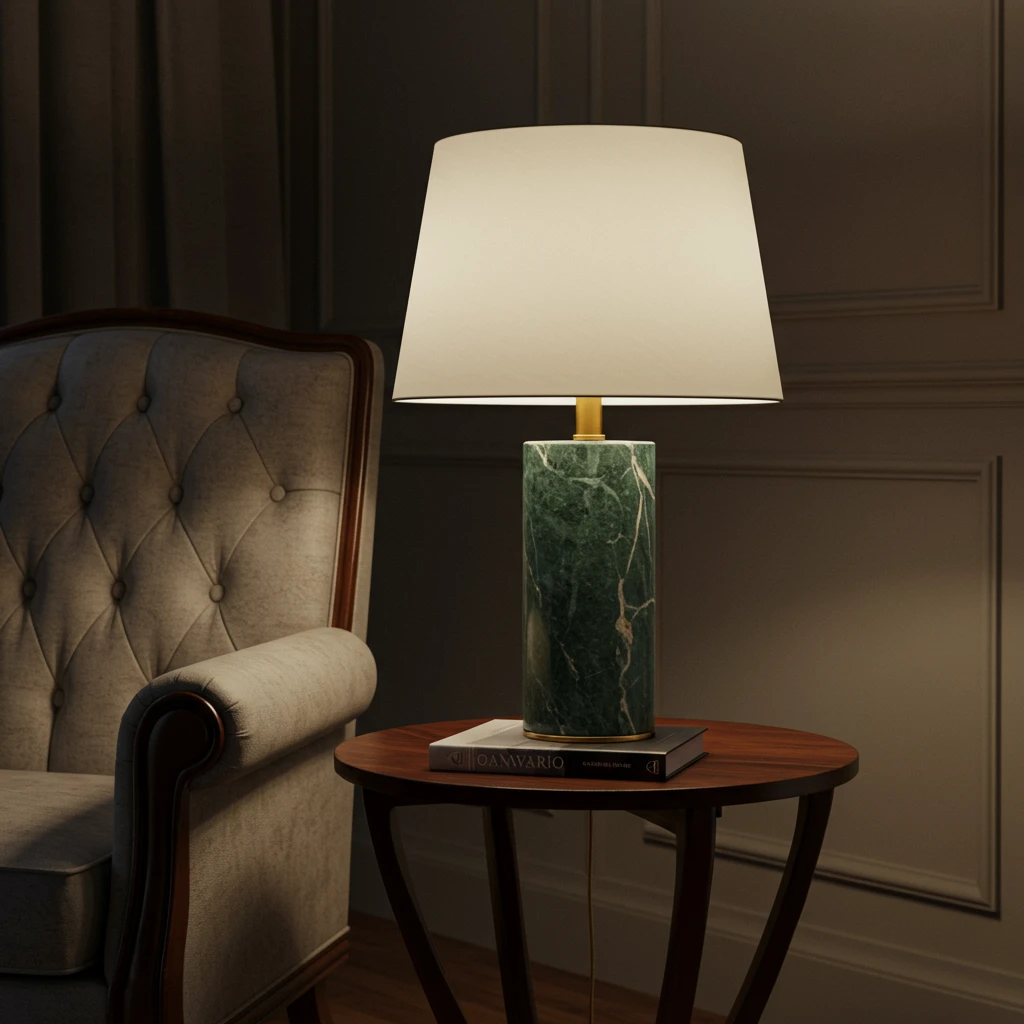
While a central chandelier can be a major statement, the table lamps and floor lamps in your modern classic living room are a great opportunity to lean into the “modern” side of the equation. A lamp with a simple, sculptural, and modern base can be a beautiful, artistic object in its own right, and it provides a great, contemporary contrast to more classic furniture pieces.
Look for lamps with bases made of interesting materials, like a heavy, solid, marble block, a beautiful, turned wood, a sculptural ceramic, or a sleek, metal tripod. The lampshade should typically be kept very simple—a classic, white or off-white drum shade is almost always the perfect choice. It allows the shape of the lamp’s base to be the main feature.
- Focus on the Base: The base of the lamp is where you can make a modern, sculptural statement.
- Simple Shade: A classic, simple, drum shade in a neutral color is best.
- Layer Your Lighting: Use a mix of floor lamps and table lamps to create a warm, layered glow.
For an enhancement, choose a lamp with a metallic interior to its shade. A lamp with a simple, black, metal dome shade that has a warm, gold-leafed interior will cast an incredibly beautiful and warm, downward-facing glow.
15. Mix Metals, Especially Brass and Black
A sophisticated and very current approach in modern classic design is the skillful mixing of different metal finishes. While sticking to one metal can be a safe choice, a thoughtful mix can add a layer of depth and a curated, collected-over-time feel. One of the most successful and timeless combinations is the mix of a warm, traditional metal, like brass or gold, with a sharp, modern metal, like matte black.
The key is to create a sense of balance. I often advise my clients to choose one dominant metal and then add a second as an accent. For example, you could have a large, brass chandelier as your main statement, and then use a matte black for your curtain rod, picture frames, and the legs of a coffee table.
- Classic Combo: The warmth of brass paired with the graphic punch of matte black.
- Create a Hierarchy: Choose one dominant metal and one accent metal.
- Spread them Around: Distribute both metal finishes throughout the room for a balanced look.
For a cohesive enhancement, find a single object that incorporates both of your chosen metals. For example, a light fixture that has both black and brass elements can be the perfect piece to tie your entire mixed-metal scheme together.

Conclusion
The beauty of the modern classic living room lies in its perfect, enduring balance. It’s a design style that honors the grace and history of classicism while embracing the clean, uncluttered simplicity of modernism. As we’ve explored through these 15 ideas, the key to achieving this sophisticated look is in the thoughtful mix: pairing clean-lined furniture with classic architectural details, juxtaposing a bold piece of abstract art with a timeless sofa, and layering high-quality, natural materials. The result is a space that is not tied to a particular trend or era, but is instead timeless, personal, and deeply elegant.