Are you looking for beautiful, low-maintenance front of house landscape ideas that will boost your curb appeal without demanding all your free time? Your front yard is your home’s first impression, but the dream of a lush, perfectly manicured landscape often clashes with the reality of a busy schedule.
The constant cycle of mowing, watering, weeding, and replanting can feel like a relentless chore. But what if you could have a stunning front yard that largely takes care of itself, looking beautiful from season to season with minimal effort?
This guide will walk you through 15+ clever, easy-care ideas from shrinking your lawn and choosing hardworking plants to incorporating durable hardscaping that will help you create a gorgeous front yard that you can actually sit back and love, rather than constantly labor over.
1. Expand Garden Beds to Shrink Your Lawn
The single most time- and resource-intensive element in most front yards is the lawn. It requires constant mowing, watering, and fertilizing. The easiest way to reduce your yard work is to simply have less of it.
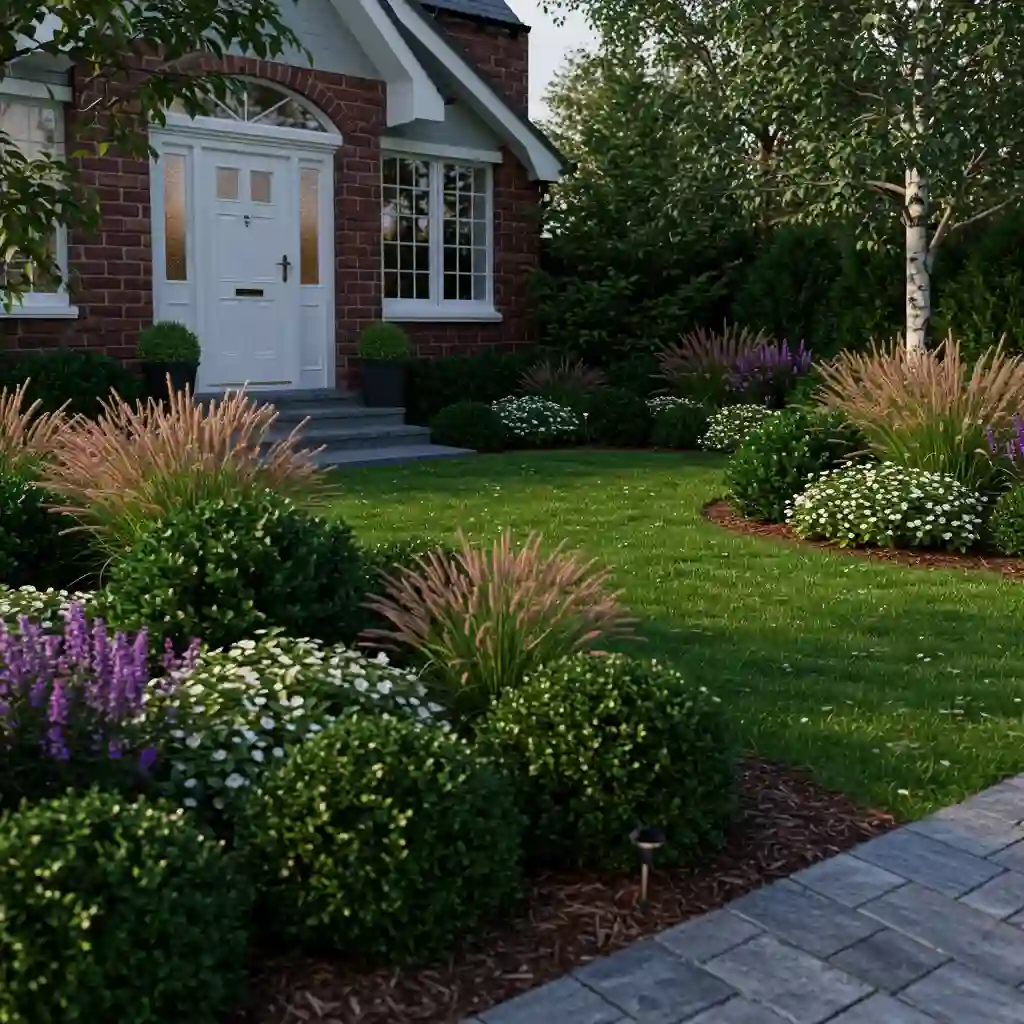
By expanding your garden beds and shrinking the size of your lawn, you can drastically cut down on maintenance while adding far more color, texture, and visual interest to your landscape. A smaller, well-defined patch of grass can look just as beautiful as a sprawling lawn, but with a fraction of the upkeep.
I always tell my time-poor clients to start here. A deep, curving garden bed filled with low-maintenance plants is infinitely less work than the same square footage of turf.
- How to Implement: Define your new, larger bed lines with a garden hose to create a pleasing shape. Use a spade to cut the new edge and remove the sod from the expansion area.
- Benefits: Less mowing, less watering, and more space for beautiful, easy-care plants.
- Design: Create deep, sweeping curves for a natural look, or clean, straight lines for a more modern aesthetic.
For an enhancement, create a defined “mowing strip” of brick or flat pavers between your lawn and your new, larger garden bed. This provides a clean edge and a surface for your mower’s wheels, eliminating the need for tedious string trimming.
2. Rely on Evergreen Shrubs for Year-Round Structure
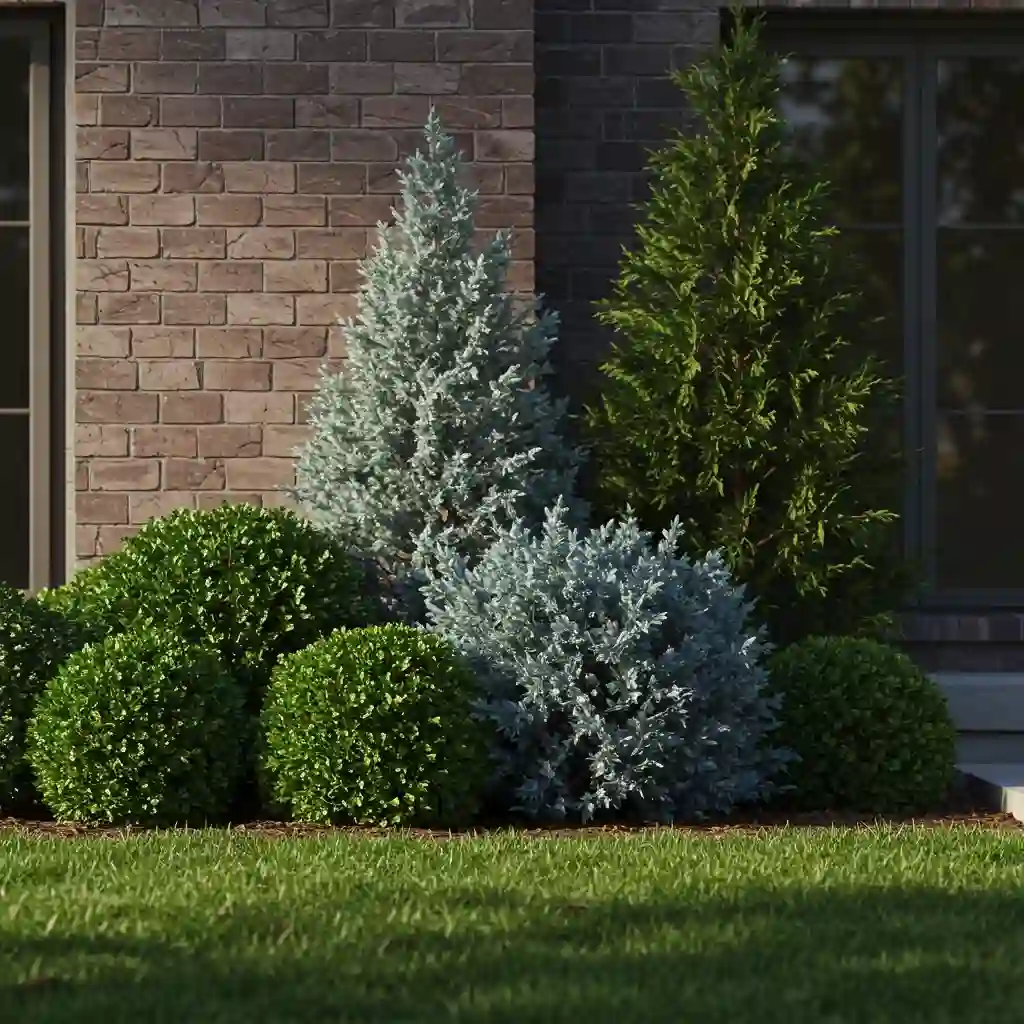
Flowers are fleeting, but the structure of your garden should look good year-round. The backbone of any low-maintenance landscape is a solid planting of evergreen shrubs. These plants retain their foliage all year, providing constant color, texture, and form even in the dead of winter.
By choosing a variety of evergreen shrubs with different shapes, sizes, and foliage colors, you can create a beautiful, multi-layered foundation that requires very little from you once established.
I design the “bones” of a front yard using evergreens first. Think about mixing low, mounding shrubs in the front, mid-sized globular shrubs in the middle, and tall, narrow, upright shrubs in the back. This creates a visually interesting composition that will look great 365 days a year.
- Great Choices: Boxwood, Holly, Juniper, Arborvitae, Dwarf Globe Spruce, and Yew.
- Variety is Key: Choose evergreens with different colors (deep green, blue-green, chartreuse) and textures (feathery, spiky, glossy).
- Placement: Use them to create a foundation, define borders, or as a backdrop for a few flowering perennials.
For a low-effort enhancement, choose dwarf or slow-growing varieties of your favorite shrubs. This will drastically reduce or even eliminate the need for regular pruning to keep them in scale with your house.
Small Garden Ideas to Maximize Your Green Space
3. Choose Hardy, Long-Blooming Perennials
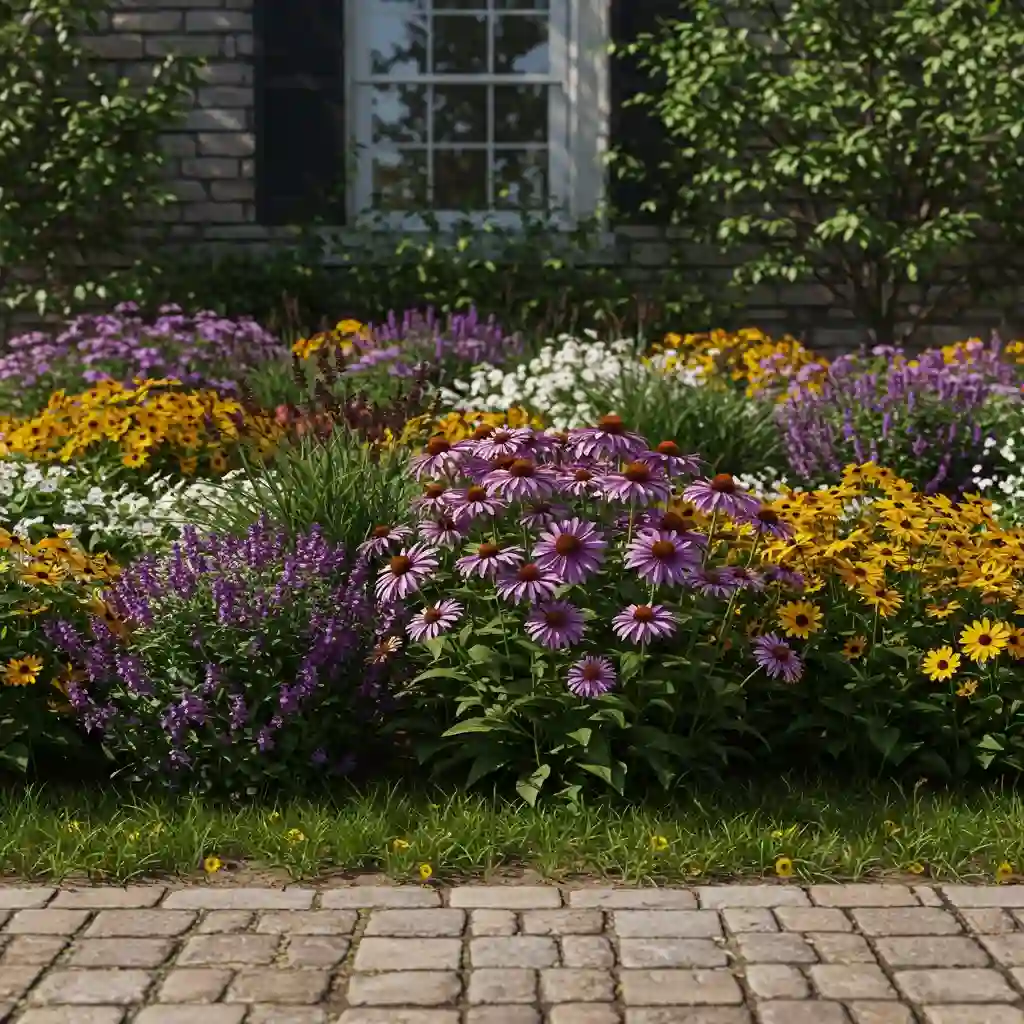
While evergreens provide the structure, perennials that come back year after year are the hardworking heroes that provide seasonal color without the need for annual replanting.
The key to a low-maintenance design is to choose hardy, reliable perennials that are known for being tough, disease-resistant, and long-blooming. You want plants that will give you the most “bang for your buck” with the least amount of fuss.
I always suggest that beginners start with a few tried-and-true, “bulletproof” perennials. Instead of finicky plants that need constant deadheading and care, choose robust varieties that thrive in your local conditions and provide a long season of color.
- Top Performers: Coneflowers (Echinacea), Black-Eyed Susans (Rudbeckia), Daylilies (Hemerocallis), Sedum ‘Autumn Joy’, Catmint (Nepeta), and Russian Sage (Perovskia).
- Plant in Groups: For a natural, high-impact look, plant your perennials in groups of 3, 5, or 7 of the same kind.
- Read the Tag: Pay close attention to the plant’s light and water needs to ensure you are putting the right plant in the right place.
For a simple enhancement, after your perennials have finished blooming in the fall, leave their seed heads standing. Many, like coneflowers and sedums, provide beautiful winter interest and a food source for birds. You can then cut them back in late winter.
4. Put Down a Thick Layer of Mulch
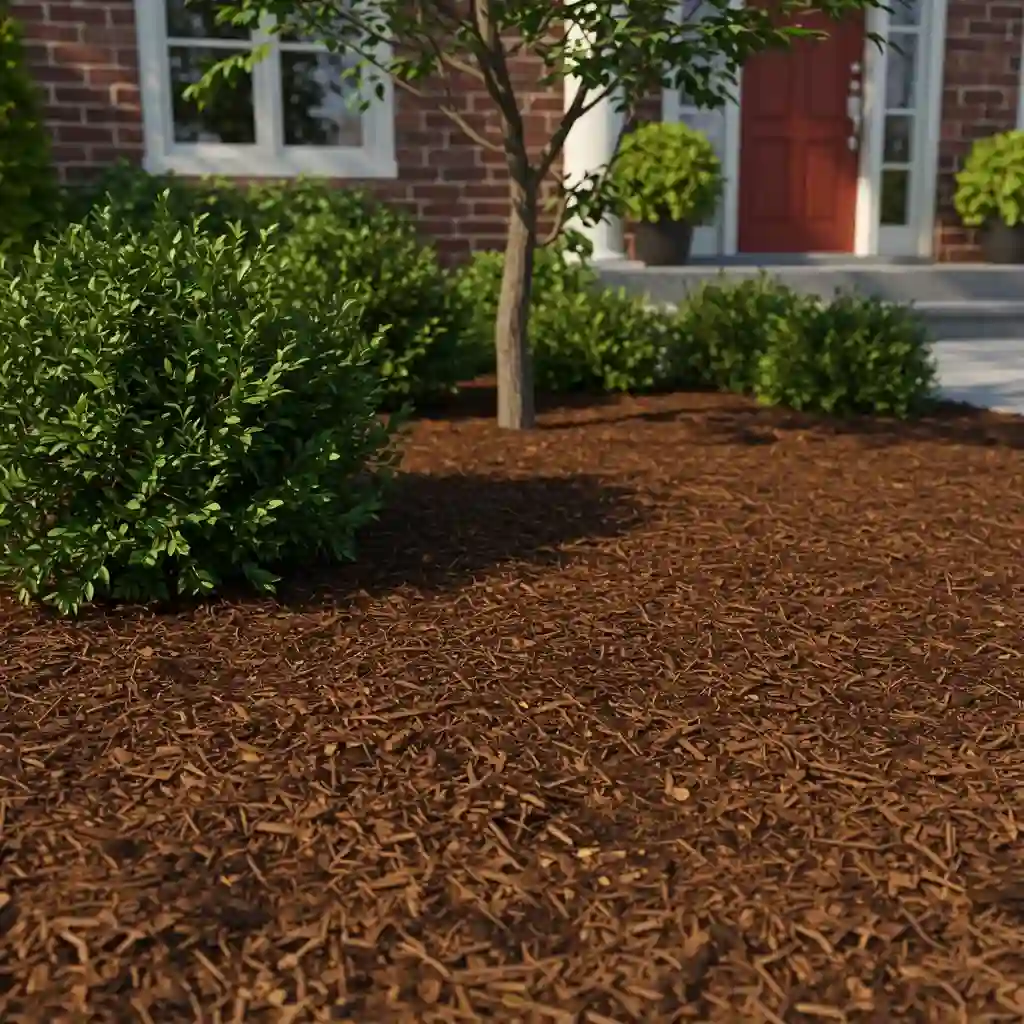
Mulch is the number one secret weapon for a low-maintenance garden. Applying a thick, 2-4 inch layer of organic mulch over your garden beds is the single best thing you can do to reduce your yard work.
Mulch acts as a physical barrier that smothers and prevents weed growth. It also helps the soil retain moisture, which means you’ll have to water your plants far less often. As it breaks down, it enriches the soil. Aesthetically, it creates a clean, uniform, dark backdrop that makes your plants look healthier and more vibrant.
This is a simple, inexpensive task that you typically only need to do once a year, in the spring. I tell all my clients that the cost and effort of mulching pays for itself tenfold in the time saved from weeding and watering.
- Types of Mulch: Shredded hardwood, cedar, or pine bark are all excellent, long-lasting choices.
- Application: Spread an even layer, 2-4 inches deep, over the entire surface of your garden beds.
- Technique: Be sure to pull the mulch an inch or two away from the base of your shrubs and perennials to prevent stem rot.
As an enhancement, use a natural, undyed, shredded hardwood mulch. It has a beautiful, dark brown color that looks very professional, and as it breaks down, it provides excellent nutrients for your soil, unlike some dyed mulches.
5. Replace Grass with a Hardy Groundcover
If you want the look of a green “lawn” without the constant mowing, consider replacing your turfgrass with a beautiful, low-growing, spreading groundcover. Many hardy groundcover plants can create a dense, green carpet that is far more drought-tolerant and requires significantly less maintenance than a traditional lawn.
This is a fantastic, eco-friendly solution for a front yard.
The key is to choose a groundcover that is well-suited to your climate and sun exposure. For a sunny, low-traffic area, a flowering groundcover like creeping thyme can be a beautiful and fragrant choice. For a shady yard, a lush carpet of sweet woodruff or Japanese pachysandra can create a serene, woodland feel.
- Benefits: Reduces or eliminates mowing, often requires less water, and suppresses weeds once established.
- Sun-loving options: Creeping Thyme, Sedum, Dwarf Mondo Grass.
- Shade-loving options: Sweet Woodruff, Ajuga, Japanese Pachysandra.
For an enhancement, and to add visual interest, plant a few different types of groundcover with contrasting leaf textures or colors in large, sweeping drifts. A river of silvery-leafed lamium flowing through a patch of green ajuga can be a stunning, low-maintenance tapestry.
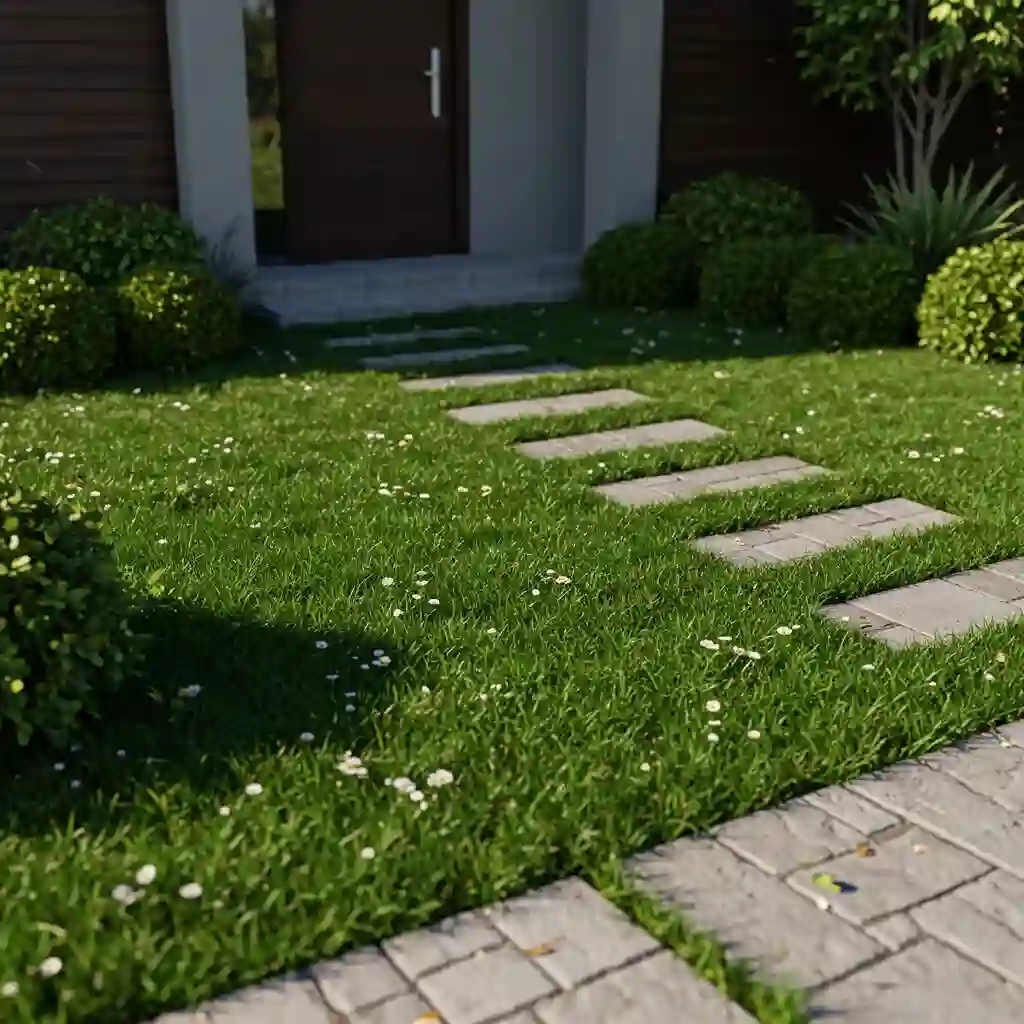
6. Use Gravel and Stone as a Groundcover
For the ultimate in low-maintenance groundcover, you can’t beat gravel or stone. Replacing a section of your lawn or a high-maintenance garden bed with a clean, simple gravel or river stone area is a modern and water-wise solution.
A gravel garden, also known as a xeriscape, requires no watering, no mowing, and, if installed correctly with a weed barrier, very little weeding.
This is a great way to create a clean, minimalist look. I love to design simple, elegant compositions using a bed of dark gray gravel with just a few, carefully placed, sculptural plants like ornamental grasses or yucca. The gravel acts as a neutral, textural canvas that highlights the form of the plants.
- Installation: Always install a high-quality, professional-grade landscape fabric underneath your stone to prevent weeds.
- Materials: Pea gravel for a softer look, or a more angular crushed rock for a modern, textured feel.
- Style: Perfect for modern, desert, or Zen-inspired landscape designs.
As an enhancement, add a few large, flat-topped boulders to your gravel area to serve as natural, informal seating and to add a strong, sculptural element.
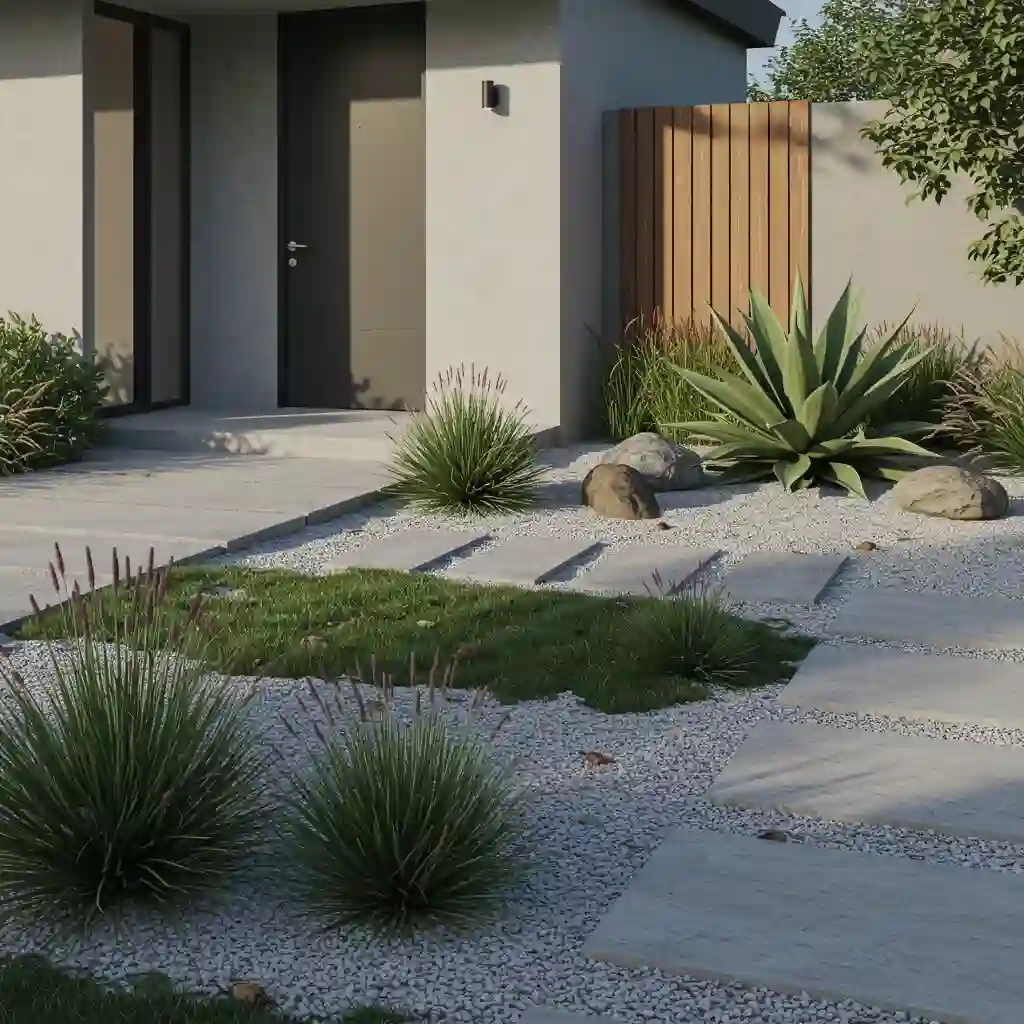
7. Incorporate Ornamental Grasses
Ornamental grasses are the superstars of low-maintenance landscaping. They are tough, drought-tolerant, have very few pest or disease problems, and provide incredible, four-season interest.
Their fine, textural foliage adds softness and movement to the garden, and they look beautiful from spring through winter. Many varieties have beautiful, plume-like seed heads that persist through the fall and winter, providing a beautiful, structural element in the dormant landscape.
I use ornamental grasses in almost every design I create. They are incredibly versatile and can be used in a modern, minimalist design or a soft, naturalistic cottage garden. The key is to choose a variety that is the right size for your space, as some can get very large.
- Easy choices for beginners: Fountain Grass (Pennisetum), Blue Fescue (Festuca glauca), Karl Foerster Feather Reed Grass (Calamagrostis), Little Bluestem (Schizachyrium).
- Maintenance: Most ornamental grasses only require a single chore per year: cutting them back to a few inches from the ground in late winter before new growth starts.
- Four-Season Interest: They provide texture, movement, and beautiful fall and winter color.
For an enhancement, plant your ornamental grasses where they will be backlit by the rising or setting sun. The low-angled sunlight shining through the translucent foliage and seed heads is a truly magical and breathtaking effect.
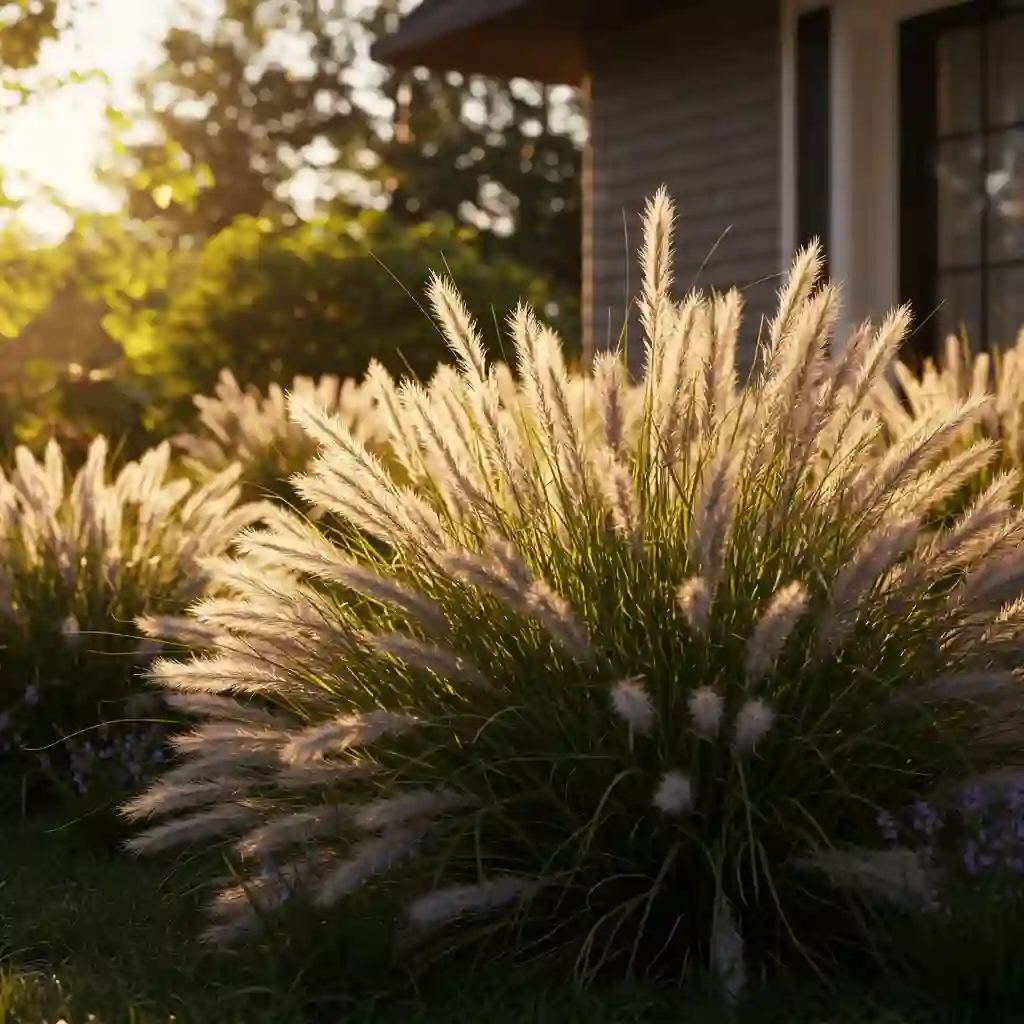
8. Install a Simple, Timeless Walkway
A clear, safe, and attractive walkway to your front door is a key component of good curb appeal. Upgrading a broken or boring builder-grade concrete path to something more intentional can make a huge difference. For a low-maintenance option, it’s best to choose a solid, durable material that won’t require constant weeding or upkeep.
A simple, classic path made of brick or flagstone is a timeless choice that will last for decades with very little maintenance.
For a more modern and budget-friendly option, large-format concrete pavers can be used to create a clean, simple, and elegant walkway. I always advise my clients to make their main walkway generously wide at least 4 feet so two people can comfortably walk side-by-side.
- Materials: Flagstone, brick, or concrete pavers are all durable and low-maintenance.
- Width: A comfortable width for a main path is 4-5 feet.
- Installation: Ensure the path is installed correctly on a proper base of compacted gravel and sand to prevent shifting and heaving.
As an enhancement, install low-voltage or solar-powered path lights along one or both sides of your walkway. This adds a beautiful, welcoming glow in the evening and is an important safety feature.
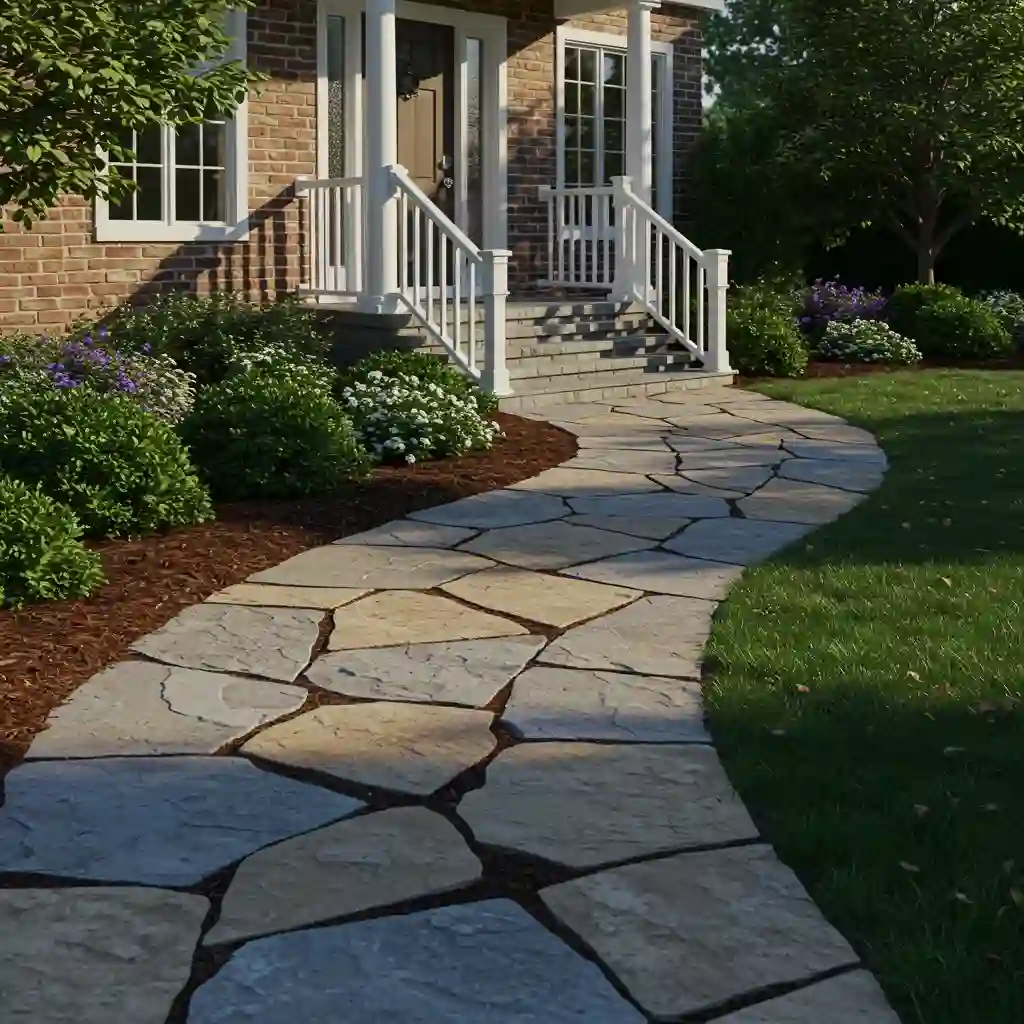
9. Use a Limited Plant Palette and Plant in Masses
This is a secret of professional landscape designers that is perfect for a low-maintenance approach. Instead of buying one of every type of plant at the nursery, which can lead to a cluttered and high-maintenance garden, choose just a few (say, 5-7) different types of hardy, reliable plants and then plant them in large, repeated groups or “masses.”
This has two major benefits. First, a large group of a single type of plant is much easier to care for than 20 different individual plants, as they will all have the same water and light needs.
Second, the visual effect of a large, cohesive mass of a single plant is much more powerful, serene, and modern than a jumble of different specimens. This principle, as highlighted by sources like Fine Gardening, is about creating a calm, rhythmic, and unified design.
- The Rule of “Less is More”: Choose a few hardworking plants and use them repeatedly.
- Plant in Groups: Always plant in odd-numbered groups of 3, 5, 7, or more for the most natural look.
- Create Drifts: Arrange your masses in large, interconnected, flowing “drifts,” like a river of color or texture.
For an enhancement, choose plants for your limited palette that offer a sequence of blooms throughout the season. For example, you could have a mass of spring-blooming bulbs, a mass of a summer-blooming perennial, and a mass of a fall-blooming sedum or grass.
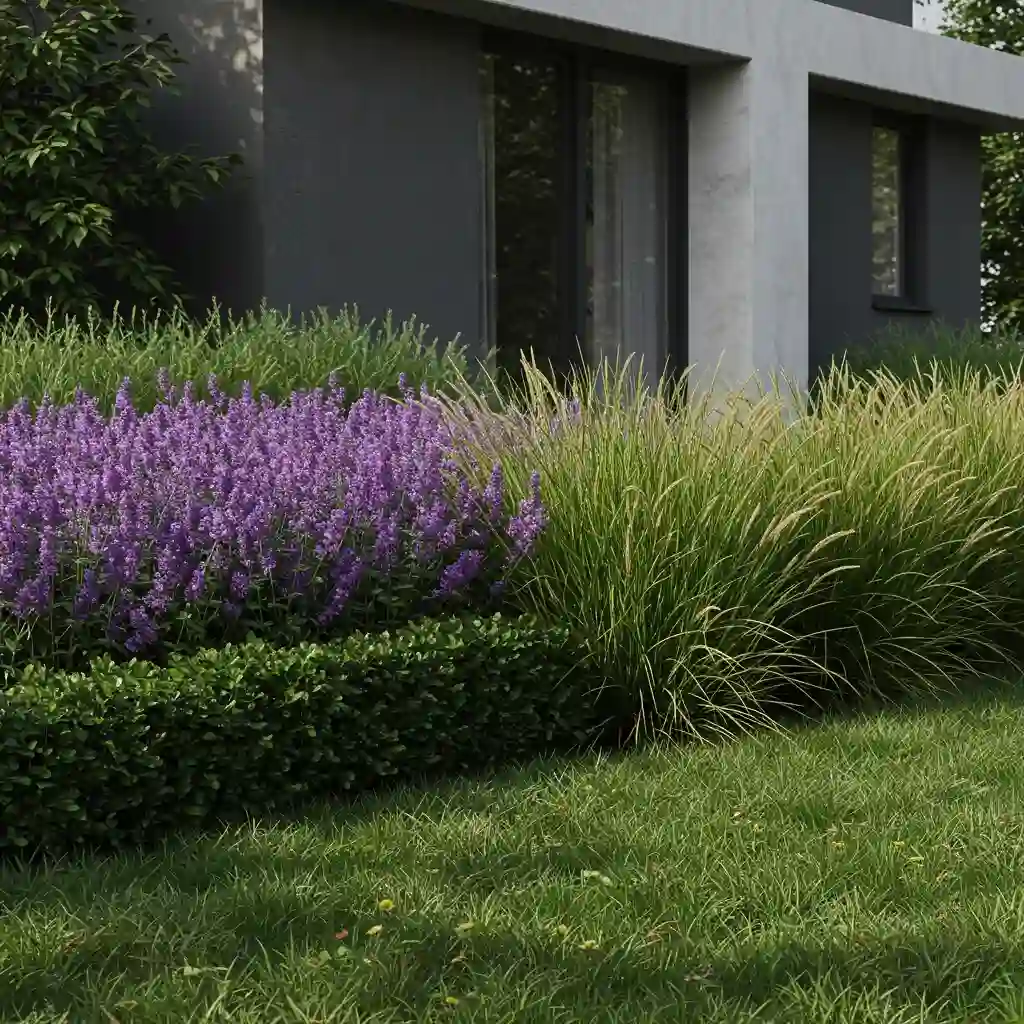
10. Opt for Native and Drought-Tolerant Plants
The ultimate low-maintenance plants are the ones that are perfectly adapted to your local climate and soil conditions. Native plants have evolved over thousands of years to thrive in your specific region, which means they are naturally resistant to local pests and diseases and require very little supplemental water or fertilizer once they are established.
Choosing native plants is a sustainable, eco-friendly, and incredibly low-maintenance approach to gardening.
I am a huge advocate for using native plants in my designs. They create a landscape that is not only beautiful but also supports local pollinators like bees and butterflies, creating a healthy ecosystem in your own front yard.
A quick search for the “native plants of [your state or region]” or a visit to a local, independent nursery can provide you with a great list of beautiful and hardy options.
- Sustainable: Requires less water, fertilizer, and pesticides.
- Supports Wildlife: Provides food and habitat for local birds, bees, and butterflies.
- Sense of Place: Creates a garden that feels authentic and connected to its natural surroundings.
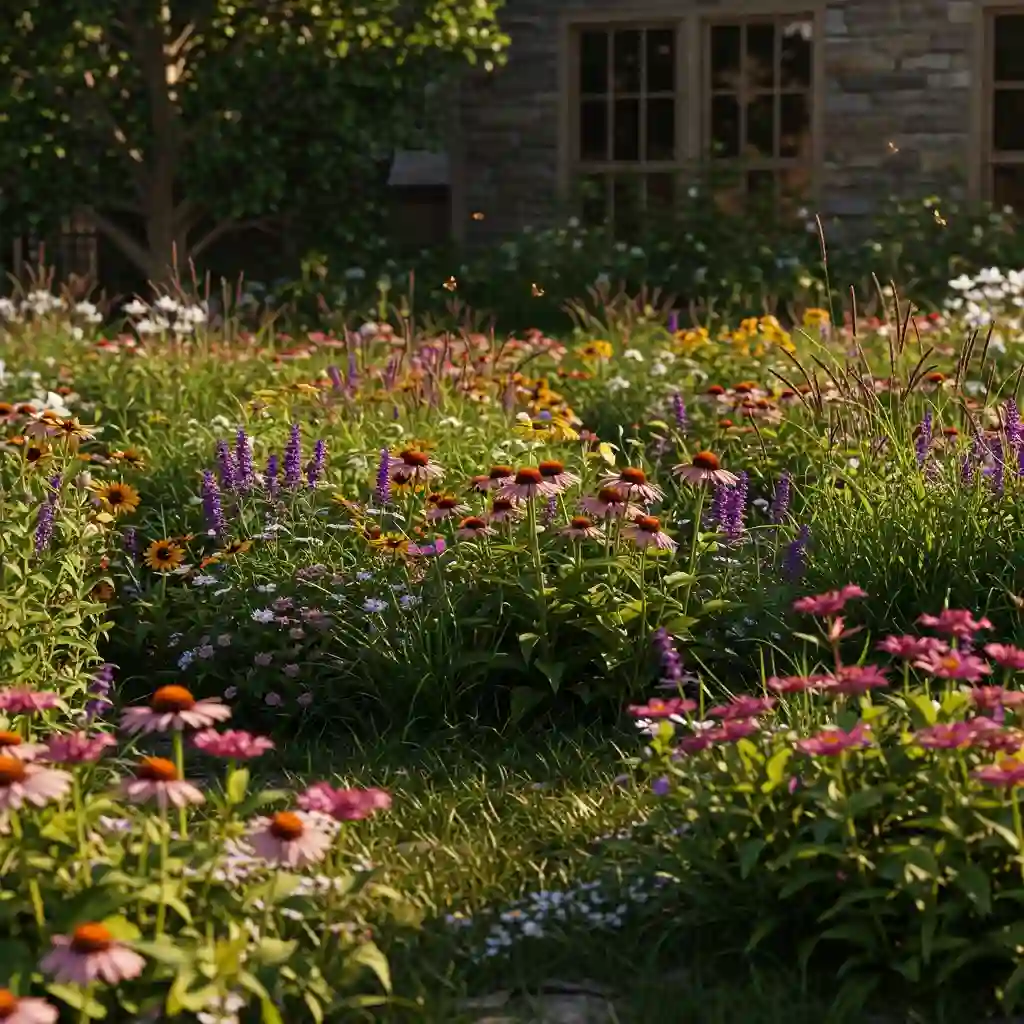
For an enhancement, create a dedicated “pollinator garden” in a sunny spot in your front yard, using a collection of native, flowering perennials that are known to attract bees and butterflies. Add a simple, shallow birdbath to provide a source of water.
11. Add a Statement Boulder or Two
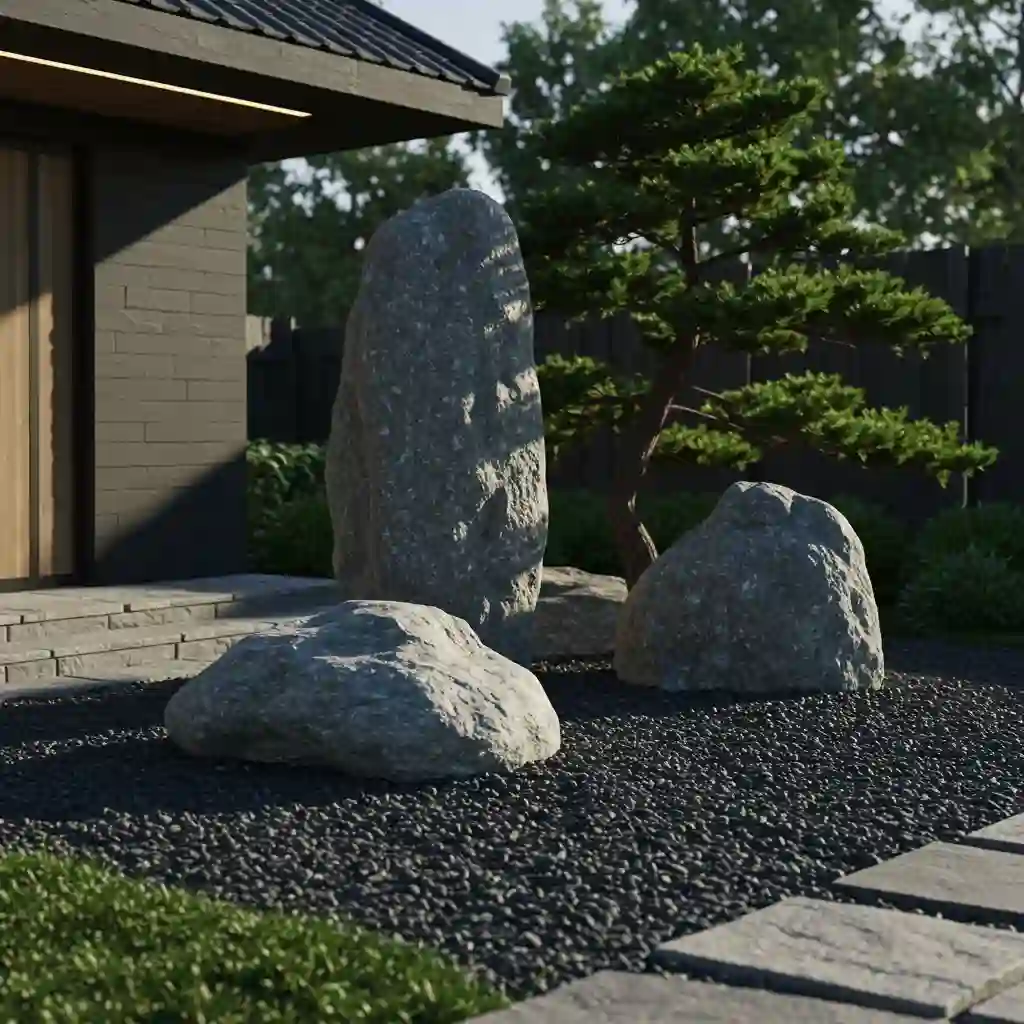
For a dramatic, zero-maintenance focal point, you can’t beat a large, beautiful boulder. A strategically placed boulder or a small grouping of them can add a powerful, sculptural, and naturalistic element to your front yard.
They provide instant age and a sense of permanence, and they look beautiful in all four seasons, requiring absolutely no care from you.
The key to making boulders look natural and intentional is to choose a type of rock that is common in your local region and to set them properly into the ground. I always tell my clients that a boulder should look like it was placed there by nature, not by a machine.
This means burying at least one-third of the rock’s mass into the soil to make it look like it’s an outcropping emerging from the earth.
- Source Locally: Choose rocks that match the geology of your area for the most authentic look.
- Group Them: Arrange boulders in natural-looking clusters of odd numbers (e.g., three or five).
- Set Them Deep: Burying the bottom of the boulder makes it look permanent and natural.
For an enhancement, tuck a few low-growing, cascading plants, like a creeping sedum or a low, mounding ornamental grass, into the crevices at the base of your boulders. This will soften their hard edges and make them look even more integrated into the landscape.
12. Use Large, High-Impact Planters
Container gardening is a great, low-commitment way to add color and life to your front yard, but managing dozens of small pots can be a high-maintenance chore. A more effective and lower-maintenance strategy is to use a few, very large, high-impact planters.
One or two oversized pots can create a much stronger focal point than a clutter of small ones, and because they hold more soil, they don’t dry out as quickly, meaning less frequent watering.
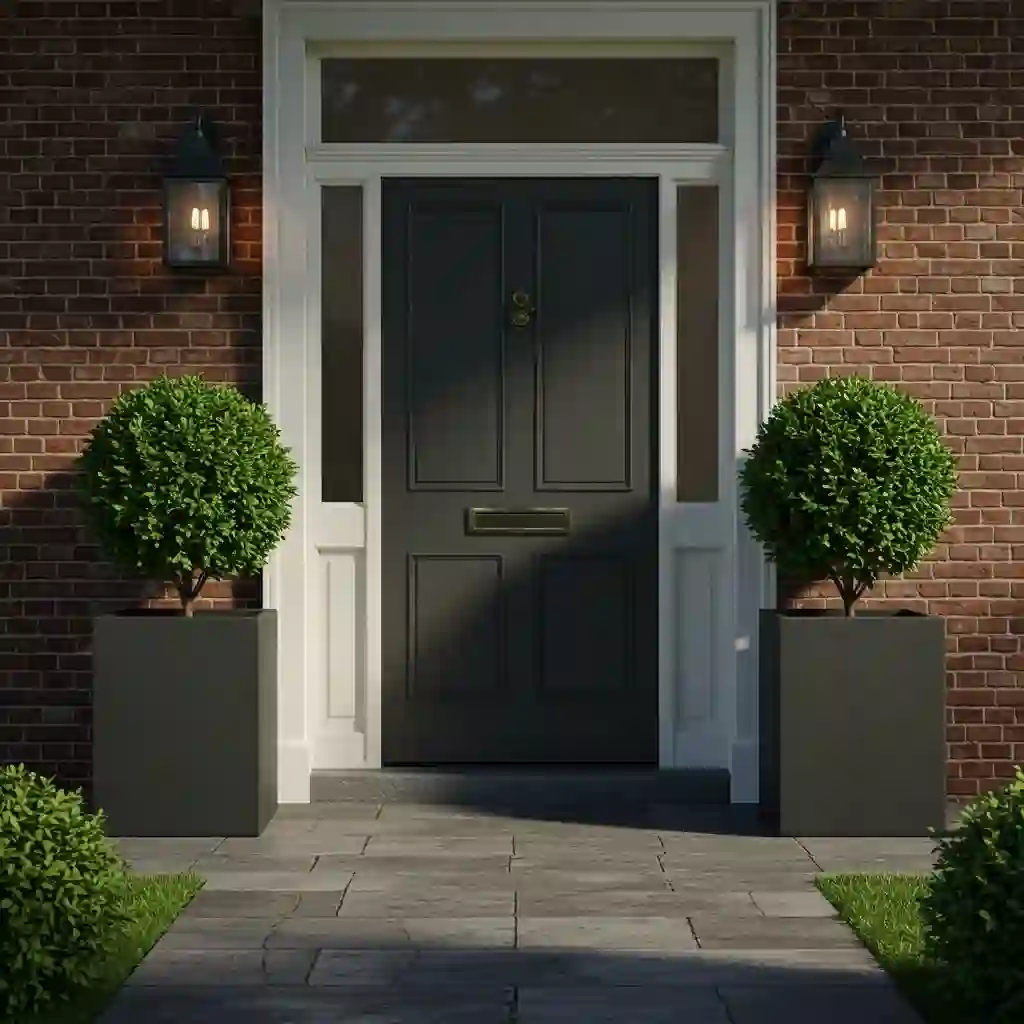
A pair of large, identical planters flanking your front door can create a formal, welcoming, and sophisticated entrance.
I love to suggest that my clients use the “Thriller, Filler, Spiller” method (a tall plant in the center, mounding plants around it, and trailing plants spilling over the edge) to create a stunning, professional-looking arrangement in their large pots.
- Go Big: One or two large, oversized pots have more style and require less watering than many small ones.
- Placement: Use them to flank your front door, at the edge of a driveway, or to anchor the corner of a garden bed.
- Material: Choose high-quality, weather-resistant materials like fiberglass, concrete, or thick ceramic.
For a very low-maintenance enhancement, plant your large containers with a single, dramatic, dwarf evergreen shrub or a beautiful, sculptural succulent like an agave. This creates a simple, modern, and year-round display that requires almost no care.
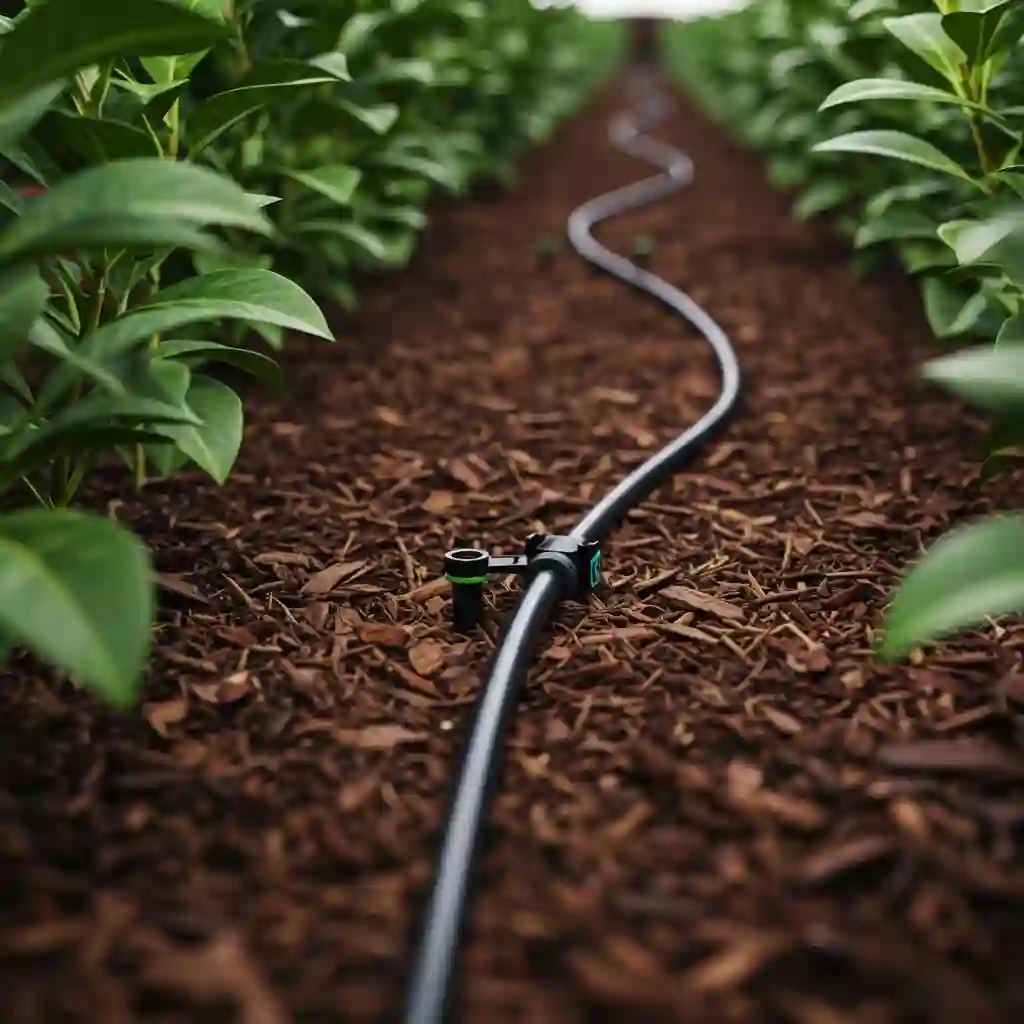
13. Install an Automated Drip Irrigation System
The single biggest time-saver for any garden is an automated irrigation system. While installing a full sprinkler system can be expensive, a drip irrigation system is a much more affordable, water-efficient, and DIY-friendly option.
A drip system consists of a network of thin tubes with small emitters that deliver water slowly and directly to the base of each plant, right where it’s needed.
This is a project I recommend to every single one of my clients. It is the key to a truly “set it and forget it” garden.
By delivering water directly to the roots, you lose very little to evaporation, and you keep the areas between your plants dry, which helps to discourage weed growth. You can connect the system to a simple, battery-operated timer at your spigot, and your garden will be watered automatically.
- Water-Efficient: Delivers water directly to the plant roots, reducing waste.
- Saves Time: Automates the task of watering your garden.
- DIY-Friendly: You can buy all-in-one kits that are easy for a homeowner to install.
For an enhancement, install a “smart” irrigation timer. These timers connect to Wi-Fi and can automatically adjust your watering schedule based on the local weather forecast, so you’ll never be watering in the middle of a rainstorm.
14. Upgrade to Low-Voltage Landscape Lighting
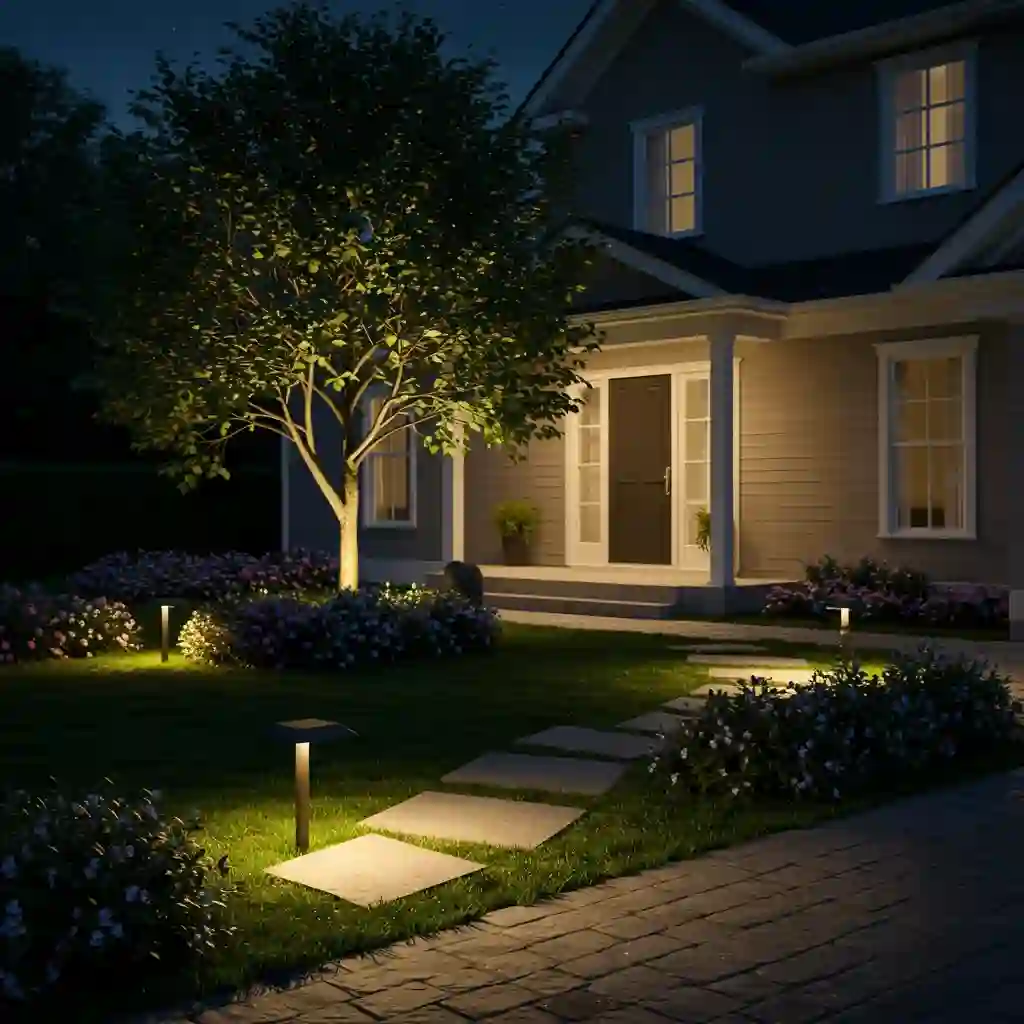
Good landscape lighting can dramatically improve your home’s curb appeal and safety at night, and modern, low-voltage LED systems are surprisingly easy and safe for a DIYer to install.
Unlike old, high-voltage systems, a low-voltage system uses a transformer to reduce the power, and the wiring can be simply buried a few inches under the soil or mulch, no conduit required.
A simple lighting scheme can make a huge difference. Use a couple of spotlights to gently uplight the facade of your house or a feature tree.
Use a few low-profile path lights to illuminate your front walkway. I love how a well-lit landscape looks just as beautiful at night as it does during the day.
- DIY-Friendly and Safe: Low-voltage systems are easy and safe for homeowners to install.
- Energy-Efficient: LED lights use a tiny fraction of the electricity of old, incandescent bulbs.
- Enhances Curb Appeal and Safety: A well-lit home is more beautiful and more secure.
For the ultimate low-maintenance enhancement, choose solar-powered lights. The quality and brightness of modern solar lights have improved dramatically. They require absolutely no wiring and are the easiest possible lighting solution to install.
15. Create a Dry Creek Bed
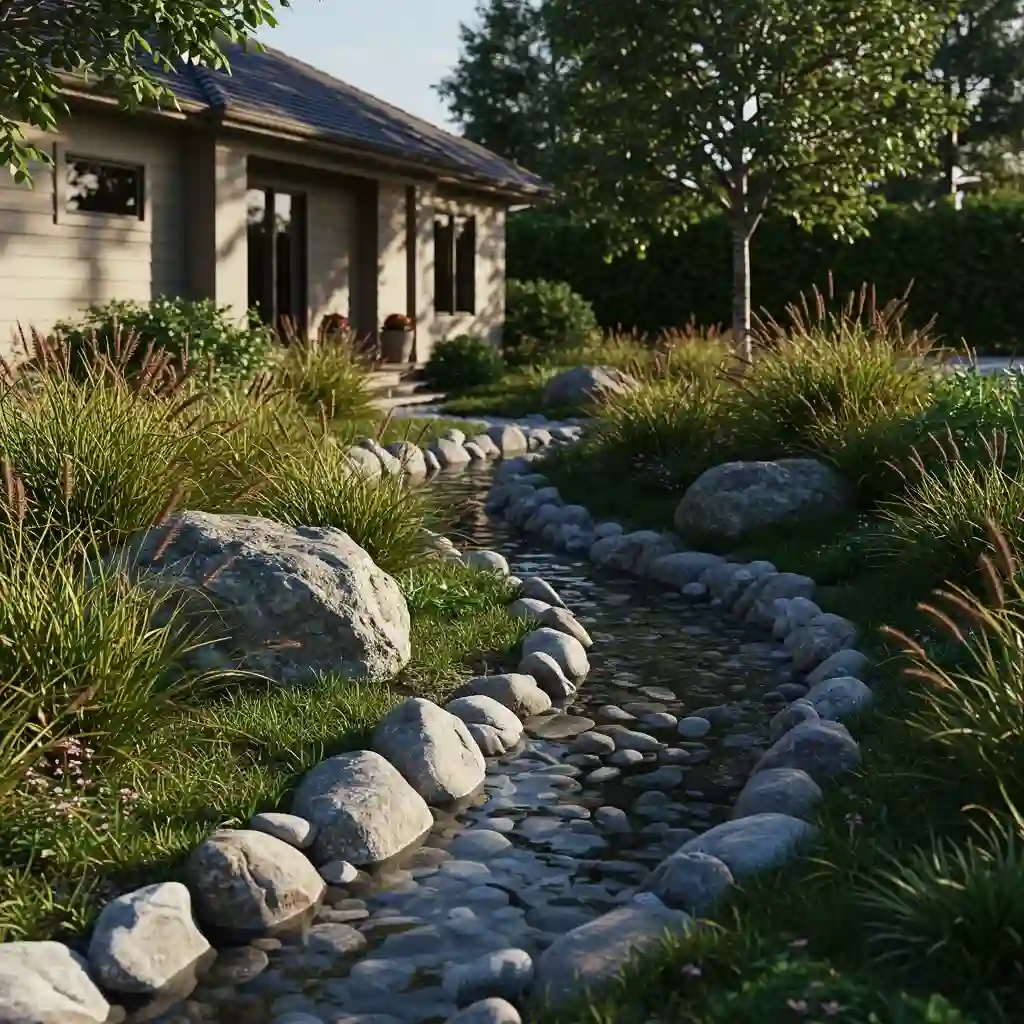
A dry creek bed is a landscape feature made of various-sized river rocks and stones, designed to mimic the look of a natural, dried-up stream. It’s a brilliantly creative and zero-maintenance way to add texture, a sense of movement, and a strong, curving line to a front yard.
It can be used to solve a real drainage problem by channeling rainwater, or it can be a purely decorative element that adds a huge amount of naturalistic charm and curb appeal.
I love this feature for a low-maintenance yard because it replaces a needy patch of lawn with a beautiful, self-sustaining feature. The “stream” can meander through a garden bed, connecting the front of the yard to the house.
- Use a Variety of Rocks: Use larger stones and small boulders for the “banks” and a mix of smaller, smooth river rocks for the “stream bed.”
- Create a Meandering Path: A gentle, curving shape will look much more natural than a straight line.
- Add Plants: Plant drought-tolerant grasses and perennials along the edges of the creek bed to soften the look and make it feel more natural.
For a beautiful enhancement, build a simple, small, wooden footbridge that arches over a section of your dry creek bed. This adds another layer of charm and enhances the sense of a real, natural landscape feature.
Conclusion
Creating a beautiful, low-maintenance front of house landscape is not about having a boring or barren yard; it’s about making smart, strategic choices that lead to a stunning and sustainable design.
As we’ve explored through these 15+ ideas, the path to an easy-care front yard involves reducing your lawn, choosing hardworking, self-sufficient plants, and incorporating durable, timeless hardscaping. By embracing these principles, you can craft a front yard that provides incredible curb appeal and a warm welcome, without demanding constant work in return.