Are you trying to perfect your living room with fireplace and TV layout? It’s one of the most common and challenging design dilemmas homeowners face. The fireplace is the traditional, architectural heart of a room a cozy, natural focal point that encourages conversation and relaxation.
The television, on the other hand, is the modern hub of entertainment, demanding prime viewing angles. When you have both in the same room, they can compete for attention, making furniture arrangement a frustrating puzzle. How do you create a space that is perfect for both a cozy chat by the fire and a family movie night?
This guide will explore 15 clever layout ideas, from classic arrangements to innovative hidden solutions, to help you conquer the dual-focal-point dilemma and create a living room that is both stylish and perfectly suited to your lifestyle.
1. The Classic Layout: TV Mounted Above the Fireplace
This is perhaps the most popular and straightforward solution to the dual-focal-point problem. By mounting the television directly above the fireplace mantel, you consolidate both focal points into one powerful visual anchor. This layout simplifies furniture arrangement, as you can orient your main seating be it a sofa or a sectional to face this single wall. It’s a clean, symmetrical, and space-saving solution, particularly effective in rooms where wall space is limited.
However, this layout has its critics. I always discuss the two main drawbacks with my clients. First, the viewing height of the TV can be uncomfortably high, potentially leading to neck strain. Second, the heat from a wood-burning or intense gas fireplace can, over time, damage the electronics of the television. This layout works best with modern, linear gas fireplaces that produce less ambient heat or when the mantel is deep enough to provide a sufficient heat shield.
- Best For: Rooms where a single focal wall is the most logical layout; homes with a modern, low-profile fireplace.
- Pros: Consolidates focal points, simplifies furniture arrangement, saves space.
- Cons: Potentially uncomfortable viewing height, heat can damage the TV.
For an enhancement, use a tilting or articulating TV mount. This allows you to angle the screen downwards for a more comfortable viewing experience when you’re seated, mitigating the neck-strain issue.
Small Backyard Ideas For Creating A Mini Outdoor Oasis
2. Side-by-Side: TV and Fireplace with Built-ins
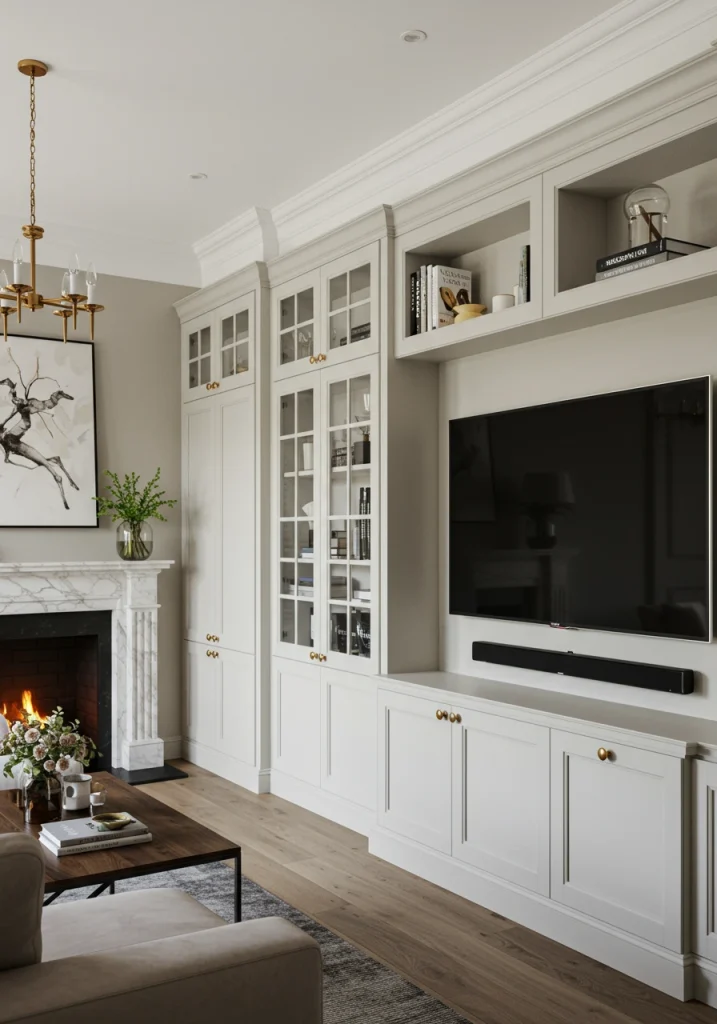
A highly functional and aesthetically pleasing solution is to place the TV and fireplace on the same wall, but next to each other rather than one on top of the other. This layout is best executed with custom or semi-custom built-in cabinetry that creates a cohesive and intentional look. Typically, the fireplace is centered on one side, and the TV is placed at a comfortable viewing height on the other, surrounded by shelves, drawers, and cabinets.
This approach, a favorite of home design shows, solves the neck-strain problem by placing the TV at an ideal eye level. The built-ins provide a huge amount of storage for media components, books, and decorative objects, and create a beautiful, balanced feature wall. I designed a layout like this for a family who wanted a cozy reading area by the fire and a comfortable TV-watching zone. The built-ins allowed us to seamlessly integrate both.
- Best For: Long living room walls; homeowners who need significant storage.
- Pros: TV is at a comfortable height, provides ample storage, creates a balanced feature wall.
- Cons: Requires more wall space, can be a more expensive option due to cabinetry.
To enhance this layout, paint the back of the open shelves a darker, contrasting color. This will make your decorative objects pop and add a layer of depth and sophistication to the built-in unit.
3. The L-Shaped Layout: Seating on Adjacent Walls
When your fireplace and TV are on adjacent (perpendicular) walls, an L-shaped furniture arrangement is a natural and effective solution. In this layout, you typically place your main sofa facing the fireplace, making it the primary focal point for conversation and relaxation. A loveseat or a pair of armchairs is then placed on the adjacent side of the room, facing the wall with the television. This creates a comfortable, balanced conversation area that can easily pivot to watch TV.
This is one of my go-to layouts because it respects both focal points without forcing them to compete. It creates a natural L-shape that defines the seating area, especially in an open-plan home. As often demonstrated by designers on Apartment Therapy, the key is to anchor the arrangement with a large area rug that connects all the seating pieces.
- Best For: Square or slightly rectangular rooms where the fireplace and TV are on adjacent walls.
- Pros: Creates a great conversation area, respects both focal points, good for traffic flow.
- Cons: May not provide “perfect” TV viewing angles for everyone on the main sofa.
For an enhancement, place a large, unifying area rug under the front legs of all seating pieces. This visually connects the furniture and solidifies the L-shaped conversation zone.
4. The Balanced Perpendicular Layout
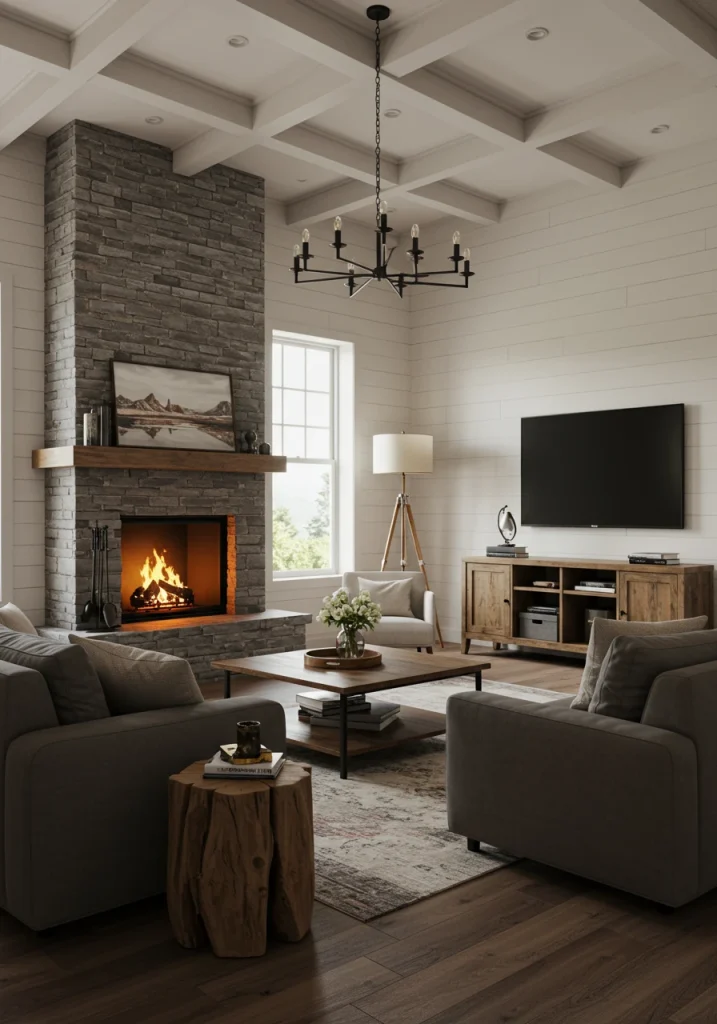
This is a variation of the L-shaped layout, perfect for when the fireplace is on one wall and you want to place the TV on the adjacent wall. Instead of a secondary sofa, you place the main sofa facing the TV wall. Then, you arrange two comfortable armchairs directly facing the fireplace. This creates a balanced layout where both the sofa and the chairs have a primary focal point.
I find this layout works wonderfully for creating two distinct but connected zones of activity. The chairs become the perfect spot for a quiet conversation or for reading by the fire, while the sofa is the dedicated media-watching zone. The key is to ensure there is enough space between the two zones for comfortable traffic flow.
- Best For: Rooms where TV watching is a high priority; creates distinct zones.
- Pros: Gives both sofa and chairs a direct view of a focal point, creates balance.
- Cons: Can feel a bit divided if the room is too small.
To enhance this layout, place a console table directly behind the sofa. This helps to define the back of the “TV zone” and provides a surface for lamps, books, and decorative objects, making the room feel more finished from all angles.
5. The Opposite Walls Layout with Two Zones
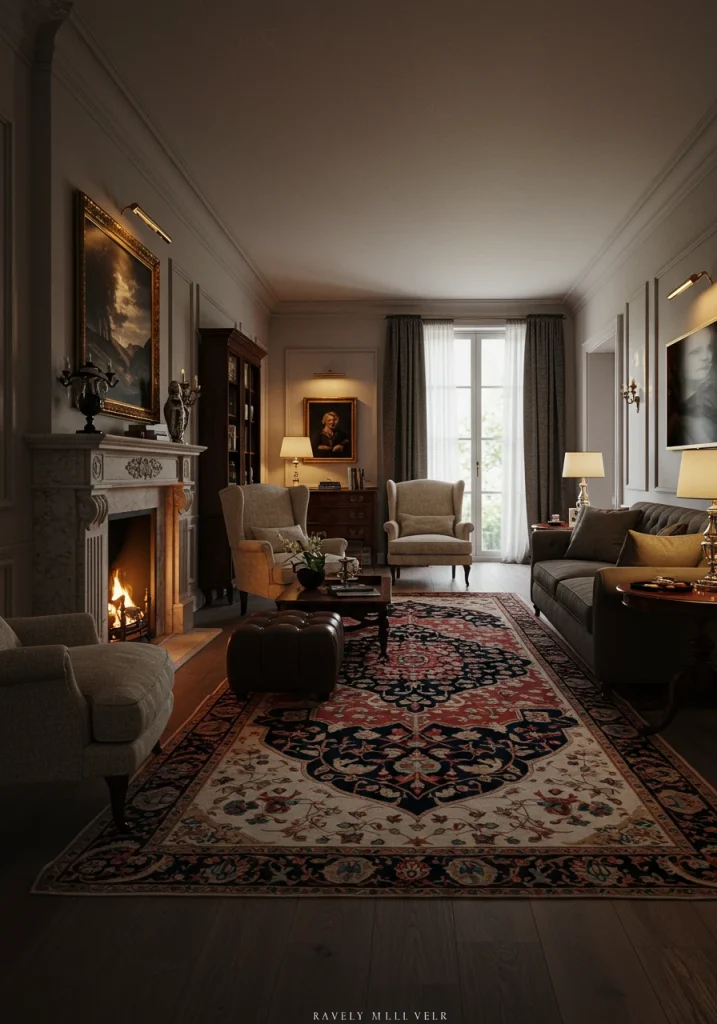
In a long, narrow living room, you often find the fireplace on one short end and the ideal wall for a TV on the opposite end. Instead of trying to force one single seating area, the best solution is often to embrace the length of the room and create two distinct but connected zones. One zone can be a cozy conversation area focused on the fireplace, perhaps with two or four armchairs facing each other. The other zone, further down the room, can be a dedicated media area with a sofa or sectional facing the TV.
This layout, often recommended for long “shotgun” style rooms, allows each focal point to have its own dedicated space and function. I designed a space like this for a client with a historic home, creating a formal “fireside chat” area near the front of the room and a more casual, comfortable family TV zone near the back.
- Best For: Long, narrow rooms with focal points on opposite walls.
- Pros: Gives each focal point its own dedicated zone, maximizes the functionality of a long room.
- Cons: Requires a significant amount of space, may not work in smaller rooms.
For enhancement, use two identical or complementary area rugs to define each of the two zones. This will visually anchor each space while creating a cohesive flow throughout the entire room.
6. The Hidden TV in Cabinetry
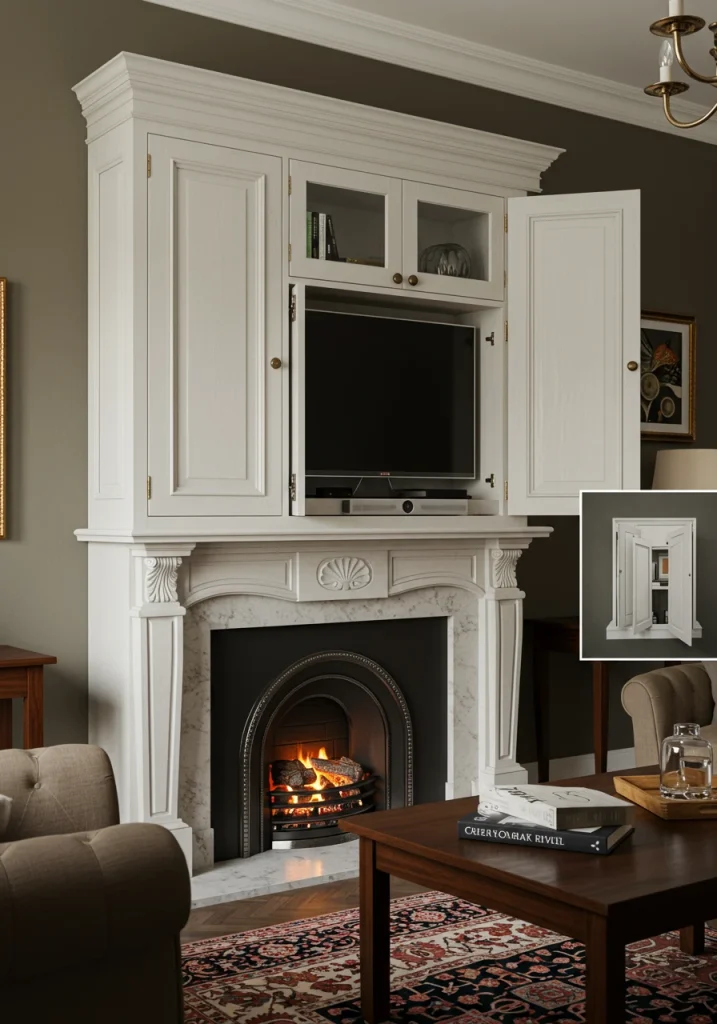
For those who love the traditional look of a fireplace and dislike the black, blank screen of a television dominating their decor, a hidden TV is the perfect solution. Custom cabinetry built around the fireplace can be designed to include doors that conceal the television when it’s not in use. This allows the fireplace to be the undisputed star of the room, maintaining a classic, technology-free aesthetic.
The doors can be designed to look like traditional cabinet doors, slide open into pockets, or even lift up. Another popular option is to have a piece of framed art that slides or lifts to reveal the TV behind it. I have designed several of these for clients who want their living room to be a serene, conversation-focused space most of the time, with the option for media entertainment.
- Best For: Homeowners who prefer a traditional aesthetic and want to hide technology.
- Pros: Keeps the TV hidden, makes the fireplace the primary focal point, provides a clean look.
- Cons: Can be an expensive custom solution, requires access to the TV.
As an enhancement, consider a remote-controlled motorized lift system. With the press of a button, a piece of art or a cabinet panel can automatically retract to reveal the TV, adding a touch of high-tech magic to a classic design.
7. The Projector Screen Solution
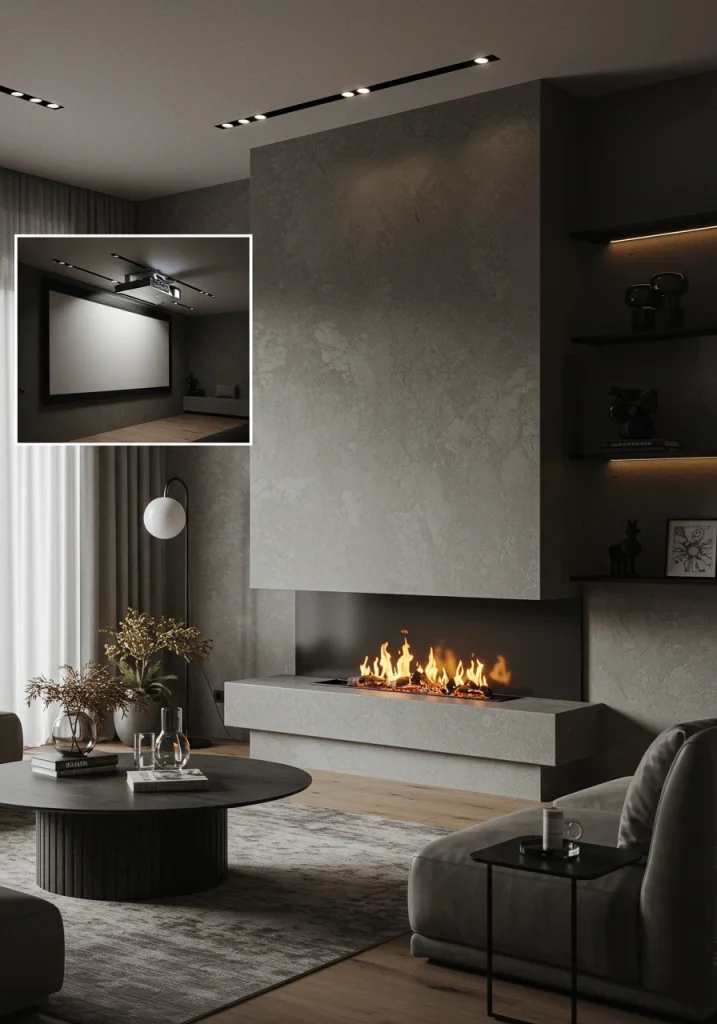
For the ultimate cinematic experience that completely disappears, a projector and a retractable screen is a fantastic high-tech solution. In this layout, your fireplace remains the beautiful, undisputed focal point of the room at all times. The projector screen is mounted in the ceiling (or in a discreet soffit) above the fireplace and remains completely hidden until it’s movie time.
With the press of a button, the screen silently descends in front of the fireplace, transforming the room into a home theater. This is a perfect solution for media enthusiasts who don’t want a permanent black screen compromising their design aesthetic. I implemented this in a modern media room, and the “wow factor” when the screen comes down is incredible.
- Best For: Movie lovers and tech enthusiasts who want a completely hidden TV.
- Pros: TV screen is completely invisible when not in use, provides a large, cinematic viewing experience.
- Cons: More expensive than a standard TV, requires professional installation, room needs good light control.
For an enhancement, pair your projector system with in-wall or in-ceiling speakers. This will complete the immersive home theater experience while keeping all the technology completely hidden from view.
8. The “Art TV” Disguise
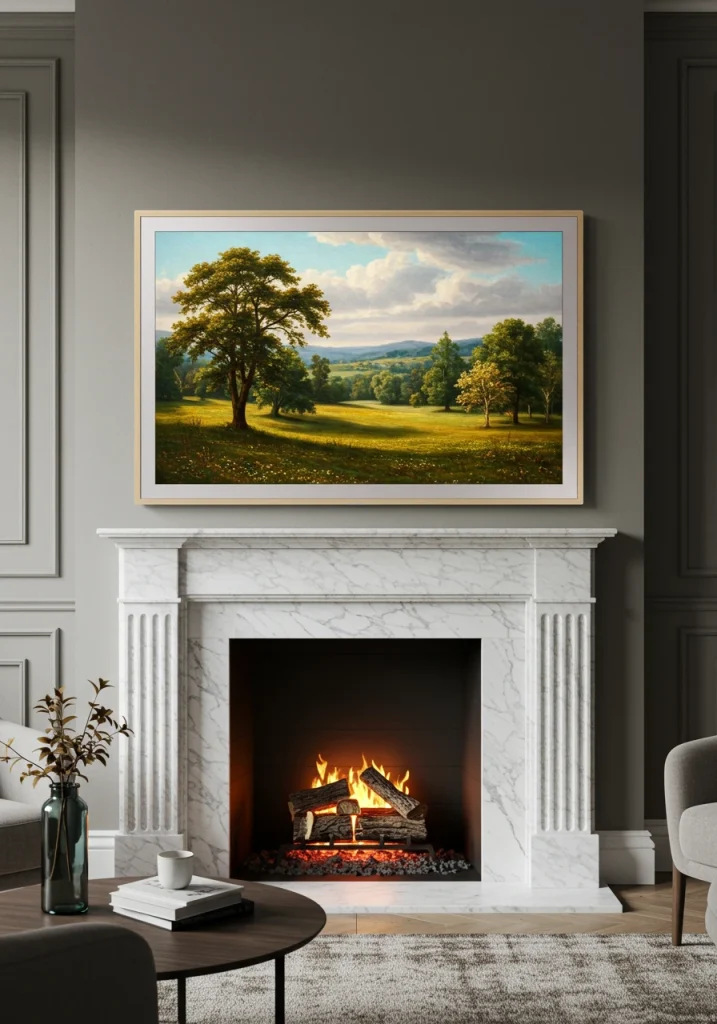
A brilliant compromise between having your TV visible and hiding it completely is to use an “Art TV,” like Samsung’s “The Frame.” These televisions are designed with a slim profile and a customizable bezel that makes them look exactly like a piece of framed art. When the TV is off, instead of a black screen, it displays a high-resolution image of a famous painting, a piece of abstract art, or even your own family photos.
This allows you to place the TV in a prominent position, like above the fireplace or next to it as part of a gallery wall, without it looking like a piece of technology. I love recommending this to my clients, as it offers the best of both worlds. You can have a beautiful, art-filled living room that instantly transforms into an entertainment space when you want it to.
- Best For: Design-conscious homeowners who want their TV to blend into the decor.
- Pros: Disguises the TV as art, allows for placement in prominent locations, customizable look.
- Cons: More expensive than a standard television of the same size.
To enhance the “art” illusion, create a gallery wall on the same wall as your Art TV. Mix in other real, framed art pieces of different sizes around the television. This will make it blend in even more seamlessly with your decor.
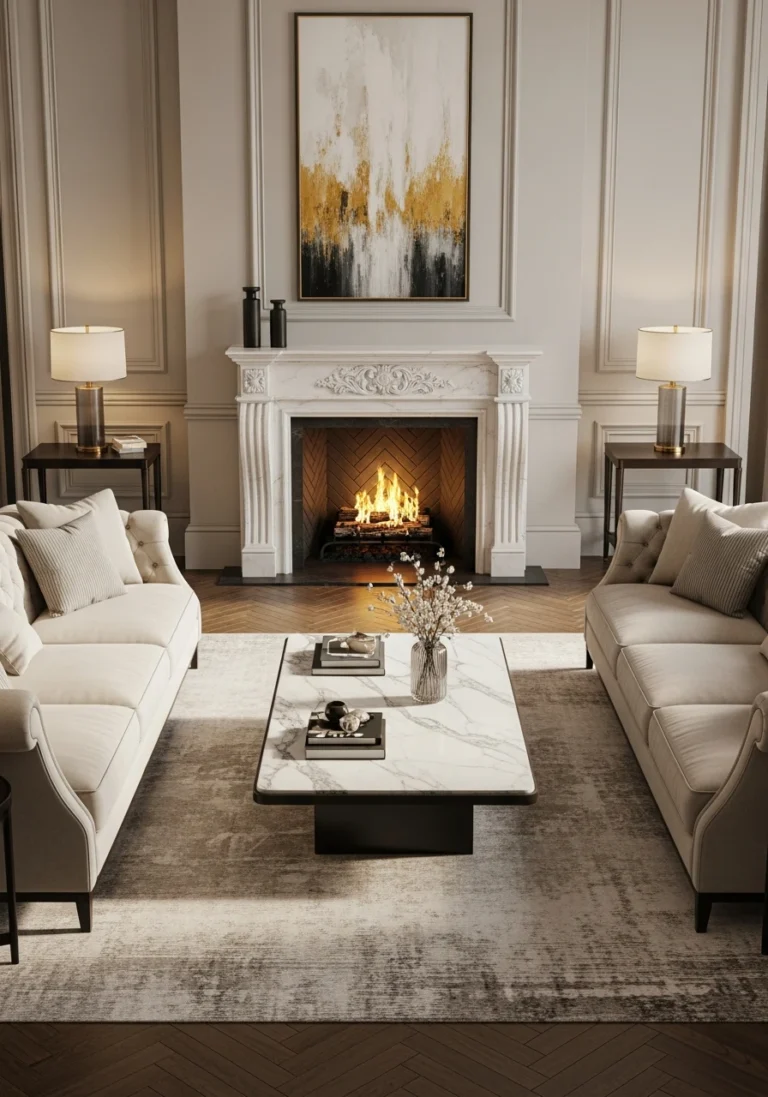
9. The Symmetrical Layout with Two Sofas
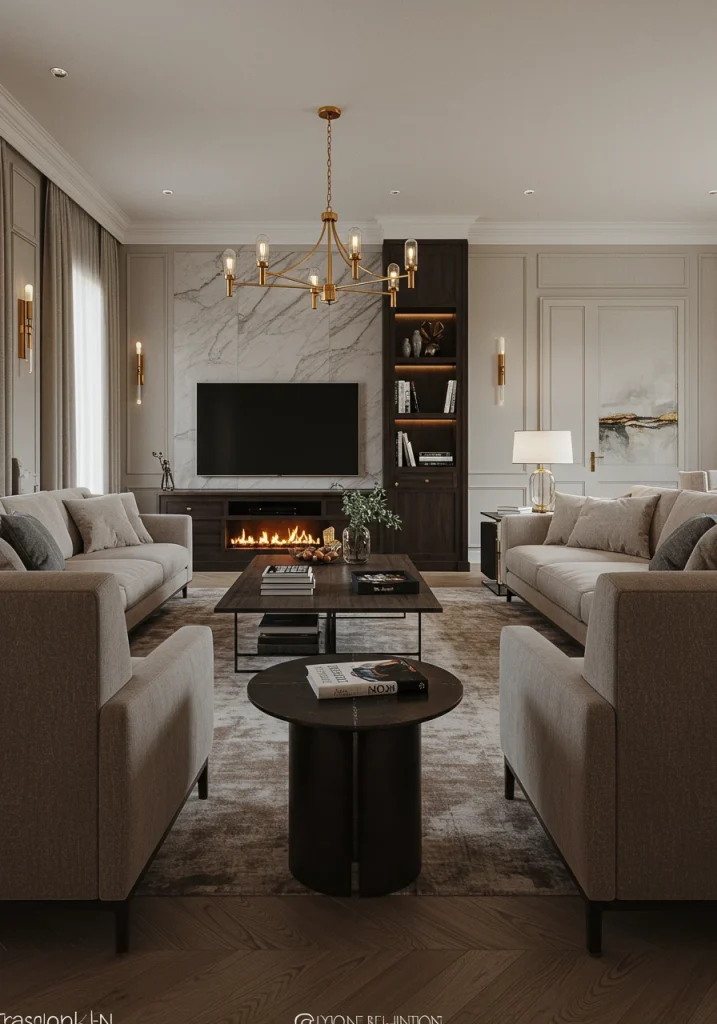
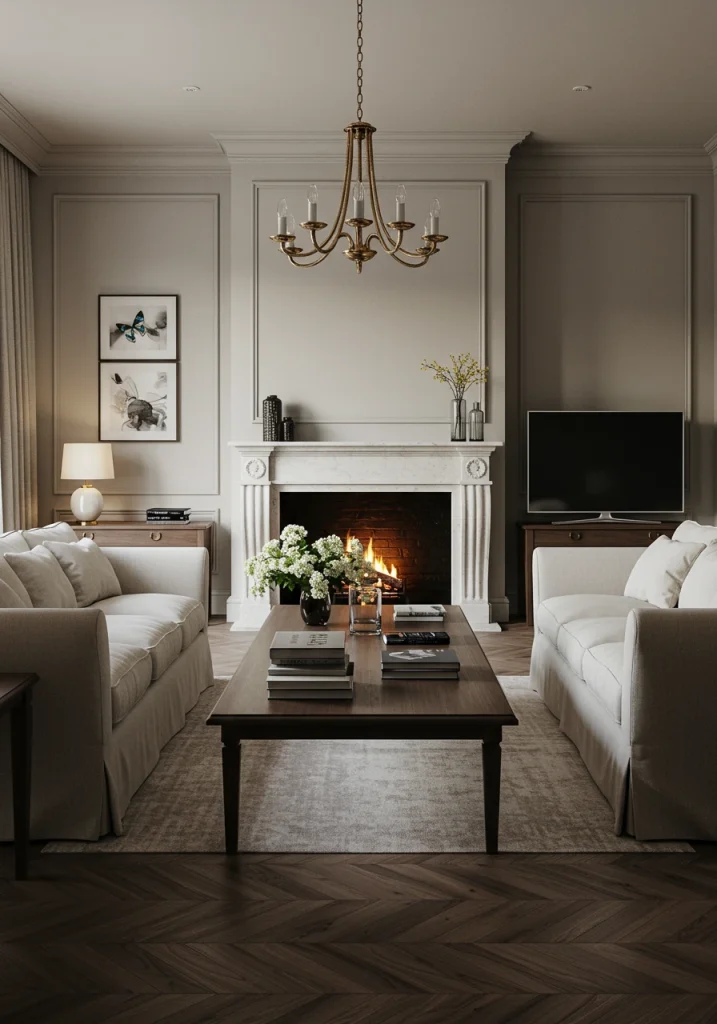
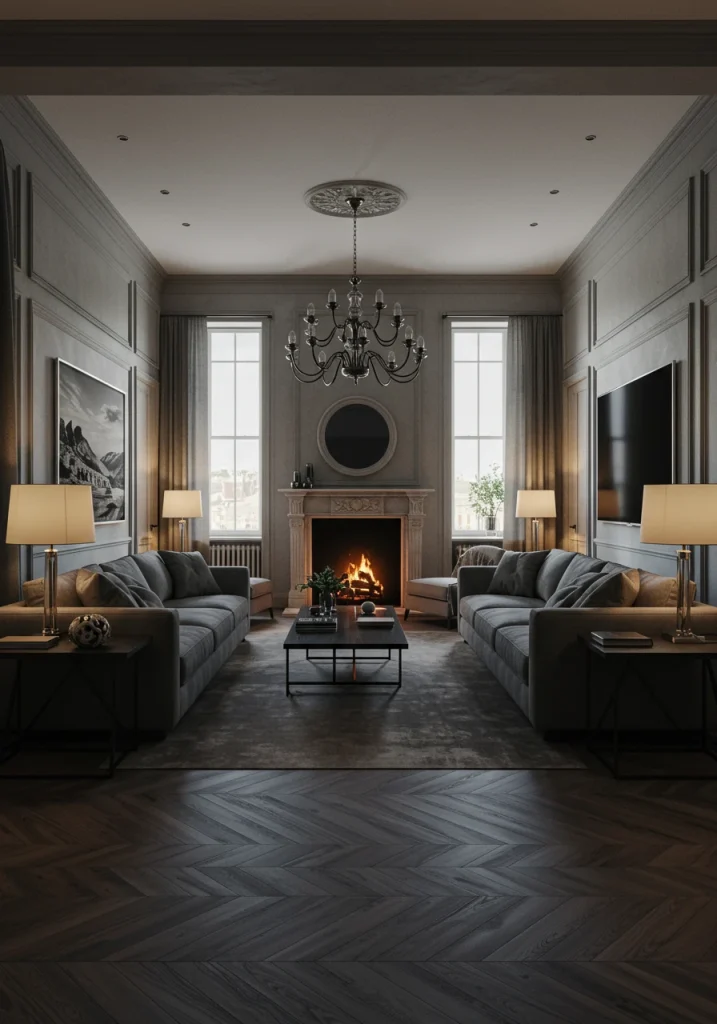
For a formal, classic, and beautifully balanced living room, a symmetrical layout with two matching sofas is a timeless choice. In this arrangement, the fireplace is the primary focal point. The two sofas are placed directly facing each other, perpendicular to the fireplace wall, with a large coffee table in between. This creates a powerful, elegant conversation area.
The television in this layout is typically placed on a wall adjacent to the fireplace, or sometimes on the wall opposite the fireplace, above a low console. While this layout is not primarily designed for TV watching, it is incredibly beautiful and perfect for homeowners who prioritize conversation and entertaining. The perfect symmetry, as often seen in the pages of Architectural Digest, creates a sense of calm and formal order.
- Best For: Formal living rooms, homeowners who prioritize conversation over TV.
- Pros: Creates a very elegant, balanced, and formal look; excellent for entertaining.
- Cons: Not ideal for comfortable TV viewing from both sofas.
For an enhancement, use a large, striking area rug that is big enough for both sofas to have all their legs on it. This will unify the entire seating arrangement and make it feel even more grand and cohesive.
10. The U-Shaped Conversational Layout
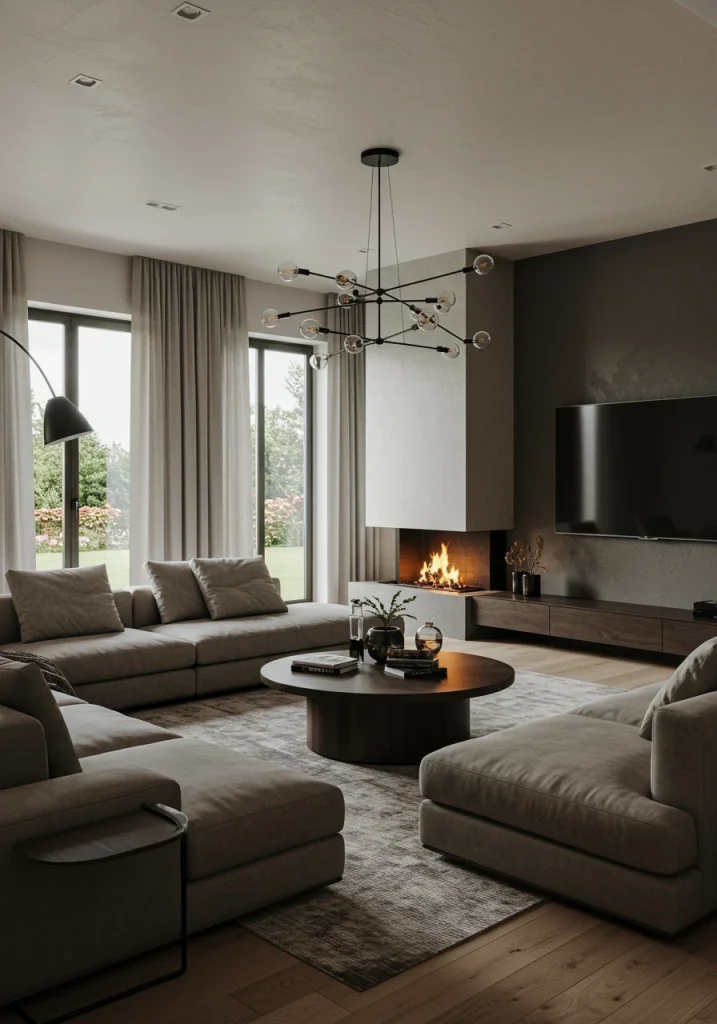
To maximize seating and create a very cozy and inclusive conversation area, a U-shaped layout is an excellent choice. This can be achieved with a large U-shaped sectional sofa, or with a standard sofa facing the fireplace, flanked by two matching armchairs or a loveseat on either side, all facing inwards. This arrangement naturally directs all attention to the center of the room and the fireplace, making it perfect for large families or those who love to entertain.
The TV in this layout is typically placed on a wall adjacent to the main seating, or above the fireplace. The U-shape ensures that most seats have a decent view of both the fire and the screen. I love this layout for creating a cozy, “pit-like” seating group that makes everyone feel included in the conversation.
- Best For: Large families, frequent entertainers, creating a very cozy and defined seating area.
- Pros: Maximizes seating, excellent for conversation, creates a cozy, contained feel.
- Cons: Can feel a bit closed off if not arranged properly, requires a good amount of space.
To enhance this layout, use a large, round coffee table or ottoman in the center of the “U.” The round shape is easy to navigate around from all the different seating angles.
11. The Swivel Chair Solution
In rooms where the fireplace and TV are on opposite walls, or in layouts where the main sofa doesn’t have a great view of both, swivel chairs are a genius solution. By placing one or two stylish swivel chairs in your layout, you introduce an element of flexibility that allows people to easily pivot between focal points. You can have the chairs facing the fireplace as part of a conversation group, and then with a simple turn, they can face the TV for movie night.
This is one of my favorite “problem-solver” pieces of furniture. It eliminates the need to choose one focal point over the other. I recently placed a pair of modern swivel chairs in a client’s living room between their sofa (which faced the TV) and two armchairs (which faced the fireplace). The swivel chairs could participate in either zone, beautifully connecting the two.
- Best For: Rooms with competing focal points on different walls; open-plan spaces.
- Pros: Incredibly flexible, allows for easy transition between focal points, adds a modern touch.
- Cons: The style of swivel chairs can sometimes be limited.
For an enhancement, choose swivel chairs in a contrasting color or a bold pattern. This will make them stand out as a fun, dynamic feature in the room.
12. The Floating Furniture Layout
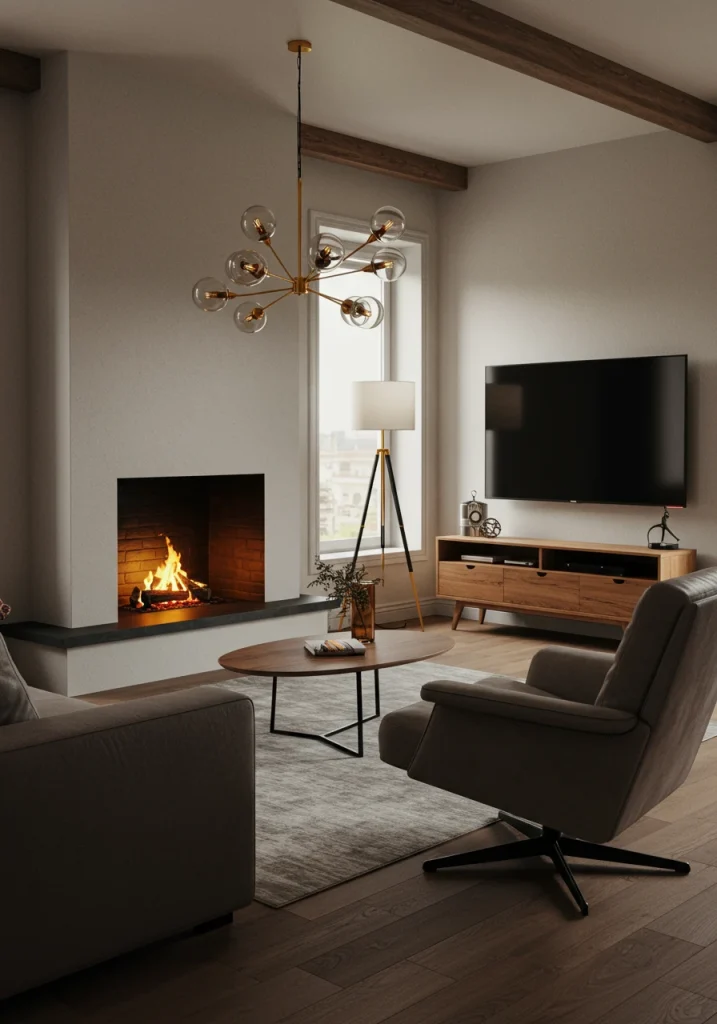
In a large, open-plan living space, it’s crucial to create a defined and cozy seating area that doesn’t feel lost in the room. A “floating” furniture layout, where the sofa and chairs are pulled away from the walls and arranged in the center of the space, is the perfect solution. This layout is typically anchored by a fireplace on one wall, with the main sofa “floating” in the middle of the room, facing it.
The TV can then be placed on a low console behind the sofa, or on an adjacent wall. This creates an intimate conversation zone around the fireplace, while maintaining the open, airy feel of the larger space. The key to making this work, as emphasized by designers at Pottery Barn, is to use a very large area rug that is big enough for all the floating furniture to sit on, which anchors the entire grouping.
- Best For: Large, open-plan living rooms.
- Pros: Defines a cozy zone in a large space, maintains an open feel, great for traffic flow.
- Cons: Requires a large room, the back of the sofa is exposed and needs to be finished/styled.
To enhance this layout, place a slim console table directly against the back of the floating sofa. This creates a beautiful, finished look and provides a surface for lighting, books, and decor, effectively creating a stylish “entry” to the seating area.
13. The Corner Solution: TV in the Corner
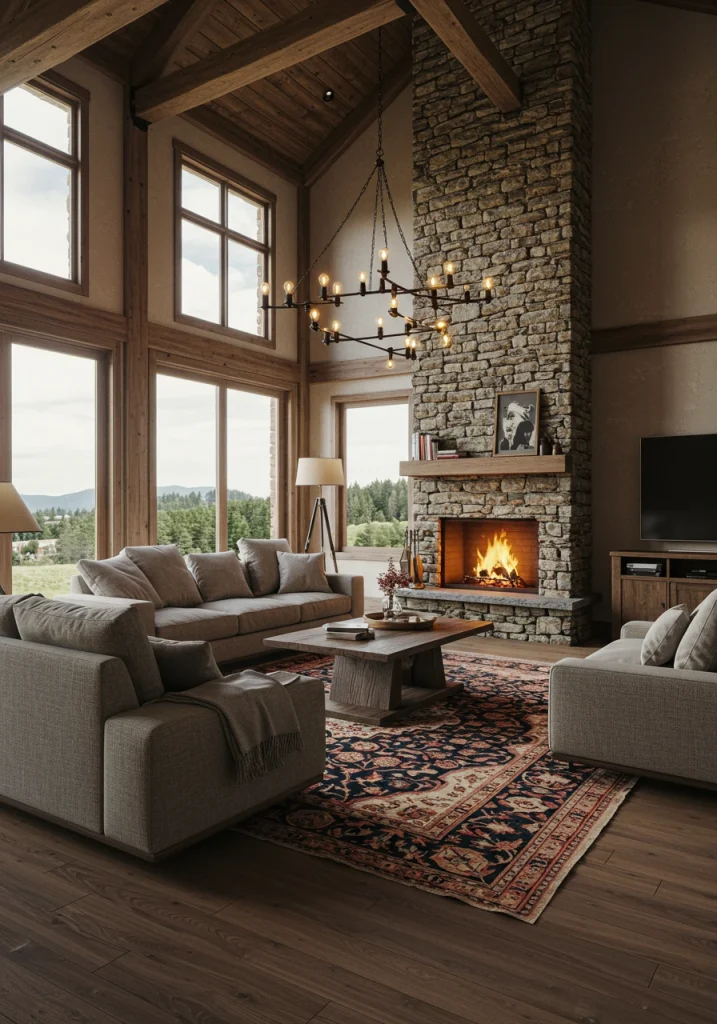
While placing furniture diagonally in a corner is often considered a design “don’t,” placing the TV in a corner can sometimes be the most practical solution, especially in a small or awkwardly shaped room. If your fireplace is on the main wall, tucking the TV into an adjacent corner on a low, angled media console can be an effective way to include it in the layout without having it compete directly with the fireplace.
This allows you to arrange your seating in a gentle arc facing the corner, so that both the fireplace and the TV are within a comfortable viewing range. I have used this solution in small, square living rooms where wall space is very limited. It’s a space-saving compromise that can be quite effective.
- Best For: Small, square, or awkwardly shaped rooms with limited wall space.
- Pros: Saves space, keeps the TV from being a main focal point, can improve viewing angles.
- Cons: Can sometimes feel dated if not done with a modern, low-profile console.
To enhance this layout and make it feel more intentional, use a custom-built corner media unit or a set of floating corner shelves. This will make the TV feel more integrated into the room’s architecture rather than just being an afterthought.
14. The Offset Balance on a Long Wall
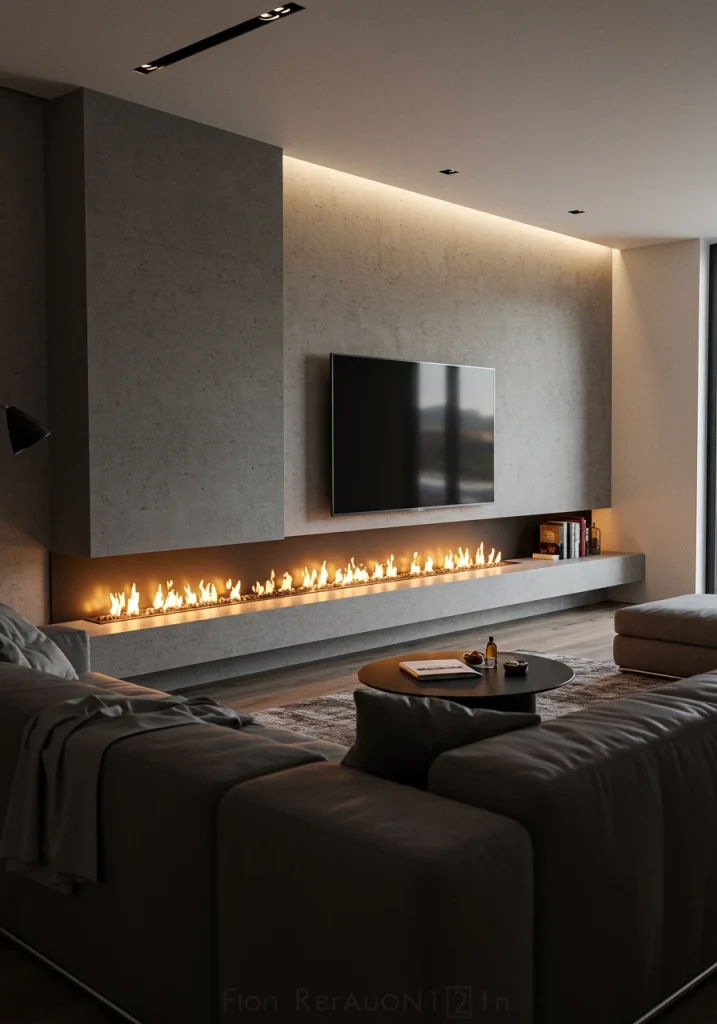
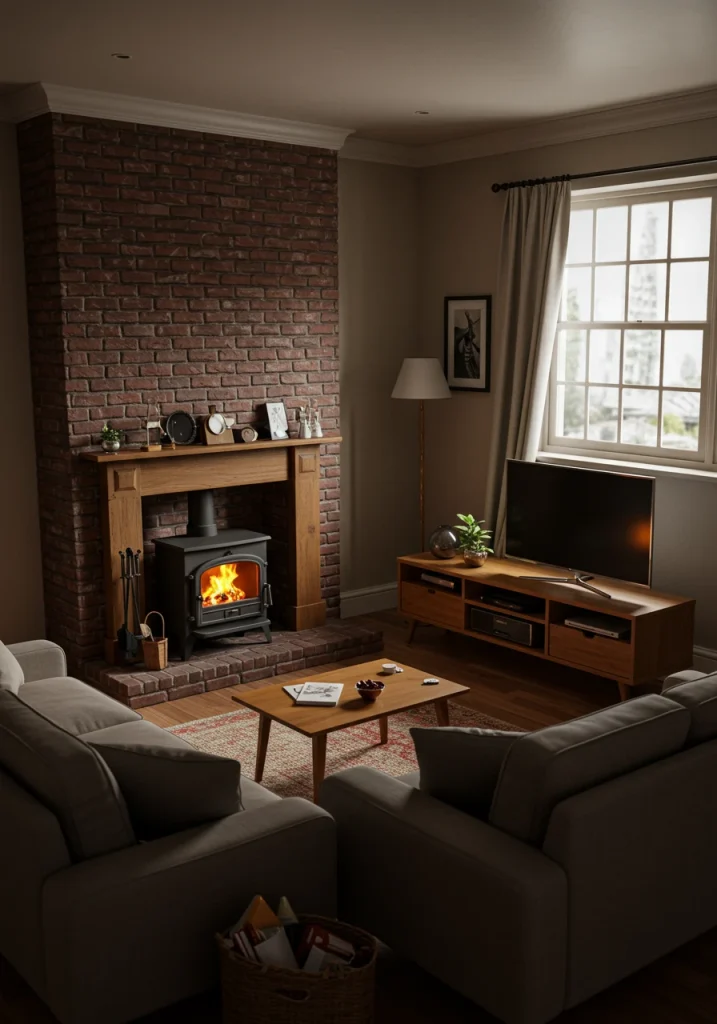
If you have one very long wall that needs to accommodate both the fireplace and the TV, but you don’t want built-ins, you can create a beautiful, asymmetrical balance. In this layout, the fireplace is typically on one end of the long wall, and the TV is on the other end, mounted above a low media console. The key is to visually connect the two and create balance.
You can achieve this by running a long, low hearth or bench that extends from the fireplace all the way under the TV. This creates a strong, horizontal line that unifies the two elements. I designed a stunning modern living room this way, with a long, floating concrete hearth that connected a sleek fireplace with the media zone.
- Best For: Very long living room walls.
- Pros: Creates a modern, asymmetrical look; keeps the TV at a comfortable height.
- Cons: Can feel unbalanced if not visually connected properly.
For enhancement, hang a large piece of vertical art on the wall in the space between the fireplace and the TV. This will help to fill the visual gap and add to the balanced, curated feel of the wall.
15. The Back-to-Back Sofa Layout
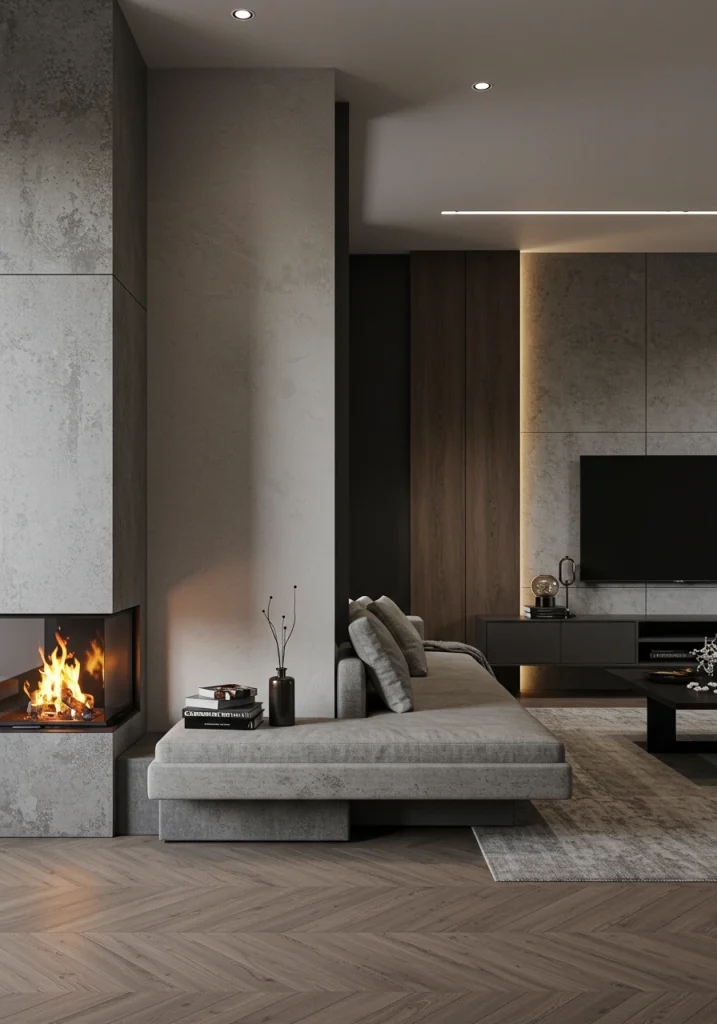
This is a solution for a very large, open-concept great room where you truly want to create two completely separate functional zones. In this bold layout, two identical sofas are placed back-to-back in the middle of the room. One sofa faces the fireplace, creating a formal, conversation-focused living area. The other sofa faces the opposite direction, towards a TV on the far wall, creating a dedicated, casual family or media room.
This is a very high-impact layout that I have used in large, open loft-style homes. It’s the ultimate way to give both the fireplace and the TV their own, equally important, dedicated spaces. The key is to have a room that is large enough to accommodate the two zones without feeling cramped.
- Best For: Very large, long, or open-plan great rooms.
- Pros: Creates two completely separate and highly functional zones.
- Cons: Requires a very large amount of space and two sofas.
To enhance this layout and connect the two zones, place a long, slim console table between the two back-to-back sofas. This creates a beautiful, finished look and provides a perfect surface for a pair of matching lamps, which will provide light to both sides of the room.
Conclusion
Mastering your living room with fireplace and TV layout is about creating a thoughtful balance between comfort, function, and style. As we’ve explored through these 15 ideas, there is no single “correct” answer, but rather a spectrum of clever solutions tailored to your specific room shape, your lifestyle, and your priorities.
Whether you choose to unify your two focal points on a single wall, separate them into distinct zones, or cleverly disguise your technology, the goal is to create a cohesive and inviting space. By considering factors like traffic flow, sightlines, and conversation areas, you can conquer this common design challenge.