Are you looking for stunning landscaping ideas for the front of your house that will dramatically boost its curb appeal? Your front yard is the first impression your home makes to the world. It’s a welcome mat for guests, a preview of your personal style, and a key factor in your home’s overall value.
A well-designed front landscape can frame your house, highlight its best architectural features, and create a warm, inviting pathway to your door. The best part is, you don’t need a massive overhaul to make a huge impact; a series of thoughtful, well-executed ideas can transform a tired, uninspired yard into a stunning showstopper.
This guide will provide you with 15 essential ideas, from creating a grand walkway and layering your garden beds to adding lighting and architectural accents, that will help you create a front yard you can be proud of.
1. Widen Your Walkway for a Grand Entrance
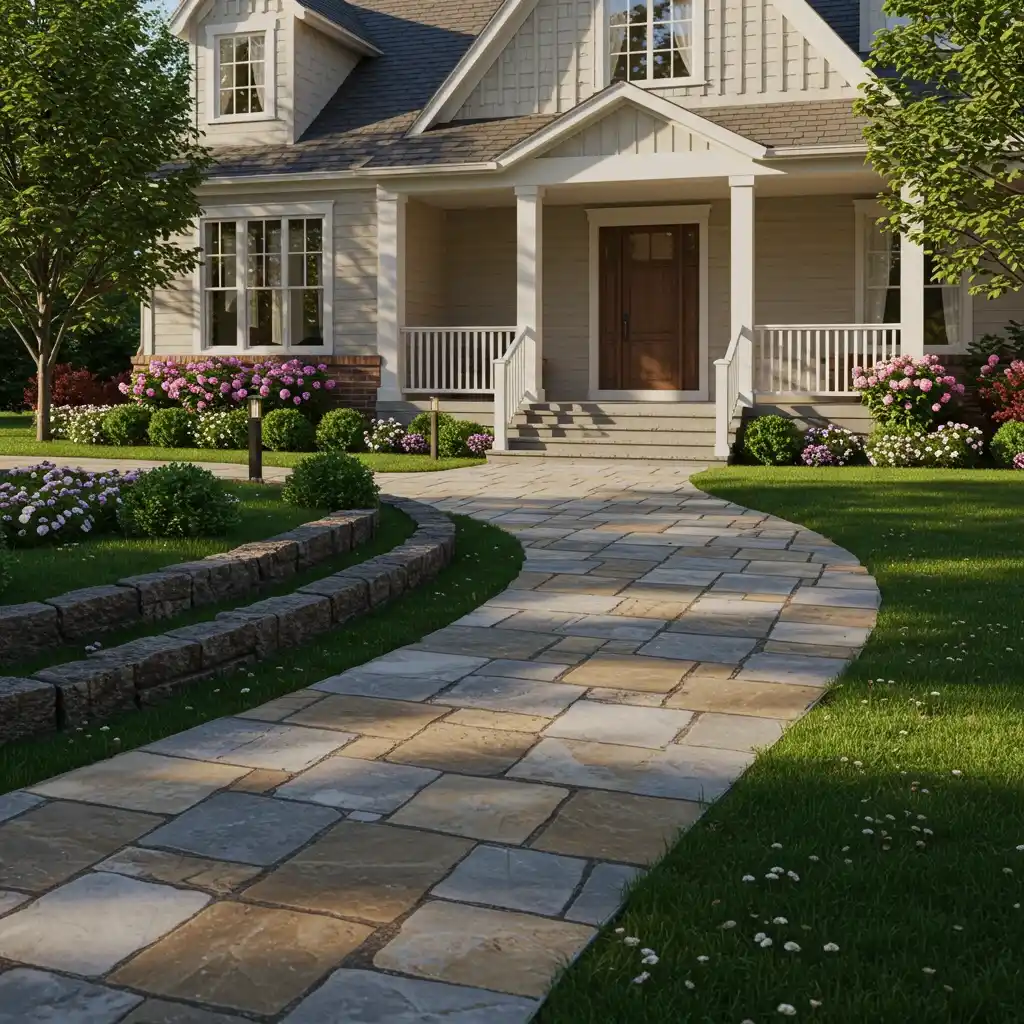
One of the most common and impactful mistakes in front yard design is a narrow, builder-grade walkway. A skinny path from the street or driveway to your front door can feel like an afterthought and make your entire entrance feel cramped and uninvincing. A simple yet dramatically effective way to boost your curb appeal is to widen your main walkway. A more generous path feels more gracious, welcoming, and substantial.
I always advise my clients to aim for a walkway that is at least four to five feet wide. This allows two people to walk comfortably side-by-side, creating a more social and welcoming approach to your home. This principle, often stressed by the experts at This Old House, is about creating a sense of scale and proportion that complements the architecture of your house.
- Materials: Classic choices include irregular flagstone for a natural look, brick for a traditional feel, or large-format concrete pavers for a modern aesthetic.
- Shape: A gently curving path can feel more organic and can make your front yard seem larger, while a clean, straight path is more formal and modern.
- Function: A wide, stable, and well-lit path is both beautiful and a crucial safety feature.
For an enhancement, line the edges of your new, wider walkway with low-growing, neatly clipped evergreen shrubs like boxwood or a border of a hardy perennial like lavender. This will define the edges of the path and make it feel even more established and intentional.
2. Frame the Entry with Symmetrical Planters
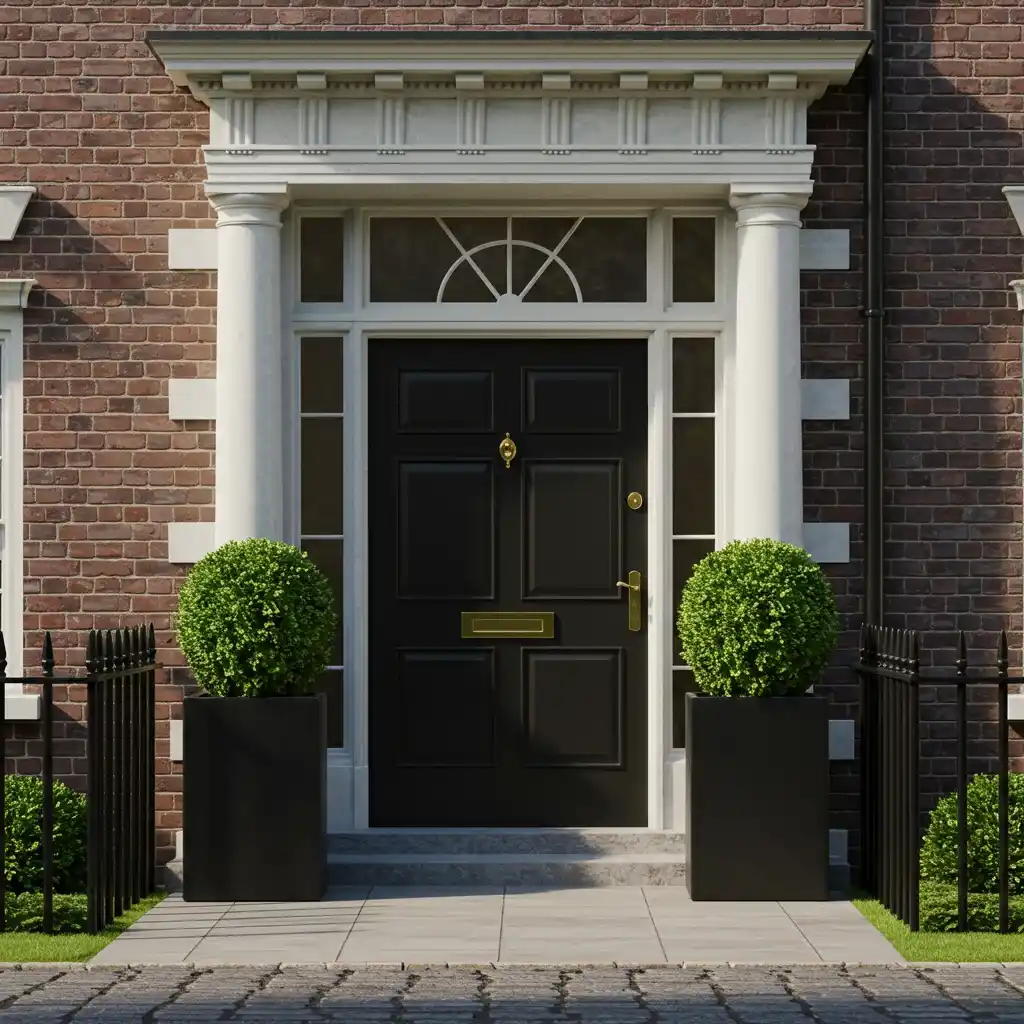
For an instant boost of classic, formal curb appeal, there is nothing more effective than a symmetrical pair of large, beautiful planters flanking your front door. This simple act of framing your entrance creates a powerful sense of balance, order, and welcome. It draws the eye directly to your front door and signals that this is a home where details are cared for.
This is my go-to trick for adding instant polish to any facade. The key is scale and repetition. Choose two identical planters that are large and substantial enough to feel proportionate to your entryway. A pair of small, insignificant pots can look cluttered; two large, dramatic planters will always look intentional and high-end.
- Planter Style: Choose a style that matches your home’s architecture—classic urns for a traditional home, simple cubes for a modern one, or terracotta for a rustic look.
- Planting: For a timeless, low-maintenance look, use a single, perfectly trimmed, evergreen topiary (like a boxwood sphere or a cone-shaped arborvitae) in each pot. For seasonal color, use a “Thriller, Filler, Spiller” combination.
- Symmetry is Key: The planters, and the plantings within them, should be identical to create that classic, balanced look.
For an enhancement, place a small, low-voltage uplight in each planter, aimed up into the foliage. At night, the illuminated plants will create a beautiful, dramatic, and welcoming glow at your front door.
3. Layer Your Foundation Plantings
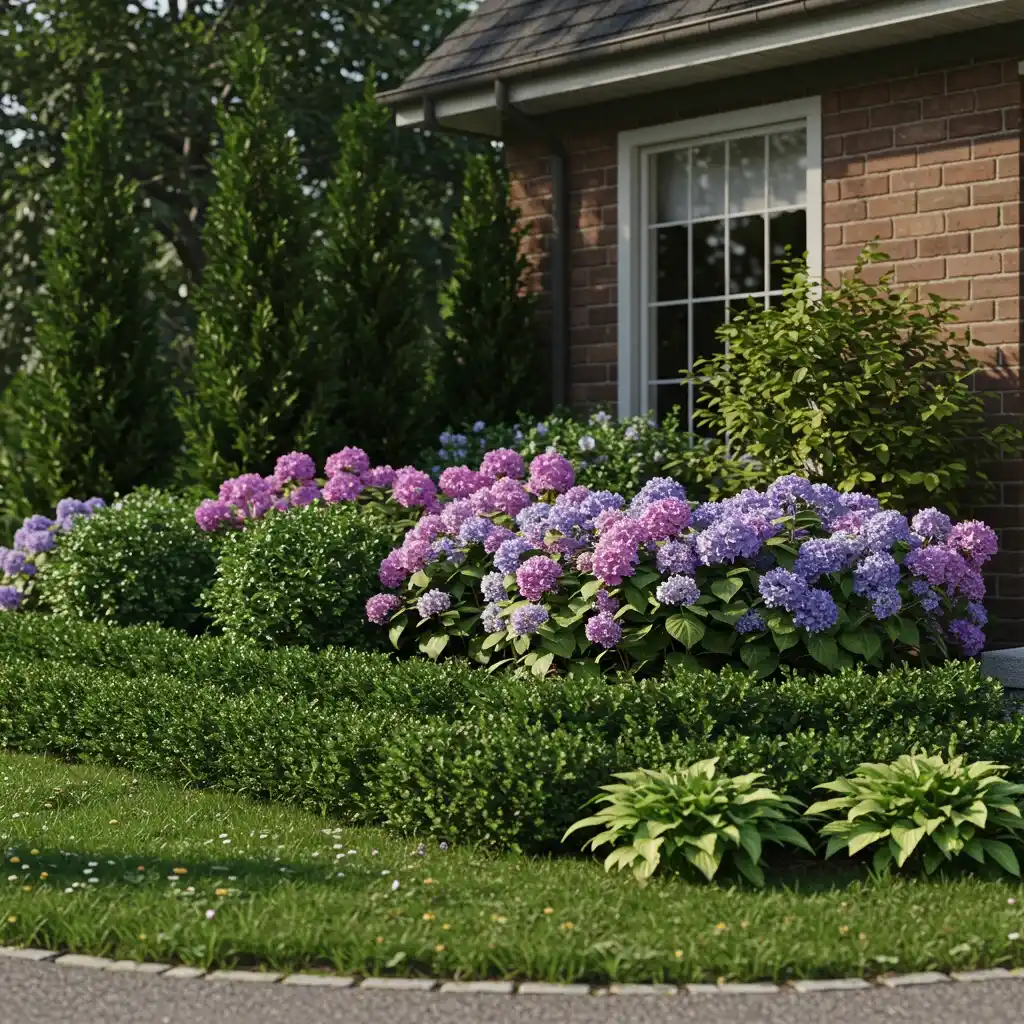
Foundation plantings are the garden beds that are located directly against the front of your house. A common mistake is to plant a single, straight, hedge-like row of shrubs. A much more beautiful and sophisticated approach is to create deep, layered beds with a mix of plants of varying heights, textures, and forms. This creates a rich, full, and visually interesting look that softens the hard lines of your home’s foundation.
I always design foundation beds to be at least four to five feet deep to allow for proper layering. The principle is simple:
- Back Layer (against the house): Place your tallest plants here. These could be upright evergreen shrubs, a climbing vine on a trellis, or tall ornamental grasses.
- Middle Layer: In front of the tall plants, use your mid-sized, mounding shrubs and perennials.
- Front Layer (at the edge): At the very front of the bed, use your lowest-growing plants, like a flowering groundcover or a neat, border plant.
For an enhancement, make sure to include a mix of evergreen and deciduous plants in your foundation beds. The evergreens will provide a beautiful, green structure all year round, while the deciduous plants and perennials will provide seasonal color and change.
4. Create a Curved, Sweeping Garden Bed
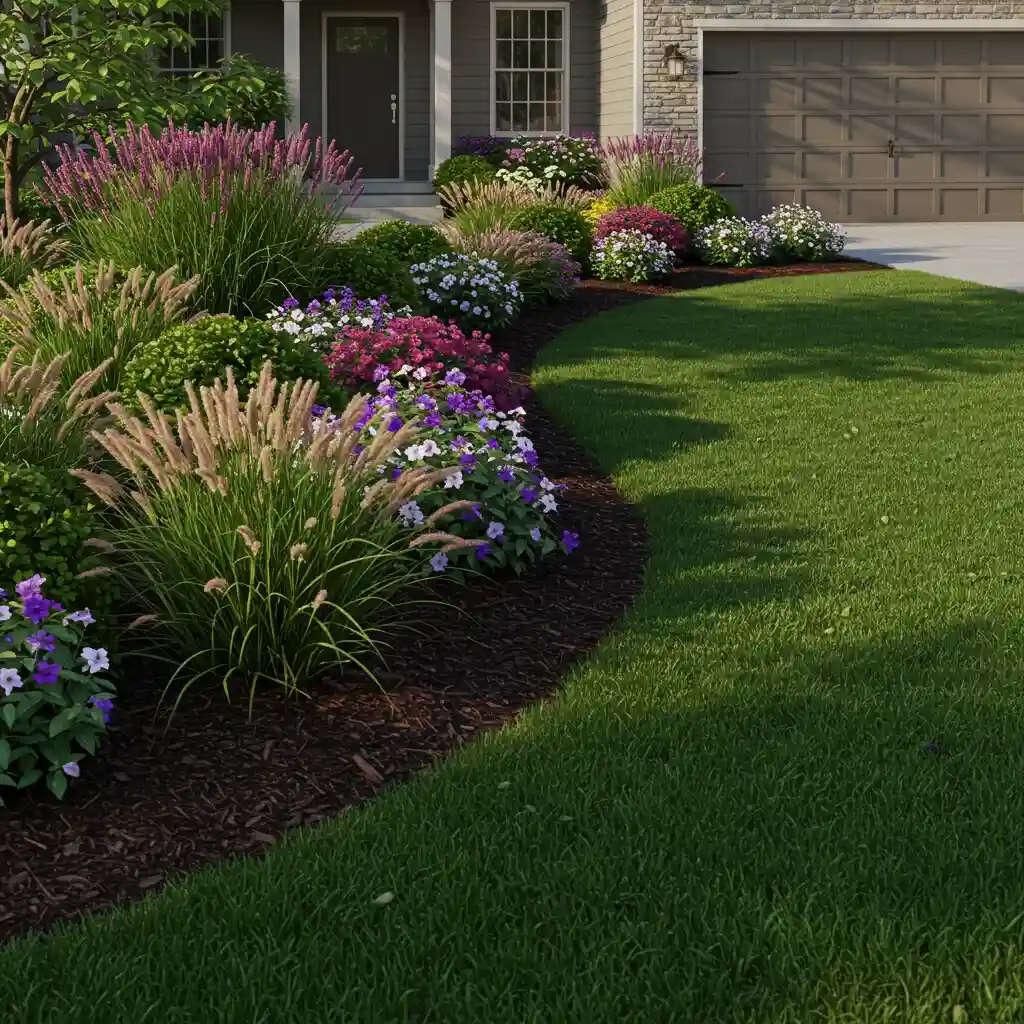
If your front yard is a simple, rectangular box, one of the easiest ways to add movement and grace is to cut a new, large, sweeping garden bed into the lawn. A deep bed with a long, graceful curve is much more dynamic and natural-looking than a series of small, rigid, rectangular beds. The curved line can help to soften the hard, straight lines of your driveway and the architecture of your house.
This is a fantastic way to shrink your lawn (and your mowing time) while adding a huge amount of space for beautiful, low-maintenance plantings. As a designer, I often use a simple garden hose to lay out the perfect, gentle curve on the ground before any digging begins.
- Design: Use a garden hose to create a long, sweeping curve, not a series of tight, wavy ones.
- Edging: Create a clean, crisp edge for your new bed using a spade or by installing a permanent landscape edging.
- Planting: Fill the new, large bed with a layered mix of shrubs, perennials, and grasses for a full, lush look.
For a cohesive enhancement, repeat the same curve on the other side of your yard, perhaps with a curved walkway or another, similarly shaped garden bed. This repetition will make your entire front yard design feel balanced and harmonious.
5. Add Classic, Overflowing Window Boxes
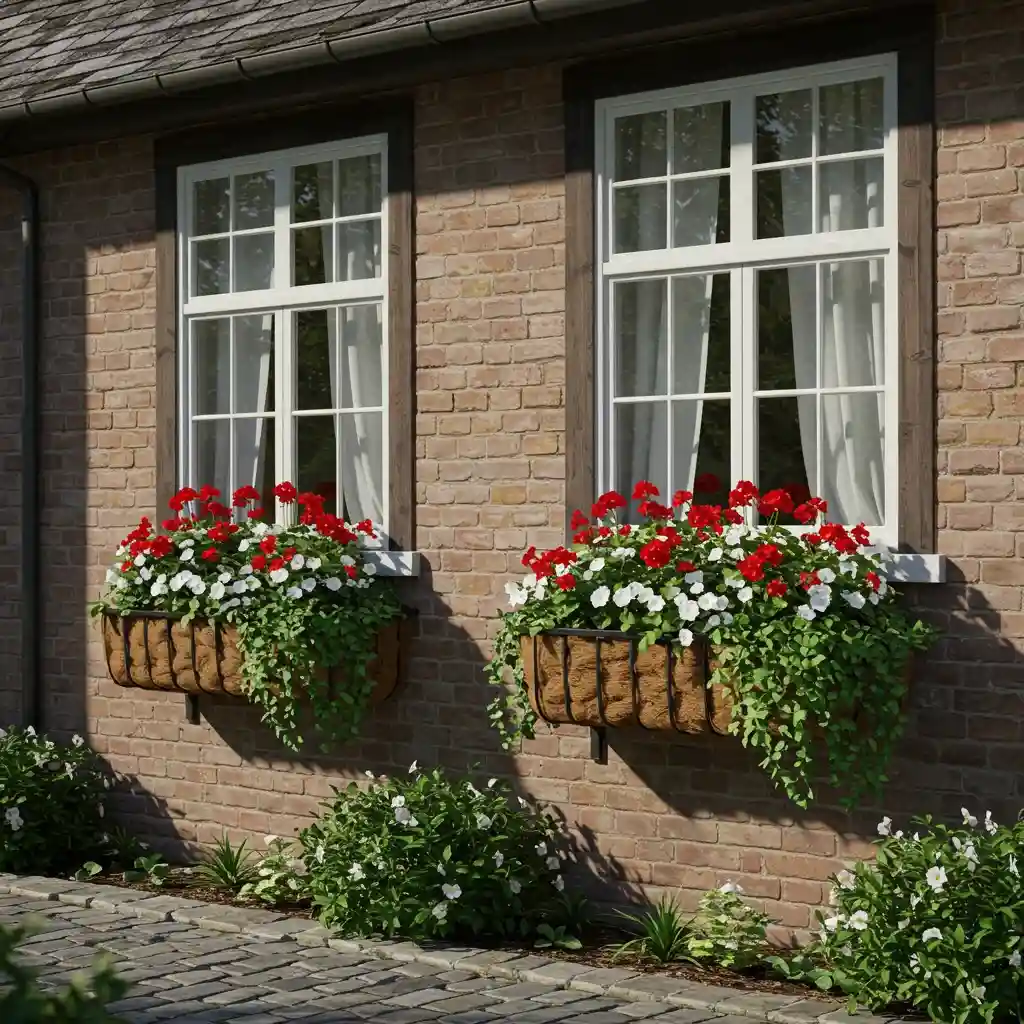
Window boxes are a quintessentially charming way to add an instant, powerful boost of color and character to the front of your house. They act like beautiful, living accessories that can be changed with the seasons. A well-planted window box can soften the architecture, tie the house to the garden, and provide a cheerful, eye-level display of flowers and foliage.
I love window boxes for the incredible curb appeal “bang for your buck” they provide. For a classic look, install matching window boxes under all the front-facing windows on your first floor. The key to a stunning window box is a very full, overflowing planting.
- Planting Recipe (Thriller, Filler, Spiller): Use an upright plant in the center (the thriller), mounding flowers to fill in the middle (the filler), and a lush, trailing plant to cascade over the front edge (the spiller).
- Material: Classic wooden boxes can be painted to match your trim. Self-watering, composite boxes are a great, low-maintenance option.
- Watering: Be aware that window boxes dry out very quickly and will need frequent watering, especially in sunny, hot weather.
For an enhancement that provides year-round interest, include a small, dwarf evergreen shrub in the center of your window box arrangement. It will provide a beautiful, green structure in the winter after the annual flowers have faded.
6. Plant for Four-Season Interest
A truly well-designed front yard looks beautiful not just in the summer, but all year round. The key to achieving this is to plant for four-season interest. This means choosing a mix of plants that will provide color, texture, and structure in every season—spring, summer, fall, and winter. A garden that goes completely dormant and bare in the winter can make a house look sad and unwelcoming.
This is a core principle of good landscape design. I always create a plant list for my clients that includes something of interest for every season.
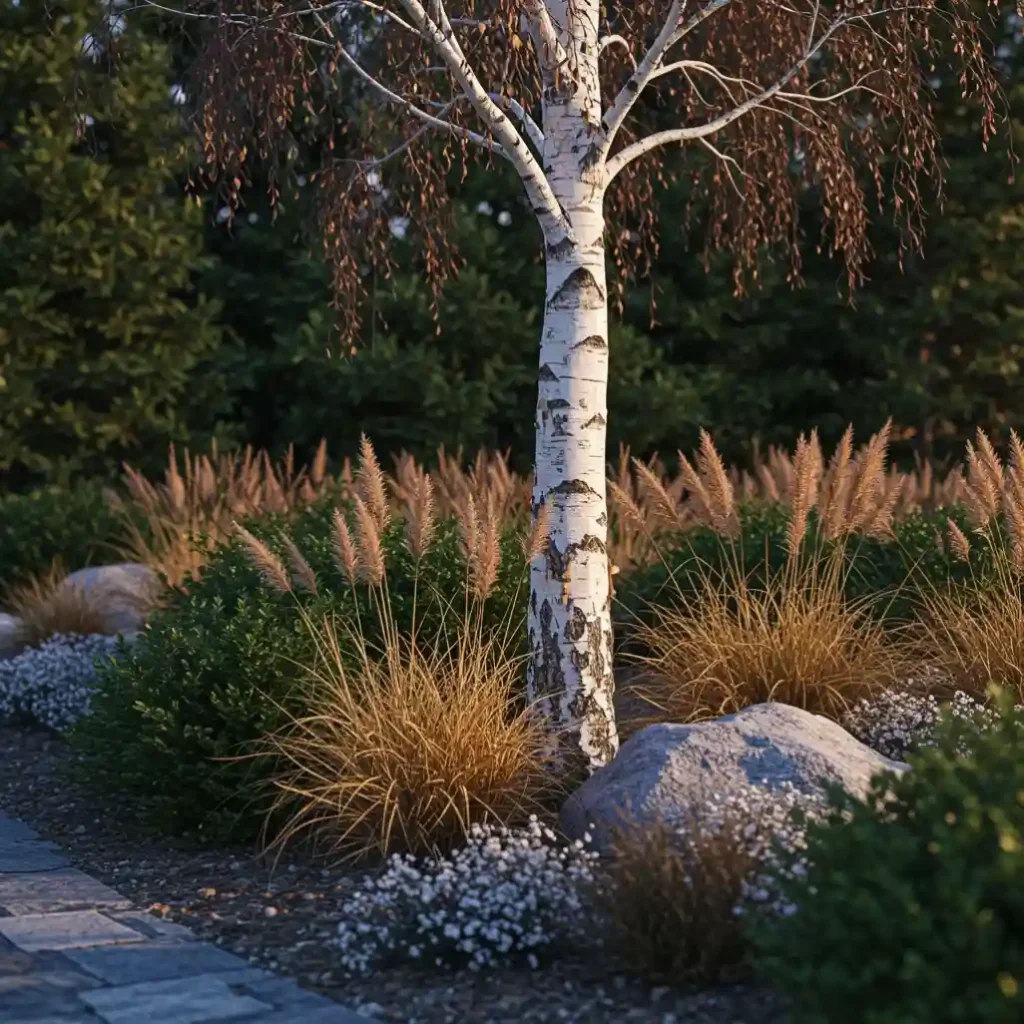
- Winter: Evergreen shrubs provide a green backbone. Trees with interesting bark (like a river birch) or a beautiful branching structure are also key.
- Spring: Early-flowering bulbs (like daffodils and tulips) and flowering shrubs (like forsythia or azaleas).
- Summer: A profusion of long-blooming perennials and annuals.
- Fall: Shrubs with beautiful fall foliage color (like a burning bush or a viburnum), and ornamental grasses with their beautiful, feathery seed heads.
For an enhancement, choose a shrub or a tree that has multiple seasons of interest. For example, a dogwood tree has beautiful spring flowers, lush summer foliage, great fall color, and a beautiful branching structure for winter.
7. Use a Statement Tree as a Focal Point
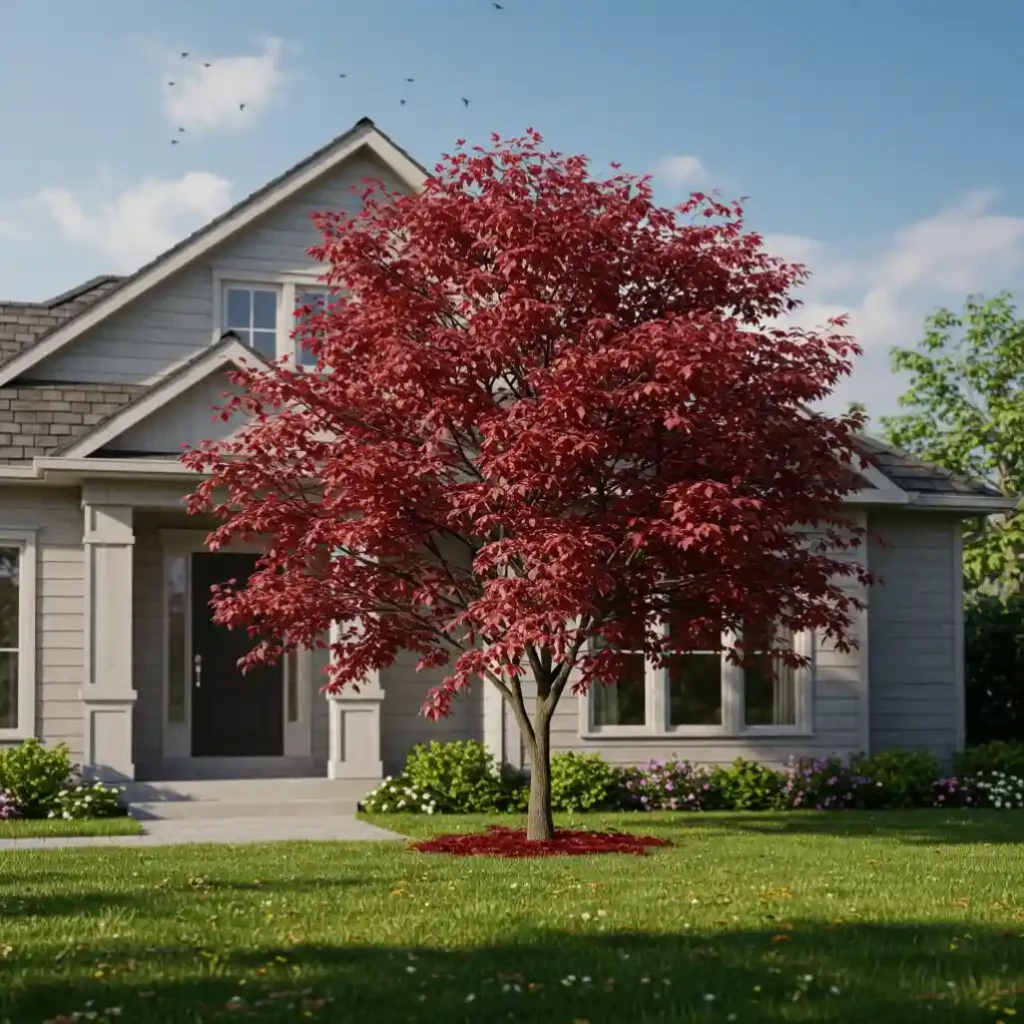
Every great front yard needs a focal point, and a single, beautiful, well-placed tree is one of the best you can choose. A statement tree, often called a “specimen tree,” can anchor your entire landscape design, provide a sense of scale and maturity, and offer beautiful, dappled shade. The key is to choose the right tree for the right spot.
I advise my clients to carefully consider the tree’s mature size to ensure it won’t overwhelm the house in the future. A small, ornamental tree with a beautiful shape, interesting flowers, or great fall color is often a better choice for a front yard than a massive shade tree.
- Placement: A common and effective placement is in the front lawn, off-center from the front door, to create a balanced, asymmetrical composition.
- Great Ornamental Choices: Japanese Maple, Dogwood, Redbud, Flowering Crabapple, or a weeping variety of cherry or birch.
- Benefits: Adds height, shade, seasonal color, and a powerful focal point.
For an enhancement, create a large, circular garden bed around the base of your statement tree. You can plant the bed with a shade-loving groundcover or a ring of spring-flowering bulbs. This will protect the tree’s trunk from mower damage and will create a beautiful, finished look.
8. Add Low-Voltage Landscape Lighting
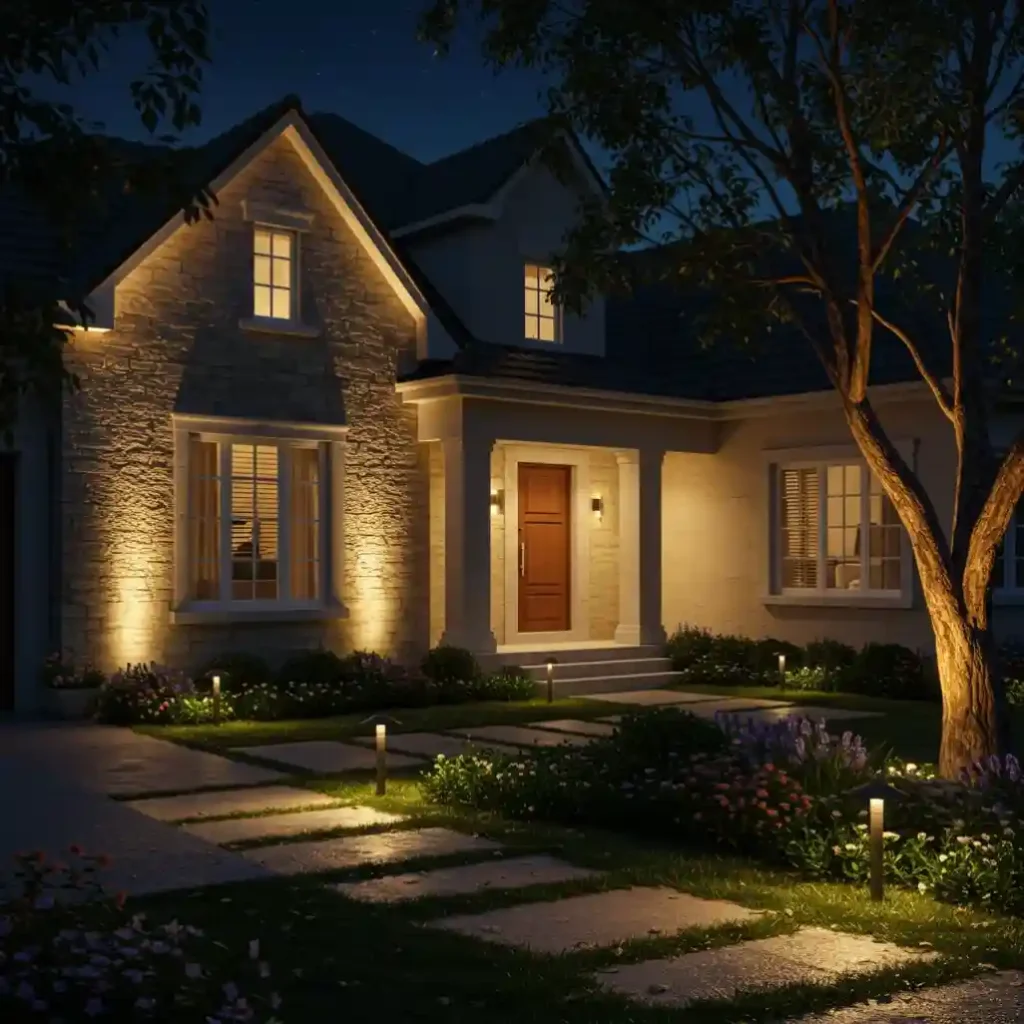
Great curb appeal doesn’t stop when the sun goes down. A well-designed, low-voltage landscape lighting scheme can make your home look just as beautiful—or even more dramatic—at night. Strategic lighting can enhance your home’s architecture, highlight your most beautiful plants, and provide a safe, welcoming path to your front door.
A simple, beginner-friendly, low-voltage lighting kit is a fantastic DIY project that is safe and easy to install. I always suggest a layered lighting approach.
- Uplighting: Place one or two spotlights at the base of your home’s facade or aimed up into the canopy of a beautiful tree to create a dramatic effect.
- Path Lighting: Use a series of low, downward-facing lights along your main walkway to provide safe and gentle illumination.
- Accent Lighting: Use a small spotlight to highlight a specific feature, like your house numbers or a wreath on your front door.
For an enhancement, use smart, low-voltage lighting that you can control from your phone. This allows you to set schedules, dim the lights, and even change their color for special occasions, all from the palm of your hand.
9. Paint Your Front Door a Bold Color
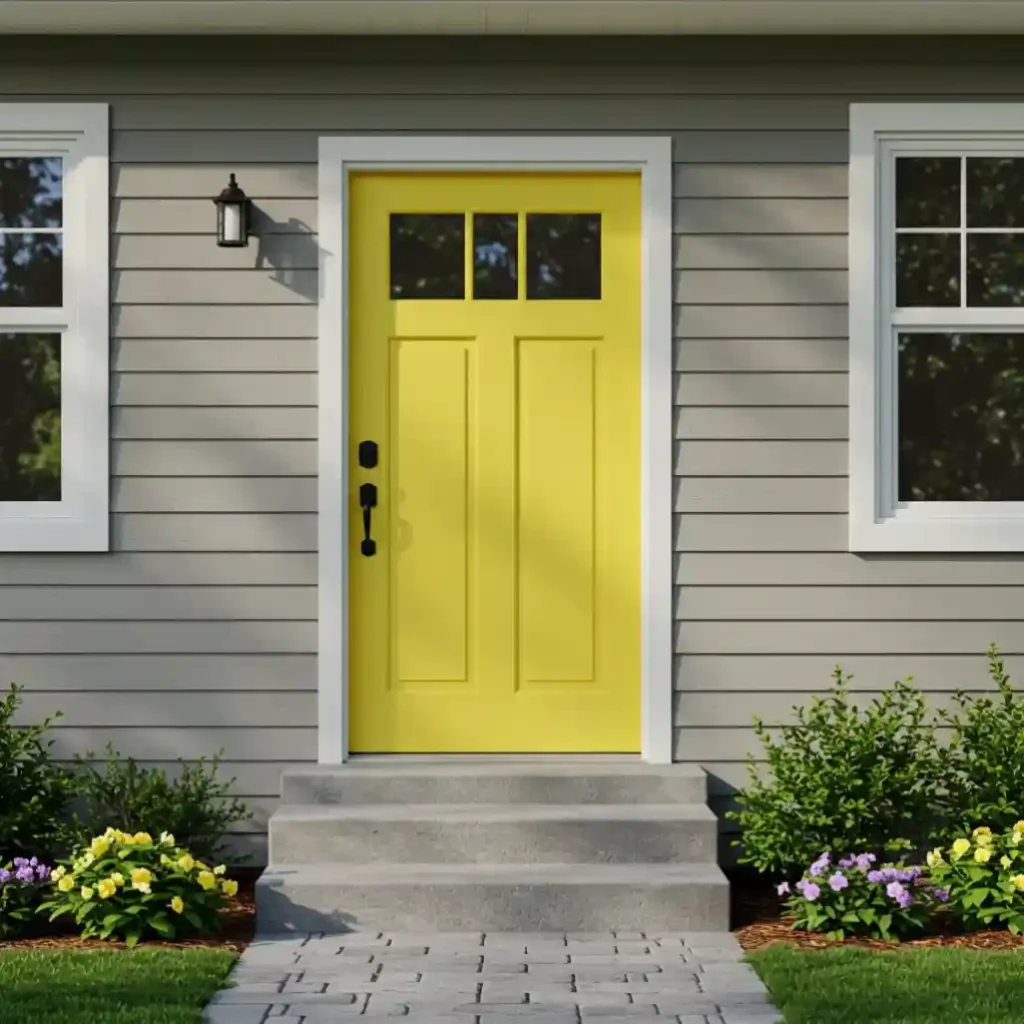
One of the quickest, cheapest, and most impactful ways to instantly boost your curb appeal and add a huge amount of personality to your home is to paint your front door a bold, beautiful color. The front door is the natural focal point of your home’s facade, and painting it a color that contrasts with the rest of your house will draw the eye and create a cheerful, welcoming statement.
This is a perfect weekend DIY project. I always encourage my clients to be brave with their color choice. A glossy, black front door is a timeless classic. A vibrant, sunny yellow can be incredibly cheerful and friendly. A deep, rich red is traditional and energetic, while a sophisticated navy or a deep green can be very elegant.
- Color is Key: Choose a color that you love and that complements the other colors of your home’s exterior.
- Prep Work: Proper cleaning, sanding, and priming is the secret to a professional-looking, long-lasting finish.
- Finish: A semi-gloss or a high-gloss finish is best for a front door, as it is durable and easy to clean.
For a cohesive enhancement, repeat your bold front door color in a few, small accents in your landscape. For example, if you have a bright yellow front door, you could have a couple of pots of yellow flowers in your planters or a single, yellow pillow on your porch bench.
10. Upgrade Your House Numbers
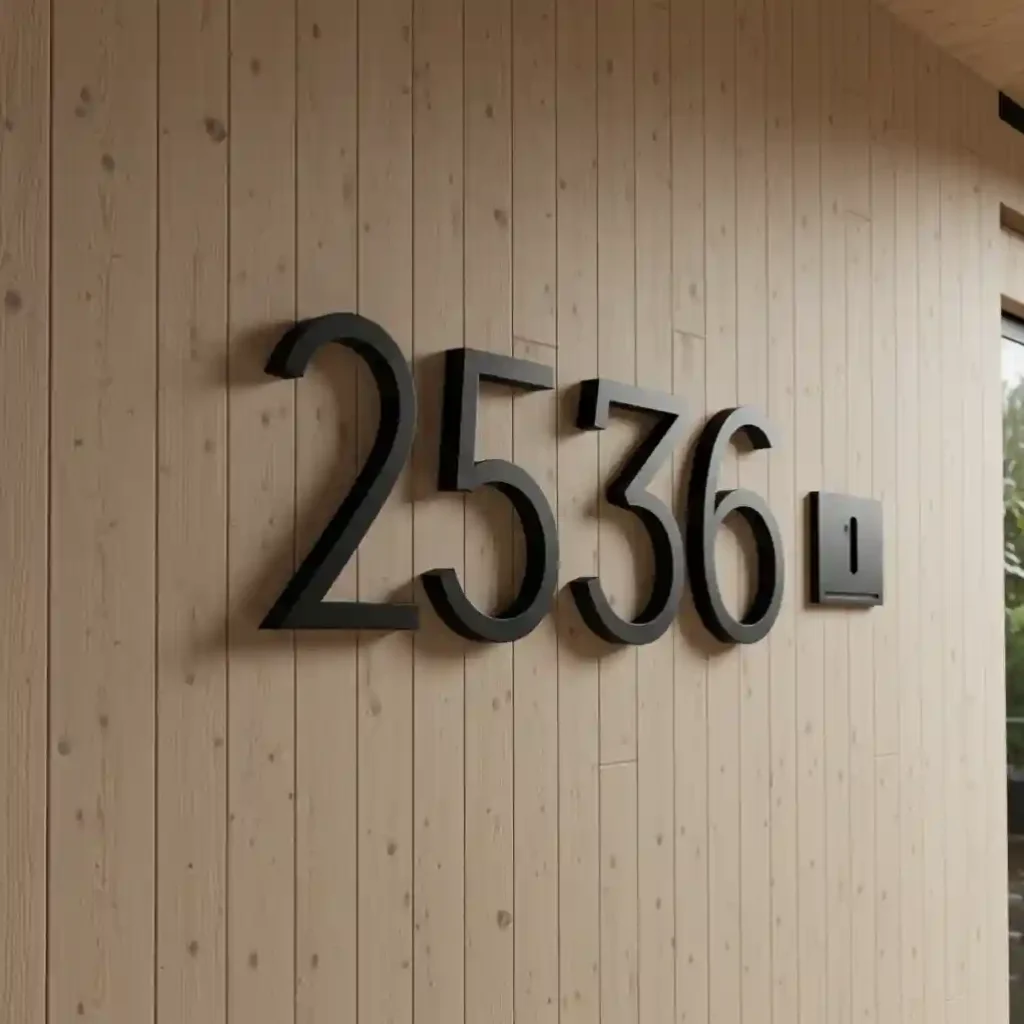
This is a small, often overlooked detail that can make a huge difference in the perceived style and quality of your home’s exterior. Swapping out old, faded, or builder-grade house numbers for a new, stylish, and modern set is an easy, 15-minute upgrade that can instantly make your entrance feel more custom and sophisticated.
There are many beautiful, modern options available online. Look for numbers that are large enough to be easily read from the street and in a font and finish that complements your home’s architectural style. I love the look of large, three-dimensional, “floating” numbers that are mounted with spacers to stand off the wall slightly.
- Style: Choose a font that matches your home’s style (e.g., a clean, sans-serif font for a modern home, a more traditional font for a classic home).
- Material and Finish: Popular choices include brushed nickel, matte black, or a warm, aged brass.
- Visibility: Ensure the color of the numbers contrasts well with the color of your house for easy readability.
For an enhancement, add a dedicated, small, downward-facing light fixture directly above your new house numbers. This is a high-end, practical detail that ensures your address is beautifully illuminated and visible at night.
11. Create a Low Stone or Brick Border Wall
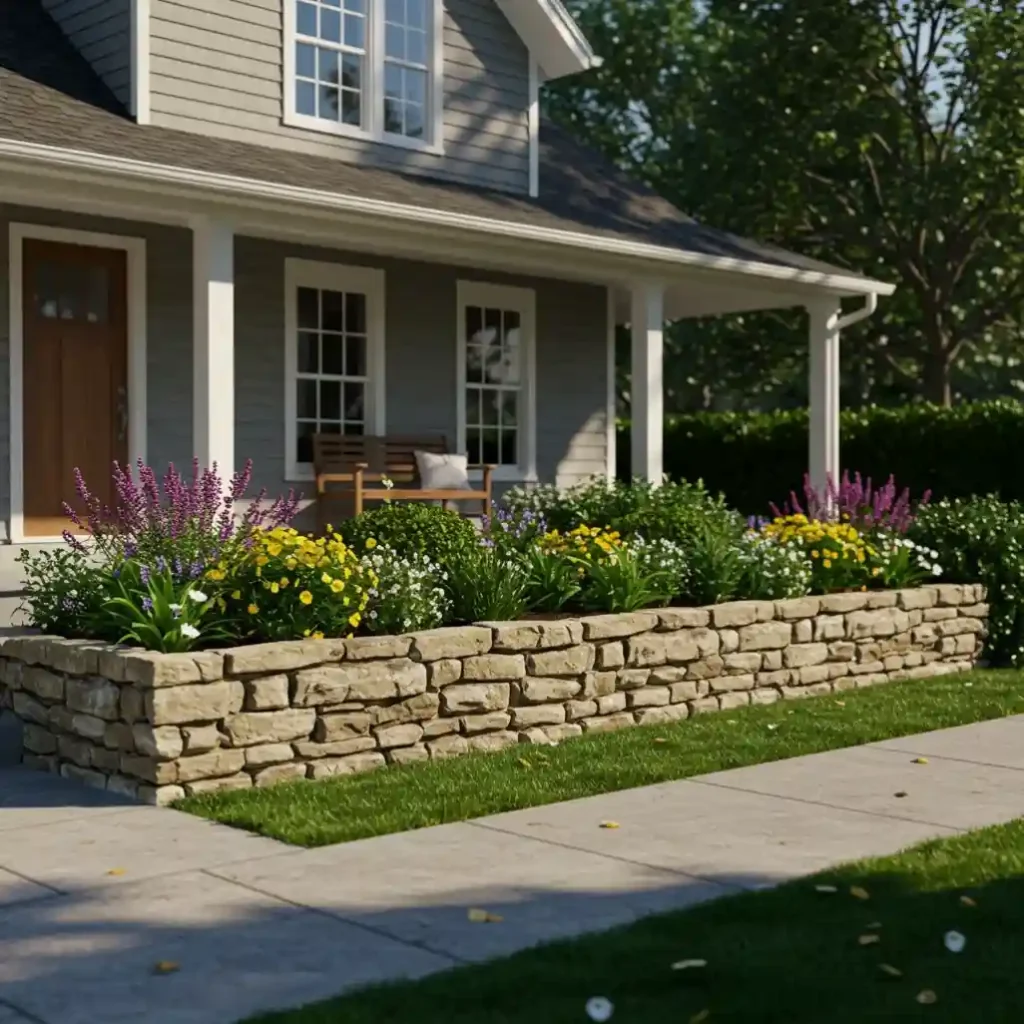
To create a strong sense of definition and a classic, established look for your front yard, a low border wall is a fantastic feature. A low wall, typically about 18-24 inches high, running along the front of your property or defining your main garden beds, can add a huge amount of architectural character and a timeless, stately feel.
This is a more significant investment, but it is one that adds permanent, lasting value and structure to your landscape. A dry-stacked, natural stone wall has a beautiful, rustic, and organic feel. A mortared brick wall is a timeless, classic choice that is perfect for a traditional home. As a designer, I find that a low wall creates a beautiful, gentle separation between the public space of the street and the private space of your yard.
- Material: Natural stacked stone for a rustic look, or brick for a classic, traditional look.
- Height: Keep it low (under 30 inches) to feel like a welcoming border, not a defensive barrier.
- Function: Defines your property line and your garden beds, and can help to retain soil on a gentle slope.
For an enhancement, install low-voltage hardscape lights directly into your wall. These lights are designed to be integrated into the wall structure and will cast a beautiful, soft, downward glow onto your walkway or garden bed at night.
12. Hide Utilitarian Items with a Stylish Screen
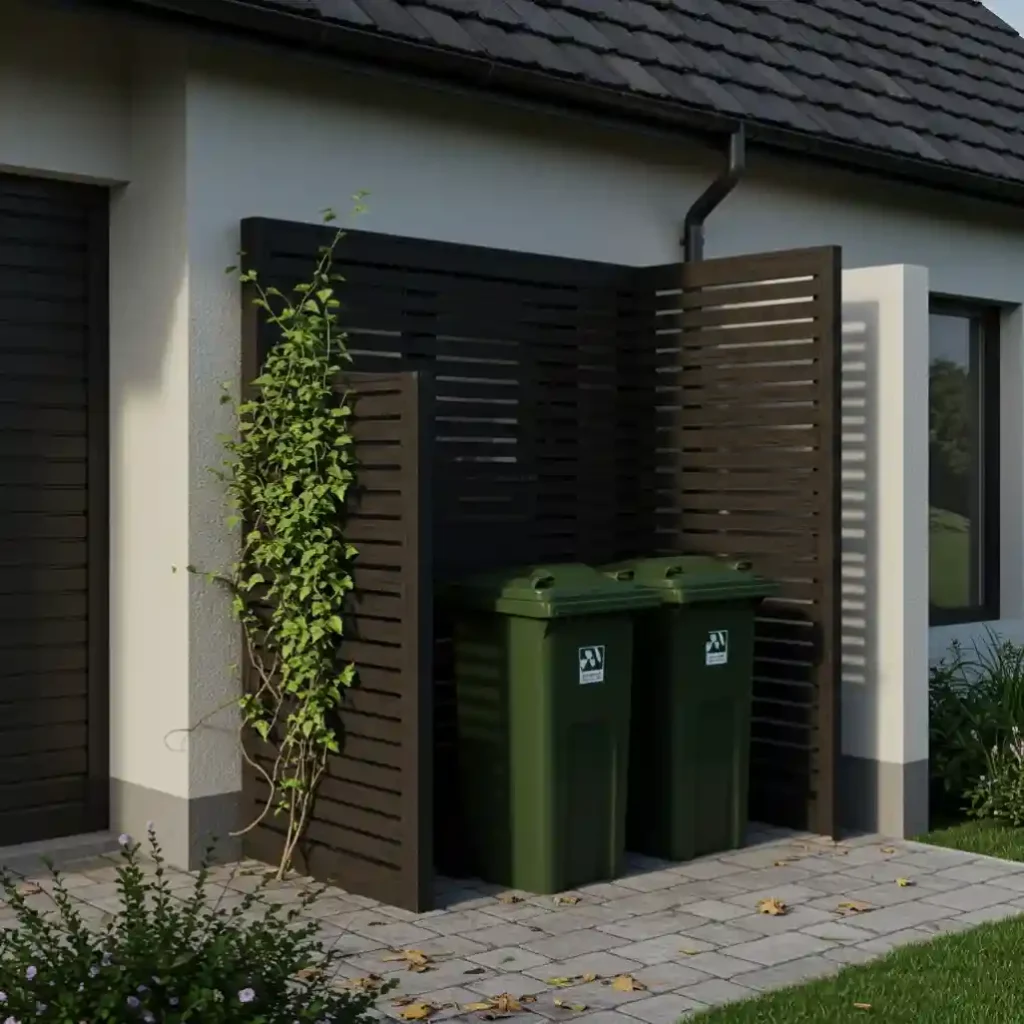
Every front yard has a few necessary but unattractive elements, like trash cans, recycling bins, and air conditioning units. Leaving these utilitarian items exposed can seriously detract from your home’s curb appeal. A simple and stylish solution is to hide them behind a small, decorative screen.
This is an easy DIY project that can make a huge difference. You can build a simple, L-shaped screen out of horizontal wood slats to create a small, private enclosure for your bins. A simple, three-panel lattice screen can be placed in front of an AC unit. The goal is to create a simple barrier that is just tall enough to hide the object from view from the street.
- DIY-Friendly: A simple screen can be built in an afternoon with basic carpentry skills.
- Materials: Wood slats, lattice panels, or even a row of tall, evergreen shrubs in planters.
- Function: Hides unattractive but necessary household items from view.
For an enhancement that is both beautiful and functional, build your screen in the form of a small, decorative arbor or trellis and plant a beautiful, flowering climbing vine on it. This will turn your functional screen into a beautiful, living garden feature.
13. Use Mulch to Create a Polished Look
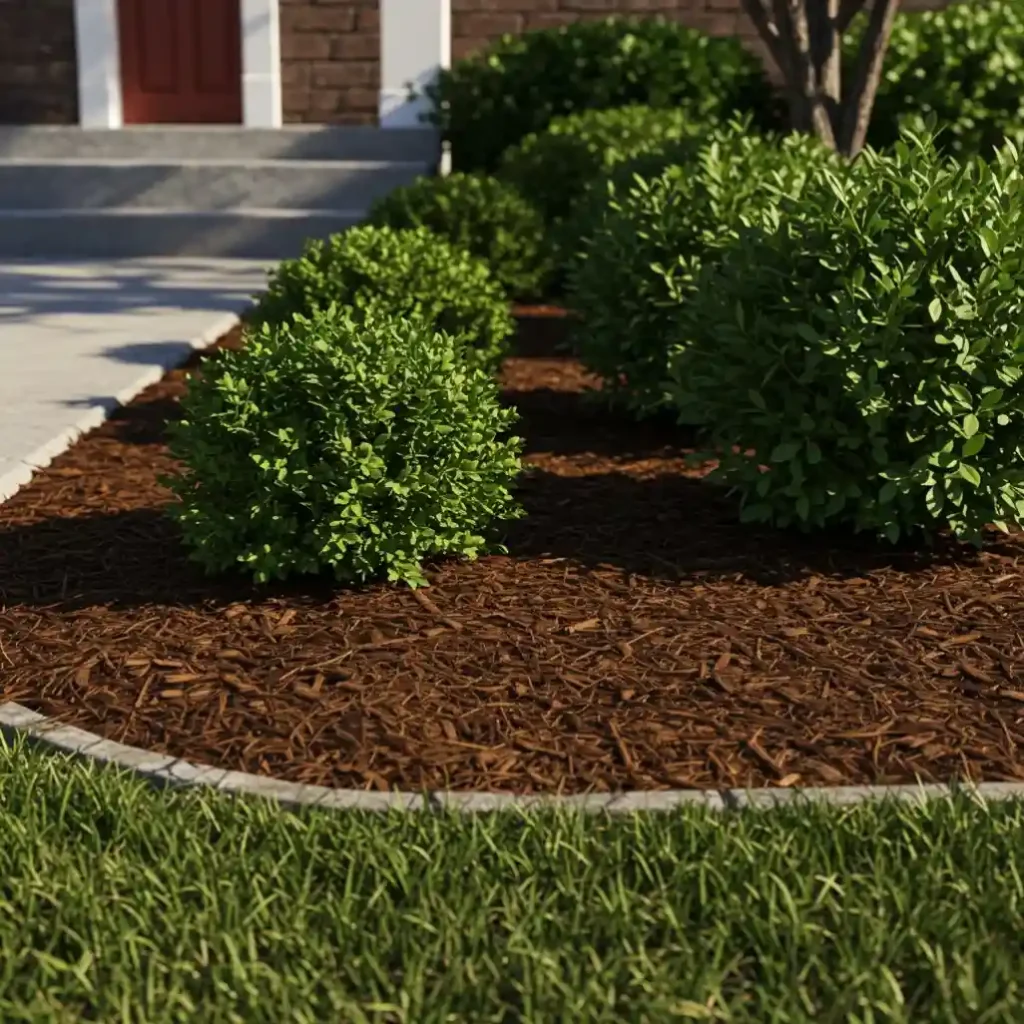
This is one of the simplest, cheapest, and most effective ways to instantly improve the curb appeal of your front yard. Applying a fresh, thick, uniform layer of mulch to all your garden beds is like giving your landscape a fresh coat of paint. It instantly makes everything look neater, more polished, and more professional.
Mulch has many practical benefits as well. As I always tell my clients, it’s a hardworking material that suppresses weeds, helps the soil retain moisture, and enriches the soil as it breaks down. Aesthetically, the dark, rich color of a good mulch provides a beautiful, cohesive backdrop that makes the green of your plants’ foliage look more vibrant and your flowers look brighter.
- Benefits: Suppresses weeds, retains moisture, and creates a clean, polished look.
- Application: Apply a fresh, 2-3 inch layer to all your garden beds once a year, in the spring.
- Material: A high-quality, natural, shredded hardwood or pine bark mulch in a dark brown color looks the most classic and professional.
For an enhancement that creates an incredibly sharp and professional-looking edge, use a spade to cut a clean, 4-6 inch deep “V-trench” edge between your lawn and your garden bed before you apply your mulch.
14. Install an Arbor for a Charming Gateway
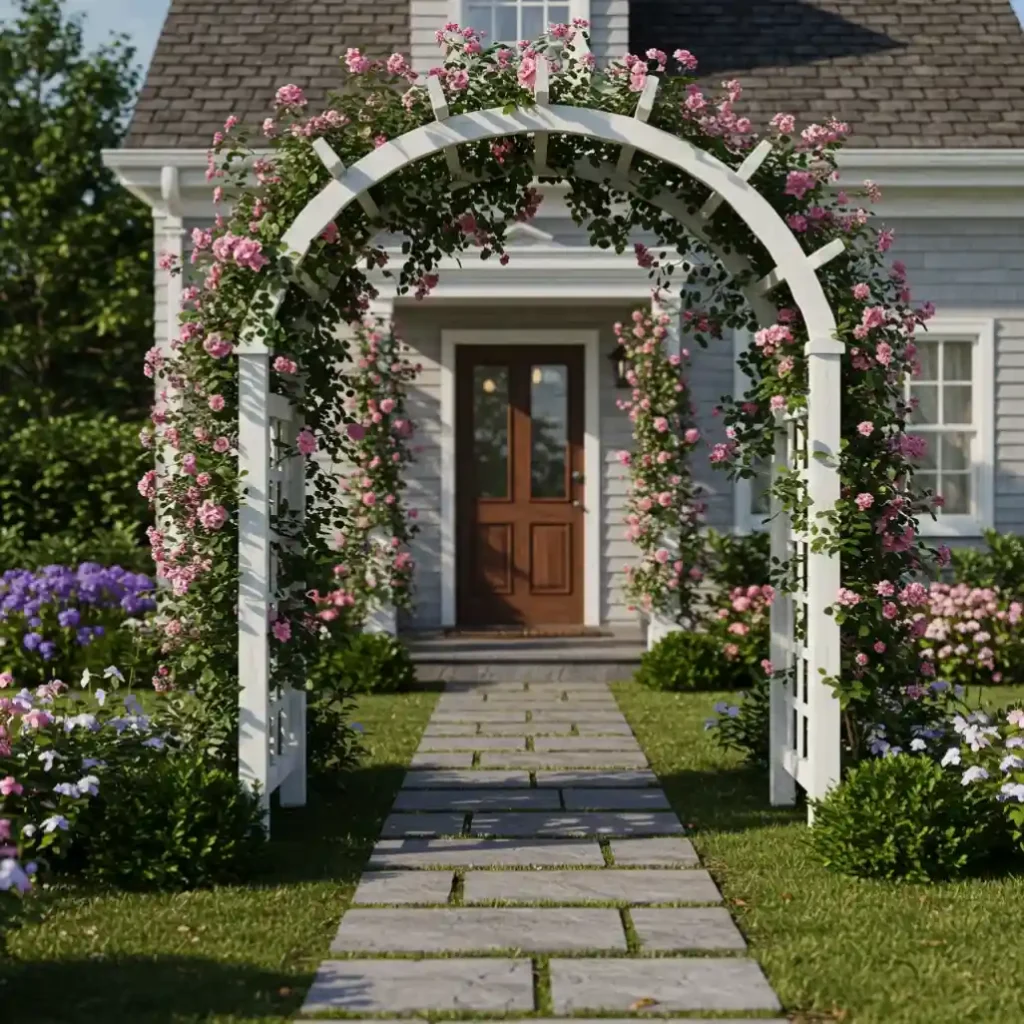
An arbor is a simple, freestanding architectural structure that can add an incredible amount of charm and a sense of entry to your front yard. It can be used to create a beautiful, defined gateway over your main walkway, or it can be used to signal the entrance to a side yard or a specific garden “room.” An arbor is a classic feature of cottage and traditional garden design, and it provides a perfect support for beautiful, flowering vines.
This is a feature that I love to use to add a touch of romance and verticality to a landscape. A simple, white-painted wooden arbor draped in a climbing rose is a timeless and breathtaking sight that provides a huge boost to your curb appeal.
- Function: Creates a charming entryway and a vertical design element.
- Materials: Classic choices include wood (painted or natural) or a more formal, metal design.
- Planting: Perfect for supporting climbing roses, clematis, wisteria, or other flowering vines.
For an enhancement, install a simple, matching gate within your arbor. This will create a more defined sense of entry and can be a great way to create a more enclosed and pet-safe front yard.
15. Add a Bench for a Welcoming Touch
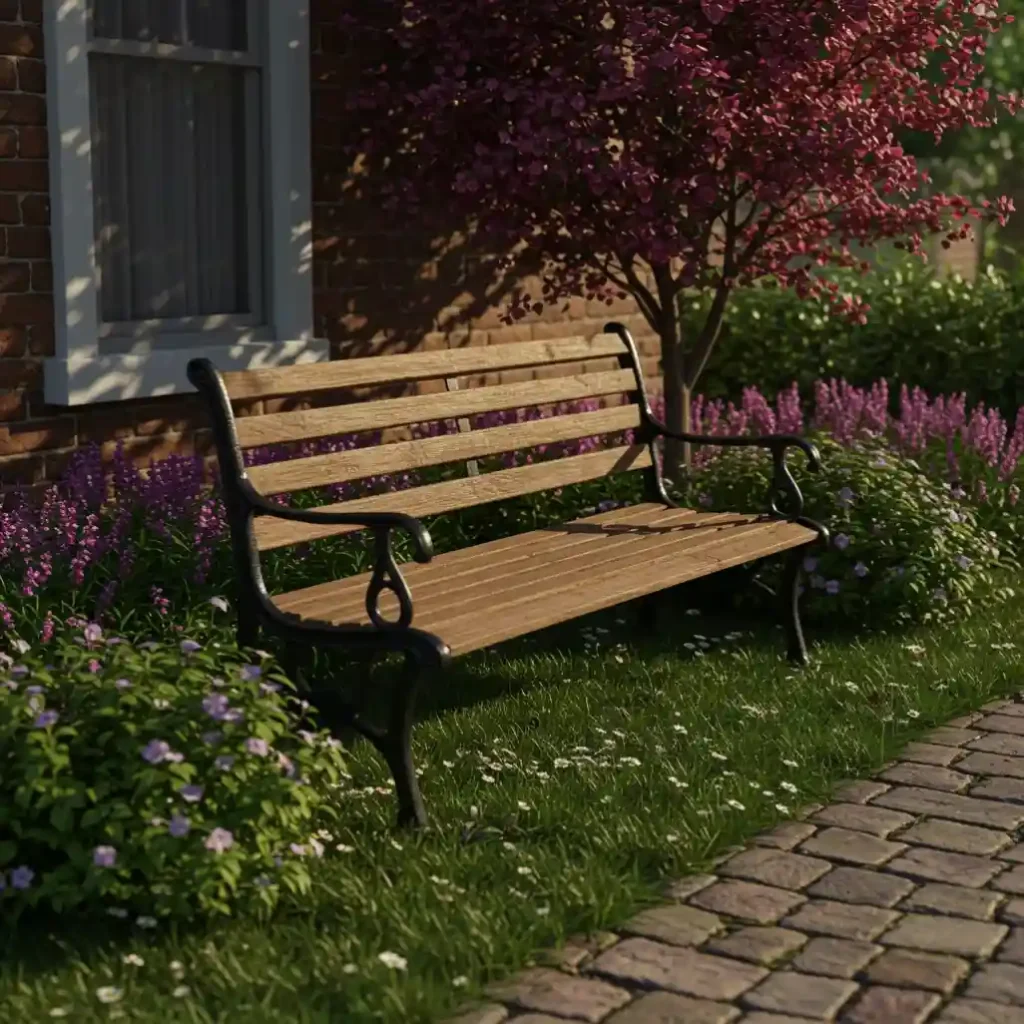
Placing a simple, beautiful bench in your front yard is a powerful and welcoming gesture. It signals that your home is a friendly and restful place. Even if it’s not used for sitting every day, a bench acts as a beautiful, sculptural focal point and adds a layer of charming, park-like character to your landscape. It’s a classic element of landscape design that never goes out of style.
I love to place a bench under a large, shady tree or tuck it into a deep, perennial-filled garden bed. It can create a quiet, contemplative destination at the end of a path. The key is to choose a bench that is made from a durable, weatherproof material that can withstand the elements.
- Materials: Classic choices include a traditional, cast iron and wood park bench, a simple, weathered teak bench, or a modern, concrete bench.
- Placement: Under a tree, in a garden bed, or on a front porch.
- Effect: Adds a charming, welcoming, and restful focal point to your yard.
For an enhancement that makes your bench even more inviting, place two, simple, matching planters on either side of it, filled with a beautiful, seasonal flower arrangement. This will frame the bench and make it feel like a truly special feature.
Conclusion
Boosting your home’s curb appeal with stunning landscaping ideas for the front of your house is one of the most rewarding investments you can make in your property. As we’ve explored through these 15 ideas, a beautiful first impression is created through a thoughtful combination of well-structured pathways, lushly layered plantings, charming architectural details, and a few, perfect finishing touches. The goal is to create a landscape that not only looks beautiful from the street but also feels warm, welcoming, and a true reflection of your personal style.
I encourage you to look at your front yard and choose one or two of these projects to start with. You don’t need to do a complete overhaul all at once. Even a simple change, like adding a pair of beautiful planters to your front door or painting your door a bold new color, can make a world of difference. By creating a beautiful, welcoming journey to your front door, you’ll be enhancing your home’s value and creating a landscape that brings you joy every time you arrive home. For more inspiration, you might enjoy our guide on choosing the right plants for your garden. [Link to related article on selecting plants for four-season interest].
Frequently Asked Questions (FAQs)
What is the easiest, cheapest way to improve my curb appeal?
The “trifecta” of cheap, easy, high-impact curb appeal is: 1) A thorough clean-up, weeding, and edging. 2) A fresh, thick layer of dark mulch on all your garden beds. 3) A fresh coat of a bold, beautiful paint color on your front door. These three things can completely transform the look of your home for very little cost.
What is “foundation planting”?
Foundation planting refers to the garden beds and the plants within them that are located directly against the foundation of your house. A good foundation planting should soften the hard lines of the house and help to gracefully transition it into the surrounding landscape.
How do I make my front yard low-maintenance?
The key is to reduce your lawn size, choose hardy, drought-tolerant, and native plants that thrive in your area, rely on evergreen shrubs for year-round structure, and use a thick layer of mulch to suppress weeds and retain moisture.
What adds the most value and curb appeal to a house?
A well-maintained, healthy lawn and a clean, well-defined landscape with mature, healthy plants are huge factors. A beautiful, grand walkway, a stylish and well-lit entryway, and a fresh coat of paint on the house and front door are also some of the highest-return investments for curb appeal.
What are the best plants to have in front of the house?
A mix of evergreen shrubs (like boxwood or holly) for year-round structure, flowering shrubs (like hydrangeas or roses) for seasonal color, and hardy, long-blooming perennials (like coneflowers or daylilies) is a great, classic combination. Always choose plants that are well-suited to your specific climate and sun exposure.
How wide should a front walkway be?
For a main walkway to your front door, the comfortable minimum is 3 feet, but a more gracious and welcoming width is 4 to 5 feet. This allows two people to walk side-by-side.
Should my front yard landscaping be symmetrical?
It can be! A symmetrical design, with identical plantings and features on both sides of the front door, creates a very formal, classic, and balanced look. An asymmetrical design, where the two sides are balanced but not identical (e.g., a large tree on one side balanced by a large garden bed on the other), can feel more modern and naturalistic. Both are valid and beautiful approaches.


