
Are you looking for inspiring indoor-outdoor living room ideas to create a seamless connection between your home and the natural world? The desire to blur the lines between inside and out is one of the most powerful movements in modern home design.
An indoor-outdoor living room expands your functional living space, floods your home with natural light and fresh air, and fosters a more relaxed, nature-centric lifestyle. It’s about more than just opening a door to the backyard; it’s about creating a single, cohesive, and expansive environment for relaxing, entertaining, and living.
This guide will provide you with 15 inspiring ideas that will help you achieve that coveted seamless flow. From transformative architectural changes like sliding glass walls to clever decorating tricks with flooring and furniture, these concepts will help you create a breathtaking indoor-outdoor oasis.
1. Erase the Boundary with Folding or Sliding Glass Walls
The single most impactful feature of any true indoor-outdoor living room is a large expanse of operable glass that effectively disappears. A wall of folding or sliding glass doors is the ultimate way to erase the physical and visual boundary between your living room and your patio or deck. When fully opened, these door systems create a massive, unobstructed opening that makes the two spaces feel like one continuous room.
This is the number one feature I recommend to clients who are building or undertaking a major renovation. While it’s a significant investment, the lifestyle benefit is unparalleled.
- Bi-Fold Doors: These doors fold up accordion-style and stack neatly to one or both sides, creating a very wide, clear opening.
- Multi-Slide Doors: These consist of several large glass panels that slide on tracks and stack behind each other or disappear into a wall pocket.
- Lift-and-Slide Doors: These doors lift slightly off their track to slide effortlessly, allowing for incredibly large and heavy glass panels.
For an enhancement that creates the ultimate seamless transition, ensure the track for your door system is recessed flush with your interior and exterior flooring. This eliminates any raised threshold, allowing for a completely flat and continuous path from inside to out.
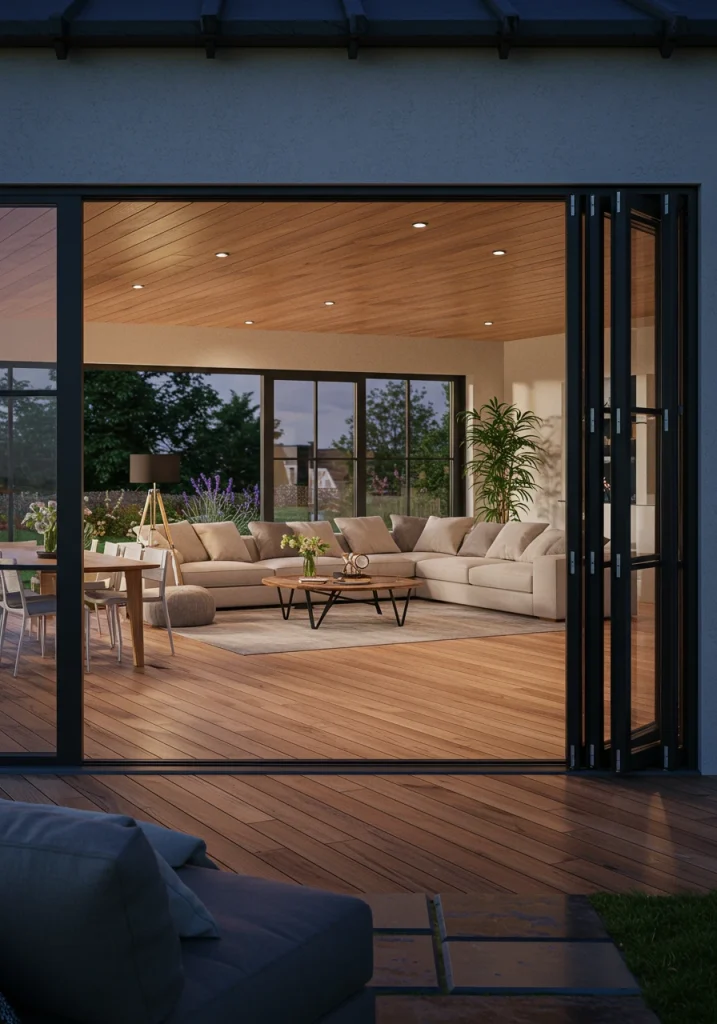
2. Use Continuous, Uninterrupted Flooring
To enhance the illusion of a single, expansive space, it is crucial to use the same flooring material both inside your living room and outside on your adjacent patio or deck. When the floor flows from the interior to the exterior without any change in color, material, or level, it creates a powerful and seamless visual connection. This is a key principle celebrated in high-end, modern architecture for its ability to truly blur the lines between indoors and out.
This requires choosing a flooring material that is durable enough for outdoor use but also beautiful and comfortable enough for an interior living space. I often work with clients to find the perfect material for their climate and style.
- Durable Materials: Large-format porcelain tiles, travertine, or slate are all excellent choices that can be used both indoors and out.
- Wood Look: You can use a durable exterior wood like ipe on your deck and choose an interior hardwood with a very similar color and plank width for a near-seamless look.
- Level Transition: Work with your contractor to ensure the finished floor height is exactly the same inside and out, creating a “zero-threshold” transition.
For an enhancement, if you’re using tile, use the same size and color of tile but specify a slightly more textured, non-slip finish for the outdoor portion for added safety in wet conditions.
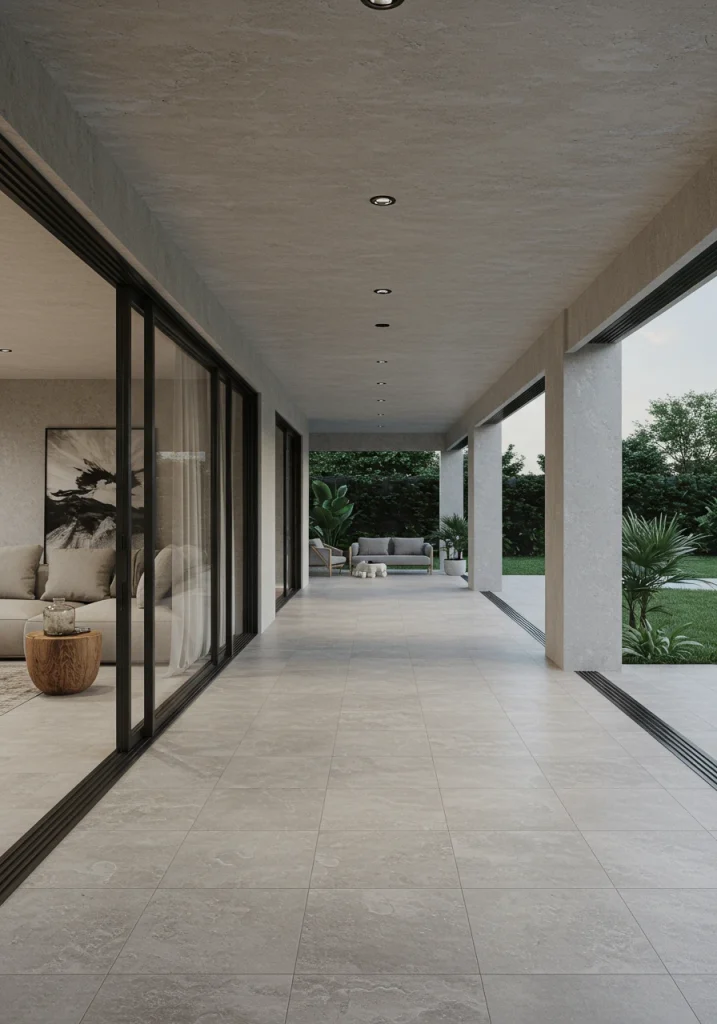
3. Extend the Ceiling or Roofline
Creating architectural continuity overhead is just as important as on the floor. Extending your interior ceiling material or a structural roofline out over your patio creates a powerful visual connection and a sense of a single, unified architectural space. This makes the outdoor area feel less like a separate patio and more like a true, open-air extension of your living room.
This is a strategy I love to incorporate into new builds and renovations. A beautiful, tongue-and-groove wood ceiling in the living room that continues outside to cover the patio is a stunning, high-end feature. Even a simpler, flat roofline that extends out to create a deep, covered overhang can be incredibly effective.
- Covered Patio: An extended roofline provides essential shade and protection from the elements, making the outdoor space usable in more types of weather.
- Material Continuity: Use the same material (e.g., wood paneling, stucco) on the indoor ceiling and the outdoor overhang.
- Architectural Cohesion: Creates a strong, intentional link between the indoor and outdoor structures.
For an enhancement that adds both style and function, install recessed lighting and a ceiling fan in the outdoor portion of the extended roofline. This will make the outdoor “room” just as comfortable and usable in the evenings as the indoor one.

4. Maintain a Consistent Color Palette
To make your indoor and outdoor spaces feel like one cohesive area, it is essential to use a consistent color palette across both zones. This doesn’t mean everything has to be the exact same color, but the main colors used in your indoor living room should be repeated in your outdoor furniture, cushions, planters, and accessories. This creates a harmonious visual flow that allows the eye to move seamlessly from inside to out.
I always create a single color and materials board for the entire indoor-outdoor space. If the indoor living room has a gray sofa with blue and white pillows, the outdoor seating should also have gray cushions with blue and white pillows. The visual thread is what ties the two spaces together.
- Choose a Palette: Select 3-4 complementary colors to use throughout both spaces.
- Repeat Colors: Use your main colors in both the indoor and outdoor zones in varying amounts.
- Create Flow: The consistent palette makes the two spaces feel like one, large, intentionally designed room.
For an enhancement, choose one bold accent color and use it in three small, well-placed locations that span both zones—perhaps in an indoor pillow, an outdoor planter, and a piece of art that is visible from both areas. This creates a stylish and intentional “visual triangle.”
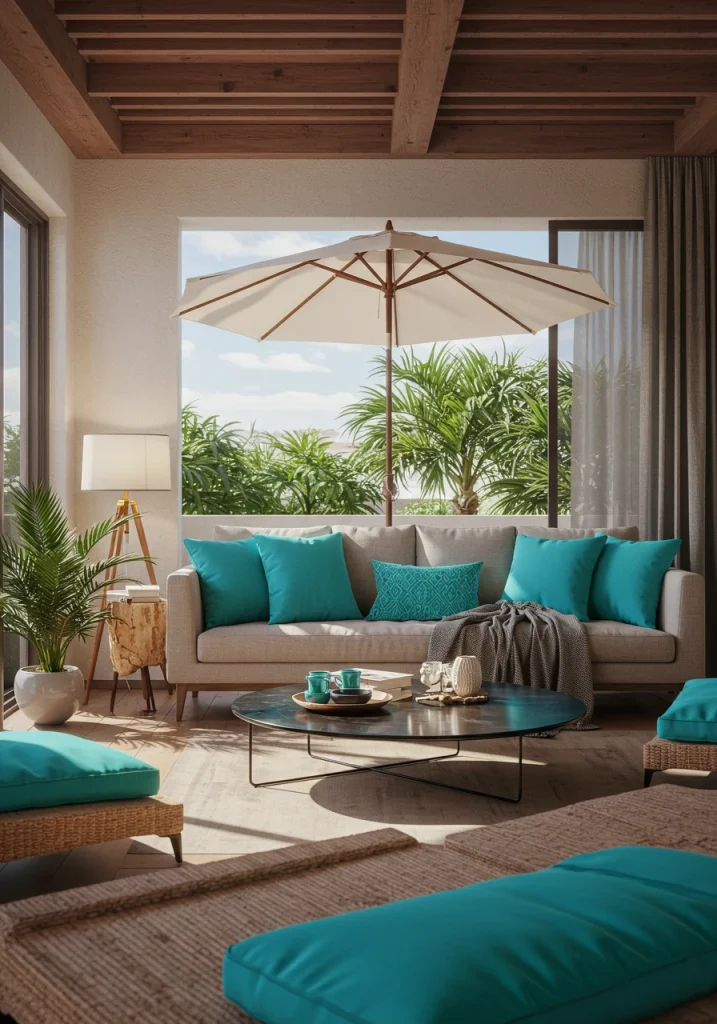
5. Create a “Mirrored” Furniture Layout
A very clever and effective way to visually link your indoor and outdoor living areas is to create a “mirrored” or continuous furniture layout. This means arranging your outdoor furniture in a way that continues or reflects the arrangement of your indoor furniture. This creates a strong sense of a single, large, and unified living space.
For example, if you have a large sectional sofa inside that faces the opening, you could place a matching outdoor sectional on the patio, also facing the opening, creating a cozy, back-to-back arrangement when the doors are open. A simpler approach I often use is to continue a line of seating. An indoor sofa can be aligned with an outdoor loveseat or a pair of chairs, creating one long, continuous line of seating that flows from inside to out.
- Extend the Layout: Arrange outdoor furniture as a continuation of your indoor arrangement.
- Mirror the Setup: A symmetrical, mirrored layout can be very powerful and formal.
- Creates a Single Space: This trick strongly reinforces the idea of one, large, unified room.
For an enhancement, choose an indoor and an outdoor sofa that are the same color and have a very similar style and profile. This will make the two pieces look like they were designed as a single, cohesive unit.

6. Use Durable, Outdoor-Friendly Furniture Indoors
To create the most seamless and practical indoor-outdoor living space, consider using furniture made from durable, outdoor-friendly materials in your indoor living room. This is a fantastic strategy for families with children and pets, or for those who entertain frequently, as outdoor furniture is designed to be incredibly durable, stain-resistant, and easy to clean.
This allows you to use the exact same furniture pieces both inside and out for ultimate cohesion, or it simply means your indoor furniture can stand up to the increased traffic and exposure that comes with an open indoor-outdoor lifestyle. I love the look of a sleek, modern, powder-coated aluminum sofa frame with high-quality, comfortable cushions; it looks just as chic indoors as it does outdoors.
- Durable Materials: Look for furniture made from aluminum, teak, or all-weather wicker.
- Performance Fabrics: Use cushions made from outdoor-friendly fabrics like Sunbrella, which are fade- and stain-resistant.
- Practicality: Creates a beautiful and incredibly durable, easy-to-clean living room.
For an enhancement, choose modular furniture. A modular sectional made from outdoor-grade materials is the ultimate in flexibility. You can arrange the pieces inside, outside, or even move a few pieces from inside to out when you’re hosting a large party.

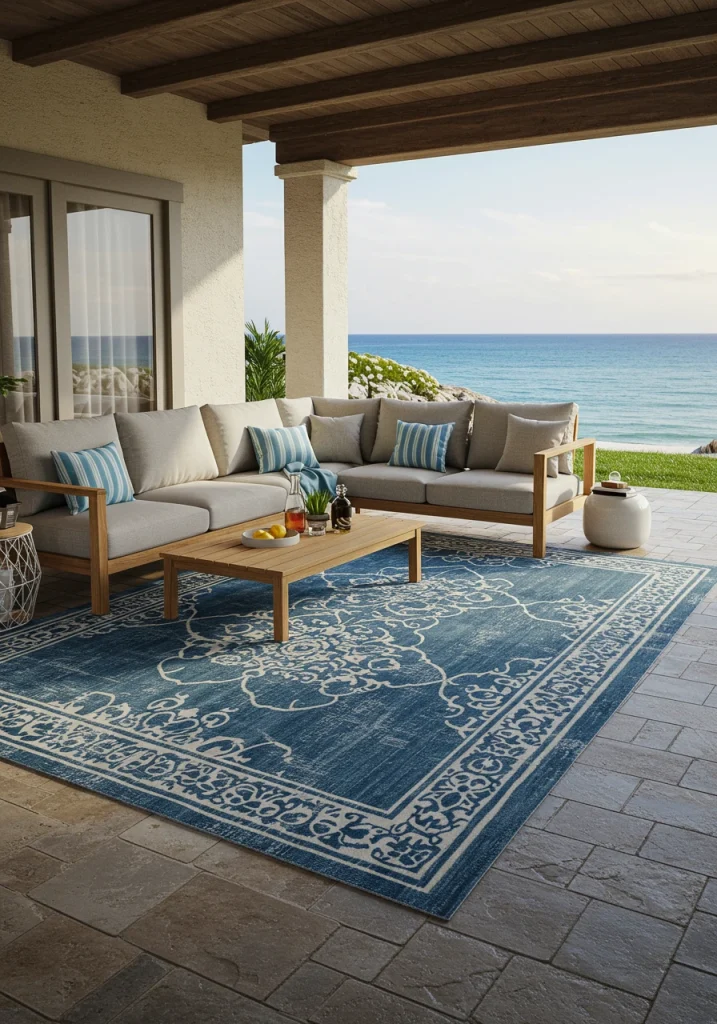
7. Use an Outdoor Rug to Define the “Room”
Just as an area rug is essential for defining a zone inside, a high-quality outdoor rug is a key element for making your patio or deck feel like a true “room.” An outdoor rug instantly anchors your outdoor seating or dining arrangement, adds a layer of color, pattern, and softness underfoot, and reinforces the feeling that your outdoor space is a finished, intentional, and comfortable living area.
Modern outdoor rugs are incredibly stylish and durable, made from materials like polypropylene that can be simply hosed off to clean. I always tell my clients that an outdoor rug is one of the most important finishing touches for an indoor-outdoor space. It’s what makes the outdoor zone feel just as much like a “living room” as the indoor one.
- Defines the Zone: Visually anchors your outdoor furniture grouping.
- Adds Comfort and Style: Adds softness, color, and pattern to a hard patio surface.
- Durable: Made from weather- and fade-resistant materials.
For an enhancement that creates ultimate cohesion, choose an outdoor rug that has a similar pattern or color palette to your indoor area rug. They don’t have to be identical, but they should feel like they are part of the same design family.
8. Create a Cohesive Lighting Plan
A cohesive lighting plan is essential for ensuring that your indoor-outdoor living space is just as beautiful and functional in the evening as it is during the day. Your lighting design should not stop at the glass doors. The style, color temperature, and placement of your lighting should create a seamless transition from the inside to the outside.
The key is to use a layered lighting scheme in both spaces and to choose fixtures that feel like they belong to the same family. I love to repeat a fixture style. For example, if you have modern, black, wall-mounted sconces inside, use a matching, outdoor-rated version of the same sconce on your exterior walls.
- Layer Your Lighting: Use a mix of ambient, task, and accent lighting both indoors and out.
- Maintain Consistency: Choose outdoor fixtures that have a similar style, finish, or shape to your indoor fixtures.
- Warm Light: Use warm white LED bulbs (around 2700K) in both areas to create a consistent, cozy glow.
For a dramatic enhancement, use low-voltage uplighting to highlight a key architectural feature on your home’s exterior or a beautiful specimen tree in your garden. When viewed from inside your living room at night, this will create a stunning, dramatic backdrop and will extend your view far beyond the walls of your home.

9. Bring Abundant Greenery Indoors
To visually and literally blur the line between your living room and your garden, bring an abundance of lush, green houseplants into your indoor space. By creating a mini “jungle” indoors, you make the transition to the garden outside feel much more natural and seamless. The indoor plants will create a beautiful, organic foreground that frames your view of the outdoor landscape.
I always encourage clients with indoor-outdoor spaces to be bold with their houseplants. A few, large, statement-making plants will have a much bigger impact than a collection of small, scattered pots. Place a very tall plant, like a Fiddle Leaf Fig or a large palm, in a corner near your glass doors. The large leaves will create a beautiful, layered view.
- Go Big: A few large, sculptural plants will have the most impact.
- Layer Heights: Use a mix of tall floor plants, medium-sized plants on stands, and small, trailing plants on shelves.
- Placement: Cluster plants near the opening to the outdoors to create a strong visual link.
For a creative enhancement, use the same style of planter both inside and outside. For example, if you have a collection of modern, gray, concrete planters on your patio, use a couple of the same planters for your large, indoor plants. This is a subtle but powerful unifying detail.

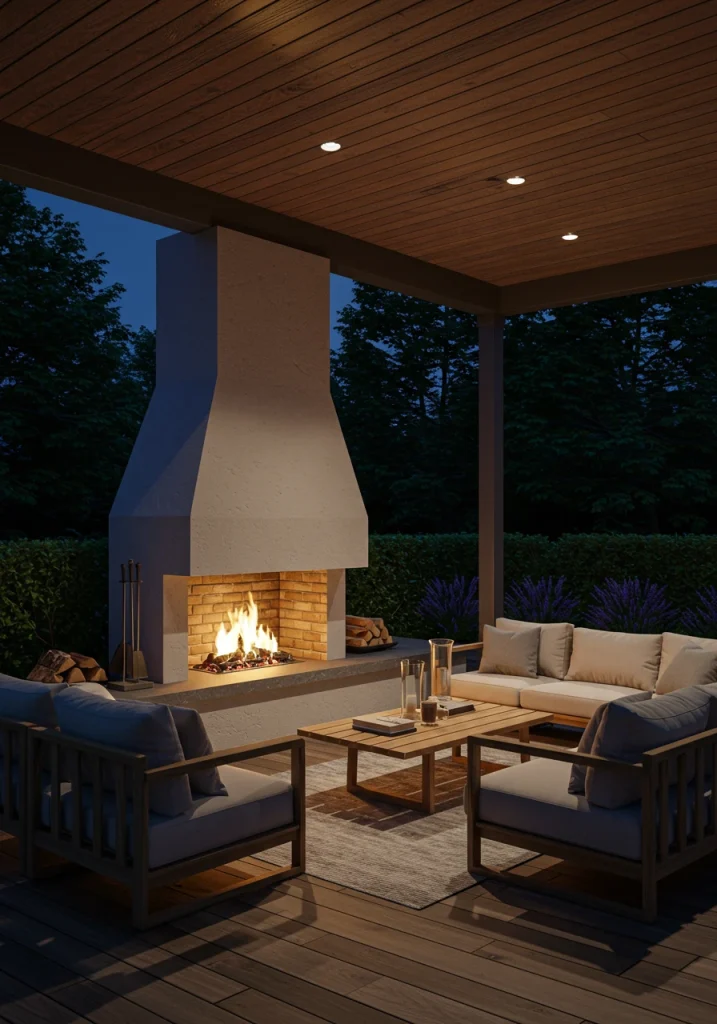
10. Add an Outdoor Fireplace or Fire Pit
A fireplace is the traditional heart of an indoor living room, and adding a fire feature to your outdoor space is a fantastic way to make it feel just as cozy and inviting. An outdoor fireplace or a fire pit creates a natural, mesmerizing focal point that encourages people to gather, and it extends the usability of your outdoor room into the cooler evenings and shoulder seasons.
For the most seamless look, you can build a double-sided fireplace that serves both the indoor living room and the outdoor patio. This is a stunning, high-end architectural feature. For a simpler and more budget-friendly option, a stylish, modern fire pit placed in the center of your outdoor seating area can create the same warm and inviting ambiance.
- Outdoor Fireplace: A more permanent, architectural feature that can anchor an outdoor room.
- Fire Pit: A more flexible and often more affordable option. Choose a style (wood-burning or gas) that fits your lifestyle.
- Focal Point: A fire feature is a powerful, natural gathering spot.
For an enhancement that combines two ideas in one, choose a fire pit that also functions as a coffee table. Many modern, propane-powered fire pits have a wide ledge and come with a cover, so they can be used as a table when a fire is not lit.
11. Incorporate a Pass-Through Window
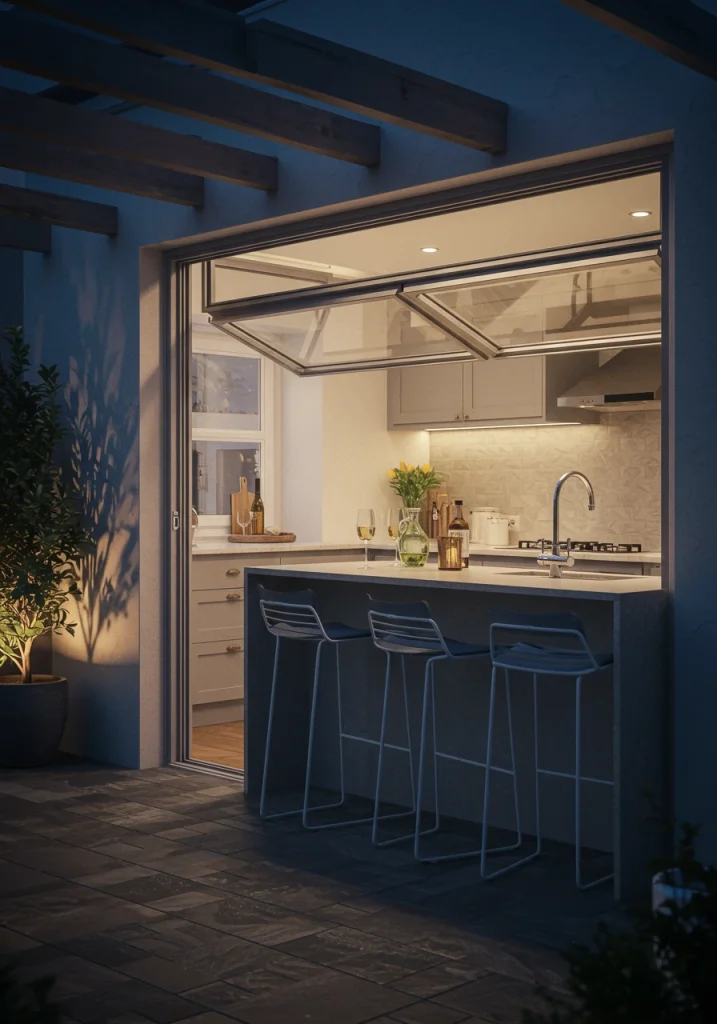
A pass-through window is a brilliantly functional feature that can dramatically enhance the connection between your kitchen (if it’s part of your open plan) and your outdoor living space. This is essentially a window over your kitchen sink or counter that opens up completely, often accordion-style or awning-style, to create a seamless indoor-outdoor bar.
This is a feature I love to incorporate whenever possible. It makes entertaining a breeze, as you can easily pass food and drinks from the kitchen to the guests sitting on bar stools on the patio outside. It creates a fun, social, and very functional link between the two zones.
- Functionality: Creates a serving bar and makes indoor-outdoor entertaining effortless.
- Creates Connection: A very strong and interactive link between the kitchen and the patio.
- Window Styles: Bi-fold, accordion, or gas-strut awning windows work best.
For the ultimate enhancement, extend your kitchen countertop material to form the outdoor bar surface as well. A single, continuous slab of granite, quartz, or concrete flowing from inside to out is a stunning, high-end, and seamless look.
12. Arrange Furniture to Face the View
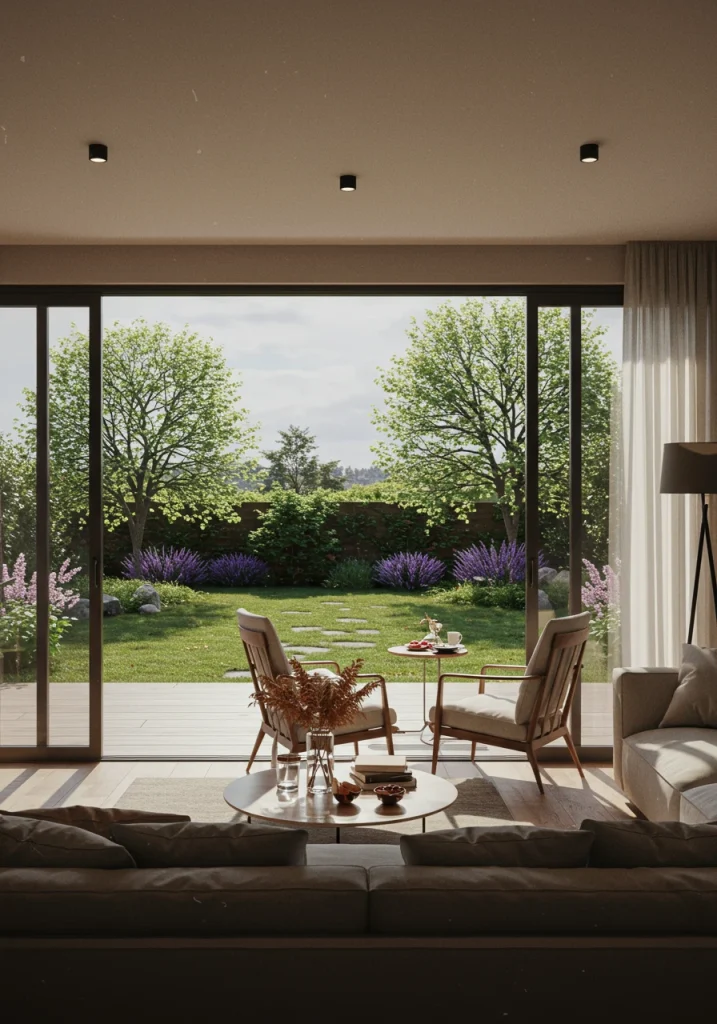
This seems simple, but it’s a fundamental principle that is often overlooked. In a true indoor-outdoor living room, the view to the outside is a primary focal point. Arrange your indoor furniture in a way that celebrates this view, rather than turning its back on it. Your main sofa or a pair of comfortable armchairs should be oriented to look out through the large glass doors.
This doesn’t mean all your furniture has to face the window like you’re at a movie theater. But the main seating axis should be oriented towards the opening. This will naturally draw your eye outside and will make the outdoor space feel like an integral part of the indoor room.
- Celebrate the View: Make the connection to the outdoors a primary focal point.
- Orient Seating: Arrange your main sofa or armchairs to face the opening.
- Create an Invitation: A seating arrangement that faces the outdoors is a subconscious invitation to go outside.
For an enhancement, place a single, beautiful, sculptural armchair right next to the opening, angled so that it has a perfect view of both the indoor living room and the outdoor patio. This creates the perfect transitional “perch.”
13. Use Weather-Resistant Curtains Outdoors
To soften the hard lines of your home’s exterior and to add a touch of resort-like luxury to your outdoor living space, consider hanging outdoor curtains. When hung from a pergola or a covered patio, these curtains can be used to define your space, provide privacy, and offer shade from the sun. The gentle movement of the fabric in the breeze can be incredibly relaxing and can make your outdoor “room” feel much more finished and intimate.
The key is to use fabric and hardware that are specifically designed for outdoor use. I always recommend fabrics that are fade-, moisture-, and mildew-resistant.
- Fabric: Must be a weather-resistant outdoor fabric like acrylic or solution-dyed polyester.
- Hanging: Use a sturdy, rust-proof outdoor curtain rod or a wire cable system.
- Function: Can be pulled closed for privacy and shade, or tied back to frame the space.
For a beautiful and cohesive enhancement, choose an outdoor curtain color or pattern that directly coordinates with the color of your indoor curtains. This will create a very strong visual link between the two spaces.

14. Incorporate a Daybed for Ultimate Lounging
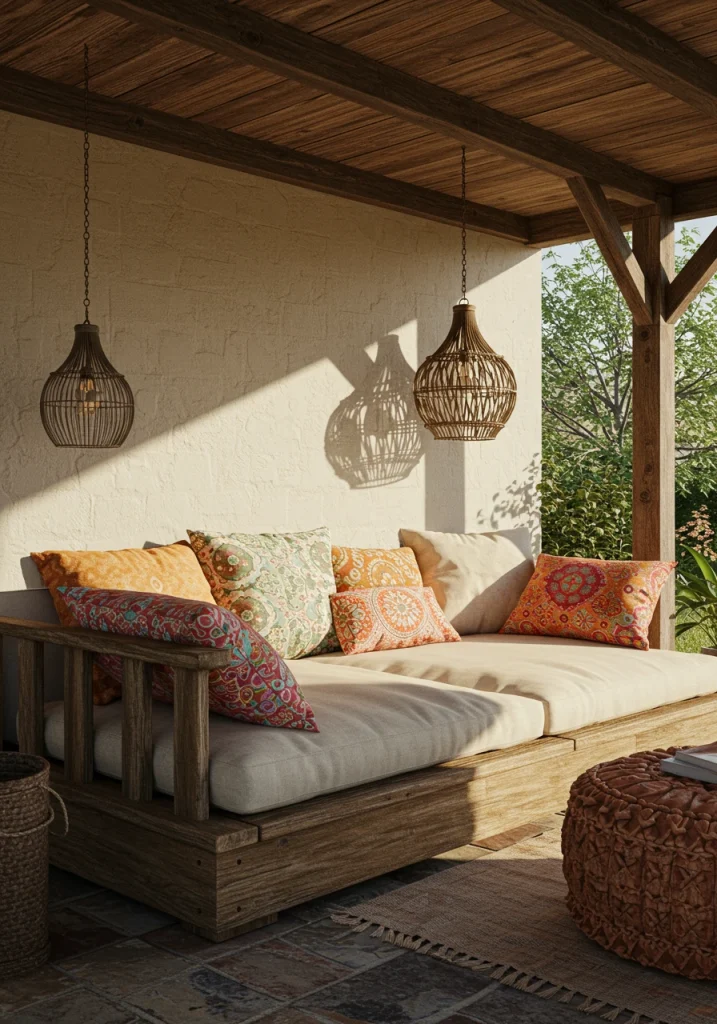
For the ultimate in relaxed, indoor-outdoor living, a daybed is a fantastic furniture choice. A daybed is a hybrid piece that is part sofa, part bed, and it is designed for serious lounging, napping, and relaxing. Placing a daybed in the transitional zone—either just inside the glass doors or just outside on a covered patio—creates an irresistible invitation to slow down and unwind.
I love the relaxed, bohemian vibe that a daybed brings to a space. Look for a simple frame made of wood or rattan and top it with a comfortable, mattress-like cushion. Pile it high with a collection of soft, comfortable pillows and a lightweight throw, and you have the perfect spot to spend a lazy afternoon with a good book.
- Versatile Lounging: Perfect for sitting, reclining, or napping.
- Relaxed Vibe: Creates a casual, bohemian, and incredibly inviting atmosphere.
- Placement: Works well on a covered patio or in a sun-drenched spot just inside the doors.
For an enhancement, choose a hanging daybed or a “swing bed.” Suspended from the ceiling of your covered patio, a gently swaying swing bed is the absolute pinnacle of indoor-outdoor relaxation.
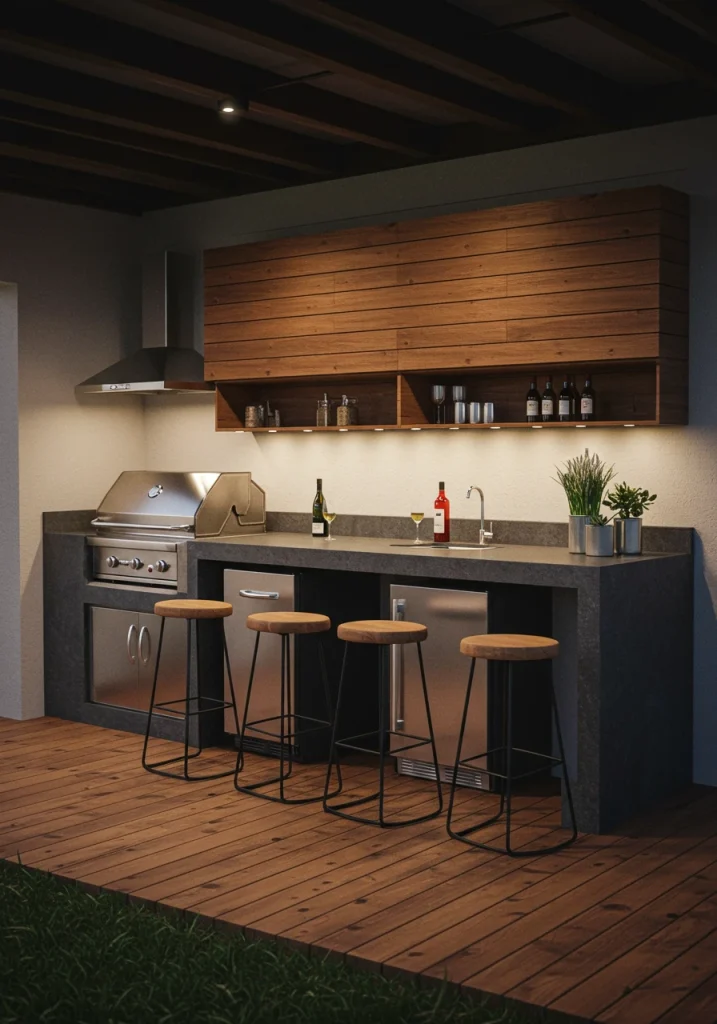
15. Create an Outdoor Kitchen or Bar
To make your outdoor living space truly functional for entertaining, consider creating a small outdoor kitchen or a dedicated bar area. This moves beyond just a simple grill and creates a proper station for preparing food and drinks outdoors, which will dramatically reduce the need to run back and forth to your indoor kitchen. This is a key feature in creating a fully realized outdoor room.
You don’t need a massive, built-in kitchen. A simple, cost-effective solution can be a modular unit that includes a bit of counter space for prep, a small, outdoor-rated refrigerator for drinks, and some storage for glasses and plates. I often design a simple, L-shaped bar with a countertop and seating, which can also help to define the edge of the patio.
- Functionality: Makes outdoor entertaining much more convenient.
- Scale: Can be a simple, modular unit or a full, custom-built kitchen.
- Key Elements: A grill, a bit of counter space, a small fridge, and some storage.
For a space-saving enhancement, instead of a full kitchen, focus on creating a great bar and beverage station. A simple counter with a built-in ice chest, a small sink, and some open shelving for glassware is a fantastic, high-impact feature for any party-loving homeowner.
Conclusion
Creating a seamless indoor-outdoor living room is about more than just opening a door; it’s a holistic design approach that erases the boundaries between your home and your garden. As we’ve explored through these 15 inspirations, the most successful spaces are born from a commitment to continuity. By using consistent flooring, extending architectural lines, and maintaining a cohesive color and material palette, you can create a single, expansive, and harmonious environment that significantly enhances your living space and your lifestyle.


