
Are you looking for creative and functional design ideas for a bedroom for kids? A child’s bedroom is so much more than just a place to sleep. It is a multi-functional hub for play, learning, dreaming, and self-expression. It’s their own personal sanctuary, a space that should grow and adapt with them through their changing phases and interests. Designing a kid’s bedroom is a unique and joyful challenge: it’s about finding the perfect balance between playful whimsy and practical functionality, creating a space that is both inspiring for them and easy for you to maintain.
This guide will provide you with 16 essential ideas and tips, from creating functional zones and maximizing storage to adding fun, interactive elements, to help you design a stylish and beloved bedroom for your child.
1. Choose a Whimsical and Adaptable Theme
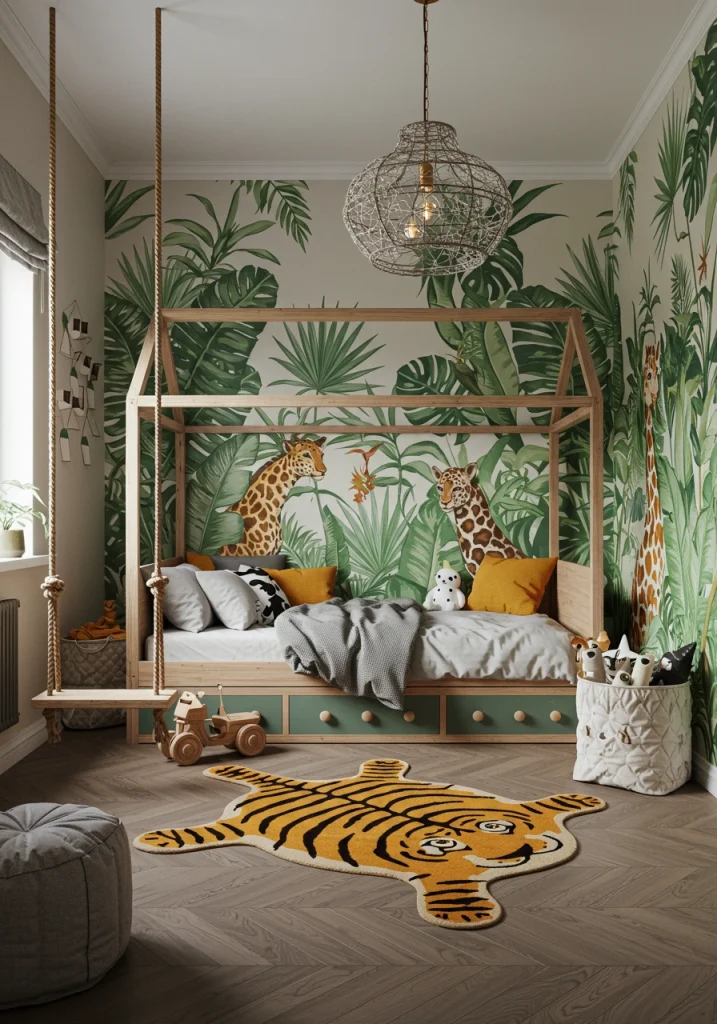
A theme can be a wonderful starting point for a child’s bedroom design, providing a cohesive direction for your color palette and decor choices. However, the key to a successful theme is to keep it adaptable and sophisticated, so it can grow with your child. Instead of going all-in on a specific, branded cartoon character that they might outgrow in a year, think in terms of a broader, more timeless theme.
I love working with clients to develop a theme that can evolve.
- Instead of a specific movie character, try a “Jungle Adventure” or “Safari” theme. This can be expressed through a beautiful, leafy wall mural, animal-print textiles, and plenty of stuffed animal friends.
- Instead of a princess theme, try a “Magical Forest” or “Secret Garden” theme. This can be achieved with a floral wallpaper, fairy lights, and a whimsical, canopy bed.
- For the aspiring astronaut, a “Cosmic Explorer” theme with a dark blue accent wall, star decals, and a solar system mobile is a classic.
For an enhancement, use the theme to inspire your color palette, but apply it in a sophisticated way. For a jungle theme, for example, use a beautiful, deep, sage or olive green on the walls rather than a bright, primary green.
2. Create a Cozy Reading Nook
Encouraging a love of reading is one of the greatest gifts you can give a child, and creating a dedicated, cozy reading nook in their bedroom can make reading feel like a special and magical activity. You don’t need a lot of space to do this; a small, unused corner can be easily transformed into an irresistible retreat for getting lost in a good book.
This is a feature I try to include in every kid’s room I design. The key is to make it incredibly comfortable and inviting.
- A Soft Seat: A small, child-sized armchair, a large, plush beanbag chair, or a simple, soft mat with a pile of floor pillows.
- Accessible Book Storage: Install low, forward-facing, picture-ledge style bookshelves on the wall. This allows kids to see the beautiful covers of their books, making them more likely to pick one up.
- Good Lighting: A dedicated, safe, and easy-to-use reading lamp, like a fun, animal-shaped table lamp or a simple, floor lamp.
For an enhancement that is pure magic, create a small, canopy-like tent in the corner using a simple embroidery hoop and a few panels of a lightweight, sheer fabric. Hang it from the ceiling over a pile of soft cushions to create a secret, tented reading hideaway.

3. The Space-Saving Loft Bed
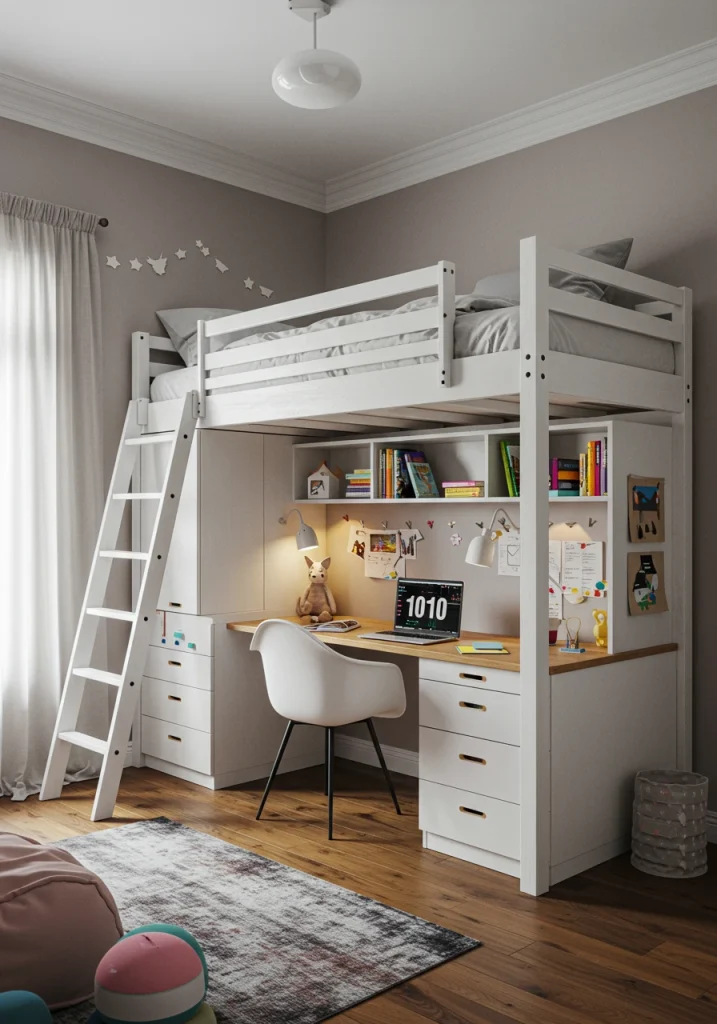
A loft bed is the ultimate space-saving solution for a small kid’s bedroom. By lifting the bed up off the floor, you free up the entire footprint underneath for a second, highly functional zone. This is a brilliantly efficient way to double the usable space in a compact room, and kids absolutely love the fun, fort-like feeling of sleeping up high.
This is my go-to solution for maximizing function in a small room. The space underneath can be adapted as your child grows.
- A Play Zone: For a younger child, the space underneath is a perfect, enclosed play area. You can add a soft rug, some toy baskets, and even hang a curtain to create a secret den.
- A Homework Station: For a school-aged child, the space is ideal for a built-in desk, a chair, and some shelving for school supplies.
- A Lounge Area: For a teenager, you can add a comfortable beanbag chair and a small TV to create a mini lounge for them and their friends.
For an enhancement that adds a touch of adventure, incorporate a fun, alternative way to get down from the loft bed, like a small, safe, indoor slide or a classic, firehouse-style pole.
4. Maximize Storage with Cubby Systems and Baskets
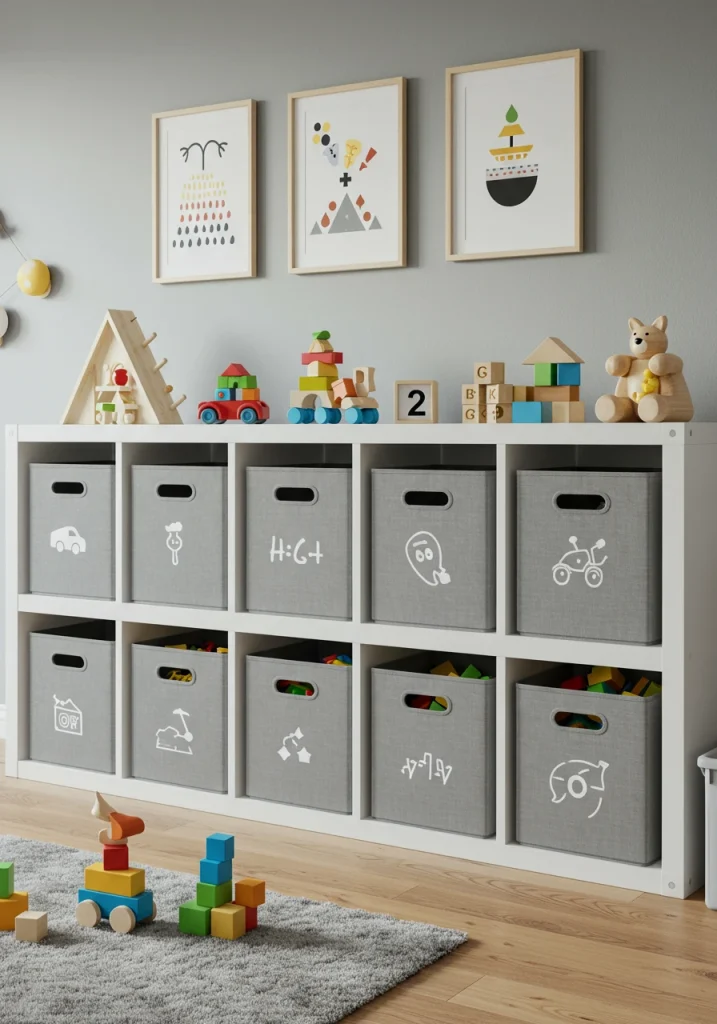
Toys, books, and clothes can quickly create a chaotic mess in a kid’s bedroom. A smart, accessible, and easy-to-use storage system is absolutely essential. A low, cube-style shelving unit is a perfect, kid-friendly solution. The open cubbies are at a perfect height for a child to access their own toys and, most importantly, to help with cleanup time.
As a designer and a parent, I know that a system has to be easy for a child to use. The key to keeping the cubbies looking neat and tidy is to use a set of beautiful, matching storage baskets or bins.
- Cubby Shelving: A low, long, cube organizer (like the classic IKEA Kallax) is a versatile and affordable choice.
- Baskets and Bins: Use collapsible, fabric bins or more sturdy, woven baskets.
- Label Everything: For a system that truly works, label each bin with a picture of the toy that belongs inside (for pre-readers) or a simple word label.
For an enhancement, get a custom-made, long cushion for the top of your low, cubby shelving unit. This will instantly transform the storage unit into a comfortable and functional bench for seating.
5. Add an Interactive Chalkboard or Whiteboard Wall
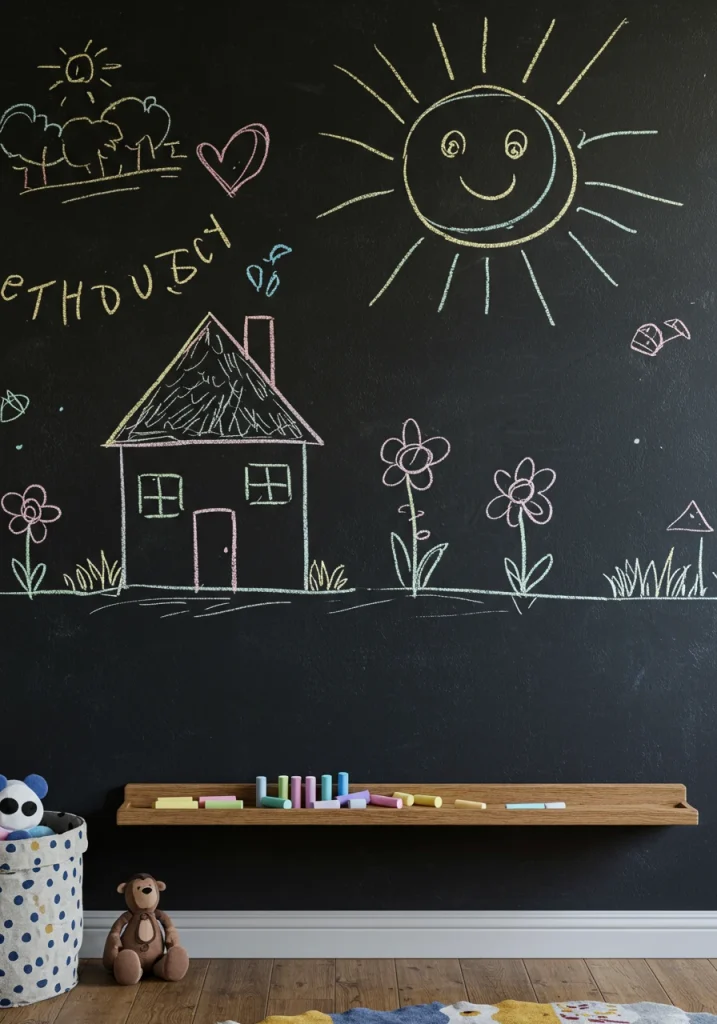
To encourage creativity and to provide a designated, appropriate place for drawing on the walls, an interactive accent wall is a fantastically fun and creative idea. You can easily paint a wall, or a section of a wall, with a special chalkboard paint or a dry-erase whiteboard paint. This turns the wall itself into a giant, endless canvas for your child’s imagination.
This is a project I love because it’s both fun and practical. It can save the other walls in your home from unwanted crayon masterpieces!
- Chalkboard Paint: Creates a classic, rustic, schoolhouse look. Be prepared for a bit of chalk dust.
- Whiteboard Paint: A more modern, clean, and less dusty option.
- Magnetic Paint: You can even use a magnetic primer underneath your paint, which will allow your child to stick magnetic letters and toys to the wall as well.
For an enhancement, install a simple, thin, picture ledge or a small, floating shelf along the bottom of your chalkboard or whiteboard wall. This is the perfect, convenient spot to store the chalk, markers, and erasers.
6. Use Removable Wallpaper or Wall Decals
Children’s tastes can change in the blink of an eye. Today they are obsessed with dinosaurs, and tomorrow it’s all about space. Removable, “peel-and-stick” wallpaper and wall decals are the perfect, renter-friendly, and low-commitment solution for creating a fun, themed accent wall that can be easily changed as your child grows.
This is one of the best innovations in modern decor. I love the huge variety of stylish and whimsical options that are now available. You can create a huge impact without the permanence or the hassle of traditional wallpaper.
- Removable Wallpaper: Perfect for creating a bold, high-impact, full feature wall. Look for fun, modern, geometric, or nature-inspired patterns.
- Wall Decals: A more budget-friendly option. You can buy a set of decals (like stars, dots, or animals) and scatter them across a wall to create your own, custom pattern.
For an enhancement, get your child involved in the process. Let them help you choose the pattern and, if you’re using individual decals, let them help you decide on the placement. This will make them feel a sense of ownership and pride in their new room.
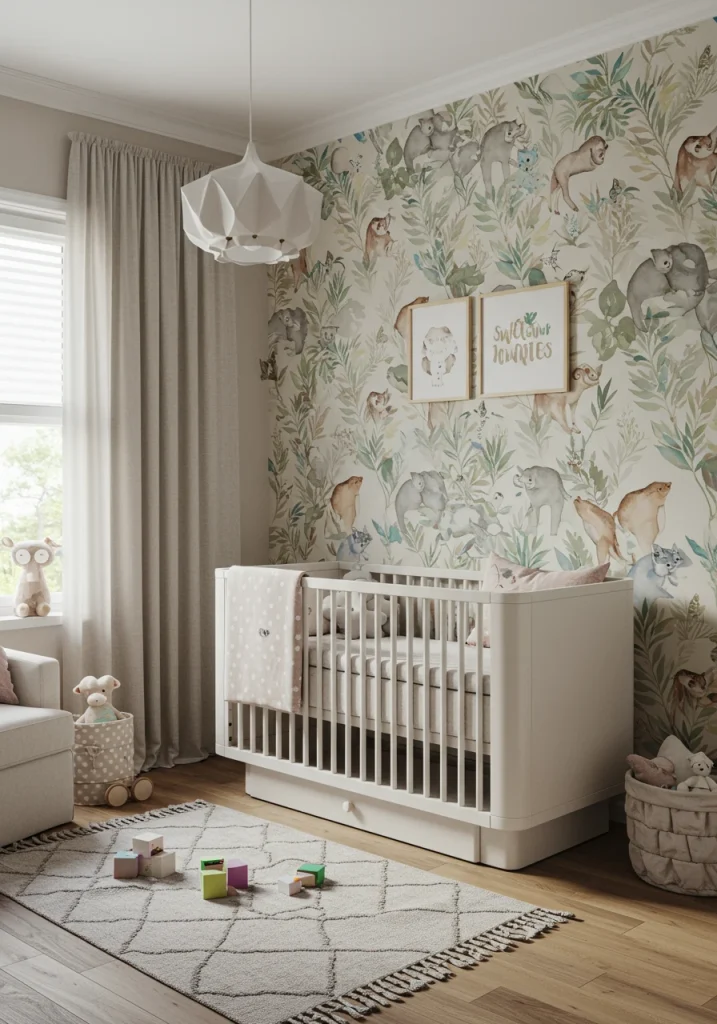
7. Create a “Gallery Wall” for Their Own Artwork
Every child is a budding artist, and their bedroom should be a proud gallery for their masterpieces. Designating a specific wall as a “gallery wall” for their own, personal artwork is a fantastic way to encourage their creativity and to make them feel a sense of pride and ownership over their space. It’s also a wonderful, ever-changing display that is full of color and personality.
There are many easy and creative ways to create a gallery wall that is easy to update.
- A Corkboard Wall: Attach a series of large, corkboard tiles to the wall to create a giant pinboard.
- A Wire and Clip System: String a few, taut, picture-hanging wires horizontally across the wall and use small, wooden clothespins or clips to easily hang new art.
- A Collection of Empty Frames: Hang a collection of empty, colorful frames on the wall and use the wall space inside the frame as the spot to tape up the latest drawing.
For a very chic and modern enhancement, install a series of simple, slim, forward-facing picture ledges. This will allow your child to easily display not just their flat drawings, but also their 3D creations, like clay sculptures or Lego models.
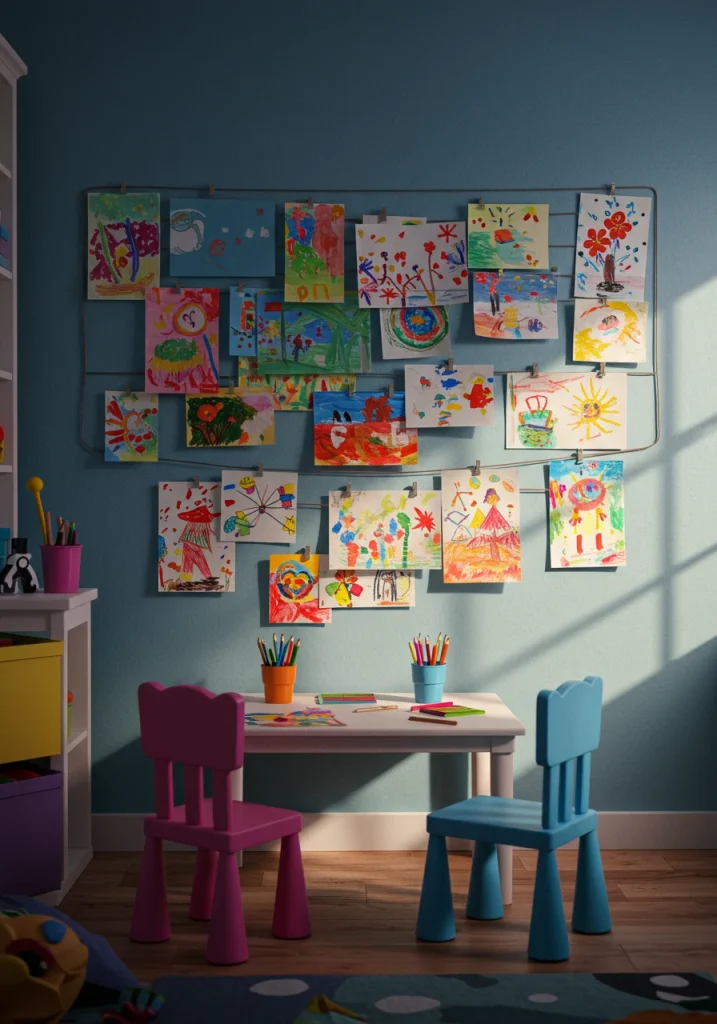
8. String Magical Twinkle Lights
Fairy lights, or twinkle lights, are one of the easiest and most affordable ways to add a dose of pure magic to any child’s bedroom. The soft, warm, gentle glow of dozens of tiny lights can instantly make a room feel cozier, more enchanting, and can also serve as a perfect, comforting nightlight.
This is a must-have for a whimsical and dreamy feel. I love that there are so many safe, battery-operated, LED options available now.
- Create a Starry Canopy: Drape several strands of lights from the center of the ceiling out to the corners of the room to create a magical, tent-like canopy of stars.
- A Glowing Headboard: Weave a string of lights through a metal headboard or tape them to the wall in the shape of a headboard.
- A Magical Fort: Line the inside of a play tent or a reading nook with fairy lights to make it feel like a secret, glowing hideaway.
For an enhancement, look for fairy lights that have a fun, decorative element, like small stars, moons, or little, fluffy pom-poms attached to the string. This will add an extra layer of playful charm.
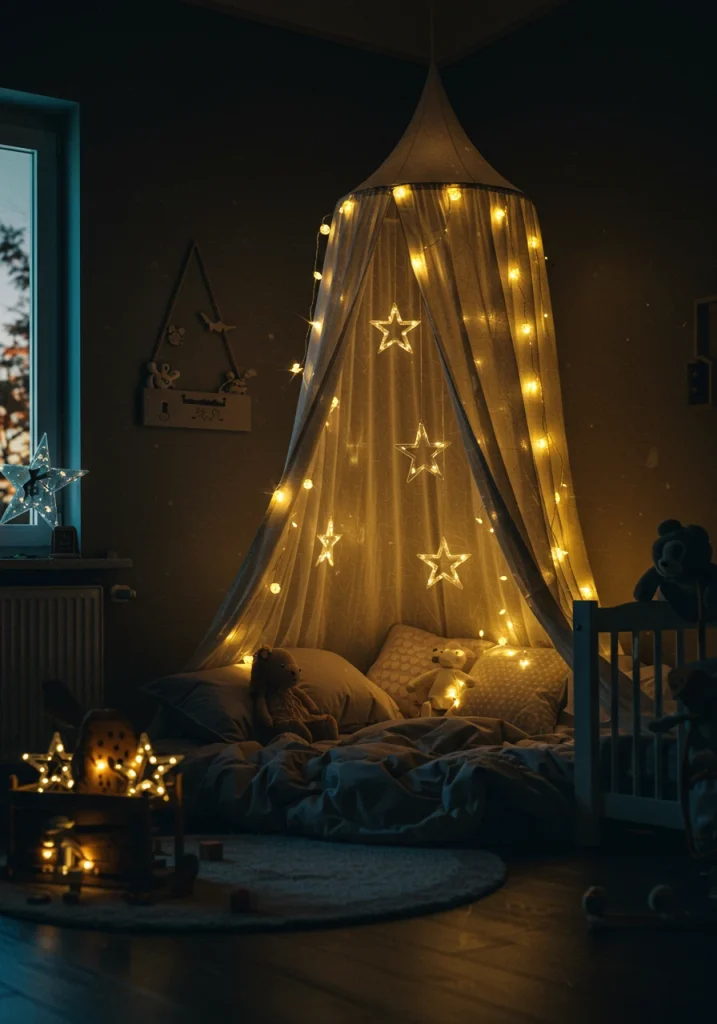
9. Use “Grow-with-Me” Multi-Functional Furniture
Children grow and change incredibly quickly, and their needs change with them. A smart and sustainable approach to furnishing a kid’s bedroom is to choose “grow-with-me” or multi-functional furniture that can adapt over time. This means investing in a few, high-quality, key pieces that can transition from the toddler years through to the teenage years.
This is a strategy I always recommend to my clients to save them money in the long run.
- A Convertible Crib: A crib that can later be converted into a toddler bed and then into a full-sized headboard.
- A Dresser with a Removable Changing Topper: A standard, high-quality dresser can be used as a changing table with the simple addition of a secure, removable topper tray. When your child is out of diapers, you simply remove the tray, and you are left with a timeless dresser.
- An Adjustable Desk and Chair: A desk that has adjustable legs can grow with your child from their first coloring station to their high-school homework hub.
For an enhancement, choose furniture in a classic, timeless style and a simple, neutral finish (like a white or a natural wood). This will ensure that the pieces can adapt to your child’s changing tastes and a variety of different design schemes over the years.

10. The Calm, Scandinavian-Inspired Room
While bright, themed rooms are fun, a calm, serene, and minimalist, Scandinavian-inspired bedroom can also be a wonderful choice for a child. This style, with its focus on a simple, neutral color palette, natural materials, and a clutter-free environment, can create a very peaceful and restorative atmosphere that is perfect for promoting calm and restful sleep.
This is a style that I love for its timeless, gender-neutral appeal. The key is to keep it from feeling cold by adding plenty of soft, cozy textures.
- Color Palette: A foundation of white and light gray, with a few, small accents of black and perhaps one, soft, muted pastel color.
- Key Materials: Light-toned woods (like birch and pine), wool, cotton, and felt.
- Furniture: Simple, clean-lined, and functional pieces, often from a brand like IKEA.
For an enhancement that adds a touch of playful, Scandinavian charm, hang a beautiful, simple, handmade, felt ball garland or a modern, wooden mobile above the bed or in a corner of the room.
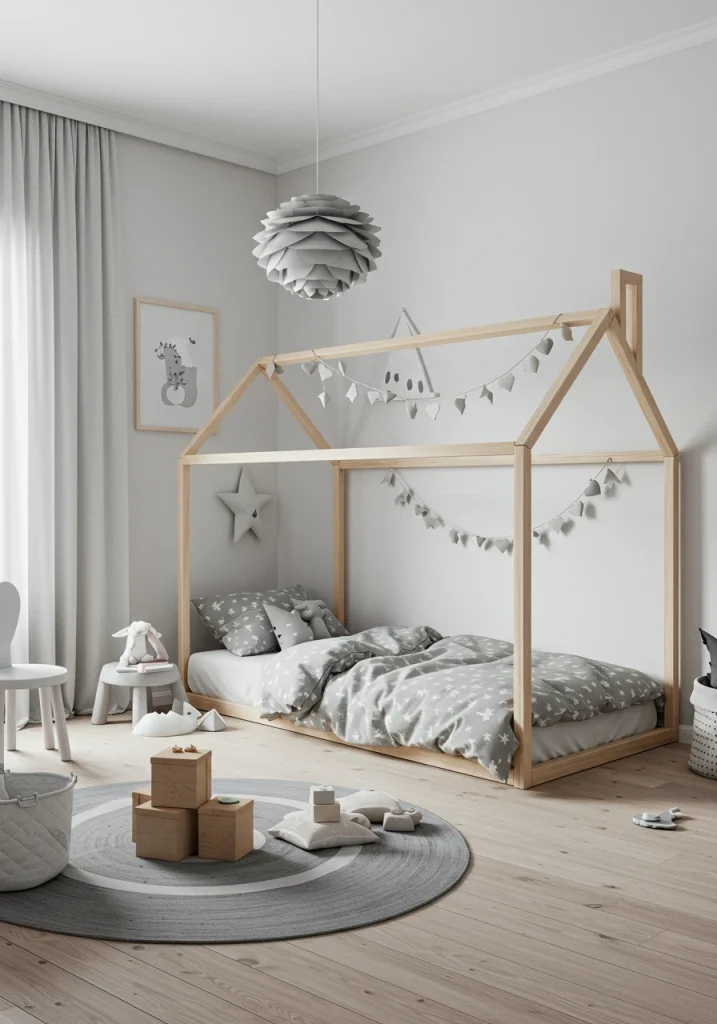
11. A Bold and Graphic, Modern Room
For a look that is energetic, fun, and very contemporary, a bold and graphic, modern style is a fantastic choice for a kid’s bedroom. This style is all about clean lines, simple, geometric shapes, and a high-contrast color palette. It’s a great way to create a room that feels playful and stimulating without being too “cutesy.”
I love this style for its confident use of color and pattern.
- Color Palette: A high-contrast palette of black and white is a classic, graphic foundation. Then, add one or two, bold, bright, primary or secondary accent colors, like a sunny yellow, a fire engine red, or a vibrant teal.
- Patterns: Bold, simple, geometric patterns like wide stripes, polka dots, or a Swiss cross pattern.
- Furniture: Simple, clean-lined, modern furniture with a minimalist feel.
For a high-impact enhancement, paint a large, bold, graphic mural on one of the walls. A series of large, overlapping, colorful circles or a bold, mountain range graphic can be a stunning and very modern focal point.

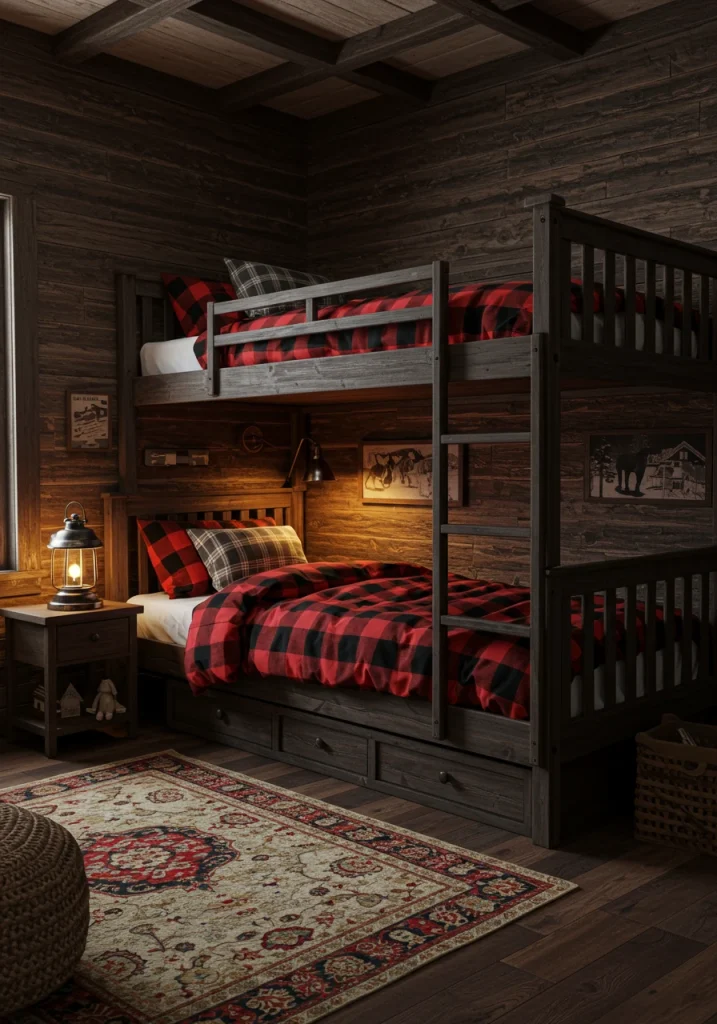
12. The Cozy, Rustic Adventure Bunk Room
To create a room that feels like a cozy, cabin-in-the-woods sleepaway camp, a rustic, adventure-themed bunk room is a fantastic choice. This style is perfect for a shared kids’ room or for a child who loves the outdoors. It’s all about celebrating natural, rugged materials and creating a warm, enveloping, and imaginative atmosphere.
This is a theme that I love for its cozy and nostalgic feel. It’s like a permanent, indoor campout.
- Bunk Beds: A sturdy, solid wood or a log-style bunk bed is the centerpiece of the room.
- Materials: An accent wall of rustic, reclaimed wood or shiplap, and cozy, textural textiles.
- Textiles: Classic, rustic patterns like plaid, buffalo check, and fair isle. Use flannel sheets and wool blankets.
- Decor: Vintage camping gear, old maps, and pennant flags can be great, thematic wall decor.
For an enhancement that adds to the adventurous, fort-like feel, hang a simple, canvas curtain on the lower bunk. This will give the child on the bottom bunk their own, private, den-like space.
13. Create a “Dress-Up” or Costume Corner
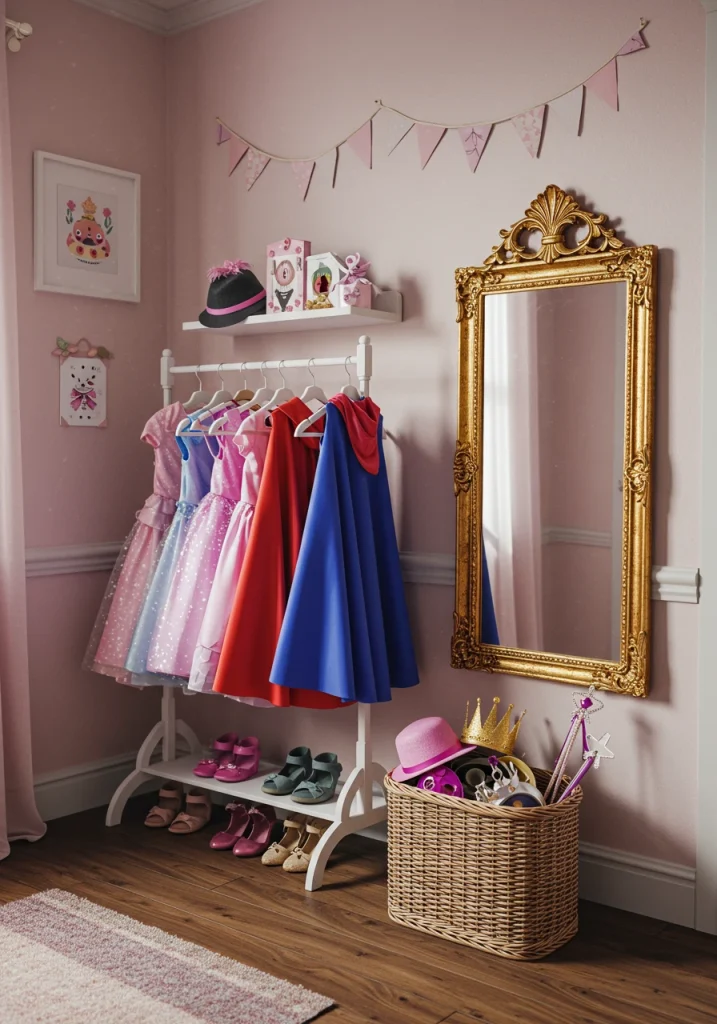
For many children, imaginative play and dressing up in costumes is a huge part of their daily life. Instead of having costumes in a messy pile in a bin, a very creative and fun idea is to create a dedicated, beautiful, “dress-up” corner. This not only keeps the costumes organized, but it also elevates them to a special status, encouraging imaginative play.
This is a simple detail that can bring a lot of joy.
- A Hanging Rack: Use a simple, wall-mounted clothing rack or a small, freestanding one to hang all the beautiful dresses, capes, and costumes.
- A Mirror: A full-length, shatterproof mirror is essential for them to admire their transformations.
- A Basket for Accessories: Use a beautiful, woven basket or a small, vintage trunk to hold all the hats, wands, swords, and other accessories.
For an enhancement that adds a touch of backstage glamour, hang a small, marquee-style, light-up star or their initial on the wall above the dress-up corner.
14. Use the Walls for Book Storage
In a small bedroom, a bulky, traditional bookcase can take up a lot of precious floor space. A brilliantly creative and space-saving solution is to use your walls for book storage. Slim, wall-mounted shelving can hold a huge number of books without taking up any footprint on your floor.
The best type of shelving for a kid’s room is a forward-facing, “picture ledge” style shelf. I always recommend these to my clients.
- Forward-Facing is Key: This style of shelf displays the beautiful, colorful covers of the books, rather than the narrow spines. This is much more visually appealing for a child and makes them much more likely to grab a book and start reading.
- Placement: Install three or four of these ledges, one above the other, on an empty wall to create a beautiful and functional, library-like feature wall.
- Space-Saving: These ledges are very narrow and have a very minimal profile on the wall.
For an enhancement, paint your picture ledges a fun, bright, accent color that contrasts with your wall color. This will make your library wall an even more vibrant and playful feature.

15. Lay Down a Soft, Playful Area Rug
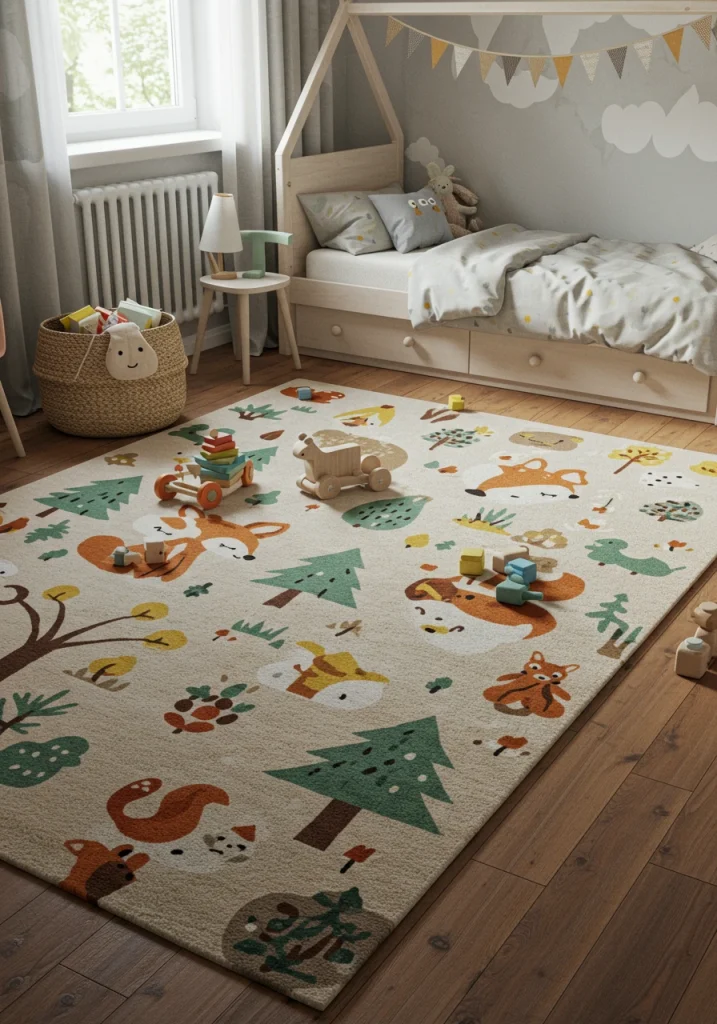
A soft, comfortable, and playful area rug is a must-have for any kid’s bedroom. The floor is a major play surface for children, and a soft rug will provide a warm, comfortable, and cushioned spot for them to sit, build, and play. A rug is also a fantastic way to anchor the room, define the play area, and introduce a large dose of color, pattern, and personality.
I always tell my clients that the rug is a place to have fun in a kid’s room.
- Softness is Key: Look for a rug with a soft, plush pile that will be comfortable to sit on. A wool or a high-quality, soft synthetic is a great choice.
- Playful Patterns: Don’t be afraid of a fun, colorful pattern. A rug with a pattern of animals, a cityscape, or a simple, bold, geometric can be a great, imaginative feature.
- Washable is a Plus: Look for a rug that is machine-washable for easy cleanup of any spills or messes.
For an enhancement that is both fun and functional, choose a rug that is also interactive, like a rug that is designed to look like a racetrack for toy cars or a map of a town.
16. A Bold and Graphic, Modern Room
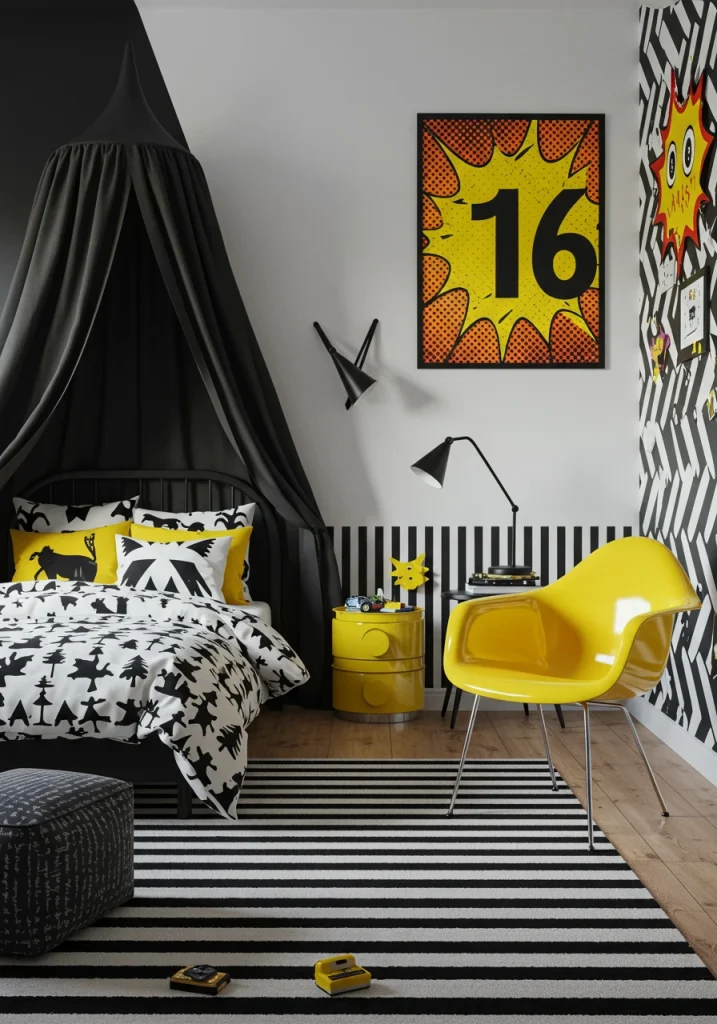
For a look that is energetic, fun, and very contemporary, a bold and graphic, modern style is a fantastic choice for a kid’s bedroom. This style is all about clean lines, simple, geometric shapes, and a high-contrast color palette. It’s a great way to create a room that feels playful and stimulating without being too “cutesy.”
I love this style for its confident use of color and pattern.
- Color Palette: A high-contrast palette of black and white is a classic, graphic foundation. Then, add one or two, bold, bright, primary or secondary accent colors, like a sunny yellow, a fire engine red, or a vibrant teal.
- Patterns: Bold, simple, geometric patterns like wide stripes, polka dots, or a Swiss cross pattern.
- Furniture: Simple, clean-lined, modern furniture with a minimalist feel.
For a high-impact enhancement, paint a large, bold, graphic mural on one of the walls. A series of large, overlapping, colorful circles or a bold, mountain range graphic can be a stunning and very modern focal point.
Conclusion
Designing a bedroom for kids is a wonderful opportunity to create a space that is as unique and special as they are. As we’ve explored through these 16 ideas, a successful child’s room is a thoughtful blend of playful imagination and smart, practical functionality. By creating distinct zones for sleeping, playing, and learning, maximizing storage with accessible systems, and incorporating fun, interactive, and personal elements, you can craft a space that will support and inspire your child as they grow.


