Are you looking for creative flat backyard landscaping ideas to transform your one-dimensional space into a dynamic and visually stunning oasis? A flat backyard can feel like a blessing and a curse. On one hand, it’s a perfectly blank canvas, free of tricky slopes to navigate.
On the other hand, that same flatness can feel monotonous, boring, and lacking in character. Without natural hills or contours, it’s up to you to create the sense of depth, height, and intrigue that makes a landscape truly captivating. The key is to think in three dimensions, strategically adding elements that break up the horizontal plane.
This guide will provide you with over 17 creative and achievable ideas to do just that. We’ll explore how to add vertical height, create the illusion of depth, and design distinct “outdoor rooms” that will turn your flat, uninspired yard into a multi-dimensional and breathtaking retreat.
1. Add Architectural Height with a Pergola or Arbor
The fastest and most impactful way to combat flatness is to introduce a significant vertical element. A pergola or an arbor is an architectural structure that instantly adds height, defines a space, and creates a sense of enclosure.
A pergola, with its open-rafter roof, can be placed over a patio to create a designated outdoor dining or living room, providing a sense of intimacy and dappled shade. A smaller arbor can be used to create a charming gateway from one part of the yard to another, signaling a transition.
I often tell clients that a vertical structure gives the eye a place to go besides the horizon. It adds a crucial third dimension to a flat landscape. You can build these structures from warm, rustic wood for a traditional look, or from sleek metal for a more modern aesthetic.
- Pergola: Creates a defined “room” over a patio or seating area.
- Arbor: Creates a beautiful entryway or a transition point along a path.
- Materials: Cedar or redwood for a classic look; powder-coated steel or aluminum for a modern feel.
For an enhancement that adds softness and romance, train a beautiful, flowering climbing vine, like a wisteria, climbing rose, or clematis, to grow up and over your pergola or arbor. The greenery will soften the hard lines of the structure and create a stunning, living canopy.
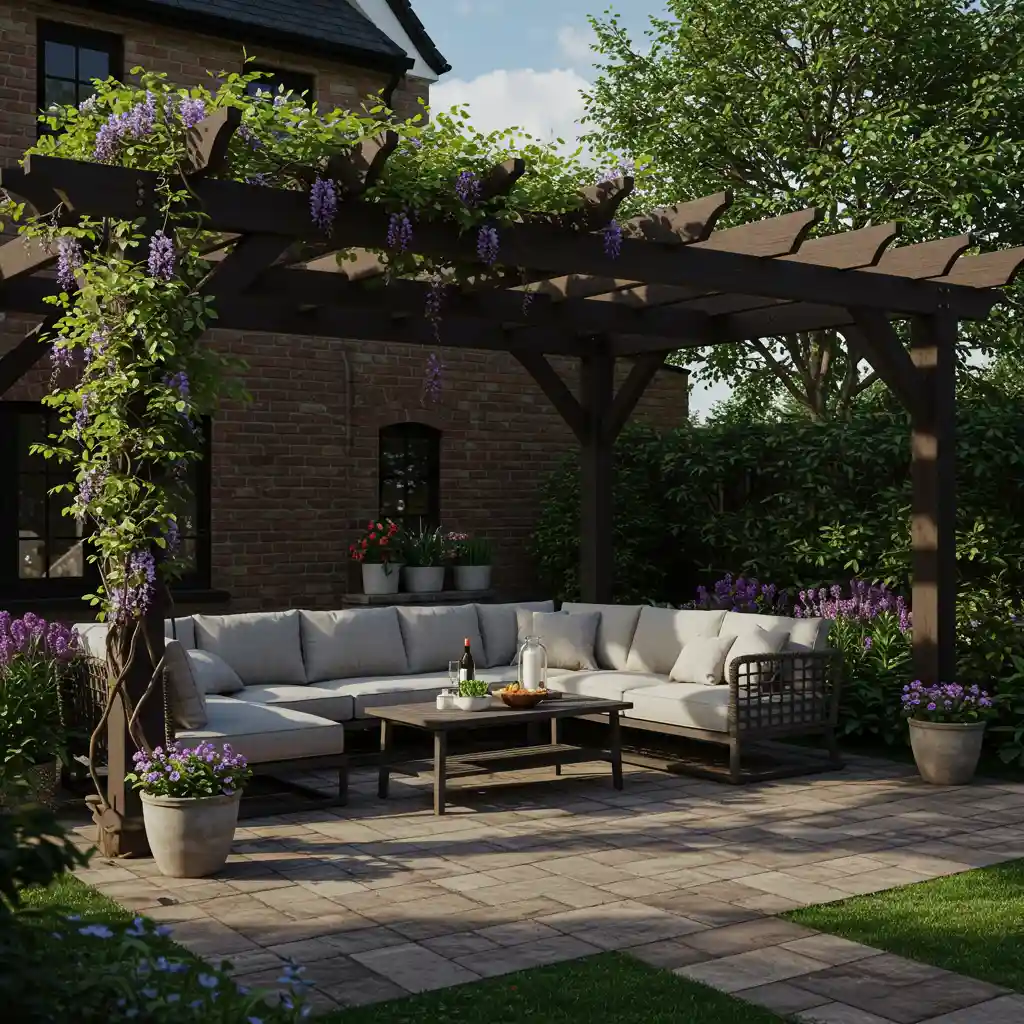
alt text: A flat backyard made interesting with the addition of a wooden pergola to create vertical height.
2. Create Gentle Hills with Garden Berms
If you can’t build up with structures, build up with earth. A “berm” is a man-made, gently rounded mound of soil that is a brilliantly effective and naturalistic way to create different levels and contours in a flat yard. By simply mounding up high-quality soil and planting on and around it, you can create the illusion of a naturally rolling landscape. Berms are perfect for creating privacy, directing drainage, or simply adding visual interest.
Creating a berm is a very organic process. I always advise clients to make the shape long, kidney-shaped, and asymmetrical for the most natural look. A well-placed berm can screen an unwanted view or create a beautiful, elevated backdrop for a perennial garden bed.
- Shape: Keep the slopes gentle and the shape long, curved, and irregular.
- Construction: Use a mix of clean fill and high-quality topsoil or garden soil.
- Planting: Plant the berm with a mix of plants of varying heights—perhaps a small ornamental tree at the peak, some mid-sized shrubs on the slopes, and low-growing groundcover at the base.
For an enhancement, incorporate a few strategically placed landscape boulders into your berm. Nestle them into the soil so they look like natural rock outcroppings, which will add to the realism and textural interest of your man-made hill.
Image Gen 2

alt text: A flat backyard with a creative garden berm added to create gentle, rolling hills and visual interest.
3. Design a Meandering, Winding Pathway
A straight path in a flat, rectangular backyard can often accentuate the boring geometry of the space. A creative solution is to design a gently meandering or winding pathway. A curved path is a classic landscape design trick because it slows the journey, creates a sense of mystery (you can’t see what’s around the bend), and makes the yard feel longer and more interesting to explore. It forces the eye—and the feet—to move through the space in a more organic, less direct way.
The key to a successful winding path is to make the curves long, graceful, and have a purpose. You don’t want it to look like a random squiggle. I often tell clients to use a garden hose to lay out the curve on the ground first, adjusting it until it feels natural. The path should appear to curve around a feature, like a large tree, a garden bed, or a cluster of boulders.
- Materials: Stepping stones, fine gravel, or shredded bark mulch are all great, easy options for a winding path.
- Design: Create long, sweeping curves, not tight, jerky turns.
- Function: Use the path to connect different “rooms” or features in your backyard.
For a beautiful enhancement, plant slightly taller perennials or grasses on the inside curve of your path. This will partially obscure the view of what’s ahead, enhancing the sense of mystery and discovery as you walk along it.
Image Gen 3

alt text: A winding stepping stone path used to create a sense of journey and depth in a flat backyard.
4. Layer Your Garden Beds by Height
One of the most fundamental principles for adding interest to a flat space is layering. This is especially true in your garden beds. Instead of planting a single row of flowers all at the same height, think like a landscape painter and create a composition with a foreground, a middle ground, and a background. This creates a sense of depth and visual rhythm that is far more pleasing to the eye.
This is a simple concept that even a beginner can master. I always provide my clients with a simple planting formula: “tall, medium, and small.”
- Back Layer (Tall): Place your tallest plants at the back of the bed (the part farthest from the viewer). This could be a tall ornamental grass, a flowering shrub, or a plant on a trellis.
- Middle Layer (Medium): In front of the tall plants, add your medium-height perennials and flowers.
- Front Layer (Small): At the very front edge of the bed, use your lowest-growing plants, like a mounding groundcover or a neat border plant.
For an enhancement, pay attention to foliage texture as well as height. Place a plant with fine, feathery foliage next to one with large, bold leaves. The contrast in texture will add another layer of sophisticated, professional-looking detail to your garden bed.
Image Gen 4

alt text: A beautifully layered garden bed in a flat backyard, with tall plants in the back and short plants in the front to create depth.
5. Create “Outdoor Rooms” or Zones
A flat, open backyard can often feel vast and undefined. A clever way to add interest and functionality is to divide the space into a series of smaller, distinct “outdoor rooms” or zones, each with its own purpose. This is a core principle of good landscape design. By creating these zones, you break up the monotonous single plane and create a more intimate and engaging series of spaces to move through.
You don’t need walls to create rooms. You can use a variety of visual cues to define different zones. I often use a change in ground material—for example, a wooden deck for the “dining room” that steps down to a gravel patio for the “lounge.” A low hedge, a row of planters, or even just a large outdoor rug can also be used to signal the boundary of a room.
- Define a Dining Zone: A space for your table and chairs on a hard, level surface like a paver patio.
- Create a Lounge Zone: A comfortable seating area for conversation, perhaps around a fire pit on a gravel or deck surface.
- Design a Play Zone: A designated area for kids with a soft surface like rubber mulch or artificial turf.
For an enhancement, use a pergola or an arbor (Idea #1) to create a “ceiling” for one of your most important outdoor rooms, like the dining area. This will dramatically increase the sense of enclosure and intimacy.
Image Gen 5

alt text: A flat backyard divided into distinct outdoor rooms for dining, lounging, and playing to add structure and interest.
6. Install a Sunken Patio or Fire Pit Area
Instead of building up, you can create levels and dimension by digging down. A sunken patio or fire pit area is a stunning, high-impact feature that can make a flat backyard feel incredibly dynamic and custom-designed. By excavating an area just a foot or two and building low retaining walls around it, you can create a cozy, enclosed “pit” that feels like a secret, secluded retreat.
This is one of my favorite creative solutions for a flat yard. The change in elevation provides a powerful sense of arrival and enclosure. The retaining walls that form the sides of the sunken area also provide a fantastic opportunity for integrated, built-in seating, which is incredibly space-efficient. As often showcased in high-end design magazines, a sunken lounge is the epitome of cool.
- Excavation: You’ll need to dig down 12-24 inches to create the sunken effect.
- Retaining Walls: Use materials like stacked stone, modern concrete blocks, or wood to build the low walls.
- Seating: Build simple, flat-topped benches directly into the retaining walls.
- Drainage: Ensure you have a plan for drainage, like a layer of gravel under your patio surface, as the area will be lower than the rest of the yard.
For an enhancement, install subtle, hardscape lighting into the walls of your sunken patio. LED strip lights tucked under the capstone of the retaining wall can cast a beautiful, downward glow onto the patio floor, creating a stunning and intimate ambiance at night.
Image Gen 6

alt text: A creative sunken fire pit area with built-in seating, adding depth and levels to a flat backyard.
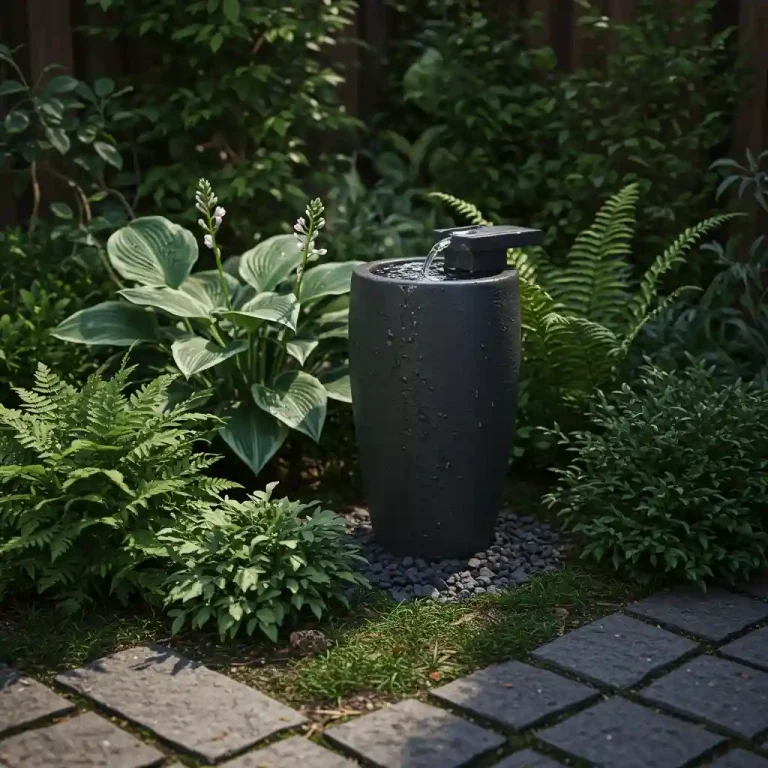
7. Use a Striking Water Feature as a Focal Point
In a flat landscape that lacks natural features, a striking water feature can be a powerful and engaging focal point. The combination of beautiful form, the reflective quality of the water’s surface, and the soothing sound of moving water can instantly elevate a boring backyard. The key is to choose a feature that has some height and a strong, sculptural presence.
Forget a simple birdbath. Think of a tall, modern, pillar-style fountain, a beautiful, overflowing ceramic urn, or a feature wall with water cascading down its surface. I love to use a simple, disappearing fountain, where the water bubbles up from a gravel-filled basin and then vanishes, for a clean, modern, and child-safe option. The vertical movement of the bubbling water adds a much-needed upward line to a flat yard.
- Choose a Style: Modern, traditional, or naturalistic rock-style fountains are all available.
- Verticality is Key: A taller feature will have more impact in a flat space.
- Sound Matters: Choose a feature with a sound you find relaxing, from a gentle bubble to a more prominent cascade.
For a dramatic enhancement, surround your water feature with a ring of dark, polished river stones and uplight it with a single, hidden spotlight. At night, the illuminated, moving water will be a mesmerizing focal point.
Image Gen 7

alt text: A tall, modern water feature used as a vertical focal point in a flat backyard.
8. Incorporate Large Boulders
For a natural and powerful way to add dimension and an “instant-age” feel to a flat yard, incorporate a few large landscape boulders. Boulders provide height, texture, and a strong, sculptural presence that can break up a monotonous, flat expanse. They can be used as a standalone focal point, grouped together to create a naturalistic outcropping, or used to retain a small garden berm.
The key to making boulders look like they belong is to choose a type of rock that is native to your region and to set them properly. I always tell my clients that a boulder should look like the “tip of the iceberg.” You should always bury at least one-third of the rock’s mass into the ground. This makes it look like it’s a natural feature emerging from the earth, not just a rock sitting on top of the lawn.
- Source Locally: Choose rocks that are common in your local area for the most natural look.
- Group Them: Arrange boulders in natural-looking clusters of odd numbers (e.g., three or five).
- Set Them Deep: Bury the bottom third of the boulder to make it look like it’s part of the landscape.
As an enhancement, plant a few low-growing, cascading plants, like a creeping sedum or a low, mounding ornamental grass, at the base of your boulders. This will help to soften their hard edges and make them look even more integrated into the landscape.
Image Gen 8
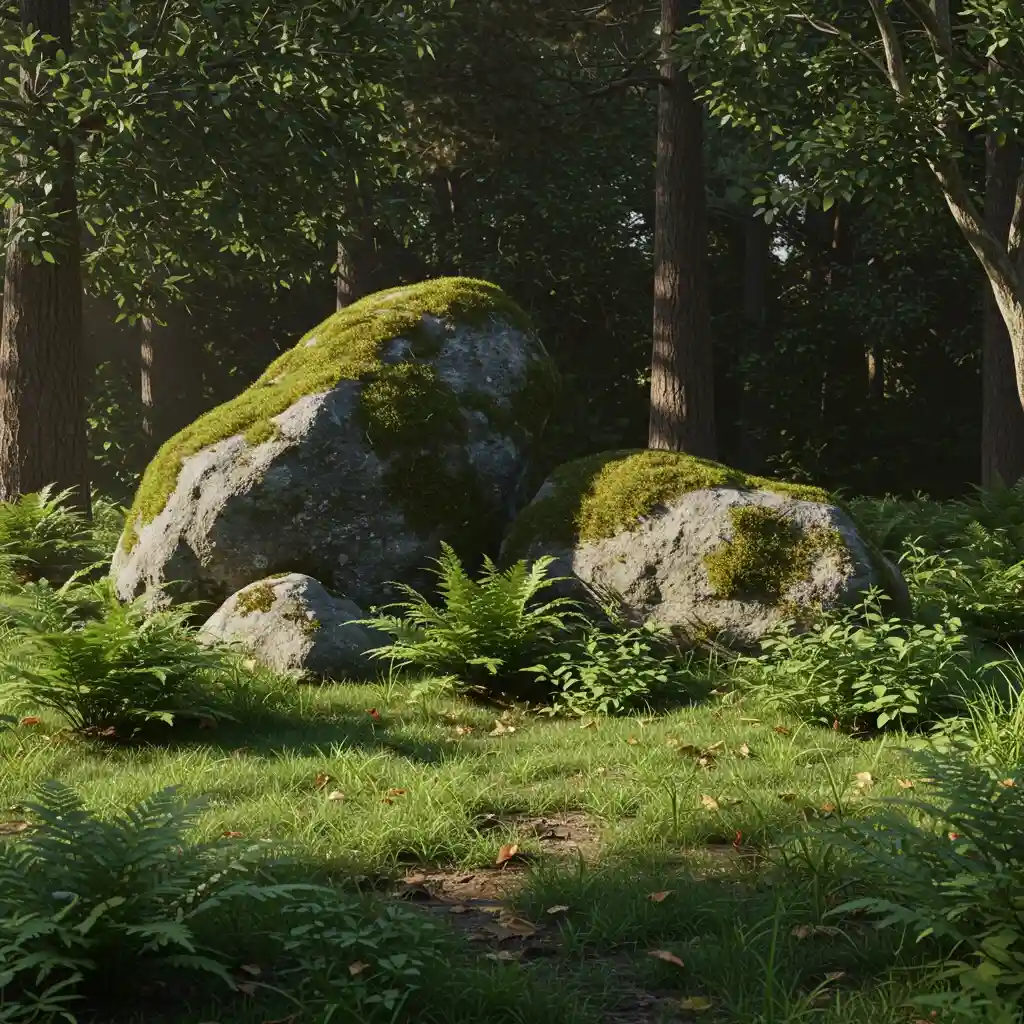
alt text: A cluster of large, strategically placed boulders used to add natural height and texture to a flat garden.
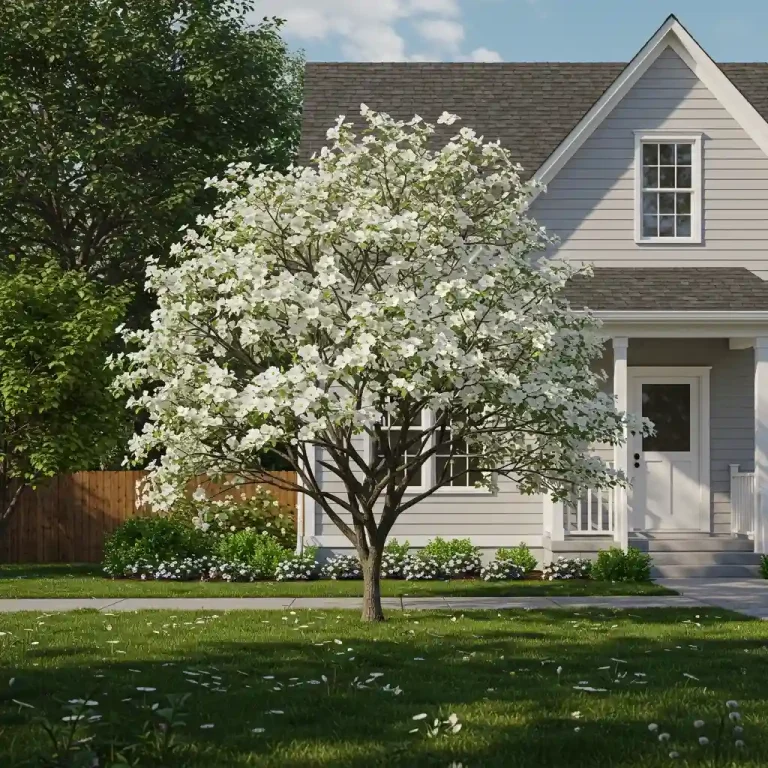
9. Plant a Grove of Columnar Trees
A single, large shade tree can sometimes feel out of scale in a small, flat backyard. A more creative and modern solution is to plant a small grove or a row of tall, narrow, columnar trees. These are trees that have a naturally upright, slender growth habit, like an exclamation point. Planting a group of three or five of them can create a stunning, vertical statement and the feeling of a small, private woodland.
This is a fantastic way to create a privacy screen or to define a boundary without the harshness of a solid fence. The repetition of the strong, vertical forms is a classic modern design technique. I love how the light filters through the trunks of a small grove, creating beautiful patterns of light and shadow on the ground.
- Good Columnar Choices: Italian Cypress, Columnar Hornbeam, Columnar Swedish Aspen, or Sky Pencil Holly. (Choose one that is appropriate for your climate).
- Plant in Groups: Plant an odd number (3, 5, or 7) in a gentle cluster or a straight, formal row.
- Give Them Space: Even though they are narrow, make sure to give them enough room to mature.
For a dramatic enhancement, uplight each tree in your grove with its own, individual, low-voltage spotlight. At night, the illuminated trunks and canopies will create a stunning, vertical rhythm in your landscape.
Image Gen 9

alt text: A row of tall, narrow, columnar trees used to add vertical interest and a privacy screen to a flat backyard.
10. Use a Dry Creek Bed for Flow and Texture
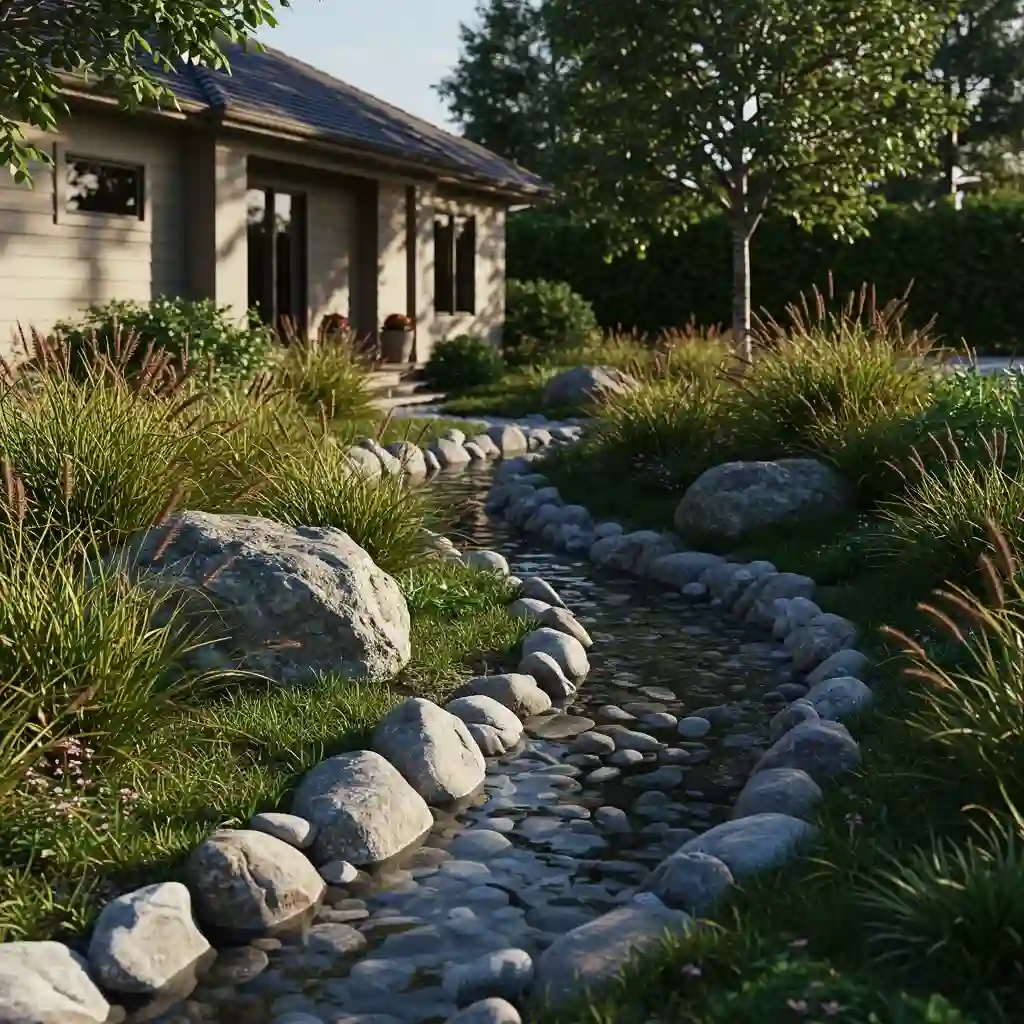
A dry creek bed is a landscape feature made of various-sized river rocks and stones, designed to mimic the look of a natural, dried-up stream. It’s a brilliantly creative and low-maintenance way to add texture, a sense of movement, and a strong, curving line to a flat backyard. It can be used to solve a real drainage problem, or it can be a purely decorative element that adds a huge amount of naturalistic charm.
I love this feature because it introduces a beautiful, rugged texture and can be used to visually connect different parts of the yard. The “stream” can meander through a garden bed, connecting a patio area to a back corner of the yard.
- Use a Variety of Rocks: Use larger stones and small boulders for the “banks” and a mix of smaller, smooth river rocks for the “stream bed.”
- Create a Meandering Path: A gentle, curving shape will look much more natural than a straight line.
- Add Plants: Plant drought-tolerant grasses and perennials along the edges of the creek bed to soften the look and make it feel more natural.
As an enhancement, build a simple, small, wooden footbridge that arches over a section of your dry creek bed. This adds another layer of charm and enhances the sense of journey through your landscape.
Image Gen 10
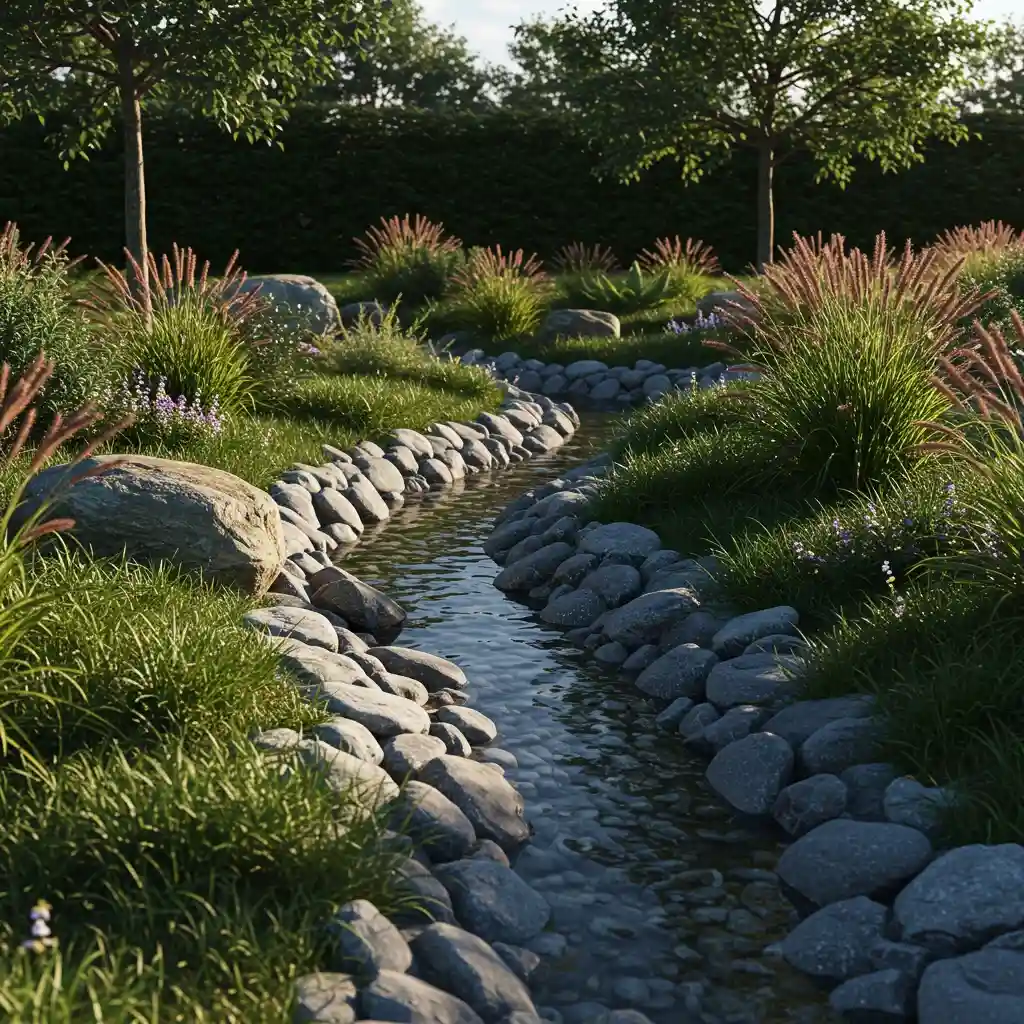
alt text: A creative, winding dry creek bed made of river stones used to add texture and flow to a flat backyard.
11. Hang a Garden Swing or Hammock
Adding an element that moves can be a great way to break up the static feeling of a flat yard. A garden swing or a hammock, suspended from a sturdy frame or between two trees, introduces a sense of playful relaxation and gentle movement. It also acts as a beautiful, sculptural focal point and an irresistible invitation to come outside and unwind.
A simple, modern wooden A-frame can be built to support a swing or a hammock if you don’t have mature trees. I love how a hanging element can create a destination within the yard. Place it in a back corner or under a pergola to create a semi-private retreat.
- Choose a Style: A classic, two-person garden swing, a modern, sculptural hanging chair, or a bohemian, woven hammock.
- Ensure Safety: The support structure, whether it’s a frame or a tree branch, must be extremely sturdy and properly installed.
- Add Comfort: Pile your swing or hammock with comfortable outdoor pillows and a soft throw.
For an enhancement, plant a fragrant, flowering vine, like jasmine, at the base of your swing’s support frame. As it grows, it will climb the frame, surrounding you with a beautiful, sweet scent as you swing.
Image Gen 11
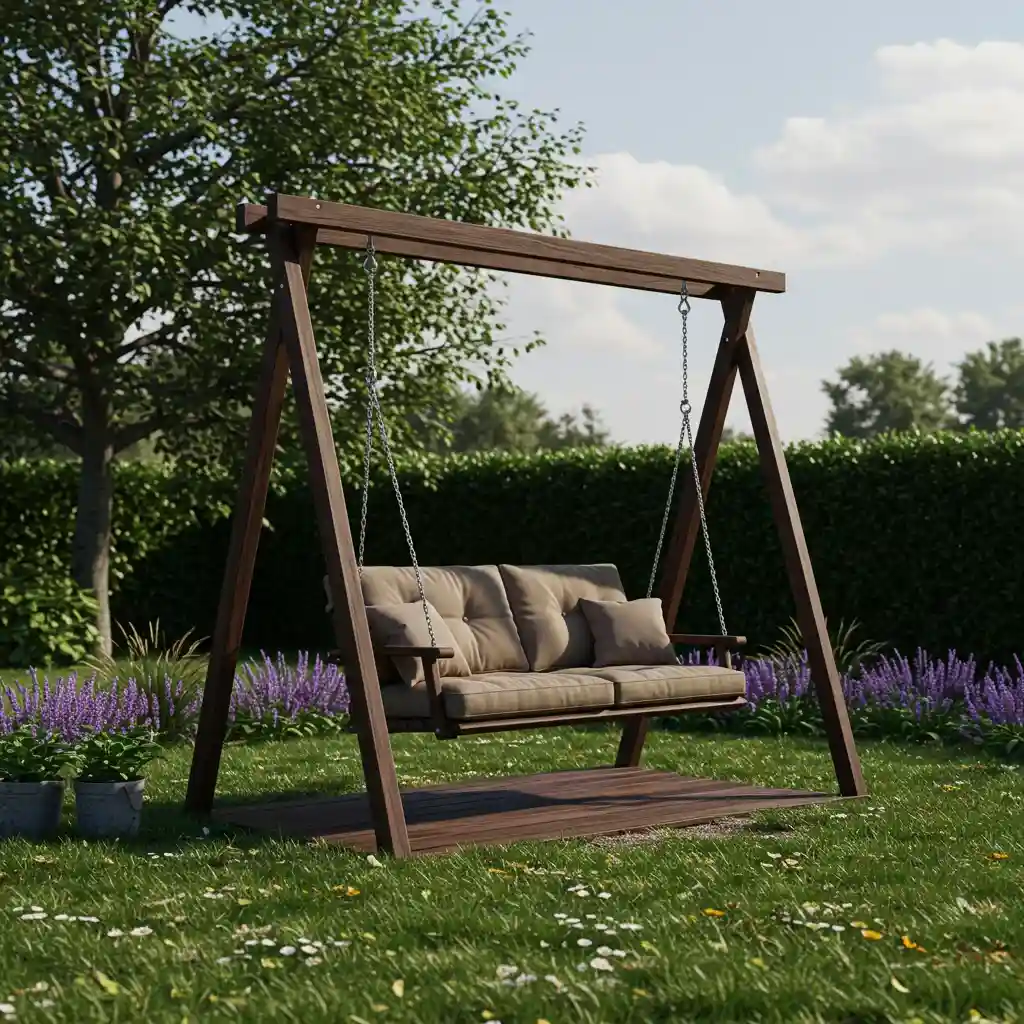
alt text: A comfortable garden swing on a modern wooden frame used as a focal point in a flat backyard.
12. Incorporate Tall Planters and Urns
A simple and flexible way to add instant height and structure to a flat backyard is with a collection of tall planters and urns. Instead of using only low, squat pots, incorporating a few tall, slender, or large-scale containers can create dramatic, vertical focal points. This is a particularly great strategy for patios or decks where you can’t plant directly in the ground.
I often advise my clients to use a symmetrical arrangement of two identical, tall planters to flank an entryway or to frame a view. You can also create a beautiful, layered look by clustering a group of three planters of the same style but in varying heights.
- Go for Height: Look for planters that are at least 24-36 inches tall.
- Style: Choose a style that matches your home, from classic, ornate urns to sleek, modern, rectangular planters.
- Planting: Use an upright, “thriller” plant in your tall planters to accentuate their verticality. A tall ornamental grass, a small evergreen topiary, or a canna lily are all great choices.
As an enhancement, place a simple, low-voltage spotlight on the ground, aimed up at your tall planter. At night, the light will highlight the planter and the plant, turning it into a dramatic, illuminated sculpture.
Image Gen 12
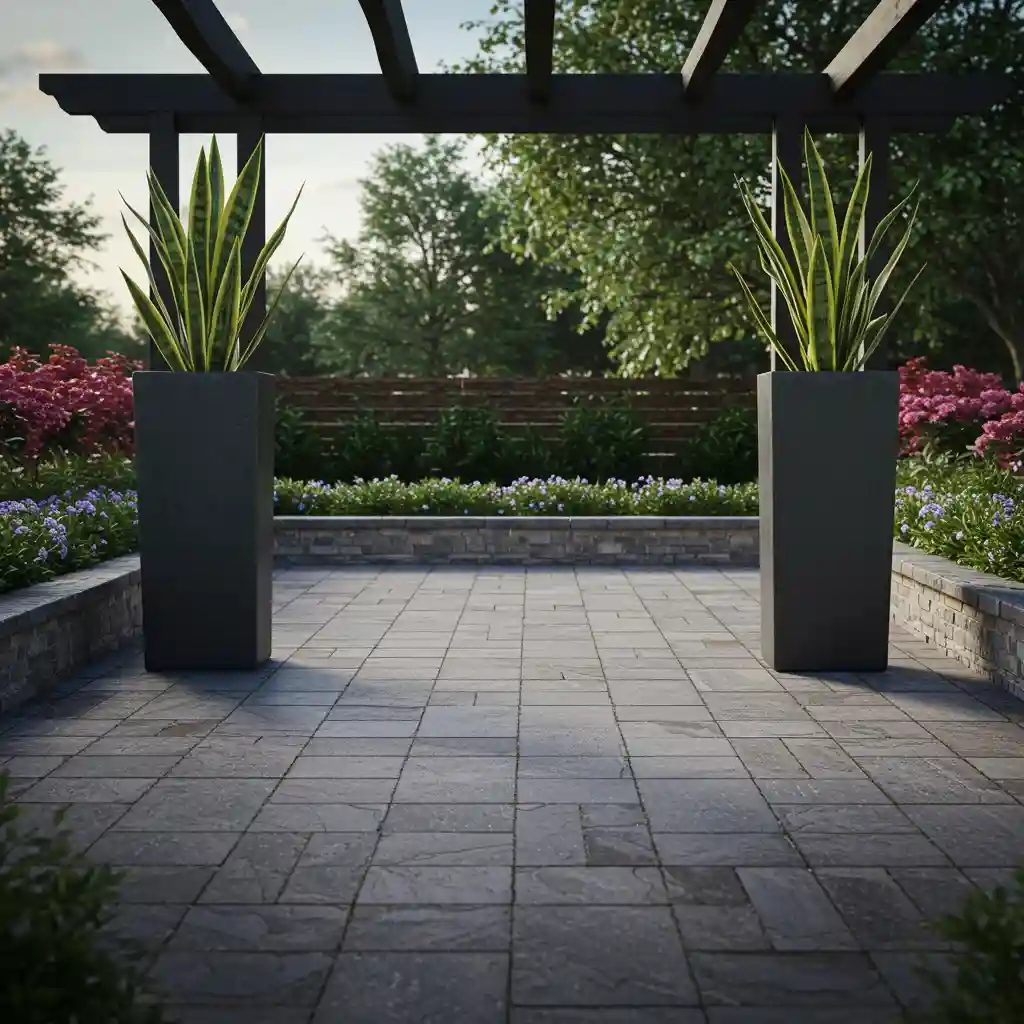
alt text: A pair of tall, modern, rectangular planters used to add vertical height to a flat patio.
13. Use a Combination of Hardscape Materials
To break up the monotony of a single, flat surface, a creative solution is to use a combination of different hardscape materials. This can create a lot of visual interest, texture, and can also be used to define different “outdoor rooms” (Idea #8). The contrast between the different materials is a powerful design tool.
Instead of a patio made entirely of concrete, for example, consider adding an “inlay” or a border of a different material. I love the look of a patio made of large concrete pavers with paths of small, smooth river stones running between them. The contrast between the smooth, modern concrete and the rustic, textured stones is stunning.
- Material Combinations: Wood and concrete, pavers and gravel, or stone and brick all work beautifully together.
- Define Zones: Use one material for the dining area, another for the lounge area.
- Create Patterns: Use a contrasting material as a decorative border or to create a simple, graphic pattern.
For a budget-friendly enhancement, you can create this effect by simply removing a few pavers from your existing patio and filling the gaps with a decorative gravel or planting a low-growing groundcover. This simple change can break up a boring, monolithic slab.
Image Gen 13
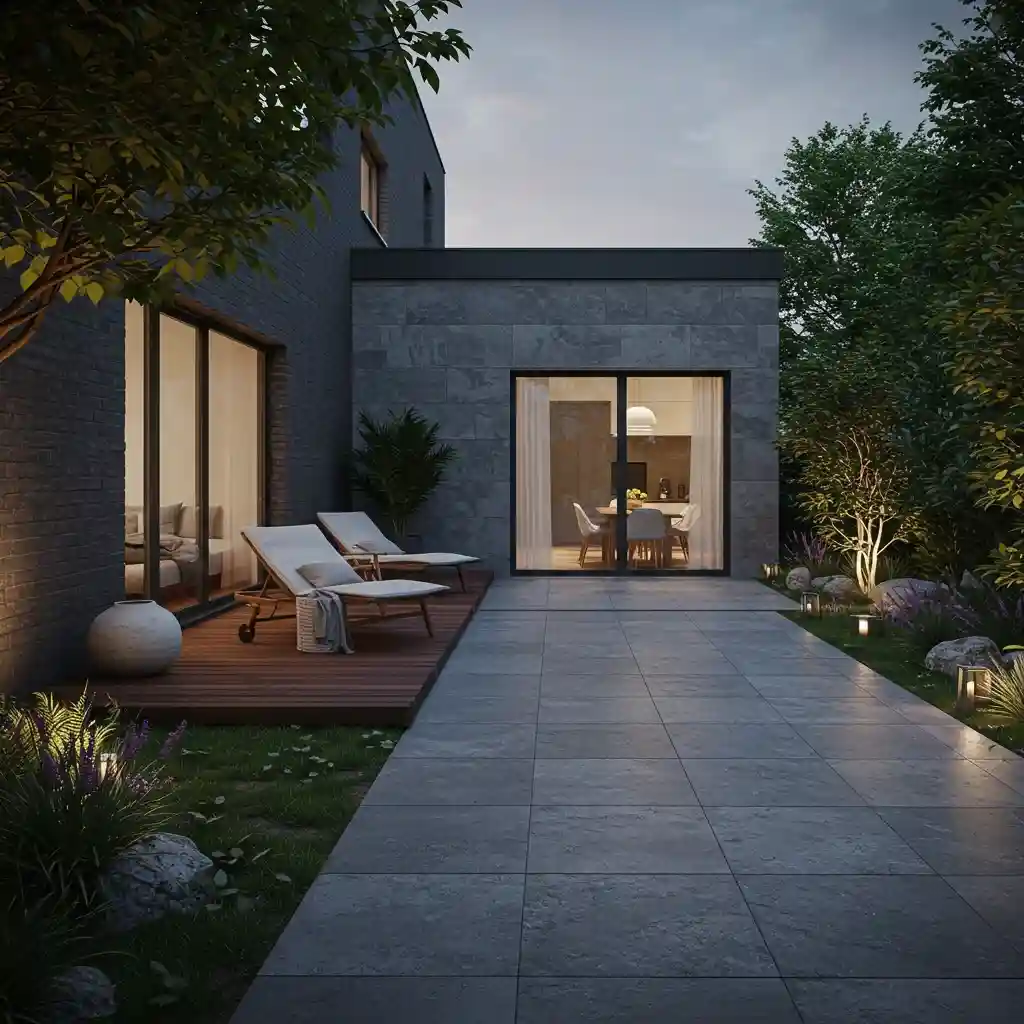
alt text: A modern, flat backyard with distinct zones created by combining a wooden deck and a concrete paver patio.
14. Install Tall, Slender Privacy Screens
A privacy screen doesn’t have to be a solid, boring fence. A series of tall, slender, decorative screens can provide the necessary privacy while also acting as a stunning, vertical, sculptural element in a flat backyard. These screens can be used to block an unwanted view, to create a private nook for a hot tub, or to serve as a beautiful, artistic backdrop for a seating area.
Look for screens made from interesting materials. Laser-cut metal screens with botanical or geometric patterns are a popular modern choice, as they cast beautiful, intricate shadows as the sun moves. A simple screen made of horizontal wood slats can also provide a clean, modern, and warm look. I often suggest placing three or five tall, narrow panels in a row with a small gap between each one.
- Function: Provides privacy and acts as a vertical design element.
- Materials: Laser-cut metal, wood slats, or even a durable composite material.
- Placement: Use them to create a backdrop, to screen a view, or to define an “outdoor room.”
As an enhancement, install low-voltage lighting behind your screens. At night, the light will shine through the cut-out patterns of a metal screen or the gaps in a wood slat screen, turning it into a beautiful, glowing lantern.
Image Gen 14
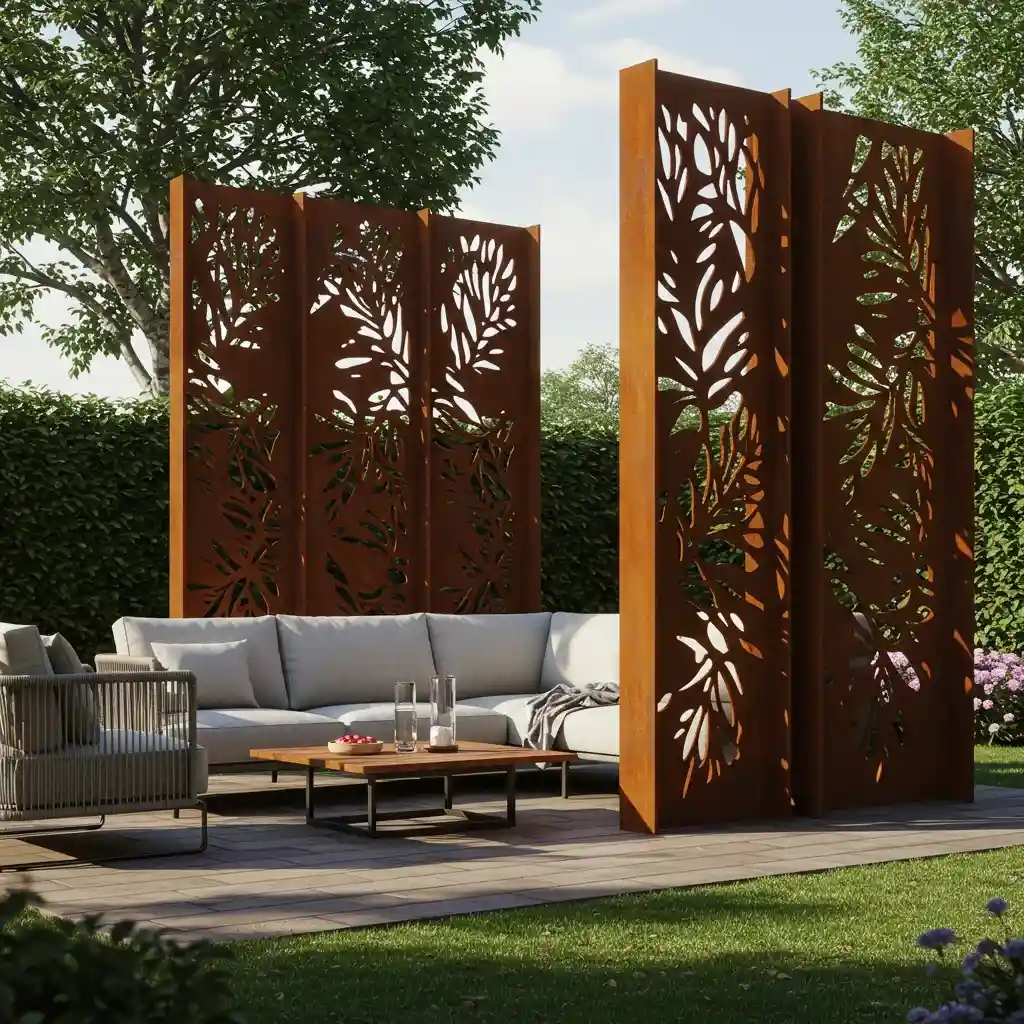
alt text: A series of tall, laser-cut metal privacy screens used to add height and artistry to a flat backyard.
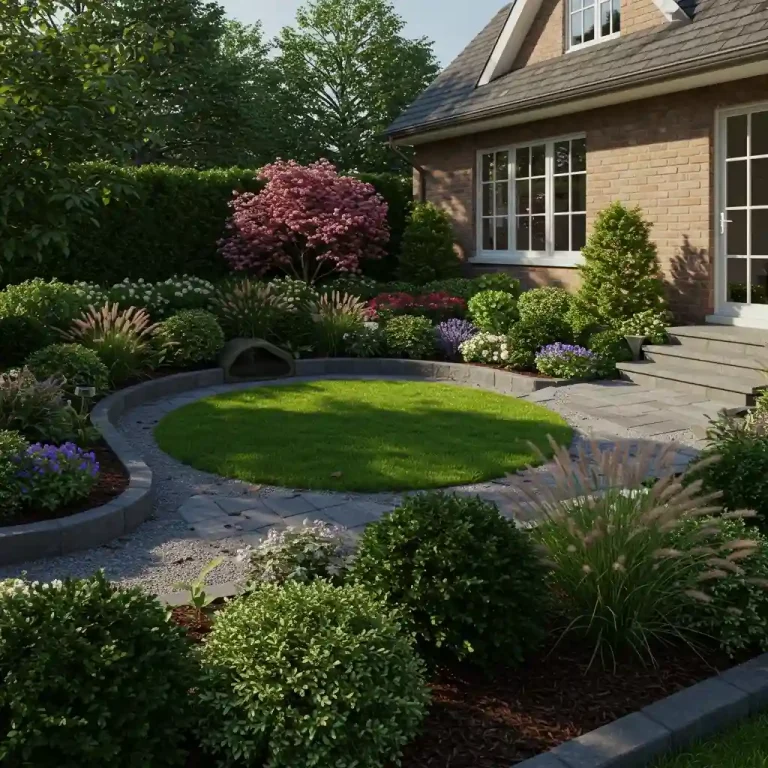
15. Create a Central Focal Point
In a flat, open yard, the eye can sometimes wander without a place to rest. Creating a single, strong, central focal point can give your entire landscape a sense of purpose and order. This is a classic design principle that works perfectly in a flat space. The focal point becomes the “hub” around which the rest of your design radiates.
Your central focal point should be something substantial and visually interesting. It could be a beautiful, multi-tiered fountain. It could be a cozy fire pit area, designed as a circle in the middle of the yard. It could be a single, stunning, sculptural specimen tree. Or it could be a piece of large-scale, outdoor-friendly art or sculpture.
I always advise clients that a good focal point should look good from all angles, as it will be the centerpiece of their yard.
- Ideas: A fire pit, a water feature, a specimen tree, or a sculpture.
- Placement: Place it in a central, highly visible location.
- Design Around It: Arrange your pathways and seating areas to lead towards and engage with the focal point.
For an enhancement, design your hardscaping to radiate out from your central focal point. For example, you could have a circular paver patio with a fire pit in the very center, with pathways extending out from the circle like the spokes of a wheel.
Image Gen 15
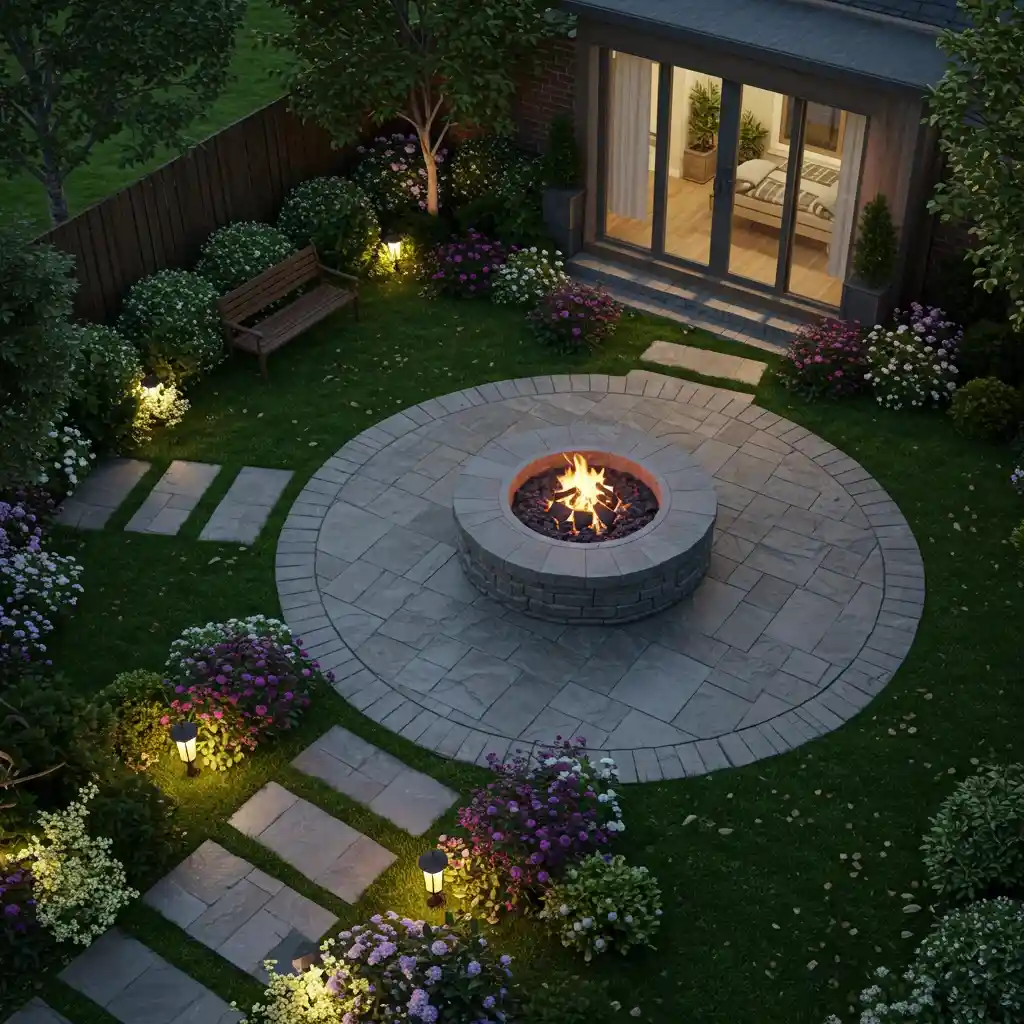
alt text: A flat backyard designed with a central fire pit on a circular patio as a strong focal point.
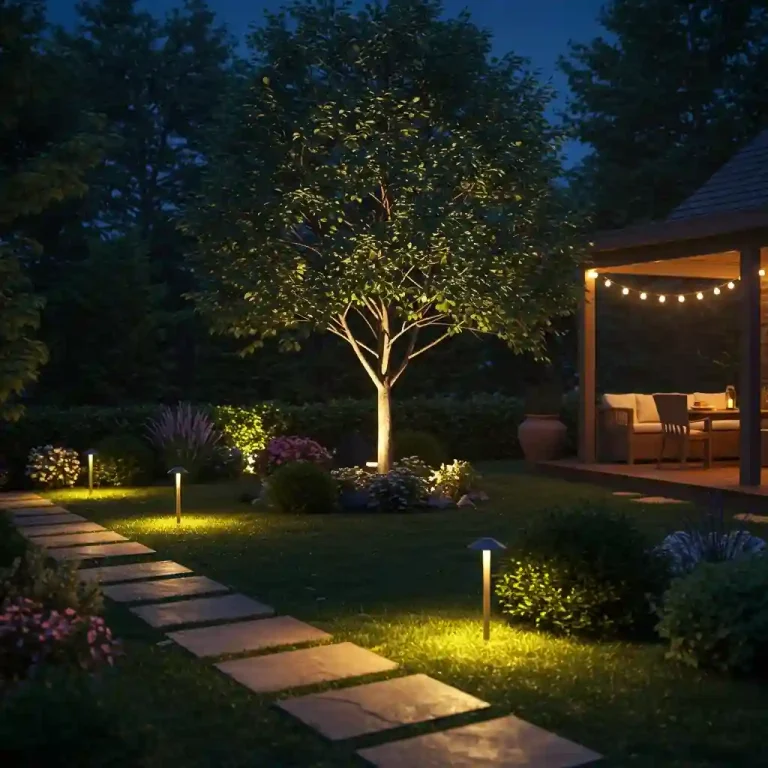
16. Use Landscape Lighting to Create Depth at Night
At night, you have a unique opportunity to completely reshape the perception of your flat backyard using landscape lighting. Strategic lighting can create a dramatic sense of depth, mystery, and height that isn’t visible during the day. The key is to use a technique called “layering,” lighting elements in the foreground, middle ground, and background of your yard.
This is one of my favorite creative tricks. By placing a soft light on a plant near your patio (foreground), a stronger light on a beautiful tree in the middle of the yard (middle ground), and another light on the fence or a hedge at the very back (background), you create distinct visual planes. This gives the yard an incredible sense of depth that it doesn’t have in the daylight.
- Uplighting: Use spotlights at the base of trees, sculptural plants, or textured walls to create dramatic shadows and highlight their form.
- Path Lighting: Use low, downward-facing lights to safely illuminate your walkways.
- Moonlighting: Place a light high up in a mature tree and aim it downwards to create a beautiful, natural, moonlit effect on the ground below.
As an enhancement, use a smart, low-voltage lighting system that you can control with your phone. This allows you to dim different zones and change the lighting scheme to create different moods for different occasions.
Image Gen 16
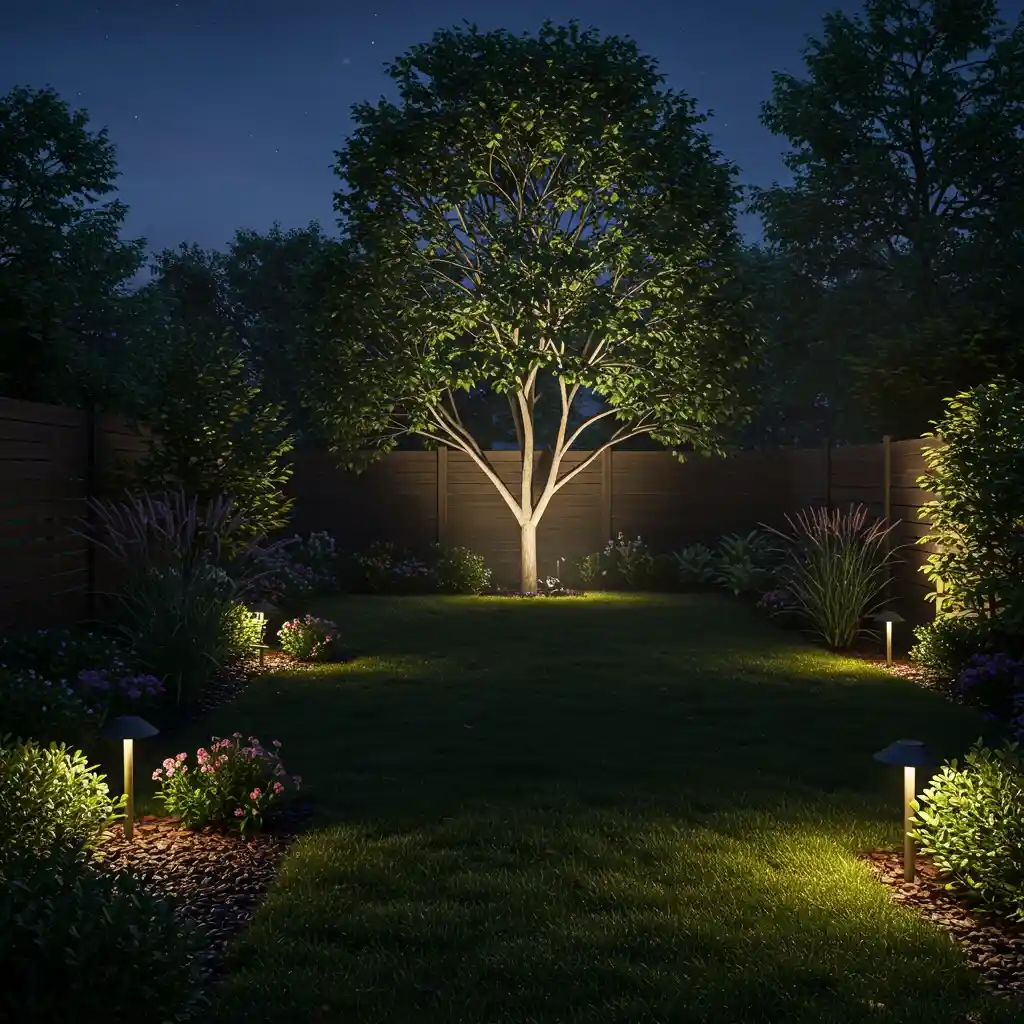
alt text: A flat backyard at night with layered landscape lighting creating a dramatic sense of depth.
17. Incorporate a Raised Deck
Similar to a sunken patio, a raised deck is a fantastic way to introduce a new level to your flat backyard. Even a deck that is only raised by a foot or two can create a powerful sense of separation and dimension. It elevates your main seating or dining area, turning it into a “stage” that overlooks the rest of the garden. This change in elevation instantly breaks up the monotony of a flat yard.
A raised deck can also be a practical solution for a yard that has poor drainage, as it lifts your living space up above any soggy ground. I love the look of a simple, modern, raised platform deck. It feels like an island of tranquility in the middle of the yard.
- Creates a New Level: The most direct way to add height and dimension.
- Defines a Zone: Clearly separates the main living/dining area from the garden.
- Practical for Slopes: Can make a slightly sloped yard feel perfectly level.
For a creative enhancement, build a wide set of “grand staircase” style steps leading up to your raised deck. These wide steps can double as informal, multi-level seating for large parties.
Image Gen 17
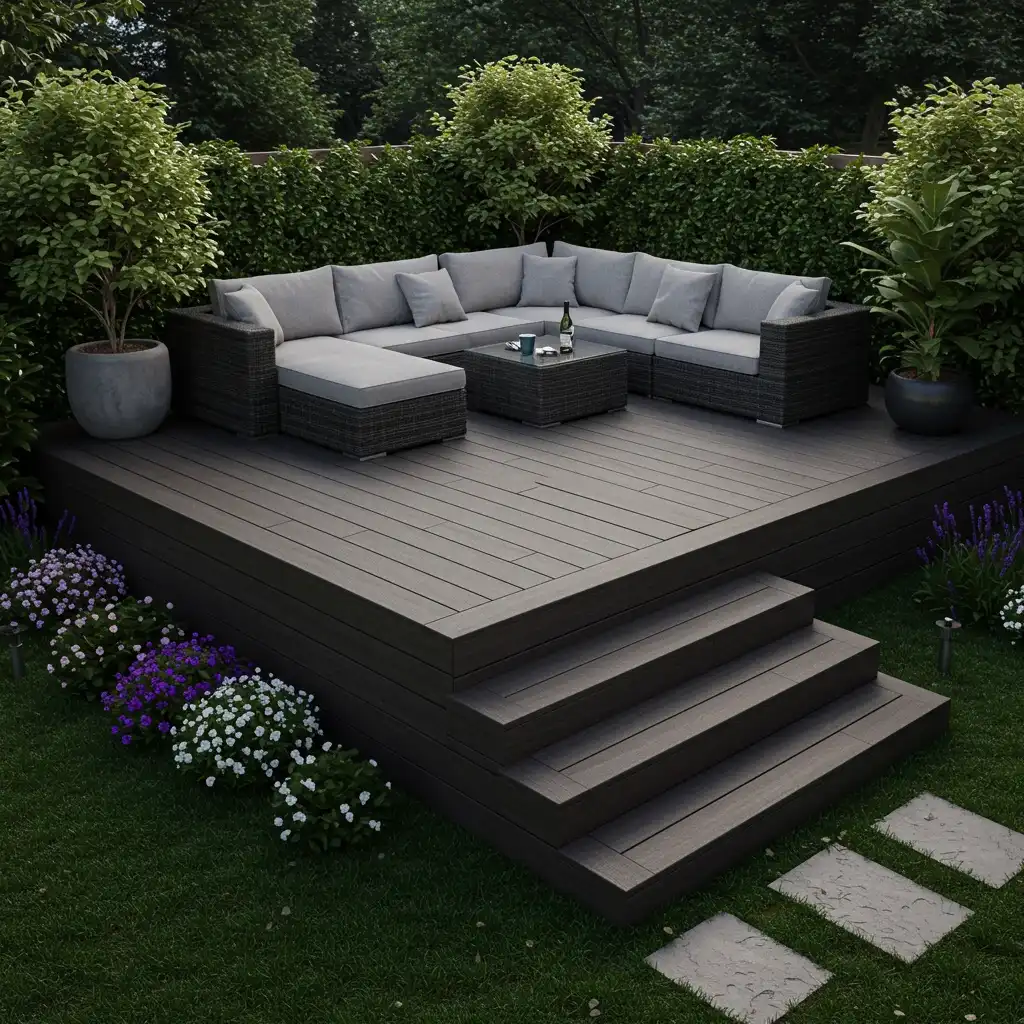
alt text: A raised deck creating a new level and a defined outdoor room in a flat backyard.
Conclusion
A flat backyard, far from being a design challenge, is an open invitation to be creative. As we’ve explored through these 17+ ideas, the key to transforming a monotonous space is to intentionally introduce elements of height, depth, and structure. By building up with pergolas and berms, digging down with sunken patios, and creating a sense of journey with winding paths and distinct “outdoor rooms,” you can craft a dynamic and engaging landscape. The goal is to break up the single horizontal plane and create a multi-dimensional oasis that is a joy to be in.
I encourage you to look at your flat yard as a blank canvas with limitless potential. You don’t need to be a professional designer to implement these concepts. Start with one or two ideas that resonate with you—perhaps by adding a simple arbor or layering your garden beds. You will be amazed at how these strategic additions can turn your flat backyard into a stunning, character-filled retreat that you and your family will love for years to come. For more ideas on garden structure, you might enjoy our guide to pathways and patios. [Link to related article on designing garden paths and patios].
Frequently Asked Questions (FAQs)
- How do you make a flat backyard interesting?The key is to add vertical elements and create a sense of depth. Use things like pergolas, tall planters, or columnar trees to add height. Create a sense of depth and journey with winding paths, layered garden beds, and by dividing the space into smaller “outdoor rooms.”
- How do you add height to a flat garden?You can add structural height with pergolas, arbors, and raised decks. You can add natural height with garden berms (man-made hills), large boulders, and by planting tall, narrow trees or using tall planters.
- What should I put in the middle of my flat backyard?The middle of a flat yard is the perfect place for a strong focal point. This could be a circular patio with a fire pit, a beautiful, sculptural tree, a striking water feature, or a piece of outdoor art. This gives the yard a center of gravity and a sense of purpose.
- How do you create levels in a flat backyard?You can create levels by either building up or digging down. Building a raised deck or a series of terraced, raised garden beds will create upward levels. Digging a sunken patio or a “conversation pit” will create a downward level. Both are highly effective at adding dimension.
- My flat backyard is just a boring square. How can I fix it?Break up the boxiness! Use a winding, curved pathway instead of a straight one. Create asymmetrical, curved garden beds instead of rectangular ones. Place a circular patio in one corner instead of a square one in the center. These organic shapes will soften the harsh geometry of the yard.
- What is a garden “berm”?A berm is a man-made mound or small hill, typically with a gentle, natural-looking slope. It’s an easy and effective way to add contour, height, and interest to a flat landscape.
- How does landscape lighting add depth?By lighting elements at different distances from the viewer—something close, something in the middle, and something at the very back of the yard—you create distinct visual planes at night. This gives the brain strong cues about the depth of the space, making it feel much larger and more dramatic than it does during the day.