
Are you looking for contemporary living room design inspirations to create a space that is stylish, comfortable, and perfectly in tune with the times? Unlike “modern” design, which refers to a specific historical era, contemporary style is the ever-evolving aesthetic of right now. It’s a fluid and sophisticated look that borrows the best from modernism, minimalism, and other movements, blending them into a style that is clean-lined yet comfortable, and curated yet livable. A contemporary living room is a sanctuary of understated elegance, designed for the way we live today.
This guide will provide you with 16 essential ideas that define the contemporary living room, from choosing the right furniture and color palette to mastering lighting and texture, to help you create a space that is both on-trend and timelessly chic.
1. Build on a Sophisticated Neutral Palette
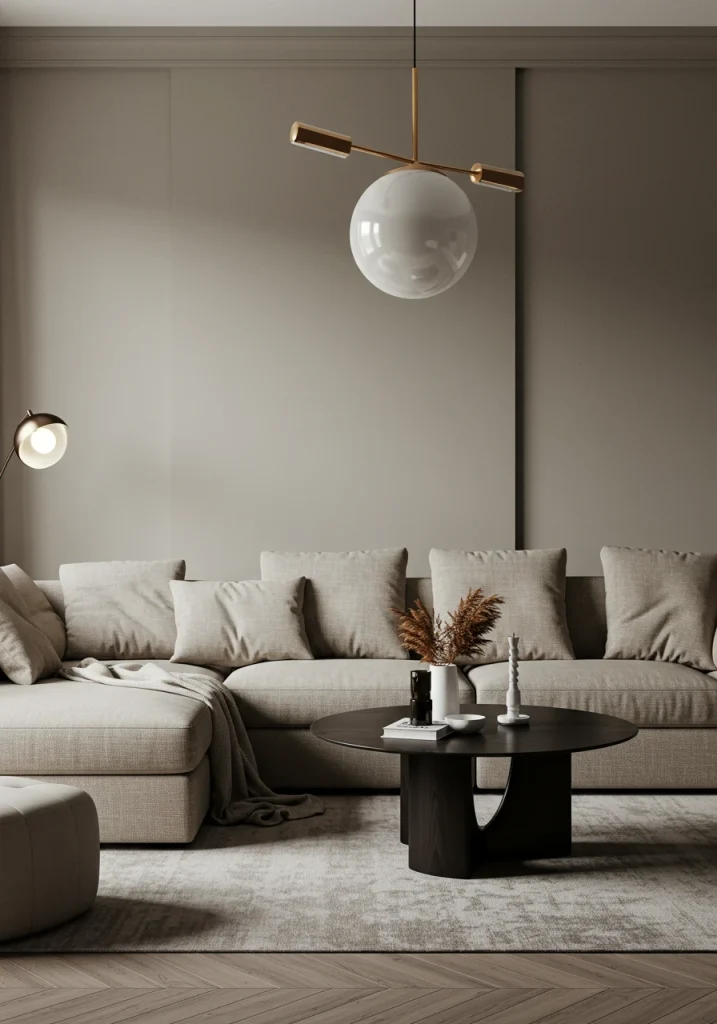
The foundation of almost every contemporary living room is a sophisticated neutral color palette. This is not about creating a boring, beige room, but about using a nuanced and layered palette of whites, creams, grays, “greiges,” and blacks as a calming and versatile backdrop. A neutral foundation allows the form of your furniture, the texture of your textiles, and the beauty of your artwork to take center stage.
I always start my contemporary projects with a carefully chosen neutral for the walls. This creates a serene, gallery-like canvas to build upon.
- Warm Neutrals: Creamy whites, warm beiges, and “greige” (a mix of gray and beige) create a soft, inviting, and organic feel.
- Cool Neutrals: Crisp whites and soft, cool grays can create a more formal, architectural, and minimalist look.
- Layering Tones: Use a variety of different shades of the same neutral (e.g., light gray walls, a medium-gray sofa, charcoal pillows) to create a rich, tonal, and sophisticated look.
For an enhancement, paint your walls, trim, and ceiling all in the same, soft, neutral color. This “color drenching” technique is a high-end designer move that blurs the architectural lines and makes the space feel seamless and serene.
2. Incorporate Curved Furniture
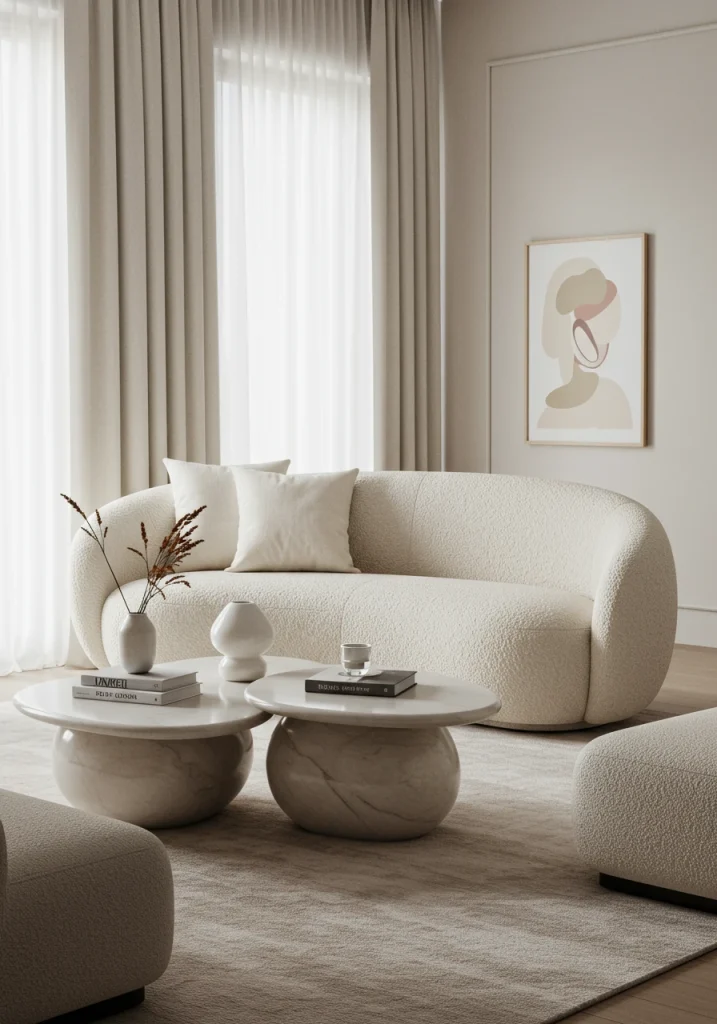
One of the most significant trends in contemporary design is the move away from sharp, rigid lines and towards soft, organic, and curved furniture. A sculptural, curved sofa, a pair of rounded “barrel” chairs, or a coffee table with a soft, amoeba-like shape can instantly add a sense of gentle flow and artistry to your living room. These pieces break up the boxiness of a room and feel more inviting and conducive to conversation.
This is a trend I have fully embraced in my own practice. The soft geometry of curved furniture is both chic and incredibly comfortable.
- The Curved Sofa: A serpentine or a gently curved sectional can be a stunning, sociable centerpiece.
- Accent Chairs: Look for “barrel” chairs, swivel chairs with a round base, or other armchairs with a soft, rounded silhouette.
- Tables: A round or an oval coffee table is a classic way to soften a seating area.
For a very on-trend enhancement, choose a piece of curved furniture upholstered in a highly textural, nubby fabric like boucle. The combination of the soft, rounded shape and the cozy, tactile fabric is the epitome of contemporary comfort.
3. Layer with Natural Textures
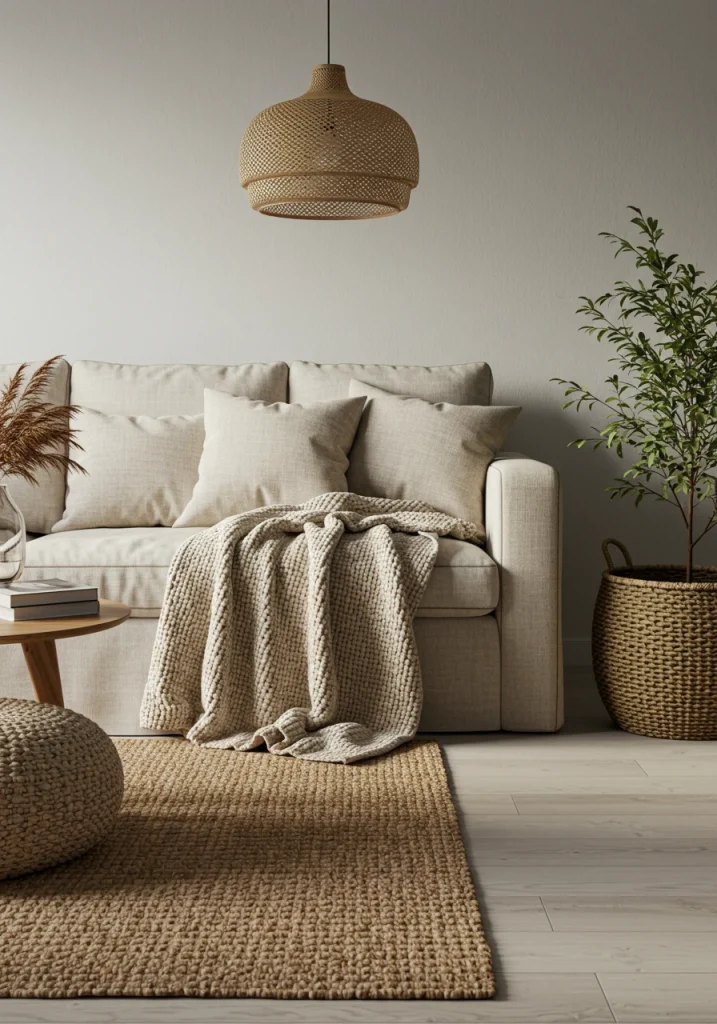
A contemporary living room is never cold or sterile. It is made warm and inviting through the generous layering of natural, tactile textures. This is a key principle for creating a space that feels both minimalist and cozy. The interplay of different textures adds depth, warmth, and a connection to the natural world.
I always create a “texture story” in my contemporary designs.
- Textiles: Use a mix of soft, natural fabrics like linen for curtains, wool and cashmere for throws, and velvet or boucle for pillows.
- Rugs: A large, hand-woven, natural fiber rug made of jute or sisal can provide a beautiful, rustic, and organic foundation.
- Baskets: A large, woven seagrass or rattan basket is the perfect, textural spot to store extra blankets.
For an enhancement, use a combination of textures on your sofa. For example, on a simple, linen-upholstered sofa, add a few, rich velvet pillows, a soft, faux fur cushion, and a chunky, hand-knit throw. The variety of textures is incredibly luxurious and inviting.
4. Use a Bold, Moody Accent Wall
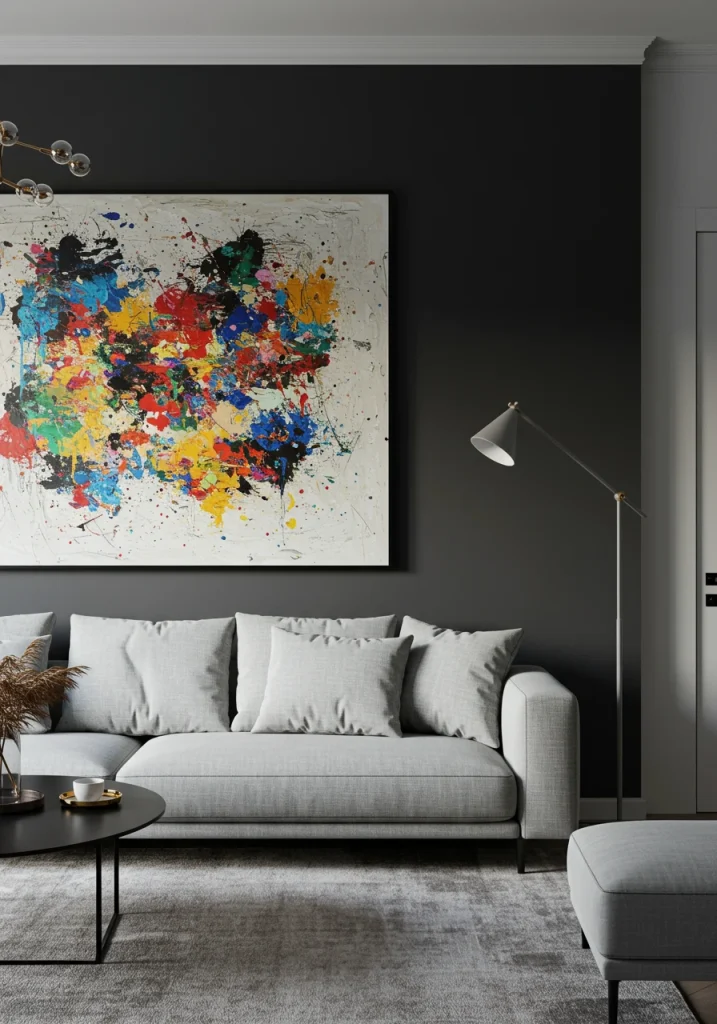
While the foundation of a contemporary room is often neutral, a bold, moody accent wall is a huge trend for adding drama, depth, and a sophisticated focal point. Painting the wall behind your sofa or a wall with a key architectural feature a deep, saturated color can create an incredibly chic and enveloping feel.
This is a fantastic way to add a dose of personality and a custom feel to your space. I love to use a paint with a soft, matte finish for a truly sophisticated, velvety look.
- Color Choices: Deep charcoal gray, a rich, inky navy blue, a dramatic, forest green, or even a soft, chalky black are all popular choices.
- Placement: The wall behind your main sofa is the perfect spot to create a dramatic backdrop.
- Balance: Pair your dark accent wall with lighter-colored furniture and plenty of warm, layered lighting to keep the space from feeling too dark.
For an enhancement, install a series of simple, vertical, wood slat panels on your dark accent wall. Paint the panels the same, matching color. This will add a subtle, textural, and very high-end architectural detail.
5. Bring in Warmth with Natural Wood Tones
To balance the clean lines and often neutral palette of a contemporary living room, it’s essential to incorporate the natural warmth and organic texture of wood. Wood is a timeless material that adds a necessary layer of soul and a connection to nature, keeping the space from feeling too cold or clinical.
This is a key ingredient for a livable and inviting contemporary space. I always make sure to include at least one significant wood element in my designs.
- Furniture: A beautiful media console, a coffee table, or a set of side tables in a warm, natural wood like oak or walnut.
- Architectural Details: A feature wall of light, vertical wood slats is a very popular, high-end trend.
- Flooring: Natural, light-toned hardwood floors, like white oak, are a classic foundation for a contemporary home.
For an enhancement that is both stylish and organic, use a “live edge” piece of wood for your coffee table or a console. A single slab of wood with its natural, uneven edge left intact is a stunning, one-of-a-kind, sculptural statement.
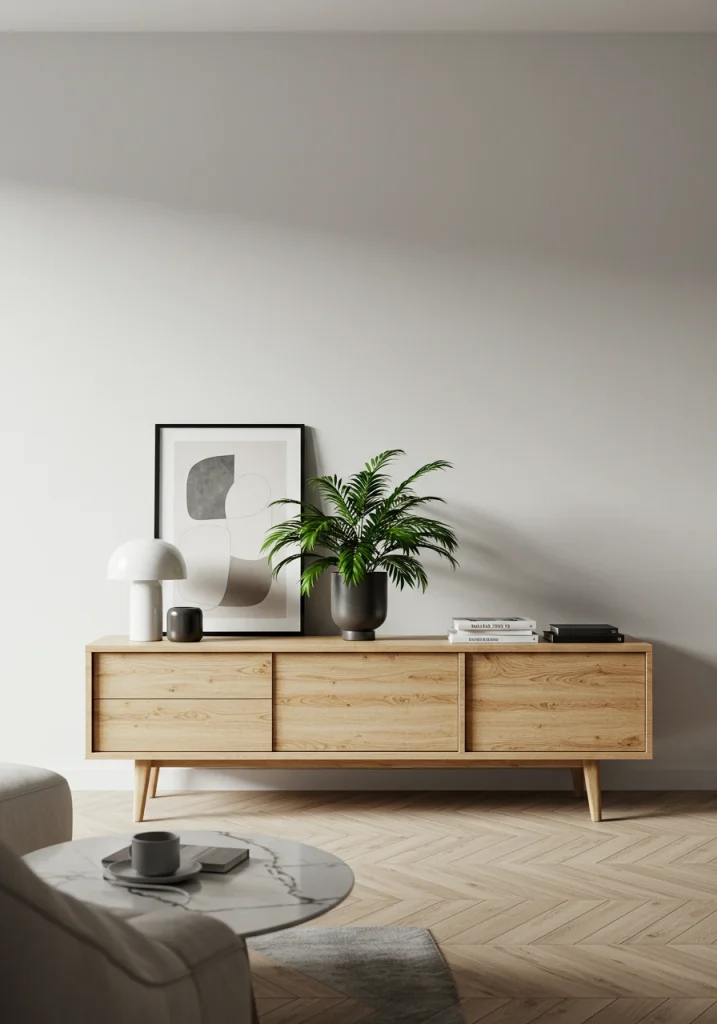
6. Choose a Low-Profile, Modular Sofa
The sofa is the largest piece of furniture in your living room, and for a contemporary look, the trend is towards low-profile, modular designs. A low-profile sofa, which sits closer to the ground, has a relaxed, lounge-like feel and can make a room with standard-height ceilings feel taller and more spacious. A modular design, which is composed of several, individual pieces, offers incredible flexibility.
I love modular sofas for their adaptability. You can rearrange the individual components to create a long sofa, an L-shaped sectional, or even two separate loveseats, allowing you to change your layout to suit any occasion.
- Low-Profile: Creates a relaxed, modern, and less imposing look.
- Modular: Offers the ultimate in flexibility for rearranging your furniture.
- Style: Look for a simple, clean, track-arm or armless design in a durable, textural, neutral fabric.
For an enhancement, choose a modular sofa that includes one or two “ottoman” pieces. These can be used to create a chaise lounge on either end of the sofa, or they can be pulled away to be used as extra seating.
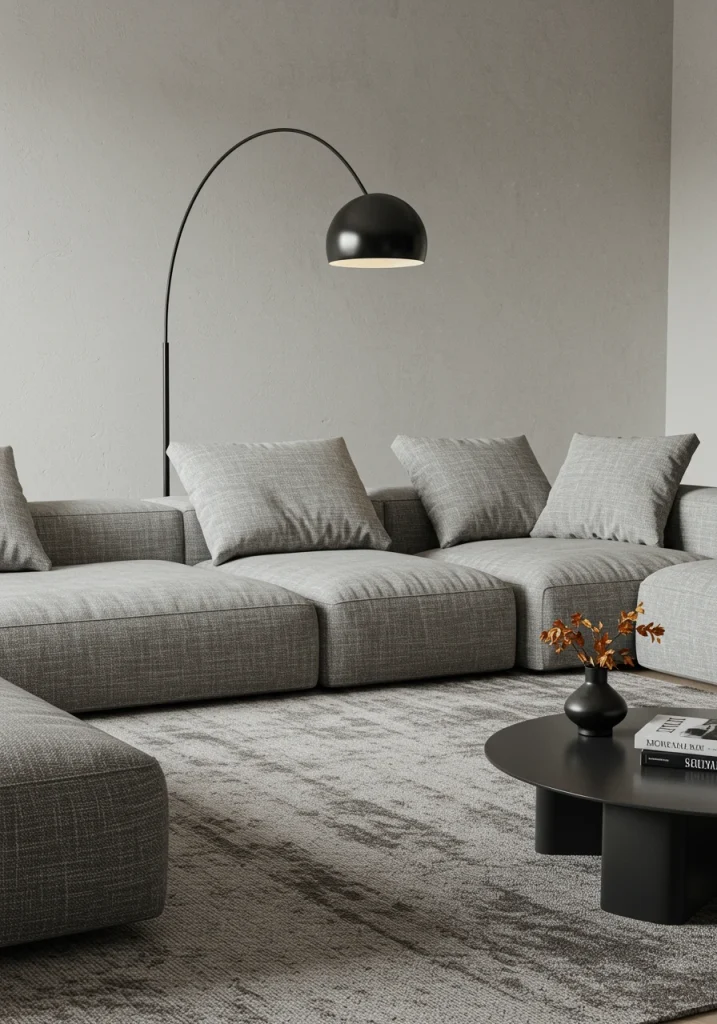
7. Make a Statement with Sculptural Lighting
In a contemporary living room, lighting is not just a utility; it is a key sculptural and artistic element. A stunning, statement light fixture can serve as the primary focal point of the room, adding a layer of drama, sophistication, and beautiful, ambient light. The trend is to choose a fixture that is a work of art in its own right.
This is my favorite way to add a “wow” factor to a room. I advise my clients to be bold with their central light fixture.
- The Chandelier: A large, modern, sculptural chandelier, perhaps in a sputnik style or a minimalist, ring-shaped LED fixture.
- The Arc Lamp: A classic, large, overarching arc floor lamp can provide both drama and functional light over a coffee table.
- The Pendant Cluster: A cluster of beautiful, glass or ceramic pendant lights hung at varying heights in a corner can be a stunning feature.
For a very on-trend enhancement, choose a light fixture made from a natural or an unexpected material. A large, cloud-like pendant made of silk or paper, or a fixture with elements of natural stone like alabaster or travertine, is incredibly chic and sophisticated.
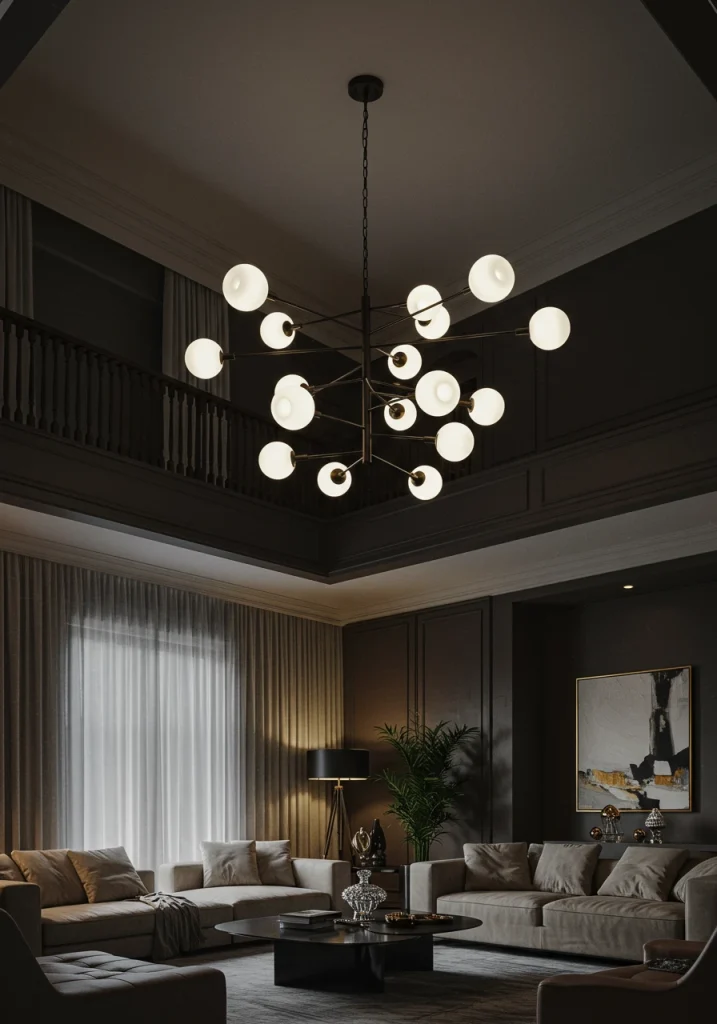
8. Incorporate Sleek, Black Metal Accents
To give your contemporary living room a sharp, graphic, and architectural edge, incorporate sleek, black metal accents. The thin, clean lines of matte black metal in lighting, furniture legs, and window frames can act like the “eyeliner” of the room, adding definition and a touch of modern, industrial chic. This is a key element for grounding a soft, neutral space.
I love the contrast of a delicate, black metal frame against a soft, white wall or a plush, light-colored rug. It’s a look that feels both airy and grounded at the same time.
- Lighting: A minimalist, black metal floor lamp or a sputnik-style chandelier with black arms.
- Furniture: A coffee table or side tables with a thin, black metal base.
- Frames: Use simple, thin, black metal frames for your artwork and mirrors.
- Window Frames: Black window frames are a stunning, high-contrast, architectural feature.
For a cohesive enhancement, ensure that all the small metal details in your room are consistent. If you choose black for your lamp and coffee table legs, also consider it for your curtain rod and any cabinet hardware. This will make the design feel very intentional and polished.
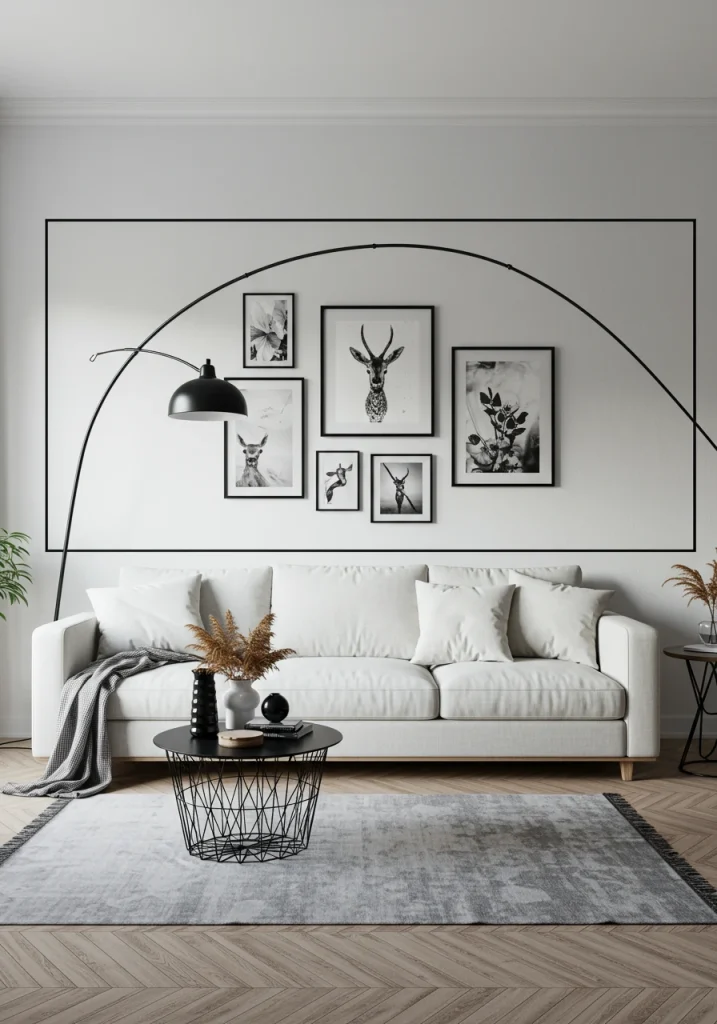
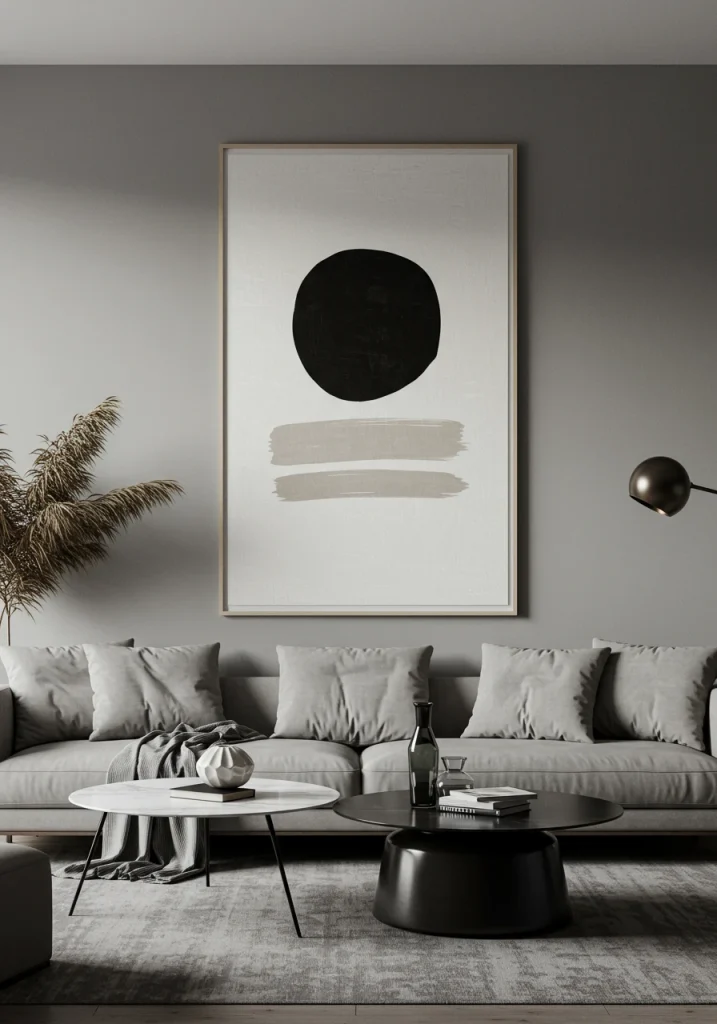
9. Style with Large-Scale, Minimalist Art
The trend in contemporary art for the living room is to keep it simple, bold, and large-scale. Instead of a busy, cluttered gallery wall of many small pieces, a single, oversized, minimalist piece of art can have a much more powerful, confident, and sophisticated impact. This creates a clear focal point and contributes to the overall uncluttered, curated feel of a contemporary space.
I always advise my clients to invest in one, large piece of art that they truly love.
- Go Big: A single piece of art that is at least two-thirds the width of your sofa will have the most impact.
- Keep it Simple: A minimalist, abstract painting with a simple, graphic composition or a beautiful, textural, monochromatic piece are all great choices.
- Framing: A simple, high-quality, “floater frame” in a natural wood or a black finish is the perfect, modern way to frame a canvas.
For an enhancement that is very on-trend, consider a diptych or a triptych. This is a single piece of art that has been divided into two or three separate panels. The architectural quality of the multi-panel format is very contemporary and sophisticated.
10. Anchor with a Textural or Abstract Rug
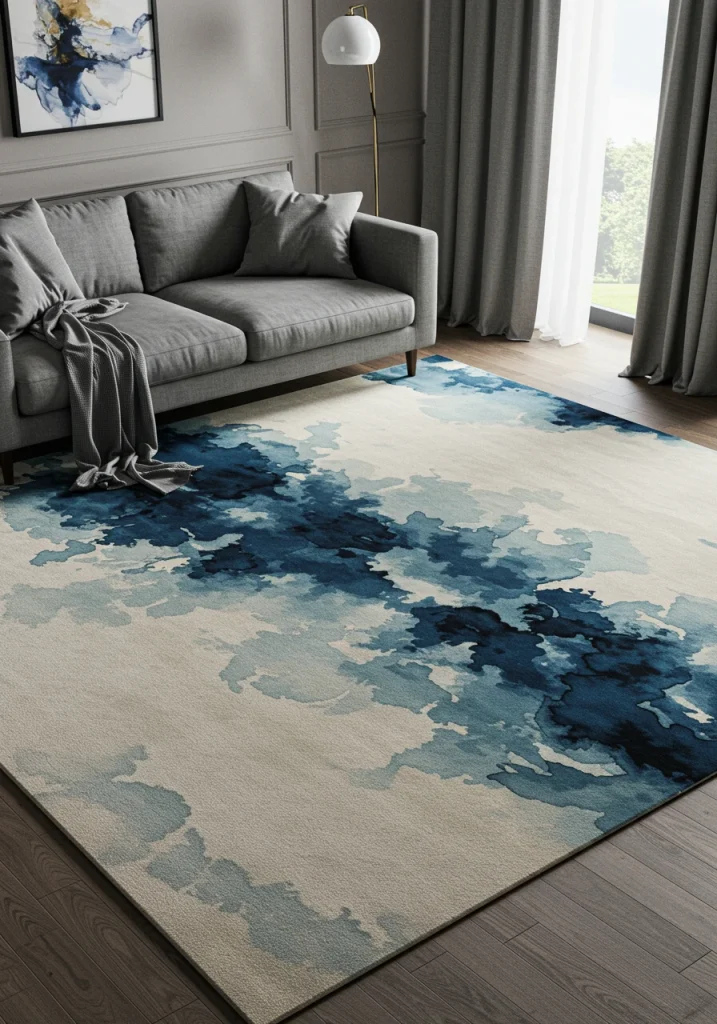
An area rug is the essential foundation for a contemporary living room, and the trend is to use the rug to add a major layer of texture or a dose of soft, abstract pattern. The rug anchors your seating area and is a perfect opportunity to introduce a key design element.
I love to use a rug to add the primary layer of texture to a room.
- A Textural Rug: A large, hand-woven rug made of a natural fiber like jute, or a high-quality, high-pile wool rug can provide a beautiful, organic, and cozy foundation.
- An Abstract Rug: A rug with a soft, abstract, watercolor-like pattern can be a beautiful way to introduce a subtle blend of colors and to serve as a piece of art for your floor.
- Size is Key: The rug should be large enough that at least the front legs of your sofa and all your chairs are on it.
For a very sophisticated and layered enhancement, choose a solid, neutral, low-pile area rug for your main foundation, and then layer a smaller, more unique, and textural rug (like a faux hide or a small, vintage rug) on top of it, just under your coffee table.
11. Focus on Clean Lines and Uncluttered Spaces
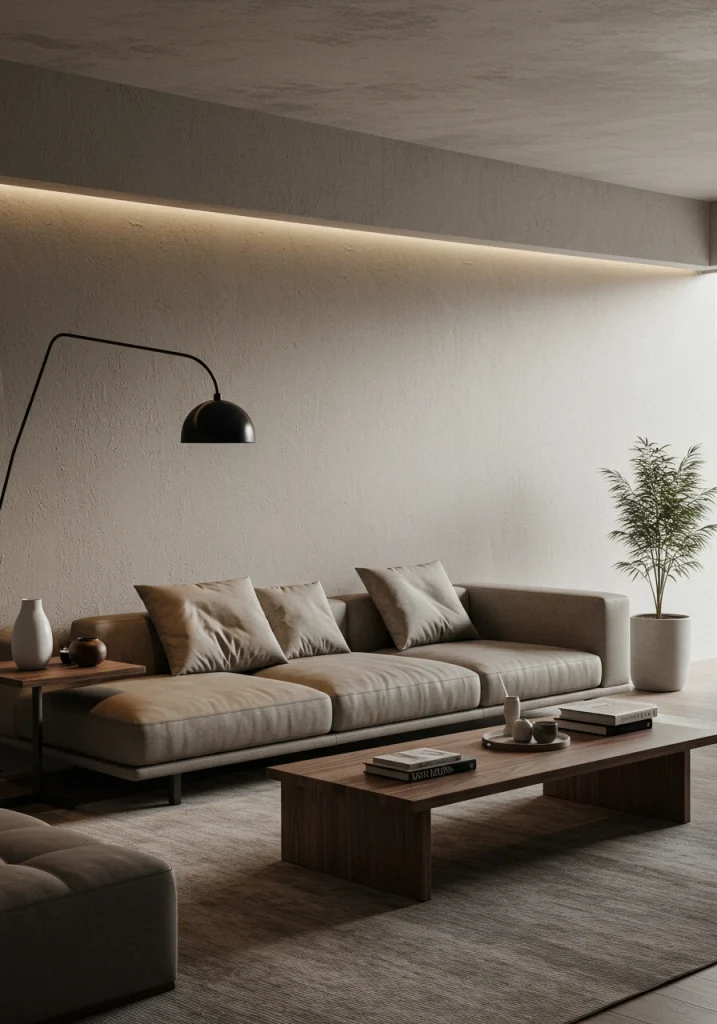
A core principle of contemporary design is a focus on clean lines and a beautifully edited, uncluttered space. This is a philosophy that is borrowed from modernism and minimalism. It’s about creating a space that feels calm, serene, and orderly. This means choosing furniture with simple, strong silhouettes and being very intentional about your decor.
This is a mindset that I encourage all my clients to adopt. A cluttered room leads to a cluttered mind.
- Clean-Lined Furniture: Choose sofas with simple, track arms, and tables and consoles with clean, geometric shapes.
- Curate Your Decor: The “less is more” approach is key. A few, beautiful, well-chosen, and meaningful objects will have more impact than a lot of small trinkets.
- Hidden Storage: Use smart, hidden storage solutions, like a storage ottoman or a media console with solid doors, to hide away the necessary clutter of everyday life.
For an enhancement that helps you to maintain a clutter-free space, use a beautiful, large, decorative tray on your coffee table or ottoman. This is a classic stylist’s trick to corral your smaller items—like remote controls, coasters, and a candle—into a single, neat, and intentional-looking vignette.
12. Add a Touch of Glamour with Warm Metals
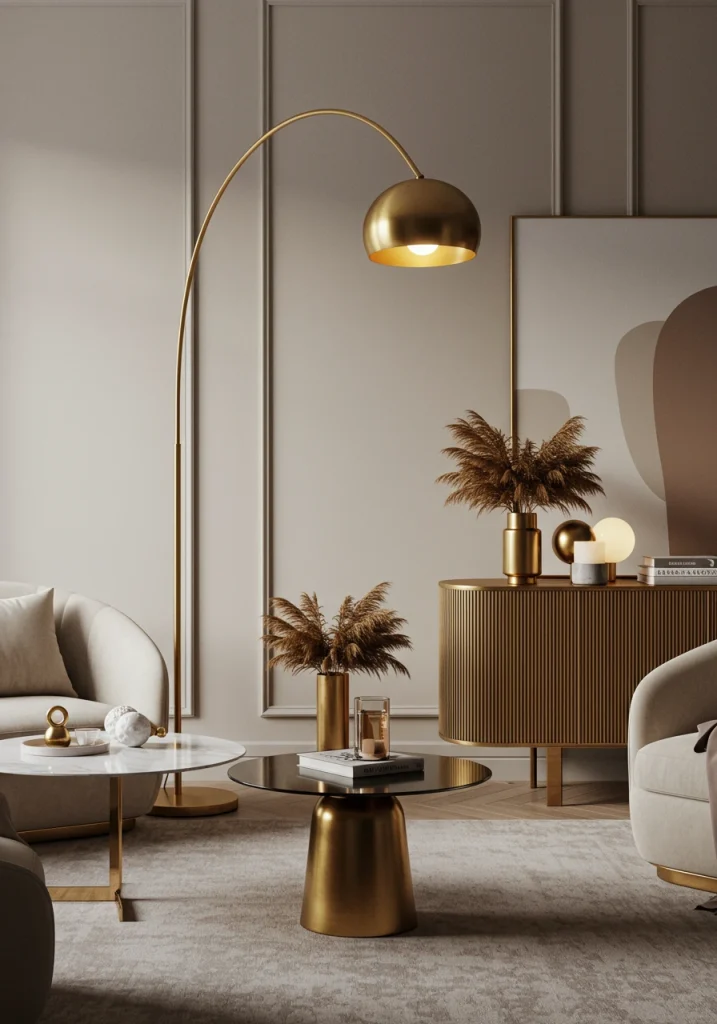
While contemporary design has roots in minimalism, the current trend is to add a touch of warmth and glamour with the use of warm, metallic accents. The soft, glowing, and slightly reflective quality of metals like brushed brass, soft gold, and even copper can provide a beautiful, jewel-like contrast to a neutral palette and natural textures.
This is a key element for making a contemporary room feel luxurious and finished. A few, well-placed metallic accents can make a huge difference.
- Lighting: A stunning, sculptural brass chandelier or a pair of elegant gold floor lamps.
- Furniture: A coffee table or a set of side tables with a slim, brass or gold-finished frame.
- Accents: A large, gold-framed mirror, a brass decorative tray on the coffee table, or brass picture frames.
For an enhancement that is very chic, use a warm metallic in an unexpected place. For example, a modern, sectional sofa with a very simple, slim, brushed brass base or legs can be an incredibly sophisticated and custom-looking detail.
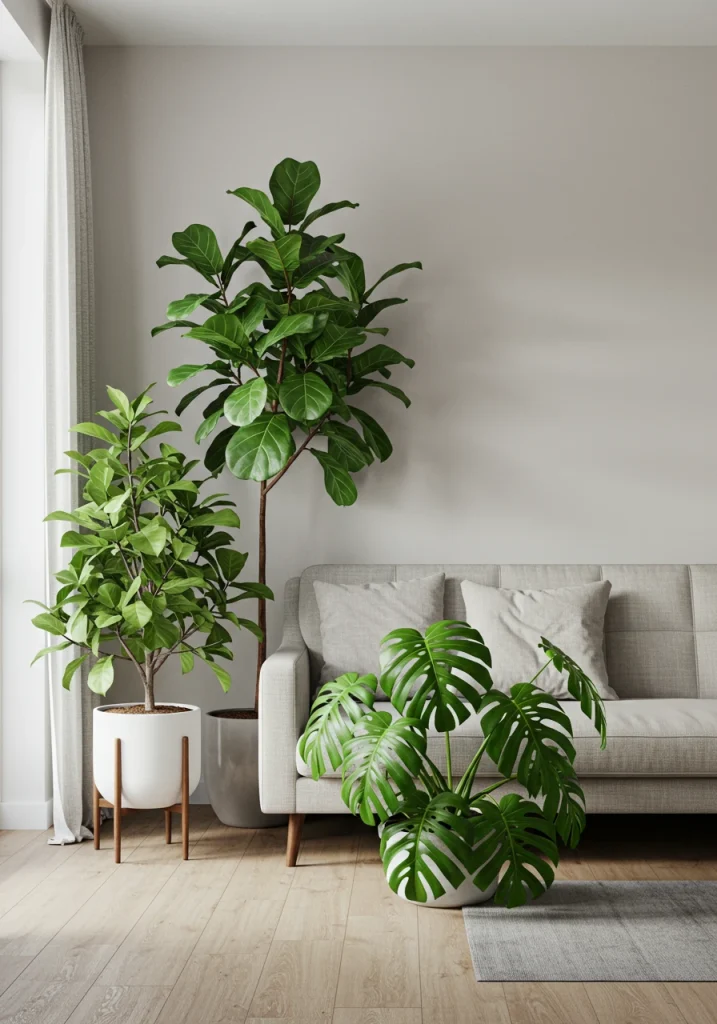
13. Create a Biophilic Design with Large Plants
Biophilic design—the concept of connecting our indoor spaces to the natural world—is a huge and important trend in contemporary design. The easiest and most effective way to do this is to incorporate large, beautiful, and sculptural houseplants into your living room. A large, statement plant can be a stunning focal point, and it will add a vibrant, living, and organic element to your clean, modern space.
I always tell my clients that every room needs at least one, great plant. It adds life, helps to purify the air, and has a proven, calming effect on our mood.
- Large Statement Plants: A tall, dramatic Fiddle Leaf Fig tree, a wide, sculptural Monstera Deliciosa, or an elegant Bird of Paradise are all fantastic choices.
- Placement: Place a tall, statement plant in a bright corner, next to your sofa, or by a large window.
- The Planter is Key: The pot is just as important as the plant. A simple, modern, ceramic or a concrete planter is a perfect choice for a contemporary room.
For an enhancement, create a small, curated “plant moment.” On a simple, wooden bench under a window, create a beautiful, layered arrangement of three, different plants of varying heights and leaf textures.
14. Use a Mix of Materials
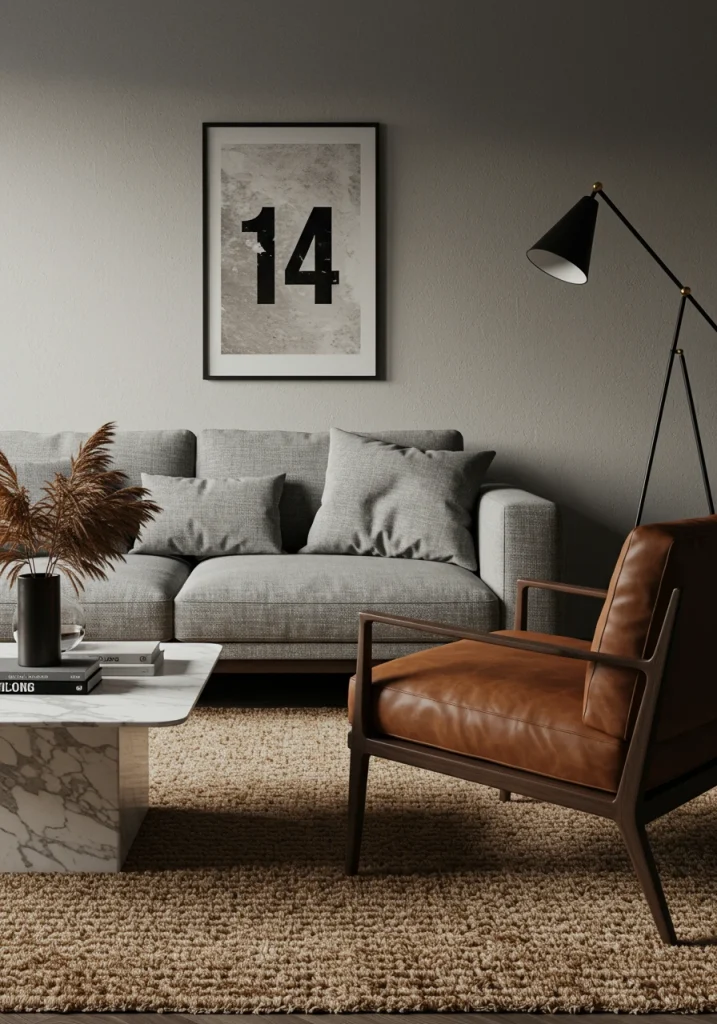
A truly sophisticated contemporary living room is a masterclass in the artful mixing of materials. The trend is to create a rich, layered, and tactile space by combining a variety of different but complementary materials. This adds a huge amount of depth and visual interest to a room.
I love to create a design that is a beautiful composition of different materials. Think about how you can combine:
- Hard and Soft: A sleek, hard, marble coffee table on top of a soft, plush, high-pile wool rug.
- Rough and Smooth: A rustic, rough, reclaimed wood console table against a smooth, painted wall.
- Warm and Cool: The cool, industrial feel of a black, metal lamp next to the warmth of a rich, cognac leather armchair.
For an enhancement, choose a single, beautiful piece of furniture that combines multiple materials in its design. For example, a coffee table that has a concrete top, a brass frame, and a wooden shelf is a stunning, high-design, and multi-material statement piece.
15. Opt for “Invisible” or Hidden Technology
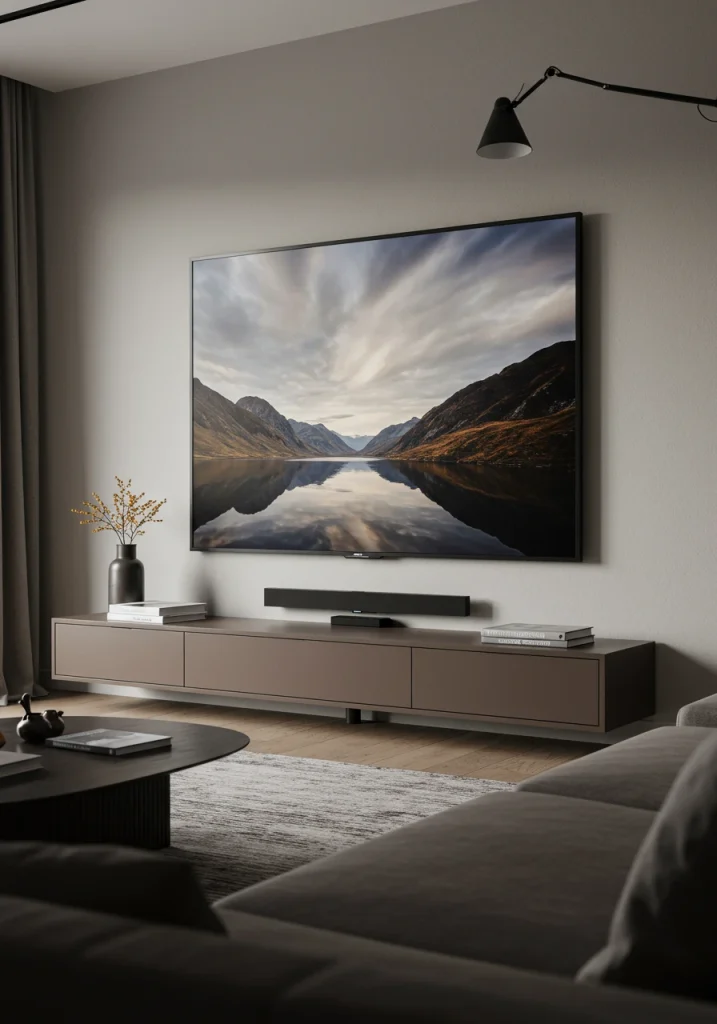
A key part of the uncluttered, contemporary aesthetic is the seamless and discreet integration of technology. In a modern living room, you want all the function of your television and your sound system, but you don’t necessarily want to see a jumble of black boxes, speakers, and messy cords. The trend is to make your technology as “invisible” as possible.
This is a major consideration in all my high-end, contemporary projects.
- An Art TV: A smart TV that displays art when it’s off (like the Samsung “The Frame”) is a brilliant way to disguise a television.
- A Hidden TV: A TV on a motorized lift that can retract into a custom cabinet or into the ceiling.
- Integrated Speakers: In-wall or in-ceiling speakers can provide an incredible, immersive sound experience with no visible speakers at all.
- Cord Management: A media console with a solid back and built-in cord management is essential for hiding all your wires.
For an enhancement that is the ultimate in seamless integration, use a smart speaker that is designed to be a piece of decor itself, like a model that looks like a picture frame or is integrated into a stylish lamp.
16. Create a Cohesive, Open-Plan Flow
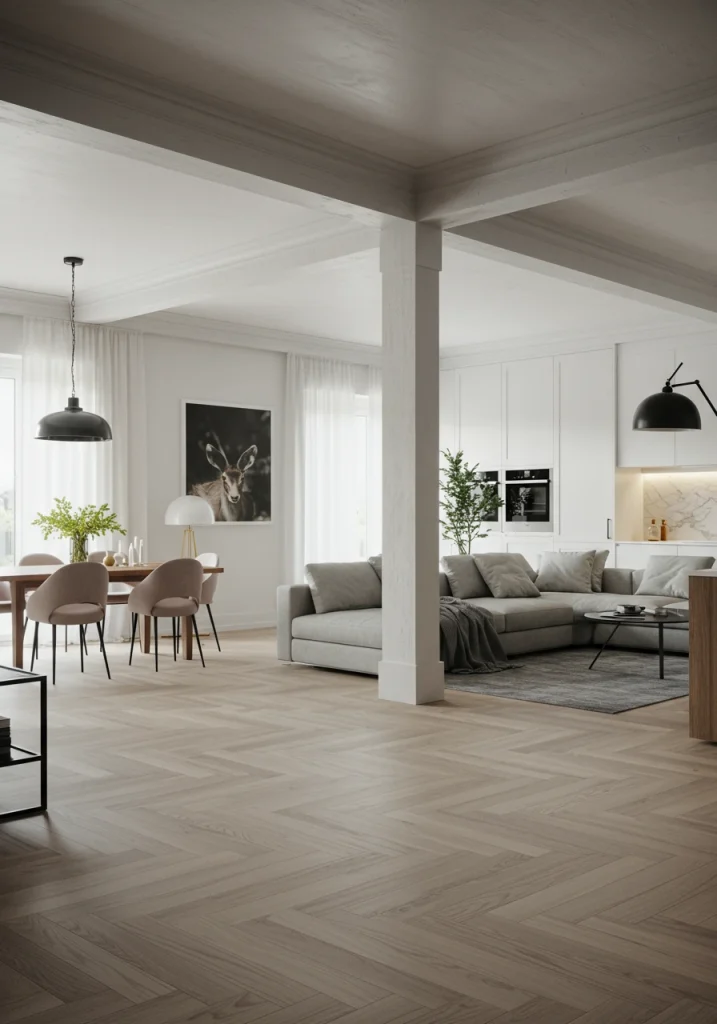
Many contemporary homes feature an open-plan layout where the living room, dining room, and kitchen are all one, large, connected space. A key part of contemporary design is creating a cohesive and harmonious flow between these different, functional zones. The goal is to make the entire space feel like one, unified design, even while you are using visual cues to define the different areas.
I always design an open-plan space as a single, cohesive entity.
- Consistent Flooring: Using the same, continuous flooring material throughout the entire open-plan space is the most important step.
- A Cohesive Color Palette: Use a consistent palette of colors throughout all the zones.
- Repeat Materials: Repeat key materials, like a specific wood tone or a metal finish, in each of the different zones to create a visual link.
For an enhancement that is a classic, open-plan design solution, place a slim console table against the back of your “floating” living room sofa. This will create a beautiful, finished-looking, and functional border between your living room zone and your adjacent dining or kitchen zone.
Conclusion
A contemporary living room is a sophisticated, comfortable, and beautifully balanced space that is perfectly suited to the way we live today. As we’ve explored through these 16 design inspirations, the essence of the style lies in its clean lines, its sophisticated neutral palette, its embrace of natural textures and materials, and its uncluttered, intentional approach to decor. It’s a style that is constantly evolving, but it is always rooted in the principles of comfort, function, and understated elegance.


