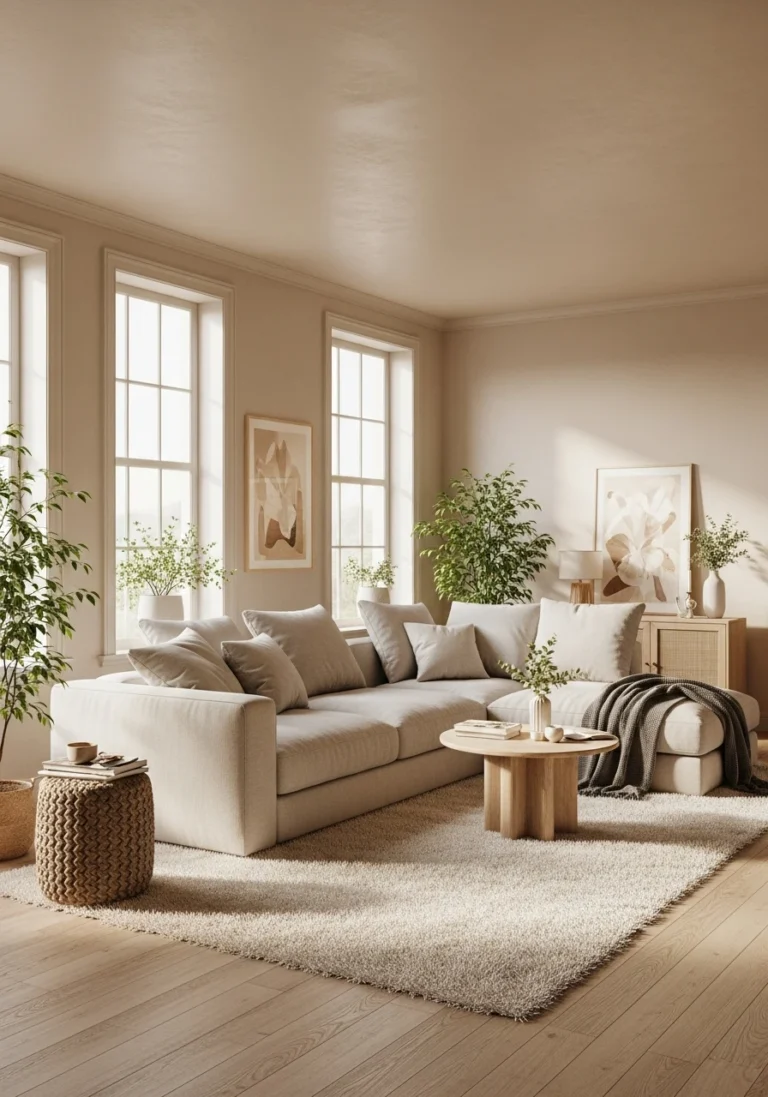
Are you looking for inspiring mid-century modern living room ideas to bring a touch of timeless, understated cool into your home? Born from the optimism and innovation of the post-war era, the mid-century modern (MCM) aesthetic is one of the most enduring and beloved design movements of all time. It’s a style defined by clean lines, organic curves, a deep connection to nature, and a philosophy that “form follows function.” A mid-century modern living room is a space that is uncluttered, highly functional, and effortlessly stylish, blending natural and man-made materials in a way that feels both vintage and perpetually current.
This guide will walk you through 15 essential ideas to help you create a stunning and authentic mid-century modern living room.
1. Anchor the Space with a Low-Profile Sofa
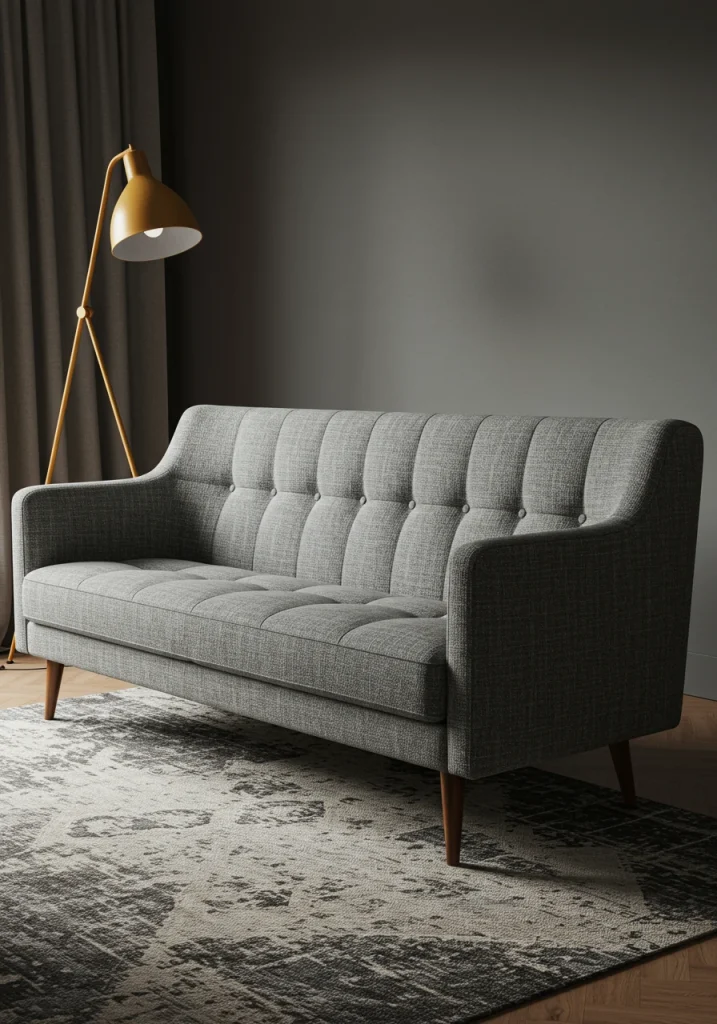
The quintessential mid-century modern sofa is the anchor of the living room. Unlike the overstuffed, bulky sofas of other eras, the MCM sofa is characterized by its clean lines, minimalist form, and low profile. The most defining feature is its legs: they are typically slender, exposed, and often tapered or splayed at an angle. This “leggy” design lifts the body of the sofa off the ground, creating a sense of lightness and airiness that is a hallmark of the style.
I always start an MCM living room project by selecting the perfect sofa. It sets the tone for the entire space. Look for a simple, rectangular frame, tailored upholstery, and often a single row of button tufting on the back cushions. Upholstery is typically a durable, textural fabric in a solid color, from a versatile neutral gray to a bolder, more optimistic hue like teal or mustard yellow.
- Key Features: Clean, linear frame; low profile; exposed, tapered wooden legs.
- Upholstery: Simple, textural fabrics in solid colors.
- Details: Minimal ornamentation, often featuring subtle button tufting.
For an enhancement, choose a sofa with a built-in, attached wooden side table at one end. This is a classic, integrated feature seen in many iconic mid-century designs and adds a layer of sleek functionality.
2. Invest in an Iconic Eames Lounge Chair
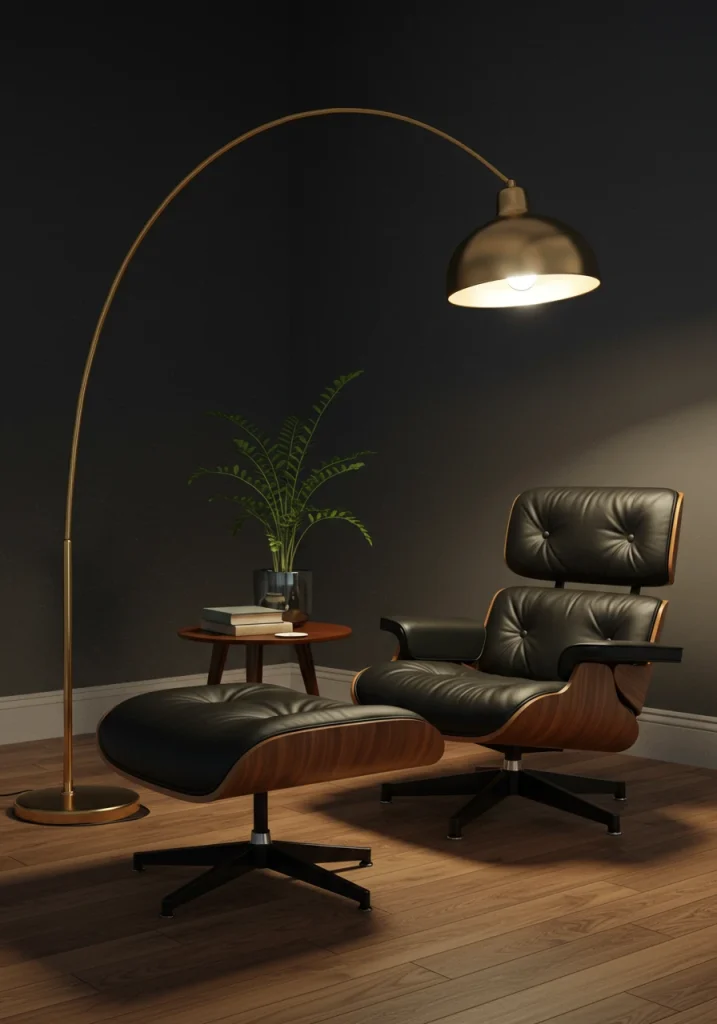
If there is one piece of furniture that embodies the spirit of mid-century modern design, it is the Eames Lounge Chair and Ottoman. Designed by Charles and Ray Eames in 1956, this chair was conceived as a modern interpretation of a classic club chair, with the goal of providing a “warm, receptive look of a well-used first baseman’s mitt.” It is the ultimate fusion of luxurious comfort and groundbreaking design.
Placing an Eames Lounge Chair in your living room is more than just adding a seat; it’s like installing a piece of functional sculpture. It instantly signals a commitment to authentic, high-quality design. I often tell my clients that if they are going to splurge on one iconic piece, this should be it. Its molded plywood shells, rich leather upholstery, and comfortable, reclining posture make it the perfect chair for reading, listening to music, or simply relaxing.
- Designers: Charles and Ray Eames for Herman Miller.
- Materials: Molded plywood shells (often in walnut or rosewood) and supple leather upholstery (classically in black).
- Function: The ultimate reading and relaxing chair, a true design icon.
For an enhancement that grounds this iconic piece, place it on a small, round, plush shag or flokati rug. The soft, high-pile texture of the rug provides a beautiful, cozy contrast to the smooth leather and molded wood of the chair.
3. Embrace Warm Wood Tones (Especially Teak and Walnut)
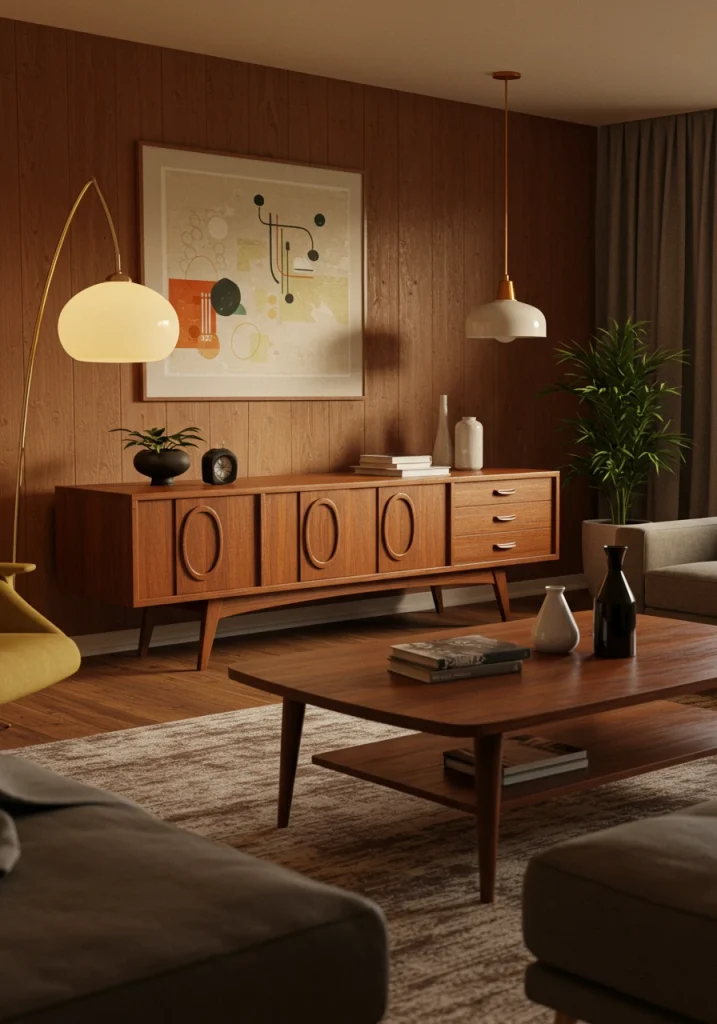
Mid-century modern design has a deep reverence for the natural beauty of wood. The style is characterized by its liberal use of warm, mid-toned woods, particularly teak and walnut. These woods have a rich, beautiful grain and a warm, golden or reddish hue that adds a necessary layer of organic warmth to the clean, often minimalist lines of the furniture.
Incorporating these wood tones is essential for an authentic MCM look. The most classic piece for this is a long, low credenza or sideboard. Look for other pieces like coffee tables, side tables, and the exposed wooden frames of sofas and chairs. I always advise my clients to not be afraid of mixing different warm wood tones; a teak coffee table can sit beautifully next to a sofa with a walnut frame.
- Key Woods: Teak, walnut, and sometimes oak or rosewood.
- Key Pieces: Credenzas, coffee tables, bookcases, and the frames/legs of upholstered furniture.
- Finish: Typically a simple, natural, low-sheen finish that allows the beauty of the wood grain to be the star.
For an enhancement, look for furniture that features a tambour door—a flexible, slatted door that rolls open. This is a beautiful and highly characteristic detail of high-end mid-century cabinetry.
4. Hang a Sunburst Mirror
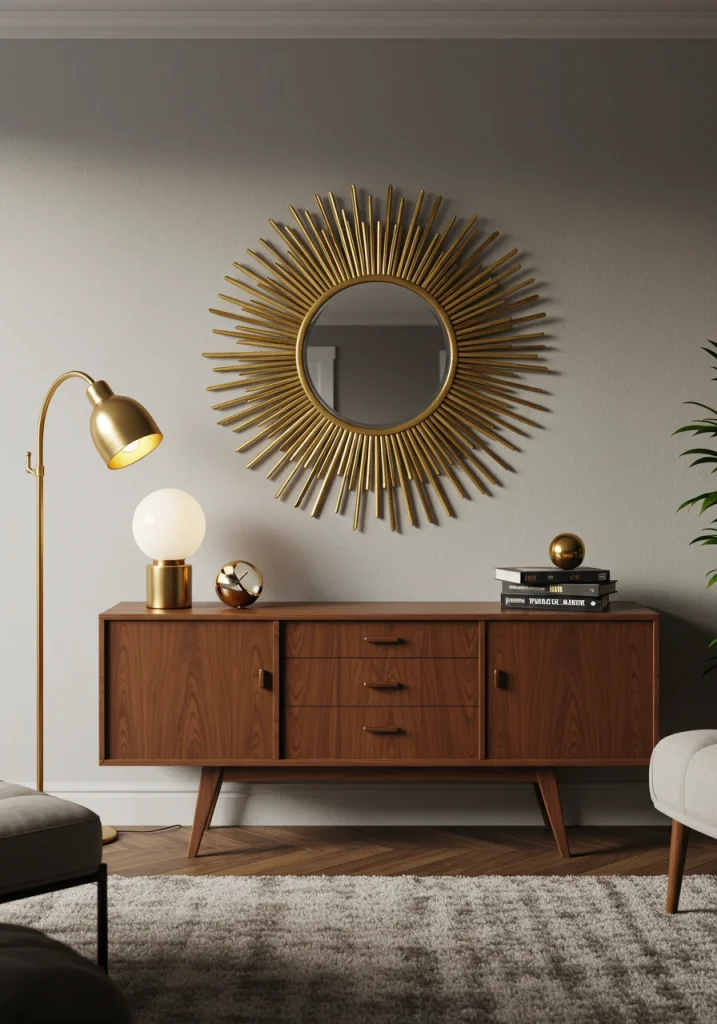
The sunburst mirror is a quintessential and relatively easy way to add a touch of mid-century modern glamour and energy to your living room. This iconic decorative element, with its central mirror and radiating “rays,” became incredibly popular in the 1950s and 60s, reflecting the era’s optimism and fascination with atomic and celestial forms.
A sunburst mirror is a piece of functional art that can serve as a stunning focal point. I love to hang a large, dramatic sunburst mirror above a simple, low credenza or over a fireplace. The radiating design adds a dynamic, sculptural quality to a flat wall. The rays can be made from a variety of materials, from classic gold or brass-toned metal to carved wood or even simple dowels.
- Iconic Shape: A central mirror with radiating spokes or rays.
- Placement: Perfect for above a credenza, a fireplace, or as the centerpiece of a gallery wall.
- Materials: Metal (brass, gold, or black), carved wood, or rattan.
For a more modern and minimalist enhancement, choose a sunburst mirror with very fine, delicate rays instead of thick, chunky ones. This can create a more subtle and airy, yet still impactful, look.
5. Choose Iconic, Sculptural Lighting
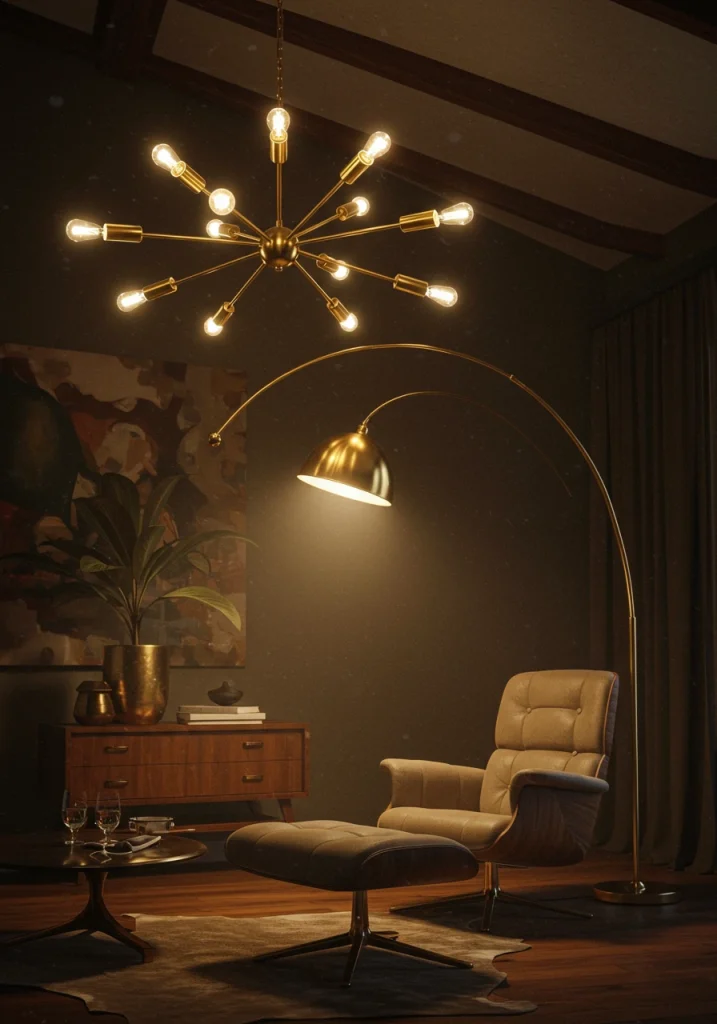
Lighting in a mid-century modern living room is never just functional; it is a key sculptural and decorative element. The lighting fixtures of this era are famous for their innovative shapes and materials. Choosing an iconic, statement-making light fixture is one of the most effective ways to establish an authentic MCM aesthetic.
The Sputnik chandelier, with its radiating arms and exposed bulbs, is perhaps the most recognizable. The arc floor lamp, with its long, sweeping arm that can extend over a sofa, is another classic that is both dramatic and highly functional. For table lamps, look for bases with interesting, ceramic, gourd-like shapes or simple, wooden, tripod-style bases. As the design experts at Herman Miller would attest, lighting was seen as a form of art.
- Chandeliers: Sputnik chandeliers are the quintessential choice.
- Floor Lamps: A large arc lamp is a must-have for a reading nook or over a coffee table.
- Table Lamps: Look for ceramic bases with interesting, organic shapes or simple, architectural forms.
For an enhancement, put your main light fixtures on a dimmer switch. This will allow you to control the ambiance, from bright and functional to a soft, warm, atmospheric glow in the evenings.
6. Use a Credenza or Sideboard as a Focal Point
In the mid-century modern living room, the long, low credenza or sideboard is often the most important piece of case furniture. It’s a hardworking piece that serves as a media console, a storage cabinet, and a beautiful display surface. A vintage or a well-designed reproduction credenza in a rich teak or walnut is often the second major furniture purchase after the sofa.
I always advise my clients to let the credenza be a focal point. Keep the styling on top simple and intentional. A credenza provides the perfect, low surface for a stylish table lamp, a few carefully chosen pieces of pottery or glassware, and perhaps a small, trailing plant.
- Key Features: Long, low profile; clean, linear design; often has sliding doors or sculpted pulls; made of warm wood.
- Function: Serves as a media unit, storage, and a display surface.
- Placement: Typically placed against the longest wall of the living room.
To enhance your credenza, style it asymmetrically. Instead of placing a lamp at each end, for example, group a tall lamp, a medium-height vase, and a low, horizontal stack of books all on one side, leaving the other side open. This creates a more dynamic and visually interesting composition.

7. The Sculptural Noguchi Coffee Table
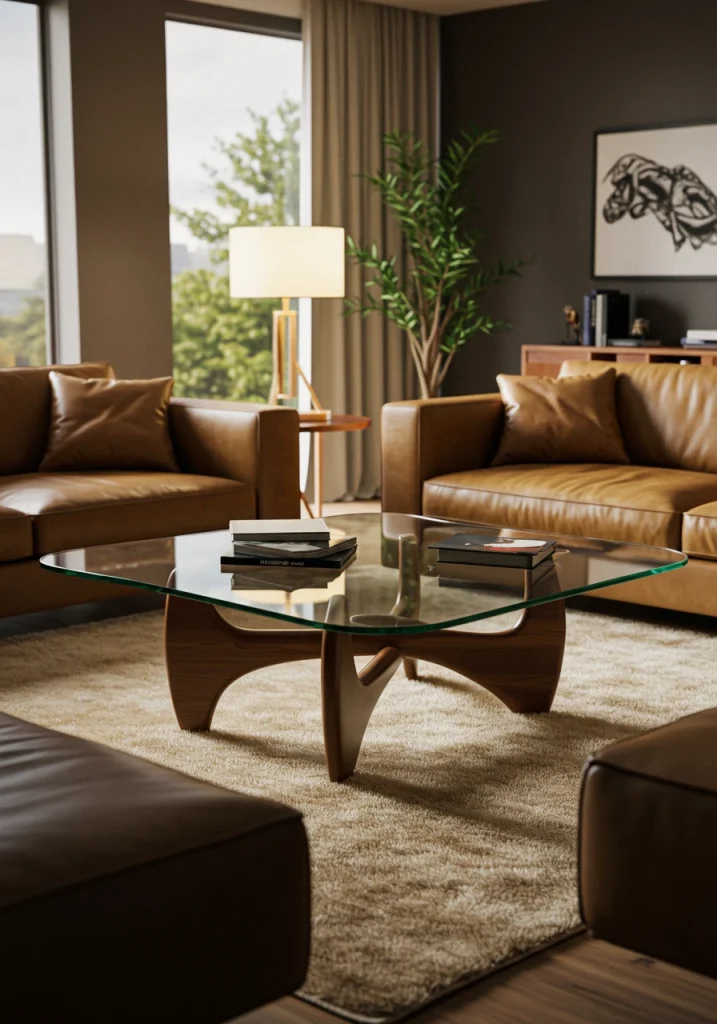
For a coffee table that is a true work of art, the Noguchi Table is an undisputed icon of mid-century modern design. Designed by the sculptor Isamu Noguchi in 1947, this table consists of just three simple pieces: a freeform, amoeba-shaped glass top and two interlocking, curved, solid wood base pieces. The design is a masterful study in balance, form, and simplicity.
Placing a Noguchi table in your living room is a statement of design sophistication. I love how its organic, sculptural form provides a beautiful, soft contrast to the often linear and rectilinear shapes of MCM sofas and credenzas. Its transparent glass top also helps to maintain a sense of openness and lightness in the room, allowing you to see the beautiful pattern of your area rug underneath.
- Designer: Isamu Noguchi for Herman Miller.
- Materials: A solid glass top with an interlocking base of solid wood (typically in black, walnut, or natural cherry).
- Effect: A functional coffee table that is also a beautiful, iconic piece of sculpture.
For an enhancement, keep the styling on your Noguchi table very minimal to allow its beautiful, sculptural shape to be the main feature. A single, small stack of art books and one, simple, low-slung decorative bowl is all it needs.
8. Use a Classic MCM Color Palette
The mid-century modern color palette is a unique and beautiful blend of earthy, natural tones and bright, optimistic pops of color. The foundation of the palette is typically grounded in warm neutrals and earthy shades inspired by the natural world. This includes warm whites, browns, muted greens, and soft grays. These are then punctuated by a few, carefully chosen, bold and vibrant accent colors.
I always advise my clients to start with the earthy base and then choose one or two bold accent colors to use sparingly. This creates a look that is both grounded and energetic.
- Earthy Base: Warm wood tones, olive green, mustard yellow, and warm browns.
- Optimistic Accents: A bright, clear orange, a vibrant turquoise or teal, a sunny yellow, or a classic red.
- Application: Use the earthy tones for your large furniture pieces and walls, and the bright accents for your throw pillows, artwork, or a single, statement accent chair.
For an enhancement, a classic and very authentic color combination is to pair the warm tones of teak or walnut wood with a rich, avocado or olive green and a pop of a burnt, pumpkin orange.

9. Add Bold, Geometric Patterns
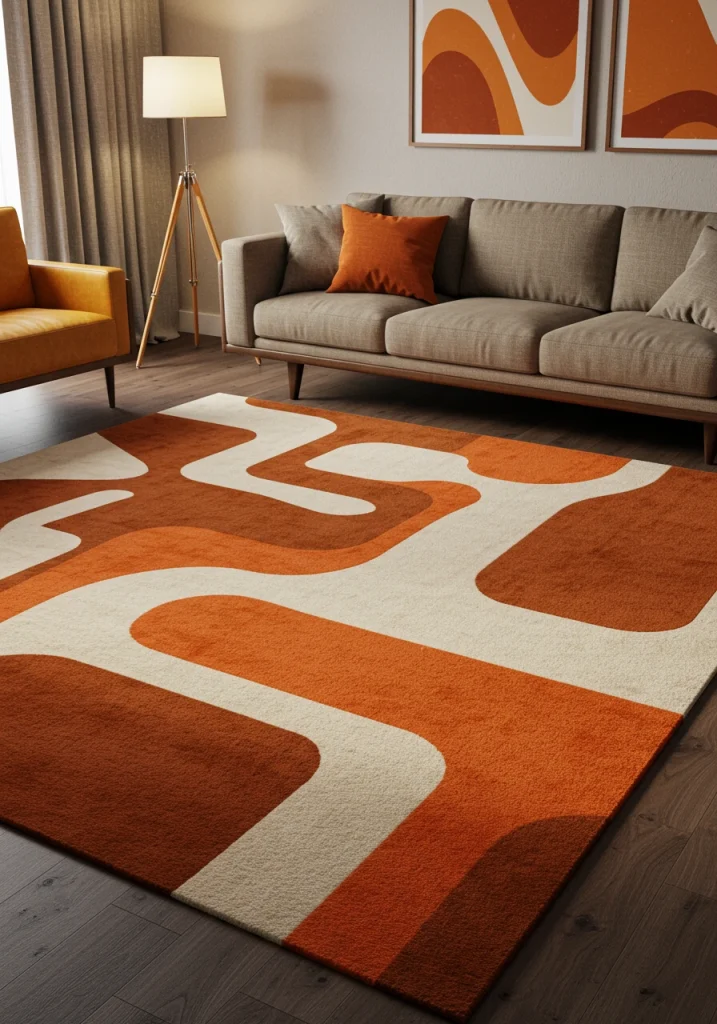
Mid-century modern design embraced the bold, graphic possibilities of geometric patterns. These patterns, often inspired by atomic age science and abstract art, are a key feature of the style and are a great way to add energy and visual interest to your living room. The patterns are typically clean, graphic, and feature repeating, abstract shapes.
You can introduce these patterns in a number of ways. An area rug with a bold, geometric pattern is a fantastic way to anchor the room. A pair of curtains with a classic, repeating, abstract print can be a major statement. For a smaller dose of pattern, use a few throw pillows with different but complementary geometric designs.
I love to use a bold, graphic pattern to keep a room with a lot of solid, neutral furniture from feeling boring.
- Key Motifs: Starbursts, abstract and asymmetrical shapes, clean circles and squares, and boomerang patterns.
- Application: Area rugs, pillows, curtains, and artwork.
- Color: The patterns are often high-contrast, combining a neutral with a bold, accent color.
For an enhancement that is very authentic, look for a wallpaper with a subtle, tone-on-tone geometric pattern to use on a single accent wall. This can add a layer of texture and pattern without overwhelming the space.
10. Blur the Lines with Large Windows
A core tenet of mid-century modern architecture is the desire to create a strong connection between the indoors and the outdoors. This was often achieved with large, expansive windows, clerestory windows (a high band of windows), and sliding glass doors that helped to blur the lines between the living room and the garden. The goal was to make the natural world a key part of the interior design.
If you are lucky enough to have a home with these architectural features, it’s important to celebrate them. I always advise my clients with large windows to keep the window treatments minimal and simple. Avoid heavy, ornate drapes. Simple, straight-hanging curtain panels that can be pulled completely clear of the window, or discreet roller blinds that can disappear, are the best choices.
- Architectural Feature: Large, unadorned windows, sliding glass doors, and clerestory windows.
- Window Treatments: Keep them minimal. Simple curtain panels or roller blinds.
- Effect: Connects the living room to the outdoors and fills the space with natural light.
For an enhancement, place a large, beautiful houseplant right next to your large window or sliding glass door. This will further strengthen the visual connection between your indoor greenery and the garden outside.
Image Gen 10

11. Feature a Statement Fireplace
The fireplace in a mid-century modern home is often a major architectural statement. Unlike a traditional, ornate, carved mantel, an MCM fireplace is typically a bold, simple, and textural feature that runs from floor to ceiling. The materials are key. A fireplace wall made of rough, stacked stone or a simple, clean expanse of brick are both classic choices.
The fireplace is often the main focal point of the living room, and the furniture is arranged to celebrate it. I love the honesty and texture of these fireplaces. They provide a powerful, rustic, and natural counterpoint to the clean lines of the furniture.
- Materials: Stacked stone, brick (often in a long, thin “Roman brick” style), or even a bold, hooded metal fireplace.
- Design: Often runs from floor to ceiling, with a simple, floating hearth or no mantel at all.
- Focal Point: A strong, textural, architectural feature.
For an enhancement, instead of a centered fireplace, many MCM homes have a cool, asymmetrical design, with the firebox on one side of the wall and a built-in log storage niche on the other.

12. Incorporate Houseplants, Especially Snake Plants
The mid-century modern desire to connect with nature extends to the use of houseplants. The sculptural, architectural forms of certain plants are a perfect fit for the MCM aesthetic. They were seen as living, breathing decorative objects that could add an organic element to the clean lines of the interior.
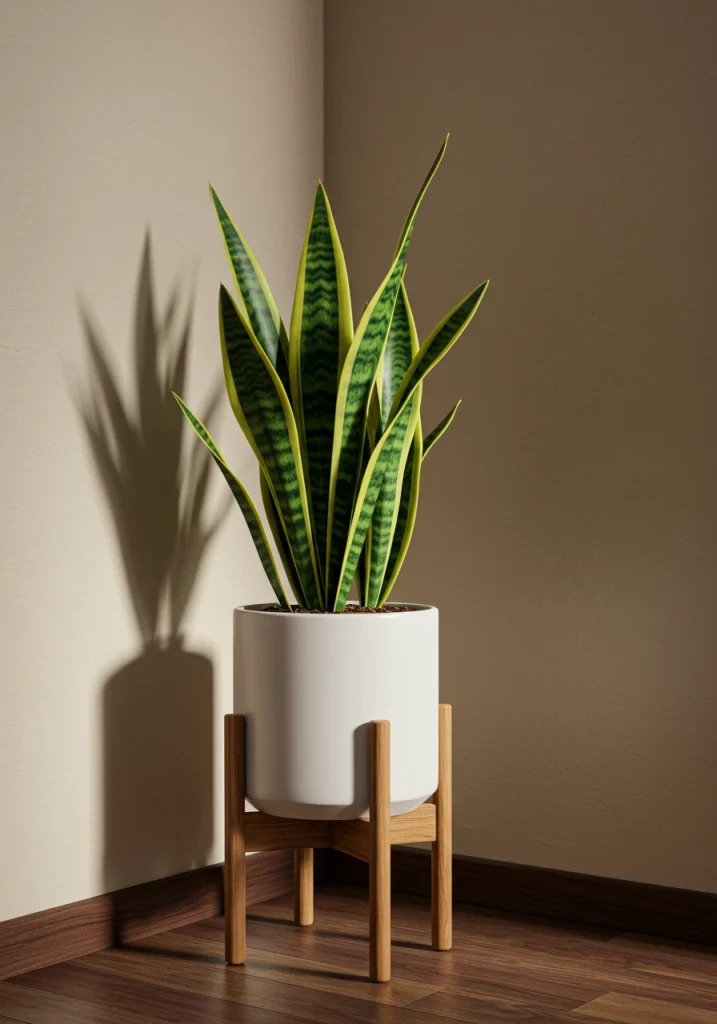
The quintessential MCM houseplant is the Snake Plant (Sansevieria). Its tall, upright, architectural leaves are a perfect vertical accent. Another popular choice is the Monstera Deliciosa, with its large, iconic, holey leaves. I always tell my clients to use simple, minimalist planters to let the shape of the plant be the star. A simple, cylindrical ceramic pot on a classic, wooden, mid-century style plant stand is the perfect combination.
- Iconic Plants: Snake Plant, Monstera Deliciosa, Fiddle Leaf Fig, and Rubber Plant.
- Planters: Simple, ceramic, cylindrical pots.
- Plant Stands: The classic, X-base, wooden plant stand is a must-have accessory.
For a dramatic enhancement, find a very tall, architectural cactus, like a Euphorbia, and place it in a corner. The strong, vertical, sculptural form is the perfect living piece of art for an MCM room.
13. Style with Abstract Art
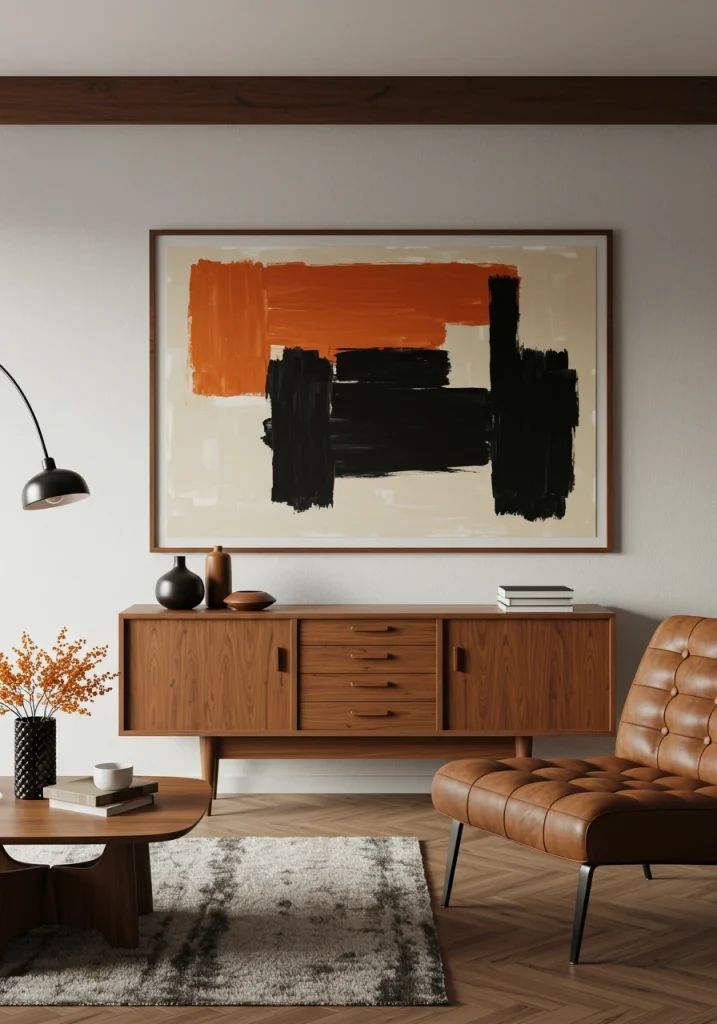
The mid-century modern movement was a sister movement to the rise of abstract expressionism in the art world. The bold, colorful, and non-representational art of this era is the perfect complement to the clean lines of MCM furniture. A large, abstract painting can be a fantastic focal point in a living room, adding a huge amount of energy, color, and personality.
I love to use a piece of abstract art as the inspiration for the room’s accent color palette. You can pull a vibrant orange or a deep blue from the painting and repeat it in a few throw pillows or a decorative vase. This is a great way to tie the room together and make the art feel truly integrated.
- Style: Abstract expressionism, color field painting, or simple, geometric abstracts.
- Focal Point: Hang a large, impactful piece of abstract art above your sofa or credenza.
- Color Palette: Use the art as the inspiration for your room’s accent colors.
For a budget-friendly enhancement, you can create your own, large-scale, mid-century modern inspired abstract art. Use a large canvas and a simple palette of 2-3 colors to create a bold, graphic composition of simple shapes and lines.
14. Incorporate Natural Textures like Leather and Wool
In addition to the warmth of wood, mid-century modern design often incorporates other natural, textural materials to add warmth, comfort, and a sense of quality. Rich, buttery leather and soft, textural wool are two key materials that provide a beautiful, organic contrast to the sleek, man-made materials and clean lines of the style.
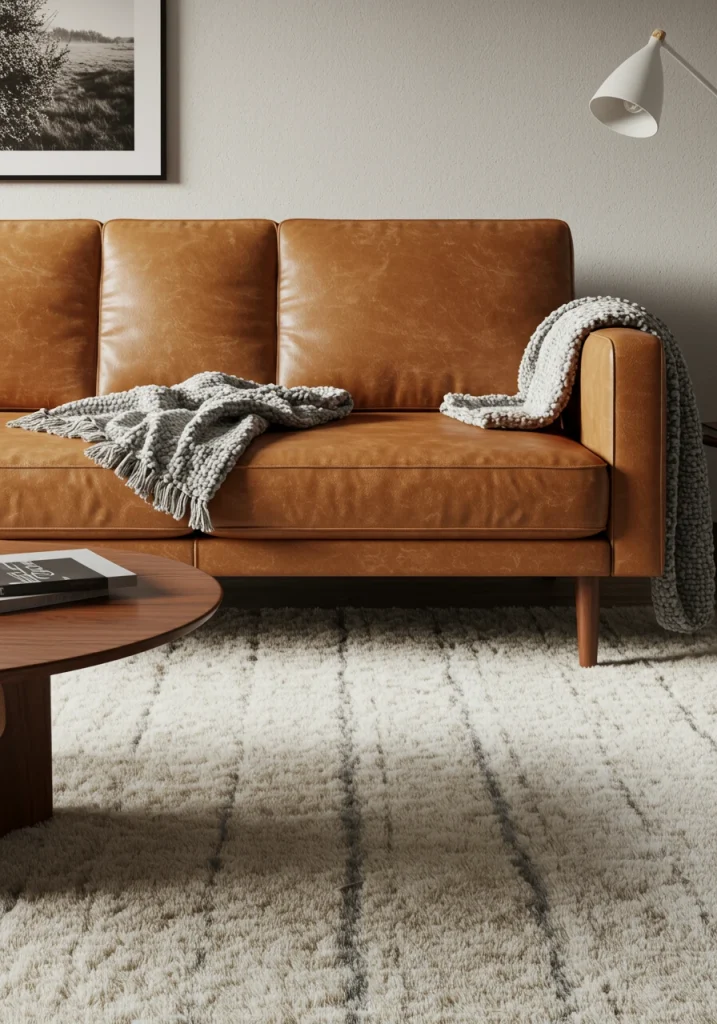
A classic, button-tufted sofa in a warm, cognac or caramel-colored leather is a timeless and incredibly durable choice. A beautiful, textural, wool area rug can provide a soft, warm foundation for the room. I love the combination of a sleek, leather sofa and a soft, shaggy, wool flokati rug; the contrast is stunning.
- Leather: Sofas, armchairs (like the Eames Lounge Chair), and ottomans in natural tones like black, brown, and cognac.
- Wool: Area rugs, throw blankets, and upholstery fabrics with a textural, tweed-like weave.
- Effect: Adds warmth, comfort, durability, and a layer of natural, high-quality texture.
For a simple enhancement, add a single, large, square, floor cushion made of a beautiful, thick leather. It’s a versatile piece that can be used as extra seating or as a casual footrest and adds a touch of rugged, sophisticated texture.
15. Set Up a Sleek, Minimalist Bar Cart
The mid-century era was the golden age of the cocktail party, and a stylish bar cart is a quintessential accessory for an MCM living room. It’s a piece that is both highly functional for entertaining and a beautiful, decorative object in its own right. A mid-century bar cart is typically a simple, elegant, and wheeled piece that allows you to serve your guests with style.
Look for a cart with a simple, two-tiered design, a slender frame, and wheels for mobility. The materials are key to the look. I love to find a classic cart with a warm, teak or walnut wood frame, or a more glamorous version with a sleek, brass or chrome frame and glass shelves.
- Function: A mobile station for serving drinks and a stylish piece of decor.
- Style: Look for simple, linear designs with two tiers and wheels.
- Materials: Classic choices are teak, walnut, brass, or chrome.
To enhance your bar cart, style it with a collection of vintage, mid-century style glassware. Look for glasses with a classic, weighted base or those with a fun, retro, gold-rimmed pattern. A vintage cocktail shaker and a stylish ice bucket will complete the authentic, “Mad Men” vibe.

Conclusion
The enduring appeal of the mid-century modern living room lies in its perfect, harmonious balance of form and function. As we’ve explored through these 15 ideas, this is a style that celebrates the beauty of clean lines, the warmth of natural materials, and the genius of iconic, sculptural design. It’s about creating a space that is uncluttered and highly functional, yet also warm, inviting, and deeply connected to the natural world. A well-designed MCM living room is more than just a collection of furniture; it’s a living testament to an era of optimism, innovation, and timeless style.