Are you looking for creative 1 bedroom apartment decor ideas to transform your space into a home that is both stylish and cozy? A one-bedroom apartment is a fantastic canvas. It offers the perfect balance of defined spaces—a separate bedroom for privacy—and a compact footprint that encourages clever, intentional design. The challenge, and the fun, lies in making the most of every square inch, creating a home that feels spacious, functional, and deeply personal, all while often working within the constraints of a rental agreement.
This isn’t about simply filling your apartment with smaller furniture; it’s about using creative design strategies to create distinct zones, maximize storage, and make your home feel both expansive and intimately cozy. This guide will provide you with 15 creative ideas to help you do just that.
1. Define Your Space: Create “Zones” with Area Rugs
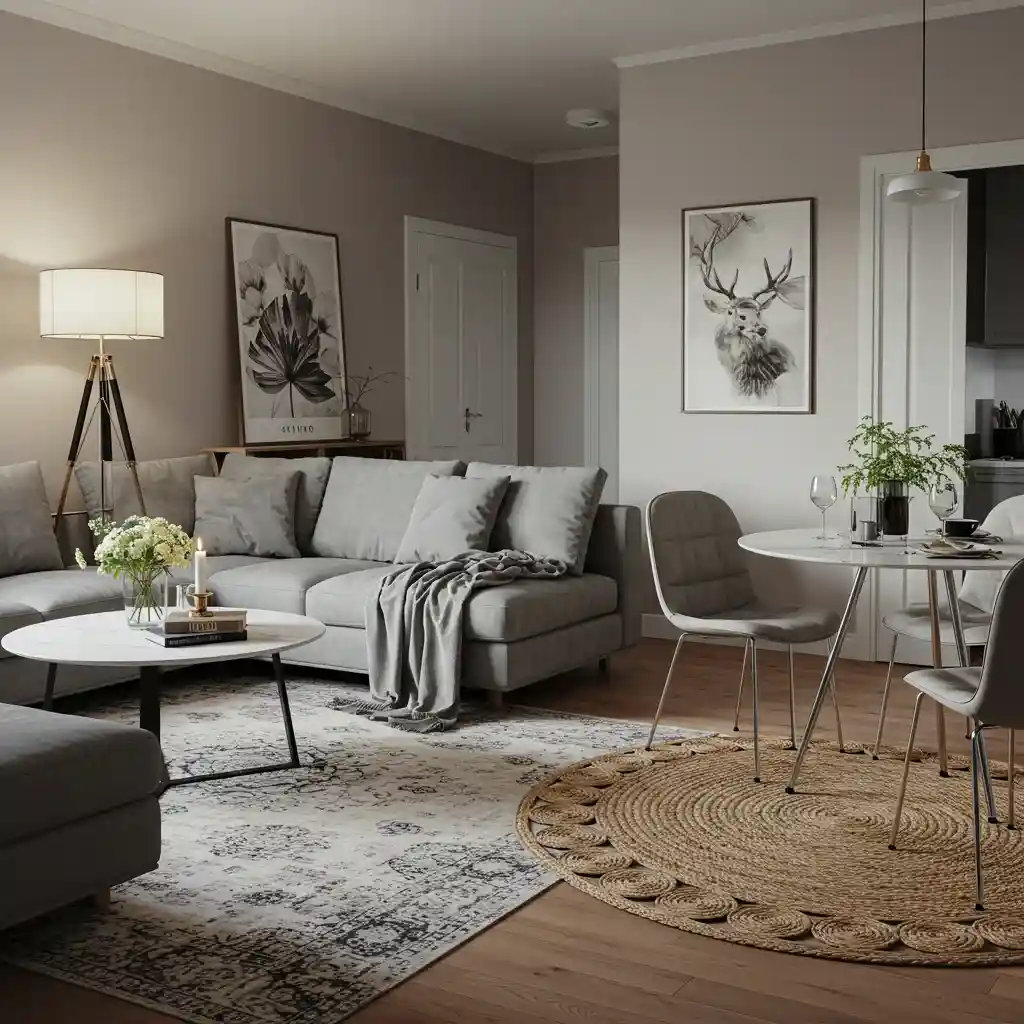
In a one-bedroom apartment, the main living area often has to serve multiple functions—living, dining, and maybe even working. The most effective way to create a sense of order and define these different areas is with area rugs. A rug is a powerful design tool that acts as a visual “anchor,” clearly delineating a specific zone. Placing a large rug under your sofa, coffee table, and accent chair instantly signals “this is the living room.” A separate, smaller rug under a bistro table can define the “dining nook.”
This is the first rule I share with my clients when tackling an open-plan living area. It’s a simple, non-permanent solution that makes a space feel more organized and intentional. The key is to choose the right size. A common mistake is using a rug that’s too small, which can make the space feel disjointed.
- Living Zone: Your rug should be large enough that at least the front legs of your sofa and any armchairs are on it.
- Dining Zone: The rug should be large enough that the dining chairs remain on the rug even when they are pulled out from the table.
- Cohesion: Use rugs that are complementary in color or style to maintain a cohesive flow throughout the space.
For an enhancement, if you have a very long living/dining combo space, use two identical rugs in each zone. This creates a powerful sense of rhythm and repetition, making the entire apartment feel very custom and well-planned.
2. Choose “Hardworking,” Multi-Functional Furniture
In a one-bedroom apartment, every piece of furniture should earn its keep. The key to a functional and uncluttered home is to select smart, multi-functional pieces that can serve two or more purposes. This is the essence of small-space living: maximizing utility without sacrificing style. Before you buy anything, ask yourself, “Can this do more than one thing?”
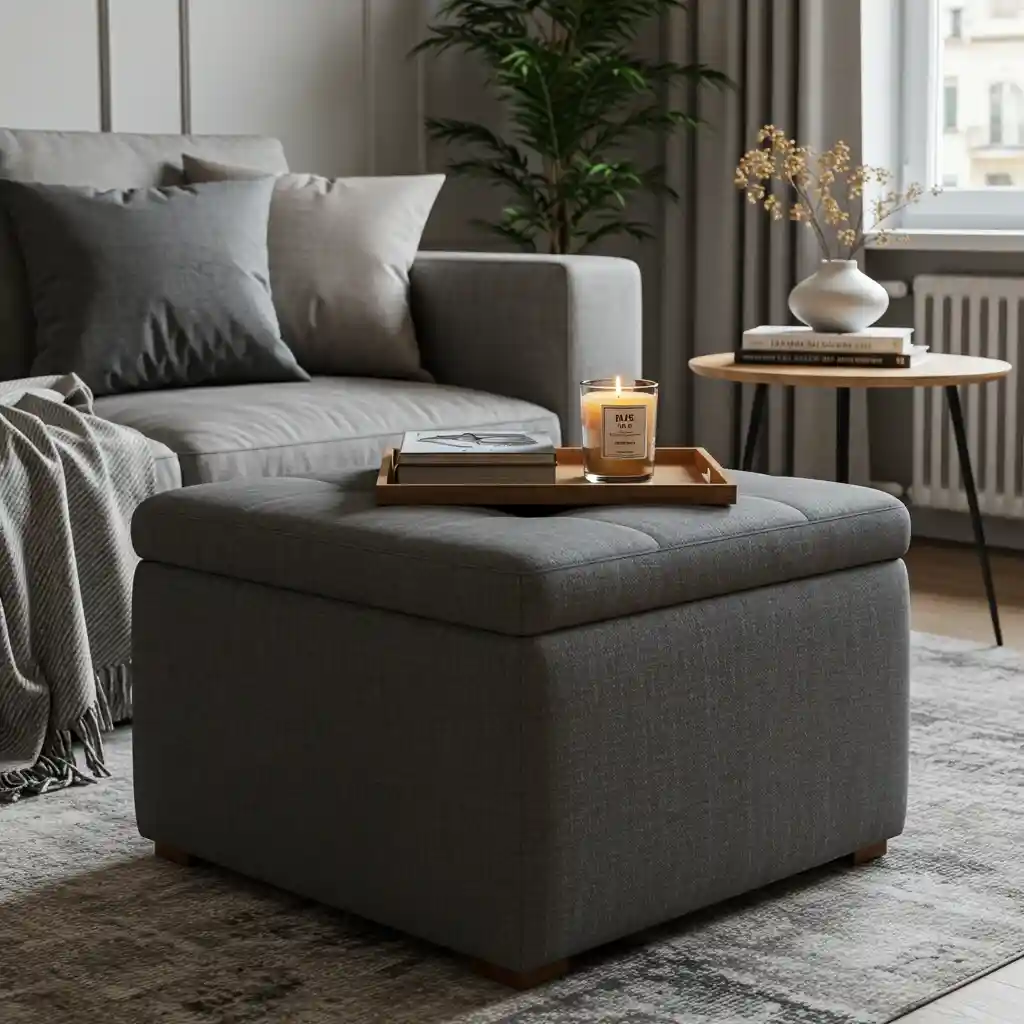
I always prioritize pieces that offer hidden storage or can adapt to different situations. A storage ottoman is a perfect example: it can be a footrest, extra seating for guests, or a coffee table (with a tray on top), all while hiding blankets or board games inside. A dining table with an extendable leaf can be small for daily use and expand for a dinner party.
- Storage Ottoman: The ultimate multi-tasker for seating, surfaces, and hidden storage.
- Lift-Top Coffee Table: Can be raised to a comfortable height for working or eating from the sofa.
- Daybed or Sleeper Sofa: Allows your living room to double as a guest room.
- Nesting Tables: Flexible side tables that can be expanded or contracted as needed.
For a creative enhancement, look for a modular sofa. These are composed of several individual pieces that can be reconfigured to suit your needs, allowing you to change your layout from a standard sofa to a chaise lounge or separate chairs.
3. Go Vertical with Wall Shelving and Storage
When your floor space is limited, the most valuable and underutilized real estate is your walls. Thinking vertically is a non-negotiable strategy for a one-bedroom apartment. By using tall, slender furniture and wall-mounted shelving, you can add a huge amount of storage and display space without taking up a single extra inch of your precious footprint. This also has the wonderful effect of drawing the eye upward, which can make your ceilings feel higher and the room feel more spacious.
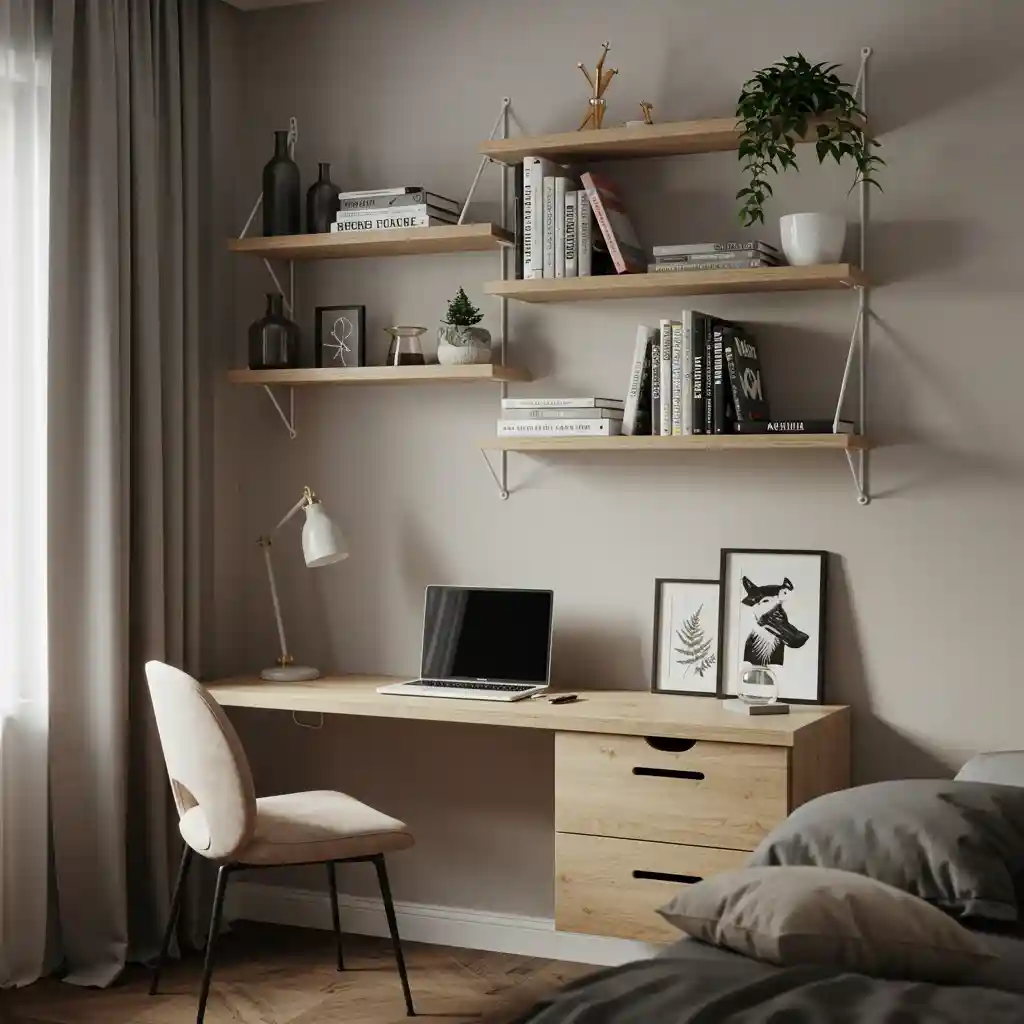
I love using a combination of open shelving and closed, wall-mounted cabinets. A set of simple, floating shelves is perfect for displaying books, plants, and decor. A sleek, wall-mounted media console or cabinet can provide hidden storage while keeping the floor clear, which makes cleaning easier and enhances the sense of space.
- Floating Shelves: Perfect for books, decor, or even as a small bar area.
- Tall, Narrow Bookcases: A “ladder” style bookcase has a very light, airy feel.
- Wall-Mounted Cabinets: Great for media storage or as an entryway drop-zone.
For a high-impact enhancement, create a floor-to-ceiling library wall. Install a series of simple, wall-mounted shelves that run from your baseboard all the way up to the ceiling. This creates a stunning, dramatic focal point and provides an incredible amount of storage.
4. Opt for “Leggy” Furniture to Create Visual Space
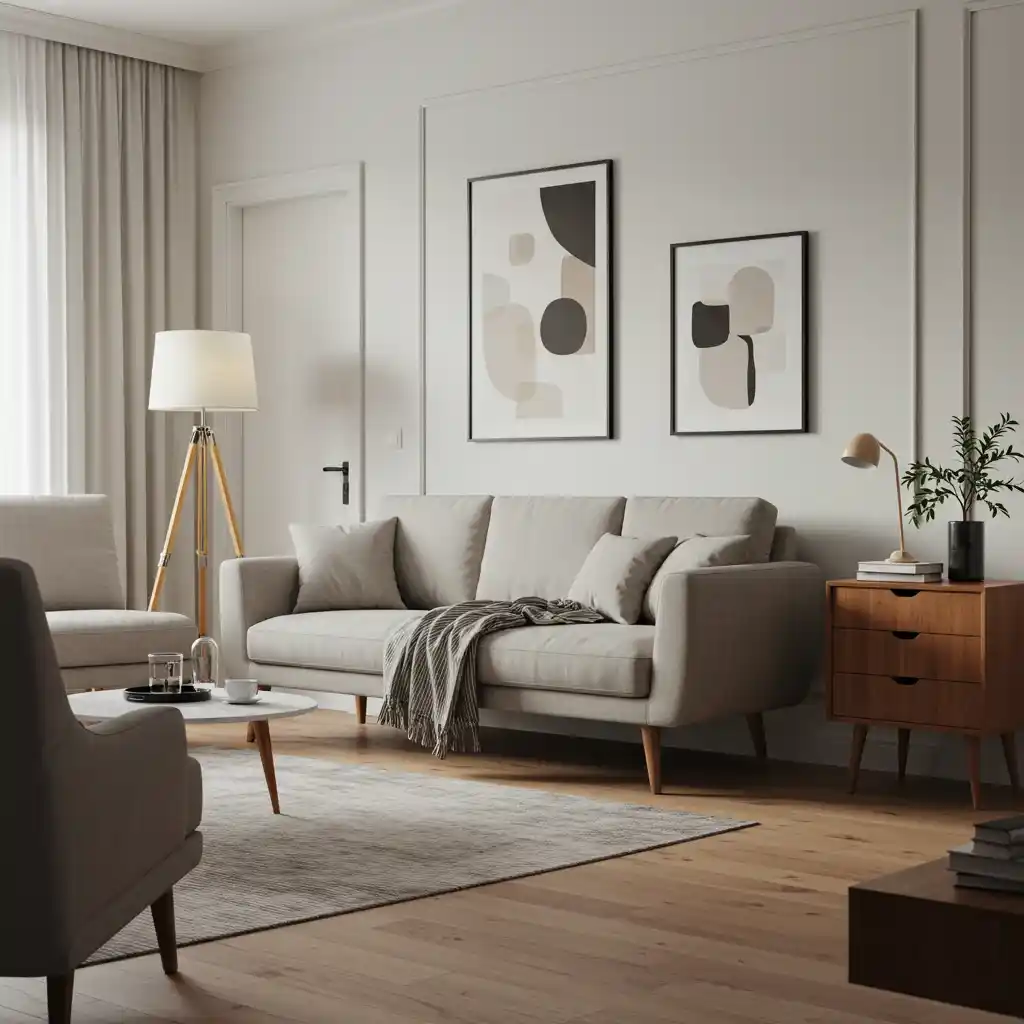
This is a simple but incredibly effective visual trick for making a small apartment feel larger. Choose furniture that is raised up on visible, slender legs. When you can see the floor and the wall continuing underneath your sofa, chairs, and tables, it creates a sense of openness and airiness. Solid, blocky furniture that sits flat on the ground can feel heavy and visually “eats” up all the space it occupies.
I consistently recommend “leggy” furniture to my clients in small spaces. This applies to everything from your sofa and armchairs (look for those classic, mid-century modern style tapered legs) to your media console and side tables. The more floor you can see, the more spacious and less cluttered the room will feel.
- Key Feature: Look for furniture with visible, slender legs that lift the main body of the piece off the ground.
- Style: Mid-century modern furniture is a perfect example of this principle.
- Effect: Creates a light, airy, and more spacious feeling.
For an enhancement, choose a coffee table or a side table that has a glass or an acrylic top in addition to its leggy base. The transparent surface will further enhance the open and airy feeling by allowing you to see right through it to the floor below.
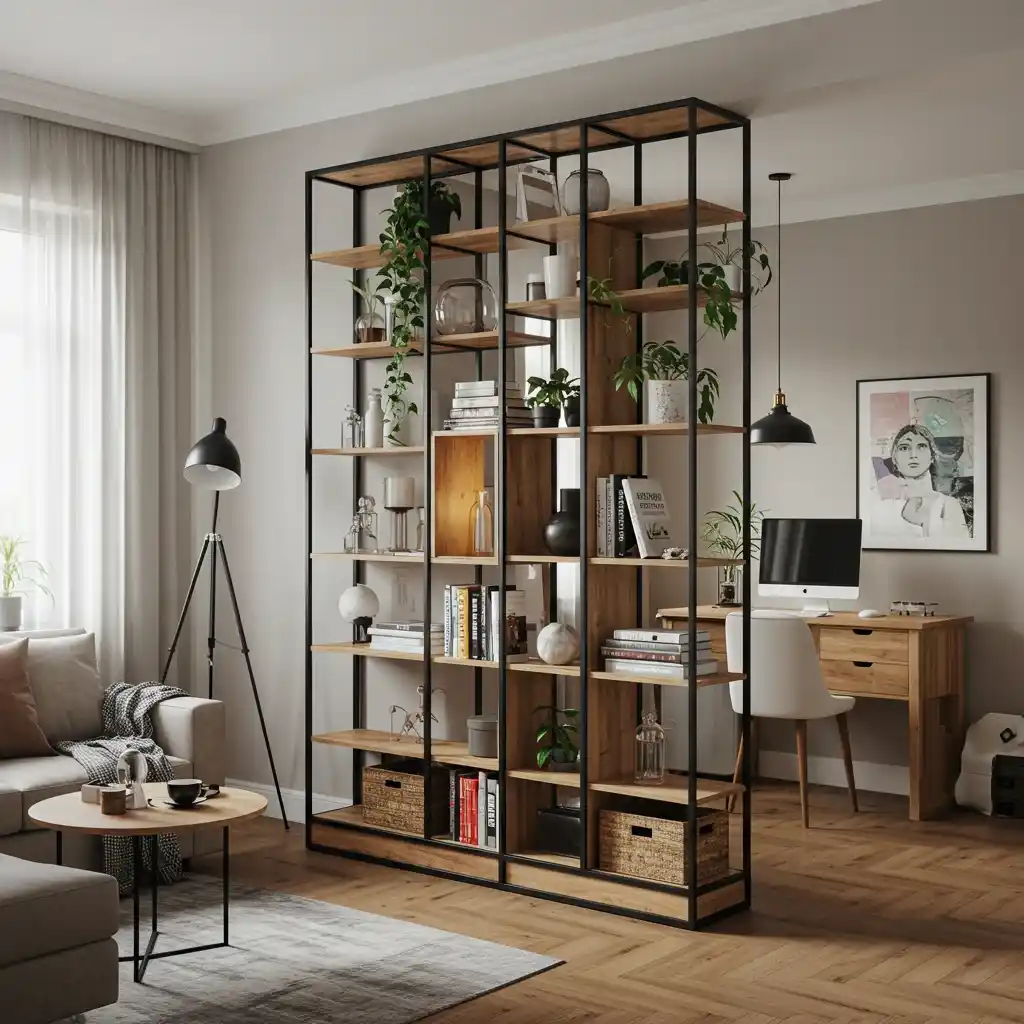
5. Use a See-Through Bookcase as a Room Divider
In a one-bedroom apartment, you often need to create a bit of separation, perhaps between your living area and a small home office nook, or between your living and dining zones. A solid wall or a heavy screen can make the space feel dark and cramped. A brilliantly creative and functional solution is to use a tall, open-backed shelving unit or bookcase as a room divider.
This type of furniture, often called an “ethere” bookcase, creates a clear sense of separation between two zones, but because you can see right through it, it doesn’t block light or your sightlines. This is a favorite solution of mine and is heavily featured on small-space design blogs like Apartment Therapy. It allows you to divide your space while maintaining that bright, open-concept feel.
- Flexible Division: Creates separation without the permanence or bulk of a wall.
- Maintains Openness: Doesn’t block light or the view, keeping the space airy.
- Provides Storage and Display: A hardworking piece that provides valuable storage for both zones.
For a stylish enhancement, style the shelves with a curated mix of books, plants, and decorative objects. Be sure to leave plenty of empty “negative space” on the shelves to allow for the best visibility and the most light to pass through.
6. Use a Cohesive Color Palette to Unify the Space
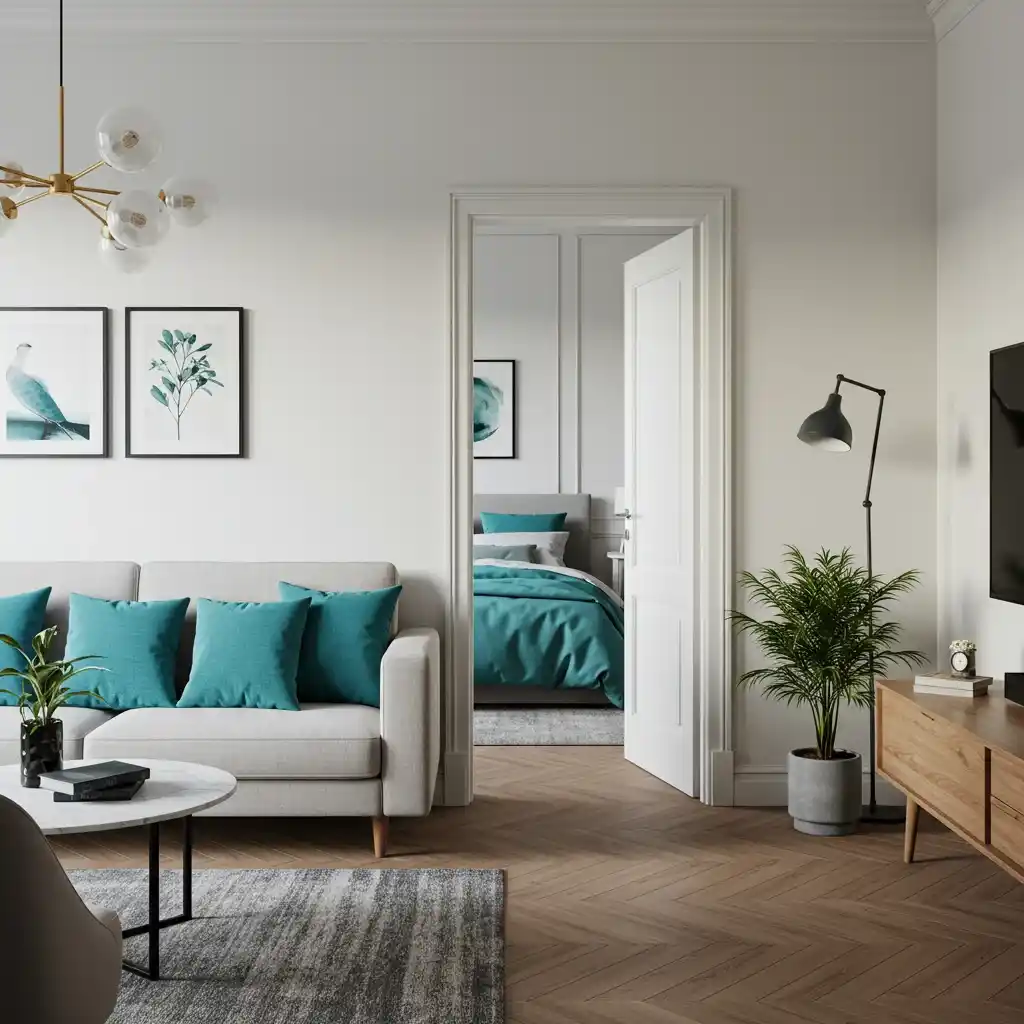
To make a small apartment with multiple zones feel like one large, harmonious space, it’s crucial to use a consistent and cohesive color palette throughout. This doesn’t mean every room has to be the same color, but the main colors should flow from the entryway through the living room and into the bedroom. This continuous visual thread will make your entire apartment feel larger and more thoughtfully designed.
I advise my clients to choose a simple, neutral foundation color for the walls (like a soft white, a pale gray, or a warm greige) and then select two to three accent colors to use in varying amounts in each room. For example, the olive green from a pillow in your living room could be repeated as the color of a vase in your bedroom, and the warm wood tone of your coffee table could match the frame of the mirror in your entryway.
- Choose a Palette: Select 3-4 complementary colors to use throughout the apartment.
- Repeat Colors: Use your main colors in each area to create a sense of flow.
- Neutral Foundation: A light, neutral wall color is the best way to make a small apartment feel bright and spacious.
For an enhancement, use a single, bold piece of art in your main living area and pull all of your accent colors directly from that piece. This is a professional designer’s trick that guarantees a perfectly coordinated and harmonious color palette.
7. Hang Large-Scale Art for a Bold Statement
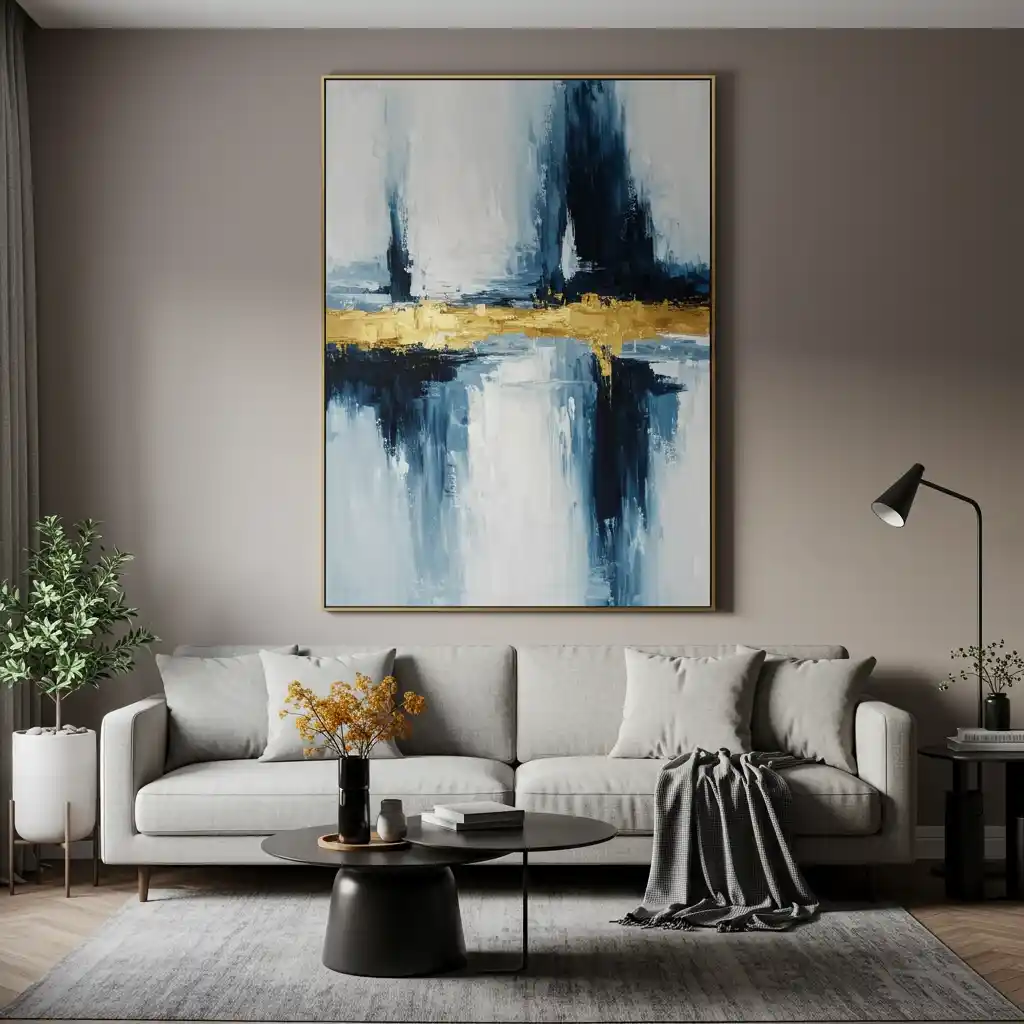
It might seem counter-intuitive, but in a small apartment, one single, large-scale piece of art often has a much better effect than a cluttered gallery wall of many small pieces. A large, oversized piece of art can actually make a room feel bigger. It creates a powerful, confident focal point and draws the eye, distracting from the small dimensions of the space. A lot of small art pieces can sometimes feel like a lot of small clutter.
I always encourage my clients to be brave and go big with their art. Choose one main wall in your living room or bedroom and hang a single, large canvas or a framed print that is at least two-thirds the width of the furniture it’s hanging above (like your sofa or your bed).
- Go Big: One large piece has more impact and feels less cluttered than many small ones.
- Create a Focal Point: A large piece of art is an instant statement maker.
- Adds Color and Personality: The easiest way to inject your personal style into a generic rental.
For a budget-friendly enhancement, create your own, large-scale abstract art on a big canvas from a craft store. You don’t need to be an artist; a simple, color-blocked design or a textured, monochromatic piece can look incredibly chic and professional.
8. Use Mirrors to Create the Illusion of Depth
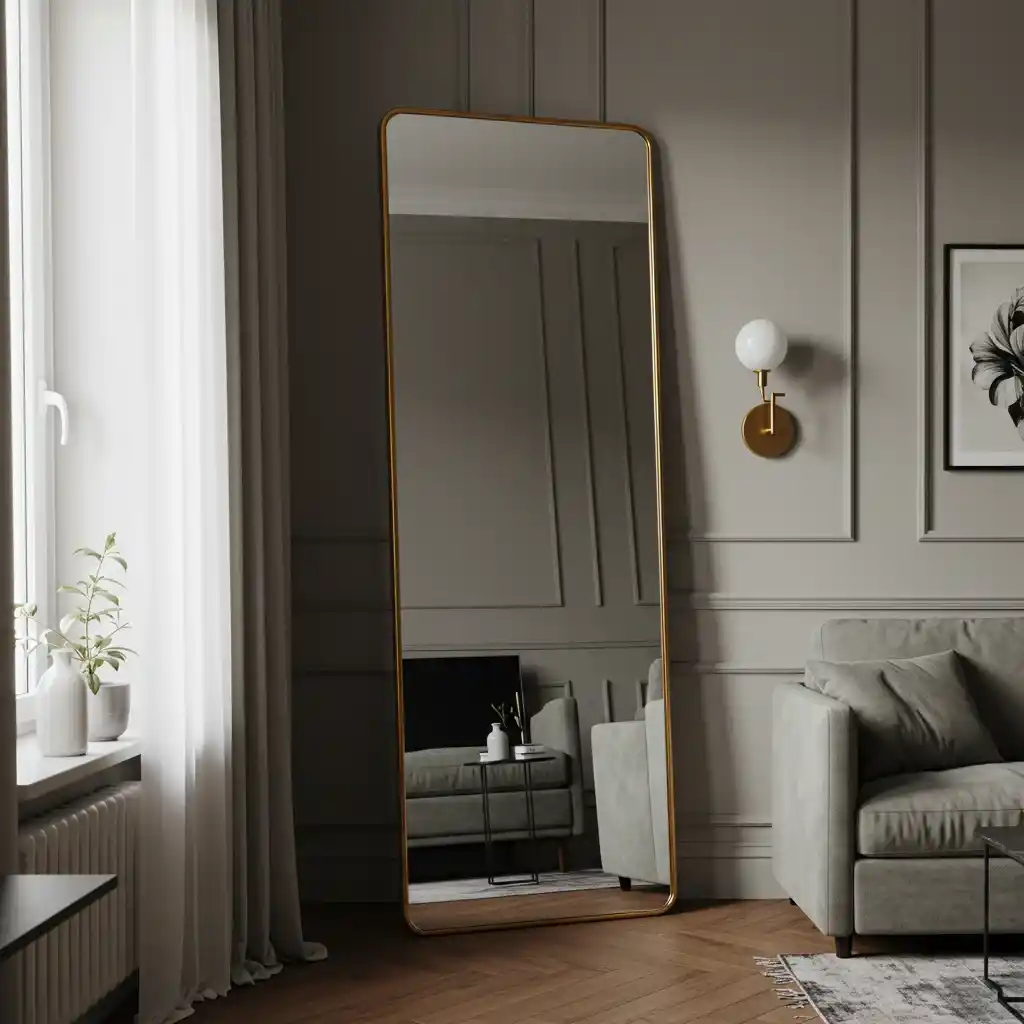
This is the oldest and most effective trick in the small-space design book. A large mirror is a magical tool in a one-bedroom apartment. It can make a room feel brighter by reflecting both natural and artificial light, and it can create a powerful illusion of depth, visually doubling the size of your space.
The placement of your mirror is key to its success. I recommend placing a large mirror opposite a window to maximize its light-reflecting capabilities. Another great spot is in a narrow entryway or at the end of a hallway, which can make the space feel much wider and less confined. A large, full-length floor mirror simply leaned against a wall is a fantastic, renter-friendly option that requires no holes.
- Reflects Light: Makes a dark room feel significantly brighter.
- Creates Illusion of Depth: Can make a small room feel twice as large.
- Renter-Friendly Option: A large, leaning floor mirror requires no installation.
For an enhancement, choose a mirror with an interesting shape or a beautiful frame that can also serve as a piece of wall art. A mirror with a dramatic, arched top or a vintage, ornate, gold-leaf frame can be a stunning focal point.
9. Design a Multi-Functional Dining Nook
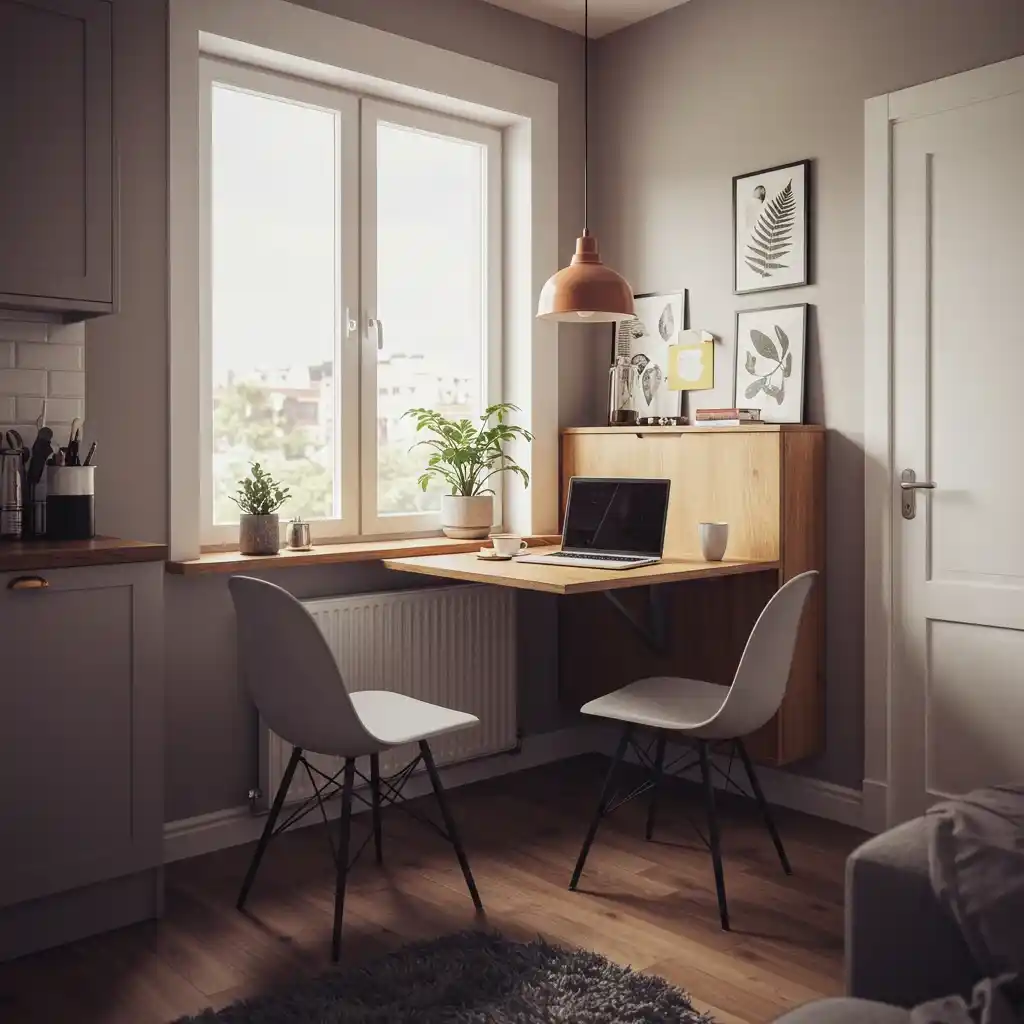
Finding space for a proper dining area is one of the biggest challenges in a one-bedroom apartment. A creative solution is to design a multi-functional dining nook that can also serve other purposes. A small, round bistro table is a classic space-saver, but you can be even more clever.
I love to recommend a wall-mounted, floating shelf or a slim console table that can be used as both a dining spot and a work-from-home desk. Paired with a couple of stylish, comfortable chairs or stools, it can be the perfect, flexible solution. Another fantastic, space-saving idea is a built-in banquette or a bench against the wall. This allows you to push the table closer to the wall, saving a huge amount of floor space.
- Bistro Table: A small, round table for two is a classic choice.
- Wall-Mounted Table: A floating or fold-down table can double as a desk.
- Banquette Seating: Building a bench against the wall is the ultimate space-saver.
For an enhancement, choose a table that is “counter-height” instead of standard dining height. This allows your dining nook to also function as extra counter-level prep space for your kitchen, and you can use comfortable, counter-height stools for seating.
10. Master a Layered Lighting Scheme
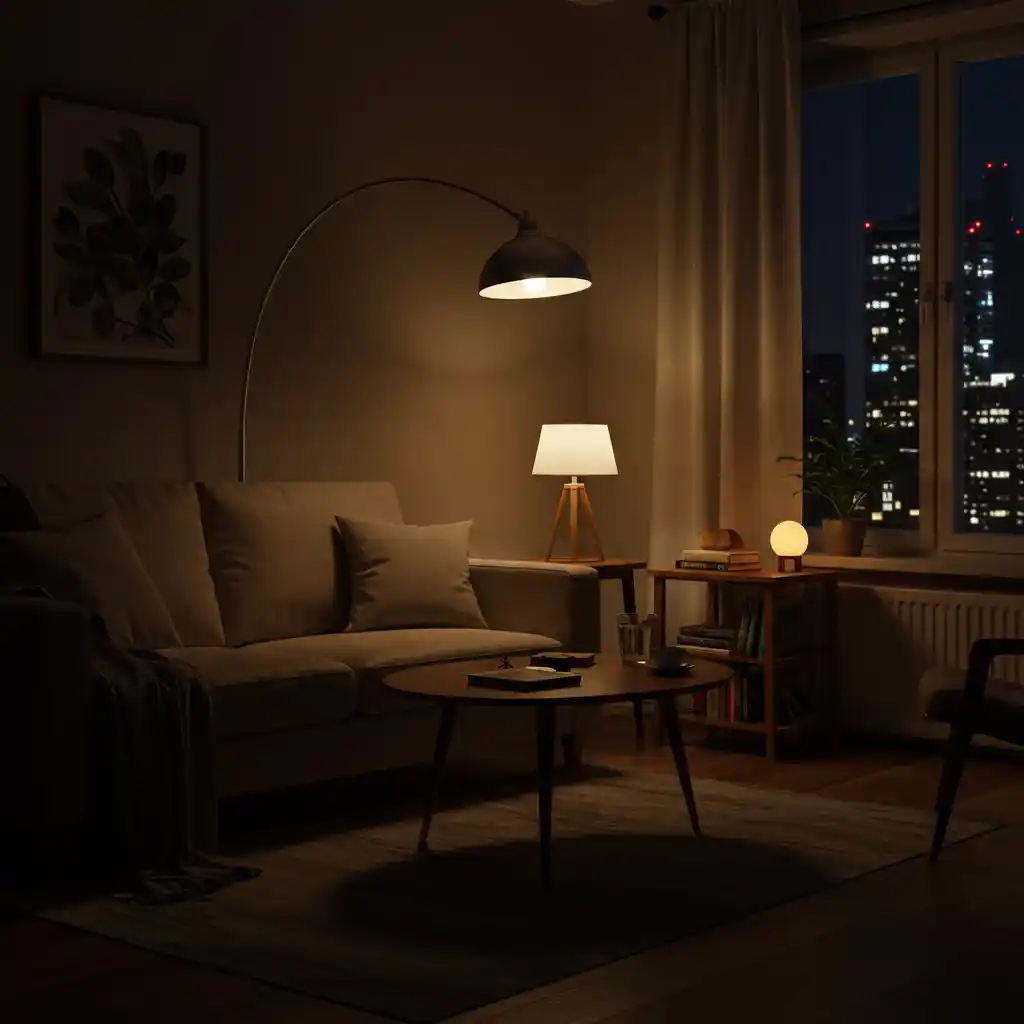
Good lighting is absolutely crucial in a small apartment. A single, harsh, overhead “boob light” that is common in many rentals can make a space feel flat and uninviting. A professional, layered lighting scheme, which is a key principle of good design, can make your apartment feel warmer, larger, and much more sophisticated.
You need to incorporate three layers of light.
- Ambient Light: This is your overall, general illumination. If you can’t change your main ceiling fixture, supplement it with the warm glow of a stylish floor lamp.
- Task Light: This is focused light for specific activities. A reading lamp next to your sofa, a small desk lamp in your work nook, and under-cabinet lighting in your kitchen are all forms of task light.
- Accent Light: This is soft, mood-setting light. A small, stylish table lamp on a console, a picture light over a piece of art, or even just candles are perfect for this.
For a renter-friendly enhancement that adds a huge amount of style, buy a plug-in wall sconce. These sconces have a cord that you can simply plug into an outlet, but they provide the same, sophisticated, eye-level light as a hardwired sconce without needing an electrician.
11. Install a Damage-Free Accent Wall
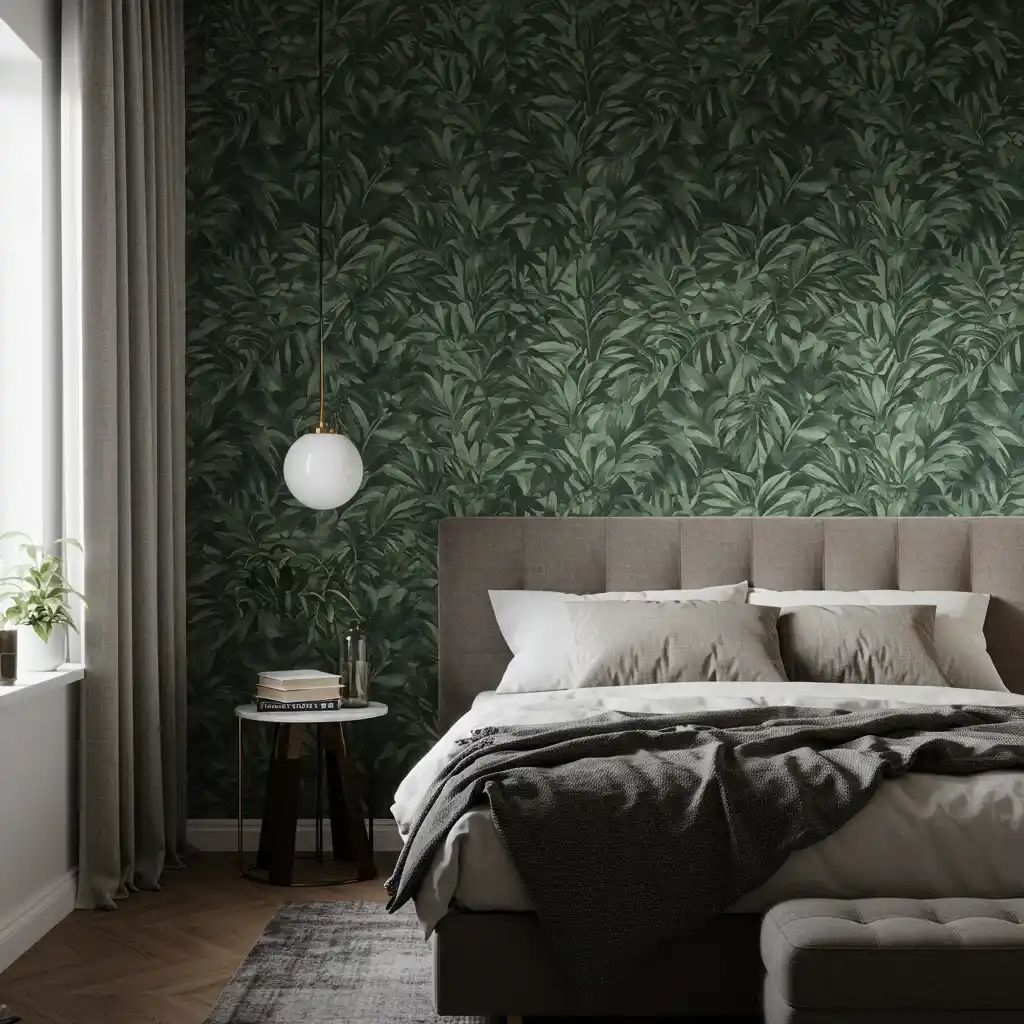
An accent wall is a fantastic way to add a bold statement of color, pattern, and personality to a room. But in a rental, painting or traditional wallpaper is often not an option. A brilliantly creative and completely renter-friendly solution is to use peel-and-stick, removable wallpaper. The quality of removable wallpaper has improved dramatically, and it’s now available in a huge range of stunning, high-end designs.
This is my go-to recommendation for renters who want to make a big, personal statement. It can be applied to the wall behind your bed to create a dramatic, headboard-like effect, or on the main wall in your living room. When you’re ready to move, you can simply peel it off without damaging the wall underneath.
- Renter-Friendly: Can be applied and removed without damaging walls.
- High Impact: A bold pattern or a rich color can completely transform a room.
- Easy to Install: A manageable DIY project for a patient person.
For a more subtle enhancement, instead of a full wall, use removable wallpaper to create a custom look on a smaller surface. You can apply it to the front of a plain dresser, the back panel of a bookcase, or even the blades of a boring ceiling fan for a surprising and creative detail.
12. Create a Cozy, Textural Bedroom Retreat
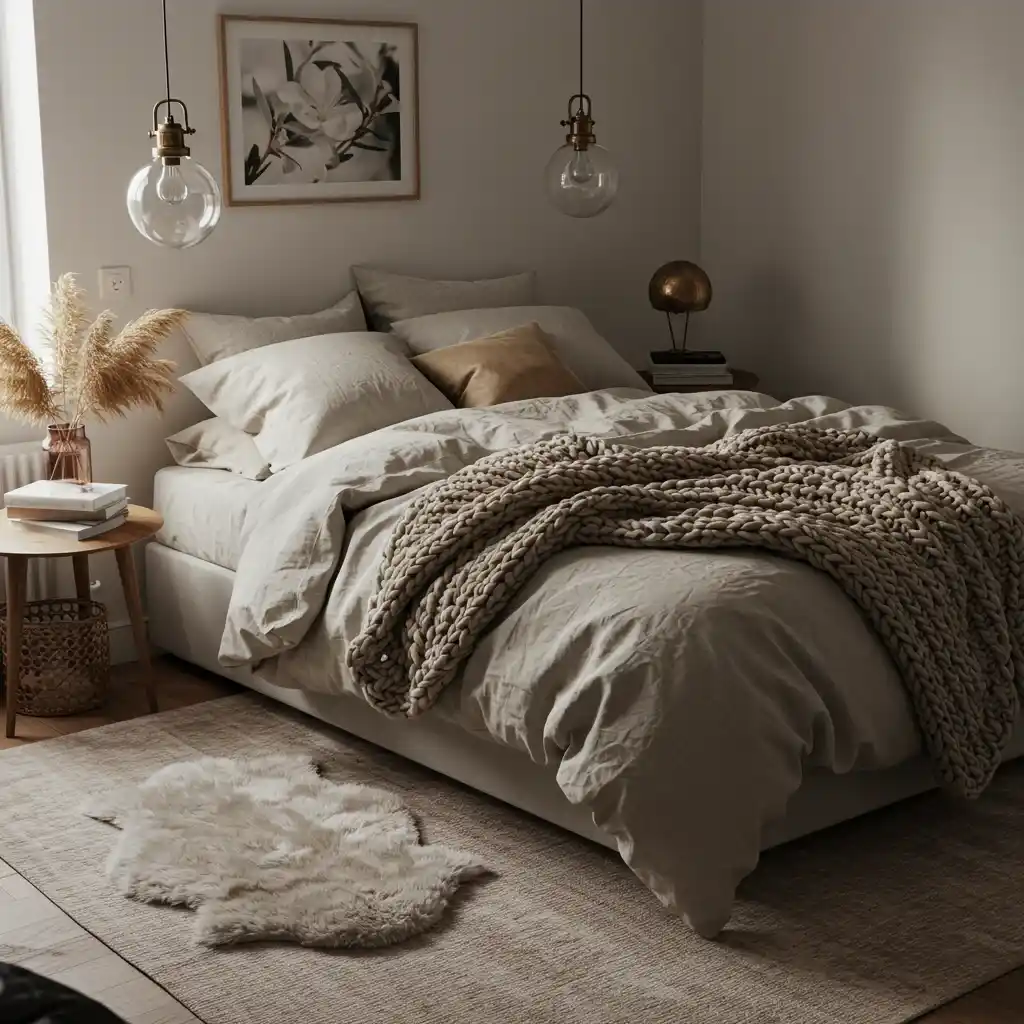
While your main living area is about creating distinct zones, your separate bedroom in a one-bedroom apartment is your true sanctuary. This is the place to go all-in on creating a cozy, comfortable, and deeply relaxing atmosphere. The best way to do this is by layering a rich variety of soft, tactile textures.
This is a strategy that focuses on how the room feels, not just how it looks.
- Layer Your Bedding: Start with soft sheets (linen or flannel are great choices), add a cozy duvet, a folded quilt or coverlet at the foot, and a variety of plush pillows.
- Add a Soft Rug: A high-pile, plush rug next to the bed is a must for a soft landing in the morning.
- Incorporate Soft Curtains: Heavy, soft curtains (like velvet or a thick linen) can help to block out light and noise, and add a layer of softness to the walls.
- A Cozy Throw: A chunky knit or a faux fur throw on an accent chair or at the foot of the bed.
For an enhancement that adds to the serene, retreat-like feel, focus on creating a clutter-free environment. Use nightstands with drawers to hide away clutter and keep your surfaces styled with only a few, simple, beautiful objects.
13. Select an “Apartment-Scale” Sofa
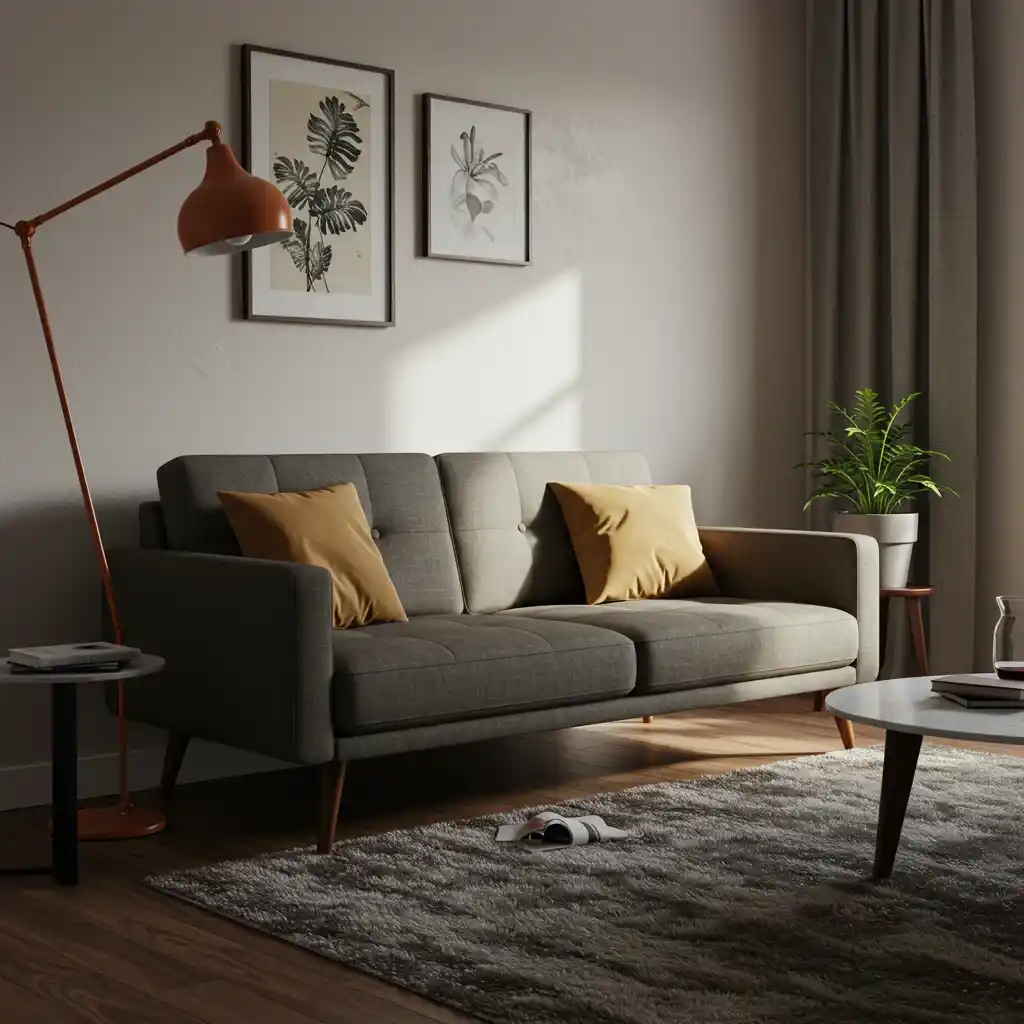
In a one-bedroom apartment, your sofa is likely the largest piece of furniture you own, and choosing the right one is critical. A huge, overstuffed, deep-seated sofa can completely overwhelm a small living room. Many furniture companies now offer “apartment-scale” sofas, which are specifically designed with smaller footprints, shallower depths, and more streamlined profiles to fit perfectly in compact spaces.
When I shop for a sofa with a client for a small apartment, we look for a few key things. It should be comfortable, but not excessively bulky. A loveseat can often be a better choice than a full, three-seater sofa. A sofa with a clean, simple silhouette and thin arms will take up less visual and physical space than one with large, rolled arms.
- Check the Depth: A shallower depth (around 32-36 inches) is often better for a small room.
- Thin Arms: Look for a track-arm or a thin, sloped-arm style.
- “Leggy” is Best: As we discussed, a sofa on raised legs will feel much lighter in the space.
For an enhancement that maximizes function, choose an apartment-scale sectional that has a reversible chaise. This will give you the flexibility to change the configuration of your sofa if you ever move or want to rearrange your room.
14. Don’t Neglect the Entryway
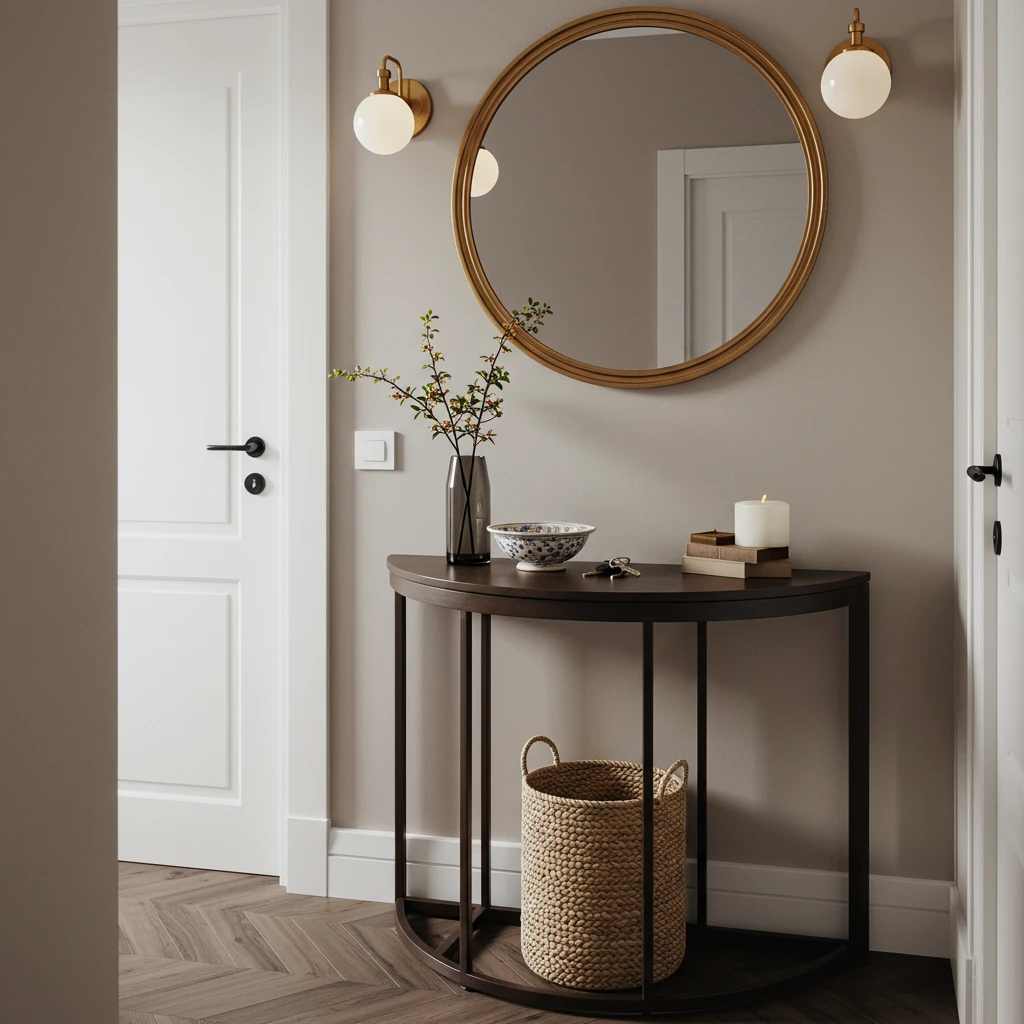
Even if you don’t have a formal foyer, it’s crucial to create a designated “entryway” zone in a one-bedroom apartment. This is the first space you and your guests see, and it sets the tone for your entire home. A well-designed entryway is also a functional workhorse, providing a necessary “drop zone” for keys, mail, and bags, which prevents that clutter from migrating further into your home.
You don’t need a lot of space to create a beautiful and functional entryway. I often use a very slim, narrow console table against the wall by the door. If there’s no room for a table, a few, simple, wall-mounted floating shelves and a row of stylish hooks can serve the same purpose.
- A Slim Console or Shelf: For a surface to drop keys and mail.
- A Mirror: To make the space feel larger and for a last-minute check.
- Hooks: For coats, bags, and keys.
- A Small Rug: To define the zone and trap dirt.
For a creative enhancement, use a wall-mounted shoe cabinet. These are often incredibly slim (only 6-8 inches deep) and have tilt-out drawers that can store several pairs of shoes, keeping them completely off the floor and out of sight.
15. The Power of Curtains
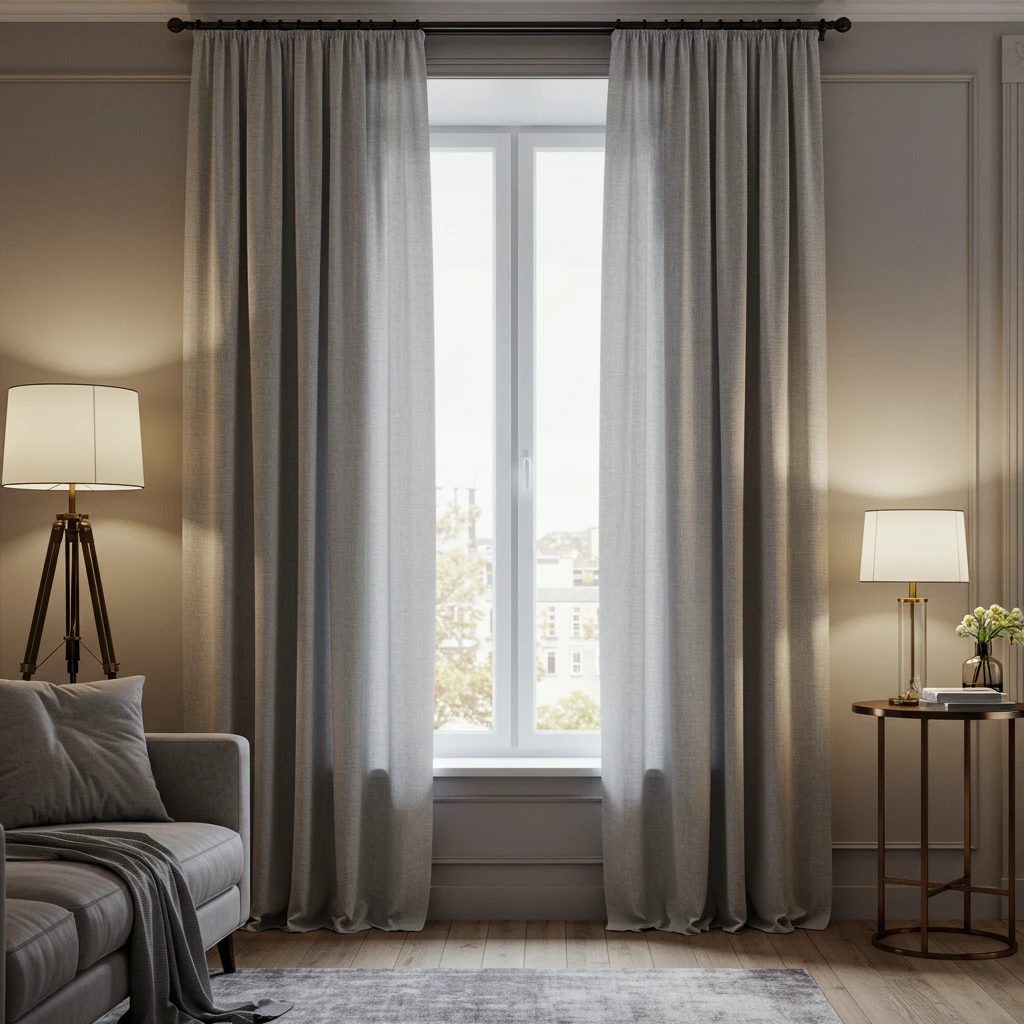
The way you dress your windows can have a huge impact on how large and stylish your one-bedroom apartment feels. The right curtains can make your ceilings feel higher, your windows look larger, and can add a layer of softness, color, and texture to your room. This is a key detail that is often overlooked in rental apartments.
The most important trick, as preached by every interior designer, is to hang your curtains “high and wide.” This means mounting your curtain rod at least 4-6 inches above the top of your window frame (or as close to the ceiling as you can get) and extending the rod 6-12 inches beyond the frame on both sides. Use long curtain panels that just skim the floor. This technique creates a powerful, vertical line that draws the eye upward and makes the entire wall feel grander.
- Hang Them High and Wide: The single most important rule for curtains.
- Fabric Choice: A lightweight linen or a soft cotton will feel airy and bright. A heavy velvet will feel more dramatic and luxurious.
- Color and Pattern: The curtains are a great place to bring in one of your accent colors or a beautiful, subtle pattern.
For a renter-friendly enhancement, if you’re not allowed to drill holes for a curtain rod, use a high-quality, sturdy, tension rod fitted snugly inside your window frame. You can then hang lightweight, sheer or cafe-style curtains from this for a soft, light-filtering effect.
Conclusion
Decorating a 1 bedroom apartment is a wonderful opportunity to create a space that is a true reflection of your personal style. As we’ve explored through these 15 creative ideas, the key to a successful design lies in smart, multi-functional solutions and clever design strategies that make the most of every square inch. By creating distinct zones, thinking vertically, choosing appropriately scaled furniture, and using a cohesive color palette, you can craft a home that feels spacious, organized, and incredibly cozy.
Frequently Asked Questions (FAQs)
How can I make my one-bedroom apartment look bigger?
Use a light and cohesive color palette. Hang a large mirror opposite a window. Choose “leggy” furniture that you can see under. Use vertical storage to draw the eye upward. And hang your curtains high and wide to make your windows and ceilings feel taller.
How do you create zones in a small apartment?
Area rugs are the easiest and most effective way to define different zones, like your living and dining areas. You can also use the back of a “floating” sofa with a console table, or a see-through, open-backed bookcase to create a sense of separation without blocking light.
What is “apartment-scale” furniture?
This is furniture that is specifically designed with smaller proportions to fit in compact spaces. These pieces typically have a shallower depth, a lower profile, and thinner arms than standard-sized furniture, allowing them to provide comfortable seating without overwhelming a small room.
I’m a renter. What are the best damage-free decorating ideas?
Removable, peel-and-stick wallpaper is a game-changer for a high-impact accent wall. Use damage-free, adhesive strips and hooks for hanging art and lightweight shelves. Focus on freestanding elements like large, leaning floor mirrors and stylish floor lamps.
How do you add enough storage to a one-bedroom apartment?
Think vertically and multi-functionally. Use tall, narrow bookcases and wall-mounted shelving. Choose furniture that has hidden storage, like a storage ottoman, a lift-top coffee table, or a bed with drawers underneath.
What’s the first thing I should buy for my one-bedroom apartment?
Start with the largest and most important piece: your sofa. Your sofa will likely anchor your main living area and dictate the scale and style of your other pieces. The second most important piece is often a good area rug to define your living zone.
How do I create a functional workspace in my apartment without a separate office?
Look for multi-functional solutions. A slim console table can double as a desk. A secretary-style desk can be closed up to hide your work at the end of the day. You can also create a small, dedicated work nook in a corner of your living room or bedroom and define it with a small rug or a different wall color.


