Are you looking for inspiring grass-free front yard ideas to boost your home’s curb appeal while saving precious time, water, and money? For decades, the perfectly manicured, green grass lawn has been the default standard for a beautiful front yard. But this thirsty, high-maintenance carpet demands a constant cycle of mowing, watering, fertilizing, and weeding. A growing movement of homeowners is choosing to “ditch the lawn” in favor of more sustainable, creative, and lower-maintenance landscapes that are just as, if not more, beautiful.
This guide will walk you through 13 incredible ideas for designing a front yard without a traditional lawn. From lush groundcover meadows to modern gravel gardens, these solutions will help you create a stunning first impression that is both beautiful and blissfully low-maintenance.
1. Create a Lush, Flowering Groundcover Meadow
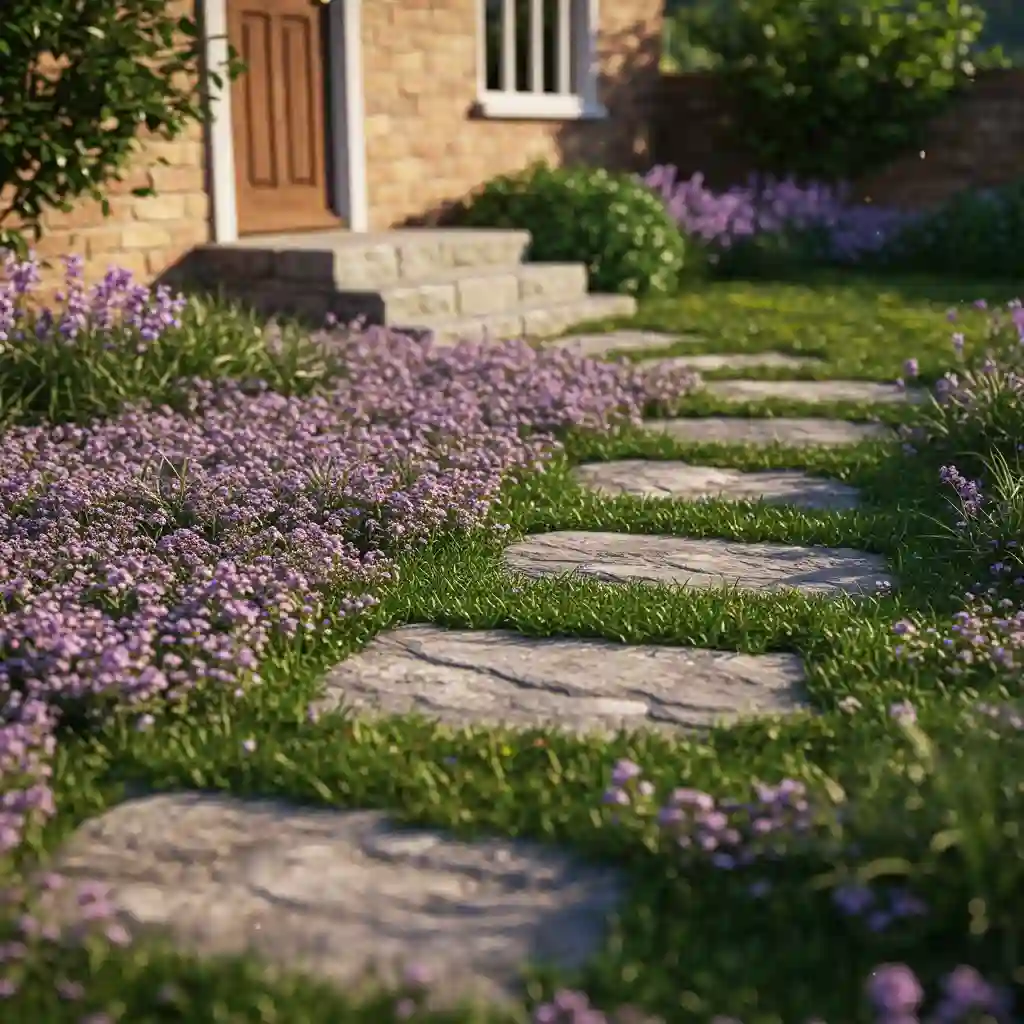
If you love the look of a green carpet but hate the endless mowing, replacing your lawn with a hardy, low-growing groundcover is the perfect solution. Many beautiful, spreading perennial plants can create a dense, green mat that suppresses weeds, requires little to no mowing, and often uses far less water than traditional turfgrass. It’s a living, breathing, and often flowering alternative that adds a soft, naturalistic feel to your front yard.
I love designing these “meadows” for clients who want a softer, more romantic look. A large expanse of creeping thyme, which releases a beautiful scent when walked on, or a patch of vibrant blue star creeper can be a stunning and unique replacement for a boring lawn.
- Sun-loving options: Creeping Thyme, Sedum, Dwarf Mondo Grass, Blue Star Creeper.
- Shade-loving options: Sweet Woodruff, Irish Moss, Ajuga (Bugleweed).
- Benefits: Drastically reduces or eliminates mowing, requires less water, and can provide beautiful seasonal flowers.
For an enhancement, plant hundreds of small, early-spring-flowering bulbs like crocuses, scilla, or grape hyacinths throughout your groundcover. In the spring, you’ll be treated to a magical, jewel-like display of flowers popping up through your living green carpet before the groundcover fully leafs out.
2. Design a Modern Gravel and Stone Garden
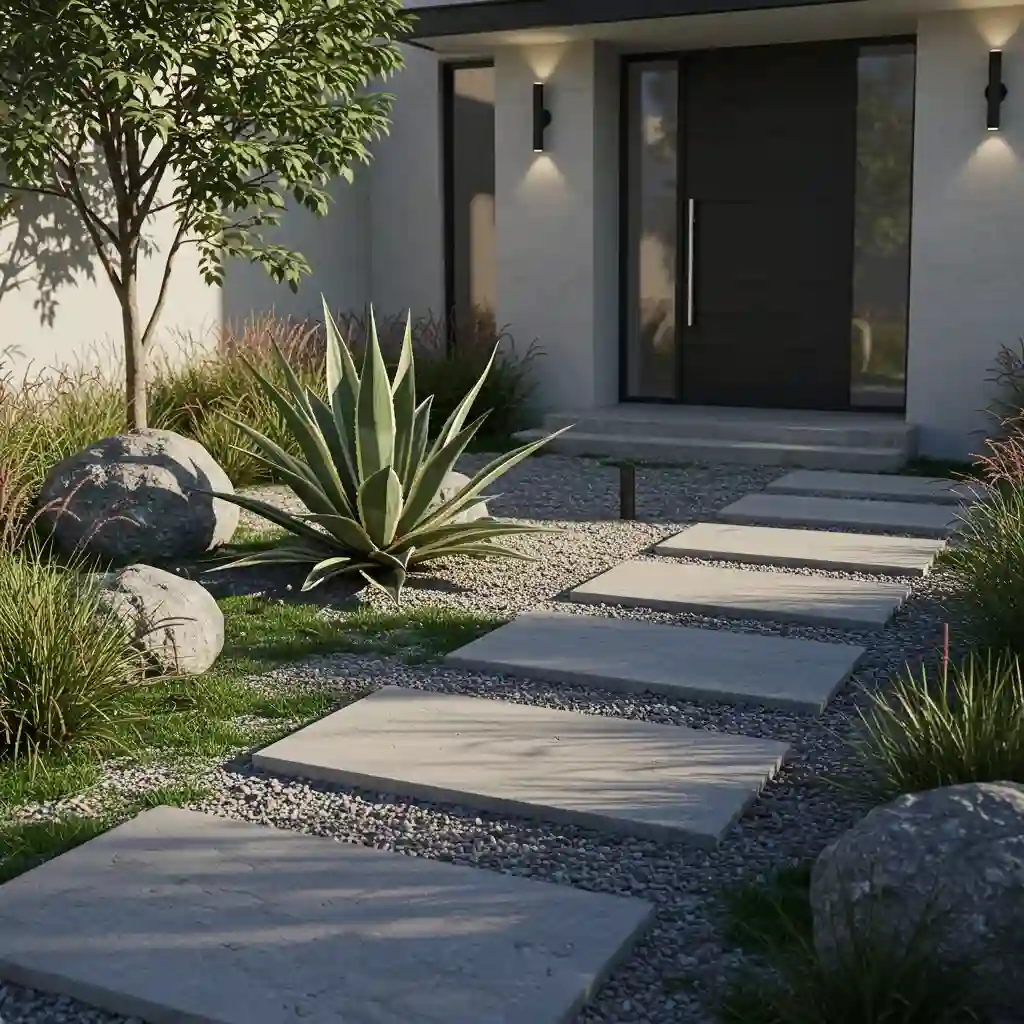
For the ultimate in low-maintenance, water-wise, and modern curb appeal, you can’t beat a gravel and stone garden, often known as a xeriscape. This approach replaces the lawn entirely with a clean, simple groundcover of decorative gravel or crushed stone, punctuated by a few, carefully placed, sculptural plants and perhaps a large boulder or two. This creates a clean, minimalist aesthetic that is both incredibly stylish and requires almost no upkeep.
This is my go-to solution for clients with modern homes or those who want a truly “set it and forget it” landscape. As seen in the pages of Dwell magazine, the beauty of this style is in its simplicity and its focus on texture and form.
- Installation: Always install a high-quality, professional-grade landscape fabric underneath your stone to prevent weeds from growing through.
- Materials: Pea gravel for a softer look, or a more angular crushed rock (like black lava rock or gray granite) for a modern, textured feel.
- Planting: Use a few, dramatic, drought-tolerant plants like agave, yucca, or ornamental grasses as living sculptures.
For a high-design enhancement, use two different colors or sizes of gravel to create subtle, geometric patterns or to delineate different zones within your front yard. A path of dark gray gravel running through a larger bed of light gray gravel can be a very sophisticated look.
3. Plant a Native Prairie or Wildflower Garden
For an eco-friendly, beautiful, and incredibly life-filled front yard, consider replacing your lawn with a native prairie or wildflower garden. This approach involves planting a dense mix of grasses and flowering perennials that are native to your specific region. These plants are perfectly adapted to your local climate and soil, meaning they require very little supplemental water or fertilizer once established. They also provide a vital habitat and food source for local pollinators like bees and butterflies, as well as for birds.
I love designing these naturalistic gardens because they are constantly changing and evolving throughout the seasons, offering a dynamic display of color and texture. It’s a look that is both beautifully wild and incredibly sustainable.
- Choose Local Plants: Work with a local, independent nursery to select a mix of grasses and wildflowers that are native to your area.
- Plant Densely: A dense planting will help to out-compete weeds and will create a lush, full look more quickly.
- Embrace the Wildness: This is not a perfectly manicured look; allow the plants to mingle and self-seed for the most natural effect.
For an enhancement, incorporate a simple, shallow birdbath or a small “bee bath” (a shallow dish filled with pebbles and water) into your wildflower garden. This will provide a crucial source of water and will attract even more beautiful wildlife to your yard.

4. Lay an Expanded, Permeable Paver Patio
A fantastic way to add a huge amount of functional, low-maintenance living space to your front yard is to replace your lawn with an expanded patio. A large front patio can serve as a welcoming courtyard, a place to sit with a morning coffee, or a spot to chat with neighbors. To keep it eco-friendly, choose permeable pavers, which have small gaps between them that allow rainwater to soak into the ground instead of running off into the storm drains.
This approach transforms your front yard from a purely ornamental space into a functional, outdoor room. I designed a front courtyard like this for a client who wanted a place to sit and watch her kids play. We used large-scale concrete pavers with small gaps filled with fine, dark gravel.
- Materials: Permeable concrete pavers, classic brick, or natural flagstone.
- Functionality: Creates a durable, all-weather surface for furniture and entertaining.
- Permeability: Helps to manage stormwater and recharge groundwater.
For an enhancement, build a low, 18-inch high seating wall around one or two sides of your front patio. This defines the space, provides a huge amount of built-in, informal seating, and adds a sense of enclosure and privacy.

5. Build Abundant, Layered Shrub and Perennial Beds
Instead of a lawn, why not devote your entire front yard to deep, lush, layered garden beds filled with a beautiful mix of low-maintenance shrubs and perennials? This “maximalist” garden approach can create a stunning, immersive, and high-curb-appeal landscape. The key to keeping it low-maintenance is to plant densely. When plants are planted closely together, they shade the soil, which helps retain moisture and naturally suppresses weeds, ultimately reducing your workload.
I advise my clients to think in layers to create a sense of depth.
- Back Layer (Tall): Place taller, evergreen shrubs against the house to provide a year-round green backdrop.
- Middle Layer (Medium): In front of the shrubs, add a layer of hardy, mid-sized perennials and ornamental grasses.
- Front Layer (Small): At the very front edge of the bed, along the walkway, use low-growing, mounding, or spreading plants.
For an enhancement, ensure you choose a good mix of plants that provide four-season interest. Include evergreen shrubs for winter structure, spring-blooming bulbs, summer-flowering perennials, and ornamental grasses that look beautiful in the fall and winter.

6. Use a Combination of Mulch and Pathways
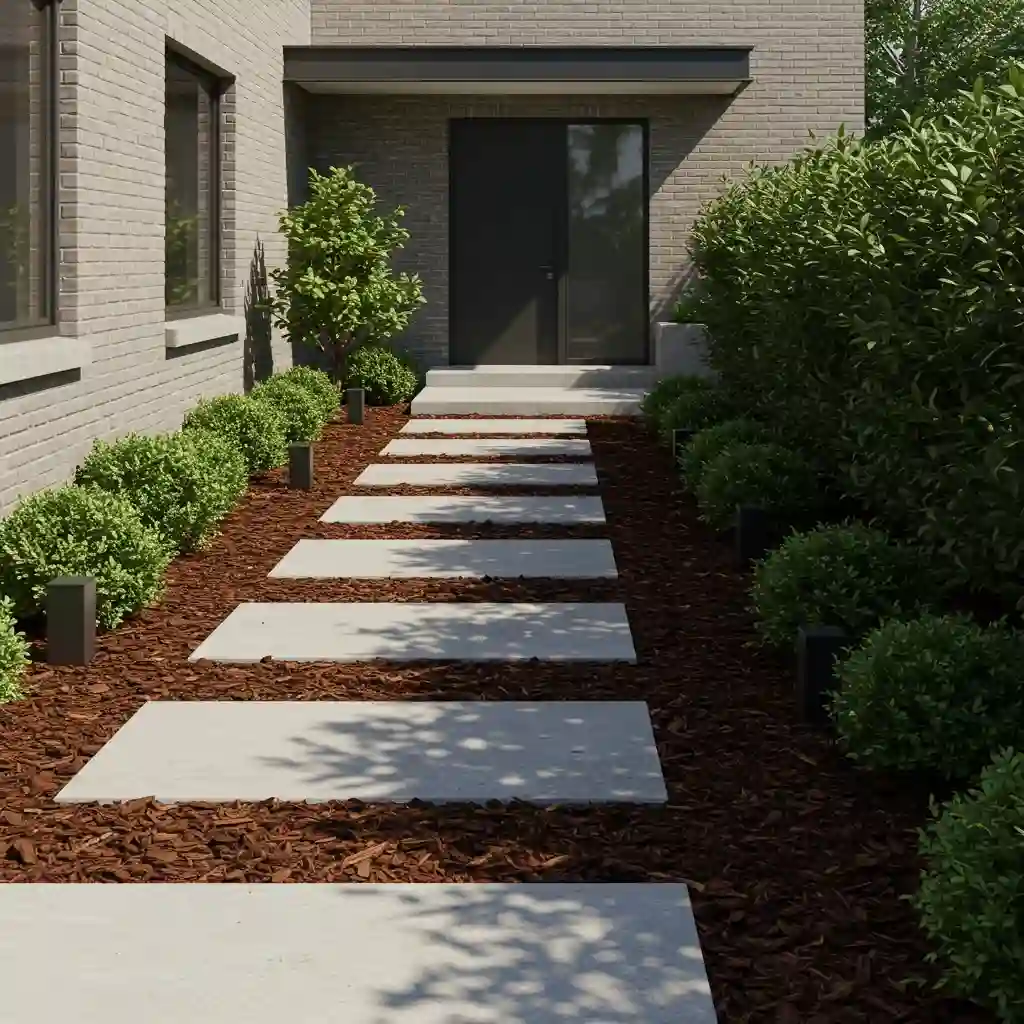
For a very simple, budget-friendly, and clean-looking no-grass solution, you can replace your lawn with a combination of deep mulch beds and clear, defined pathways. A thick, 3-4 inch layer of a high-quality wood chip or bark mulch is a fantastic groundcover. It suppresses weeds, retains soil moisture, and creates a neat, uniform backdrop for a few, carefully chosen specimen plants.
This is a great starting point for a beginner. I often suggest my clients start by sheet-mulching their entire lawn (placing cardboard down and covering it with mulch). They can then live with this clean, simple look and gradually add a few, easy-care shrubs or a pathway over time.
- Mulch: Use a high-quality, long-lasting mulch like shredded cedar or pine bark.
- Pathways: A simple, straight path of concrete pavers or a winding path of flagstones can provide a clear route to your front door.
- Planting: Keep the planting minimal. A few, well-placed, sculptural shrubs or a small ornamental tree will have a big impact against the simple mulch backdrop.
For an enhancement, use a crisp, clean edging material, like a thin, steel edge, to create a sharp, defined line between your mulched beds and your pathways. This simple detail makes the whole design feel very intentional and professionally done.
7. Incorporate a Dry Creek Bed
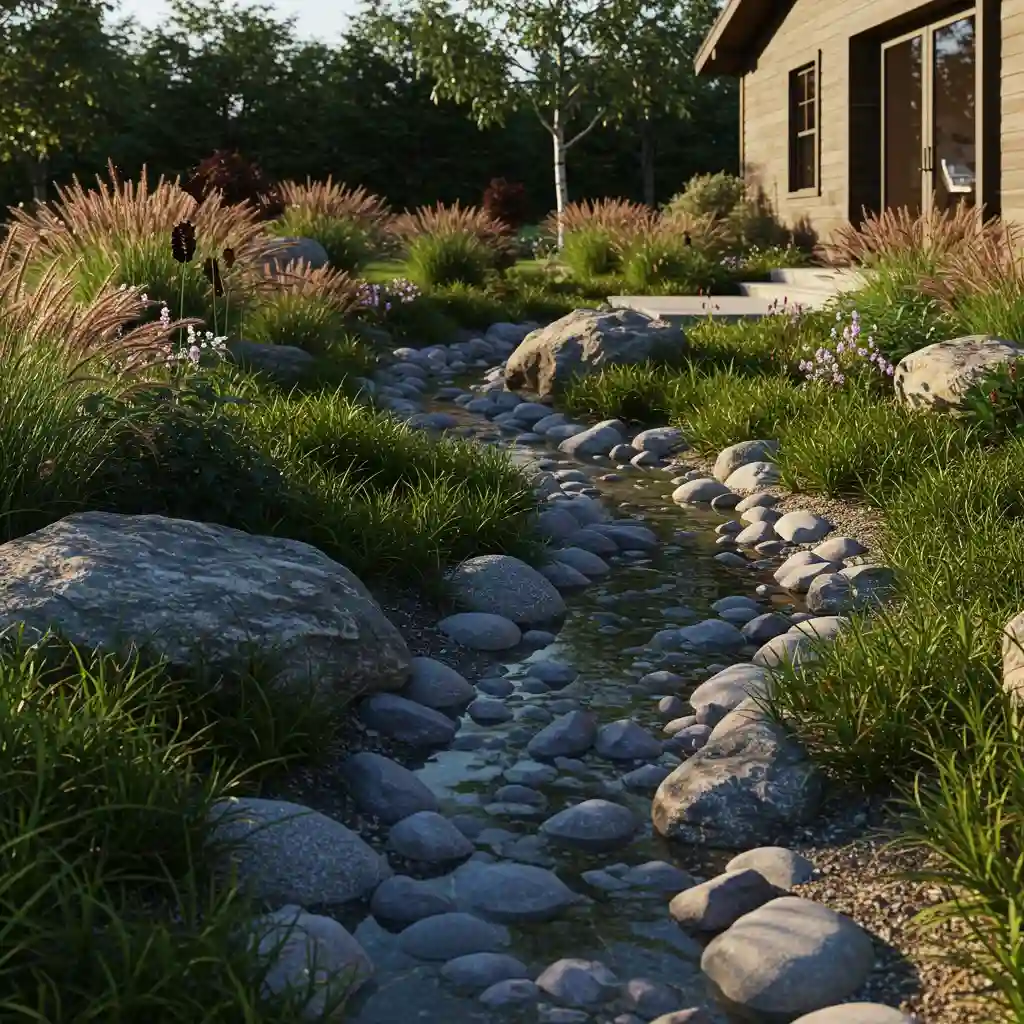
A dry creek bed is a landscape feature made of various-sized river rocks and stones, designed to mimic the look of a natural, dried-up stream. It’s a brilliantly creative and zero-maintenance way to add texture, a sense of movement, and a strong, curving line to a front yard. It can be used to solve a real drainage problem by channeling rainwater, or it can be a purely decorative element that adds a huge amount of naturalistic charm and curb appeal.
I love this feature for a low-maintenance yard because it replaces a needy patch of lawn with a beautiful, self-sustaining feature. The “stream” can meander through a garden bed, connecting the front of the yard to the house.
- Use a Variety of Rocks: Use larger stones and small boulders for the “banks” and a mix of smaller, smooth river rocks for the “stream bed.”
- Create a Meandering Path: A gentle, curving shape will look much more natural than a straight line.
- Add Plants: Plant drought-tolerant grasses and perennials along the edges of the creek bed to soften the look and make it feel more natural.
For a beautiful enhancement, build a simple, small, wooden footbridge that arches over a section of your dry creek bed. This adds another layer of charm and enhances the sense of a real, natural landscape feature.
8. Go All-In with a Decomposed Granite Courtyard
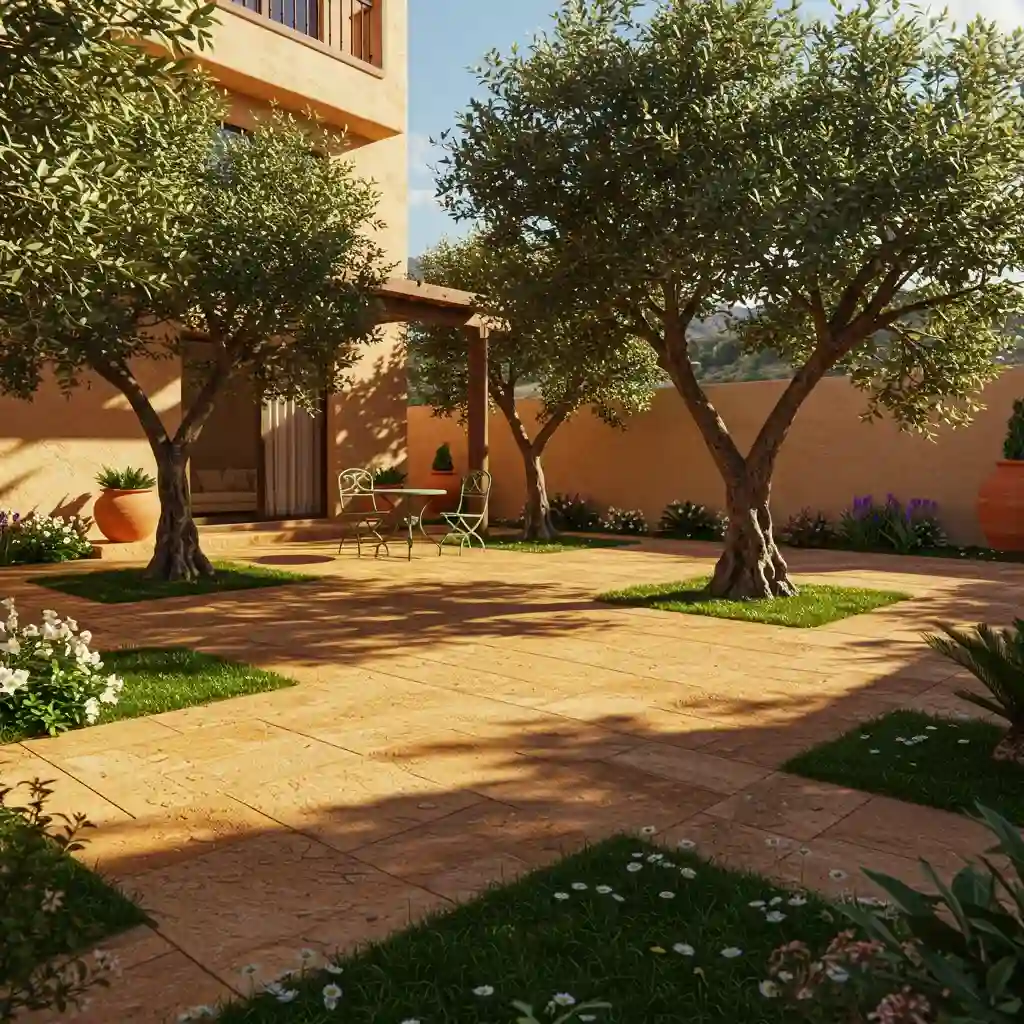
For a look that is classic, elegant, and very low-maintenance, consider transforming your entire front yard into a beautiful, European-style courtyard using decomposed granite (DG). This material, a fine, crushed rock, packs down to create a firm yet permeable surface that is perfect for a seating area, pathways, and planting pockets. It has a soft, natural, and timeless feel that is a perfect, neutral backdrop for your home’s architecture.
This is a fantastic, water-wise solution that can create a huge, usable, outdoor living space in your front yard. I love designing front courtyards for my clients, often enclosed by a low wall or a hedge for privacy. It completely changes how they use their front yard, turning it from a pass-through space into a true destination.
- Use Stabilized DG: Choose a stabilized DG, which has a resin binder mixed in, for a more durable, less dusty surface.
- Create Planting Pockets: Leave out areas within the DG to plant a few, beautiful, drought-tolerant specimen trees or shrubs.
- Add Seating: A classic bistro set or a couple of comfortable armchairs can turn the courtyard into a perfect spot for morning coffee.
For an enhancement, add a simple, classic, tiered fountain in the center of your DG courtyard. The sound of the trickling water will complete the timeless, European-courtyard feel.
9. Design with Masses of Ornamental Grasses
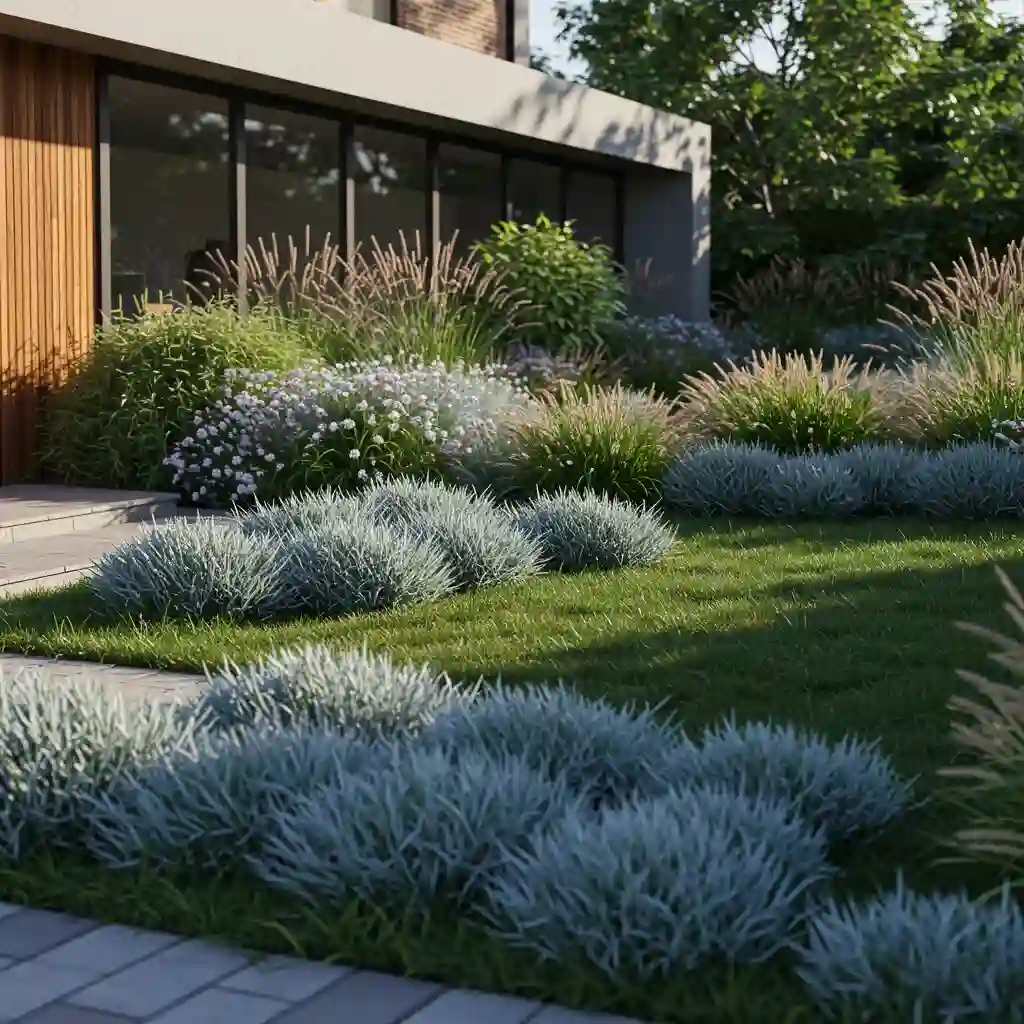
For a dramatic, modern, and incredibly low-maintenance grass-free front yard, consider designing with large masses of ornamental grasses. These plants are prized for their beautiful form, textural foliage, and graceful movement in the breeze. A garden composed primarily of different types of ornamental grasses can be a stunning, four-season spectacle, with beautiful foliage in the summer and striking, dried seed heads that provide interest all winter long.
I love creating designs that feel like a modern, stylized prairie. The key, as taught by landscape masters like Piet Oudolf, is to plant in large, sweeping drifts or bold, geometric blocks of a single type of grass. Choose a few different varieties with varying heights, colors (from blue-greens to reddish-browns), and textures.
- Easy choices for beginners: Fountain Grass (Pennisetum), Blue Fescue (Festuca glauca), Karl Foerster Feather Reed Grass (Calamagrostis).
- Design: Plant in large, cohesive groups for the most impact.
- Maintenance: Most ornamental grasses just need to be cut back once a year in late winter or early spring.
For an enhancement, plant a scattering of tall, airy, see-through perennials, like Verbena bonariensis or Gaura, amongst your grasses. The delicate flowers will appear to float beautifully above the textural foliage of the grasses.
10. Create a Foodscape with Raised Vegetable Beds
Turn your front yard into a beautiful and productive space by replacing your lawn with a “foodscape,” or an edible garden. A collection of neat, well-designed, raised vegetable beds can be just as beautiful as a traditional flower garden, and it has the wonderful benefit of providing you with fresh, organic produce. This is a sustainable and incredibly rewarding use of your sunny front yard space.
The key to making a front-yard vegetable garden look stylish is to keep it neat and organized. Use attractive materials for your raised beds, like cedar wood or sleek, modern, metal containers. Arrange the beds in a neat, geometric pattern, and use wide, clean pathways of gravel or wood chips between them. I love to see a beautiful, well-tended potager garden in a front yard; it’s a sign of a truly functional and loved home.
- Raised Beds: Keep the garden neat, contained, and are easier to work in.
- Layout: A symmetrical, geometric layout of the beds will look the most intentional and stylish.
- Mix in Flowers: Intersperse your vegetables with edible flowers, like marigolds and nasturtiums, to attract pollinators and add a pop of color.
For an enhancement, add a beautiful, decorative fence, like a classic picket fence, around your front-yard foodscape. This will give it a charming, traditional, and contained feel.

11. Install High-Quality, Realistic Artificial Turf
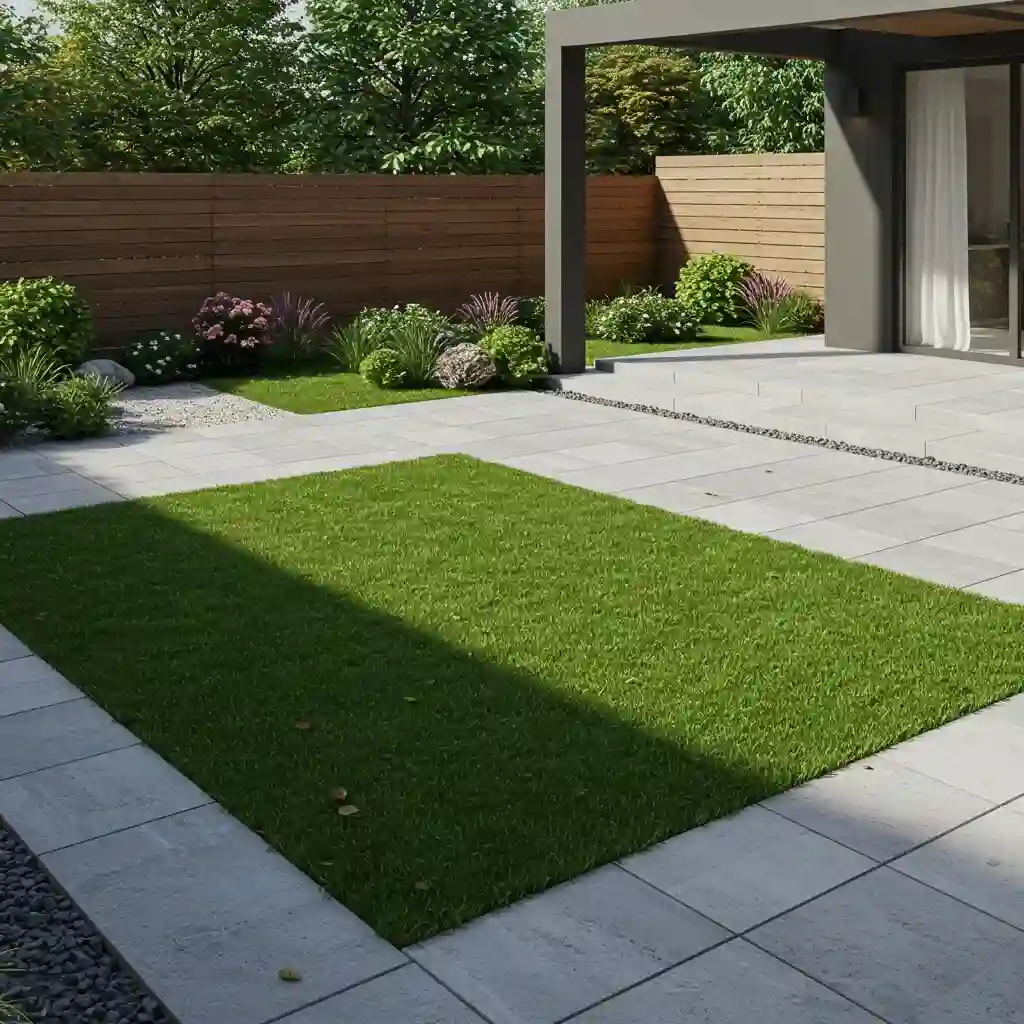
For homeowners who absolutely love the classic, green look of a perfect lawn but despise the constant maintenance, watering, and chemical treatments, modern, high-quality artificial turf can be a surprisingly good solution. The quality of artificial grass has improved dramatically in recent years. The best products look and feel incredibly realistic, with multiple blade colors and a soft texture. It provides a perfect, evergreen, and completely maintenance-free surface year-round.
While the initial installation cost can be higher than other groundcovers, the long-term savings in water bills, fertilizer costs, and your own time can be significant. I often suggest using a small, well-defined area of artificial turf, almost like a green area rug, rather than covering the entire yard.
- Zero Maintenance: No watering, mowing, or fertilizing required.
- Always Green: Looks perfect in all seasons and all weather.
- Great for Kids and Pets: Provides a clean, soft, and durable play surface.
For a modern enhancement, use a crisp, straight border of concrete or metal edging around your artificial turf area. This will create a very clean, geometric, and intentional look that highlights the perfection of the green surface.

12. Feature a Central Water-Wise Rock Garden
A rock garden, or an alpine garden, is a beautiful and very low-maintenance feature that is perfect for a sunny, grass-free front yard. The design mimics a rocky, mountainous landscape, using a combination of large stones, gravel, and a selection of small, tough, drought-tolerant plants that thrive in rocky conditions. A well-designed rock garden can be a stunning, textural, and year-round focal point.
This is a great solution for a yard with a natural slope, but it can also be created on a flat space by building up a low berm (Idea #2). I love the intricate, miniature world that a rock garden creates.
- Materials: A mix of large, feature rocks (boulders), medium-sized stones, and a gravel mulch.
- Plants: Choose a variety of small, drought-tolerant plants like sedums, succulents (like hens and chicks), creeping phlox, and dwarf conifers.
- Placement: A sunny, well-drained spot is ideal.
For an enhancement, incorporate a “disappearing” fountain into your rock garden. The water can bubble up from between the rocks and then vanish back into a hidden reservoir, adding the gentle, soothing sound of water to your rocky landscape.
13. Add a Rain Garden to Manage Stormwater
A rain garden is a brilliantly creative, beautiful, and eco-friendly solution for a front yard. It is a shallow, specially designed depression in your landscape that is planted with water-loving native plants. It’s designed to temporarily collect and absorb rainwater runoff from your roof or driveway. This helps to prevent erosion, filters pollutants from the water, and provides a vital habitat for birds and pollinators.
This is one of my favorite features to recommend to my environmentally-conscious clients. It turns a potential drainage problem into a beautiful garden feature. A rain garden can be a stunning, seasonal focal point that is full of life.
- Function: A beautiful and sustainable way to manage stormwater runoff.
- Plants: Use water-loving, native perennials, grasses, and shrubs that can handle both wet and dry conditions.
- Location: Place it in a naturally low spot in your yard, at least 10 feet away from your home’s foundation.
For an enhancement, connect the downspout from your roof directly to your rain garden via a decorative, river-rock lined channel or a dry creek bed. This makes the functional connection a beautiful, visible part of the design.

Conclusion
Choosing to create a grass-free front yard is a liberating decision that frees you from the endless cycle of mowing and watering, and opens up a world of creative landscaping possibilities. As we’ve explored through these 13 ideas, the alternatives to a traditional lawn are more beautiful, sustainable, and full of personality than ever before.
By combining low-maintenance hardscaping like gravel courtyards and paver patios with smart, water-wise planting strategies like native gardens and groundcover meadows, you can craft a stunning front yard that is both incredibly beautiful and easy to care for.
Frequently Asked Questions (FAQs)
What is the cheapest thing to put in my front yard instead of grass?
A thick layer of organic mulch (like wood chips) is one of the most affordable ways to cover a large area and suppress weeds. Pea gravel is another very budget-friendly option for creating pathways and patio areas.
How do I get rid of my front lawn to start a grass-free landscape?
The most eco-friendly and easiest method for a beginner is sheet mulching. You cover your lawn with a layer of overlapping cardboard, which blocks the sunlight and smothers the grass. Then, you can pile a thick layer of compost and mulch on top and plant directly into it after a few months as the grass and cardboard decompose.
Will a no-grass front yard lower my property value?
On the contrary, a well-designed, high-quality, low-maintenance landscape can significantly increase your property value and curb appeal. A thoughtful, modern, water-wise design is often seen as a major asset by potential buyers compared to a needy, traditional lawn.
What is xeriscaping?
Xeriscaping is a style of landscaping that is designed to require little or no supplemental water from irrigation. It uses smart design principles, such as grouping plants with similar water needs, and a palette of drought-tolerant and native plants to create a beautiful, sustainable garden that conserves water.
I have dogs. What’s a good grass-free option that is pet-friendly?
Pea gravel can be a good, durable option, though some dogs don’t like the feel of it. A patio made of durable pavers is another great choice. High-quality artificial turf is also extremely popular for dog owners, as it is durable, soft on paws, and easy to clean and rinse off.
What is a groundcover?
A groundcover is a low-growing, spreading plant that can be used to cover the ground in place of a lawn. They are often more drought-tolerant and require less maintenance than grass, and many offer the added benefit of seasonal flowers.
How do I keep a gravel yard from looking empty and hot?
The key is to incorporate plenty of plants in large, defined garden beds or in containers. Add a beautiful, multi-stemmed tree to provide shade. A simple water feature can also add a cooling, sensory element. The gravel should be the backdrop, not the only feature.