Are you looking for modern garden design ideas to transform your backyard into a sleek, stylish, and refreshingly low-maintenance retreat? Modern garden design is a departure from the fussy, cluttered look of traditional gardens. It embraces a “less is more” philosophy, where clean lines, strong geometric forms, and the natural beauty of materials and plants are the true stars.
It’s about creating an outdoor space that feels like a seamless extension of your home’s contemporary architecture a structured, serene, and uncluttered sanctuary designed for relaxation and sophisticated entertaining, not for endless weekend chores.
This guide will walk you through 15 foundational ideas for creating your own modern garden. From the bold use of hardscape materials to a minimalist approach to planting, these concepts will help you refresh your outdoor space with effortless style.
1. Embrace a Geometric Layout
The very foundation of modern garden design is a strong geometric layout. This means thinking in terms of clean lines, crisp angles, and defined shapes like squares, rectangles, and circles.
A modern garden is intentionally structured, not left to wander organically. The pathways, patios, and planting beds should all have a clear, defined geometry. This creates a sense of order, calm, and purpose, and provides a strong architectural framework for the entire space.
I always start my design process by sketching out the main “bones” of the yard using these simple shapes. The main patio might be a perfect square, with a long, linear path leading to a rectangular raised garden bed in the corner. This approach, where the hardscaping creates a strong, graphic pattern, is a hallmark of the style.
- Create a Grid: Think of your backyard as a grid. Use pathways and bed edges to create strong horizontal and vertical lines.
- Incorporate Circles: A circular patio or a round fire pit can provide a beautiful, soft contrast to the otherwise linear layout.
- Keep it Simple: Avoid complex, fussy curves. Stick to bold, simple geometric forms.
For an enhancement, use your paving materials to accentuate the geometry. For example, lay long, rectangular pavers in a clean, stacked-bond (grid) pattern to reinforce the linear, modern aesthetic.
15 Low Maintenance Front of House Landscape Ideas You’ll Love

2. Use Monochromatic Hardscape Materials
To create a serene and cohesive modern look, it’s best to use a limited, monochromatic palette for your hardscape materials. Instead of a busy mix of different colored stones and bricks, choose one or two complementary materials and use them throughout the space.
A popular and effective combination is smooth, poured concrete or large-scale concrete pavers paired with a contrasting textural material like dark charcoal gravel or decomposed granite.
This minimalist approach to materials creates a calm, uncluttered backdrop that allows the clean lines of the design and the textures of the plants to become the main features.
I often suggest a simple palette of light gray, dark charcoal, and the warmth of a single wood tone. As seen in many high-end architectural homes, this restraint in materials is what creates a truly sophisticated and modern feel.
- Primary Materials: Concrete (poured or pavers), decomposed granite, gravel, and a single type of wood (like ipe or cedar).
- Color Palette: Stick to neutrals like gray, charcoal, white, and beige.
- Consistency: Use the same material for pathways, patios, and wall caps to create a unified look.
For a high-design enhancement, use the same flooring material for your indoor living space and your outdoor patio. When the large glass doors are open, this creates a seamless, uninterrupted flow, truly blurring the lines between inside and out.
3. Incorporate Board-Formed Concrete Features
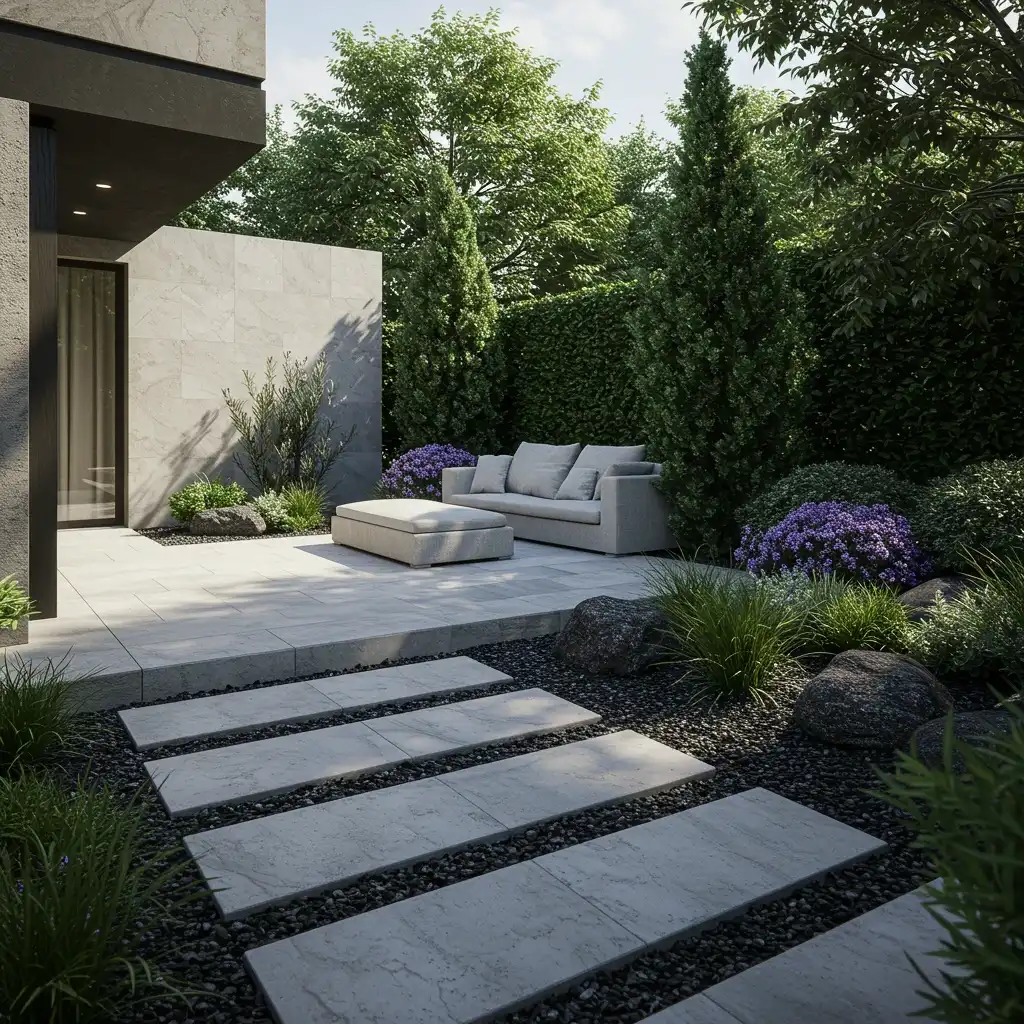
For a material that is both industrial and warm, raw and textural, board-formed concrete is a stunning choice for a modern garden. This technique involves pouring concrete into a formwork made of wooden planks.
When the forms are removed, the texture and grain of the wood are permanently imprinted onto the concrete surface. The result is a beautiful, tactile feature that embodies modern architectural principles.
This is a fantastic material for creating low retaining walls, the sides of a raised patio, a minimalist water feature, or a dramatic accent wall. The strong, horizontal lines of the wood grain pattern reinforce the clean, linear aesthetic of modern design.
I love using board-formed concrete because it adds a layer of custom, handcrafted detail that feels both timeless and completely contemporary.
- Application: Use for low walls, raised planters, water features, or even a built-in bench.
- Aesthetic: Provides a warm, organic texture to the cool, industrial nature of concrete.
- High-Impact: A truly custom, architectural feature that makes a bold statement.
As an enhancement, design a built-in bench that emerges seamlessly from a low, board-formed concrete retaining wall. Capping it with a beautiful, warm ipe wood seat creates a stunning combination of materials.
4. Feature Corten Steel for Planters and Edging
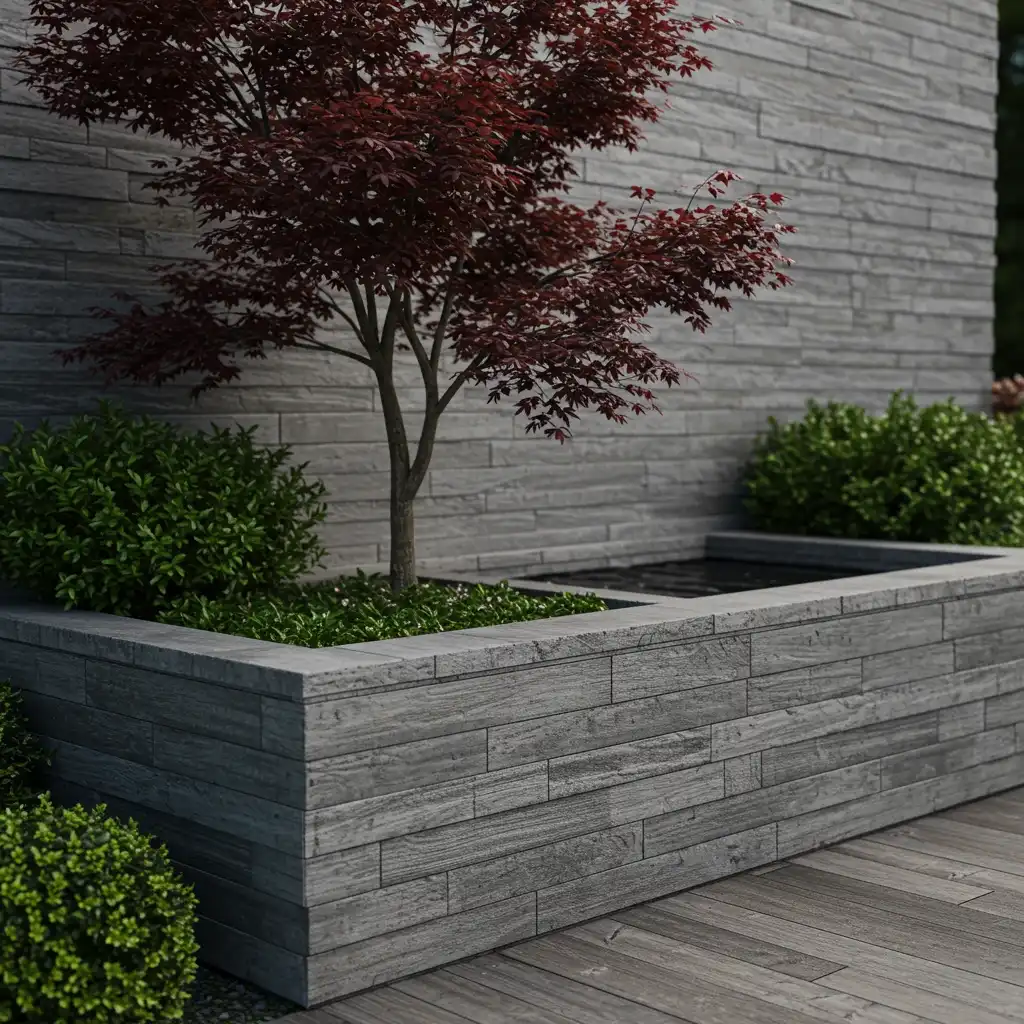
Corten steel, or weathering steel, is a signature material of modern landscape design. When this steel alloy is exposed to the weather, it develops a stable, rust-like patina in beautiful, deep shades of orange, brown, and red.
This patina not only looks stunning but also acts as a protective layer, preventing further corrosion. The warm, earthy color and rustic-industrial texture of Corten steel provide a perfect, warm contrast to the cool grays of concrete and the vibrant greens of plants.
I love using Corten steel to create crisp, clean lines and bold, sculptural forms. A thin blade of Corten steel is the perfect minimalist edging for a garden bed or a path.
For a major statement, a series of large, simple, geometric planter boxes made from Corten steel can become a powerful focal point.
- Material: Weathering steel that forms a stable, protective rust patina.
- Color: A rich, warm, and evolving orange-brown color.
- Uses: Garden edging, raised planter boxes, retaining walls, privacy screens, and water features.
For a creative enhancement, use a sheet of Corten steel as the backdrop for a water feature. As the water cascades down the surface, it will enhance the richness of the patina and create a beautiful, multi-sensory experience.
5. Adopt a Limited, Repetitive Plant Palette
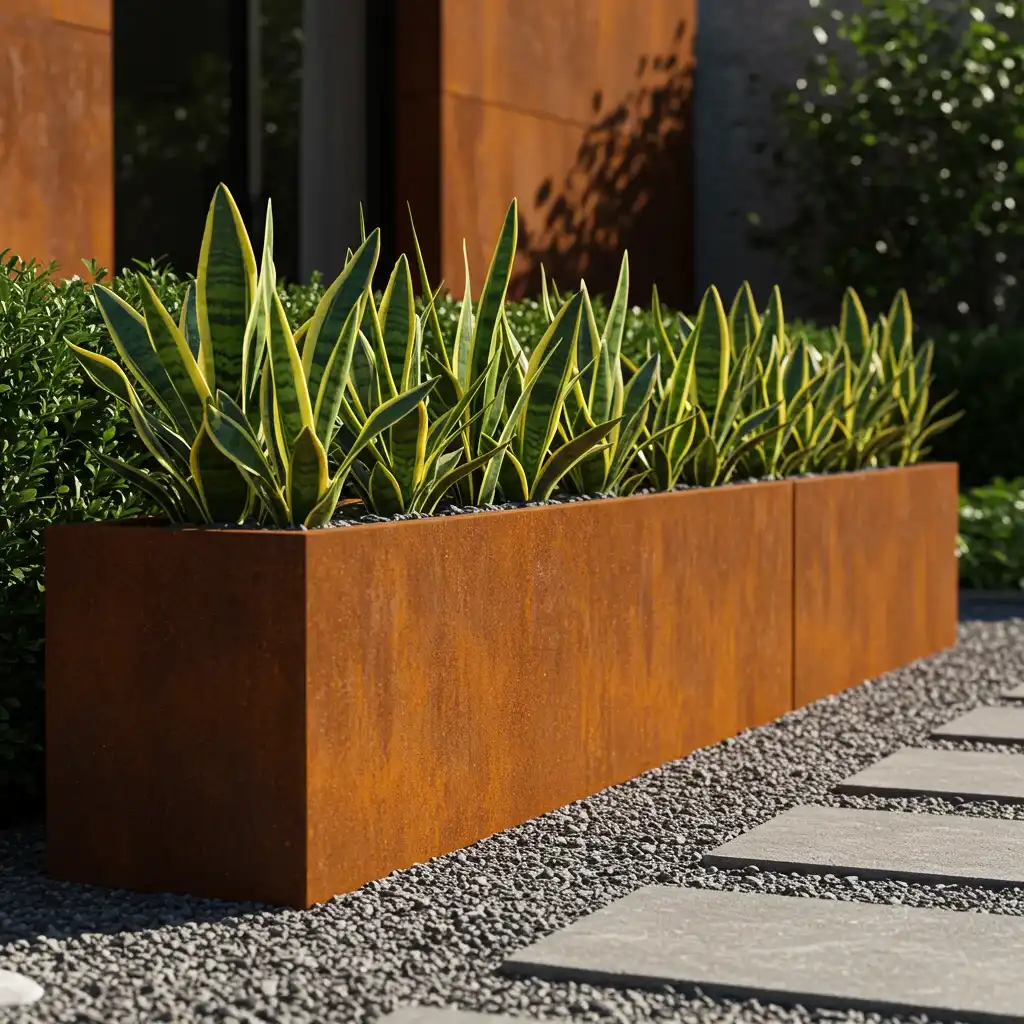
The mantra of modern planting design is “less is more.” Instead of a chaotic jumble of different flowers and colors, a modern garden uses a very limited and carefully curated plant palette.
The design relies on the principle of repetition choosing just a handful of plant species and then planting them in large, intentional groups or masses. This creates a powerful sense of rhythm, unity, and calm.
When I design a modern garden, I typically select no more than five to seven different types of plants for the entire space.
The focus is on their form, texture, and foliage, rather than on their flowers. By repeating the same plants in different areas, you create a cohesive and serene landscape that feels intentional and uncluttered.
- Philosophy: Choose a few hardworking plants and repeat them in large groups.
- Effect: Creates a calm, rhythmic, and unified design.
- Focus: Prioritize plants with interesting shapes, textures, and foliage over a multitude of different flowers.
As an enhancement, create a “monoculture” planting in one of your main garden beds. This means filling the entire bed with just one single type of plant, like a mass planting of a single variety of ornamental grass or a groundcover. The effect is incredibly powerful, simple, and modern.
6. Focus on Foliage, Form, and Texture Over Flowers
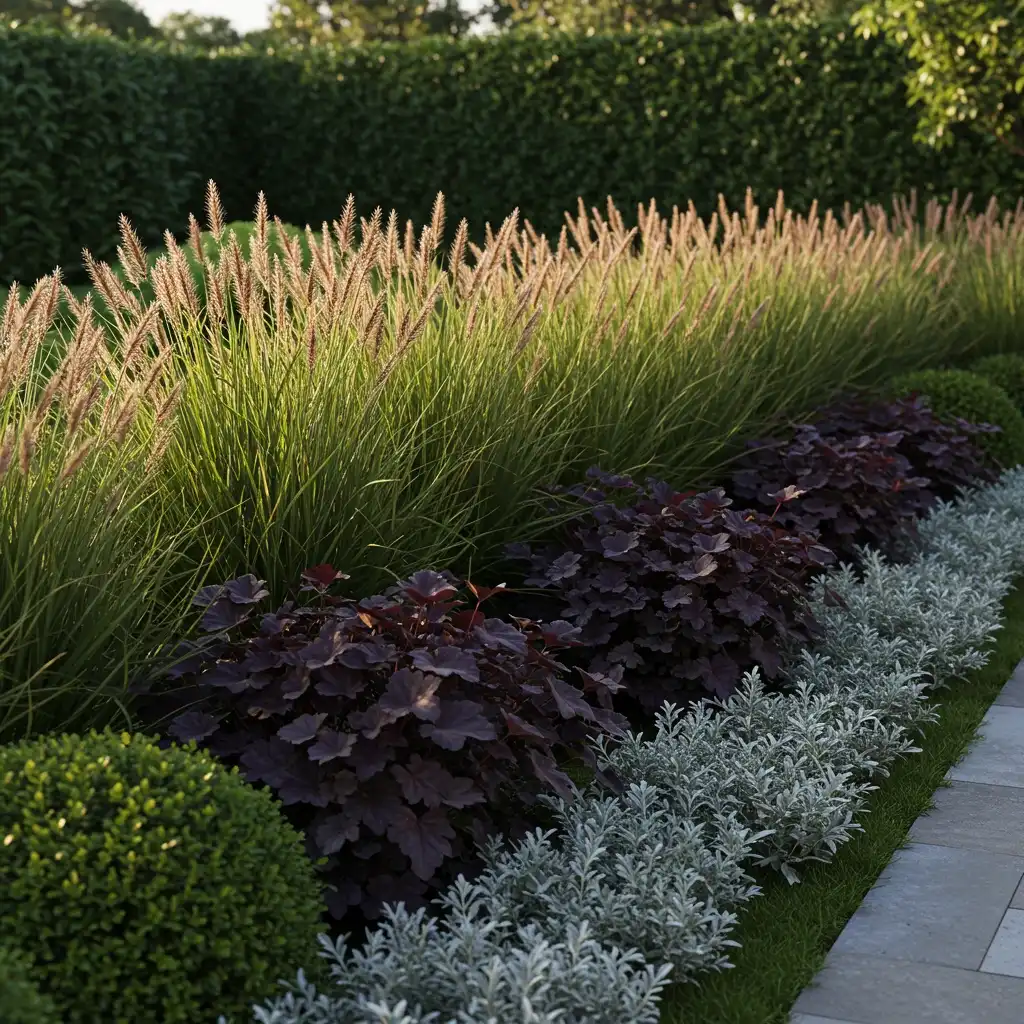
While traditional gardens often focus on a succession of colorful blooms, modern garden design prioritizes the more permanent qualities of plants: their form, foliage, and texture.
The overall shape of a plant, the color and texture of its leaves, and the way it contrasts with its neighbors are the most important considerations.
This approach creates a garden that looks beautiful and structured all year round, not just when the flowers are in bloom.
I encourage my clients to think like sculptors, arranging plants with different forms and textures to create a living composition.
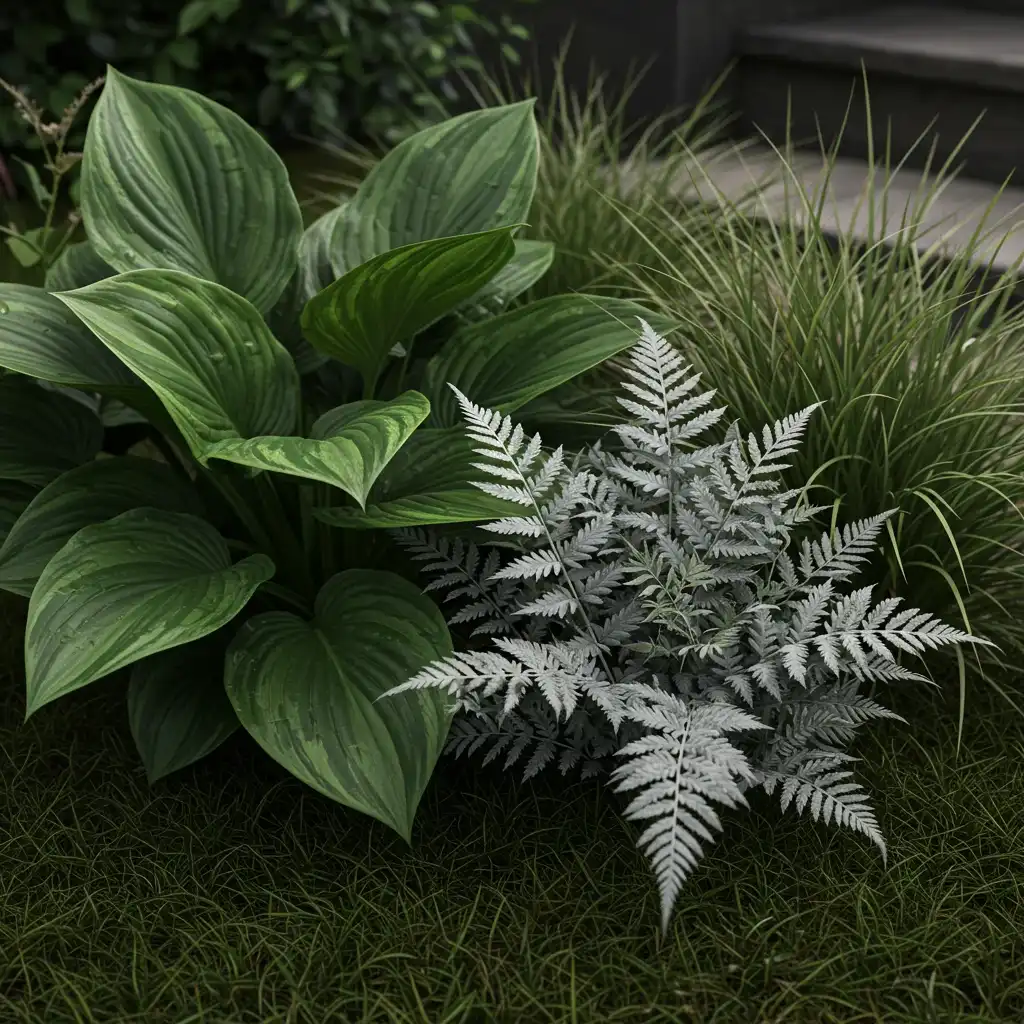
Pair the bold, spiky leaves of an agave with the fine, feathery texture of an ornamental grass. Contrast the large, tropical-looking leaves of a hosta with the delicate foliage of a fern.
- Form: Look for plants with strong, architectural shapes—upright, weeping, mounding, or spiky.
- Foliage: Choose plants with interesting leaf color (like deep burgundy, chartreuse, or silvery-blue) and variegation.
- Texture: Mix fine-textured plants with coarse-textured plants for a dynamic contrast.
For an enhancement, choose a single color, other than green, and select a variety of plants that feature that color in their foliage. A garden composed of plants with silver, blue, and gray foliage, for example, can be an incredibly sophisticated and modern monochromatic statement.
7. Plant in Grids or Bold, Geometric Masses
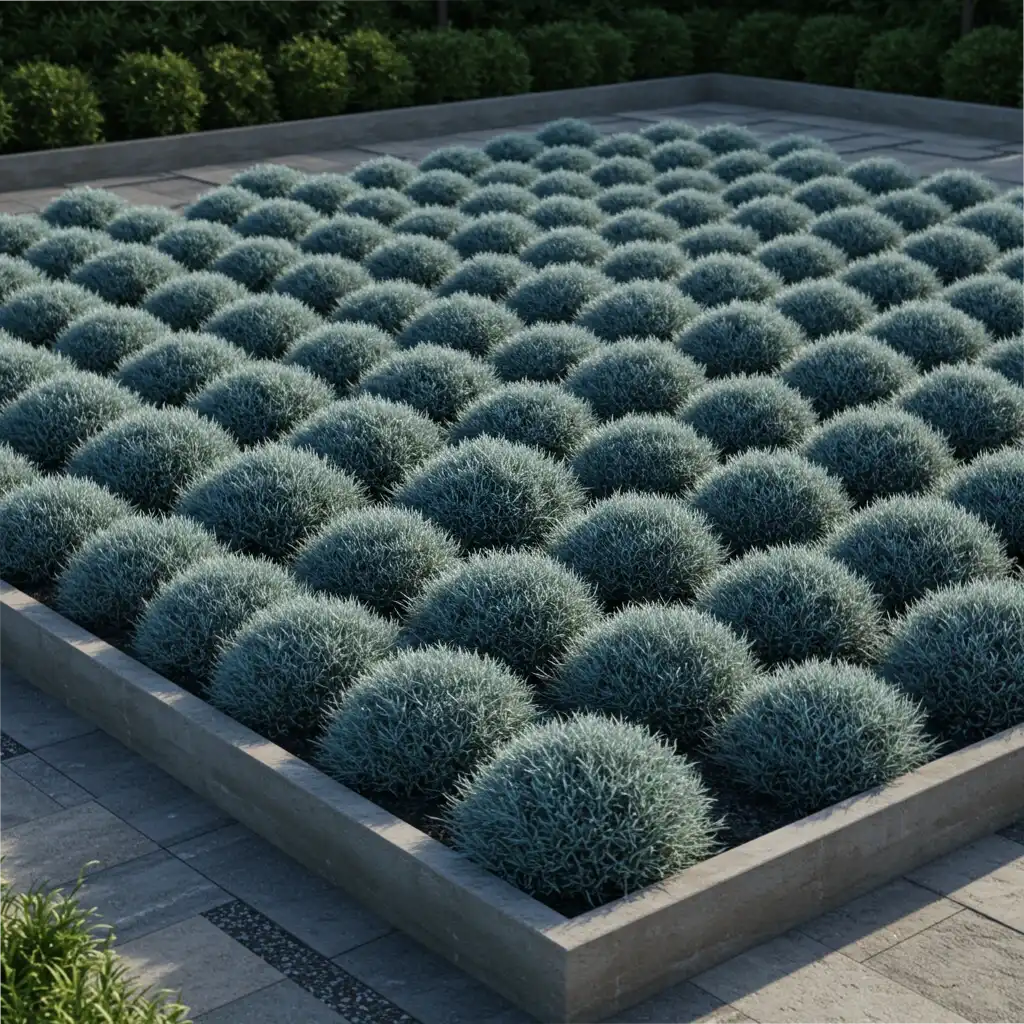
The geometric layout of your hardscaping should be echoed in your planting design. Instead of scattering plants randomly, a modern garden arranges them in a structured, intentional way. Two common techniques are planting in a grid or in large, distinct, geometric masses or blocks.
Planting in a grid, where individual plants are spaced evenly in a geometric pattern, is a very formal and architectural approach. It highlights the form of each individual plant and creates a powerful, rhythmic pattern.
Planting in large, single-species “blocks” is another popular technique. A square block of a single type of perennial next to a rectangular block of an ornamental grass can look like a living, abstract painting.
- Grid Planting: A formal, architectural approach that emphasizes pattern and repetition.
- Block Planting: Planting a single species in a large, geometric shape.
- Effect: Creates a look that is intentional, organized, and reinforces the garden’s modern geometry.
As an enhancement, use a groundcover of a contrasting color and texture between your grid-planted specimens. For example, a grid of upright ornamental grasses planted in a bed of dark, fine-textured gravel can be a stunning combination.
8. Use Architectural and Sculptural Plants
Modern gardens often feature “architectural” or “sculptural” plants as living works of art. These are plants that have such a strong, dramatic, and interesting form that they can stand alone as a focal point.
They are the supermodels of the plant world, chosen for their bold silhouettes and unique shapes.
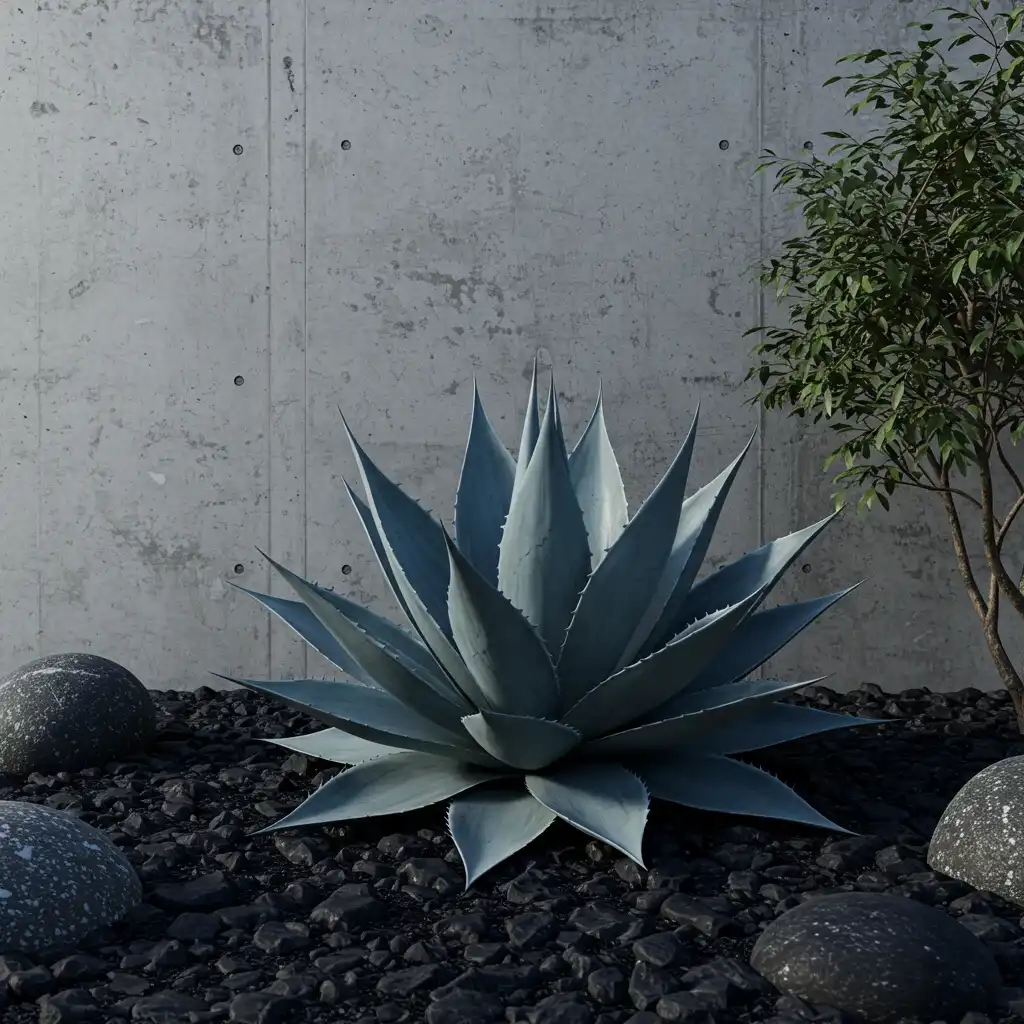
I love to use these plants to create a high-impact, low-maintenance focal point. A single, large agave or yucca in a bed of gravel, a stand of tall, vertical horsetail reed, or a beautifully pruned, multi-stemmed tree can all serve as a living sculpture.
These plants are a perfect fit for a minimalist aesthetic where every single element must be beautiful and intentional.
- Plant Examples: Agave, Yucca, Century Plant, Horsetail Reed, Phormium (New Zealand Flax), Tree Ferns, and many cacti and succulents.
- Placement: Use them as a focal point in a planter, a gravel bed, or against a plain wall to highlight their form.
- Effect: Adds a dramatic, sculptural, and architectural element to the planting scheme.
For an enhancement, place your architectural plant in a simple, modern planter that creates a beautiful contrast in form. For example, a very spiky, sharp-looking agave planted in a perfectly smooth, round, bowl-shaped planter is a stunning juxtaposition.
9. Install a Horizontal Slat Fence or Screen
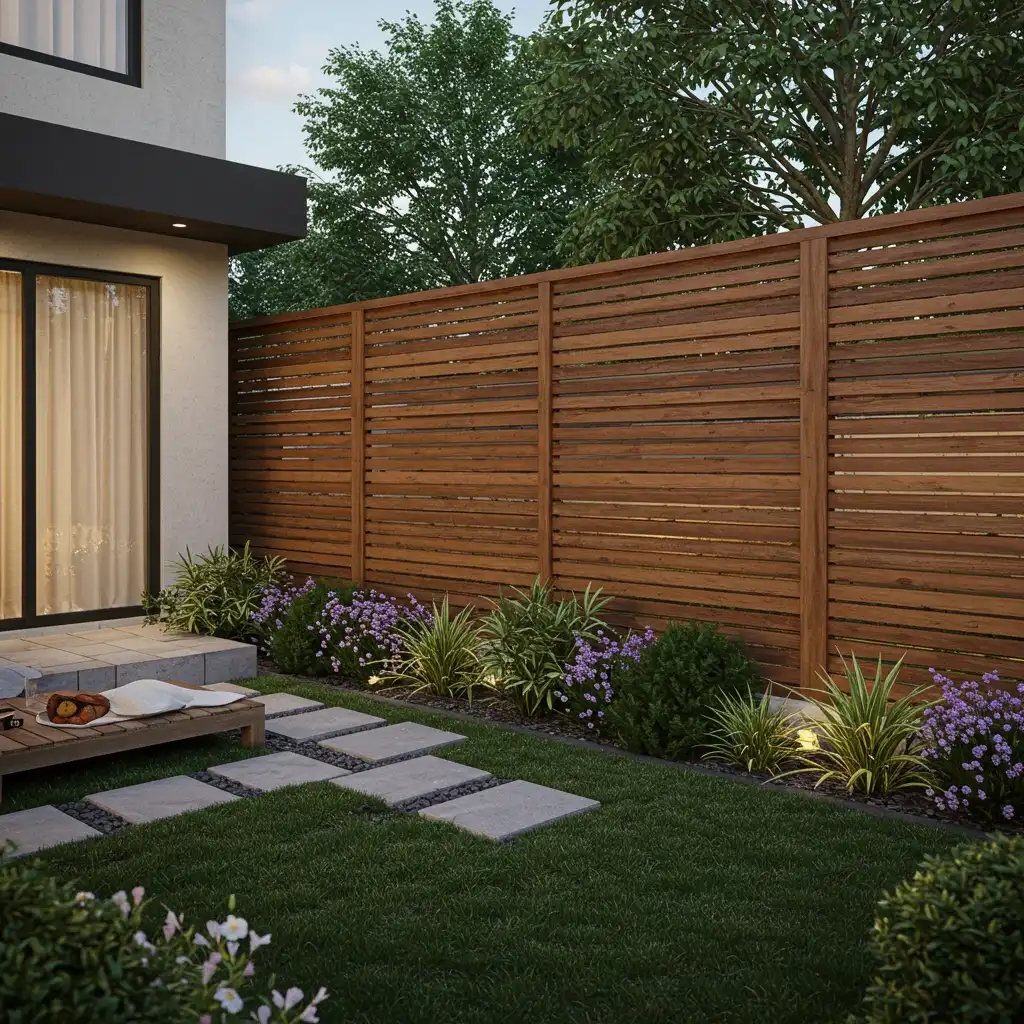
Fences and privacy screens are a necessary part of many backyards, and in a modern garden, the design of these elements is critical. A horizontal slat fence or screen is the quintessential choice for a modern aesthetic.
Composed of long, horizontal boards, typically with a small, consistent gap between them, this style of fence emphasizes the horizontal lines of the landscape and has a very clean, graphic, and contemporary look.
I use this style of fence constantly in my modern designs. It provides privacy while still feeling light and airy, as small amounts of light and air can pass through the gaps.
It also serves as a beautiful, textural backdrop for your plantings. You can build them from beautiful woods like cedar or ipe, or use a lower-maintenance composite material.
- Design: Long, horizontal boards with a consistent, narrow gap in between.
- Materials: Cedar, ipe, redwood, or low-maintenance composite decking boards.
- Effect: Creates a clean, linear, and modern backdrop that provides privacy.
As an enhancement, stain your horizontal slat fence a very dark color, like a charcoal gray or a near-black. This will make the fence visually recede and will provide a stunning, high-contrast backdrop that makes your green plants look incredibly vibrant.
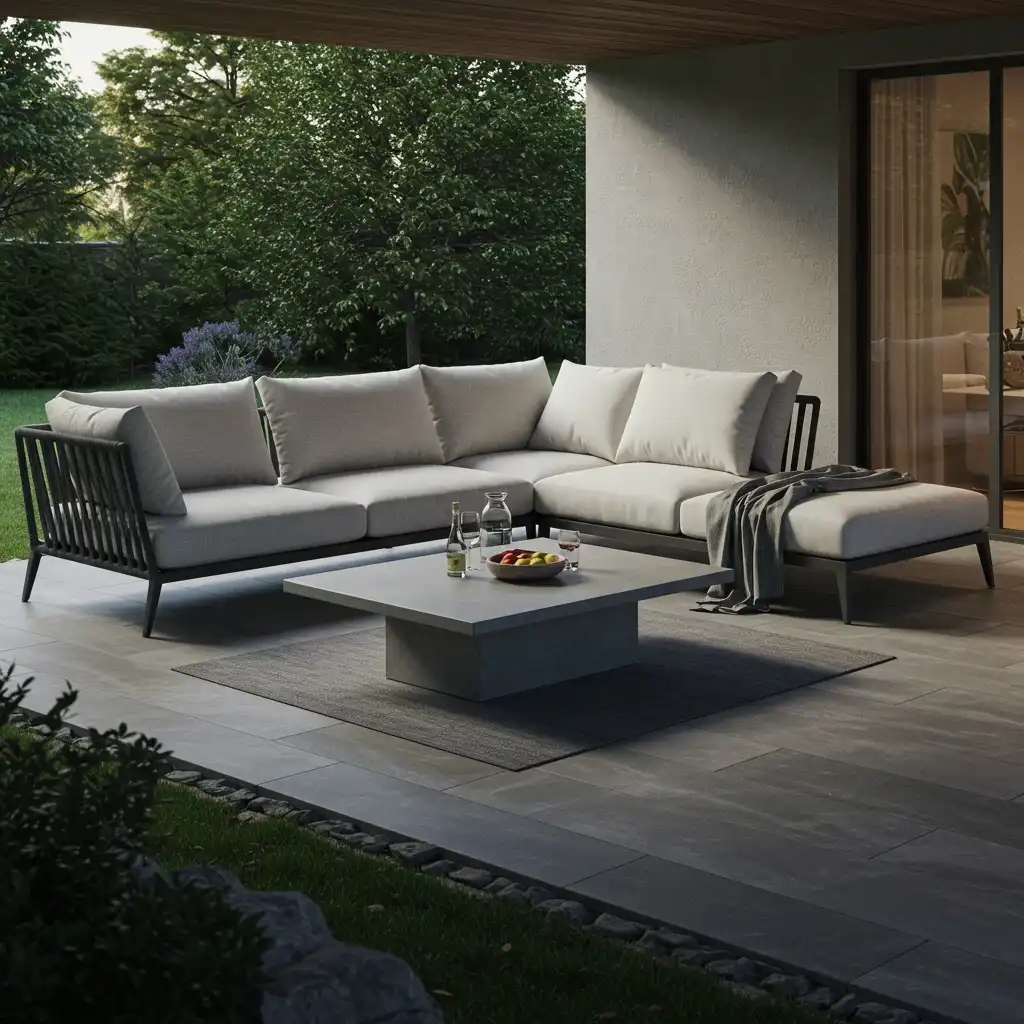
10. Choose Sleek, Minimalist Outdoor Furniture
The furniture you choose for your modern garden should be an extension of the overall design philosophy. Look for pieces with clean lines, simple geometric shapes, and a lack of unnecessary ornamentation.
The materials are often just as important as the shape. Furniture made from powder-coated aluminum, teak, concrete, or a sleek, modern outdoor weave are all great choices.
I advise my clients to think of their outdoor furniture as functional sculptures. A beautiful, minimalist outdoor sofa or a set of sleek dining chairs can be a design feature in their own right.
The key is to choose pieces that are comfortable and durable, but also have a strong, simple silhouette.
- Look for Clean Lines: Avoid overly ornate or decorative furniture.
- Materials: Powder-coated metal, concrete, high-quality teak or ipe, and modern synthetic weaves.
- Color Palette: Stick to a neutral palette of white, gray, charcoal, and natural wood tones for the furniture frames.
For an enhancement, add comfort and a single pop of color with your cushions. Choose high-quality, outdoor-friendly cushions in a solid, neutral color for the main seating, and then add one or two accent pillows in a single, bold, vibrant color like a citrus yellow or a deep teal.
11. Design a Minimalist Water Feature
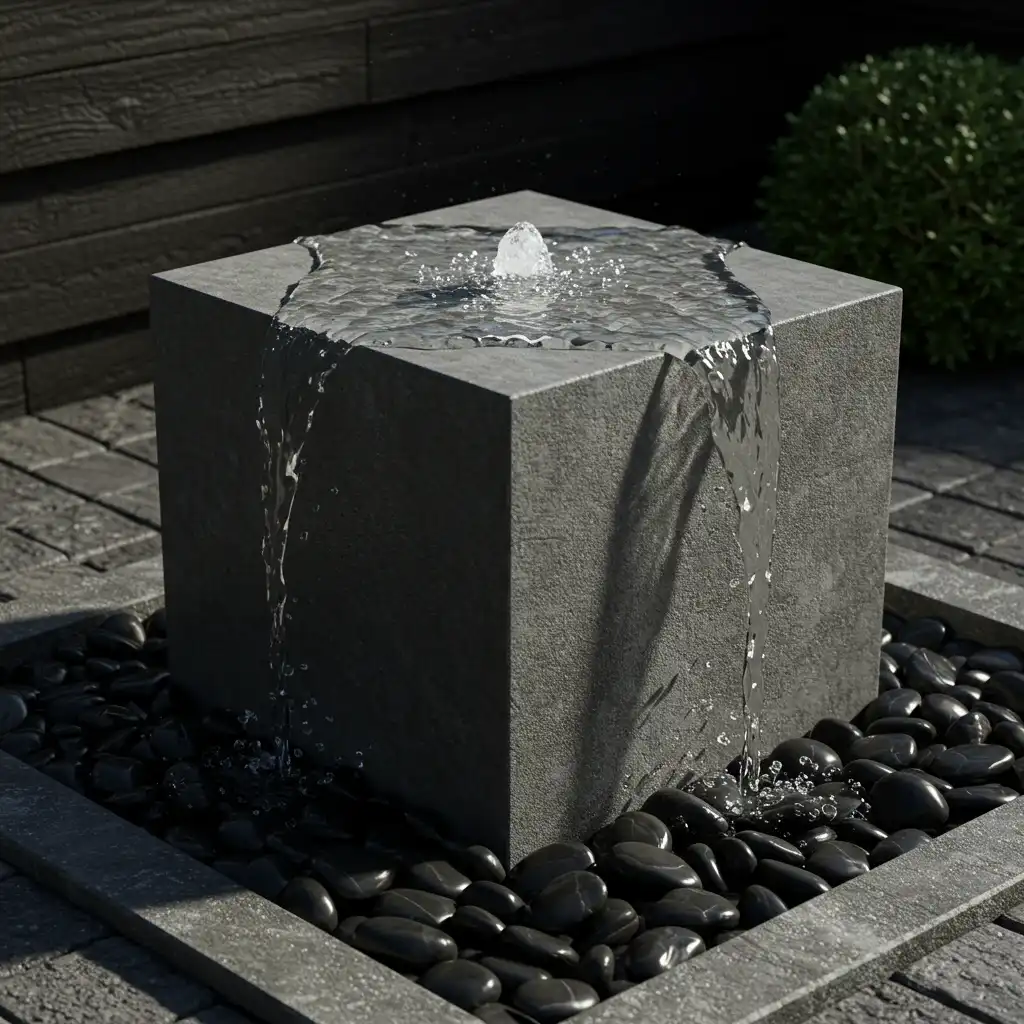
A water feature in a modern garden should be a simple, architectural statement. Forget fussy, tiered fountains or naturalistic rock waterfalls. A modern water feature is all about clean lines, simple forms, and the beauty of the material itself. The sound of the water should be gentle and tranquil, not loud and splashy.
I love to design water features that are integrated into the hardscape.
This could be a simple, rectangular reflecting pool with a blade-like edge, a single sheet of water cascading down a board-formed concrete wall, or a simple, bubbling fountain emerging from a bed of river stones. The focus is on the calm, reflective quality of still water or the serene sound of a smooth, quiet cascade.
- Design: Simple geometric shapes like cubes, spheres, or rectangular basins.
- Materials: Concrete, Corten steel, or dark stone.
- Sound: Aim for a gentle bubble or a quiet, smooth flow.
For a dramatic enhancement, make your water feature a “disappearing” fountain. The water bubbles up through a bed of gravel or pebbles and then drains away into a hidden reservoir below. This creates a safe, child-friendly feature with a very clean, minimalist look.
12. Create Drama with Strategic Night Lighting
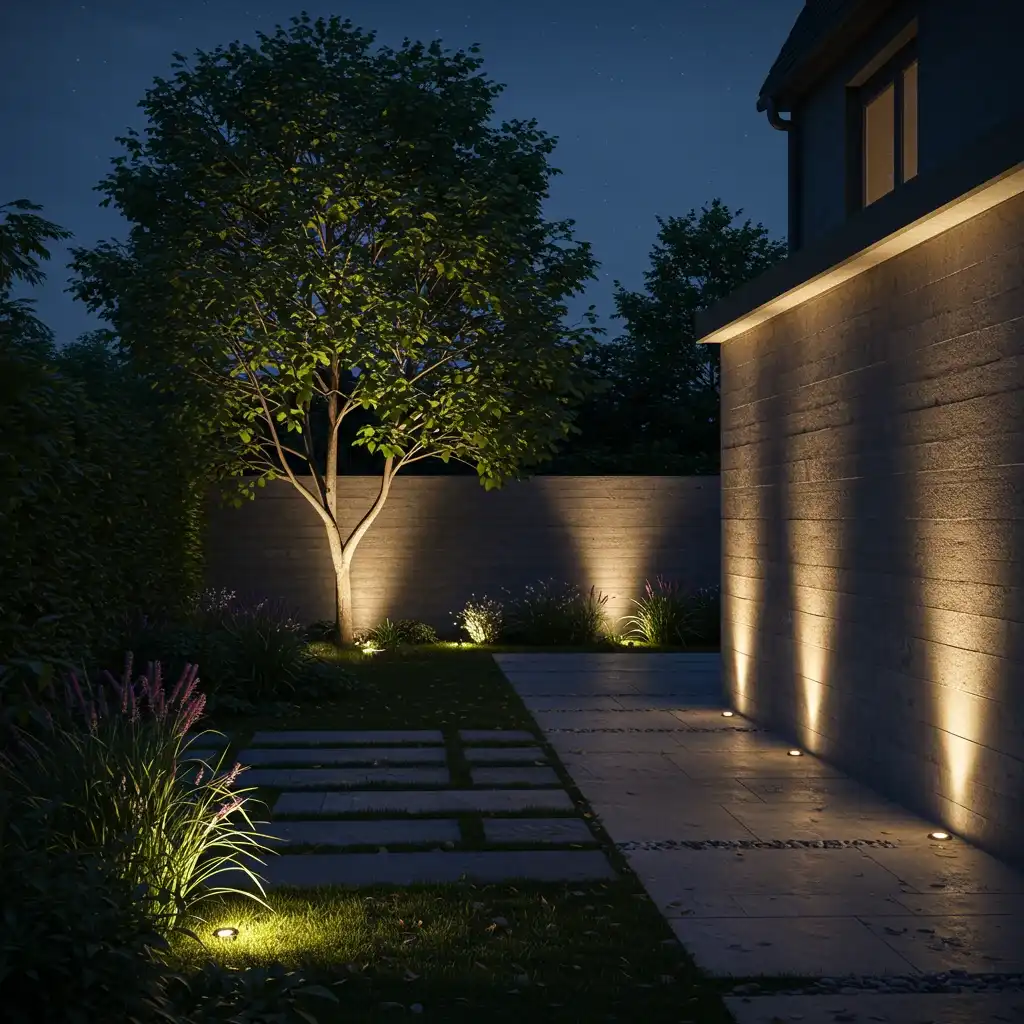
Modern landscape lighting is a crucial design element that can completely transform your garden at night. The goal is not to flood the space with bright light, but to use a series of subtle, strategically placed lights to create drama, highlight key features, and provide safe navigation. A well-lit modern garden can look even more beautiful and sculptural at night than it does during the day.
The key technique is “uplighting.” Placing a low-voltage spotlight at the base of a sculptural tree, an architectural plant, or a textured wall and aiming it upwards will create dramatic shadows and highlight the form and texture of the feature. I always use warm-toned LED lights for an energy-efficient and inviting glow.
- Uplighting: To highlight trees, architectural plants, and textured walls.
- Path Lighting: Use low, minimalist fixtures that cast light downwards onto the path to avoid glare.
- Grazing: Placing a light close to a textured surface (like a concrete wall or a stone facade) to skim light across it and reveal its texture.
For a sophisticated enhancement, wash the entire length of a long, modern fence or wall with a series of well-spaced, low-level “wall washer” lights. This will define the boundary of your garden at night and turn a simple wall into a beautiful, glowing feature.
13. Make a Statement with a Single, Bold Planter
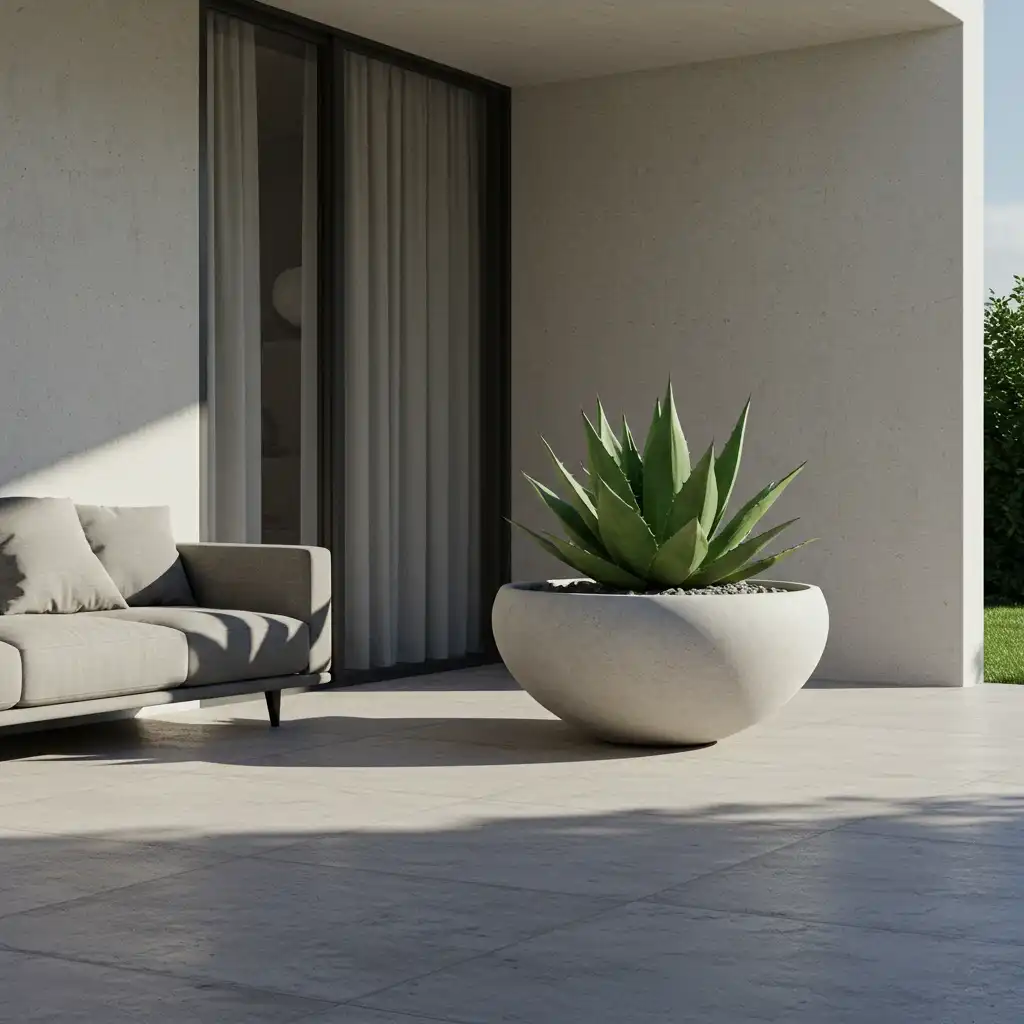
In keeping with the “less is more” philosophy, instead of a clutter of many small pots, a single, large, bold, and beautifully designed planter can be a powerful focal point in a modern garden. This is about choosing one container to be a piece of functional sculpture. The planter itself is just as important as the plant it holds.
Look for a planter with a simple, strong, geometric shape a large cube, a tall, slender rectangle, a perfect sphere, or a wide, low bowl.
The material should be modern and substantial, like smooth concrete, fiberglass, or powder-coated metal. I often use a single, oversized planter to anchor the corner of a patio or to serve as a destination at the end of a path.
- Scale: Go as big as your space can handle for the most impact.
- Shape: Simple, clean, geometric shapes are best.
- Material: Concrete, fiberglass, or metal.
- Planting: Use a single, dramatic, architectural plant inside for a truly minimalist statement.
For an enhancement, choose a planter in a single, vibrant, unexpected color, like a glossy red or a bright citrus yellow. In an otherwise neutral, green-and-gray garden, a single pop of bold color from a large planter can be a stunning and playful focal point.
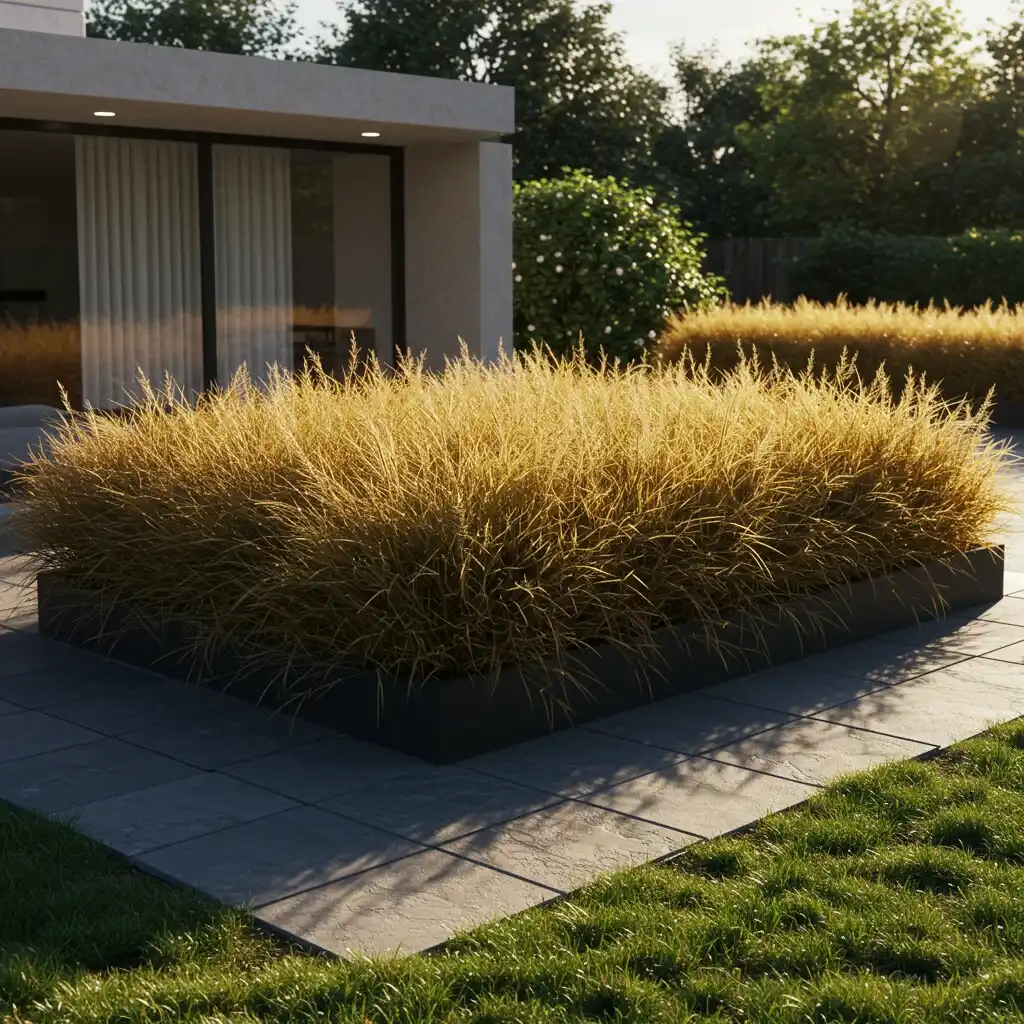
14. Mass Plantings of a Single Ornamental Grass
For a high-impact, low-maintenance, and quintessentially modern planting statement, there is nothing more effective than a large, mass planting of a single type of ornamental grass. The beauty of this approach is in its simplicity and repetition.
A large drift or a rectangular block of a single grass creates a living, breathing, textural field that moves and whispers in the wind.
This is a signature move of the “New Perennial” movement, made famous by landscape designer Piet Oudolf.
It’s about celebrating the beauty of a single plant’s form and texture, multiplied to create a powerful effect. I love using this to create a soft, textural counterpoint to the hard, clean lines of a modern house.
- Choose One Grass: Select a single variety of ornamental grass that you love and that is well-suited to your climate.
- Plant in a Mass: Plant dozens of them close together to form a single, cohesive block or a flowing, river-like drift.
- Effect: Creates a dynamic, textural, and sensory experience with minimal maintenance.
As an enhancement, in the late fall, leave the dried foliage and seed heads of your grasses standing through the winter. They will provide beautiful, structural interest in the dormant garden, catching the frost and snow in a magical way. Cut them back in late winter or early spring just before new growth begins.
15. Integrate a Simple, Modern Fire Pit
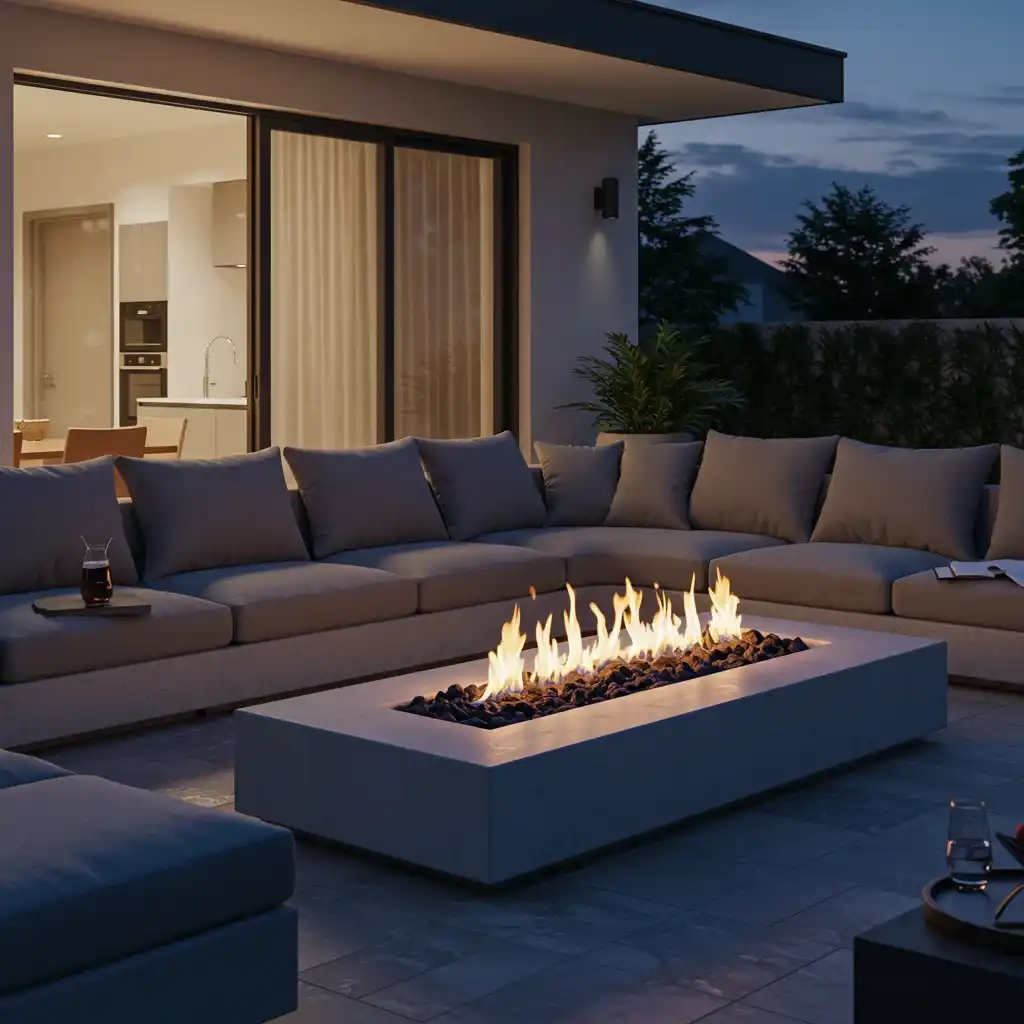
A fire feature is a natural gathering spot, and in a modern garden, the fire pit should be a simple, elegant, and architectural element.
Forget rustic, rock-ringed campfires. A modern fire pit is all about clean, geometric shapes and high-quality materials. It’s a functional sculpture that provides warmth and a mesmerizing focal point for your outdoor living space.
Look for a fire pit in a simple shape like a square, a circle, or a long, low rectangle. The materials are key to the modern look.
A fire pit made from smooth, poured concrete, thick-gauge Corten steel, or powder-coated metal will all fit the aesthetic perfectly. I love designing fire pits that are integrated into the patio, with built-in seating around them for a cozy, conversation-pit feel.
- Shape: Simple, clean, geometric shapes.
- Material: Concrete, Corten steel, or powder-coated metal.
- Fuel: A natural gas or propane-fueled fire pit is cleaner, easier to use, and more in keeping with the minimalist aesthetic than a wood-burning one.
For a sleek, minimalist enhancement, use a fire-rated glass wind guard around the flame of your gas fire pit. The glass is nearly invisible, protects the flame from the wind, and adds a layer of safety and modern sophistication.
Conclusion
Refreshing your outdoor space with modern garden design ideas is about embracing the beauty of simplicity, structure, and nature. As we’ve explored through these 15 ideas, a modern garden is a carefully considered composition of clean lines, geometric forms, and a restrained palette of materials and plants.
It’s about creating a space that is not only stylish and visually striking but also incredibly easy to live in and maintain. By focusing on the interplay between hardscape and softscape, and by choosing each element with intention, you can create a serene, sophisticated, and deeply relaxing outdoor sanctuary.


