Are you struggling to find the perfect long rectangle living room layout? This common architectural shape, often found in both classic and modern homes, presents a unique set of design challenges. The long, narrow space can easily feel like a hallway, a tunnel, or a “bowling alley,” making furniture arrangement feel awkward and unbalanced.
Pushing all your furniture against the long walls only accentuates the narrowness, creating an uncomfortable and impractical space. The secret to a successful design is to stop fighting the room’s shape and start working with it through smart, strategic furniture placement.
This guide will provide you with 15 smart layout and furniture arrangement ideas that will help you conquer the “tunnel effect,” improve traffic flow, and transform your long, rectangular room into a balanced, beautiful, and highly functional living space.
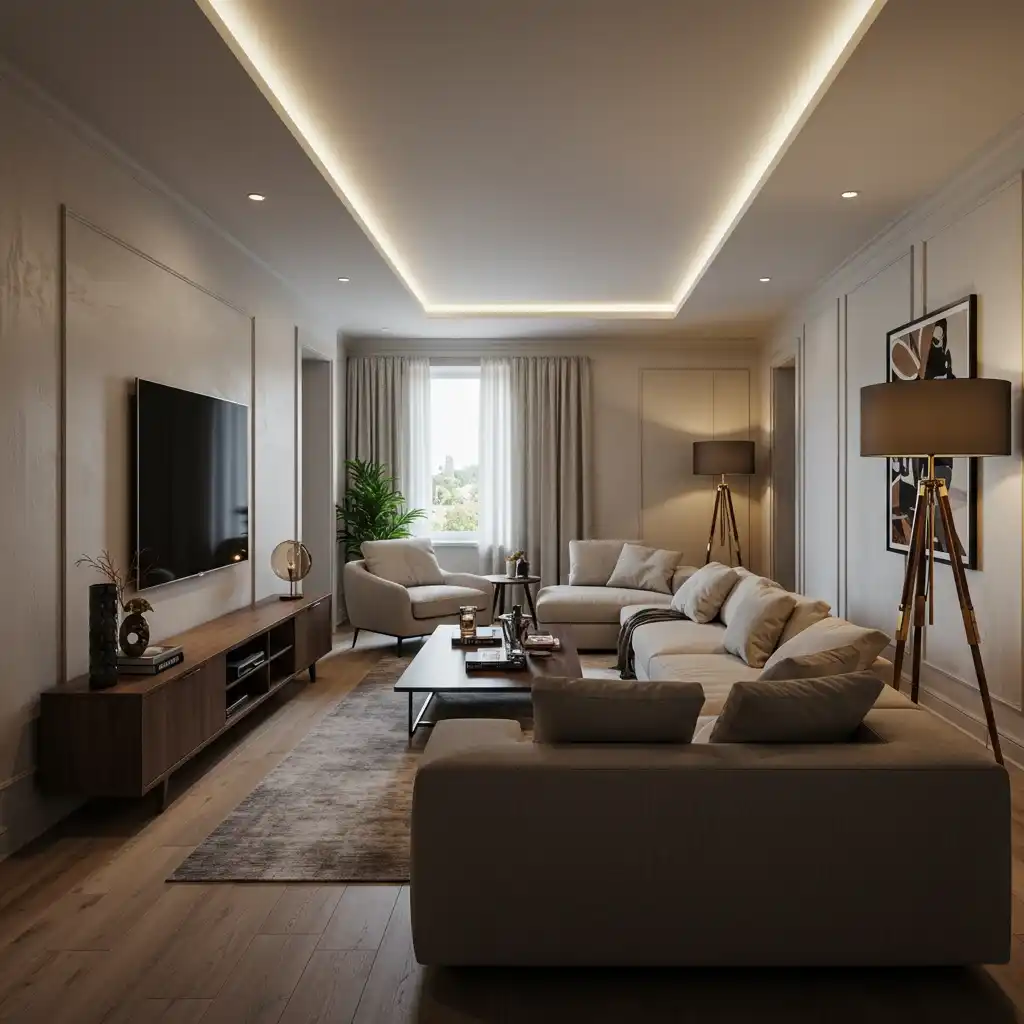
1. Divide and Conquer: The “Two Zones” Layout
This is the most effective and popular strategy for any long, rectangular room. Instead of trying to create one large, stretched-out seating area, the key is to “divide and conquer” by creating two or more distinct, smaller zones, each with its own purpose. This breaks up the long, linear feel of the room, making it feel more balanced and incredibly functional.
I always use this as my starting point for clients with long living rooms. You can create a primary seating area for watching TV or socializing at one end of the room, and a secondary zone at the other end. This secondary zone could be a cozy reading nook with two armchairs, a small home office area with a slim desk, or a dedicated play area for children.
- Primary Zone: Usually the larger zone, with a comfortable sofa or sectional and a coffee table.
- Secondary Zone: A smaller grouping, such as two armchairs and a side table, a desk and chair, or a simple bench under a window.
- Divider: The back of the main sofa often acts as a natural, soft divider between the two zones.
For an enhancement, use two separate but complementary area rugs to visually anchor each of your zones. This is a powerful visual cue that will further solidify the feeling of two distinct “rooms” within the larger space.
2. Create a Clear Walkway by “Floating” Your Sofa
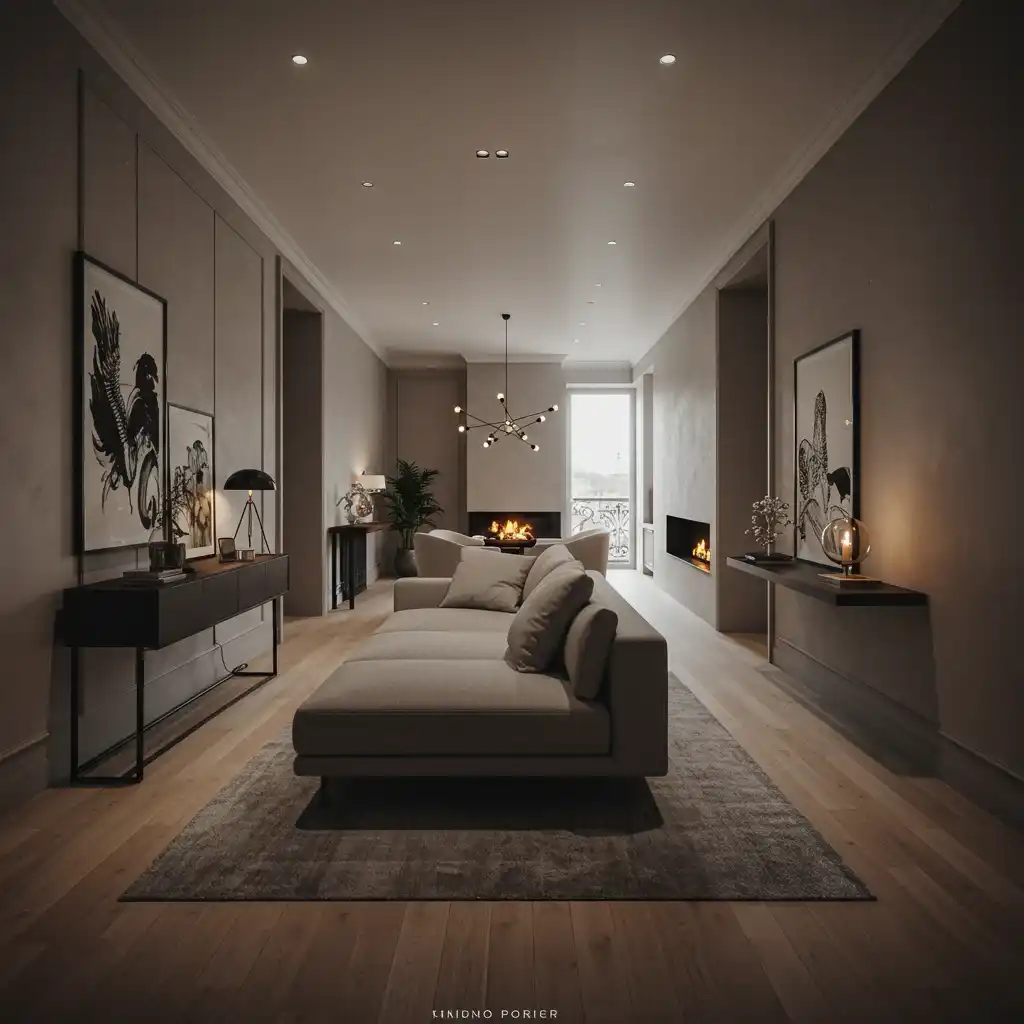
A major problem in a long, narrow room is that the natural traffic path often cuts right through the middle of your seating area. A brilliantly effective layout solution is to create one clear, dedicated walkway along one of the long walls.
You achieve this by “floating” your main sofa and furniture grouping in the middle of the room, pulled away from both long walls. This creates an unobstructed “traffic lane” on one side and a cozy, contained seating area on the other.
This layout is a game-changer for improving traffic flow and making the seating area feel more intentional and intimate. I often place the main focal point, like a fireplace or a TV, on one long wall and float the sofa directly opposite it. The main walkway is then created behind the sofa, along the other long wall.
- Float the Furniture: Pull your main sofa and chairs away from the walls.
- Create a Walkway: Leave a clear, unobstructed path of at least 30-36 inches along one wall.
- Anchor with a Rug: Place a large area rug under your floating furniture arrangement to define the seating zone.
To enhance this layout, place a long, slim console table against the wall in your newly created walkway. This provides a surface for lamps and decor, making the walkway feel like a stylish gallery or foyer rather than just empty space.
3. Use Two Rugs to Anchor and Define Zones
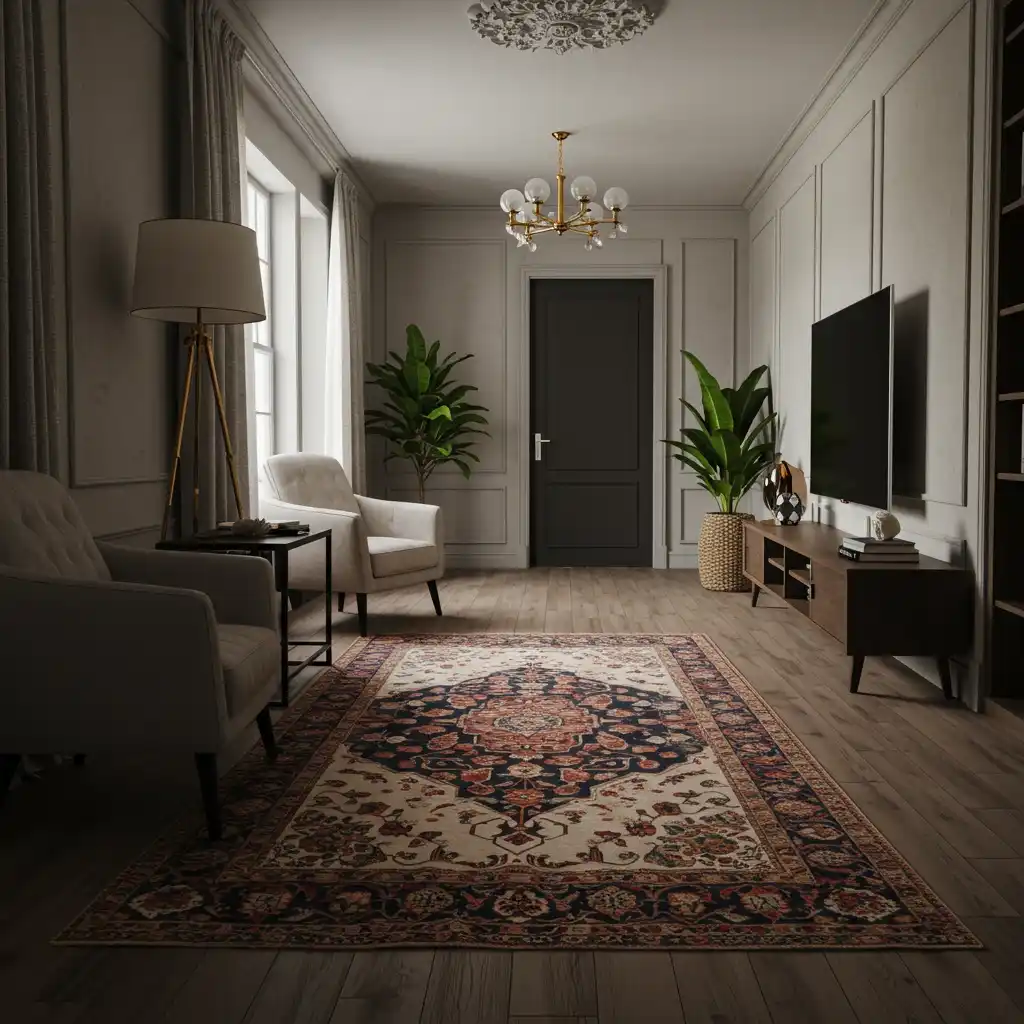
This idea is the essential companion to the “Two Zones” layout. Using two separate area rugs is the most powerful visual tool for breaking up a long, rectangular room and making your distinct zones feel purposeful and grounded.
Each rug acts as an “island” that anchors a furniture grouping, making the division of space feel clear and intentional to the eye.
I always advise my clients to choose rugs that are complementary in style and color but not necessarily identical.
They could be two different patterned rugs that share a common color palette, or one patterned rug for the main zone and a simpler, textural, solid-colored rug for the secondary zone. This creates a cohesive flow while still allowing each “room” to have its own personality.
- Function: Clearly defines separate functional zones (e.g., a conversation area and a media area).
- Adds Style: A great way to add more color, pattern, and texture to a long room.
- Anchors Furniture: Makes your furniture groupings feel grounded and intentional, not lost in a long space.
For an enhancement that adds a touch of designer flair, overlap the corners of your two rugs by just a few inches. This small detail can make the transition between the two zones feel a little softer, more connected, and more curated.
4. Place a Desk or Console Behind the Sofa
This is another key element for layouts that involve a “floating” sofa. The back of a sofa floating in the middle of a room can sometimes feel like a large, awkward barrier.
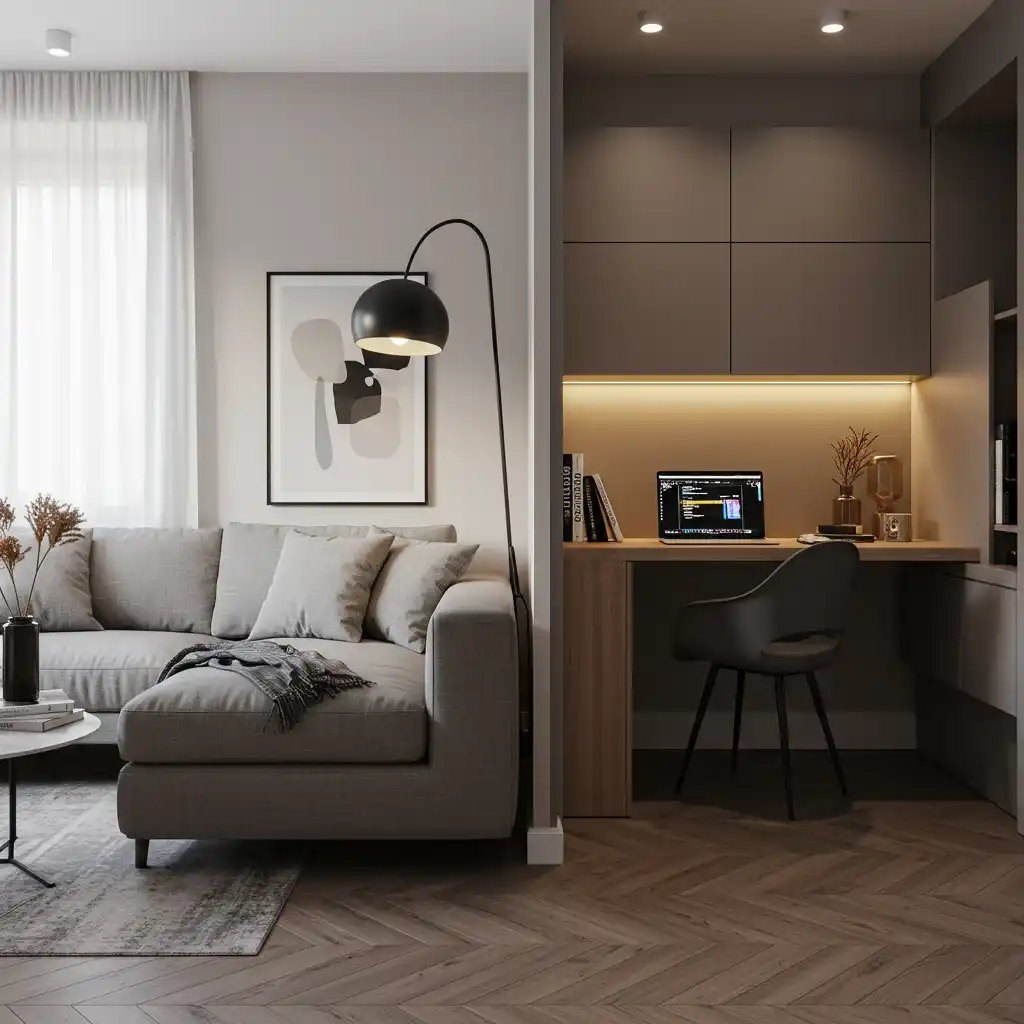
Placing a slim console table or even a small desk directly against the back of the sofa is a brilliantly smart and functional solution. It creates a beautiful, finished look and provides a highly useful surface.
This is my go-to trick for adding function and style to a divided room. A console table can hold a pair of lamps, providing essential light to the center of the room.
A desk behind the sofa creates a perfect, compact, and out-of-the-way home office nook. As seen in many high-end designs, this layout makes the sofa a multi-functional centerpiece.
- Function: Creates a finished look, provides a surface for lighting and decor, and can create a small workspace.
- Placement: The console or desk should be roughly the same height as the back of the sofa.
- Style: Choose a piece that complements your decor and is finished on all sides.
For an enhancement, add a pair of small, backless stools or ottomans tucked neatly under the console table. This provides instant, hidden extra seating for when you have a larger gathering.
5. Create Vertical Interest to Counteract Length
A long, narrow room is, by its nature, very horizontal. To create a sense of balance and make the room feel more proportional, it’s crucial to add strong vertical elements. This design strategy draws the eye upward, making the ceiling feel higher and the room feel less like a long, low tunnel.
There are several great ways to achieve this. I often recommend a pair of tall, matching bookcases flanking a fireplace or a doorway.
This adds a sense of height and architectural grandeur. Another very effective trick is to hang your curtains high and wide mounting the rod as close to the ceiling as possible and extending it well beyond the window frame. This makes the windows, and the entire wall, feel much taller.
- Tall Bookshelves: Draw the eye upward and provide valuable storage.
- High-Hung Curtains: Creates an illusion of height and makes windows feel larger.
- Vertical Art: Hang a tall, narrow piece of art or a gallery wall that has a strong vertical orientation.
- Tall Plants: A tall, slender plant, like a Fiddle Leaf Fig or a Snake Plant, in a corner can also add a nice vertical line.
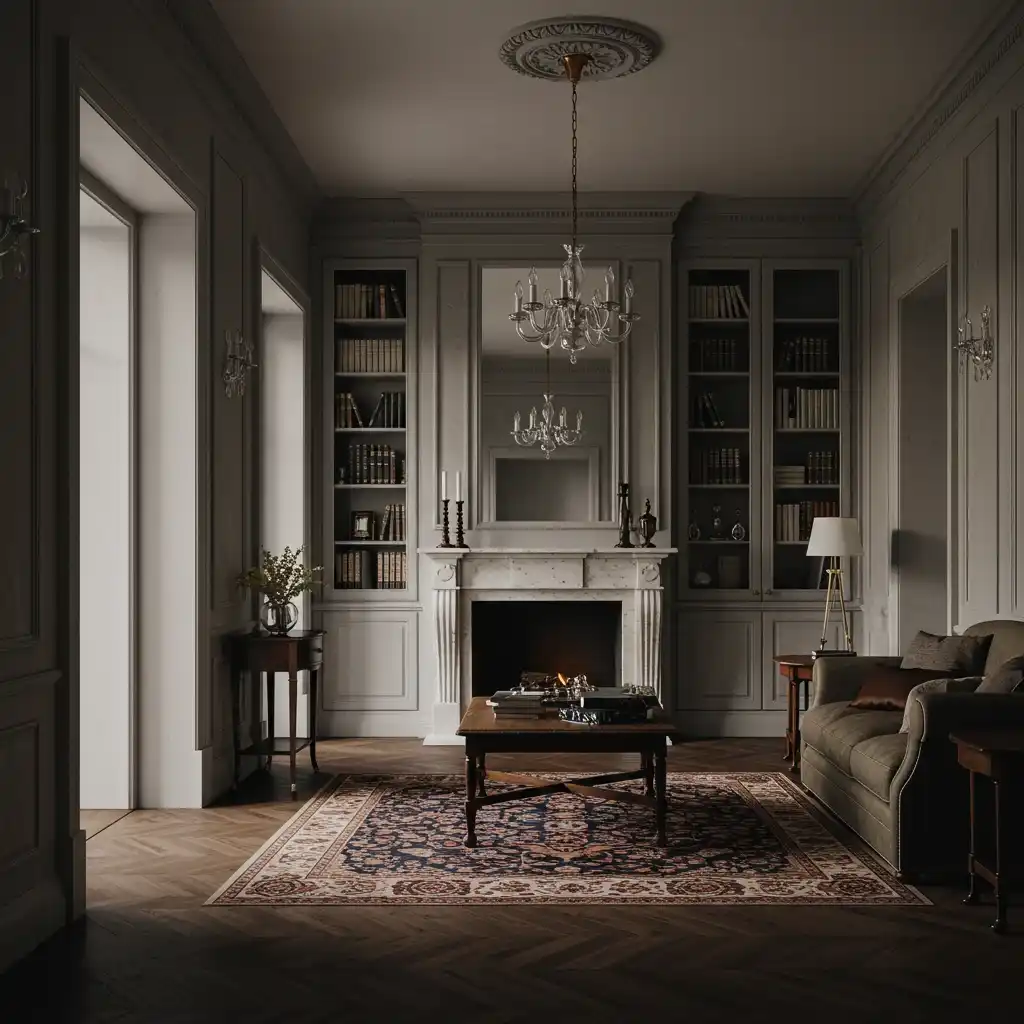
For a dramatic enhancement, install floor-to-ceiling, built-in bookshelves on one of the short walls at the end of the room. This will create a stunning focal point and a library-like feel, and its strong verticality will be a powerful counterpoint to the room’s length.
6. Use Rounded Furniture to Soften the Lines
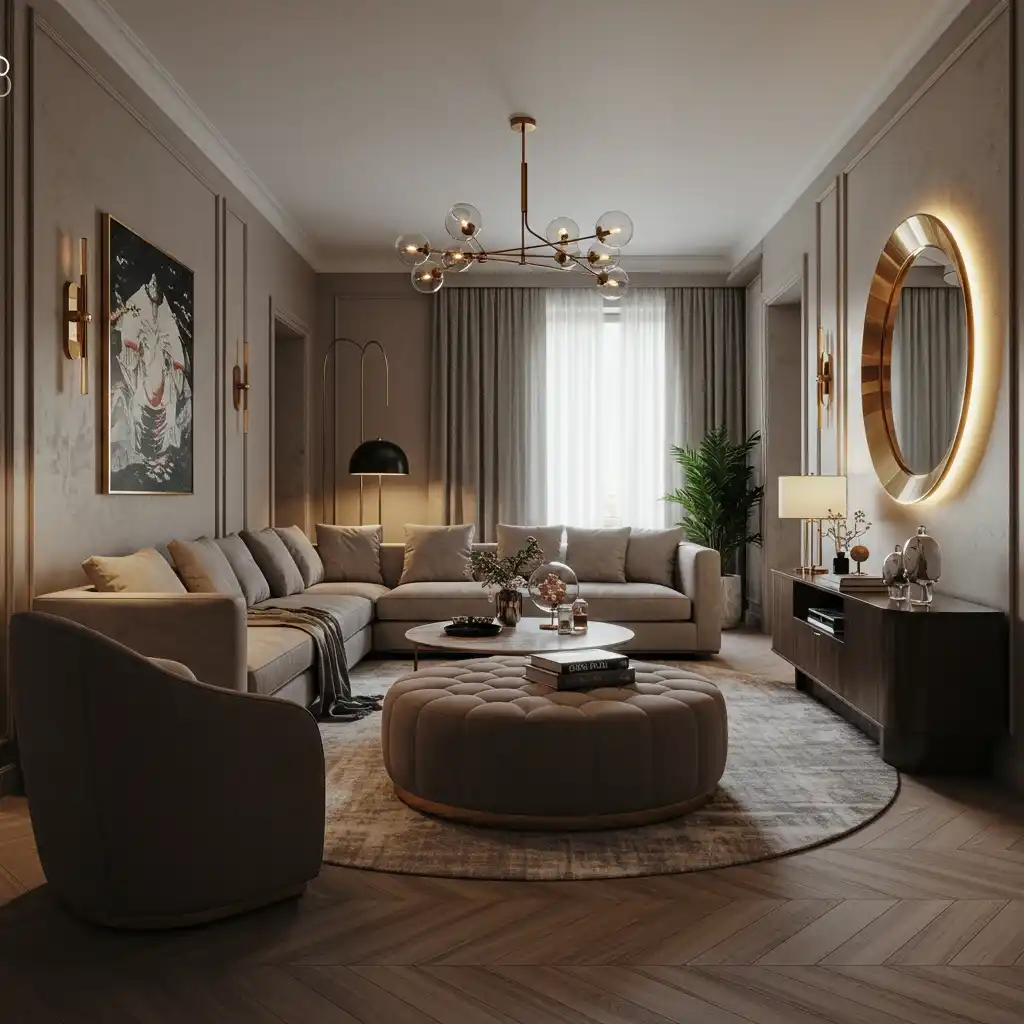
A long, rectangular room is defined by its sharp, 90-degree corners and long, straight lines. A very effective visual trick to break up this harsh geometry is to introduce furniture with soft, curved, and rounded shapes. The organic silhouettes of a round coffee table, a circular area rug, or a pair of armchairs with curved backs can interrupt the “tunnel effect,” making the room feel softer and more dynamic.
I always try to incorporate at least one major round element in a long, narrow room. A large, round coffee table or ottoman is a fantastic choice. It improves the flow of traffic (no sharp corners to bump into) and creates a natural, central gathering spot that contrasts beautifully with the room’s linear shape.
- Round Coffee Table/Ottoman: Softens the main seating area and improves traffic flow.
- Circular Rug: Visually breaks up the long, rectangular floor plan.
- Curved Chairs: A pair of barrel chairs or other accent chairs with soft curves can be a beautiful addition.
- Arc Lamps: A floor lamp with a long, sweeping arc introduces a graceful, overhead curve.
For an enhancement, hang a large, round mirror on one of the long walls. The powerful, circular shape will be a bold, graphic counterpoint to the length of the room and will also help to bounce light, making the space feel wider.
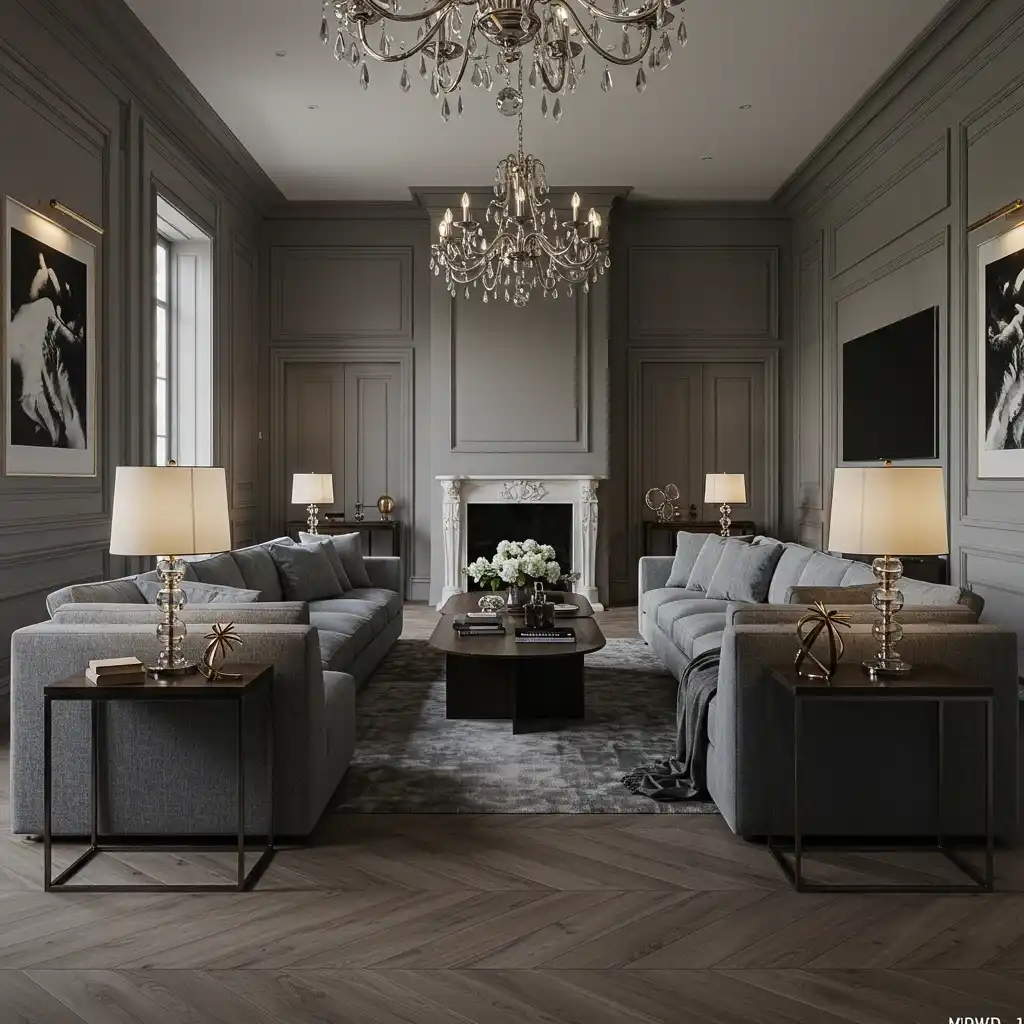
7. The Symmetrical Layout with Two Loveseats
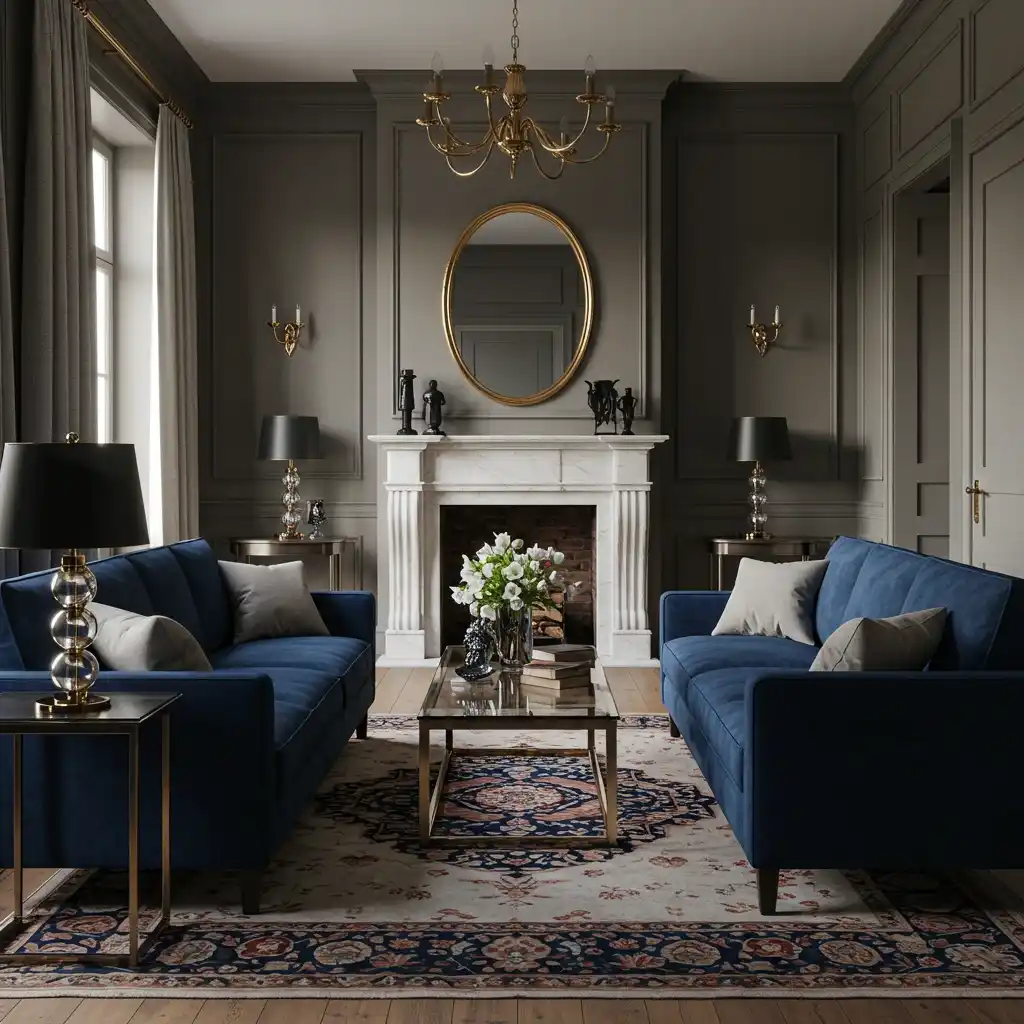
For a more formal and balanced approach in a long, narrow room, consider a symmetrical layout using two matching loveseats or small-scale sofas. In this classic arrangement, a central focal point, like a fireplace on one of the long walls, serves as the anchor.
The two loveseats are then placed directly facing each other, perpendicular to the long walls, with a coffee table in between.
This layout creates a very elegant and defined conversation zone and naturally creates two walkways on either side of the seating group, which is great for traffic flow. It’s a classic setup often seen in traditional design.
I recommend using loveseats or smaller-scale sofas for this, as two full-sized sofas can often feel too crowded in a narrow room.
- Best For: Formal living rooms, creating a strong sense of balance and clear traffic paths.
- Furniture: Use two identical, smaller-scale sofas or loveseats.
- Effect: Creates a very elegant, balanced, and formal conversation area.
To enhance this layout, place a large, striking piece of art on the wall opposite the fireplace. This will create a second, powerful focal point and give the room a beautiful sense of perfect, formal balance.
8. The Perpendicular Sofa Layout
A very simple but effective layout for a long, narrow room is to place your main sofa perpendicular to the long walls. This means that one arm of the sofa is against or near one of the long walls. This placement can instantly break up the long, linear sightline of the room and help to create a more defined, squarer seating area.
This is a great layout when your fireplace or TV is on one of the short walls at the end of the room. I often float the perpendicular sofa in the middle of the room and place two small accent chairs opposite it to form a cozy, contained conversation area. This naturally creates a walkway behind the chairs to access the rest of the room.
- Breaks the Length: Placing the sofa across the narrow dimension of the room helps to visually shorten it.
- Creates a Zone: Helps to define a clear, comfortable seating area.
- Good for End-Wall Focal Points: Works well when your fireplace or TV is at the end of the room.
For an enhancement, if you float the perpendicular sofa in the middle of the room, place a slim console table or a low bookcase against the back of it. This will create a beautiful, finished look and define the “end” of your main living zone.
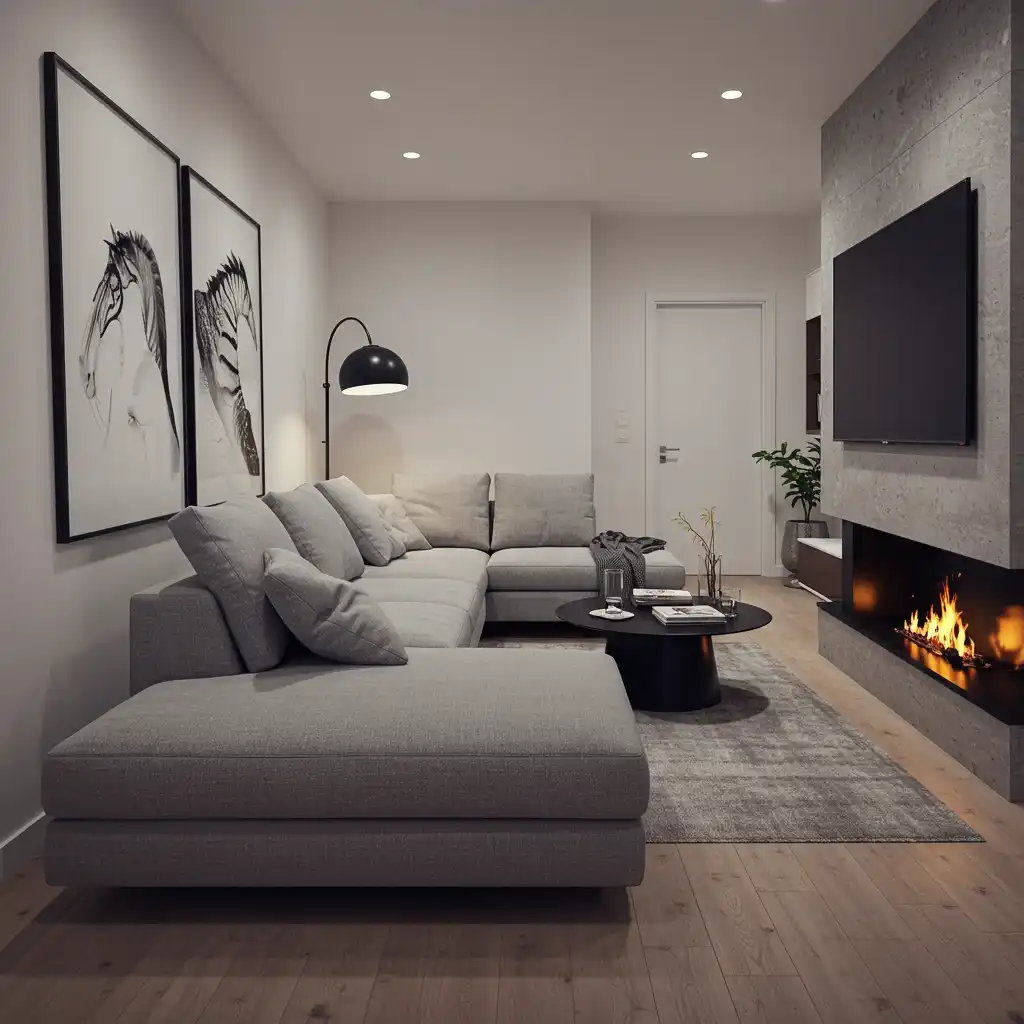
9. Using L-Shaped Sectionals to Create a “Corner”
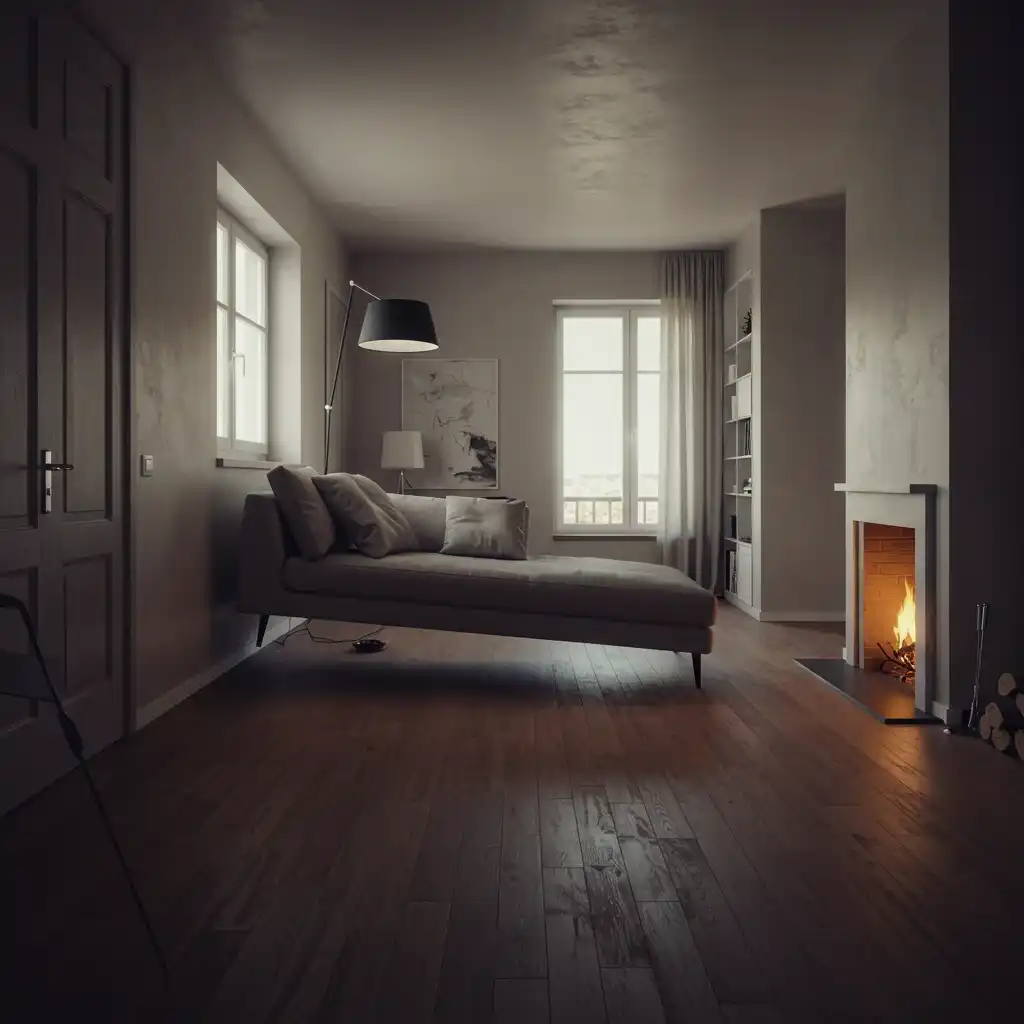
An L-shaped sectional sofa can be a surprisingly smart choice for a long, narrow living room, as it can be used to create an artificial “corner,” making the room feel more square and defined. Instead of pushing the sectional into a corner, float it in the middle of the room. Place the long side of the “L” parallel to the long wall, and the shorter side (the “chaise”) will extend into the room, acting as a natural, soft divider.
This layout can create a very cozy and contained seating area and is perfect for movie nights. I often place the fireplace and TV on the long wall opposite the sectional. The key is to choose a sectional that is not too deep or bulky, often called an “apartment-scale” sectional, to avoid overwhelming the narrow space.
- Creates a Corner: The L-shape adds a right angle that helps to break up the long, straight lines of the room.
- Defines the Zone: The chaise of the sectional creates a clear boundary for the main seating area.
- Scale is Key: Choose a sectional with a slim profile and a shallow depth.
For a functional enhancement, make sure you leave a clear walkway of at least 30 inches behind the long side of the floating sectional to ensure a smooth traffic flow through the room.
10. The Back-to-Back Sofa Divide
This is a bold and highly effective layout, but it is best suited for a very long and at least moderately wide room. It is the ultimate expression of the “two zones” concept. In this arrangement, two identical sofas (or a sofa and a loveseat) are placed back-to-back, floating in the middle of the room.
One sofa faces one end of the room (perhaps towards a fireplace), creating a formal conversation zone. The other sofa faces the opposite end (towards a TV), creating a casual media zone.
This is a high-impact layout that I have used in large, open loft-style homes. It’s the ultimate way to create two, completely separate, and highly functional zones within a single, long room. The key is to have enough space for comfortable walkways around both sides of the central sofa unit.
- Best For: Very long and relatively wide rooms.
- Functionality: Creates two completely separate and highly functional zones.
- Requires: A very large amount of space and two sofas.
To enhance this layout and connect the two zones, place a long, slim console table or a low bookcase between the two back-to-back sofas. This creates a beautiful, finished look and provides a perfect surface for a pair of matching lamps, which will provide light to both sides of the room.
11. Incorporating Swivel Chairs for Flexibility
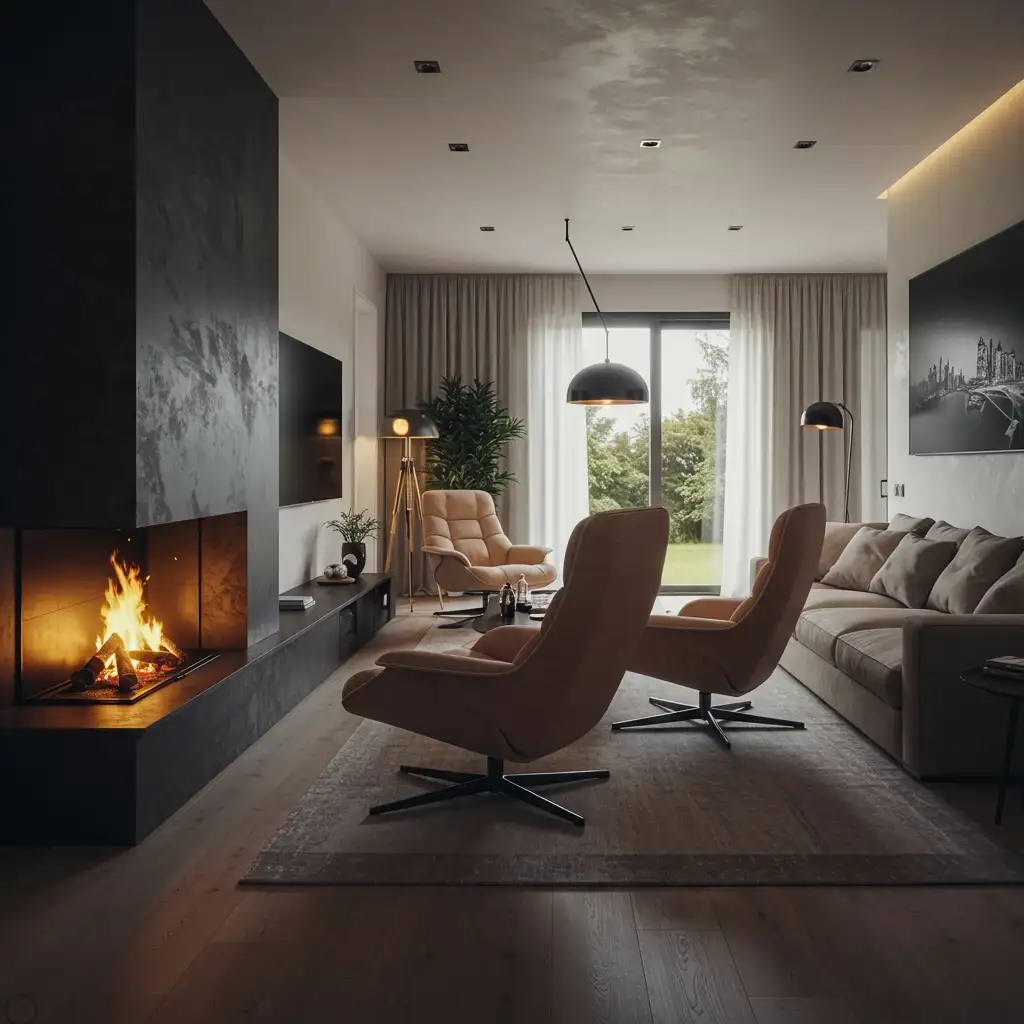
Swivel chairs are the secret weapon for any room with an awkward layout or multiple focal points, and they are especially brilliant in a long, narrow living room. By placing a pair of stylish swivel chairs in your seating arrangement, you introduce an incredible amount of flexibility that allows you to easily pivot between different zones or focal points without rearranging any furniture.
This is one of my favorite “problem-solver” pieces of furniture. You could have your main sofa facing a fireplace, and a TV on an adjacent long wall. A pair of swivel chairs can then be placed opposite the sofa; they can face the sofa for a conversation by the fire, and then with a simple turn, they can face the TV for movie night.
- Incredibly Flexible: Allows for easy reorientation between different focal points or zones.
- Adds a Modern Touch: Most swivel chairs have a clean, contemporary silhouette.
- Great for Zoning: Can act as a bridge, able to participate in two different zones.
For an enhancement, choose swivel chairs in a unique shape (like a round barrel chair) or a bold, contrasting color. This will make them stand out as a fun, dynamic feature in the room, celebrating their flexibility.
12. Using Backless Sofas or Benches as Dividers
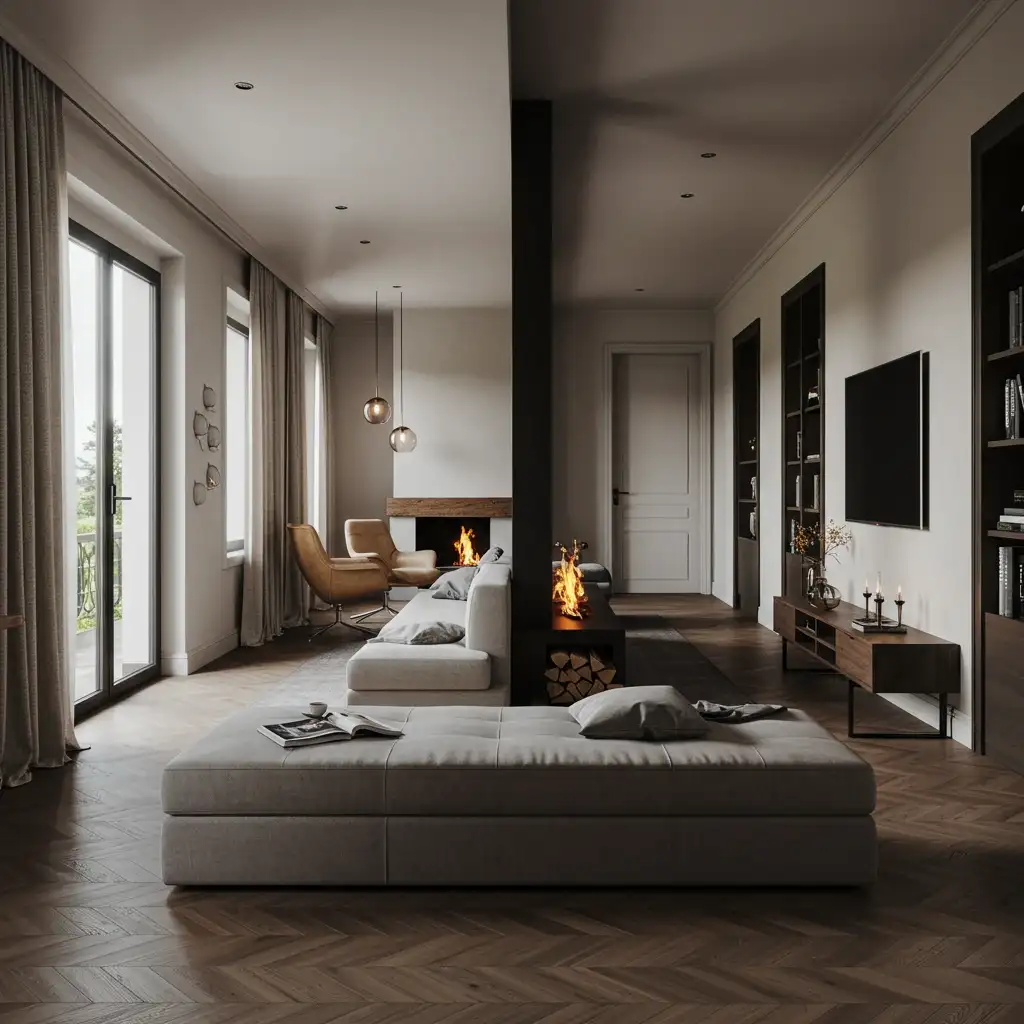
In a long room where you want to create two distinct zones, a standard sofa can sometimes act as a harsh visual barrier. A brilliantly creative solution is to use a backless sofa, a daybed, or a long, upholstered bench as the dividing element. Because these pieces have no high back, you can see over them, which allows the two zones to feel connected and maintains an open, airy sightline down the length of the room.
This is a favorite trick of mine for maintaining an open-plan feel while still creating a clear division of space. A backless sofa is also a very social piece of furniture, as people can sit on either side, allowing it to participate in both zones at once.
- Maintains Sightlines: The lack of a back keeps the room feeling open and connected.
- Social Seating: Allows for two-way seating, engaging with both zones.
- Visually Light: Feels much less bulky than a traditional sofa.
For a functional enhancement, place a slim, C-shaped side table that can slide over the top of the backless sofa. This provides a flexible, movable surface for a drink or a book without the need for a full coffee table.
13. The Angled Furniture Arrangement
While it’s generally advisable to keep furniture parallel to the walls, in some long and narrow rooms, a slightly angled furniture arrangement can be a creative solution to break up the boxiness. This doesn’t mean putting everything on a harsh diagonal, but rather subtly angling your main sofa and perhaps a couple of chairs.
By placing your sofa at a slight angle facing a corner where the fireplace or TV might be, you can create a more dynamic layout and improve sightlines.
This can also help to create more interesting, triangular-shaped spaces in the corners behind the furniture, which are perfect for a floor lamp or a tall plant. This is a great way to “cheat” the geometry of the room.
- Breaks the Box: Angling the furniture disrupts the harsh, linear feel of the room.
- Improves Sightlines: Can help to create a better viewing angle to two different focal points.
- Creates Dynamic Space: Moves away from a rigid, parallel layout.
As an enhancement, use a custom-shaped or an angled area rug that aligns with the angle of your sofa. This will make the angled placement feel much more intentional and will anchor the unique seating arrangement.
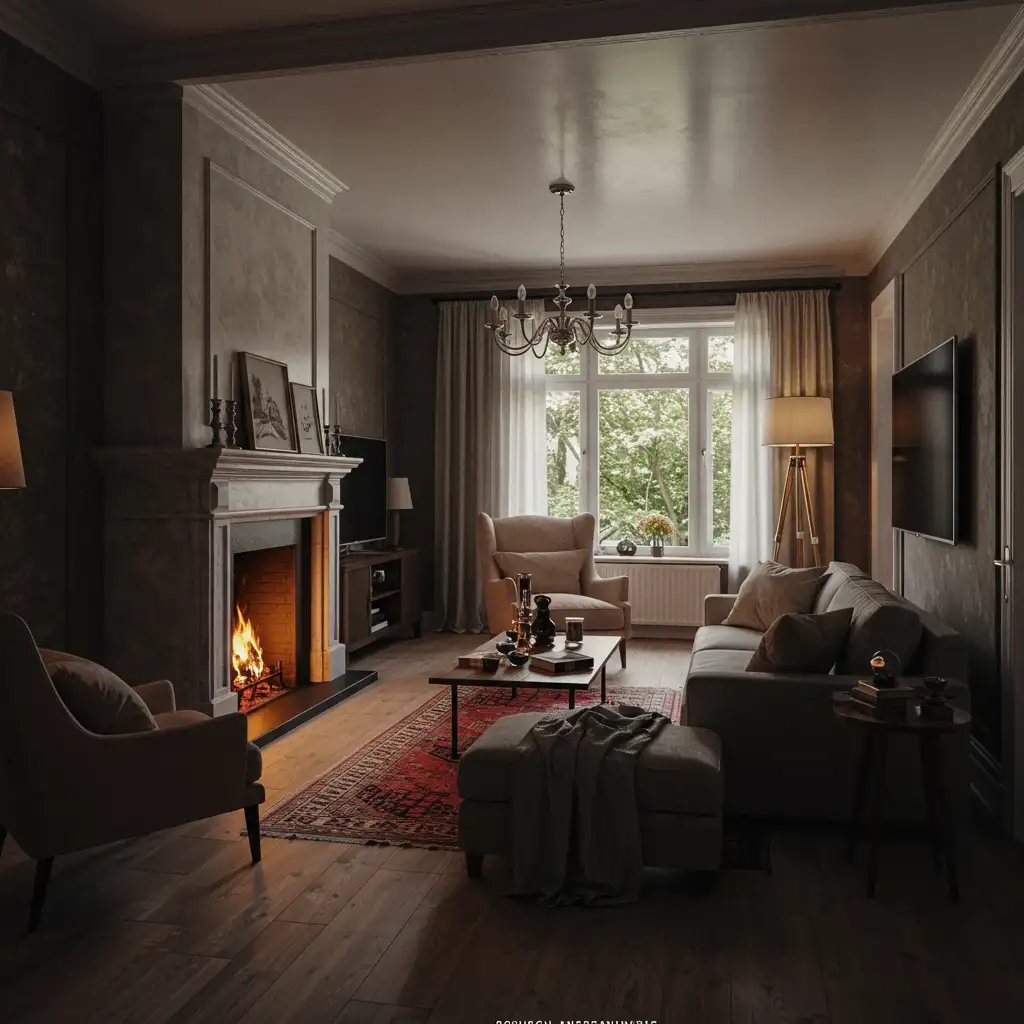
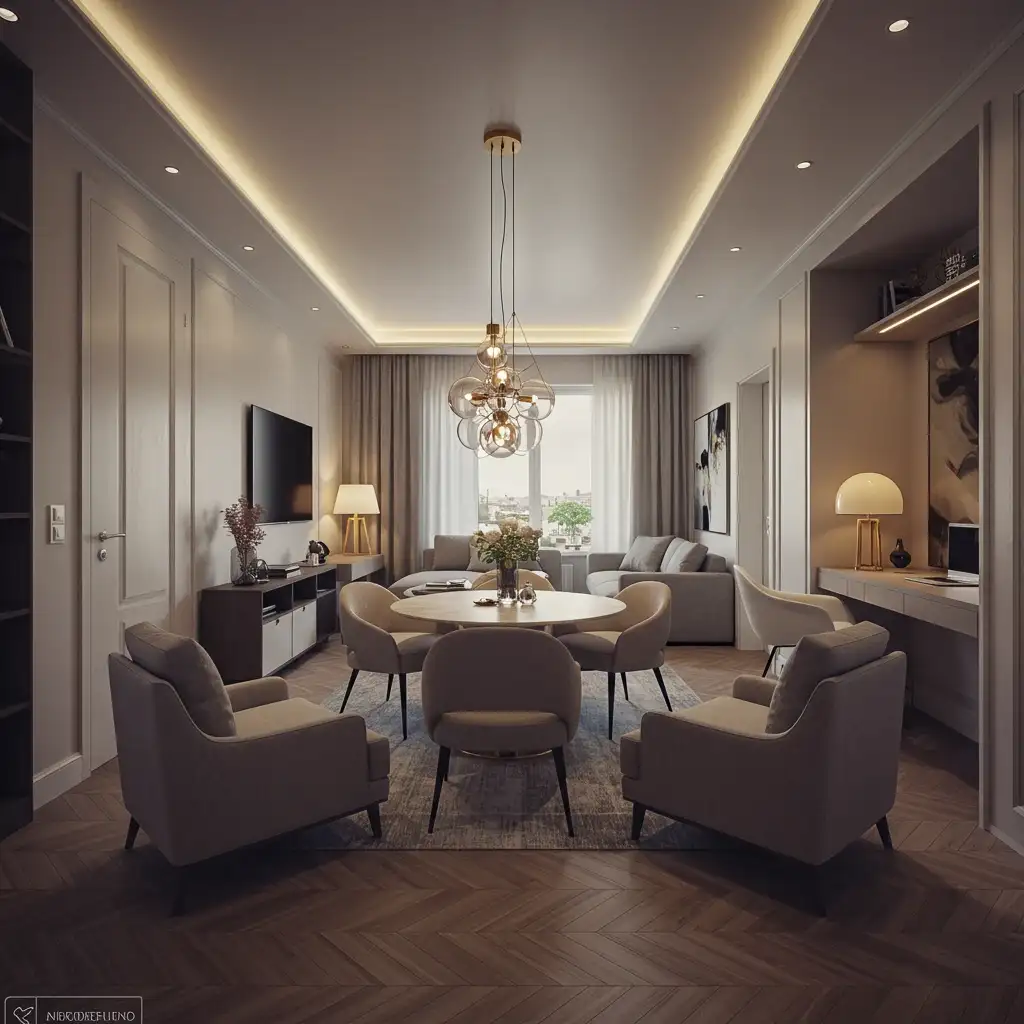
14. The “Three Zones” Layout for Very Long Rooms
For a very long, rectangular living room, you may even have enough space to create three distinct, functional zones. This is the ultimate way to maximize the utility of a very long room, turning it into a truly multi-purpose space. This layout requires careful planning to ensure that the zones feel distinct but still connected, and that there is a clear traffic path through the room.
A common three-zone layout could be:
- A TV/Media Zone: A comfortable sofa or sectional at one end of the room, facing the television.
- A Central Conversation/Game Zone: A smaller, central grouping of four armchairs around a round coffee table or ottoman. This can be a great, technology-free zone.
- A Quiet Nook: A small desk and chair for a home office, or a single armchair and a lamp for a reading nook at the other end of the room, perhaps by a window or the fireplace.
For an enhancement, use lighting to help define the three zones. For example, a large, statement pendant light over the central conversation zone can give it a sense of importance and act as a beautiful focal point for the entire room.
15. Use a Large Mirror on a Long Wall
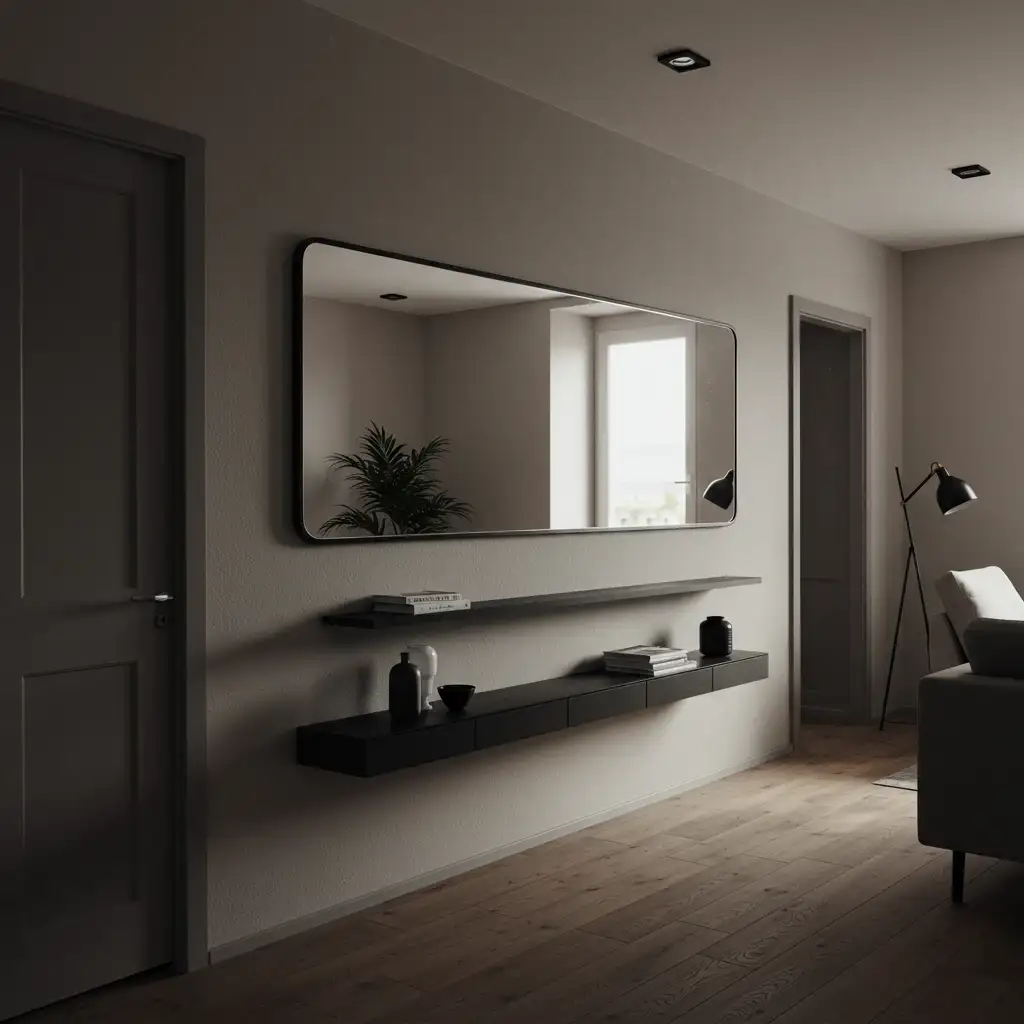
This is a classic visual trick that is incredibly effective in a long, narrow living room. Hanging a very large mirror on one of the long walls can create a powerful illusion of width, helping to counteract the “tunnel effect.” The mirror reflects the room back on itself, tricking the eye into perceiving the space as being much wider and more open than it actually is.
The bigger the mirror, the more powerful the effect will be. I often recommend a very large, rectangular mirror that can be hung horizontally above a sofa, or a full-length, oversized floor mirror that can be simply leaned against the wall. As a designer, I see mirrors not just as reflective surfaces, but as tools for manipulating the perception of space.
- Creates Illusion of Width: The reflection makes the room feel less narrow.
- Bounces Light: A large mirror will also amplify the natural and artificial light in the room, making it feel brighter.
- Focal Point: A mirror with a beautiful, sculptural frame can also serve as a stunning piece of wall art.
For an enhancement, place your mirror on the wall that is opposite your main source of natural light (your largest window). This will maximize its light-reflecting capabilities and will bring a beautiful reflection of the outdoors into your living room.
Conclusion
A long rectangle living room doesn’t have to be a design dilemma. As we’ve explored through these 15 smart ideas, the key is to embrace the shape of your room and use clever furniture arrangement and layout strategies to your advantage.
By breaking up the length of the room into smaller, functional zones, creating clear traffic paths, and using visual tricks to alter the perception of space, you can transform your “bowling alley” into a balanced, stylish, and highly functional living area.
Frequently Asked Questions (FAQs)
How do you arrange furniture in a long, narrow living room?
The best strategy is to avoid pushing all the furniture against the long walls, which creates a “bowling alley” effect. Instead, create distinct zones for different activities (like a conversation zone and a TV zone) or “float” your main sofa in the middle of the room to create a clear walkway along one wall.
How do you break up a long living room?
Use visual cues to divide the space. A sofa with a console table behind it can act as a divider. Two separate but complementary area rugs can anchor two different zones. A backless sofa or a bench in the middle of the room can also create a soft, permeable division.
Should furniture be against the wall in a long room?
Not necessarily. “Floating” your main furniture grouping away from the walls is often the best way to improve traffic flow and create a more intimate, cozy seating area. It’s one of the most effective ways to combat the “tunnel” effect.
How do you stop a room from looking like a tunnel?
Break up the long, straight lines. Create a clear walkway on one side and a seating zone on the other. Use vertical elements like tall bookshelves or curtains hung high to draw the eye up. Incorporate round shapes with a circular coffee table or a round rug. And hang a large mirror on one of the long walls to create an illusion of width.
What is the best type of sofa for a long, narrow room?
A long, low-profile sofa can work well against a long wall or floated. An “apartment-scale” L-shaped sectional is great for creating a defined corner and seating zone. Two smaller-scale loveseats facing each other can also be a very elegant solution. Avoid overly deep, bulky, or overstuffed pieces that will crowd the space.
How much space do I need for a walkway?
A comfortable and functional main walkway should be at least 30 to 36 inches wide. This allows people to move through the space easily without having to turn sideways or bump into furniture.
How can two area rugs help in a long room?
Two rugs can be used to visually define two separate functional zones. One rug can anchor your main TV-watching area, and a second, complementary rug can define a smaller conversation nook or reading corner at the other end of the room. This makes the space feel more organized and purposeful.


