Are you looking for smart long living room ideas for your apartment that will help you conquer its challenging shape? The long, rectangular living room is a common feature in apartment layouts, and it can be notoriously tricky to decorate.
The narrow dimensions can easily create a “bowling alley” or “tunnel” effect, where furniture is awkwardly pushed against the walls, and the space feels more like a corridor than a cozy, functional living area. The key to success is to stop fighting the room’s shape and start using clever design strategies to make it work for you.
This guide will provide you with 15 practical and creative ideas that will help you break up the length, improve the flow, and transform your long apartment living room into a balanced, beautiful, and highly livable space.
1. Divide and Conquer: Create Two Distinct Zones
This is the number one, most effective strategy for any long apartment living room. Instead of trying to create one, single, stretched-out seating area, divide the length of the room into two (or even three) smaller, more functional zones. This instantly breaks up the “bowling alley” effect and makes the room feel more purposeful and balanced. Your long room is a gift of space; zoning allows you to take full advantage of it.
I always start by helping my apartment-dwelling clients identify their needs. The primary zone is typically the living/TV area. The secondary zone can then become a much-needed second function.
- Living + Dining: Create a main seating area, and use the other end of the room for a small, round dining table or a bistro set.
- Living + Office: Create your lounge space, and tuck a slim, stylish desk and chair into the other end, preferably near a window.
- Living + Reading Nook: Create your TV zone, and use the other end for a single, comfortable armchair, a floor lamp, and a small bookshelf.
For an enhancement, use a large area rug to define your primary living zone. This is a powerful visual cue that will clearly anchor the seating area and separate it from the secondary zone.
2. Use a Rug to Define the Main Living Area
In an open-plan or long apartment, an area rug is not just a decorative accessory; it is a crucial space-planning tool.
A well-sized area rug acts as a visual “island,” anchoring your main seating furniture (your sofa, chairs, and coffee table) and grouping them together into a cohesive, intentional zone. This simple addition is the most effective way to make your living area feel like a distinct “room” and to keep your furniture from feeling like it’s just floating in a long, awkward space.
The biggest mistake renters make is choosing a rug that’s too small. I always advise that the rug should be large enough so that at least the front legs of your sofa and any armchairs are sitting on it. This visually connects all the pieces.
- Function: Visually defines the living room zone, adds softness and color, and anchors the furniture.
- Size is Key: Must be large enough to connect the main seating pieces.
- Placement: The front legs of the sofa and any chairs should be on the rug.
For an enhancement that makes your narrow room feel wider, choose a rug with bold, horizontal stripes that run across the narrow dimension of the room. The stripes will create a visual illusion of width.
3. Float the Sofa to Create a Clear Walkway
In a long, narrow apartment, the most direct path from one end of the room to the other is often right through the middle, forcing you to weave around your furniture. A smart layout solution is to create one clear, dedicated walkway along one of the long walls.
You do this by “floating” your main sofa and furniture grouping in the middle of the room, pulled away from the walls. This creates an unobstructed “traffic lane” on one side and a cozy, contained seating area on the other.
This layout is a game-changer for improving traffic flow and is a core principle of good space planning.
I often place the main focal point, like a TV on a console, on one long wall and float the sofa directly opposite it. The main walkway is then created behind the sofa, along the other long wall. This makes the seating area feel intentional and intimate.
- Float the Furniture: Pull your main sofa away from the wall into the center of the room.
- Create a Walkway: Leave a clear path of at least 30-36 inches along one wall.
- Anchor with a Rug: Place a large area rug under your floating furniture arrangement to define the seating zone.
To enhance this layout, place a long, very slim console table against the wall in your newly created walkway. This provides a surface for lamps and decor, making the walkway feel like a stylish gallery or foyer.
4. Use “Visually Light” Furniture
The physical and visual weight of your furniture has a huge impact on how large and open your long apartment living room feels. Bulky, solid-base furniture can eat up space and make the area feel cramped and heavy.
A creative solution is to choose furniture that is “visually light.” This means pieces that are raised up on slender legs so you can see the floor and the air underneath them. This creates a sense of openness and makes the space feel significantly less crowded.
This principle, often highlighted by small-space experts at IKEA and West Elm, is key for apartments. Look for sofas, chairs, and media consoles with “leggy” designs.
- Look for Legs: The more of the floor and wall you can see, the larger the space will feel.
- Choose See-Through Materials: Furniture made of acrylic or lucite can almost “disappear” visually, which is a fantastic trick for a small space. A glass coffee table has a similar effect.
- Thin Frames: Furniture made from thin metal or streamlined wood profiles feels less bulky.
For an enhancement, choose a coffee table made of clear acrylic or glass. It provides all the function you need but takes up almost zero visual space, allowing you to see the beautiful pattern of your rug right through it.
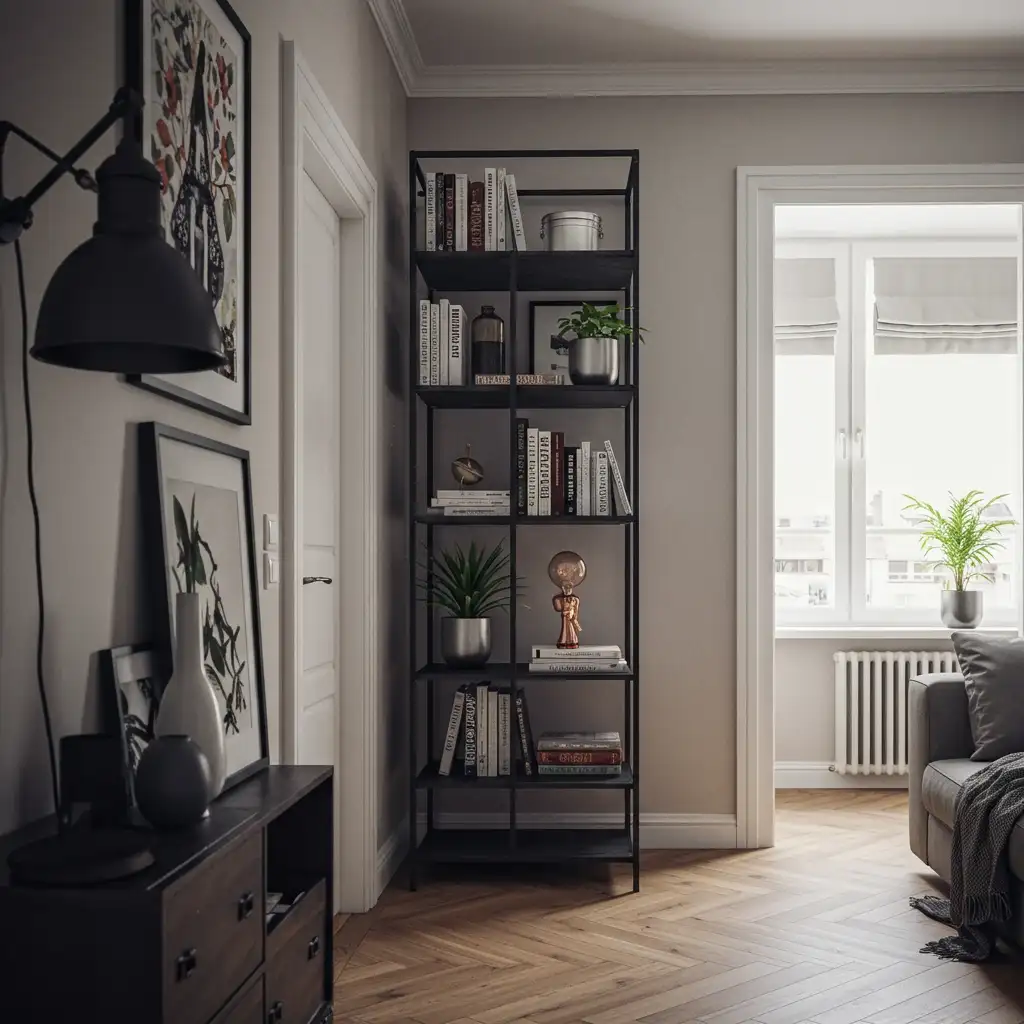
5. Incorporate Round Shapes to Break Up the Lines
A long, rectangular room is defined by its straight lines and sharp corners. A very effective visual trick to break up this “tunnel” is to introduce furniture and decor with soft, curved, and rounded shapes.
The organic silhouettes of a round coffee table, a circular area rug, or a pair of armchairs with curved backs can interrupt the harsh linearity of the room, making it feel softer, more dynamic, and less like a corridor.
I always try to incorporate at least one major round element in a long, narrow apartment living room. A large, round coffee table or a soft, round ottoman is a great starting point. It improves traffic flow (no sharp corners to bump into) and creates a natural, central gathering spot that contrasts beautifully with the room’s linear shape.
- Round Coffee Table/Ottoman: Softens the main seating area and improves traffic flow.
- Circular Rug: Visually breaks up the long, rectangular floor plan.
- Curved Chairs: A pair of barrel chairs or other accent chairs with soft curves can be a beautiful addition.
- Arc Lamps: A floor lamp with a long, sweeping arc introduces a graceful, overhead curve.
For an enhancement, hang a large, round mirror on one of the long walls. The powerful, circular shape will be a bold, graphic counterpoint to the length of the room and will also help to bounce light, making the space feel wider.
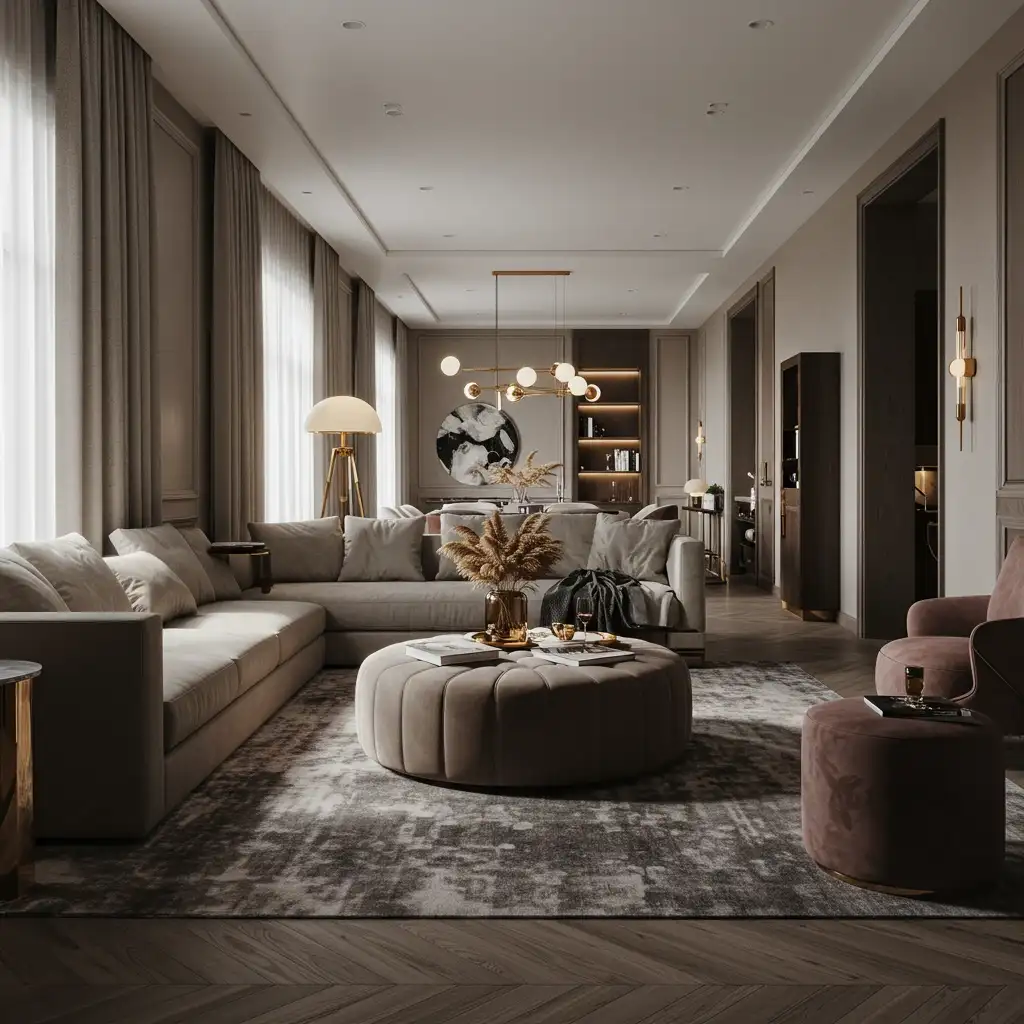
6. Go Vertical with Tall, Narrow Bookshelves
In a long, narrow apartment, the walls can feel like they are closing in on you. To counteract the horizontal nature of the room and make it feel more balanced and proportional, it’s crucial to add strong vertical elements.
A pair of tall, narrow bookshelves or “etagere” style shelves is a fantastic way to do this. They draw the eye upward, making the ceiling feel higher, and they provide a huge amount of valuable, space-saving storage and display space.
This is a classic small-space strategy that I use all the time. Instead of a wide, low bookcase that eats up floor space, go for a tall, skinny one. Placing a tall bookshelf in a corner or on either side of a doorway can add a sense of height and architectural interest.
- Draws the Eye Upward: Makes the ceiling feel higher and the room more balanced.
- Space-Saving Footprint: A tall, narrow shelf provides a lot of storage for a very small amount of floor space.
- “Ladder” Style Shelves: Leaning ladder-style shelves are another great option as they feel very light and airy.
For an enhancement that is perfect for renters, use a modular, wall-mounted shelving system. You can customize the height and configuration to fit your space perfectly, and it keeps your floor completely clear.
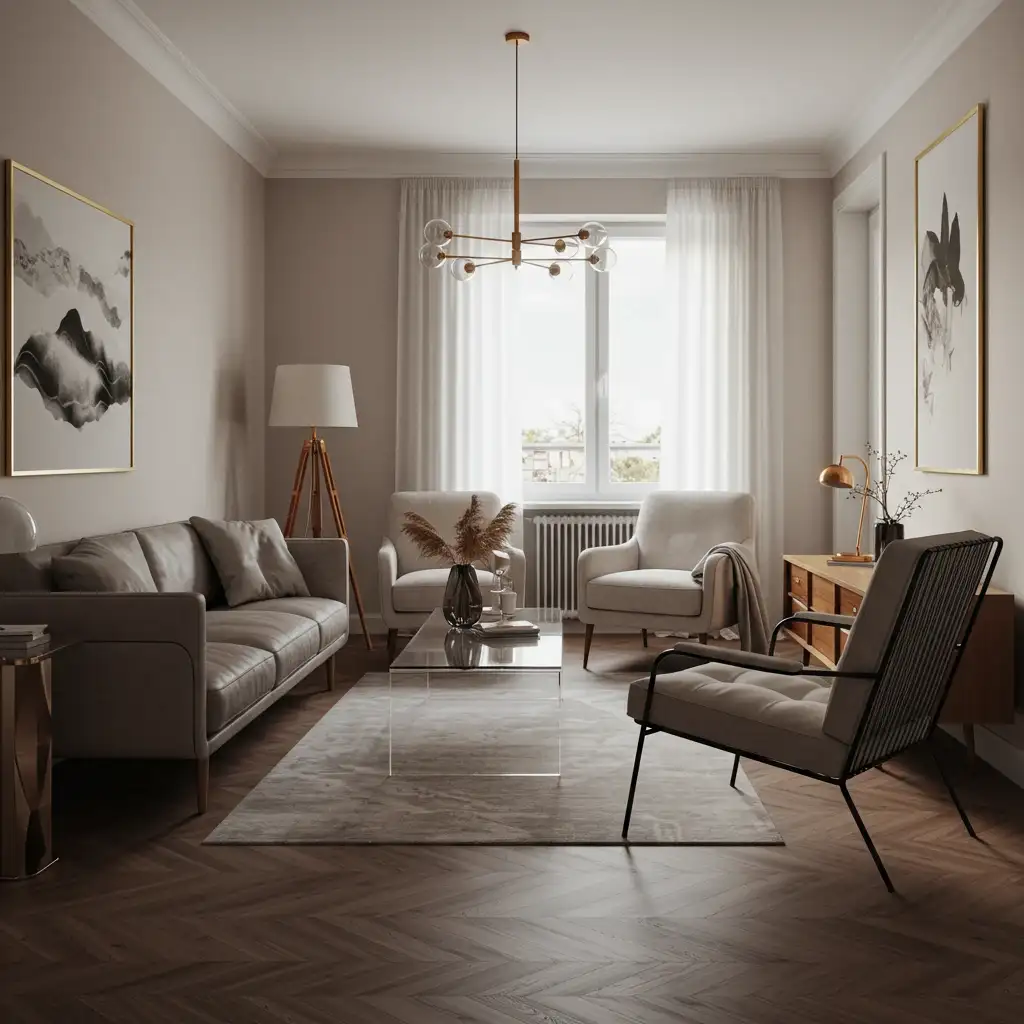
7. Use Mirrors to Create an Illusion of Width
This is the oldest and most effective trick in the book for a reason. A large mirror is a must-have in a long, narrow apartment living room.
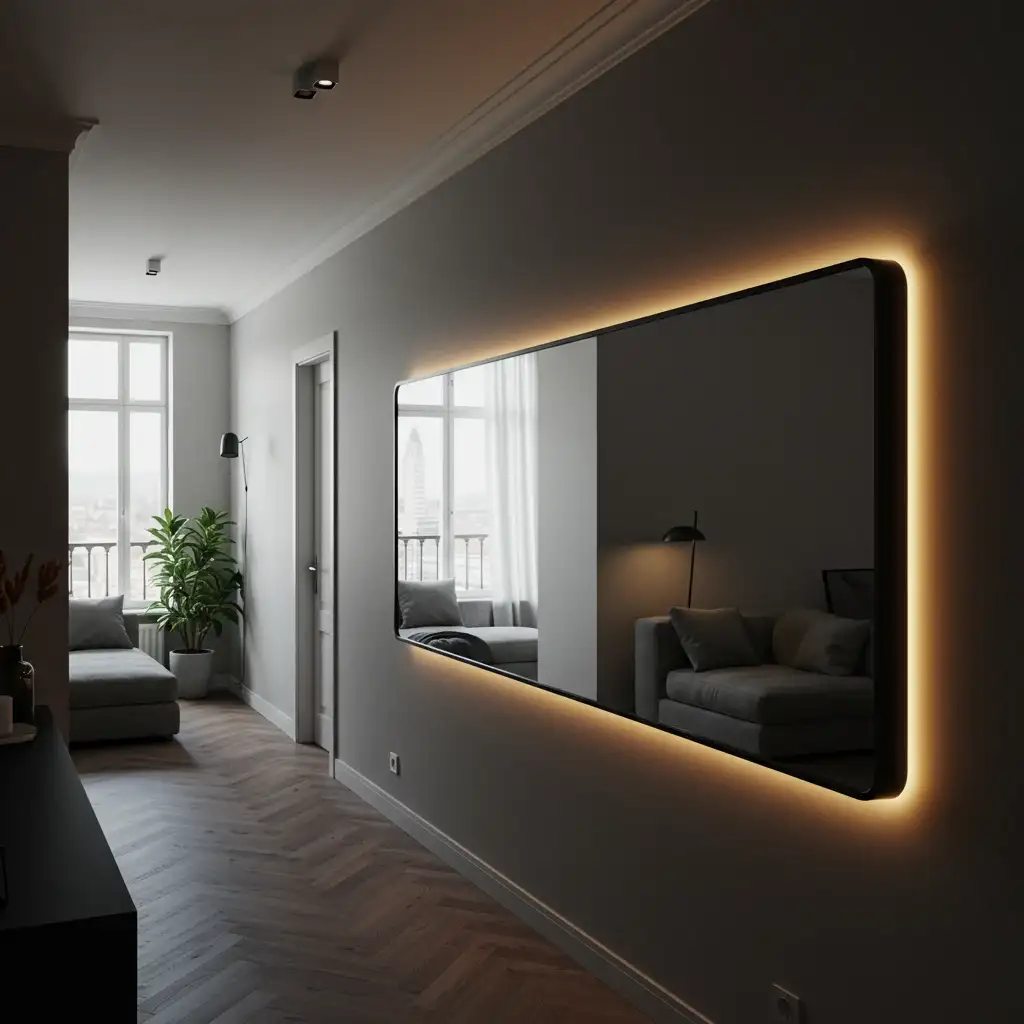
When placed correctly on one of the long walls, a mirror can create a powerful illusion of width and depth, making the room feel significantly less like a corridor and much more open and balanced. It works by reflecting the room back on itself and by bouncing light around the space.
I always tell my clients to go as big as they can with their mirror. A very large, rectangular mirror hung horizontally above the sofa can be incredibly effective at creating a “window” effect that seems to push the wall out.
- Creates Illusion of Width: The reflection makes the room feel less narrow.
- Bounces Light: A large mirror will amplify the natural and artificial light in the room, making it feel brighter.
- Placement is Key: Hang the mirror on one of the long walls to visually push it out and widen the space.
For a dramatic, renter-friendly enhancement, get a very large, full-length floor mirror and simply lean it against one of the long walls. This has a very casual, chic, and high-impact look that requires no installation.
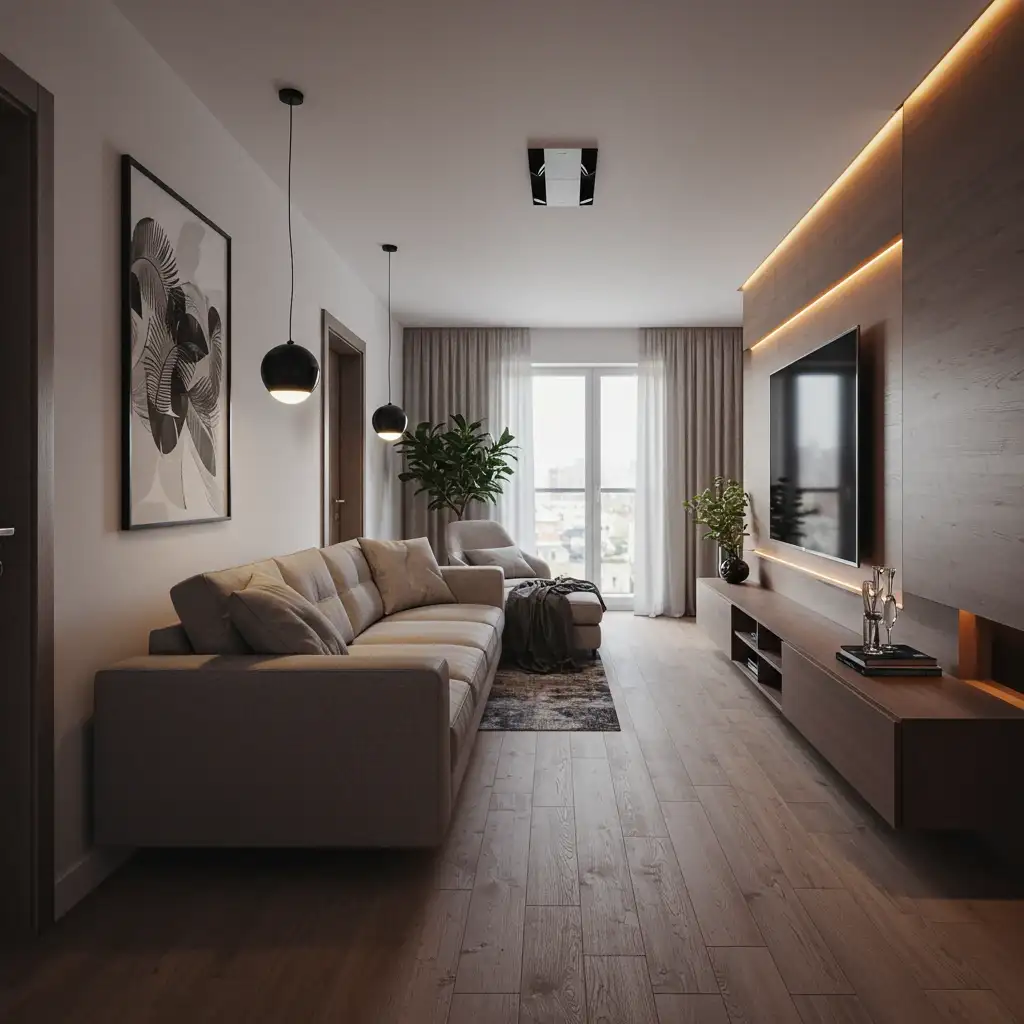
8. Choose an “Apartment-Scale” Sectional
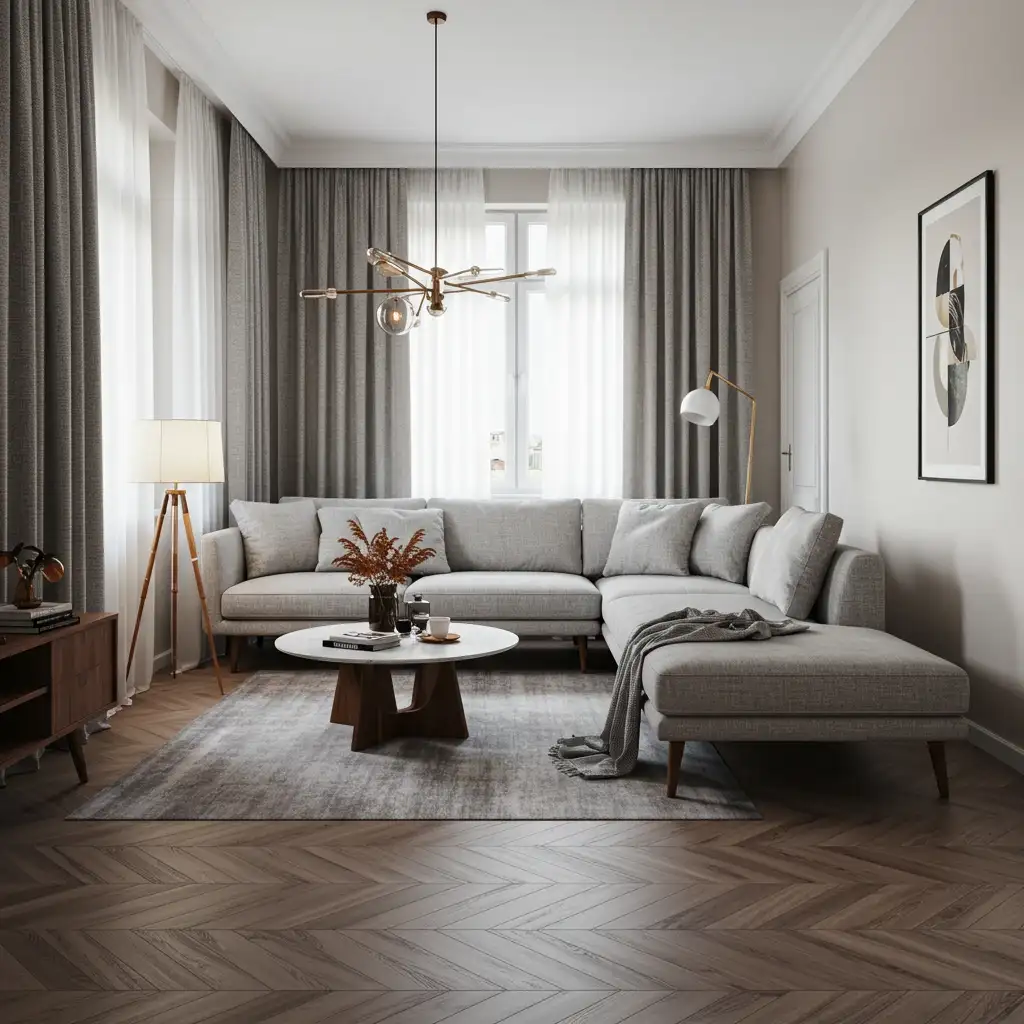
An L-shaped sectional sofa can be a fantastic choice for a long apartment living room, but you have to choose the right one. A massive, overstuffed sectional will completely overwhelm the space.
The key is to look for an “apartment-scale” sectional. These are specifically designed with smaller spaces in mind; they have a shallower seat depth, a slimmer profile, and are often a bit shorter in length.
A well-chosen apartment sectional can actually be a great space-saver. By providing a lot of seating in one, corner-hugging piece, it can eliminate the need for extra armchairs, which can free up floor space. I love to use a sectional with a reversible chaise, which gives my clients the flexibility to change the layout if they move.
- Scale is Everything: Look for a model specifically labeled “apartment-scale” or “small-space.”
- Measure Carefully: Make sure you measure your room and the sofa carefully before you buy.
- Chaise for Lounging: A chaise-style sectional provides a perfect, comfortable spot for putting your feet up and lounging.
For an enhancement, choose a sectional that is raised up on tall, slender legs. This “leggy” design is a key feature of visually light furniture and will make the large piece feel much less bulky in your long, narrow room.
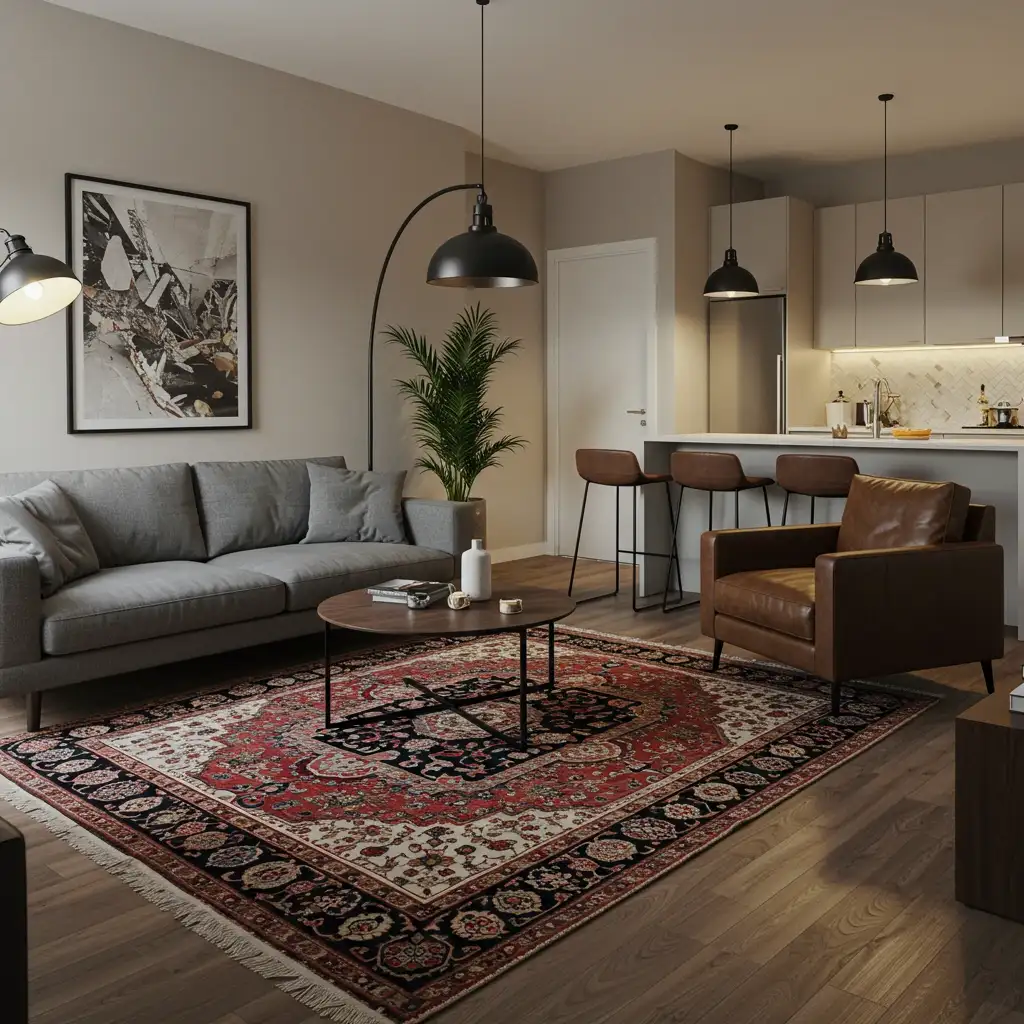
9. Use a See-Through Divider
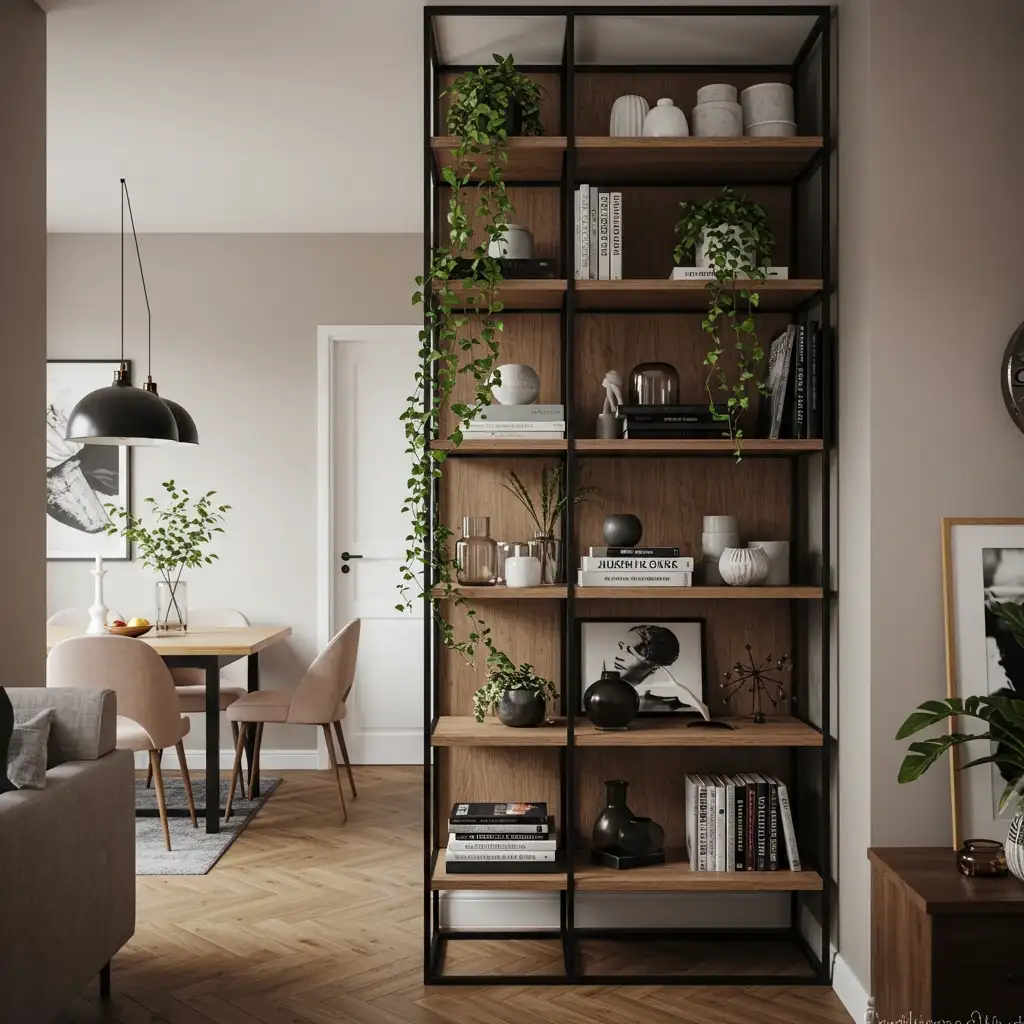
If you want to create two distinct zones in your long living room but want to maintain a very light and airy feel, a see-through divider is a brilliant creative solution. Unlike a solid wall or the back of a sofa, a permeable divider creates a clear sense of separation without blocking light or your sightlines. This is a favorite solution of mine for small, open-plan apartments.
A tall, open-backed shelving unit or bookcase is the most popular and functional option. It provides a huge amount of storage and display space while still feeling very open. Other great options include a decorative folding screen made of a semi-transparent material (like woven rattan or fabric), or even a curtain hung from a ceiling track.
- Flexible Division: Creates separation without building a wall.
- Maintains Openness: Doesn’t block light or the view, so the space still feels large.
- Provides Storage and Display: A hardworking, functional piece of furniture.
For an enhancement, use your see-through bookshelf to house a collection of beautiful, green houseplants. The living, green elements will create a beautiful, natural screen that feels fresh and vibrant.
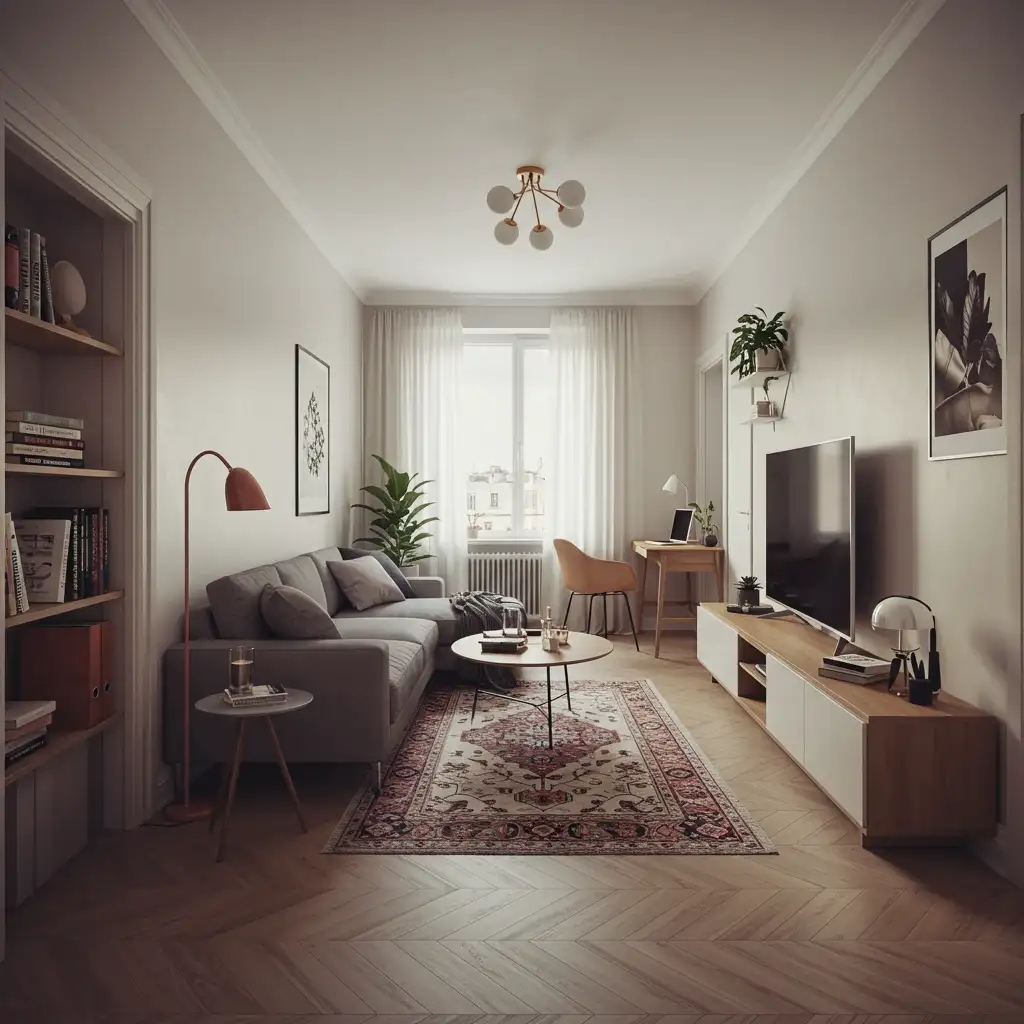
10. Hang Curtains High and Wide
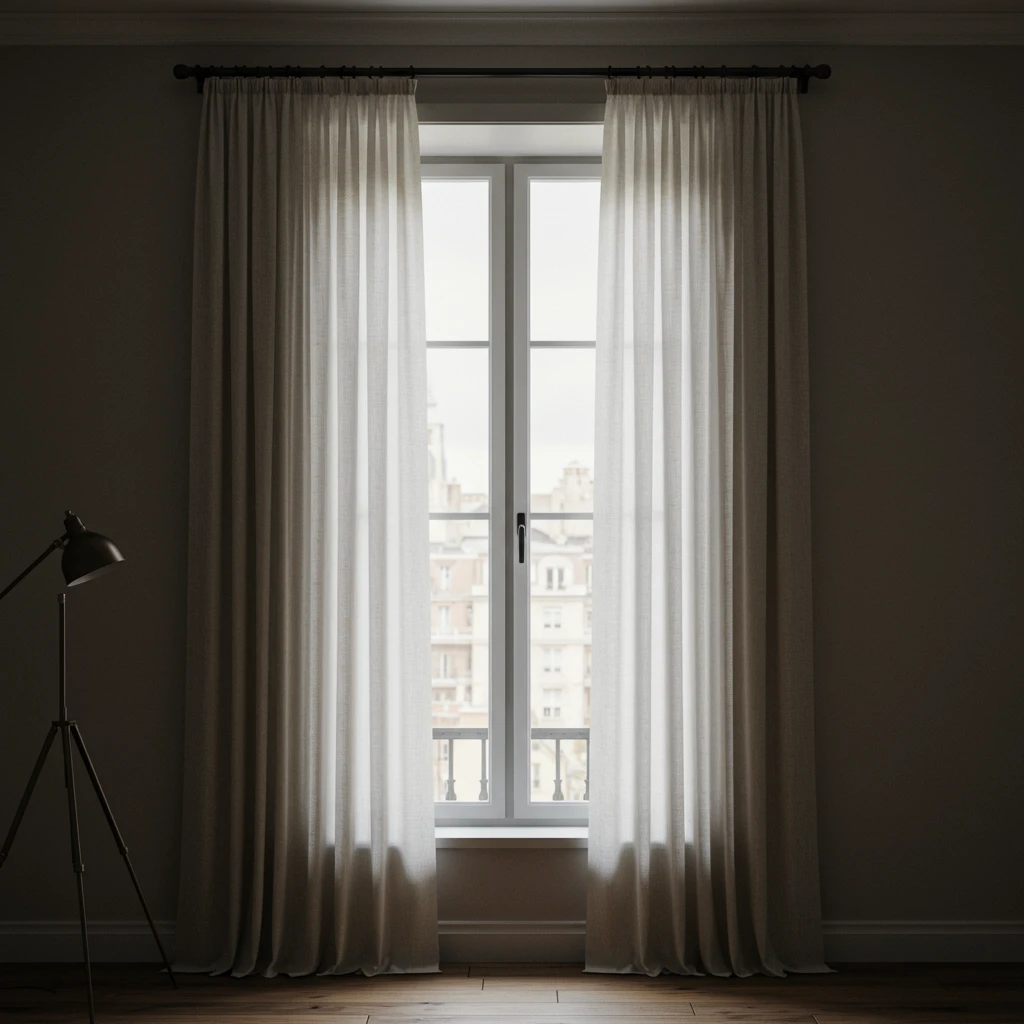
This is a simple, classic, and incredibly effective trick for making the windows in your long, narrow apartment feel larger and the ceilings feel higher. It’s a must-do for any small or awkwardly shaped room. Instead of mounting your curtain rod right on the window frame, you should hang it “high and wide.”
I instruct all my clients to follow this simple rule.
- Hang it High: Mount your curtain rod at least 4-6 inches above the top of your window frame. If you have the space, mounting it halfway between the top of the frame and the ceiling is even better.
- Hang it Wide: The curtain rod should extend at least 6-10 inches beyond the window frame on both sides. This allows you to pull the curtain panels completely clear of the window when they are open, letting in the maximum amount of light and not blocking any of your view.
- Let Them Kiss the Floor: The curtain panels should be long enough to just touch or “kiss” the floor.
For an enhancement, use a single, extra-wide curtain panel on a long rod and sweep it all to one side during the day. This creates a very dramatic and elegant, asymmetrical look that can help to break up the long, straight lines of the wall.
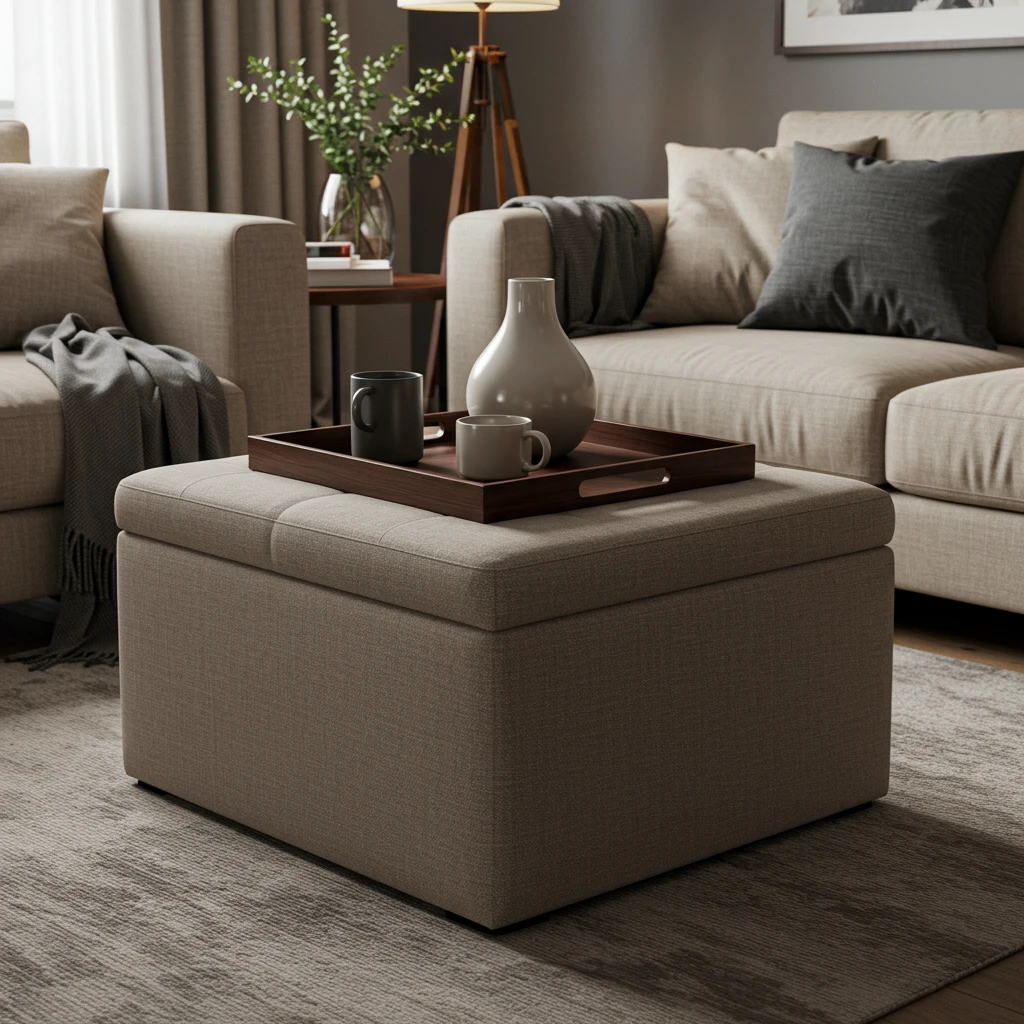
11. Use Multi-Functional Furniture
In any apartment, but especially in a long one where you want to create multiple zones, every piece of furniture should work hard. Multi-functional furniture is the key to creating a space that can adapt to your different needs without being filled with clutter. Look for pieces that combine seating, storage, and surfaces in clever ways.
This is a core principle of small-space design. I always recommend a storage ottoman as the top, must-have piece. It can be a coffee table (with a tray), a footrest, and extra seating, all while hiding away your blankets or board games.
- Storage Ottoman: A true multi-tasking hero.
- Nesting Tables: Flexible side tables that can be expanded or compacted.
- A Drop-Leaf Dining Table: Can be a slim console table for daily use, and then expanded to seat guests.
- A Sleeper Sofa or Daybed: Perfect for a “flex” space that needs to double as a guest room.
For an enhancement, choose a coffee table that has a “lift-top” mechanism. The top of the table can be lifted up and towards you to become a comfortable height for working on a laptop or for eating a casual meal while sitting on the sofa.
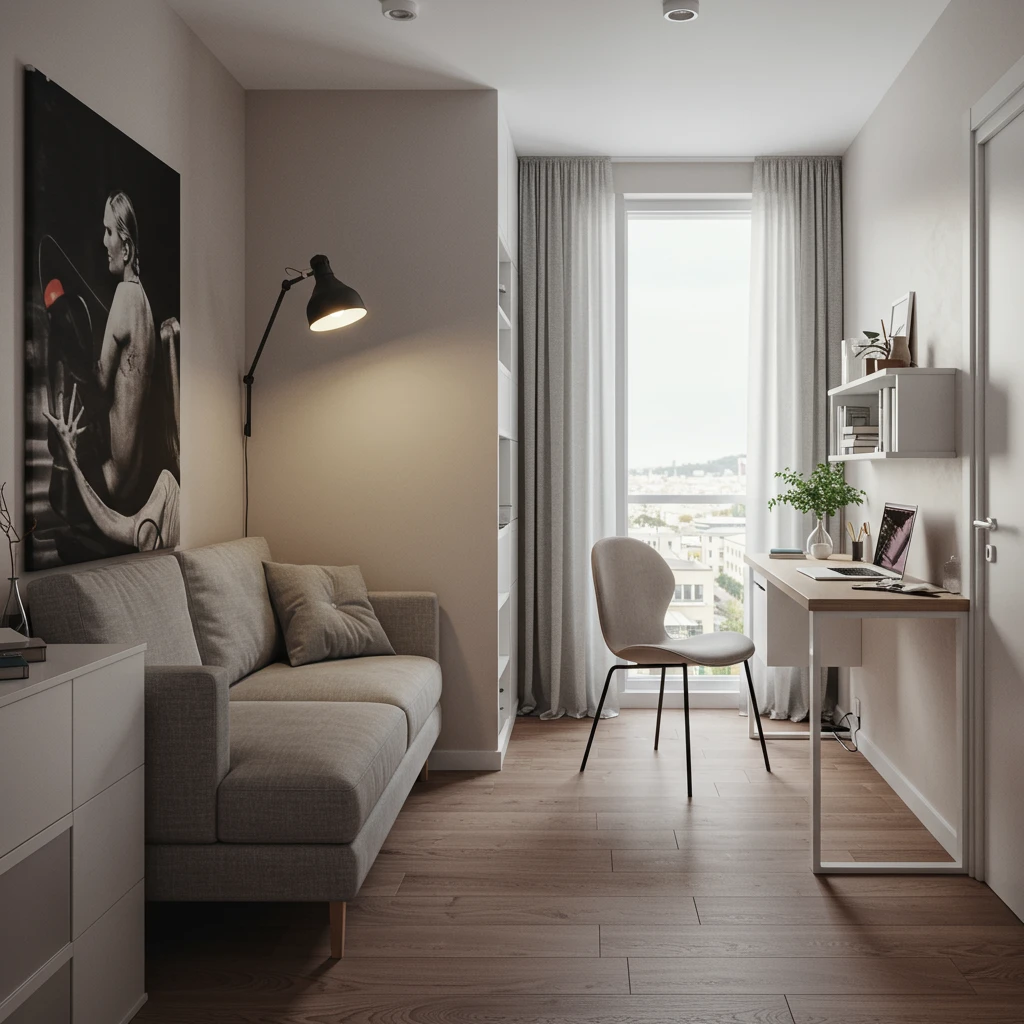
12. Place a Desk Behind the Sofa
For many people living in apartments, the long living room also needs to function as a home office. Instead of trying to cram a desk into a corner, a brilliantly creative and space-saving layout is to place a slim desk directly against the back of your floating sofa. This layout, celebrated by the experts at The Spruce, uses the sofa to create a natural and seamless division between your living zone and your work zone.
This works perfectly with the “floating sofa” layout (Idea #3). It keeps your workspace out of the main line of sight, which can help you to mentally “switch off” from work when you’re relaxing on the sofa. The key is to choose a desk that is the right height and has a slim profile.
- Function: Creates a defined, out-of-the-way home office nook.
- Placement: The desk should be roughly the same height as the back of the sofa.
- Keep it Tidy: Since it’s in your main living space, good cord management and a tidy desktop are essential.
For a cohesive enhancement, place a stylish, modern table lamp on your desk that provides good task lighting for work but also contributes to the overall, ambient, layered lighting scheme of your living room in the evening.
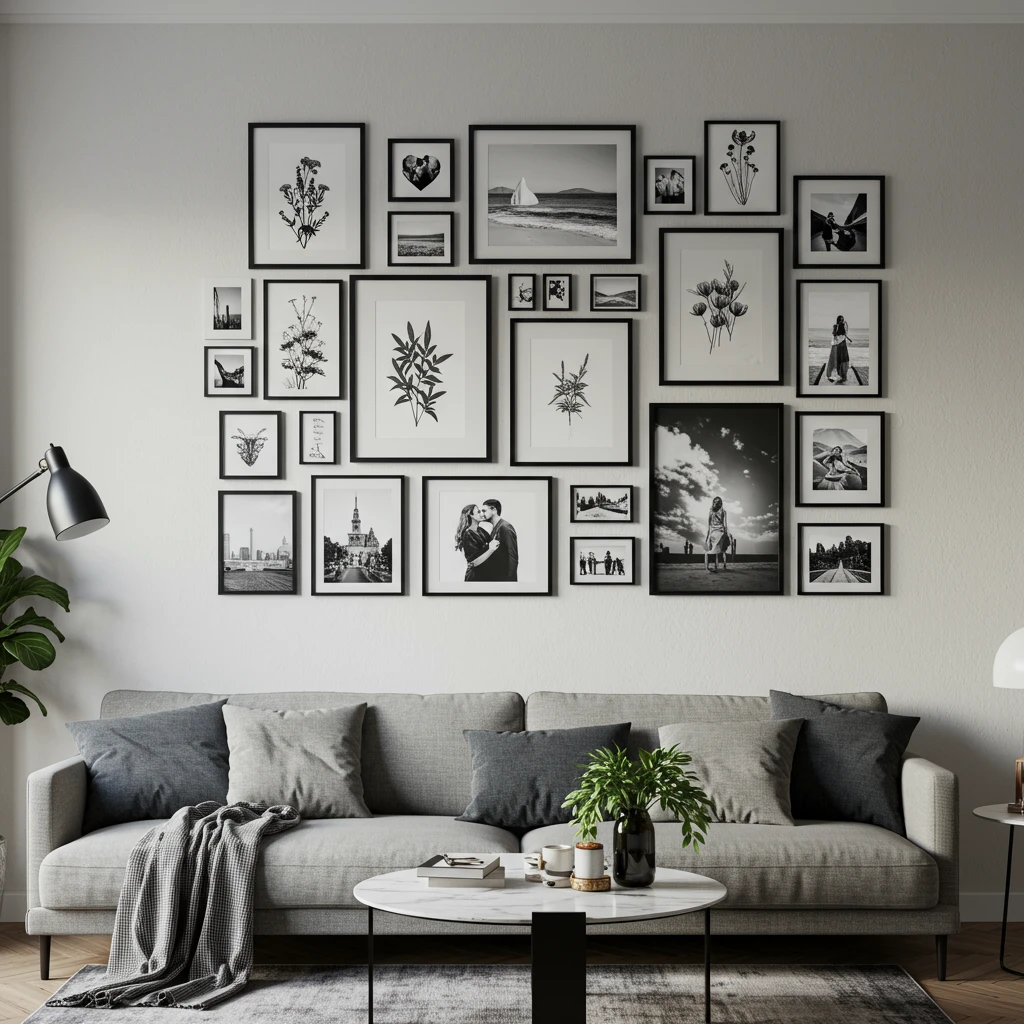
13. Create a Damage-Free Gallery Wall
Adding personal art is key to making a rental apartment feel like home, but the fear of damaging the walls can be a major hurdle. A large gallery wall is a fantastic way to fill a long wall and add a huge amount of personality, and it can be done in a completely damage-free way. The key is to use lightweight frames and high-quality, removable adhesive strips.
I love this solution for my renting clients because it allows them to make a huge, personal statement without risking their security deposit. A gallery wall can also be a great way to incorporate a television; by surrounding your TV with a collection of framed art, you can make it feel less like a black box and more like a part of the overall design.
- Lightweight Frames: Choose frames with acrylic or plexiglass instead of heavy, breakable glass.
- Adhesive Strips: Use a reputable brand like 3M Command Strips and make sure to use the correct size for the weight of each frame.
- Mix and Match: A collection of art prints, personal photos, and even a small, lightweight, woven object can create a beautiful, eclectic mix.
For an enhancement that is even more damage-free, use a set of floating picture ledges (Idea #4). You only have to make a few holes to hang the ledges, and then you can lean and layer dozens of different pieces of art, changing them as often as you like.
14. The Symmetrical Layout with Two Loveseats
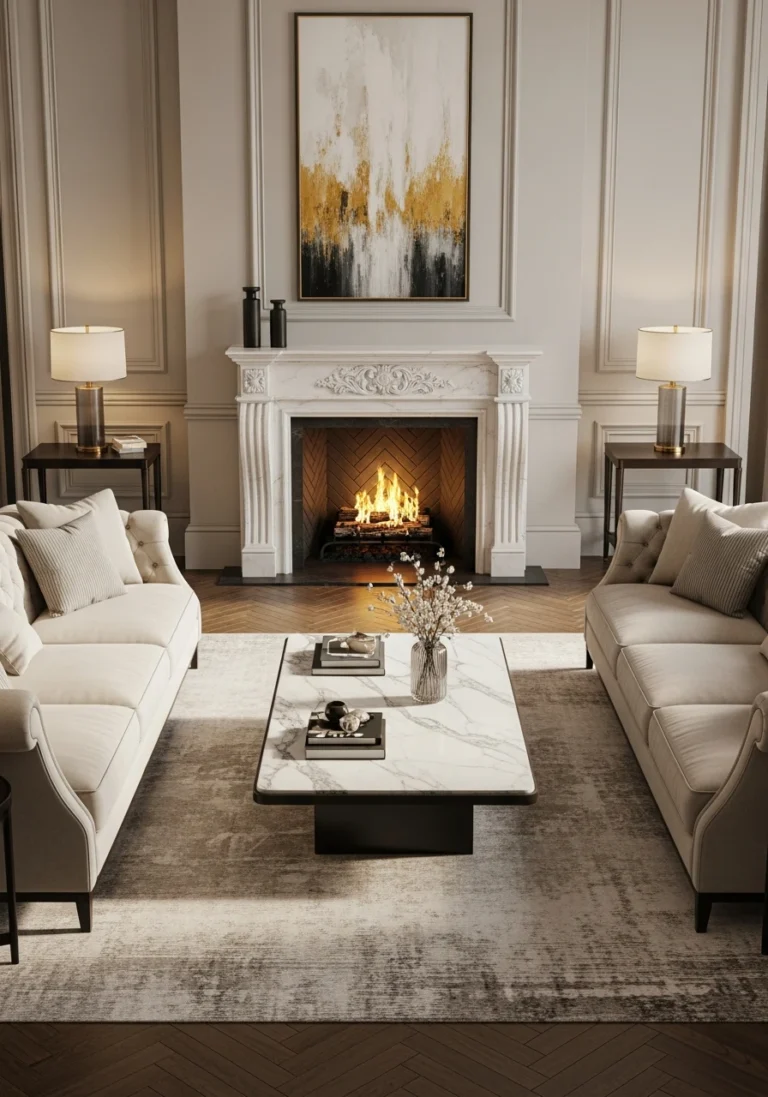
For a more formal and balanced approach in a long apartment living room, consider a symmetrical layout using two matching loveseats or small-scale sofas. This classic arrangement can create a very elegant and defined conversation zone and naturally creates two clear walkways on either side of the seating group, which is great for managing traffic flow in a narrow space.
This layout is a great way to make a long room feel more like a well-proportioned, square room. I recommend using loveseats or smaller-scale “apartment sofas” for this, as two full-sized sofas can often be too bulky and can completely block the flow in a narrow apartment. The two loveseats should be placed directly facing each other, perpendicular to the long walls, with a coffee table in between.
- Best For: Creating a formal, balanced feel and clear traffic paths.
- Furniture: Use two identical, smaller-scale sofas or loveseats.
- Effect: Creates a very elegant, balanced, and conversation-focused layout.
To enhance this layout, place a long, slim console table or a low bookcase against the wall behind one of the loveseats. This will add a useful surface and some extra storage without taking up too much of your precious floor space.

15. A Layered Lighting Scheme
In a long apartment living room, a single, central ceiling light will leave the ends of the room feeling dark and cavernous. A smart, layered lighting scheme is absolutely essential for making the entire space feel warm, bright, and inviting. This means using multiple sources of light at different heights to create a balanced and functional ambiance throughout the length of the room.
This is a non-negotiable step for a successful design. I always plan for at least three to five points of light in a long room.
- Ambient Light: A main ceiling fixture on a dimmer.
- Task Light: A floor lamp next to a chair for reading at one end of the room.
- Accent Light: A pair of stylish table lamps on a console table behind the sofa in the middle of the room.
- Focal Light: A small picture light over a piece of art at the other end of the room.
- Warm Bulbs: Use “warm white” bulbs (around 2700K) to create a cozy, golden glow.
For an enhancement that is perfect for a rental, use plug-in wall sconces. These can be mounted on the wall to provide a beautiful, ambient light source without requiring any expensive or permanent electrical work.

Conclusion
A long apartment living room, while presenting a unique set of challenges, is a canvas for some of the most creative and smart design solutions. As we’ve explored through these 15 ideas, the key to success is to embrace the room’s length by creating functional zones and to use clever furniture arrangements and visual tricks to make the space feel more balanced, open, and inviting.
By floating your furniture, going vertical with your storage, and using rugs to define your spaces, you can conquer the “bowling alley” effect and craft a multi-functional and stylish home.
Frequently Asked Questions (FAQs)
How do you arrange furniture in a long, narrow apartment living room?
The best strategy is to create two or more distinct zones (e.g., a TV zone and a dining/office zone). “Float” your main sofa away from the walls to create a clear traffic path along one side. Use an area rug to anchor and define your main seating area.
How do you make a long living room not look like a hallway?
Break up the long, straight lines. Use a see-through divider like an open bookcase. Incorporate round shapes with a circular coffee table or rug. Create vertical interest with tall, narrow bookshelves or by hanging your curtains very high. A large mirror on a long wall can also create an illusion of width.
How do you create zones in a small open-plan apartment?
The easiest and most effective ways are to use area rugs to define each functional space (living, dining). The back of a sofa can also act as a natural divider. A slim console table behind the sofa can further solidify this border.
What size sofa is best for a narrow living room?
Look for an “apartment-scale” sofa or sectional. These pieces are designed with a shallower seat depth and a slimmer overall profile, so they provide comfortable seating without taking up too much of the room’s width.
I’m a renter. What are the best damage-free ideas for a long living room?
A well-placed area rug, a “floating” sofa layout, and a large, leaning floor mirror are all powerful, non-permanent layout solutions. For the walls, use damage-free adhesive strips to create a gallery wall, or use picture ledges to minimize the number of holes you need to make.
Should all the furniture be pushed against the walls?
No, this is one of the biggest mistakes in a long, narrow room. Pushing everything against the walls actually emphasizes the narrow, corridor-like shape. Pulling your furniture together into a cozy, “floating” conversation group in the middle of the room will make the space feel much more intimate and well-designed.
How much space do I need to leave for a walkway?
A main traffic path in a living room should be at least 30 to 36 inches wide to allow for comfortable, easy movement through the space.