Are you tired of the endless cycle of mowing, watering, and fertilizing a traditional lawn? Are you looking for no-grass backyard ideas that are lower in maintenance, more sustainable, and packed with style? You’re in the right place. The concept of a beautiful backyard is evolving beyond the classic green lawn, moving towards more functional, personal, and eco-conscious outdoor living spaces. A grass-free backyard can be an incredible asset, transforming a high-maintenance patch of land into a stunning, multi-purpose oasis for dining, entertaining, and relaxing.
This guide is designed to be your starting point, offering 15 easy and inspiring ways to design a stunning no-grass backyard. From stylish hardscaping to lush, low-water plantings, these ideas will help you create a beautiful, personalized, and wonderfully low-maintenance outdoor sanctuary.
1. Lay a Foundation with a Decomposed Granite Courtyard
One of the most stylish and practical alternatives to grass is a patio or courtyard made from decomposed granite (DG). This material, essentially a fine, crushed rock, packs down to create a firm yet permeable surface that has a soft, natural, and slightly rustic feel. It’s the material that gives European courtyards and park pathways their timeless charm. A DG patio is significantly more affordable and easier for a DIYer to install than concrete or pavers.
I often recommend stabilized DG for my clients, which has a resin binder mixed in that helps it harden for a more durable, less dusty surface perfect for pathways and seating areas. It creates a beautiful, neutral canvas that allows your furniture and plants to take center stage.
- Installation: Mark your area, excavate a few inches, install edging, lay down a base layer of crushed rock, and then compact a 3-4 inch layer of DG on top.
- Benefits: Affordable, permeable (allows water to drain through), and has a soft, natural look.
- Style: Perfect for Mediterranean, rustic, or minimalist modern aesthetics.
For an enhancement, plant a few hardy, drought-tolerant groundcover plants like creeping thyme in small pockets within your DG patio. This will soften the edges and release a beautiful scent when you walk on it.
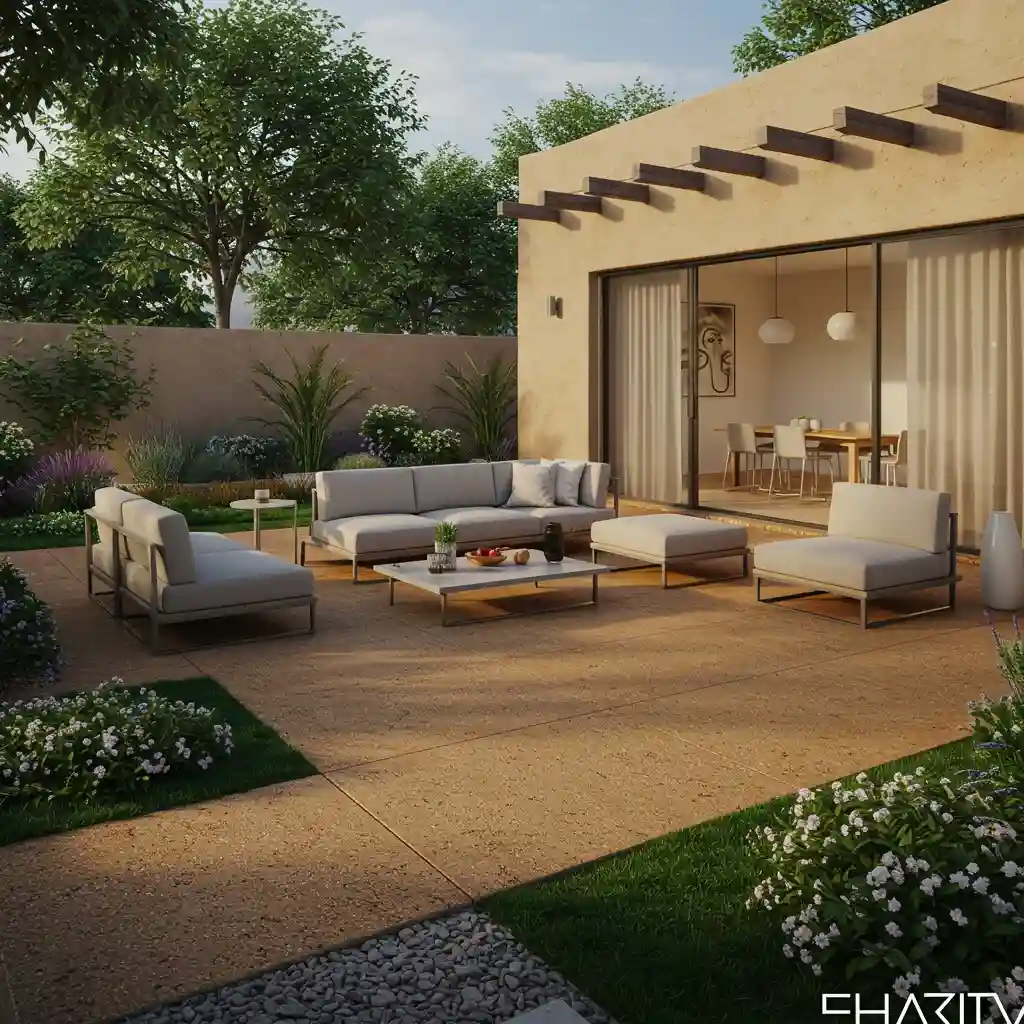
alt text: A beautiful, no-grass backyard featuring a large decomposed granite patio and modern furniture.
2. Create an Expansive Paver or Flagstone Patio
For a more solid and structured feel, replacing your lawn with a large paver or flagstone patio is a classic and beautiful choice. This immediately transforms your backyard from a simple yard into a true outdoor living and dining room. Extending your hardscaping creates a durable, mud-free surface for furniture and entertaining, drastically reducing yard maintenance.
You can choose from a huge variety of materials. Concrete pavers offer a clean, modern, and budget-friendly option, available in many sizes and colors. Natural flagstone, with its irregular shapes and beautiful color variations, provides a more organic and rustic look. I love working with clients to create a layout that feels both functional and beautiful.
- Layout: A simple grid or running bond pattern with concrete pavers looks modern. An irregular “crazy paving” pattern with flagstone is more rustic.
- Installation: Requires a proper base of compacted gravel and sand for a long-lasting, level surface.
- Functionality: Provides a stable, all-weather surface for dining sets, lounge furniture, and fire pits.
As an enhancement, leave small gaps (about 1-2 inches wide) between your pavers or flagstones and plant a tough, low-growing groundcover like mondo grass or Irish moss in between. This softens the look of the hardscape and helps with drainage.
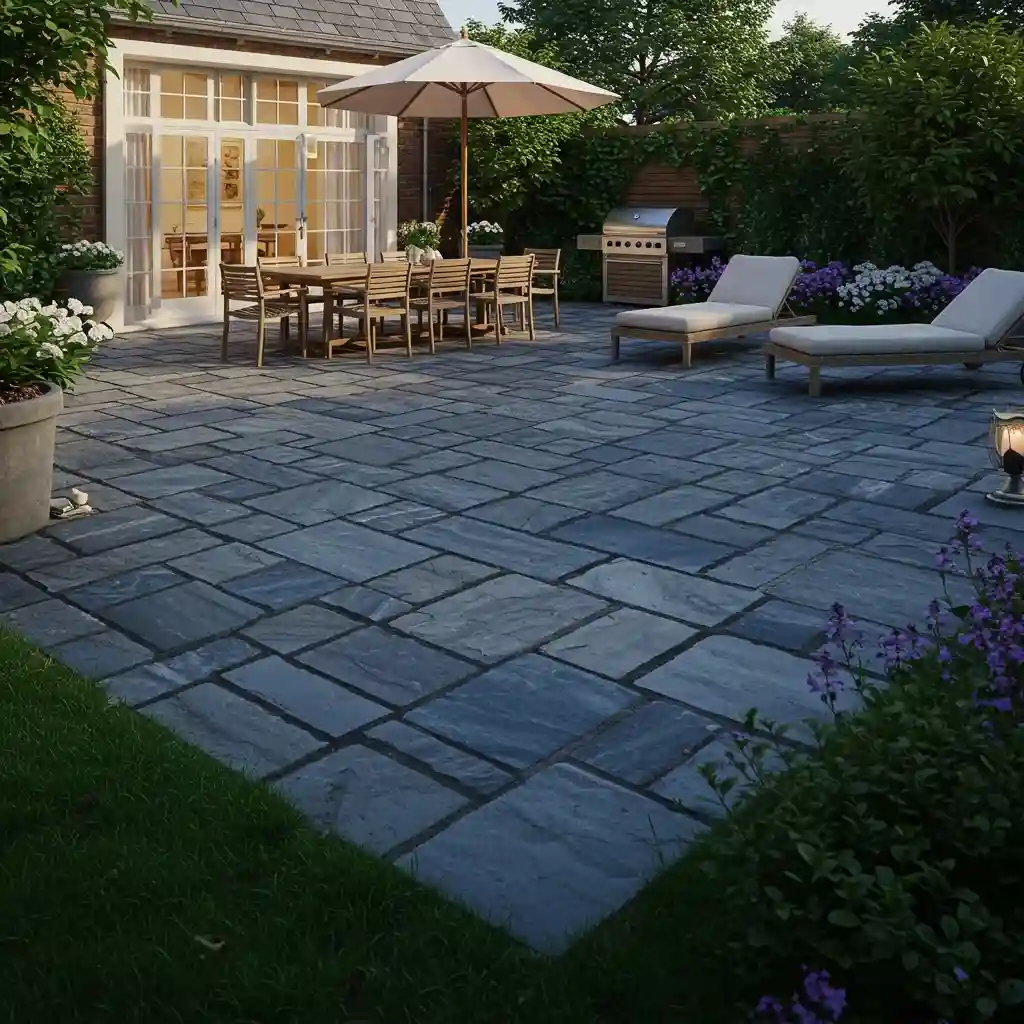
alt text: An elegant, no-grass backyard with a large flagstone patio for dining and lounging.
3. Use Pea Gravel for a Soft, Textured Surface
For a budget-friendly, easy-to-install, and charmingly casual surface, a pea gravel patio is an excellent no-grass solution. Pea gravel consists of small, smooth, rounded stones that create a soft, textural surface with a satisfying crunch underfoot. It’s perfect for creating a relaxed, informal seating area, a path, or filling a large area of your yard.
This is a fantastic DIY project. The most crucial step is proper installation of a sturdy landscape edging to keep the gravel contained and a weed barrier fabric underneath to prevent weeds. I often suggest this for secondary seating areas or fire pit zones.
- Affordable: One of the least expensive materials for creating a large outdoor surface.
- DIY-Friendly: Easy for a beginner to install over a weekend.
- Aesthetic: Creates a soft, informal, and slightly rustic or coastal vibe.
For an enhancement, add a few large, flat flagstones within the pea gravel area to create stable, solid spots for the legs of your chairs and tables, preventing them from sinking into the stones.
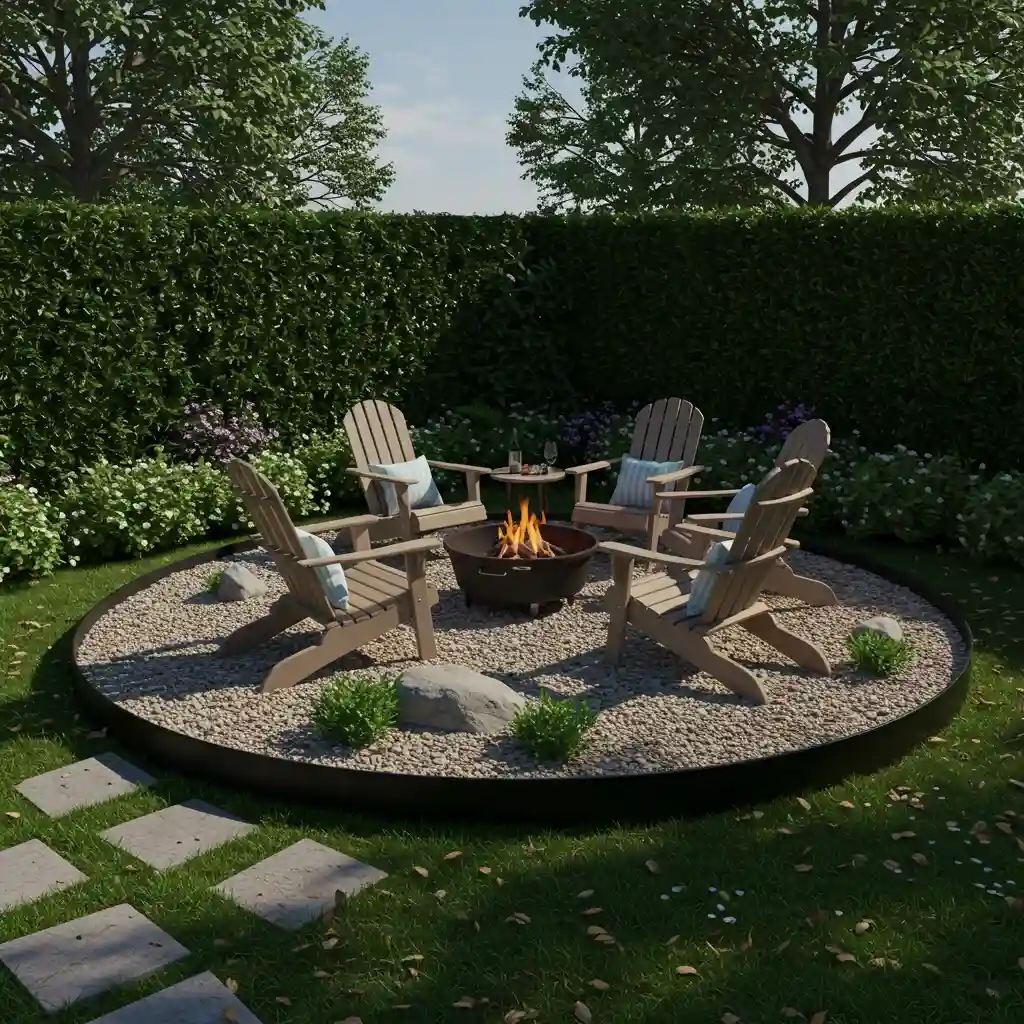
alt text: A cozy, no-grass backyard fire pit area set on a bed of pea gravel.
4. Build a Low-Level Deck
A deck is a fantastic way to create a defined outdoor living space and is a classic alternative to a lawn. For an easy, modern, and often more budget-friendly approach, consider a low-level or “floating” deck that sits just a few inches off the ground. These decks often don’t require extensive railings or complex footings (depending on local codes), making them a more achievable DIY project.
A deck provides a warm, comfortable surface underfoot and can make a small or sloped yard feel more level and usable. I love designing decks with interesting patterns, like laying the boards on a diagonal or creating a simple picture-frame border. This simple detail can make a standard deck look custom and high-end.
- Material: Pressure-treated pine is the most affordable. Cedar, redwood, or composite decking are more expensive but longer-lasting options.
- Design: A simple, square or rectangular floating deck can be a great beginner project.
- Effect: Creates a warm, defined “room” and makes the yard feel more like an extension of the house.
To enhance your deck, build a simple, low bench into one or two sides of the deck itself. This provides space-saving, integrated seating and helps to define the edge of your outdoor room.
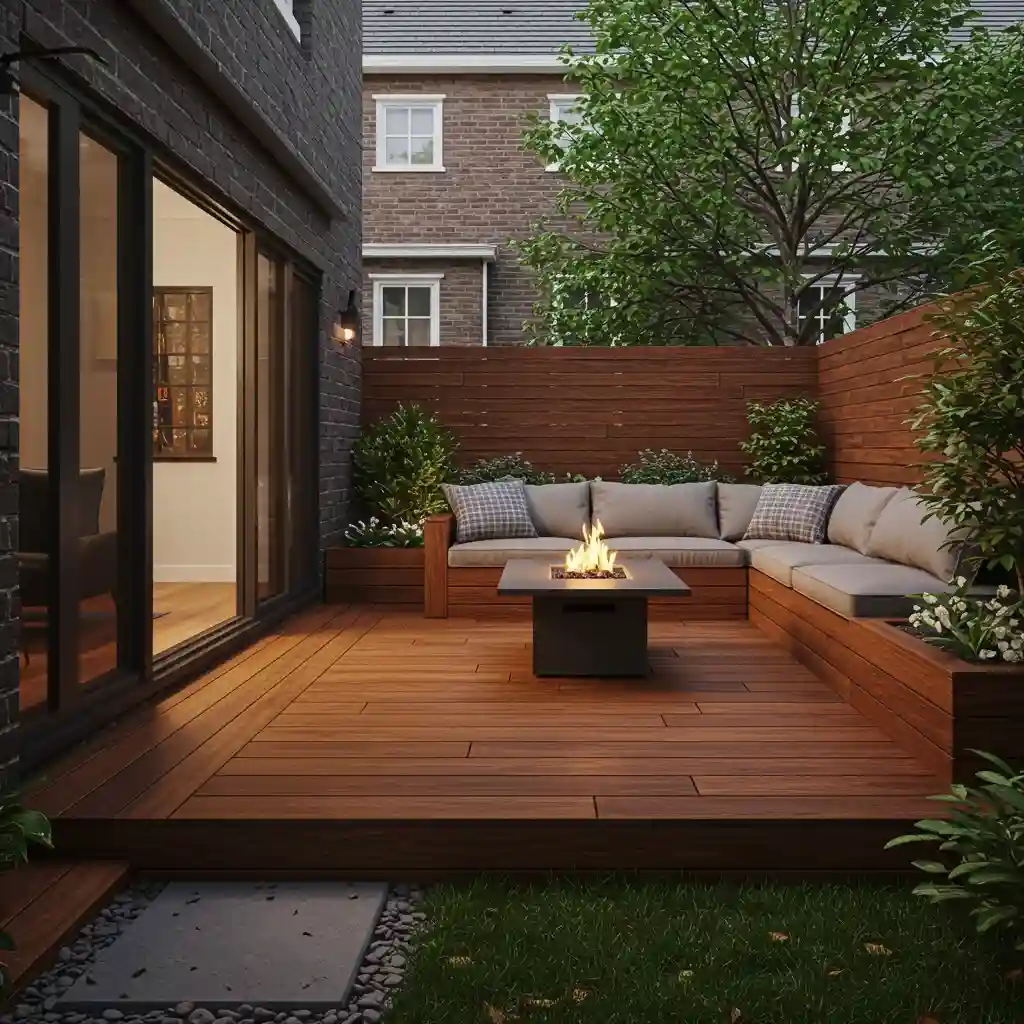
alt text: A modern, no-grass backyard featuring a low-level wooden deck as the main surface.
5. Plant a Lush Groundcover “Carpet”
If you love the look of a green carpet but hate the maintenance of a traditional lawn, a hardy, low-growing groundcover is your perfect solution. There are many beautiful, spreading perennial plants that can create a dense, green mat that suppresses weeds, requires little to no mowing, and often uses far less water than turfgrass. It’s a living, breathing alternative to a lawn.
The key is to choose a groundcover that is well-suited to your climate and sun exposure, and one that can handle a bit of foot traffic if needed. For sunny areas, creeping thyme is a fantastic choice that releases a beautiful scent when walked on. For shady spots, sweet woodruff or certain varieties of moss can create a lush, woodland feel.
- Sun-loving options: Creeping Thyme, Sedum, Dwarf Mondo Grass.
- Shade-loving options: Sweet Woodruff, Irish Moss, Ajuga.
- Benefits: Low-maintenance, often drought-tolerant, and provides a soft, green look.
As an enhancement, intersperse your groundcover with spring-flowering bulbs, like crocuses or grape hyacinths. In the spring, you’ll be treated to a beautiful, jewel-like display of flowers popping up through your green carpet.
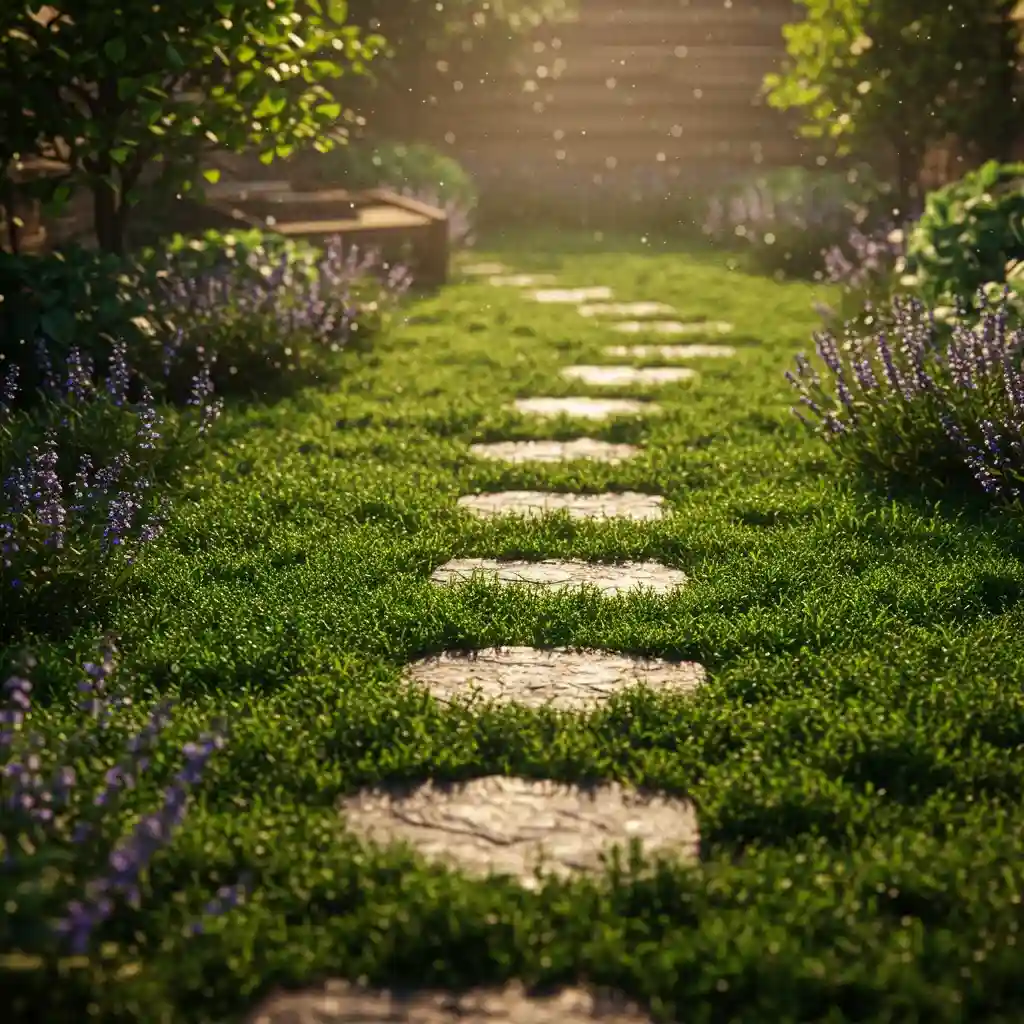
alt text: A beautiful, lawn-free backyard with a lush carpet of creeping thyme as a grass alternative.
6. Design with Masses of Ornamental Grasses
For a dramatic, modern, and incredibly low-maintenance no-grass backyard, consider designing with large masses of ornamental grasses. These plants are prized for their beautiful form, textural foliage, and graceful movement in the breeze. A garden composed primarily of different types of ornamental grasses can be a stunning, four-season spectacle, with beautiful foliage in the summer and striking, dried seed heads that provide interest all winter long.
I love creating designs that feel like a modern, stylized prairie. The key, as taught by landscape masters like Piet Oudolf, is to plant in large, sweeping drifts or bold, geometric blocks of a single type of grass. Choose a few different varieties with varying heights, colors (from blue-greens to reddish-browns), and textures.
- Easy choices for beginners: Fountain Grass (Pennisetum), Blue Fescue (Festuca glauca), Karl Foerster Feather Reed Grass (Calamagrostis).
- Design: Plant in large, cohesive groups for the most impact.
- Maintenance: Most ornamental grasses just need to be cut back once a year in late winter or early spring.
For an enhancement, plant a scattering of tall, airy, see-through perennials, like Verbena bonariensis or Gaura, amongst your grasses. The delicate flowers will appear to float beautifully above the textural foliage of the grasses.
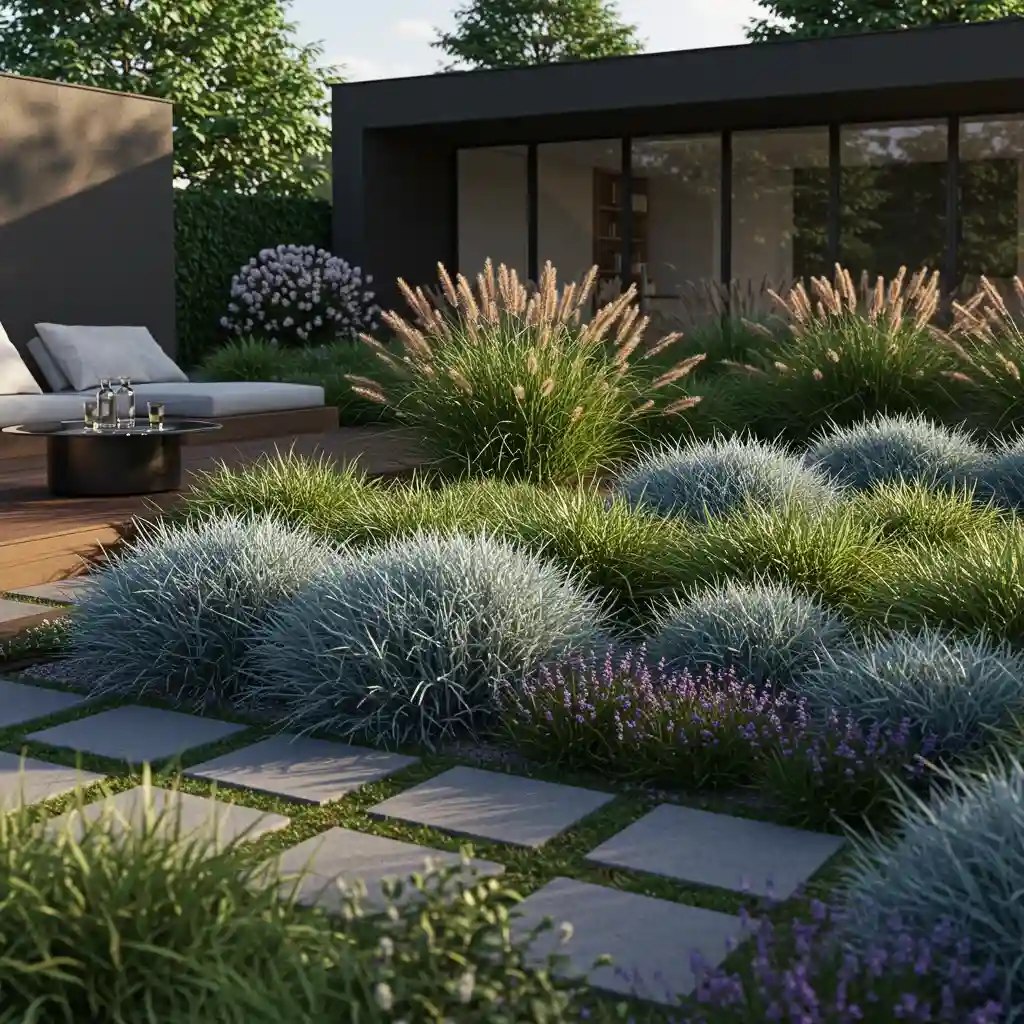
alt text: A stunning, low-maintenance, no-grass backyard designed with large masses of different ornamental grasses.
7. Create Abundant, Layered Garden Beds
Instead of a lawn, devote your entire backyard to deep, lush, layered garden beds filled with a mix of shrubs, perennials, and flowers. A “maximalist” garden approach can create a stunning, immersive, and surprisingly low-maintenance oasis. The key is to plant densely. When plants are planted closely together, they shade the soil, which helps retain moisture and suppresses weeds, ultimately reducing your workload.
I advise my clients to think in layers, just like a natural forest. Place taller shrubs or ornamental grasses at the back of the bed, medium-sized perennials in the middle, and a low-growing groundcover or border plants at the very front. This creates a rich, full, and visually interesting composition.
- Planting Strategy: Plant densely to out-compete weeds and conserve water.
- Layering: Use tall plants in the back, medium in the middle, and low in the front.
- Choose Hardy Plants: Select a mix of shrubs and perennials that are well-suited to your climate for a long-lasting garden.
For a beginner-friendly enhancement, focus on a simple color palette of just two or three colors (e.g., purples, pinks, and silver) plus green. This will make your lush garden feel cohesive and intentional, not chaotic.
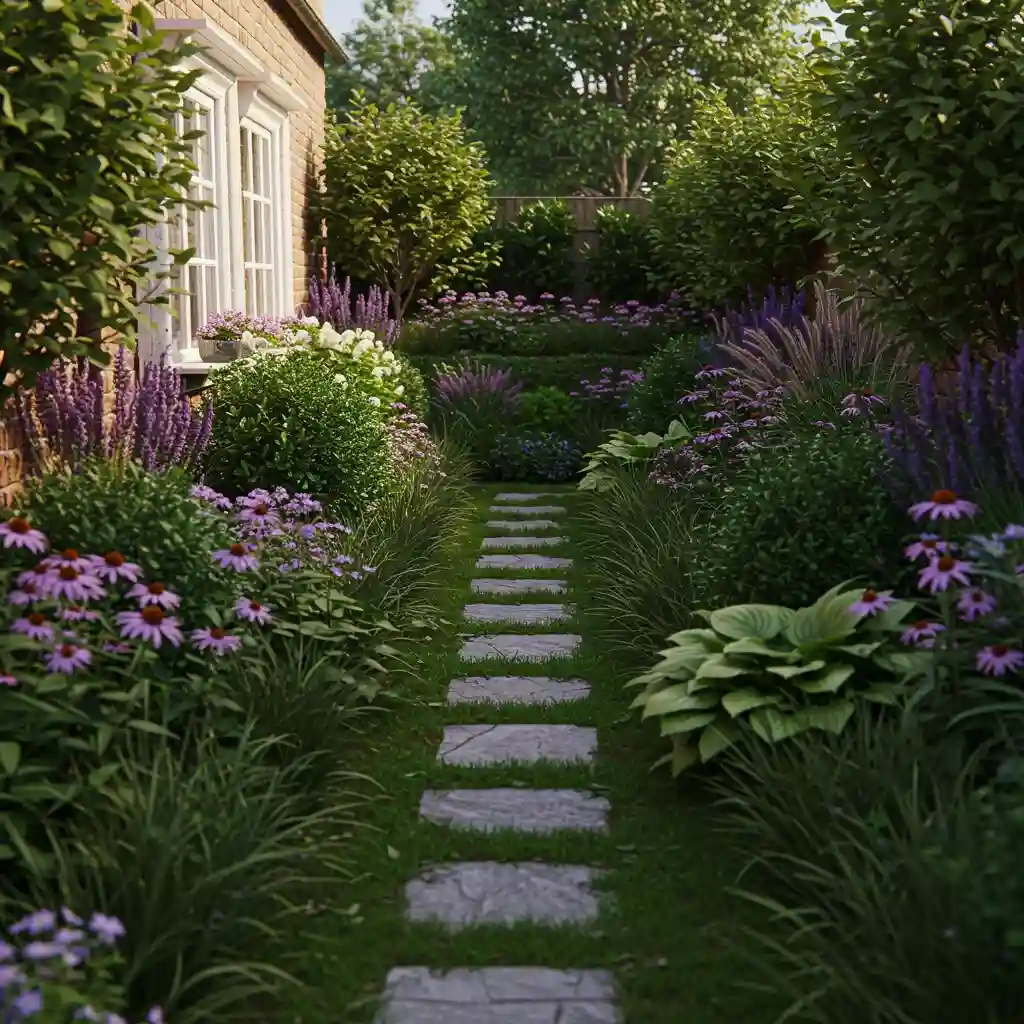
alt text: A lush, no-grass backyard featuring deep, layered garden beds filled with perennials and shrubs.
8. Incorporate Raised Beds for Flowers or Veggies
Raised garden beds are a fantastic, easy way to add structure and function to a no-grass backyard. They create instant, neat, and contained planting areas with clean, defined edges. They are perfect for creating a designated vegetable garden, a cut-flower garden, or simply for adding height and dimension to your landscape. Raised beds are a beginner’s best friend because you can fill them with perfect, high-quality soil, and their height makes them much easier to plant, weed, and water.
You can build simple raised beds yourself from cedar or redwood planks, or you can buy easy-to-assemble kits made of wood, composite, or even stylish metal. I love the organized, geometric look of a series of raised beds in a gravel or DG courtyard.
- Benefits: Better soil, good drainage, less bending over, and fewer weeds.
- Materials: Cedar, recycled composite, or galvanized metal are popular choices.
- Use: Perfect for vegetables, herbs, or a dedicated cut-flower garden.
For an attractive and functional enhancement, design your raised beds to be about 18 inches high and cap them with a wide, flat board. This creates a perfect, informal bench for sitting while you’re gardening.
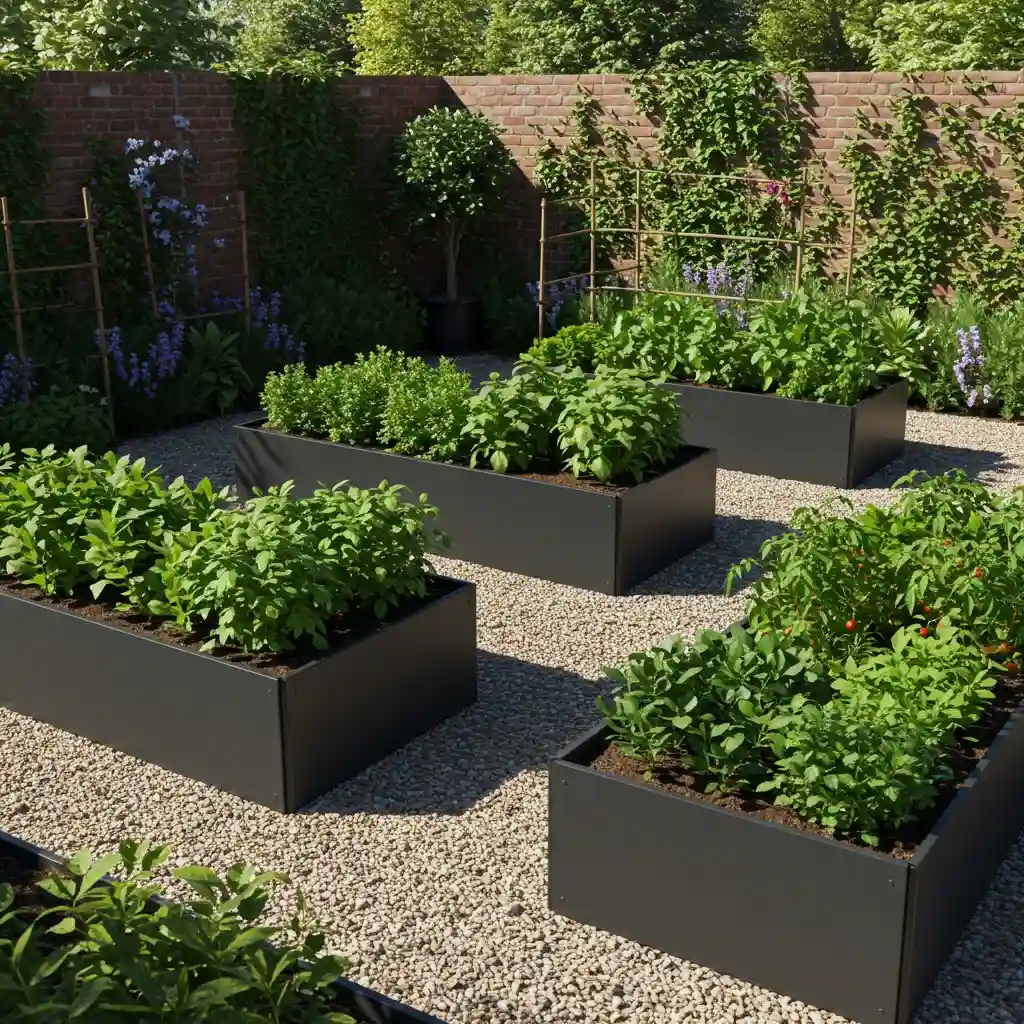
alt text: A neat and organized, no-grass backyard with modern raised garden beds for vegetable gardening.
9. Go All-In with Container Gardening
For the ultimate in flexibility and for very small spaces like courtyards or patios, you can completely forgo in-ground planting and create your entire garden in containers. A well-curated collection of pots, planters, and window boxes can be arranged to create a lush, layered, and surprisingly abundant oasis. This approach is perfect for renters, as you can take your entire garden with you when you move.
I love the creative freedom that container gardening offers. You can treat your planters like mobile design elements, moving them around to create different compositions. The key to a successful all-container garden is to think in terms of variety and scale. Use a mix of very large pots to anchor the design, medium pots to fill in the middle, and small pots for accents.
- Variety: Use pots of different sizes, shapes, materials, and colors for an interesting, collected look.
- Grouping: Cluster your pots together in groups of three or five to create a more impactful display.
- Watering: Be mindful that container gardens dry out much faster than in-ground gardens and will need more frequent watering.
As an enhancement, use a few tall, narrow, vertical planters in your container collection. These can be used to grow climbing plants like peas or beans, or simply to add a strong vertical element to your design, drawing the eye upward.
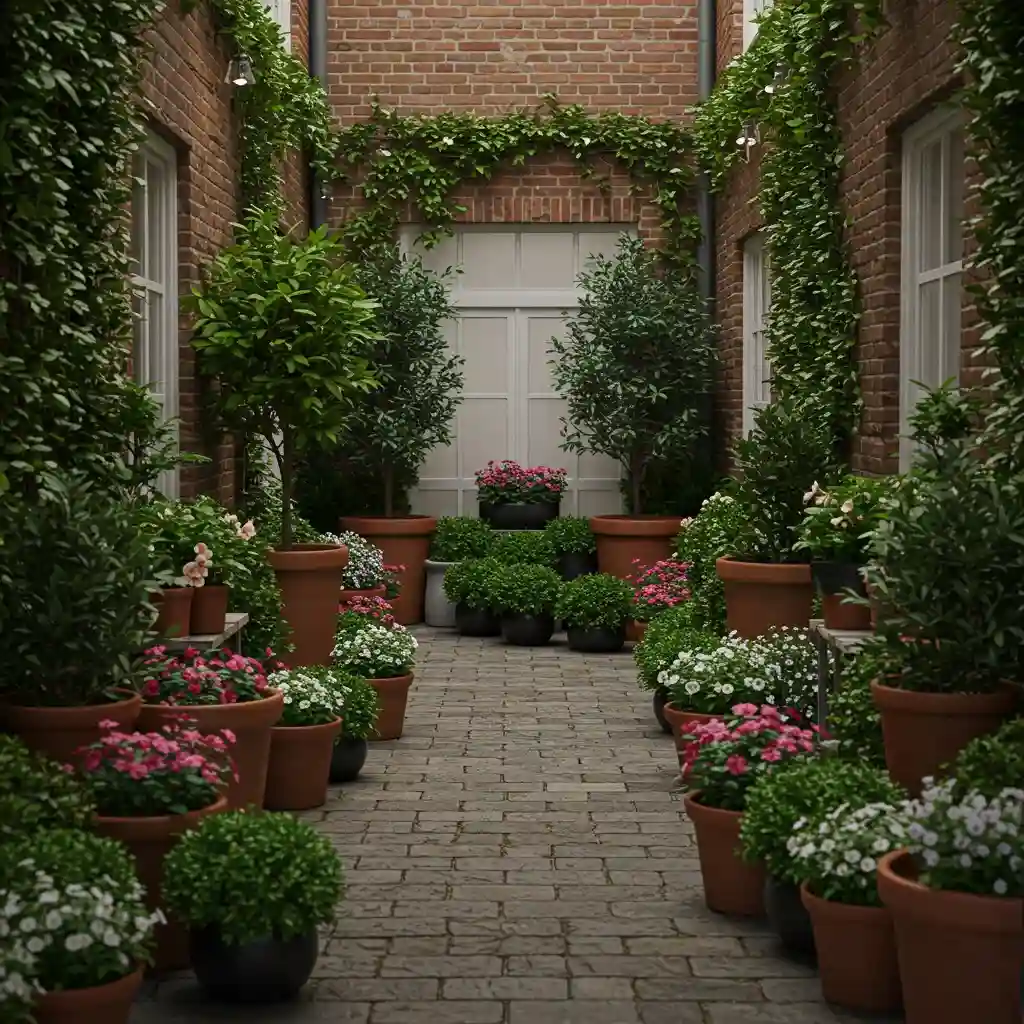
alt text: A lush, no-grass backyard oasis created entirely with a variety of beautiful container plants.
10. Create Winding Pathways
In a no-grass backyard, the pathways you create are a major design element. Instead of a single, straight path, designing a series of gently winding pathways can make a small space feel much larger and more interesting. A curved path is a classic design trick because you can’t see the end from the beginning, which creates a sense of mystery and journey, encouraging you to explore.
You can create your pathways from a variety of easy, beginner-friendly materials. A simple path of shredded bark mulch is soft, natural, and inexpensive. A pea gravel path has a charming, rustic crunch. A path made of simple stepping stones set into a bed of groundcover feels informal and integrated. The key is to make the curves long and graceful, not tight and squiggly.
- Materials: Mulch, pea gravel, or stepping stones are great for beginners.
- Design: Create long, sweeping curves rather than tight, jerky turns.
- Function: Connect different “zones” of your backyard, like your patio and a fire pit area.
For a beautiful enhancement, line the edges of your winding path with low-voltage or solar-powered path lights. At night, the lights will accentuate the beautiful curve of your path and provide safe, gentle illumination.
alt text: A winding mulch pathway creating a sense of journey in a no-grass backyard filled with garden beds.
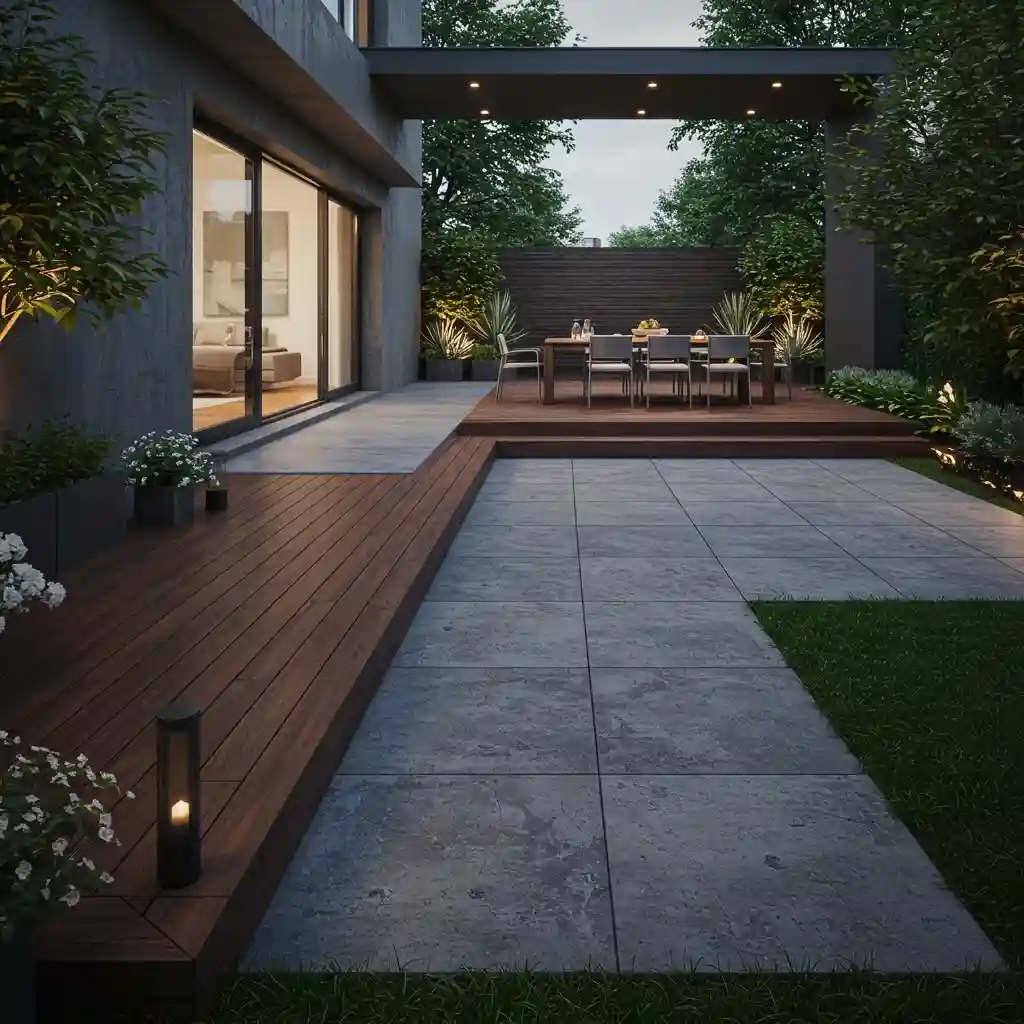
11. Combine Hardscape Materials for a Zoned Look
For a sophisticated and dynamic no-grass backyard, consider using a combination of different hardscape materials to define different zones. Instead of one, monotonous surface, using two or three different materials can create a lot of visual interest and clearly delineate different areas for different activities.
For example, you could have a main patio area made of concrete pavers for your dining table, a connecting pathway made of pea gravel, and a separate, smaller seating area made of a low-profile wooden deck. This is a technique I use often to break up a space and make it feel more custom and thoughtfully designed. The transitions between the materials create interesting lines and textures.
- Define Zones: Use one material for the dining area, another for the lounge area, etc.
- Material Combinations: Wood and concrete, pavers and gravel, or stone and decomposed granite all work beautifully together.
- Create Visual Interest: The contrast in color and texture between the materials is a powerful design element.
As an enhancement, use a slim, modern metal or stone edging to create a crisp, clean line between your different hardscape materials. This will make the transitions feel very sharp, intentional, and professional.
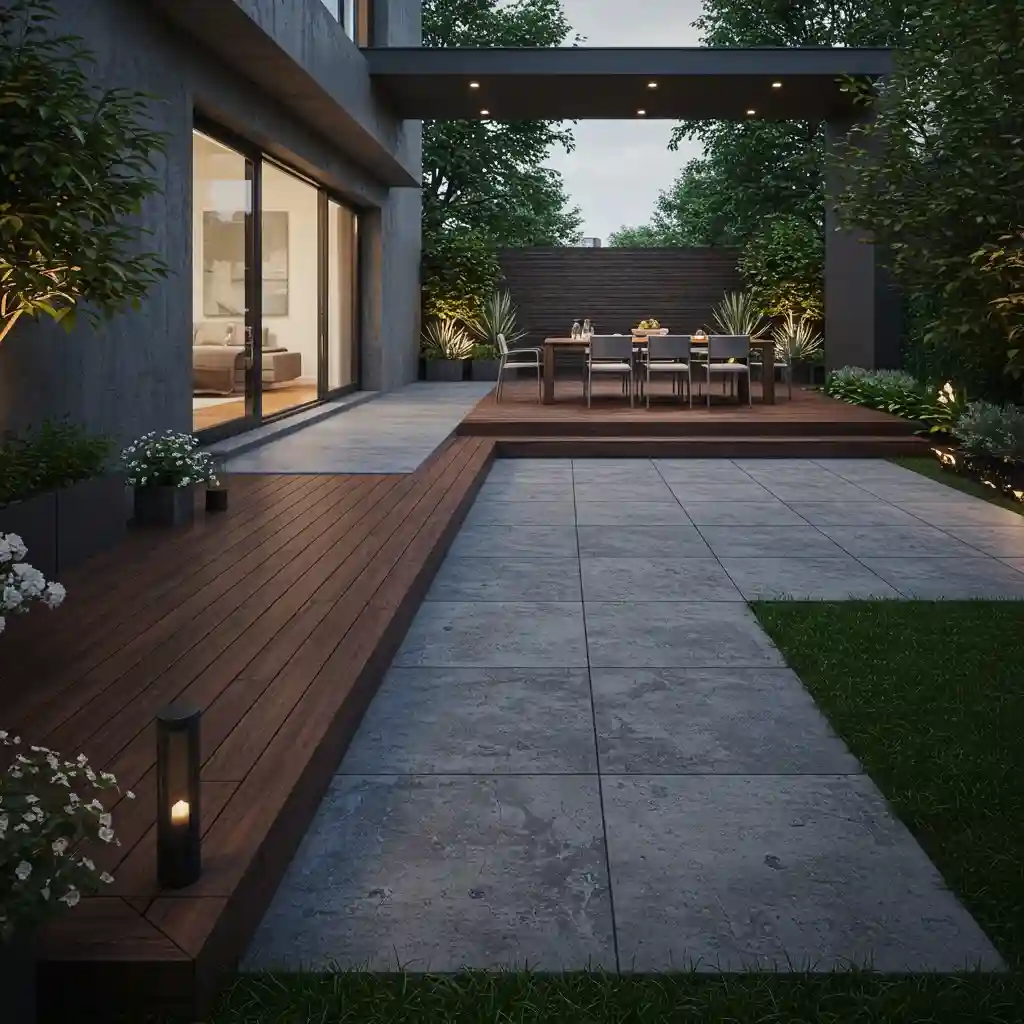
alt text: A modern, no-grass backyard with distinct zones created by combining a wooden deck and a concrete paver patio.
12. Add a Simple Fire Pit Area
A fire pit is a fantastic focal point for a no-grass backyard and is a natural magnet for gathering. It can extend the use of your backyard into the cooler evenings and shoulder seasons, providing warmth and a wonderful, cozy ambiance. Creating a simple fire pit area is an easy and relatively inexpensive project for a beginner.
The easiest and safest way to do this is to create a dedicated patio area for your fire pit using a non-flammable material like pea gravel or concrete pavers. Then, you can simply place a portable, metal fire pit bowl in the center. Arrange a few comfortable chairs around the fire pit, and you have an instant, inviting gathering spot.
- Safety First: Always place your fire pit on a non-flammable surface, at a safe distance from your house, fences, and any overhanging trees.
- Seating: Adirondack chairs are a classic, comfortable choice.
- Fuel: A wood-burning fire pit provides a rustic experience, while a propane-powered one is cleaner and easier to use.
For a budget-friendly and easy enhancement, instead of buying chairs, create simple, rustic seating by arranging a few large, smooth logs or stumps around your fire pit.
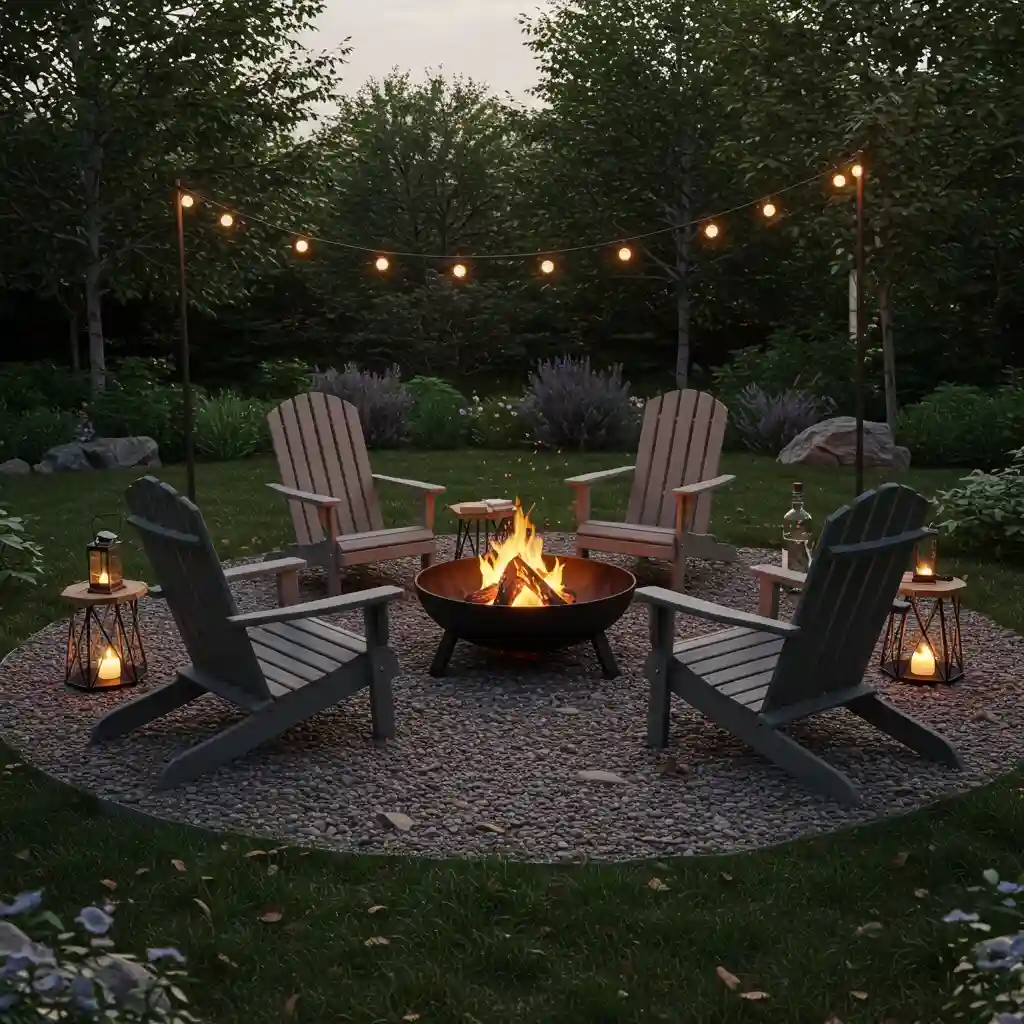
alt text: A simple and inviting, no-grass backyard fire pit area with a metal fire bowl and Adirondack chairs on a gravel patio.
13. Use Boulders and Rocks for Natural Art
For a very low-maintenance and high-impact design element, incorporate a few large boulders or rocks into your no-grass landscape. Boulders act as natural, sculptural art pieces. They add a sense of age, permanence, and texture to a garden and can be used to create focal points, to add height and dimension, or even to serve as informal seating.
The key to making boulders look natural is to choose rocks that are native to your region and to set them into the ground so they look like they have always been there. I always advise my clients to bury at least one-third of the boulder below the ground. Grouping boulders of different sizes together in a cluster of three or five often looks more natural than a single, isolated rock.
- Source Locally: Choose rocks that are common in your local area for the most natural look.
- Group Them: Arrange boulders in natural-looking clusters of odd numbers.
- Set Them Properly: Bury the bottom third of the boulder to make it look like it’s emerging from the earth.
As an enhancement, plant a few low-growing, cascading plants, like a creeping sedum or a small, ornamental grass, at the base of your boulders. This will help to soften the edges and make them look more integrated into the landscape.
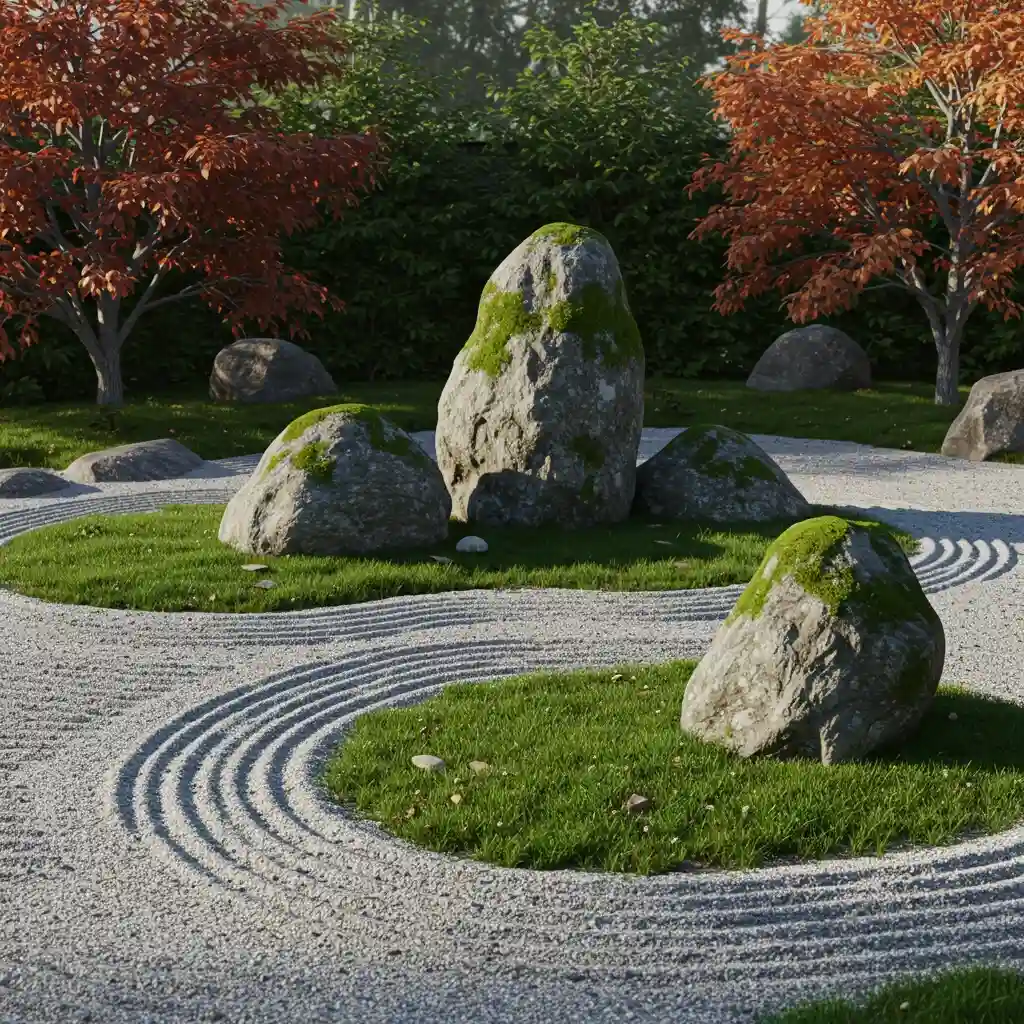
alt text: A tranquil, no-grass backyard featuring a sculptural arrangement of large boulders in a bed of raked gravel.
14. Incorporate Artificial Turf for a “Green” Look
For homeowners who love the lush, green look of a lawn but despise the constant maintenance, modern artificial turf can be a surprisingly good solution. The quality of artificial grass has improved dramatically in recent years. High-quality turf looks incredibly realistic, feels soft underfoot, and requires no watering, mowing, or fertilizing. It provides a perfect, evergreen surface year-round.
While the initial installation cost can be higher than other groundcovers, the long-term savings in water bills and maintenance can be significant. I often suggest using a small, well-defined area of artificial turf, almost like a green area rug, rather than covering the entire yard. This can be a perfect, clean, and soft play area for children.
- Low Maintenance: No watering, mowing, or fertilizing required.
- Always Green: Looks perfect in all seasons and all weather.
- Great for Kids and Pets: Provides a clean, soft, and durable play surface.
For a modern enhancement, use a crisp, straight border of concrete or metal edging around your artificial turf area. This will create a very clean, geometric, and intentional look that highlights the perfection of the green surface.
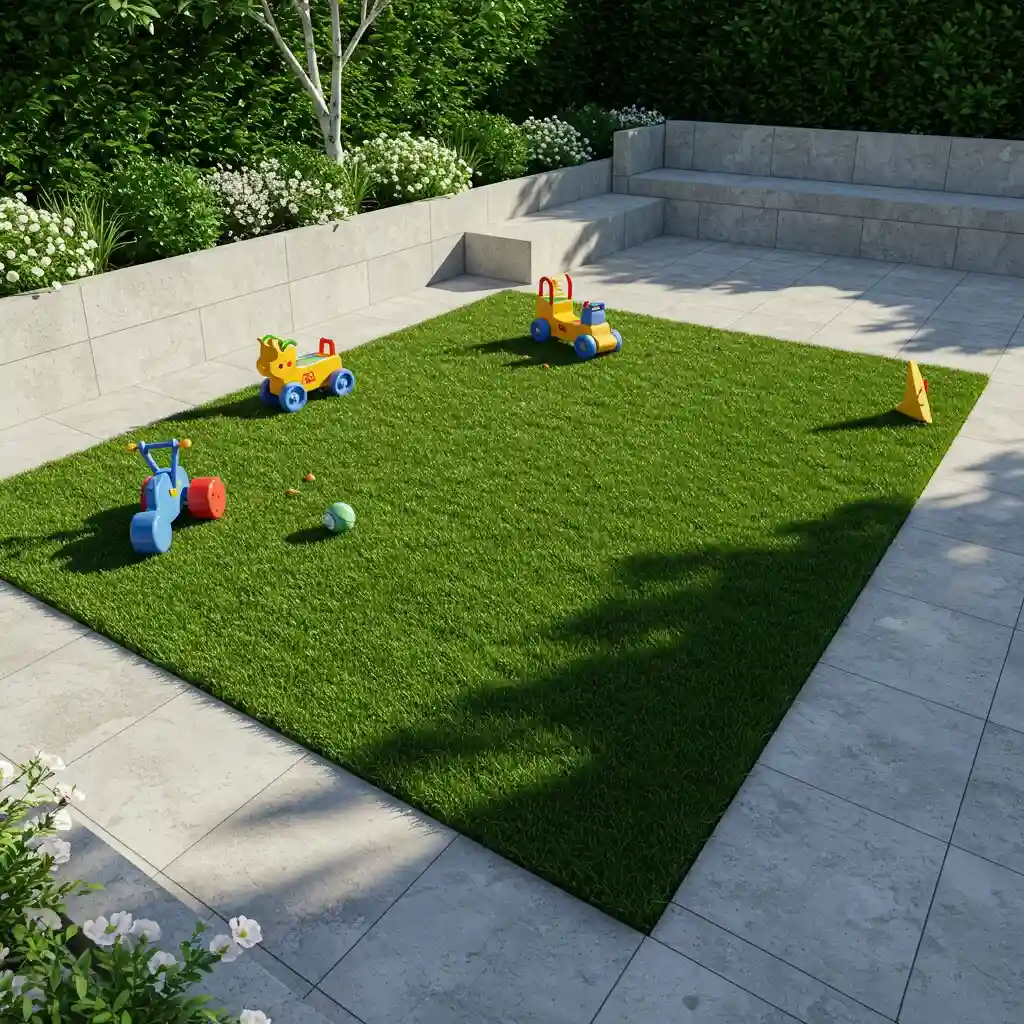
alt text: A modern, no-grass backyard with a clean, rectangular area of artificial turf used as a play space.
15. Choose One Comfortable Seating Element
When you’re starting out and have a small backyard, it’s better to have one really comfortable, well-chosen seating element than a cramped, uncomfortable set. Instead of trying to squeeze in a full dining set and a lounge area, decide on the one activity you will do most often and choose the perfect piece of furniture for that.
If you love to read and relax, maybe a single, super-comfortable outdoor lounge chair and a small side table is all you need. If you dream of having coffee with a friend, a classic, charming bistro set is perfect. If you love to nap in the sun, maybe a simple, comfortable daybed is the right choice. By focusing on one key piece, you can invest in a higher-quality, more comfortable item and you will avoid cluttering your small space. This is a core principle of minimalist and small-space design.
- Prioritize Your Activity: Dining, lounging, or conversation?
- Quality over Quantity: One comfortable chair is better than four uncomfortable ones.
- Measure Your Space: Make sure your chosen piece fits comfortably with plenty of room to walk around it.
For a beginner-friendly enhancement that adds a lot of comfort, invest in a high-quality, comfortable outdoor cushion for your chosen chair. A thick, well-made cushion in a stylish, weather-resistant fabric can make even a simple chair feel incredibly luxurious.
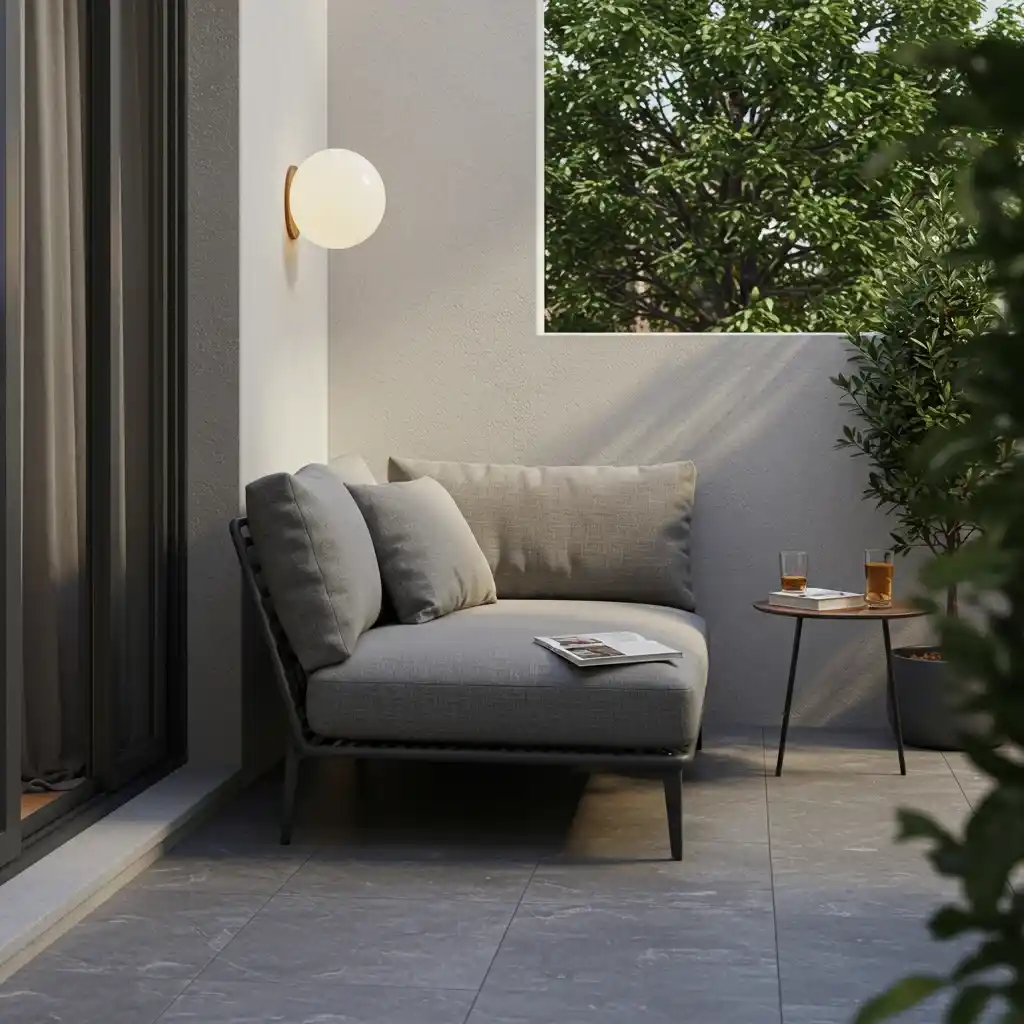
alt text: A beginner’s small backyard focused on a single, comfortable lounge chair to maximize space and relaxation.
Conclusion
Designing a no-grass backyard is a liberating and creative process that allows you to reclaim your outdoor space from the endless chore of lawn maintenance. As we’ve explored through these 15 easy ideas, the alternatives to a traditional lawn are more beautiful, functional, and sustainable than ever. By combining stylish, low-maintenance hardscaping like paver patios and gravel courtyards with smart, water-wise planting strategies like massing ornamental grasses and creating lush garden beds, you can craft a truly personalized outdoor oasis. The goal is to create a backyard that reflects your lifestyle and invites you to spend more time relaxing and entertaining outdoors.
I encourage you to look at your yard as a blank canvas. You don’t have to tackle everything at once. Start with one or two of these beginner-friendly projects, like laying a simple pea gravel patio or creating a few beautiful container gardens. You’ll be amazed at how quickly you can transform your yard into a low-maintenance, high-style retreat that you will enjoy for years to come. For more ideas on sustainable gardening, you might enjoy our guide to xeriscaping. [Link to related article on water-wise garden design].
Frequently Asked Questions (FAQs)
- What can I put in my backyard instead of grass? There are many beautiful alternatives, including patios made of pavers, flagstone, or decomposed granite; low-maintenance groundcover plants; beds of ornamental grasses; decks; and container gardens. A combination of these elements is often the best approach.
- What is the cheapest alternative to a grass lawn? Mulch and pea gravel are two of the most affordable groundcover materials. Laying down a thick layer of wood chip mulch or creating a pea gravel patio (with a weed barrier underneath) are very budget-friendly ways to cover a large area.
- How do I get rid of my lawn to start a no-grass backyard? The easiest, most eco-friendly method is called sheet mulching. You cover the lawn with a layer of cardboard, which blocks the light and smothers the grass. Then, you can add a thick layer of compost and mulch on top and plant directly into it after a few months as the cardboard and grass decompose.
- Are no-grass yards really lower maintenance? Yes, in general, a well-designed no-grass yard is significantly lower maintenance than a traditional turfgrass lawn. It eliminates the need for regular mowing, fertilizing, and frequent watering. While gardens still require some weeding and care, the overall weekly workload is drastically reduced.
- What is a “groundcover”? A groundcover is a low-growing, spreading plant that can be used to cover the ground in place of a lawn. They are often more drought-tolerant and require less maintenance than grass. Examples include creeping thyme, sedum, and mondo grass.
- How do I keep a gravel backyard from looking barren? The key is to add plenty of plants! Use large planters, create lush, defined garden beds along the edges, and incorporate a few large boulders or a statement tree. The gravel should be the neutral backdrop, not the only feature.
- Can I have a no-grass backyard if I have dogs or kids? Absolutely. A durable paver patio, a low-level deck, or even high-quality artificial turf can provide a great, clean play surface. Just be mindful that gravel and some mulches can be less comfortable for playing on. A designated sandpit or a small patch of artificial turf can be a great solution for a dedicated play zone.
Meta Description Suggestion: “Discover 15 easy, low-maintenance, and stylish no-grass backyard ideas. From gravel patios and lush groundcovers to decks and container gardens, create your perfect lawn-free oasis.”

Tools